
Corn Snake Shedding Guide: What's Normal, What to Watch, and When to Relax
Corn snake shedding only needs 40-60% humidity. Screen-top tanks work fine, stuck shed is rare. Here's what to expect and when to worry.

✓Recommended Gear
In this guide, we cover everything you need to know and recommend 5 essential products. Check prices and availability below.
TL;DR: Corn snakes shed every 4-8 weeks as juveniles and every 2-3 months as adults; the 7-14 day pre-shed phase (cloudy eyes, dull colors, reduced appetite) is completely normal. A healthy shed comes off in one piece; stuck eye caps or tail-tip shed require a 20-30 minute warm soak and gentle cotton-swab assistance — never forcible pulling.
Your corn snake has gone quiet. The eyes have turned cloudy and the normally vibrant orange and red pattern looks washed out, like a faded photograph. It is refusing food, hiding more than usual, and has no interest in being handled. If you are a new corn snake keeper, this might look alarming. It is not. Your corn snake is about to shed its skin — and it is about to go smoothly.
Corn snakes are among the easiest snakes in the hobby when it comes to shedding. They are surface-dwelling, semi-arid species from the eastern United States, and their shedding requirements genuinely match that origin: 40-60% ambient humidity is all they need for a clean, one-piece shed. Your standard screen-top glass tank is fine. Stuck shed is uncommon in a correctly set up enclosure. This is not a crisis management guide — it is a "here is what is happening, and here is what to watch for" guide.
For context on where corn snakes land on the difficulty spectrum, compare this guide with our ball python shedding guide — a species that requires 60-80% humidity, is prone to retained eye caps, and is genuinely challenging to manage in screen-top tanks. Corn snakes are the opposite experience.
Understanding Corn Snake Shedding
Corn snakes shed their entire outer skin layer in a single process called ecdysis — and they do it throughout their entire lives. Unlike mammals that replace skin cells continuously, snakes grow a new skin layer beneath the old one, then shed the old layer all at once.
The trigger is growth. As the new layer forms, lymphatic fluid accumulates between old and new skin, causing the characteristic color dullness and eye cloudiness that signals a shed is coming.
How Often Do Corn Snakes Shed?
Shedding frequency is directly tied to growth rate — and growth rate slows with age.
- Hatchlings (0-6 months): Shed every 3-4 weeks. Rapid growth phase means frequent cycles.
- Juveniles (6-18 months): Shed every 4-6 weeks. Growth is still active but slowing.
- Young adults (18 months - 3 years): Shed every 6-8 weeks on average.
- Adults (3+ years): Shed every 8-12 weeks, sometimes less frequently. Some individuals slow to 4-5 times per year.
If your adult corn snake is shedding every 3 weeks, check that temperatures are appropriate — too-warm conditions can trigger slightly faster metabolic cycles. If shedding seems to have stopped entirely for more than 4 months, a vet check is reasonable.
The Blue Phase: What Is Actually Happening
The most striking part of the shed cycle is the blue phase — the period when your corn snake's eyes turn a milky, grayish-blue color. This is caused by lymphatic fluid accumulating between the old spectacle (the transparent scale covering the eye) and the new spectacle forming underneath.
The blue phase in corn snakes lasts 3-7 days. During this window, your snake:
- Loses pattern vibrancy (the colors look faded and dull)
- Has reduced vision due to the fluid layer between spectacles
- Refuses food (completely normal — do not try to feed)
- Avoids handling (respect this — visibility is compromised and stress increases)
Around day 4-7, the eyes unexpectedly clear. Many new keepers mistake this for the shed being over. It is not — the fluid has redistributed, and the shed itself will follow within 2-5 days of the eyes clearing.
Pro Tip: Mark the date when you first notice cloudy eyes. If the shed has not occurred within 14 days of that date, a warm soak is a sensible next step — though this is genuinely uncommon with corn snakes in properly set up enclosures.
Shedding Frequency by Age
Hatchlings (0-6 months)
Every 3-4 weeks
Rapid growth phase
Juveniles (6-18 months)
Every 4-6 weeks
Growth still active
Young adults (18 mo - 3 yr)
Every 6-8 weeks
Growth slowing
Adults (3+ years)
Every 8-12 weeks
Slowest shedding rate
Signs Your Corn Snake Is About to Shed
You will usually notice the shed cycle coming 5-10 days before the actual shed. Knowing what to look for helps you prepare the enclosure and adjust your handling schedule.
Visual cues:
- Eye cloudiness — the clearest signal. Eyes shift from clear and glossy to a gray-blue milky opacity. This is the start of the blue phase.
- Color dulling — the bright orange, red, and brown pattern looks faded and low-contrast. Morphs with vivid colors are particularly noticeable.
- Skin has a slightly dull, dry texture — the outer layer begins to separate microscopically.
Behavioral cues:
- Food refusal — corn snakes almost universally stop eating during the opaque phase. This is instinctive and completely normal. Do not try to force-feed.
- Increased hiding — your snake will spend more time in its hide and less time exploring.
- Rubbing behavior — the snake starts rubbing its snout against rough surfaces to initiate the shed. Cork bark and rough décor items provide the friction needed to get the process started.
- Irritability or reluctance to be handled — reduced vision + increased skin sensitivity = the snake prefers to be left alone.
Pro Tip: If you have a regular feeding schedule, food refusal is often the first signal you notice — even before the eyes cloud over. When a corn snake that normally eats eagerly refuses two meals in a row, check the eyes. A shed cycle may already be underway.
Key Pre-Shed Signs
What you need to know
Cloudy, grayish-blue eyes (clearest signal of pre-shed phase)
Colors become dull and faded—pattern loses vibrancy
Food refusal during opaque phase (completely normal)
Increased hiding and reduced time exploring
Rubbing snout against rough surfaces to initiate shed
Irritability and reluctance to be handled due to reduced vision
The Ideal Shedding Environment
The good news for corn snake keepers: the shedding environment your snake needs is essentially the same environment it should be in all the time. There is no humidity spike required, no enclosure reconfiguration, no frantic substrate soaking.
Humidity: 40-60% Is Enough
Corn snakes are native to the southeastern and central United States — open woodlands, rocky hillsides, overgrown fields. They are surface dwellers (unlike ball pythons, which are burrowing snakes from humid underground environments). Their natural ambient humidity ranges from 35-65% depending on season and location.
In captivity, 40-60% ambient enclosure humidity is the target — and this is achievable in almost any standard setup, including screen-top glass tanks. This stands in direct contrast to ball pythons, which require 60-80% and struggle in screen-top enclosures without significant modification.
For corn snakes:
- Screen-top glass tanks — these work fine for corn snake humidity requirements. The 40-60% range does not require special covering or humidity trapping.
- Standard coconut fiber or aspen substrate — either holds adequate moisture for corn snake needs at normal room temperature.
- Room humidity in most homes — standard indoor humidity (40-55%) is often already at or near target without any active management.
Use a **[Zoo Med Digital Hygrometer](https://www.amazon.com/dp/B06XY3X7P9?tag=krawlo-20 to verify actual enclosure humidity rather than guessing — dial-style analog units can read 10-15% off from actual levels. For a full comparison of monitoring options, see our best reptile hygrometer guide.
Pro Tip: If you live in a very dry region (desert Southwest, high altitude, or dry winter with forced-air heating), indoor humidity can drop below 30%. In those cases, lightly mist the substrate once during the blue phase. That single misting is usually sufficient. You do not need a fogger, a misting system, or constant humidity management.
Temperature: Keep the Gradient Stable
Temperature does not change during a shed, but it matters. Corn snakes need an ambient gradient of 72-88°F with a warm side surface around 85-88°F and a cool side around 72-75°F. A snake kept too cool metabolizes more slowly, and the shed process extends. The physical separation of old and new skin requires energy. Maintain the established temperature gradient — do not add heat or reduce it during the shed.
For full details on temperature management, see our corn snake heating guide.
The Optional Humid Hide: Nice but Not Necessary
A humid hide — an enclosed hide filled with damp **[Zoo Med Sphagnum Moss](https://www.amazon.com/dp/B0035Q4CVE?tag=krawlo-20 — creates a localized high-humidity microclimate (70-80%) that the snake can self-select into during the opaque phase. For ball pythons, a humid hide is nearly mandatory. For corn snakes, it is a nice addition if you want to provide it, but your snake may barely use it. Most corn snakes in properly set up enclosures complete clean sheds without one.
If you want to add one, place it on the warm side, pack it with damp (not wet) sphagnum moss, and replace the moss every 2-3 weeks to prevent mold.
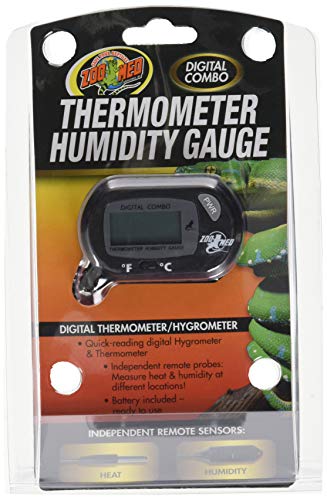
Zoo Med Digital Hygrometer
Accurate digital monitoring is the foundation of corn snake shedding care. Dial-style analog units can read 10-15% off from actual humidity, giving you false confidence. This dual-probe unit reads both temperature and humidity with ±3% accuracy — confirm you are actually in the 40-60% target range.
Check Price on Amazon
Zoo Med Sphagnum Moss
Optional but useful: pack damp sphagnum moss into a small hide to create a localized 70-80% humidity microclimate for corn snakes in very dry environments. Resists mold longer than coco fiber, holds moisture well, and is easy to replace every 2-3 weeks.
Check Price on AmazonIdeal Shedding Environment
Ambient humidity
40-60%
Screen-top tanks work fine
Ambient temperature
72-88°F
Full gradient range
Warm side surface
85-88°F
Basking area
Cool side
72-75°F
Retreat/rest area
How Long Does Shedding Take?
The full corn snake shed cycle — from first signs to completed shed — typically spans 7-14 days. Here is the timeline in detail:
| Stage | Duration | What You See |
|---|---|---|
| Pre-blue (early) | Days 1-3 | Slight color dulling, mild food refusal |
| Blue phase (opaque) | Days 3-7 | Cloudy blue-gray eyes, full color fade, hiding |
| Clear phase | Days 7-10 | Eyes clear suddenly — shed is still coming |
| Shed | Days 10-14 | Actual shed; takes 30 minutes to 2 hours |
| Post-shed | 24-48 hrs later | Eyes bright, colors vivid, appetite returns |
The actual act of shedding is fast once it starts. A corn snake will rub its snout on a rough surface (cork bark, the enclosure wall texture, a water dish edge) to get the skin started at the lip. Once the old skin is rolling back, the snake works its way through the enclosure and the shed peels backward like a sock inverting. A healthy corn snake sheds in one continuous piece, nose to tail.
Post-shed, colors are temporarily more vivid than usual — the new skin has not yet developed its full surface texture and reflects light more brightly. The snake returns to normal feeding behavior within 24-48 hours.
Pro Tip: Provide a **[Zoo Med Cork Bark Round](https://www.amazon.com/dp/B001F9ANVG?tag=krawlo-20 or other rough-textured décor in the enclosure. Corn snakes use these surfaces to get the shed started at the snout. Without a suitable rough surface, snakes sometimes struggle to initiate — not because of humidity, but because there is nothing to rub against.
Post-Shed Inspection Checklist
After every shed, spend two minutes inspecting your corn snake before returning it to its enclosure. A complete, clean shed from a healthy corn snake should look and feel a specific way. Here is exactly what to check:
1. Inspect the Shed Skin
- Should be in one continuous piece from snout tip to tail tip. Tears at handling points (where you touched during removal) are fine; breaks in the middle of the body suggest humidity was marginal.
- Stretch a section gently — healthy shed skin has elasticity and does not disintegrate. Paper-thin, crumbly shed means humidity was too low.
- Hold it up to light — you should see a faint imprint of every scale. Missing scale impressions in patches mean those areas did not shed cleanly.
- Check the tail tip — tail retained shed is the single most common stuck shed location in corn snakes. The tail taper means less surface area and less friction to help the shed release.
2. Inspect the Eye Caps (Spectacles)
- Post-shed, both eyes should be completely clear, highly glossy, and fully transparent — pupil and iris visible with no haziness.
- Compare both eyes — asymmetry is the easiest way to spot a retained cap on one side.
- A retained eye cap looks like a faint film or dull patch over the eye. It is less common in corn snakes than in ball pythons but can still occur.
3. Check the Body — Nose to Tail
- Run fingertips gently along the full body length. Raised edges or rough textured patches where scales did not release cleanly indicate spot-retained shed.
- Pay particular attention to: the area around the vent (cloaca), where retained shed can cause constriction issues, and the tail tip.
4. Assess the Overall Condition
- Skin should look clean, smooth, and vibrant. New pattern colors will be temporarily more vivid than usual — this is normal.
- Any wounds, abrasions, or reddened patches visible beneath the new skin warrant a vet consultation.
Pro Tip: Keep the shed skin for 48 hours after the shed rather than discarding it immediately. If you notice something off on the snake later, the shed skin tells you whether the cycle itself was clean or marginal.
Stuck Shed: Prevention and Recovery
Stuck shed (dysecdysis) is genuinely uncommon in corn snakes housed at 40-60% humidity with a proper temperature gradient. When it does occur, the tail tip is the most likely location.
What Causes Stuck Shed in Corn Snakes?
- Humidity below 30% — usually only in very dry climates with forced-air heating in winter
- No rough surface to initiate the shed — the snake cannot get the skin started at the snout
- Underlying health issues — skin infections, external parasites (mites), malnutrition
- Injuries or scars — old wound sites sometimes retain shed; this is not preventable through husbandry changes
The Warm Soak Method
If you find retained shed anywhere on the body:
-
Prepare a soak container. A clean plastic tub with a loose-fitting lid. Fill with 85-88°F water — use a thermometer. Water depth should partially submerge the body without forcing the snake to constantly work to keep its head above water.
-
Soak for 15-20 minutes. The warmth and humidity inside the container cause the retained shed to rehydrate and loosen. Most corn snakes tolerate soaking well.
-
After soaking, use a damp cotton ball and very gentle rolling pressure — not pulling — on any retained patches. Work from a loose edge, not from the center of a retained patch. The skin should release with minimal pressure.
-
For tail tip retained shed specifically: After soaking, wrap the tail in a warm wet paper towel for 5 minutes, then attempt to roll the retained skin downward toward the tail tip. Do not pull — roll.
-
If it does not release in one session, repeat the next day. Do not force it. Two to three consecutive daily sessions resolve the vast majority of cases.
For signs that something more serious is going on, see our reptile illness signs guide.
Pro Tip: An **[Exo Terra Water Dish Large](https://www.amazon.com/dp/B0GS5YTXXY?tag=krawlo-20 wide enough for your corn snake to partially enter serves double duty: it provides drinking water and a self-directed soaking option during the shed cycle. Corn snakes often soak themselves voluntarily before a shed if the dish is large enough — which is exactly what you want.
When to See a Reptile Vet
- Retained shed over the eyes (retained spectacle) that does not release after two warm soak sessions
- Red, weeping, or ulcerated skin visible beneath retained areas — indicates infection
- Retained shed around the vent or tail tip that will not release after three sessions — constriction risk
- Multiple consecutive problem sheds despite correct husbandry — may indicate underlying illness or parasites
This guide is for informational purposes only and is not a substitute for professional veterinary advice. Always consult a qualified reptile veterinarian for health concerns.
Nutrition and Shedding Health
A corn snake's ability to shed cleanly is partly determined by what it eats. The new skin being formed beneath the old one requires specific nutrients — deficiencies show up in shed quality before they cause other obvious symptoms.
Key Nutrients for Shedding
Vitamin B complex — particularly B2 (riboflavin) and B6 (pyridoxine), supports healthy skin cell formation. Whole prey (mice, rats) naturally provides B vitamins through organ tissue. Frozen-thawed prey retains most nutritional value if stored correctly (under -10°F, no freezer burn).
Calcium and Vitamin D3 — calcium is involved in cell signaling processes including skin formation. Without adequate D3, calcium cannot be absorbed efficiently. For corn snakes housed without UVB lighting (which is common), a calcium supplement with D3 is the standard approach. **[Repashy Calcium Plus](https://www.amazon.com/dp/B0B57KL69G?tag=krawlo-20 is an all-in-one formula providing calcium, D3, and multivitamins in a single product — dust prey lightly every 4th feeding.
Hydration — chronically dehydrated corn snakes shed poorly. A clean, appropriately sized water dish that the snake can access at all times is the simplest intervention. Water should be changed every 2-3 days or whenever soiled.
The Connection Between Feeding Frequency and Shedding
Young corn snakes that are fed on schedule (juveniles every 5-7 days, adults every 7-10 days) grow steadily and shed on predictable cycles. Irregular feeding — particularly long fasting periods — can disrupt growth cycles and cause irregular or problematic sheds. Keep feeding consistent. For full feeding guidance, see the corn snake species page at /species/corn-snake.
Pro Tip: If your adult corn snake has been refusing food for more than 3 weeks outside of a visible shed cycle, this warrants attention — either a health issue or an environmental problem (temperatures, lighting cycle, stress). It is not the same as the 1-2 week food refusal that is normal during a shed.
Recommended Gear
Zoo Med Digital Hygrometer
Accurate digital monitoring is the foundation of corn snake shedding care. Dial-style analog units can read 10-15% off from actual humidity, giving you false confidence. This dual-probe unit reads both temperature and humidity with ±3% accuracy — confirm you are actually in the 40-60% target range.
Check Price on Amazon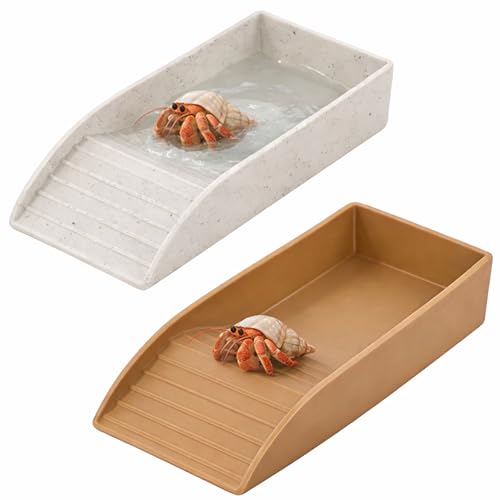
Exo Terra Water Dish Large
Wide enough for a corn snake to partially submerge, this dish provides daily hydration and doubles as a self-directed soaking option. Corn snakes often enter water dishes voluntarily before a shed — which naturally supports a clean shed without keeper intervention.
Check Price on AmazonZoo Med Sphagnum Moss
Optional but useful: pack damp sphagnum moss into a small hide to create a localized 70-80% humidity microclimate for corn snakes in very dry environments. Resists mold longer than coco fiber, holds moisture well, and is easy to replace every 2-3 weeks.
Check Price on AmazonZoo Med Cork Bark Round
Corn snakes need a rough surface to initiate the shed at the snout. Cork bark provides the right texture — rough enough to catch the lip of the old skin, natural-looking, and easy to clean. Without a suitable rough surface, some snakes struggle to get the shed started even with correct humidity.
Check Price on Amazon
Repashy Calcium Plus
All-in-one calcium, D3, and multivitamin supplement that supports healthy skin formation between shed cycles. Light dusting on prey every 4th feeding covers nutritional gaps for corn snakes without UVB lighting — improving overall shed quality over time.
Check Price on AmazonFrequently Asked Questions
Hatchlings and juveniles shed approximately every 3-6 weeks due to rapid growth. Adult corn snakes slow to every 6-12 weeks, with some individuals shedding only 4-5 times per year. Decreasing shedding frequency as your corn snake ages is completely normal.
References & Sources
Related Articles

Blue Tongue Skink Shedding Guide: One-Piece Sheds, Stuck Toe Emergencies & Subspecies Humidity
Blue tongue skinks shed in one piece like snakes — and stuck shed on toes can cause tissue death within days. Learn the complete BTS shedding guide here.

Corn Snake Diet & Feeding Guide: Prey Sizing, Schedules, and Preventing Obesity
Corn snakes eat too well — obesity is the real threat, not refusal. This guide covers prey sizing tables, milestone schedules, and body condition scoring.

Bearded Dragon Shedding Guide: What's Normal and How to Help
Bearded dragon shedding in patches is normal — learn the pre-shed signs, how to help with stuck shed, and when to see a vet.