
Ball Python Shedding Guide: Humidity, Stuck Sheds & Eye Cap Retention
Ball pythons need 60-80% humidity to shed cleanly — here's why they're high-risk, how to fix stuck sheds, and why eye cap retention is a real danger to vision.

✓Recommended Gear
In this guide, we cover everything you need to know and recommend 5 essential products. Check prices and availability below.
TL;DR: Ball pythons need 60–80% humidity to shed cleanly — milky blue eyes, dull skin, and food refusal are normal pre-shed signs lasting 1–2 weeks before the shed occurs. Stuck shed is caused by low humidity; treat with a 15–20 minute soak at 85–88°F or a humid hide packed with damp sphagnum moss. Retained eye caps are the most dangerous post-shed complication — if both eyes aren't clear and glossy, see a reptile vet rather than attempting DIY removal.
Your ball python has gone blue. The eyes have turned milky, opaque gray-blue and the skin has lost its crisp pattern. It is off food, hiding more, and does not want to be handled. That is a ball python about to shed — and if your humidity is not right, you are about to find out the hard way.
Ball pythons shed more problematically than almost any other commonly kept snake. The reason is counterintuitive: they come from the arid savannas of West and Central Africa, yet they spend most of their time underground in humid burrows where ambient humidity sits at 60-80%. Keepers who see "arid" and build a dry enclosure are setting their snake up for dysecdysis (stuck shed) — and the most dangerous complication: retained eye caps.
This guide covers the full picture: why BPs are humidity-sensitive, how to read the shed cycle, the enclosure decisions that make or break shed quality, and how to handle the two emergencies unique to snakes.
Why Ball Pythons Shed More Problematically Than Other Snakes
Ball pythons require significantly higher ambient humidity than their wild habitat suggests — because they live underground, not on the surface. That distinction is the key to understanding their shedding needs.
The surface of their West African range is genuinely semi-arid. But ball pythons are burrowing snakes. They spend daylight hours deep in termite mounds and mammal burrows where the microclimate is consistently warm and humid. Field research consistently shows burrow humidity in their native range runs 60-80% year-round.
In captivity, most keepers house ball pythons in glass tanks with screen tops — essentially humidity vacuum cleaners. Room air at 30-40% passes through the screen constantly, dropping enclosure humidity to levels the snake would never naturally experience. The result: dysecdysis rates significantly higher than in species actually adapted to dry surface environments.
Pro Tip: If you have a screen-top glass tank, assume the humidity is too low until your hygrometer proves otherwise. Most such setups sit at 30-45% — well below the 60-80% target.
Contrast this with bearded dragons, which genuinely live on the surface in arid zones and require only 30-40% ambient humidity. The bearded dragon shedding guide covers that entirely different approach.
Why BPs Need High Humidity
What you need to know
Ball pythons live underground in burrows (60–80% humidity), not surface-dwelling
Screen-top glass tanks create humidity vacuums at 30–40% — unnatural for this species
Bearded dragons are truly arid and only need 30–40% humidity — opposite housing needs
Dysecdysis (stuck shed) and eye cap retention are direct results of low-humidity enclosures
The Shedding Cycle: Timeline and Behavioral Cues
A complete ball python shed from first signs to completion spans 7-14 days. The process has two phases.
Phase 1: Going Blue (Days 1-7)
The first sign is eye color change. The normally clear spectacle turns a cloudy, blue-gray milky color. Simultaneously: skin pattern loses contrast, the snake goes off food, hiding increases, and handling is refused. The cloudiness is caused by lymphatic fluid accumulating between the old skin layer and the new one forming beneath.
Phase 2: Clear Phase and Shed (Days 7-14)
Around day 7, the eyes unexpectedly clear. New keepers sometimes think the shed was "canceled" — it is not. This clearing happens as lymphatic fluid redistributes. The snake typically sheds within 3-5 days after the eyes clear.
A healthy ball python sheds in one complete piece — from snout to tail tip, inside out, like a sock. A complete single-piece shed is your primary indicator that humidity was adequate throughout.
Pro Tip: Keep shed skins for a few days before discarding. If the shed tears easily or is papery-thin in patches, humidity was marginal during that cycle. Adjust before the next shed.
If your ball python sheds in multiple pieces, sheds incompletely, or takes more than 14 days — start with the humidity protocol in the next section.
Ball Python Shed Cycle (7–14 Days)
Phase 1: Going Blue
Days 1–7Eyes turn milky blue-gray, skin loses pattern contrast, snake refuses food and increases hiding
Tip: This cloudy appearance is lymphatic fluid building under the old skin layer — completely normal
Clear Phase
Around Day 7Eyes unexpectedly clear again as lymphatic fluid redistributes
Tip: Don't assume the shed was cancelled — this clearing happens before the actual shed
Complete Shed
Days 7–14 (typically 3–5 days after eyes clear)Snake sheds in one complete piece from snout to tail tip, inside out like a sock
Tip: If shed comes off in multiple pieces or is incomplete, humidity was too low — adjust for next cycle
The Humidity Sweet Spot: 60-80% During Shed
Target 60-80% ambient enclosure humidity during pre-shed, with the higher end of that range preferred during the opaque phase. Outside of shedding, 55-65% is adequate for ongoing health.
Monitoring this accurately requires a digital hygrometer — not the dial-style analog units that ship in kit setups, which can read 15-20% off from actual humidity. The [Zoo Med Digital Hygrometer](https://www.amazon.com/dp/B06XY3X7P9?tag=krawlo-20 reads both temperature and humidity with ±3% accuracy — place one probe in the hide, one at mid-enclosure. For a full comparison, see our best reptile hygrometer guide.
Tank Type Comparison: Which Enclosures Lose Humidity Fastest
The single biggest factor in ball python humidity management is enclosure type. Here is how the main options compare:
| Enclosure Type | Humidity Retention | Notes |
|---|---|---|
| PVC/HDPE Enclosure | Excellent | Industry standard for serious keepers; solid walls hold humidity with minimal intervention |
| Bioactive Glass + Soil Substrate | Very Good | Living substrate and live plants produce and retain moisture naturally |
| Glass Tank with Screen Top | Poor | Screen allows constant air exchange and moisture loss; requires significant mitigation |
| Screen-Top Glass (partially covered) | Moderate | Covering 50-75% of screen top dramatically improves retention |
| Melamine Rack Tub | Very Good | Minimal ventilation by design; easy to hold 65-80% |
PVC and HDPE enclosures are the community standard because they solve the humidity problem by design. Solid walls with minimal ventilation panels hold 60-80% easily without active intervention. See our best ball python enclosures guide for a full comparison.
Screen-top glass tanks are where most keepers start — and where most stuck sheds happen. The fix is partial screen covering: cover 50-75% of the screen with foam board or acrylic. Leave the area nearest the heat source uncovered for ventilation. This often raises humidity from 35% to 65% without any other changes.
Substrate Choice for Humidity Retention
Substrate is the second major lever for humidity. Not all substrates hold moisture equally.
| Substrate | Humidity Retention | Notes |
|---|---|---|
| Coconut Fiber (Eco Earth) | Excellent | Best single-substrate option for moisture retention; slightly acidic, resists mold |
| Cypress Mulch | Very Good | Classic BP substrate; holds moisture well, natural-looking, widely available |
| Sphagnum Moss (layered) | Excellent | Used in humid hides or mixed with other substrates; outperforms everything for moisture |
| Aspen Shavings | Poor | Dries out quickly; does not support adequate humidity; best for drier-climate snakes |
| Paper Towel / Reptile Carpet | None | Zero moisture retention; only appropriate for quarantine setups |
**[Zoo Med Eco Earth Coconut Fiber](https://www.amazon.com/dp/B01CN8ZRYA?tag=krawlo-20 is the most widely recommended substrate for ball pythons targeting humidity. A 4-6 inch loose layer, kept slightly moist (squeeze a handful — no water should drip), maintains enclosure humidity with minimal active management. For a full breakdown, see our best ball python substrate guide.
According to ReptiFiles ball python shedding care, adequate substrate depth combined with the correct enclosure type eliminates the majority of humidity-related shedding failures.
Pro Tip: Add a humid hide specifically for shedding support. An enclosed hide filled with **[Pangea Sphagnum Moss](https://www.amazon.com/dp/B0CM8C2F9S?tag=krawlo-20 creates a localized 80-90% humidity microclimate that your ball python can self-select into during the opaque phase. The **[Exo Terra Snake Cave](https://www.amazon.com/dp/B01N12O44C?tag=krawlo-20 is purpose-built for this — its enclosed ceramic design traps humidity and the entrance size is well-matched to adult ball pythons. Pack it with damp (not wet) sphagnum moss and position it on the warm side.
Exo Terra Snake Cave
Purpose-built humid hide for ball pythons — enclosed ceramic design traps humidity at 80-90% inside while the enclosure ambient stays at target levels. Fill with damp sphagnum moss for best results during pre-shed.
Check Price on Amazon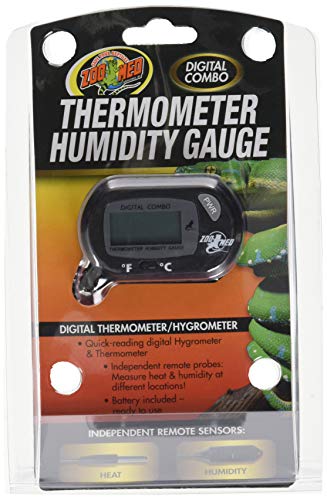
Zoo Med Digital Hygrometer
Dual probe unit with ±3% accuracy reads both temperature and humidity simultaneously. Essential for verifying you are actually hitting the 60-80% humidity target — not relying on inaccurate analog dial units.
Check Price on Amazon
Zoo Med Eco Earth Coconut Fiber Substrate
Best humidity-retaining substrate for ball pythons. A 4-6 inch moist layer passively holds 55-65% ambient humidity and significantly reduces stuck shed incidents compared to aspen or paper towel.
Check Price on Amazon
Pangea Sphagnum Moss
Best humid hide filler for ball python shedding support. Retains moisture far longer than coconut fiber or peat, resists mold well, and creates the 80-90% microclimate inside the Exo Terra Snake Cave that replicates natural burrow humidity.
Check Price on AmazonStuck Shed: Diagnosis, Immediate Response and Prevention
Stuck shed means humidity was inadequate at some point during the shed cycle. The fix is immediate soaking followed by enclosure correction.
The shed is problematic if: it came off in multiple pieces, visible skin remains attached after the main shed, or the shed skin is papery and tears easily when stretched.
After every shed, run your fingertips gently along the full body from head to tail, feeling for raised edges or rough patches where old scales have not fully released.
The Snake Sauna Protocol (Step-by-Step)
Do not pull dry stuck shed. Old skin bonds to the new layer beneath as it desiccates — pulling tears the new skin and creates wounds and infection risk.
-
Prepare the soak container. Use a clean plastic tub (a shoebox-sized tub with a locking lid works well). Fill with 85-88°F water — use a thermometer. Water depth: enough to partially submerge the snake's body but not so deep the snake cannot hold its head up comfortably.
-
Place the snake in the container and close the lid loosely. Most ball pythons will attempt to escape immediately. The lid keeps them contained while still allowing some air movement. Do not use an airtight seal.
-
Soak for 15-20 minutes. Maintain water temperature as best you can — add a small amount of warm water if it cools significantly. The warmth and humidity inside the container recreate burrow conditions and cause the stuck shed to rehydrate and loosen.
-
After soaking, wrap loosely in a warm damp towel. Gently roll the snake in the towel with light friction. Many stuck patches release during this step as the loosened skin catches on the towel fibers.
-
Check again. For any remaining stuck areas, use a damp cotton ball and gentle rolling pressure — not pulling — to work the loosened skin free. Move slowly, working from a loose edge toward the body.
-
If it does not release in one session, repeat the next day. Two or three sessions over consecutive days are almost always sufficient. Never force retained shed.
Pro Tip: After resolving a stuck shed, treat it as a diagnostic event. Check hygrometer accuracy, substrate moisture, and misting schedule. Fix the root cause before the next shed cycle.
For more on identifying illness signs after a problematic shed, see our reptile illness signs guide.
When to Call a Vet
See a reptile veterinarian if:
- Skin under a retained patch looks red, ulcerated, or weeping — indicates infection
- Retained shed does not release after 3 consecutive daily soaking sessions
- You cannot confirm a retained eye cap has fully released
- Black or very dark blue skin under retained shed — indicates necrotic tissue
- Labored breathing or wheezing alongside a problem shed — possible respiratory infection from chronic low humidity
The Eye Cap Problem: Recognition and Safe Removal
Retained eye caps are the most dangerous shedding complication specific to snakes — and ball pythons are particularly prone to them. This is the one area where keeper error can cause permanent blindness.
Unlike leopard geckos (which have moveable eyelids), snakes have a permanent fused transparent scale covering each eye called the spectacle or brille. This scale sheds with the rest of the skin during every ecdysis cycle. When it does not shed cleanly, the old spectacle remains over the new one.
How to Identify a Retained Eye Cap
After a shed appears complete, examine both eyes in good lighting:
- Normal post-shed eye: Clear, glossy, fully transparent — pupil and iris visible clearly.
- Retained eye cap: The eye looks dull, slightly opaque, or matte rather than glossy. You may see a faint ring where the old spectacle meets surrounding scales.
When in doubt, compare both eyes to each other. Asymmetry often reveals a cap on one side. Reptile Advisor's ball python shedding analysis notes eye cap retention as the most common BP complication question in keeper communities — largely because of the humidity demands described above.
Safe Eye Cap Removal
Never attempt to peel a retained eye cap with tweezers, fingernails, or any pointed instrument. The spectacle sits directly over the cornea. Slipping causes permanent corneal scarring.
-
Complete a full snake sauna session first (see protocol above). A thorough 15-20 minute warm soak is often sufficient — the eye cap rehydrates and releases on its own during the towel wrap step.
-
After soaking, use a warm damp cotton ball. Hold it gently over the eye for 30-60 seconds. Sustained moisture often causes the cap to lift at the edge.
-
If the cap does not release after two or three attempts over consecutive days — go to a reptile vet. A reptile vet can remove a retained eye cap safely in seconds. This is not a "wait and see" situation. Multiple retained caps stacked across sheds cause infection and permanent vision damage.
Pro Tip: A single retained eye cap is a warning. Two in a row is a systemic humidity failure that needs structural correction — enclosure type, substrate, or misting schedule.
According to Terrarium Quest's ball python shedding guide, retained eye caps that go undetected across multiple sheds are the leading cause of vision impairment in captive ball pythons.
Feeding, Handling and Stress During Shed
Do not feed during the opaque phase (blue eyes). Ball pythons stop hunting during the shed cycle in the wild, and this carries over in captivity. Feeding during this window adds metabolic load and frequently results in regurgitation.
Wait until the shed is complete before offering food. Most ball pythons resume feeding normally within 24-48 hours post-shed. If your BP refuses the first meal after shedding, skip one week and offer again.
Handling Rules During Shed
- No handling from the moment the eyes go blue until at least 48 hours after the shed completes. The skin is physically sensitive during pre-shed — the lymphatic fluid under the old layer creates pressure and discomfort.
- After the shed, verify completeness before resuming handling. Run your hands along the body and check both eyes before picking up.
- Ball pythons that ball up during pre-shed are telling you they want to be left alone. Forced handling during pre-shed is unnecessary stress.
See our ball python heating guide for temperature targets that directly affect shedding quality — a snake kept too cool sheds more slowly and incompletely.
Setup Upgrades: Products That Fix Humidity Issues
If you are dealing with chronic stuck sheds, here are the targeted fixes that resolve the problem:
Accurate monitoring first. The [Zoo Med Digital Hygrometer](https://www.amazon.com/dp/B06XY3X7P9?tag=krawlo-20 reads ±3% accuracy with dual probes — place one in the humid hide and one at mid-enclosure. Analog dial units can read 15-20% off from actual humidity. Replace yours if you are not using a digital unit.
Add a humid hide. The **[Exo Terra Snake Cave](https://www.amazon.com/dp/B01N12O44C?tag=krawlo-20 filled with damp **[Pangea Sphagnum Moss](https://www.amazon.com/dp/B0CM8C2F9S?tag=krawlo-20 creates an 80-90% microclimate the snake can self-select into during the opaque phase. This single addition resolves a large percentage of stuck shed problems in screen-top setups.
Upgrade substrate. Switch from aspen or paper towel to **[Zoo Med Eco Earth Coconut Fiber](https://www.amazon.com/dp/B01CN8ZRYA?tag=krawlo-20. At 4-6 inches deep and slightly moist, it passively holds 55-65% ambient humidity. For even higher retention, mix 50/50 with cypress mulch.
Mist daily during the blue phase. The **[Exo Terra Mister](https://www.amazon.com/dp/B0BZGN4JF5?tag=krawlo-20 is a fine-mist spray bottle — spray the substrate (not the snake directly) once or twice daily during the opaque phase. For automated options, see our best reptile fogger guide.
Recommended Gear
Exo Terra Snake Cave
Purpose-built humid hide for ball pythons — enclosed ceramic design traps humidity at 80-90% inside while the enclosure ambient stays at target levels. Fill with damp sphagnum moss for best results during pre-shed.
Check Price on AmazonZoo Med Digital Hygrometer
Dual probe unit with ±3% accuracy reads both temperature and humidity simultaneously. Essential for verifying you are actually hitting the 60-80% humidity target — not relying on inaccurate analog dial units.
Check Price on AmazonZoo Med Eco Earth Coconut Fiber Substrate
Best humidity-retaining substrate for ball pythons. A 4-6 inch moist layer passively holds 55-65% ambient humidity and significantly reduces stuck shed incidents compared to aspen or paper towel.
Check Price on Amazon
Exo Terra Mister Spray Bottle
Fine mist spray bottle for daily substrate misting during the opaque pre-shed phase. Simple and effective for active humidity maintenance without a full automated misting system.
Check Price on AmazonPangea Sphagnum Moss
Best humid hide filler for ball python shedding support. Retains moisture far longer than coconut fiber or peat, resists mold well, and creates the 80-90% microclimate inside the Exo Terra Snake Cave that replicates natural burrow humidity.
Check Price on AmazonFrequently Asked Questions
Juvenile ball pythons (under 12 months) shed approximately every 4-6 weeks due to rapid growth. Adults (12+ months) shed every 4-8 weeks on average, though some individuals shed as infrequently as every 8-12 weeks. Shedding frequency naturally decreases as the snake reaches full adult size.
References & Sources
Related Articles

Ball Python Diet & Feeding Guide: Schedule, Prey Sizing, and Fixing Food Refusal
Ball pythons refuse food more than almost any other pet snake. This complete feeding guide covers schedules, prey sizing, and a step-by-step feeding strike fix.

Blue Tongue Skink Shedding Guide: One-Piece Sheds, Stuck Toe Emergencies & Subspecies Humidity
Blue tongue skinks shed in one piece like snakes — and stuck shed on toes can cause tissue death within days. Learn the complete BTS shedding guide here.

Corn Snake Shedding Guide: What's Normal, What to Watch, and When to Relax
Corn snake shedding only needs 40-60% humidity. Screen-top tanks work fine, stuck shed is rare. Here's what to expect and when to worry.