
Bearded Dragon Shedding Guide: What's Normal and How to Help
Bearded dragon shedding in patches is normal — learn the pre-shed signs, how to help with stuck shed, and when to see a vet.

✓Recommended Gear
In this guide, we cover everything you need to know and recommend 6 essential products. Check prices and availability below.
TL;DR: Bearded dragons shed in patches over several days (never in one piece) — babies shed every 1–2 weeks, adults every 4–8 weeks. Pre-shed signs include dull skin color, eye-puffing (normal and unique to beardies), food refusal, and irritability — do not force-feed or handle excessively during this time. Stuck shed responds well to a 10-minute lukewarm soak plus gentle help with a damp cloth; retained shed on the tail tip requires prompt attention to prevent constriction and tissue death.
Your bearded dragon is acting strange. It stopped eating two days ago, puffed its eyes wide open, and the skin around its head looks washed-out and dull. Then patches of old skin start peeling away — head first, then the body in chunks over the next few days. Is something wrong? Not at all. Your beardie is shedding, and every part of that behavior is completely normal.
Bearded dragon shedding is fundamentally different from how snakes or even leopard geckos shed. Where those animals come out of their skin in one neat piece, beardies shed in patches — and that process can span several days. Understanding what is normal, and knowing when a stuck patch is becoming a medical problem, is one of the most practical skills you can develop as a keeper.
This guide covers the full picture: shedding frequency by age, the pre-shed signs unique to bearded dragons, how to support a healthy shed, how to handle stuck shed safely, and when to call a vet.
How Often Do Bearded Dragons Shed?
Shedding frequency is driven entirely by growth rate. Baby bearded dragons grow at a phenomenal pace — they can double in length in a matter of weeks — and their skin cannot grow with them. Shedding is how they solve that problem.
| Age | Shed Frequency | Notes |
|---|---|---|
| Hatchlings (0–3 months) | Every 1–2 weeks | Fastest growth phase; shed is almost continuous |
| Juveniles (3–12 months) | Every 2–4 weeks | Growth slowing but still rapid |
| Sub-adults (12–18 months) | Every 4–6 weeks | Approaching adult size |
| Adults (18+ months) | Every 4–8 weeks | Growth largely complete; sheds to replace worn skin |
Unlike snakes, bearded dragons do not shed in a single event. Expect multiple distinct patches falling off over several days — head area typically first, then neck, body flanks, limbs, and finally the tail. This is normal and does not indicate a problem.
If your adult beardie suddenly starts shedding more frequently than every 4 weeks, consider whether growth has resumed (some adults experience late growth spurts), or whether there is an underlying skin issue, parasite load, or nutritional gap worth investigating.
Pro Tip: Keep a shedding log in your phone — just the date and a quick note ("complete," "stuck on toes," etc.). After 3–4 sheds you will know your individual dragon's pattern, which makes spotting genuine problems far easier.
Bearded Dragon Shed Frequency by Age
Side-by-side comparison
| Feature | ||
|---|---|---|
Pre-Shed Signs in Bearded Dragons
Beardies give clear signals before they shed. Learning to read them turns a potentially alarming week into a predictable routine.
Dull, whitish, or grayish skin. This is the first and most reliable sign. The vivid orange, red, or tan tones fade and the skin takes on a dusty, washed-out appearance. You may notice this most obviously on the beard and head before it spreads to the body.
Eye puffing. This is the behavior that startles most new bearded dragon owners. In the days before shedding — especially before the facial skin releases — bearded dragons will bulge their eyes outward dramatically, often closing them afterward. They do this by increasing pressure behind the eye, which physically pushes the eyelid skin away from the new layer beneath. It looks alarming. It is completely intentional and a normal part of the process.
Appetite loss or food refusal. Most beardies reduce or entirely stop eating in the days leading up to a shed. Do not force-feed and do not read appetite loss as illness without other supporting symptoms. Once the shed is complete, appetite typically returns to normal within a day or two.
Irritability and handling intolerance. A normally docile bearded dragon may puff up its beard, open its mouth, or actively flee during pre-shed. Shedding skin is physically sensitive. Respect the behavior and minimize handling until the shed is complete.
Increased hiding or lethargy. Some beardies become noticeably less active and spend more time in shelter areas. This is a normal response to the vulnerability of shedding.
Pro Tip: Eye puffing is one of the most misunderstood bearded dragon behaviors online — many posts treat it as an emergency. It is not. If it occurs alongside a dull skin coat and you are approaching your dragon's typical shed window, it is simply pre-shed facial skin loosening.
Key Takeaways
What you need to know
Skin turns dull, grayish, or whitish — vivid colors fade as lymphatic fluid builds between old and new skin layers
Eye puffing — bearded dragons bulge their eyes outward to physically loosen facial skin, a unique and normal pre-shed behavior
Appetite loss or full food refusal — completely normal, do not force-feed during pre-shed
Irritability and handling intolerance — the shedding skin is physically sensitive; minimize handling until the shed is complete
Increased lethargy or hiding — a normal response to the vulnerability of the shedding state
The Shedding Process: What to Expect
A bearded dragon shed typically unfolds over 3–7 days, though it can extend to 10–14 days in some individuals or during large, full-body sheds. Here is the typical progression:
Day 1–2: The skin becomes visibly dull. Eye puffing begins. Appetite drops. Your dragon may scratch its face or rub against rough decor to help loosen the skin around the head.
Day 2–4: The head and facial skin begin to release. Patches of old skin separate, often leaving the new bright skin exposed beneath in stark contrast to the still-dull areas. This patchy look is entirely normal — do not attempt to pull ahead of the natural process.
Day 3–7: The shed works down the neck, body, and limbs. The belly often sheds in large, satisfying sheets. The tail may take the longest of all.
Eating the shed. Many bearded dragons eat their own shed skin as it comes off. This behavior — ecdysis eating — is completely normal. In the wild it removes evidence of the animal's presence and recycles protein and minerals. You do not need to remove shed from the enclosure if your dragon is eating it.
Do not attempt to rush the process by picking at partially attached shed. Skin that has not fully separated is still connected to the underlying new layer and pulling it causes tears and potential infection. Let the process run at its own pace.
Humidity for Shedding Bearded Dragons
This is where bearded dragon shedding differs significantly from leopard gecko or chameleon care. Beardies are desert animals — their ambient humidity requirement is 30–40%, and pushing that higher for extended periods creates respiratory infection risk.
The solution is targeted humidity support, not raising ambient levels.
Method 1: Humid hide. A humid hide on the cool side of the enclosure (filled with damp sphagnum moss) gives your beardie the option to self-regulate. Unlike leopard geckos, beardies are less inclined to use hides, but many will use a humid hide during active shedding periods if it is accessible. A Zoo Med Repti Shelter 3 in 1 Cave packed with lightly damp Galapagos Sphagnum Moss works well. Keep the moss damp but not dripping, and replace it every 5–7 days to prevent mold.
Method 2: Warm baths. This is the most effective and most widely recommended method for bearded dragon shedding support. A 10–15 minute bath in 85–90°F lukewarm water (just deep enough to reach mid-belly — never cover the head) hydrates the skin, softens the shed layer, and helps patches release naturally. During active shedding, bathe your beardie every other day. Many experienced keepers do this weekly as standard practice.
Method 3: Targeted misting. You can lightly mist the non-basking side of your enclosure (not the basking spot) to raise localized humidity temporarily. Do not mist heavily or repeatedly — allow the enclosure to dry out fully between sessions. Think of this as a supplement to baths, not a replacement.
Monitor your ambient humidity with a Zoo Med Digital Combo Thermometer Hygrometer — accuracy matters here. A reading below 20% consistently indicates your enclosure air is too dry and may be contributing to shedding difficulties even with baths.
Pro Tip: The best time for a shedding bath is right after your dragon has been under its basking lamp for an hour or two. A warm, metabolically active dragon will benefit more from the soak than a cold, sluggish one.
See our bearded dragon heating guide for basking spot and ambient temperature targets that support healthy shedding.
Zoo Med Repti Shelter 3 in 1 Cave
Community standard humid hide with a top-opening port for easy moisture addition. Filled with damp sphagnum moss and placed on the cool side of the enclosure, it gives your beardie on-demand humidity access during shedding.
Check Price on Amazon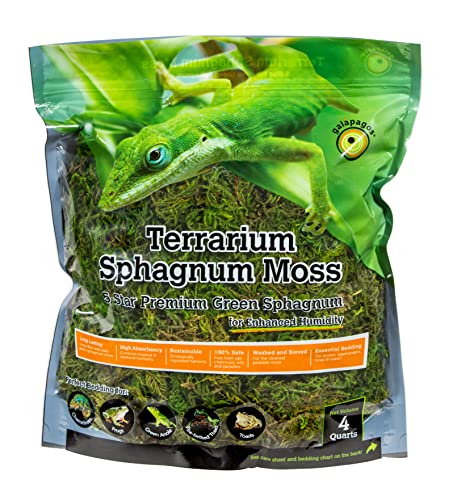
Galapagos Sphagnum Moss
Best moisture-retaining substrate for humid hides. Holds humidity without compacting, resists mold better than coconut fiber or peat, and a single bag lasts months. Squeeze until damp but not dripping before packing into the hide.
Check Price on AmazonZoo Med Digital Combo Thermometer Hygrometer
Reads temperature and humidity simultaneously from a single probe. Essential for verifying ambient enclosure humidity stays in the 30–40% target range and spotting when conditions are too dry and contributing to shedding problems.
Check Price on AmazonBearded Dragon Shedding Environment
Key temperature and humidity targets for healthy shedding
Ambient Humidity
30–40%
Normal enclosure range — do not raise this long-term
Humid Hide Interior
60–70%
Localized microclimate during shedding
Soak Water Temperature
85–90°F
Warm but not hot — use a thermometer
Basking Spot Surface
105–115°F
Essential for metabolic function and shed quality
Stuck Shed: How to Help Safely
Dysecdysis — retained or stuck shed — is more common in beardies than many keepers expect. The most problem-prone areas are toes, tail tip, around the ear openings, and the eyelid area. Identify a retained patch and act before it desiccates and tightens.
The rule above all others: never pull dry stuck shed. Old skin that has dried bonds to the new skin layer beneath. Pulling it tears the new skin, creates open wounds, and introduces infection risk. Always hydrate before any attempt at removal.
Step-by-step protocol for stuck shed:
-
Prepare a warm bath. Use a shallow plastic container or a clean sink basin. Water temperature: 85–90°F — use a thermometer. Depth: mid-belly, never covering the back or head. Bearded dragons can drown if water reaches the nostrils.
-
Soak for 10–15 minutes. Keep the water warm throughout. Your beardie will likely try to climb out — loosely drape a damp cloth over the container or gently hold your hand over it. Most dragons settle after a minute or two. Do not leave them unattended.
-
After soaking, wrap gently in a damp warm cloth. The retained humidity inside the cloth continues softening the stuck patches for another few minutes. Gently rub — do not scrub — the cloth over the stuck areas using circular motions.
-
Use a damp cotton swab on resistant patches. With gentle rolling motions — never pulling upward — work the cotton swab fibers under the edge of a stuck patch. The friction helps lift the loosened skin away from the new layer. This works particularly well on stuck toe caps.
-
If it does not release, stop and try again tomorrow. Never force. A second or third warm soak on consecutive days is far safer than forcing a patch off.
-
Stuck for more than 3 days of soaking? Call a reptile vet. This is especially urgent for toes, tail tips, and eye areas.
Pro Tip: A product like Zoo Med Repti Shedding Aid can be sprayed lightly on stuck patches immediately before and during a soak. It contains conditioners that help soften the old skin layer. Use it as a supplement to the soak, not a replacement.
Stuck Shed Removal Protocol
Follow these steps in order — never pull dry shed
Prepare a warm bath
1 minFill a shallow container with 85–90°F water — mid-belly depth only, never covering the head. Use a thermometer.
Soak for 10–15 minutes
10–15 minKeep water warm throughout. Loosely cover the container so your dragon can't escape. Do not leave unattended.
Wrap in a warm damp cloth
2–3 minAfter soaking, wrap your dragon gently in a damp warm cloth and rub softly with circular motions over stuck areas.
Cotton swab for stubborn patches
5 minGently roll a damp cotton swab under the edge of stuck shed on toes, tail tip, or body. Never pull or use tweezers.
Repeat or call a vet
If shed does not release, repeat the soak the next day. Still stuck after 3 days of soaking? See a reptile vet — especially for toes, tail tip, and eye areas.
Tip: After successful removal, address the root cause: increase bath frequency or add a humid hide with damp sphagnum moss.
Danger Zones: Toes, Tail, and Eye Openings
Three locations on a bearded dragon require particular vigilance after every shed. Do not assume the shed completed just because most patches are gone — check these areas individually.
Toes — The Tourniquet Problem
Bearded dragons have five toes per foot and twenty toes total. A ring of retained shed around a single toe acts as a tourniquet. As the shed dries it tightens, restricting blood flow. The toe turns dark, then purple, then begins to necrose. Without intervention, the toe dies and eventually drops off.
Check each toe individually after every shed. Stuck toe caps often look like the toe just has a slightly rougher tip than the others. Run a damp finger over each toe — you can feel the ridge of old skin. Soak immediately and use a cotton swab with rolling motions to work it free.
Toe loss in bearded dragons is preventable. Check every single toe after every single shed.
Tail Tip — Necrosis Risk
The tail narrows to a fine point and retained shed at the tip is extremely common. A ring of old skin dries, constricts, and the tip loses circulation. The tail tip darkens, eventually dying and detaching (necrosis).
Unlike leopard geckos, bearded dragons do not regenerate their tails. Tail tip loss is permanent. Check the tail tip after every shed. If you see a pale or slightly constricted ring of old skin, begin warm soaks that day.
Eye Openings and Ear Openings
Bearded dragons have distinct ear openings — visible as small oval indentations just behind the jaw hinge. These openings can trap shed that dries and accumulates. Similarly, the skin folds around the eyes and the ridge above the brow can retain patches.
For eyes: you can gently apply a cotton ball dampened with lukewarm water and hold it against the eye area for 30–60 seconds. Do not insert anything into the eye itself. If shed around the eye does not release after two soak attempts, see a reptile vet — the risk of accidental eye injury from amateur removal is not worth taking.
For ear openings: gently hold a soaked cloth over the ear area for several minutes. Do not probe inside the ear opening. If you see accumulated old shed deep inside, have a vet remove it.
Nutrition and Its Impact on Shedding
Shedding problems are not always about humidity. Poor nutrition — specifically deficiencies in calcium, vitamin A, and overall hydration — directly degrades the quality of every shed.
Calcium and D3. Calcium is the most commonly deficient mineral in captive bearded dragons. Deficiency causes metabolic bone disease, but it also degrades skin integrity and shed quality. Dust feeder insects and vegetables with Repashy Calcium Plus at most feedings. It is an all-in-one calcium, D3, and multivitamin trusted by professional breeders and ideal for the majority of feedings.
Vitamin A. Vitamin A deficiency in bearded dragons directly causes dysecdysis, swollen eyes, and rough, patchy skin between sheds. Signs include skin that looks perpetually dull even outside of pre-shed phases and shed that comes off in tiny flakes rather than coherent patches. Supplement with Arcadia EarthPro-A Multivitamin on alternating feedings — it contains preformed retinol rather than just beta-carotene, which bearded dragons convert inefficiently.
Hydration. Dehydrated bearded dragons shed poorly. The problem is that most beardies do not drink readily from standing water bowls — they simply do not recognize still water as drinkable in the same instinctive way that other reptiles do. Solutions:
- Offer regular warm baths (which beardies drink from while soaking)
- Lightly mist leafy greens before feeding — the moisture on the leaves is consumed naturally
- Occasionally mist your dragon's snout lightly and let it lick water droplets
A well-hydrated bearded dragon produces pliable, easy-to-remove shed. A chronically dehydrated one has brittle, adherent old skin that causes repeated dysecdysis.
Diet diversity. A dragon living on feeder crickets and iceberg lettuce lacks the nutritional complexity to support healthy skin. Rotate feeder insects (dubia roaches, black soldier fly larvae, hornworms) and offer a wide variety of leafy greens and vegetables. See our bearded dragon diet guide for a complete feeding rotation.
Pro Tip: If your dragon has had multiple consecutive sheds with retained patches despite correct humidity, address nutrition next. Pull the supplement rotation back to basics — calcium with D3 most feedings, a multivitamin with preformed vitamin A twice a week — and assess improvement over 2–3 shed cycles.

Repashy Calcium Plus
All-in-one calcium, D3, and multivitamin trusted by professional bearded dragon breeders. Dust feeder insects and vegetables at most feedings to maintain the calcium and vitamin levels that support healthy skin integrity and shed quality.
Check Price on Amazon
Arcadia EarthPro-A Multivitamin
Contains preformed retinol (vitamin A) rather than just beta-carotene. Bearded dragons convert beta-carotene inefficiently, making retinol-based supplementation significantly more effective for preventing vitamin A deficiency and the dysecdysis it causes. Alternate with calcium on feeding days.
Check Price on AmazonWhen to See a Reptile Vet
Most bearded dragon shedding issues resolve with warm baths and better humidity management. These are the situations that require professional help:
- Retained shed on toes or tail tip that does not release after 3 consecutive days of warm soaks. Circulation loss is permanent. Do not wait.
- Any shed retained around the eyes that does not release after 2 soak attempts. Eye injury risk is too high for amateur removal.
- Skin that looks red, inflamed, or ulcerated under a retained patch. This indicates infection beneath the shed.
- Entire shed fails to progress for more than 14 days after pre-shed signs appeared. This may indicate an underlying health issue (parasites, systemic illness, severe nutritional deficiency) that is interfering with the ecdysis cycle.
- Shed areas that look black or very dark blue. This indicates necrotic tissue — tissue death due to circulation loss. Emergency vet visit.
- Dragon is severely lethargic, not responding normally, or showing neurological signs during what you thought was a shed. Sometimes apparent pre-shed behavior masks a more serious illness. If your dragon is unresponsive or cannot hold its head up, this is a vet emergency.
Keeping a record of shed dates, duration, and any problem areas makes vet consultations significantly more productive. Bring photos of any retained patches.
Common Mistakes That Cause Shedding Problems
Pulling dry stuck shed. The single most damaging thing a keeper can do. Always soak first. If the shed won't release after soaking, try again tomorrow. Never use tweezers or fingernails on dry retained skin.
No humidity support whatsoever. A beardie in a bone-dry 20% ambient humidity enclosure with no bath access and no humid hide will have chronic shedding problems. The desert origin of bearded dragons does not mean they can successfully shed in a completely desiccating environment.
Wrong basking temperatures. Shedding is a metabolic process. Cold dragons shed slowly and incompletely. The basking spot surface should reach 105–115°F, with ambient warm side air at 85–95°F. Check your bearded dragon heating guide and verify with a temperature gun, not just the light packaging claim.
Wrong enclosure substrate. Fine particle substrates like sand can cling to loose shed and make removal harder, while also causing impaction risk if ingested during shedding (beardies sometimes mouth the enclosure floor). See our best bearded dragon substrate guide for substrate options that work with shedding rather than against it.
Handling during active shedding. Shedding skin is sensitive. Partially detached patches can be torn unevenly by handling, leaving behind adherent strips on tender new skin. Give your beardie space from the start of obvious pre-shed signs until at least 24 hours after the last patch drops.
Skipping toe and tail checks after each shed. It only takes one missed ring of stuck shed on a toe to start a tourniquet effect. Build the post-shed toe check into your routine — it takes 30 seconds and can save a digit.
No supplement rotation. A calcium-only supplementation schedule without a quality multivitamin leads to gradual vitamin A depletion over months, which progressively worsens shed quality. Alternate calcium with a multivitamin containing preformed vitamin A.
For enclosure setup that supports all of these conditions — correct temperatures, substrate, and hide access — see our guide to the best bearded dragon enclosures.
Recommended Gear
Zoo Med Repti Shedding Aid
A conditioning spray designed to soften retained shed. Spray lightly on stuck patches before and during a warm soak to help loosen adherent old skin without tearing the new layer beneath.
Check Price on AmazonZoo Med Repti Shelter 3 in 1 Cave
Community standard humid hide with a top-opening port for easy moisture addition. Filled with damp sphagnum moss and placed on the cool side of the enclosure, it gives your beardie on-demand humidity access during shedding.
Check Price on AmazonGalapagos Sphagnum Moss
Best moisture-retaining substrate for humid hides. Holds humidity without compacting, resists mold better than coconut fiber or peat, and a single bag lasts months. Squeeze until damp but not dripping before packing into the hide.
Check Price on AmazonZoo Med Digital Combo Thermometer Hygrometer
Reads temperature and humidity simultaneously from a single probe. Essential for verifying ambient enclosure humidity stays in the 30–40% target range and spotting when conditions are too dry and contributing to shedding problems.
Check Price on AmazonRepashy Calcium Plus
All-in-one calcium, D3, and multivitamin trusted by professional bearded dragon breeders. Dust feeder insects and vegetables at most feedings to maintain the calcium and vitamin levels that support healthy skin integrity and shed quality.
Check Price on AmazonArcadia EarthPro-A Multivitamin
Contains preformed retinol (vitamin A) rather than just beta-carotene. Bearded dragons convert beta-carotene inefficiently, making retinol-based supplementation significantly more effective for preventing vitamin A deficiency and the dysecdysis it causes. Alternate with calcium on feeding days.
Check Price on AmazonFrequently Asked Questions
Eye puffing is a completely normal and intentional pre-shed behavior unique to bearded dragons. Your dragon is increasing pressure behind its eyes to physically push the eyelid skin away from the new skin layer forming beneath — essentially a biological trick to loosen the facial skin before it starts peeling. It looks alarming the first time you see it, but if it occurs alongside dull, grayish skin coloration and you are approaching your dragon's typical shed window, it is entirely expected. It does not require any intervention.
References & Sources
Related Articles

Blue Tongue Skink Shedding Guide: One-Piece Sheds, Stuck Toe Emergencies & Subspecies Humidity
Blue tongue skinks shed in one piece like snakes — and stuck shed on toes can cause tissue death within days. Learn the complete BTS shedding guide here.

Corn Snake Shedding Guide: What's Normal, What to Watch, and When to Relax
Corn snake shedding only needs 40-60% humidity. Screen-top tanks work fine, stuck shed is rare. Here's what to expect and when to worry.

Bearded Dragon Diet & Feeding Guide (By Age)
Complete bearded dragon diet guide covering the insect-to-greens ratio by age, best feeder insects, safe vegetables, supplements, and common feeding mistakes.