
Corn Snake Heating Guide: Best Heat Sources, Temps & Thermostat Setup
Corn snakes need lower temps than tropical species -- here's exactly how to set up heating, choose the right heat source, and avoid the most common mistakes.

✓Recommended Gear
In this guide, we cover everything you need to know and recommend 6 essential products. Check prices and availability below.
TL;DR: Corn snakes need an 85-88°F warm side and 70-75°F cool side, best provided by an under-tank heat mat on a thermostat or a low-wattage basking bulb — room temperature alone is never sufficient for digestion or immune health. Always use a thermostat: an unregulated UTH can exceed 110°F and cause fatal thermal burns.
Corn snakes have a reputation for being easy to keep -- and they are -- but that reputation has also spread a dangerous myth: that room temperature is "close enough" for heating. It is not.
Corn snakes are temperate-climate animals from the eastern United States. They need a proper thermal gradient to digest, fight off infection, and thrive long-term. The good news? Their requirements are genuinely lower and more forgiving than tropical species like ball pythons, making proper setup straightforward if you know your targets.
This guide covers exactly what temperature gradient corn snakes need, which heat sources work best, how to choose a thermostat, and which mistakes the keeper community sees most often.
Corn Snake Temperature Requirements
Corn snakes need a thermal gradient with a basking spot of 85-90F, a warm side ambient of 80-85F, and a cool side of 72-78F. This gradient -- not a single uniform temperature -- is what allows your snake to thermoregulate correctly.
Here are the full targets at a glance:
| Zone | Temperature Target | Notes |
|---|---|---|
| Basking Surface | 85-90F (29-32C) | Measured with IR thermometer directly on the surface below heat source |
| Warm Side Ambient | 80-85F (27-29C) | Air temp at mid-height on warm side |
| Cool Side Ambient | 72-78F (22-26C) | Air temp at mid-height on cool side |
| Night Temperature | 65-70F (18-21C) | Safe drop for adults; juveniles under 1 year should not drop below 72F |
Corn snakes are significantly more tolerant than ball pythons -- they naturally experience seasonal temperature variation in the wild, including cool winter periods. But "more tolerant" does not mean "anything goes." Chronic temperatures below 70F ambient suppress immune function and digestive efficiency.
According to ReptiFiles' corn snake temperatures guide, the temperature gradient should be maintained throughout the day, allowing the snake to freely choose its preferred body temperature at any given moment.
Why the Cool Side Matters as Much as the Warm Side
Many keepers obsess over the warm side and ignore the cool side. This is backwards.
If your cool side is too warm -- above 80F -- your corn snake has no way to cool down. It will be stuck in a permanently warm environment with no ability to thermoregulate downward. Over time, chronic warmth without access to a cool zone is just as harmful as chronic cold.
Measure both sides. If you do not know your cool side temperature, you do not know your gradient.
How to Measure Temperature Accurately
Two tools are non-negotiable:
-
Infrared (IR) thermometer -- point at any surface for an instant reading. Essential for checking the basking spot surface. The Etekcity Infrared Thermometer is a widely used, affordable option that gives reliable readings across the enclosure.
-
Digital probe thermometers with dual probes -- place one probe on the warm side and one on the cool side for continuous monitoring. See our Best Reptile Thermometer roundup for the top-rated options.
Do not use adhesive tape thermometers or dial thermometers -- their accuracy is poor. Even a 5-10F error in reading is enough to push your snake outside safe parameters without you knowing.
Pro Tip: Let your heating setup run for 24 hours before placing your corn snake inside. Thermal equilibrium in a fully decorated enclosure takes time -- readings right after setup will not reflect steady-state temps.
Corn Snake Temperature Targets
Basking Surface
85-90°F
29-32°C (IR thermometer on surface)
Warm Side Ambient
80-85°F
27-29°C (air temp at mid-height)
Cool Side Ambient
72-78°F
22-26°C (air temp at mid-height)
Night Temperature
65-70°F
18-21°C (adults only; juveniles min 72°F)
Critical Minimum
70°F
Chronic temps below this suppress immune function
Best Heat Sources for Corn Snakes
The best primary heat sources for corn snakes are overhead options: Deep Heat Projectors (DHP), Ceramic Heat Emitters (CHE), and halogen basking bulbs. Under-tank heaters can only supplement these -- they cannot create the warm-side ambient gradient corn snakes need.
Here is the full comparison:
| Heat Source | Light Output | Heats Air | Basking Surface | Penetrates Tissue | 24/7 Safe | Best For |
|---|---|---|---|---|---|---|
| Deep Heat Projector (DHP) | None | Yes | Yes | Yes | Yes | Premium setups, most biologically complete |
| Ceramic Heat Emitter (CHE) | None | Yes | Moderate | No | Yes | All setups, budget-friendly |
| Halogen Basking Bulb | Yes | Yes | Yes | Moderate | Day only | Bioactive, natural photoperiod |
| Under-Tank Heater (UTH) | None | No | Belly only | No | Supplemental only | Not recommended as primary source |
| Red/Blue Night Bulbs | Low visible | Minimal | No | No | Avoid entirely | Corn snakes can see these wavelengths |
Deep Heat Projectors (DHP) -- Best Overall
The Arcadia Deep Heat Projector 50W is the most biologically complete heating option available for corn snakes. DHPs emit near-infrared radiation in the IR-A and IR-B spectrum -- the same wavelengths found in natural sunlight -- which penetrate skin and muscle tissue rather than just warming the air or surface around the snake.
This matters because wild corn snakes bask in exposed areas with direct sunlight, receiving solar radiation that warms their bodies from within. Standard CHEs and heat mats cannot replicate this effect.
Why keepers choose DHPs:
- No light output -- safe for 24/7 use without disrupting day/night cycle
- Runs at lower surface temperatures than equivalent CHEs, reducing desiccation risk
- Community data reports improved feeding response and activity levels
- Long lifespan when paired with a proportional thermostat
Recommended wattage: A 50W DHP handles most adult corn snake enclosures (4x2x2 ft or similar). Because DHPs are unusually efficient at tissue warming, resist the urge to size up.
Dome requirement: DHPs require a deep-dome fixture (standard shallow domes cause uneven heat concentration). Use a fixture rated for the DHP's wattage.
Ceramic Heat Emitters (CHE) -- Best Budget Option
Ceramic heat emitters are the most common overhead heat source in corn snake keeping -- affordable, reliable, and widely available.
Fluker's Ceramic Heat Emitter 60W is a solid mid-range option for a 40-gallon or larger enclosure. CHEs screw into a standard dome lamp base and produce pure heat with zero visible light, making them fully compatible with 24/7 use.
How they work: CHEs emit far-infrared radiation (IR-C, longwave) that heats air and surfaces but does not penetrate tissue. The snake absorbs heat conductively by resting in the warm air or on a warm surface -- less direct than a DHP, but fully effective for thermoregulation.
Wattage guide for corn snakes:
- 4x2x2 ft enclosure: 60-75W CHE
- 40-gallon tank: 50-60W CHE
- 20-gallon tank: 40-50W CHE
Always size for your enclosure and let the thermostat do the fine adjustment. Never leave a CHE unthermostated -- surface temps can exceed 120F.
Pro Tip: CHEs on on/off thermostats fail in 2-4 months due to thermal shock from full on/off cycling. Pair your CHE with a proportional thermostat and it will last 12-18 months. The thermostat upgrade pays for itself in saved bulbs within the first year.
Halogen Basking Bulbs -- Best for Natural Setups
Halogen flood bulbs serve double duty: they produce visible daylight and near-infrared warmth simultaneously. For keepers who want a natural day/night cycle or are building a bioactive enclosure, halogen is the most natural-looking daytime heat source.
The Philips 50W PAR38 Halogen Flood Bulb is a hardware-store option that is functionally identical to reptile-branded basking bulbs that cost three times more. The filament technology is the same -- the only difference is the packaging.
How to use halogen correctly:
- Connect to a dimmer/proportional thermostat (not on/off -- flickering disrupts ambiance and stresses snakes)
- Put on a timer to simulate a 12/12 or 14/10 photoperiod
- Pair with a secondary 24/7 heat source (CHE or DHP) if nighttime temps drop below 65F
- Do not use halogen alone -- corn snakes need consistent overnight ambient temps
Wattage: 50W PAR38 is appropriate for most single-enclosure setups. Larger enclosures may need 75W, but always start lower and adjust up via thermostat.
Under-Tank Heaters (UTH) -- Supplemental Only
Under-tank heaters remain popular with corn snake keepers, especially those who grew up with older care guides. The research consensus has shifted: UTHs should not be the only heat source.
Why they are insufficient as a primary source:
Corn snakes thermoregulate using ambient air temperature, not just belly contact. A UTH may bring the floor surface to 85F, but air temperature six inches above it may only reach 75-78F -- not enough for proper thermoregulation. The snake spends most of its time moving through air, not pressing against the floor.
The additional risk: unthermostated UTHs can reach surface temperatures of 120-130F, causing thermal burns if the snake cannot escape.
If you use the Zoo Med ReptiTherm Under Tank Heater: Only as supplemental belly heat, always on a proportional thermostat set to 80-82F surface target, and always alongside an overhead primary source.
What to Avoid: Red and Blue "Night" Bulbs
Old care guides recommended red or blue bulbs for nighttime heating because they were believed to be invisible to snakes. Community data and reptile vision research have disproved this for most colubrid species.
Corn snakes can perceive red and blue light. These bulbs disrupt their rest cycle. Skip them entirely. If nighttime heating is needed, use a CHE or DHP on a thermostat -- both produce zero visible light.
For a full comparison of nighttime-safe heating options, see our Best Night Heat for Reptiles guide.
Pro Tip: If your room temperature stays above 65F year-round, you may not need any nighttime heat for an adult corn snake. Simply turn off any halogen daytime bulbs and let the enclosure cool naturally. Corn snakes are adapted to cooler nights.
Arcadia Deep Heat Projector 50W
Best overall heat source for corn snakes -- emits tissue-penetrating IR-A/B radiation like natural sunlight, runs cooler than CHEs, and is safe for 24/7 use on a thermostat
Check Price on AmazonFluker's Ceramic Heat Emitter 60W
Affordable and reliable 24/7 CHE option for 40-gallon corn snake enclosures -- produces no light so it does not disrupt the day/night cycle
Check Price on AmazonPhilips 50W PAR38 Halogen Flood Bulb
Hardware-store halogen bulb that produces near-infrared warmth and visible daytime light -- functionally identical to reptile-branded basking bulbs at a fraction of the cost
Check Price on AmazonZoo Med ReptiTherm Under Tank Heater
Only acceptable as a supplemental belly-heat source paired with a proportional thermostat -- never as a primary heat source for corn snakes
Check Price on AmazonHeat Source Overview
What you need to know
Deep Heat Projectors penetrate skin and muscle tissue — most biologically complete option
Ceramic Heat Emitters are affordable, reliable, and suitable for all setups — pair with proportional thermostat to avoid burnout
Halogen bulbs provide natural visible daylight + warmth — ideal for bioactive or naturalistic enclosures
Under-Tank Heaters cannot create the warm-side ambient gradient corn snakes need — use only as supplemental heat
Red/Blue night bulbs should be avoided entirely — corn snakes can see these wavelengths and will be stressed
Thermostat Types for Corn Snakes
Every heat source -- without exception -- must be connected to a thermostat. An uncontrolled heat source in a sealed enclosure is a hazard to your snake and a fire risk.
Three types of thermostats exist. Choosing the right one for your heat source matters significantly for both temperature stability and equipment lifespan.
On/Off Thermostats
The most basic option. The thermostat monitors a probe and cuts power when the target temperature is reached, then restores full power when it drops below the threshold.
- Cost: $15-30
- Temperature stability: +/-3-5F (noticeable swings)
- Bulb impact: Poor -- thermal shock from cycling shortens CHE lifespan to 2-4 months
- Best paired with: Heat mats and UTHs only
- Not recommended for: CHEs or DHPs
On/off thermostats are adequate for UTHs because heat mats tolerate thermal cycling better than glass-element bulbs. For overhead heat sources, the repeated full on/off cycling creates thermal shock that cracks ceramic elements prematurely.
Proportional Thermostats -- Recommended
Proportional thermostats modulate power output continuously. As the enclosure approaches the target temperature, the thermostat reduces power to a percentage (e.g., 80% -> 50% -> 20%) rather than switching off entirely. The result: rock-stable temperatures and dramatically extended bulb life.
- Cost: $40-80
- Temperature stability: +/-1-2F
- Bulb impact: Good -- proportional power prevents thermal shock, 12-18 month CHE lifespan
- Best paired with: CHEs, DHPs, and halogen bulbs
The Inkbird ITC-306A Proportional Thermostat is a community-recommended mid-range option with a clear digital display, dual probe inputs, and proportional (PID) control. At under $50, it is the most cost-effective upgrade for corn snake keepers stepping up from on/off thermostats.
Pro Tip: Place your thermostat probe at the snake's resting height on the warm side -- not on the basking surface directly under the lamp. You are regulating warm-side ambient air temperature. The basking surface will naturally run hotter than the probe reading -- this is correct behavior.
Pulse Proportional Thermostats
Pulse thermostats deliver power in rapid, short pulses rather than continuous reduced power. The duty cycle (percentage of time the heat source is on per second) controls average output. This is the gold standard for resistive heating elements.
- Cost: $60-120
- Temperature stability: +/-0.5-1F
- Bulb impact: Excellent -- minimal thermal stress
- Best paired with: CHEs, UTHs, radiant heat panels
- Not suitable for: Halogen bulbs (visible pulse flicker)
For single-enclosure corn snake setups, a proportional thermostat is usually sufficient. Pulse thermostats shine in larger collection setups where temperature stability is critical across multiple enclosures.
Thermostat Type vs Heat Source Quick Reference
| Thermostat Type | Price | Stability | Best Paired With |
|---|---|---|---|
| On/Off | $15-30 | +/-3-5F | UTHs and heat mats only |
| Proportional | $40-80 | +/-1-2F | CHE, DHP, Halogen |
| Pulse Proportional | $60-120 | +/-0.5-1F | CHE, UTH, Radiant Heat Panel |
Setting Up Your Corn Snake Heat Gradient
A correct corn snake gradient has a defined warm side, a defined cool side, and a thermostat probe positioned to regulate ambient air -- not just the basking surface. Here is the step-by-step setup process.
Step-by-Step Setup
-
Set up the enclosure before adding heat. Substrate, hides, water bowl, and any decor should be in place first. Furnished enclosures behave differently thermally than empty ones.
-
Mount the heat source on one side only -- never centered. Centering eliminates the gradient. The goal is warm on one end, cool on the other. Position the heat source above the warm hide.
-
Place the thermostat probe 6 inches below the heat source at the height your snake will spend most of its time -- typically mid-height on the side wall. This controls warm-side ambient air, not just the surface directly under the lamp.
-
Set the thermostat to your warm-side ambient target: 80-82F. The basking surface will naturally read hotter than this (85-90F) -- that is the correct behavior. You are not trying to set the thermostat to the basking surface temperature.
-
Run the setup for 24 hours with no snake inside. Take three measurements: basking surface, warm-side ambient, and cool-side ambient. All three must be within range simultaneously before the snake enters.
-
Verify with an IR thermometer. Point it at the basking surface -- the spot directly under (or closest to) the heat source. This should read 85-90F. If it is above 90F, lower the thermostat set point. If it is below 85F, raise it.
Recommended Equipment Placement (4x2x2 Enclosure)
- Heat source: overhead, positioned over the left 1/3 of enclosure
- Thermostat probe: 6 inches below heat source, secured to side wall at mid-height
- Warm hide: directly under or adjacent to heat source
- Cool hide: opposite end, fully shaded
- Water bowl: cool side (reduces evaporation and prevents bacteria from warm-water stagnation)
For enclosure size recommendations and product picks, see our Best Corn Snake Enclosures guide. Your choice of enclosure directly affects heating strategy.
For humidity tracking, see our Best Reptile Hygrometer guide -- corn snakes need 65-75% humidity, and your choice of heat source affects humidity management (CHEs dry air faster than DHPs).
Day/Night Temperature Cycling
Corn snakes are naturally temperate-climate animals. In the wild, they experience significant temperature variation between day and night -- sometimes dropping into the low 60sF overnight in autumn. Replicating a modest nighttime drop is beneficial and not difficult to achieve.
When You Need Nighttime Heating
- Room temperature drops below 65F at night -- you need a nighttime heat source
- Juvenile corn snakes under 1 year old -- keep overnight temps above 72F
- Room stays above 65F -- no additional heat needed; turn off halogen daytime bulbs and let the enclosure cool naturally
Nighttime Temperature Options
| Option | Light Output | Notes |
|---|---|---|
| CHE (left on 24/7) | None | Best option -- thermostat holds ambient temp without disturbing sleep |
| DHP (left on 24/7) | None | Same benefit as CHE, with added tissue-penetrating IR |
| Natural room-temp drop | None | Fine for adults if room stays above 65F -- natural and beneficial |
| Red or blue night bulbs | Visible | Avoid -- corn snakes can perceive these wavelengths |
One underappreciated benefit of allowing a nighttime temperature drop: it more closely matches natural seasonal patterns and is associated with better long-term metabolic health in captive corn snakes, per keeper community experience.
For breeding purposes, a more pronounced winter cooling period (brumation) is used to trigger reproductive cycling. This is optional for pet corn snakes not intended for breeding -- it is not required for health. See our Corn Snake Care Guide for full details on brumation.
Common Heating Mistakes
1. Relying on Room Temperature Alone
Corn snakes are hardier than ball pythons, but they are not houseplant-hardy. A room kept at 72F does not provide a thermal gradient -- it provides a uniform temperature that neither warms nor cools the snake appropriately. Community data consistently links room-temp-only keeping to sluggish metabolism, feeding refusal, and suppressed immune function over time.
2. Not Thermostating the Heat Source
Every heat source must be on a thermostat. An uncontrolled 60W CHE in a 20-gallon enclosure can push temperatures above 110F on a warm summer day. Thermal burns and heat stroke are both possible -- and both are vet emergencies. Never run a heat source without a thermostat.
If you notice signs of overheating or stress, consult our Reptile Illness Signs guide and contact a reptile veterinarian immediately.
3. Using Red or Blue Night Bulbs
This is the most persistent myth in corn snake keeping. Red and blue night bulbs are not invisible to corn snakes. They disrupt rest and circadian rhythm. Use a CHE or DHP for nighttime heating -- both produce zero visible light.
4. Placing the Thermostat Probe on the Basking Surface
If the probe is on the basking surface, the thermostat is controlling that one hotspot -- not the ambient gradient. The basking surface should naturally run hotter than the probe reading. Control warm-side ambient air (target: 80-82F), and the basking surface will follow at 85-90F.
5. Only Having One Hide
Every corn snake enclosure needs two hides -- one on the warm side, one on the cool side. A snake that must choose between feeling safe (in its only hide) and regulating its temperature will not thermoregulate correctly. This is a setup error that mimics a heating problem in its symptoms.
6. Skipping the IR Thermometer
Analog dial thermometers and adhesive strip thermometers are notoriously inaccurate -- sometimes by 10-15F. You cannot manage a thermal gradient you cannot measure. The Etekcity Infrared Thermometer costs under $20 and gives instant, accurate surface readings anywhere in the enclosure. It is not optional equipment.
Pro Tip: Point your IR thermometer at the basking spot weekly, especially as seasons change. Room temperature shifts in winter and summer can push your enclosure temperatures several degrees off target without you noticing. Seasonal recalibration of your thermostat set point is normal maintenance.
7. Using a Heat Mat as the Only Heat Source
This mistake is extremely common with new corn snake keepers because older care guides recommended heat mats. A heat mat creates belly warmth but cannot create warm-side ambient air temperature. The snake's thermoregulation depends on ambient air, not just floor contact. Always pair any UTH with an overhead primary heat source.
According to The BioDude corn snake care guide, overhead halogen basking bulbs connected to a dimming thermostat are the recommended primary heating approach for corn snakes -- not heat mats.
8. Ignoring Seasonal Temperature Variation
A setup calibrated in summer may run cold in winter when your home's HVAC system keeps rooms at 65-68F. Check warm-side ambient and cool-side temps at each season change and adjust thermostat set points accordingly. This is normal -- it is not a sign your equipment is failing.
For a full look at corn snake care beyond heating -- enclosure, substrate, feeding, and health -- see our complete Corn Snake Care Guide.
For a direct comparison with ball python heating requirements, see our Ball Python Heating Guide. Corn snakes run 5-10F cooler across every zone and are considerably more forgiving -- a useful baseline for keepers who have experience with ball pythons.
This article is for informational purposes only and is not a substitute for professional veterinary advice. Always consult a qualified reptile veterinarian for health concerns.
Recommended Gear
Arcadia Deep Heat Projector 50W
Best overall heat source for corn snakes -- emits tissue-penetrating IR-A/B radiation like natural sunlight, runs cooler than CHEs, and is safe for 24/7 use on a thermostat
Check Price on Amazon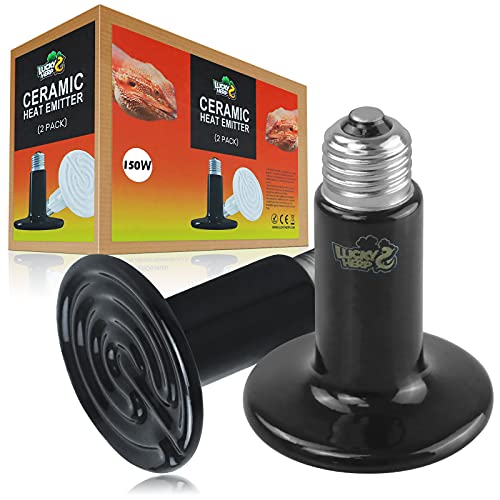
Fluker's Ceramic Heat Emitter 60W
Affordable and reliable 24/7 CHE option for 40-gallon corn snake enclosures -- produces no light so it does not disrupt the day/night cycle
Check Price on Amazon
Philips 50W PAR38 Halogen Flood Bulb
Hardware-store halogen bulb that produces near-infrared warmth and visible daytime light -- functionally identical to reptile-branded basking bulbs at a fraction of the cost
Check Price on Amazon
Inkbird ITC-306A Proportional Thermostat
Proportional control keeps temperatures stable within +/-1F and dramatically extends bulb lifespan -- the most cost-effective thermostat upgrade for corn snake keepers
Check Price on Amazon
Etekcity Infrared Thermometer
Essential point-and-shoot tool for verifying surface temperatures in the basking zone -- no corn snake setup is complete without one
Check Price on Amazon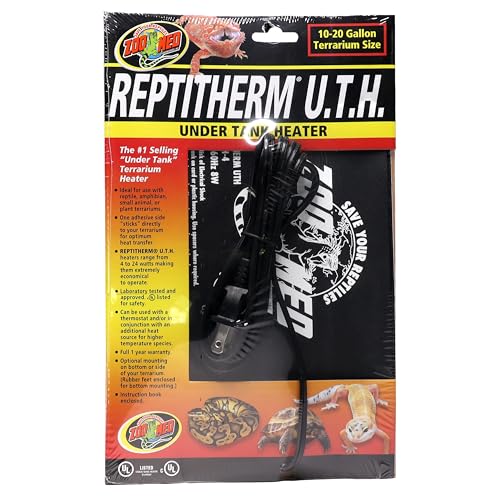
Zoo Med ReptiTherm Under Tank Heater
Only acceptable as a supplemental belly-heat source paired with a proportional thermostat -- never as a primary heat source for corn snakes
Check Price on AmazonFrequently Asked Questions
Corn snakes need a thermal gradient: a basking surface of 85-90F (29-32C), a warm side ambient of 80-85F (27-29C), and a cool side of 72-78F (22-26C). Nighttime temperatures can safely drop to 65-70F for adults. Juveniles under one year old should not drop below 72F at night. These temperatures are notably lower than tropical species like ball pythons, which is one reason corn snakes are considered beginner-friendly.
References & Sources
Related Articles

Veiled Chameleon Heating and Lighting Guide: The Three-Light Setup Explained
Veiled chameleons need three separate light sources and a nightly drop to 65°F. Learn how to set up the full lighting stack for your screen cage today.

Blue Tongue Skink Heating Guide: Temperatures, Subspecies & Real Setup Advice
Blue tongue skink heating guide: Indonesian vs Northern BTS temperature differences, Deep Heat Projectors vs halogen bulbs, and 4x2x2 setup walkthrough.

Bearded Dragon Heating & Thermostat Guide
Get bearded dragon heating right: basking temps, halogen bulb setup, thermostat types, and why heat mats are wrong for BDs. Full setup guide.