
Blue Tongue Skink Heating Guide: Temperatures, Subspecies & Real Setup Advice
Blue tongue skink heating guide: Indonesian vs Northern BTS temperature differences, Deep Heat Projectors vs halogen bulbs, and 4x2x2 setup walkthrough.

✓Recommended Gear
In this guide, we cover everything you need to know and recommend 6 essential products. Check prices and availability below.
TL;DR: Blue tongue skinks need a surface basking temp of 105-115°F (measured by temp gun) depending on subspecies — Northerns need 110-115°F, Indonesians 105-110°F — with a cool side of 70-75°F. Use a halogen or deep heat projector on a thermostat; room-temperature assumptions and cheap ambient thermometers are the most common reasons for sluggish digestion and poor health.
Your blue tongue skink basks for thirty minutes, retreats to its cool hide, then basks again. But it looks sluggish. It eats slowly. Its digestion seems off. You check the basking bulb — it's on. So what is the problem?
Chances are the surface temperature is lower than you think, or the cool side is warmer than it should be, or — most commonly — you are heating an Indonesian skink the same way you would heat a Northern. Those are three different animals with three different thermal needs, and conflating them is the most expensive mistake a blue tongue skink keeper can make.
Blue tongue skinks require the widest thermal gradient of any commonly kept pet lizard. Their large, heavy bodies absorb and release heat differently from slim geckos or even bearded dragons. And unlike most reptiles in the pet trade, subspecies variation in temperature requirements is dramatic enough to change which heater you buy, what thermostat you set, and how your whole enclosure is configured.
This guide covers everything: why body mass matters, the subspecies temperature table you need before you buy a single product, a head-to-head comparison of Deep Heat Projectors and basking bulbs specifically for skinks, and a real-world walkthrough of heating a standard 4×2×2 ft enclosure from scratch.
Subspecies Matter: Indonesian vs Northern vs Eastern Temperature Needs
The single biggest mistake in blue tongue skink heating is treating all subspecies the same. The Tiliqua genus spans a continent — from the tropical rainforests of Sulawesi and the Maluku Islands to the temperate woodlands of southeastern Australia — and the temperature requirements reflect that geography directly.
Before setting up a single heater, identify your subspecies. Purchasing the wrong thermostat setpoints for your animal will result in chronic sub-optimal thermoregulation that is difficult to diagnose and easy to overlook.
Temperature Targets by Subspecies
| Subspecies | Basking Surface | Warm Ambient | Cool Side | Nighttime | Humidity |
|---|---|---|---|---|---|
| Northern BTS (T. s. intermedia) | 100–110°F | 80–90°F | 75–80°F | 65–70°F | 40–60% |
| Eastern BTS (T. s. scincoides) | 95–105°F | 78–88°F | 72–78°F | 60–68°F | 40–55% |
| Indonesian / Halmahera (T. gigas) | 90–100°F | 80–88°F | 75–82°F | 72–78°F | 60–80% |
| Merauke (T. gigas evanescens) | 95–105°F | 80–88°F | 75–80°F | 70–75°F | 60–75% |
| Irian Jaya / Tanimbar | 95–105°F | 80–88°F | 74–80°F | 68–74°F | 50–70% |
The key differences are not just in basking temperatures — they are in the nighttime floor temperature and cool side baseline.
A Northern BTS tolerates nighttime temperatures down to 65°F and has evolved to experience genuine cold nights in the Australian outback. An Indonesian BTS should never drop below 72°F at night — these animals come from tropical environments where temperature variation across 24 hours is modest. Dropping an Indonesian skink to 65°F at night is the thermal equivalent of giving an Australian reptile a tropical humidity spike: technically survivable short-term, chronically damaging long-term.
Pro Tip: If you purchased your blue tongue skink from a breeder, ask specifically for the subspecies documentation. "Blue tongue skink" at a pet store often means Northern or Eastern — the most commonly bred — but Indonesian animals are increasingly common and need noticeably different management. When in doubt, check with bluetongueskinks.net for subspecies identification help.
Why Indonesian BTS Need Higher Ambient Temperatures
Indonesian blue tongue skinks originate from humid tropical forests where temperatures rarely dip below 75°F (24°C) even at night. Their enzyme cascades, immune responses, and digestive chemistry evolved to operate within a narrower, warmer temperature band than Australian subspecies.
The practical consequence: if you set your Indonesian BTS enclosure to "cool at night" the way BD and Northern BTS keepers do, you are likely to see:
- Chronic lethargy outside basking periods
- Slow or incomplete digestion (food sitting in a cool gut)
- Elevated respiratory infection risk
- Reduced immune response and vulnerability to secondary infections
For Indonesian BTS, the nighttime ambient temperature floor is not optional — it is a physiological requirement. A second thermostat controlling a ceramic heat emitter (CHE) for overnight ambient maintenance is not optional for Indonesian subspecies owners whose room temperature drops below 75°F.
Northern vs Indonesian Temperature Needs
Side-by-side comparison
| Feature | Northern BTS (T. s. intermedia) | Indonesian BTS (T. gigas) |
|---|---|---|
| Basking Surface Temp | 100–110°F | 90–100°F |
| Nighttime Floor (Critical) | 65–70°F (tolerates cold) | ★72–78°F (requires warmth) |
| Cool Side | 75–80°F | 75–82°F |
| Humidity | 40–60% | ★60–80% |
Our Take: Indonesian BTS require year-round warm nights (never below 72°F) and higher humidity due to tropical origin; Northerns evolved to survive genuine cold.
The Large-Body Heat Problem: Why Skinks Warm Up Slowly
Blue tongue skinks weigh between 300 and 700 grams as adults — up to 15 times the mass of a leopard gecko. That body mass fundamentally changes how they interact with heat, and it changes what your heating setup needs to accomplish.
Thermal Mass and Heat Penetration
A 50g leopard gecko sitting under a halogen bulb reaches its target body temperature in minutes. The heat energy from the bulb penetrates the animal's thin muscle layers and warms its core rapidly.
A 500g blue tongue skink does not work this way. The skink's thick, dense body is a thermal mass — it absorbs heat slowly and loses it slowly. A skink basking for 20 minutes has likely only raised its core body temperature by a few degrees, even if its dorsal surface reads warm to the touch.
This is why blue tongue skinks bask in long, sustained sessions — often 45–90 minutes at a stretch — rather than the brief dashes a gecko might take. They need extended exposure to high-quality radiant heat to drive their core temperature to the 88–95°F range that optimizes enzyme activity for digestion.
Pro Tip: If your BTS seems perpetually hungry or its food takes unusually long to digest, do not immediately change the diet — check basking quality first. A skink that cannot reach proper core temperature will have impaired digestive enzyme function regardless of what it eats.
What This Means for Your Setup
Because large-body thermal mass requires sustained, penetrating heat to warm the core effectively, the quality of infrared radiation matters more for BTS than for smaller species.
There are two relevant infrared wavelengths:
- Infrared-A (IR-A) and Infrared-B (IR-B) — Penetrating wavelengths. They pass through skin and superficial tissue to warm underlying muscle and organs. This is the same wavelength profile as solar radiation. It is what actually heats the animal's core.
- Infrared-C (IR-C) — Surface wavelength. It warms the skin surface and immediately adjacent tissue but does not penetrate deeply. This is what ceramic heat emitters and heat mats produce.
For a 500g skink, IR-C alone is inadequate as a primary heat source. The animal's surface warms but its core remains under-temperature — it basks longer, consumes more energy trying to thermoregulate, and still shows signs of a cold animal despite the enclosure feeling warm.
For a 50g gecko, the distinction matters less because there is so little mass between "surface" and "core."
Bottom line: blue tongue skinks need IR-A and IR-B sources. That means halogen basking bulbs, Deep Heat Projectors, or both.
Why Blue Tongue Skinks Need Special Heating
What you need to know
Blue tongue skinks weigh 300–700g (up to 15× heavier than leopard geckos), creating thermal mass that warms and cools slowly
They require sustained basking of 45–90 minutes to raise core body temperature, unlike small species that warm quickly
They need penetrating infrared (IR-A/B) sources like halogen bulbs; surface heat (IR-C) from ceramic emitters alone is inadequate
Poor basking quality causes chronic cool-gut digestion problems and lethargy despite the bulb being on
Deep Heat Projectors vs Basking Bulbs for BTS
Neither is wrong — but they do different things, and BTS benefit from a setup that uses both. Here is the complete breakdown.
Basking Bulb (Halogen Flood)
A halogen flood bulb (PAR38 or BR30 format, 75–150W) mounted directly above the basking zone emits visible light, IR-A, and IR-B simultaneously. It provides both the photonic basking cue (your skink can see the bright spot and orient toward it) and the penetrating infrared radiation that drives core warming.
Advantages for BTS:
- Creates a visually distinct basking zone the skink actively seeks
- High wattage options available for large enclosures
- Inexpensive to replace
- Well understood — decades of reptile keeper experience with this format
Disadvantages for BTS:
- Daytime use only (you need a separate night heat solution)
- Heats a focused spot; ambient enclosure temperature depends on enclosure size
- In very large 4×2×2 enclosures, a single halogen may not provide sufficient warm-side ambient temperatures
Deep Heat Projector (DHP)
The Arcadia Deep Heat Projector 80W emits IR-A and IR-B with zero visible light output. It can run 24 hours a day without disrupting the day/night cycle. It is increasingly popular in the BTS community specifically because of the large-body thermal mass problem — the DHP's penetrating wavelengths actively warm the skink's core even without direct dorsal orientation to a visible basking source.
Advantages for BTS:
- IR-A + IR-B penetrates large body mass more effectively than surface heating
- Can run overnight, maintaining warm ambient temperatures for Indonesian subspecies
- No visible light — no disruption to circadian rhythm
- Reduces the burden on the halogen bulb for total enclosure thermal management
Disadvantages for BTS:
- No visible basking cue — some skinks are less motivated to position themselves under a DHP than under a visible basking bulb
- Higher upfront cost (~$60–$80)
- Must be paired with a dimming thermostat; on/off cycling damages the element
Head-to-Head Comparison
| Feature | Halogen Basking Bulb | Deep Heat Projector 80W |
|---|---|---|
| IR type | IR-A + IR-B | IR-A + IR-B |
| Visible light | Yes — daytime basking cue | No |
| 24-hour operation | No | Yes |
| Thermostat requirement | Dimmer (PWM) | Dimmer (PWM) |
| Best for | Primary daytime basking heat | Overnight ambient + thermal supplement |
| Core warming for large BTS | Good | Excellent |
| Cost (unit) | $10–$25 | $60–$80 |
| Recommended? | Yes — essential | Yes — especially for Indonesian subs |
The Recommended Setup for Most BTS
Daytime: Halogen flood bulb on a dimming thermostat, probe on basking surface, set to species-appropriate basking temperature.
Overnight (Northern/Eastern): Either nothing (if room stays above 65°F) or CHE on a separate on/off thermostat set to 65–68°F floor.
Overnight (Indonesian/Merauke): DHP on a dimming thermostat set to 75°F ambient floor — this is the most important difference for tropical subspecies owners.
For detailed thermostat types and selection, our bearded dragon heating guide covers the dimmer vs. on/off vs. pulse thermostat question in depth — the same principles apply to BTS.
Pro Tip: The **[Herpstat 2 Proportional Thermostat](https://www.amazon.com/dp/B0CP3VW5NC?tag=krawlo-20 has two independent outlets — one for the daytime basking halogen, one for the overnight ambient heater (CHE or DHP). This single unit replaces two separate thermostats and provides proportional dimming for both. It is the most elegant solution for a BTS setup and particularly valuable for Indonesian subspecies requiring tight overnight temperature control.
Arcadia Deep Heat Projector 80W
Emits IR-A and IR-B for deep tissue warming with zero visible light — essential for large-bodied BTS and the only night-appropriate radiant heater for Indonesian subspecies
Check Price on Amazon
Herpstat 2 Proportional Thermostat
Two independent dimming outlets let you control the daytime basking bulb and overnight ambient heater separately from one unit — the most complete solution for a full BTS thermal setup
Check Price on AmazonHeating a 4×2×2 Enclosure: Real-World Setup
The 4×2×2 ft (120×60×60 cm) enclosure is the community standard for adult blue tongue skinks, and it creates specific heating challenges that a 40-gallon tank does not. The volume is large, thermal stratification occurs naturally, and achieving a true gradient requires deliberate placement.
For enclosure selection guidance, see our best blue tongue skink enclosures guide.
The Thermal Challenge of a 4-Foot Enclosure
In a 40-gallon tank (36×18×18 in), a single well-placed halogen bulb can heat the basking zone and influence ambient temperatures throughout. In a 4×2×2, the volume is more than double the 40-gallon. A single 100W halogen can maintain a hot basking spot without materially raising the warm-side ambient temperature — which is actually what you want, but it means you need to think about the whole thermal picture, not just the basking spot.
Recommended Equipment List for 4×2×2
- Primary Basking Heat: 100–150W halogen flood (PAR38) in a dome reflector, positioned at the warm end, 10–12 inches above basking surface
- Supplemental Ambient / Night Heat: Arcadia DHP 80W (or 100W CHE as budget alternative), positioned at the warm end upper corner
- Thermostat 1 (basking): Herpstat 2 outlet 1, probe on basking surface — set to species temp (see table above)
- Thermostat 2 (ambient floor): Herpstat 2 outlet 2, probe at mid-enclosure warm-side air — set to 68–72°F (Northern) or 75–78°F (Indonesian)
- Measurement: Infrared thermometer gun for weekly surface checks; Govee WiFi probe for continuous monitoring
The **[Govee WiFi Thermometer/Hygrometer](https://www.amazon.com/dp/B0B5KF2J34?tag=krawlo-20 is an excellent continuous monitoring tool — it logs temperature and humidity data to a phone app, sends alerts if temperatures go out of range, and lets you verify the thermal gradient over 24 hours rather than relying on a single moment measurement. Particularly valuable during the first two weeks of a new setup.
Basking Zone Construction
The basking platform for a BTS should be wide, flat, and dense — the thermal mass of the surface itself matters. Large flat slate tiles (available at home improvement stores) absorb heat from the halogen above and hold it between basking bouts, creating a warm surface even when the light output is slightly reduced by the thermostat. The slate absorbs IR-A and re-radiates the energy as gentle warmth through the animal's belly and limbs during basking sessions.
Position the basking tile so the skink's body, when lying fully extended, receives consistent heat across the entire dorsal surface. BTS are long animals — a 12–18 inch flat basking zone is appropriate for a full-grown Northern or Indonesian adult.
The Thermal Gradient Check
Before introducing your skink, map the enclosure temperatures with an IR gun and a probe thermometer:
- Basking surface center — target: species-appropriate basking temp (see table)
- Basking surface edge — should be 5–10°F cooler than center (natural gradient)
- Warm-side floor — target: 80–85°F for most subspecies
- Enclosure midpoint floor — target: 78–82°F
- Cool hide interior — target: 72–78°F (Northern/Eastern) or 75–80°F (Indonesian)
- Cool side wall — should be within 2°F of cool hide
If the cool side reads above 82°F, your enclosure lacks sufficient gradient. Solutions: increase ventilation, relocate the enclosure away from room heat sources, or reduce ambient heater output. A skink that cannot find a genuinely cool zone cannot thermoregulate — it will overheat even if the basking temperature is perfect.
Pro Tip: Check temperatures at three different heights in the warm zone: floor, mid-level, and upper level. In a 4×2×2, thermal stratification means the upper warm end can be 8–12°F warmer than the floor. If your skink spends time climbing to the upper warm end during the day, it may be seeking more heat — or your floor temperatures may be too cool.
Dome Fixture and Bulb Mounting
The **[Zoo Med Combo Dome](https://www.amazon.com/dp/B005KPMCPG?tag=krawlo-20 (dual-bulb fixture) allows simultaneous mounting of the halogen basking bulb and a CHE or DHP in a single overhead fixture. For a 4×2×2 screen-top enclosure, this is a practical solution that reduces cable clutter and ensures both heat sources are correctly positioned over the warm zone.
Mount the fixture so the bulb center is directly above the basking platform. Adjust height until surface temperature reads correctly — do not assume wattage determines temperature. The same 100W halogen mounted 8 inches above the surface vs. 14 inches above the surface can produce a 20°F difference in basking surface temperature. Always verify with an IR gun after mounting.
Measuring Surface Temperature Correctly
The most common measurement error: using a probe thermometer to measure air temperature above the basking platform and calling it the basking temperature. Air temperature and surface temperature diverge significantly in a well-configured basking zone.
For accurate basking surface data, use an infrared thermometer pointed directly at the tile surface where the skink actually lies. The **[Govee WiFi probe](https://www.amazon.com/dp/B0B5KF2J34?tag=krawlo-20 is excellent for continuous ambient monitoring but does not replace the IR gun for surface spot-checks.
For temperature and thermostat products specifically, our best reptile thermostats guide covers the full range of accurate options, most of which apply directly to BTS setups.
Basking Bulb Options: What Works for BTS
The halogen flood bulb is the standard primary heat source for blue tongue skinks. Choose wattage based on enclosure height and ambient room temperature — not based on what works for a different animal in a different tank.
Halogen Wattage Guide for 4×2×2
| Room Temperature | Bulb Wattage | Expected Basking Surface Temp (10" above) |
|---|---|---|
| 68–72°F room | 150W | Approx. 105–115°F |
| 72–76°F room | 100W | Approx. 100–110°F |
| 76–80°F room | 75W | Approx. 95–105°F |
These are estimates — verify with an IR gun. The thermostat will trim output to hit your exact setpoint, but using a bulb that is severely undersized means the thermostat runs at 100% output continuously with no safety margin.
The **[Arcadia Basking Bulb](https://www.amazon.com/dp/B0D4ZLFX9T?tag=krawlo-20 is one of the most recommended options specifically for medium-to-large lizard setups. It is a halogen flood in PAR38 format, emits a warm yellow light that closely mimics midday solar quality, and is available in 75W, 100W, and 150W versions.
Pro Tip: Always buy two basking bulbs when you buy the first one. Halogen bulbs fail at inconvenient times — usually on a weekend when pet stores are crowded and you have a skink that needs heat now. A spare bulb in the drawer costs $15 and saves a stressful scramble.
Why CHEs Are Not Primary Heat Sources for BTS
Ceramic heat emitters emit only IR-C — the surface-warming wavelength. For a gecko, this is marginal but usable. For a 500g skink, IR-C from a CHE does not penetrate the body mass meaningfully.
A BTS under a CHE primary will lie still for extended periods, appear warm to the touch, and still show all the behavioral signs of a cold animal: slow digestion, reduced appetite, extended basking attempts even when the surface temperature reads correctly. The enclosure feels warm. The skink is not.
Use CHEs for nighttime ambient supplementation only — not as a primary daytime heat source for BTS.
Nighttime Heating and the Indonesian Rule
Whether you need nighttime heat depends entirely on two things: your subspecies and your room temperature.
Northern and Eastern BTS — Night Heat Guidelines
- Room above 65°F: No supplemental nighttime heat needed. Turn off all visible light sources. Natural room temperature drop is beneficial.
- Room 60–65°F: CHE on an on/off thermostat set to 65°F floor. The thermostat activates only when room temperature drops below the threshold — the CHE may rarely or never turn on in most seasons.
- Room below 60°F: CHE or DHP on a thermostat set to 65–68°F floor. This is a cold room and you should also check daytime ambient temperatures.
Indonesian, Merauke, Halmahera — Night Heat Guidelines
- Room above 75°F: No supplemental nighttime heat needed.
- Room 70–75°F: CHE on an on/off thermostat set to 72°F floor as a safety net.
- Room below 70°F: DHP 80W or CHE on a dedicated thermostat set to 75°F floor is required. This is not optional for tropical subspecies. Chronic nighttime temperatures below 72°F in an Indonesian BTS cause cumulative immune suppression, elevated vulnerability to respiratory infections, and abnormal hibernation-like behavior that is inappropriate for tropical animals.
For night-specific product options, our best night heat reptile guide covers ceramic heat emitters and deep heat projectors with full comparisons.
Pro Tip: Never use red or blue "night" bulbs. Research on reptile vision confirms that most lizards, including blue tongue skinks, can perceive red and blue wavelengths. These lights disrupt sleep cycles, elevate stress hormones, and suppress appetite with chronic use. A ceramic heat emitter or DHP — both producing zero visible light — is always the correct choice for supplemental nighttime heating.
Humidity and Heat: The Indonesian Complication
Heat and humidity are interconnected systems in Indonesian BTS husbandry, and heating setup choices affect both.
Indonesian blue tongue skinks require 60–80% humidity — significantly higher than the 40–60% that suits Northern and Eastern subspecies. This creates a heater selection challenge that does not exist for dry-habitat subspecies.
How Heaters Affect Humidity
- Ceramic heat emitters (CHE) dry enclosure air faster than DHPs at equivalent wattage. A CHE running continuously in an Indonesian setup may require daily or twice-daily misting to maintain humidity.
- Deep Heat Projectors (DHP) produce radiant heat without the strong convective drying effect of a CHE. They are the preferred primary ambient heater for Indonesian BTS specifically because they maintain humidity more effectively.
- Halogen basking bulbs create a localized hot-dry basking zone but have limited effect on overall enclosure humidity if the basking zone is positioned correctly over the warm end only.
For Indonesian BTS, the recommended heating stack is:
- Halogen flood (daytime basking, warm end)
- Arcadia DHP 80W (ambient + overnight, warm end upper — Herpstat 2 for control)
- Dense substrate (topsoil/organic mix) with a humid hide to maintain localized humidity
For humidity monitoring, the **[Govee WiFi Hygrometer](https://www.amazon.com/dp/B0B5KF2J34?tag=krawlo-20 provides continuous humidity logging alongside temperature — essential for Indonesian setups where dropping below 60% humidity for extended periods causes dysecdysis (shedding problems) and respiratory stress. See our best reptile hygrometer guide for full options.
Common Heating Mistakes for Blue Tongue Skinks
-
Using a heat mat as the primary heat source. BTS are diurnal baskers that need overhead radiant heat. A UTH under the substrate delivers IR-C belly heat — not the overhead IR-A and IR-B that drives BTS thermoregulation. A BTS on a heat mat primary will underperform even if enclosure temperature reads acceptable.
-
Heating all subspecies identically. An Indonesian BTS setup with a 65°F night temperature floor will produce a chronically stressed animal. Match your thermostat setpoints to your specific subspecies (see table above).
-
Measuring air temperature and calling it basking temperature. Air temperature 3 inches above the basking surface and actual surface temperature diverge by up to 20°F. Always measure surface temperature with an IR gun, not a probe in the air.
-
Using an on/off thermostat with a halogen bulb or DHP. On/off cycling destroys the halogen filament rapidly and can damage the DHP element. Both require a dimming (PWM) proportional thermostat. An on/off thermostat is only correct for CHEs.
-
No cool side below 80°F. BTS need a genuine cool retreat to thermoregulate. Without a cool zone at 72–78°F (Northern/Eastern) or 75–80°F (Indonesian), the animal cannot lower its body temperature after basking. An enclosure that is uniformly warm in all areas prevents thermoregulation entirely.
-
Undersized basking zone. A BTS is 18–24 inches long as an adult. A 6-inch diameter basking spot (appropriate for a leopard gecko) leaves most of the animal off the warm surface. The basking platform should accommodate the full body length lying extended.
-
No continuous monitoring. A thermostat set to the right temperature does not guarantee actual temperatures are correct — thermostats can malfunction, probes shift position, or enclosure conditions change. A data-logging thermometer like the Govee WiFi probe provides the peace of mind that a single daily reading does not.
Recommended Gear
Arcadia Deep Heat Projector 80W
Emits IR-A and IR-B for deep tissue warming with zero visible light — essential for large-bodied BTS and the only night-appropriate radiant heater for Indonesian subspecies
Check Price on AmazonHerpstat 2 Proportional Thermostat
Two independent dimming outlets let you control the daytime basking bulb and overnight ambient heater separately from one unit — the most complete solution for a full BTS thermal setup
Check Price on Amazon
Arcadia Basking Bulb 100W
PAR38 halogen flood in a warm solar-spectrum light quality — provides the IR-A and IR-B overhead basking heat blue tongue skinks evolved to use
Check Price on Amazon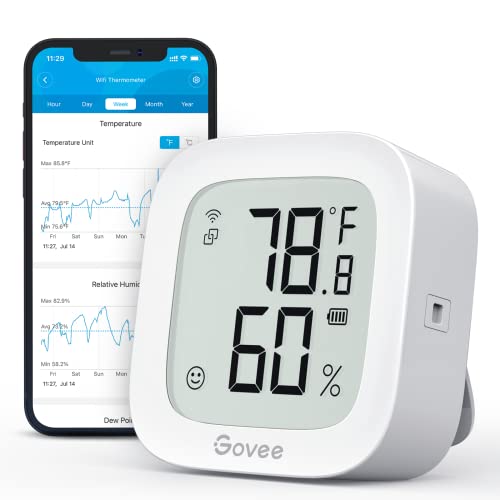
Govee WiFi Thermometer Hygrometer
Continuous temperature and humidity logging with phone alerts — essential for Indonesian BTS setups where both metrics require tight control
Check Price on Amazon
Zoo Med Combo Dome Dual Reptile Lamp
Dual-bulb dome fixture mounts the halogen basking bulb and a CHE or DHP simultaneously over the warm end — reduces cable clutter in a 4×2×2 setup
Check Price on Amazon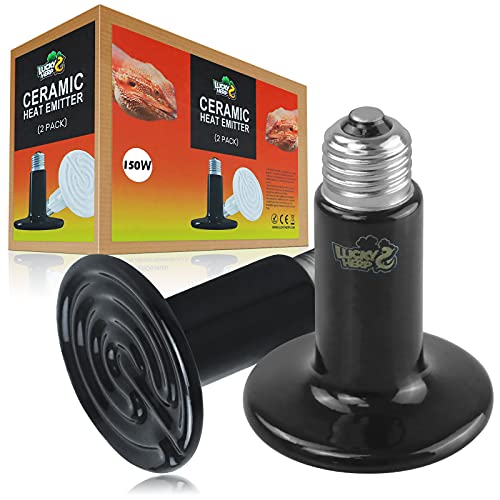
Ceramic Heat Emitter 100W
Budget-friendly nighttime ambient supplemental heater for Northern and Eastern BTS in cool rooms — zero visible light, compatible with on/off thermostat
Check Price on AmazonFrequently Asked Questions
It depends on subspecies. Northern BTS need a basking surface of 100–110°F. Eastern BTS do well at 95–105°F. Indonesian subspecies (including Halmahera, Merauke) prefer a slightly cooler basking surface of 90–105°F paired with higher ambient temperatures and humidity. Always measure with an infrared thermometer gun directly on the surface, not air temperature above it.
References & Sources
Related Articles

Blue Tongue Skink Tank Setup: Enclosure Size, Substrate & Heating Guide
Forget the pet store 40-gallon advice—blue tongue skinks need at least 4×2×2 feet. This setup guide covers everything from substrate depth to basking temperatures.

Blue Tongue Skink Lighting Guide: UVB, Ferguson Zones & Subspecies Photoperiods
Blue tongue skinks need Zone 3-4 UVB — not optional. Learn T5 HO vs mercury vapor for BTS, Ferguson zones explained, and subspecies photoperiod differences.

Veiled Chameleon Heating and Lighting Guide: The Three-Light Setup Explained
Veiled chameleons need three separate light sources and a nightly drop to 65°F. Learn how to set up the full lighting stack for your screen cage today.