
Ball Python vs Boa Constrictor: Which Heavy-Bodied Snake Is Right for You?
Ball python vs boa constrictor: real size trajectory, feeding costs, two-person handling, and how to honestly decide if you're ready for a bigger snake.

✓Recommended Gear
In this guide, we cover everything you need to know and recommend 6 essential products. Check prices and availability below.
TL;DR: Ball pythons stay 3–5 ft and 1–1.8 kg their whole lives; female boa constrictors reach 6–8 ft and 10–15 kg, requiring a 6×2×2 ft minimum enclosure, rabbit-sized prey, and two-person handling once full-grown. Boas almost never refuse food unlike ball pythons, but demand significantly more space, higher feeding costs, and carry permit requirements in some US states. Choose a ball python for manageability; choose a boa only if you're genuinely ready for a large, decades-long commitment.
You have kept your ball python for two years. It eats reliably, handles well, and you love everything about it — but lately you find yourself watching boa constrictor videos at midnight. Or maybe you are choosing your first heavy-bodied constrictor and cannot decide between a species that stays at 3-5 ft versus one that reaches 6-10 ft.
This guide is for that exact moment. The ball python and common boa constrictor are both thick-bodied, powerfully muscular constrictors with 20-30 year lifespans. But the practical reality of keeping a mature boa female — feeding her rabbits, finding a friend to help you clean her enclosure, dedicating a full room to her housing — is categorically different from ball python ownership.
These are not beginner basics. This is the intermediate-keeper decision: are you actually ready for a bigger snake?
Quick Comparison Table
| Category | Ball Python | Common Boa (BCI) |
|---|---|---|
| Scientific name | Python regius | Boa constrictor imperator |
| Adult size | 3-5 ft | 5-8 ft (females larger) |
| Adult weight | 1-1.8 kg | 4-15 kg |
| Lifespan | 20-30 years | 20-30+ years |
| Feeding reliability | Notorious refusals | Rarely refuses |
| Prey (adult) | Small rats | Rats → rabbits |
| Warm side temp | 88-92°F | 85-90°F |
| Cool side temp | 76-80°F | 78-82°F |
| Humidity | 60-80% | 60-70% |
| Minimum enclosure (adult) | 4×2×2 ft | 6×2×2 ft (females) |
| Solo handling (adult) | Yes | Snakes 6 ft+ need two people |
| Morph price range | $50 to $10,000+ | $100 to $2,000 |
| Permit required? | Rarely | Some US states/counties |
Ball Python vs Common Boa: Complete Comparison
Side-by-side comparison
| Feature | Ball Python | Common Boa (BCI) |
|---|---|---|
| Adult Size | ★3–5 ft | 5–8 ft (females) |
| Adult Weight | ★1–1.8 kg | 6–15 kg |
| Feeding Reliability | Notorious refusals (30–40% annually) | ★Rarely refuses |
| Annual Prey Cost | ★$120–240 | $300–650 |
| Solo Handling (Adult) | ★Yes, always | No (6+ ft requires two people) |
| Lifespan | 20–30 years | 20–30+ years |
| Enclosure Requirement | ★4×2×2 ft (lifetime) | 6×2×2 ft minimum |
Our Take: Ball pythons suit keepers prioritizing affordability and solo handling; boas suit experienced keepers ready for significant space, cost, and handling complexity.
The Size Trajectory: What 6-10 Feet Actually Looks Like
Ball pythons are a 4-foot snake for life. Boas are a 4-foot snake for about two years.
This is the most important sentence in this article — and the one most often glossed over by keepers who buy a cute, handleable juvenile boa.
Ball Python Size Reality
A ball python hatchling starts at 10-16 inches. By 12 months, a female may reach 2-3 ft. By 3 years, most females are fully grown at 4-5 ft, and most males top out at 3-4 ft. That 4×2×2 ft enclosure you set up at the start is the enclosure you will use forever.
An adult ball python female weighing 1,400-1,800g is a comfortable one-person handle. She drapes over your arm and shoulders without demanding your full physical attention. The weight is satisfying but manageable.
Boa Constrictor Size Reality
A common boa (BCI — Boa constrictor imperator) hatchling looks almost identical to a ball python at 18-24 inches. It is at this stage that most new keepers dramatically underestimate the trajectory.
| Age | BCI Female Length | BCI Female Weight |
|---|---|---|
| Hatchling | 18-24 inches | 50-100g |
| 1 year | 3-4 ft | 0.5-1 kg |
| 2 years | 4-5 ft | 1.5-3 kg |
| 3 years | 5-6 ft | 3-6 kg |
| 4-5 years (adult) | 6-8 ft | 6-12 kg |
| Large females | up to 8 ft | 10-15 kg |
A mature BCI female at 8 ft and 10-15 kg is a completely different animal from what you brought home. She is longer than most humans are tall. Draping her over your shoulders means supporting 22-33 lbs of pure muscle. Cleaning her 6×2×2 ft enclosure means navigating around an animal that can apply meaningful constriction force.
Pro Tip: Before committing to a boa, visit a local reptile expo and ask to hold an adult female BCI. Responsible breeders will accommodate this request. Nothing prepares you for the reality of a mature boa like physically handling one. Do not guess — go handle one.
What about true red-tail boas (BCC)? Boa constrictor constrictor is a separate subspecies that grows larger still — females regularly reaching 8-10 ft and occasionally exceeding 12 ft. Most pet boas sold in the US are BCI (Colombian or Central American), which are meaningfully smaller. Confirm subspecies before purchase if size is a concern.
| Species/Subspecies | Max Female Length | Notes |
|---|---|---|
| Ball Python (P. regius) | 5 ft | Rarely exceeds this |
| Common Boa BCI (B. c. imperator) | 8 ft | Most US pet boas |
| True Red-Tail BCC (B. c. constrictor) | 10-12 ft | Significantly larger; rarer |
Growth Trajectory: From Hatchling to Adult
Hatchling (0 years)
Ball Python: 10–16 in | Boa: 18–24 in — Nearly identical to the naked eye
1 Year Old
Ball Python: 2–3 ft | Boa: 3–4 ft (0.5–1 kg) — Boa growth advantage becomes visible
3 Years Old
Ball Python: 4–5 ft (near full adult) | Boa: 5–6 ft (3–6 kg) — Size gap widens significantly
4–5 Years Adult
Ball Python: 4–5 ft, 1.4–1.8 kg (stable forever) | Boa: 6–8 ft, 6–15 kg (may require two-person handling)
Tip: Mature boa is ~50% longer and 7–8× heavier than an adult ball python
Feeding Costs and Prey Size: Mice vs Rabbits
Ball pythons eat small rats for life. Boas start on mice and graduate to rabbits — and rabbit prices will shock you.
Ball Python Feeding Economics
A ball python hatchling starts on fuzzy mice or small hoppers. By adulthood, a female ball python's prey item of choice is a small to medium rat — typically weighing 100-200g. Fed every 10-14 days, the annual feeding cost for an adult ball python is roughly $120-220/year using frozen-thawed prey purchased in bulk.
The feeding complication with ball pythons is not cost — it is reliability. Seasonal feeding strikes affecting 30-40% of keepers annually can create weeks or months of refusals. The prey is cheap; the anxiety is expensive.
For ball python diet specifics, see our ball python diet and feeding guide.
Boa Constrictor Feeding Economics
A boa hatchling starts on fuzzy mice. By 18-24 months, it has progressed through hoppers, weanling rats, and medium rats. By the time a BCI female reaches maturity at 4-5 years, she is eating large rats or small rabbits every 10-14 days.
Rabbit pricing is a genuine shock. A frozen feeder rabbit typically costs $12-25 per animal depending on size and supplier. At one feeding every two weeks, that is $300-650/year in prey costs alone — two to three times the ball python's annual feeding bill.
| Prey Item | Prey Weight | Typical Cost | Annual Cost (biweekly feeding) |
|---|---|---|---|
| Small rat | 100-200g | $1.50-3.00 | $39-78 |
| Large rat | 300-600g | $3.00-6.00 | $78-156 |
| Small rabbit | 500g-1 kg | $8-15 | $208-390 |
| Medium rabbit | 1-2 kg | $12-25 | $312-650 |
Pro Tip: Buy frozen feeders in bulk from reptile-specific suppliers like RodentPro or BHB Reptiles. Bulk rat packs (50-count) can cut per-item costs by 30-40% versus buying individually. A dedicated chest freezer for feeders becomes a worthwhile investment once you are buying rabbits.
Boa feeding reliability: This is where boas win decisively. Common boas are among the most reliable feeders in the constrictor hobby. Feeding strikes lasting more than 2-3 weeks are genuinely abnormal and warrant health investigation. If you have been traumatized by a ball python feeding strike, the boa's near-guaranteed feeding response is a significant quality-of-life improvement.
| Feeding Metric | Ball Python | Common Boa |
|---|---|---|
| Adult prey item | Small-medium rat | Large rat or rabbit |
| Monthly prey cost | $10-20 | $25-55 |
| Annual prey cost | $120-240 | $300-650 |
| Feeding frequency | Every 10-14 days | Every 10-14 days |
| Strike rate | High (seasonal) | Very low |
| Strike duration | Weeks to months | Rarely >2-3 weeks |
Feeding Cost Reality Check
What to budget for
Two-Person Handling: When Your Snake Gets Too Big for Solo Care
Ball pythons are a solo-keeper snake for life. Boas become a two-person snake once they exceed 6 feet.
This is a safety reality that comparatively few articles address directly — and it has practical implications for your living situation, relationship, and schedule.
Why Size Changes the Handling Equation
A ball python at 4-5 ft and 1.5 kg can apply constriction pressure if startled, but a healthy adult is easily unwrapped from your arm without assistance. The muscle mass is not overwhelming.
A BCI female at 6-8 ft and 8-12 kg is a categorically different experience. The constriction force of a large boa is significant — not dangerous in the sense of a reticulated python or Burmese python, but strong enough that a startled or feeding-response-triggered boa wrapping tightly around your neck or arm alone in a room represents a genuine risk scenario.
The standard recommendation from experienced keepers and herpetological organizations: two people present for any boa over 6 feet.
Pro Tip: Establish the two-person handling rule before your boa reaches 6 ft, not after. Building the habit early prevents the gradual slide into complacency where you "just quickly" take out your large boa alone because it seems calm. Calm snakes can respond unpredictably to loud sounds, feeding smells, or sudden movement.
Practical Implications
This means you need a second person available for routine handling sessions. For solo keepers who live alone, this is a real constraint — not a theoretical one.
| Scenario | Ball Python | Common Boa (adult female) |
|---|---|---|
| Solo keeper, lives alone | No issues | Two-person handling needed |
| Partner/roommate who is snake-averse | Fine | Potential problem |
| Scheduled handling sessions | Flexible | Must coordinate schedules |
| Emergency enclosure access | Always possible | Strongly advised with backup |
| Traveling with snake (vet visits) | One person, pillowcase | Two people recommended |
Hook training is worth mentioning here. Hook-trained boas (snakes conditioned to a hook touch = handling time, not feeding time) are significantly calmer and less likely to exhibit cage-defensive behavior. A hook and consistent pre-handling desensitization routine is standard practice for responsible boa keepers. A snake thermostat for stable temperatures also reduces stress-related defensive behavior.
Important context: Common boas are NOT in the same danger category as large pythons (reticulated, Burmese). A healthy, well-socialized BCI is a docile animal that the vast majority of experienced keepers handle without incident. The two-person rule is a precautionary best practice — not a statement that boas are dangerous animals.
The Morph Market: $50 Ball Pythons vs $200 Boas
Ball pythons have the largest, most complex morph market in the reptile hobby. Boa morphs exist but are less extensive — and base-animal pricing reflects this.
Ball Python Morphs: The Rabbit Hole
The ball python morph market is genuinely extraordinary. With hundreds of co-dominant and recessive genes cataloged — and new morphs discovered or line-bred annually — the combination possibilities are effectively infinite.
| Ball Python Morph Tier | Example Morphs | Price Range |
|---|---|---|
| Common single-gene | Pastel, Spider, Pinstripe | $60-200 |
| Mid-tier | Clown, Enchi, Mojave | $150-500 |
| Designer combos | Pastel Clown, Fire Clown | $400-1,500 |
| High-end collector | Panda Pied, BEL complex | $1,500-5,000 |
| Trophy morphs | Ultra-rare recessive combos | $5,000-10,000+ |
The morph hobby has its own culture, breeding records, community forums, and investment logic. Some keepers purchase ball pythons purely as a collecting and breeding hobby, treating rare morphs like collector's items. A normal-pattern ball python costs $50-80. A visually stunning designer morph can cost as much as a used car.
Pro Tip: Be aware of the Spider morph controversy. The Spider gene causes a neurological wobble condition (head tremors) that varies in severity. Many responsible keepers avoid producing Spider-gene animals on ethical grounds. Research morph-associated health issues before purchasing designer animals. See our ball python species page for links to morph health research.
Boa Constrictor Morphs: Smaller Market, Lower Ceiling
Boa morphs exist — and some are genuinely stunning — but the market is substantially smaller than the ball python world.
| Boa Morph Tier | Example Morphs | Price Range |
|---|---|---|
| Base animals (wild-type locality) | Colombian, Hog Island, Argentine | $80-300 |
| Common single-gene | Albino (T+ and T-), Hypo | $200-500 |
| Designer combos | Anery Sunglow, IMG Albino | $400-1,200 |
| High-end | Leopard, Motley, Jungle | $800-2,500 |
The boa market's smaller size has two consequences. First, prices for equivalent visual impact are generally lower than ball pythons. Second, the breeding investment path is less developed — you cannot reasonably expect a boa morph collection to appreciate in value the way some ball python morphs have.
Locality boas add another layer of interest unique to this species. Hog Island boas from the Bay Islands of Honduras are naturally smaller (rarely exceeding 5 ft) and naturally hypomelanistic. Argentine boas grow larger and have distinctive banding. Locality collecting is a distinct hobby within the boa world with no equivalent in ball python keeping.
| Purchase Decision | Ball Python | Common Boa |
|---|---|---|
| Entry price (normal) | $50-80 | $80-150 |
| Mid-market morph | $200-600 | $200-500 |
| Top-tier collector animal | $5,000-10,000+ | $1,500-2,500 |
| Morph variety | Enormous (100s of genes) | Moderate (dozens of genes) |
| Locality collecting | Not applicable | Yes (Hog Island, Argentine, etc.) |
| Breeding investment potential | High (established market) | Moderate |
Enclosure Size: The Room Question
Ball pythons fit in any spare corner. Boas may need their own room.
An adult ball python lives comfortably in a 4×2×2 ft PVC enclosure. This is the size of a large TV cabinet and fits against any wall in any room. The [Zen Habitats 4×2×2](https://www.amazon.com/dp/B0DRSHBP5S?tag=krawlo-20 or similar PVC enclosures are the gold standard — they retain the 60-80% humidity ball pythons require without constant misting effort.
An adult female BCI needs a minimum 6×2×2 ft enclosure, with 8 ft long being strongly recommended for larger females. For true red-tail BCC females, you are looking at 8×3×3 ft custom builds. These are pieces of furniture that define the room they occupy.
| Enclosure Requirement | Ball Python | BCI Female | BCC Female |
|---|---|---|---|
| Minimum floor space | 4×2 ft | 6×2 ft | 8×3 ft |
| Standard height | 2 ft | 2 ft | 2-3 ft |
| Footprint in room | 8 sq ft | 12 sq ft | 24 sq ft |
| Custom build required? | No | Sometimes | Usually |
| Off-the-shelf options | Many | Limited | Rare |
| Approximate enclosure cost | $250-500 | $400-900 | $800-2,000+ |
The practical question for prospective boa owners: do you have a room — not a corner, a room — where an 8-foot long, waist-height enclosure can live permanently? Do you have the ability to heat that volume of space consistently? Do you have room to work around the enclosure for cleaning with a 10 kg snake that needs to be secured or moved?
For thermal management at scale, a quality thermostat is non-negotiable. The [Inkbird ITC-308](https://www.amazon.com/dp/B011296704?tag=krawlo-20 works well for single heat sources; keepers running large boa enclosures with multiple heat panels often upgrade to the Herpstat 2 or 4 for multi-zone control. Ball python heating specifics are in our ball python heating guide.
Pro Tip: Factor HVAC into your boa enclosure planning. A 6×2×2 ft PVC enclosure with a heat panel draws significant electricity. In winter climates, the room housing the boa may need supplemental heating to keep ambient temps from crashing the enclosure's thermal gradient. Budget $30-60/month extra on electricity for a large boa enclosure in cold climates.

Zen Habitats 4x2x2 PVC Reptile Enclosure
The standard ball python adult enclosure. PVC retains 60-80% humidity far better than glass, front-opening design simplifies feeding and cleaning, and the footprint fits in any room. Not suited for adult boas — use this for your ball python.
Check Price on Amazon
Inkbird ITC-308 Reptile Thermostat
Essential for both species. Prevents overheating and eliminates temperature guesswork. Dual-outlet design controls heating and cooling simultaneously. Start here for ball pythons; upgrade to multi-zone for large boa enclosures.
Check Price on Amazon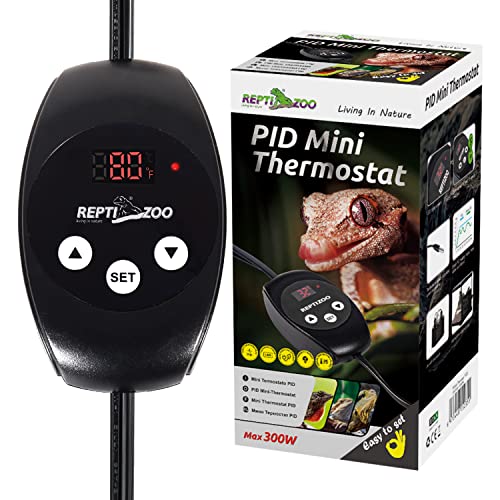
Herpstat Thermostat (2 or 4 outlet)
The preferred thermal controller for large boa enclosures running multiple heat panels. Multi-zone control lets you maintain distinct warm side, ambient, and cool side temperatures in a 6-8 ft enclosure without interference.
Check Price on AmazonTemperament: Docile is Not One Size Fits All
Both species are described as "docile," but this word means something different for a 4-ft snake versus an 8-ft snake.
Ball pythons are defensively passive. Their threat response is to curl into a ball — a behavior that essentially eliminates bite risk for calm, deliberate handling. Strike behavior in ball pythons is predominantly feeding-response (mistaking your hand for prey) or fear-response in newly acquired or poorly socialized animals. A tame, established ball python almost never strikes.
Boas are confident animals that tend toward docility but are more variable in temperament than ball pythons. Some individual boas are "marshmallows" from day one. Others are notably cage-defensive — striking at the enclosure door, displaying defensive S-curves, or hissing when their space is entered. Cage-defensive behavior does not mean an animal is aggressive — it is a stress response — but it demands respectful handling protocol.
Hook training is the standard practice for managing cage-defensive boas. A snake hook tapped gently on the animal signals that it is handling time, not feeding time, reducing defensive reactions significantly. Most cage-defensive boas become calm once removed from the enclosure.
| Temperament Factor | Ball Python | Common Boa |
|---|---|---|
| Default defensive response | Curls into ball | S-curve display, occasional hiss |
| Strike tendency (established) | Very low | Low-moderate (individual variation) |
| Cage defensiveness | Rare | More common |
| Hook training recommended? | Rarely needed | Yes, standard practice |
| Temperament consistency | Very predictable | More individual variation |
| Impact of a mistake | Minor (small bite) | Minor-moderate (larger bite, constriction) |
For both species, review our reptile illness signs guide to understand behavioral changes that may indicate health issues rather than temperament.
Substrate, Humidity, and Maintenance Load
Both species have similar humidity requirements — 60-80% for ball pythons, 60-70% for boas — but the maintenance load scales dramatically with enclosure size.
A ball python's 4×2×2 ft enclosure holds humidity well in quality PVC. A [quality substrate](https://www.amazon.com/dp/B00OBI6P60?tag=krawlo-20 of cypress mulch or coconut fiber mixed 50/50 maintains 65-75% with minimal intervention. Spot-cleaning takes 10-15 minutes. Full substrate replacement every 2-3 months takes 30-45 minutes.
A boa's 6×2×2 ft or larger enclosure is a proportionally larger maintenance job. More substrate volume, more surface area to clean, more hide furnishings to sterilize. A full clean with a large, active boa requires safely securing or removing the animal — ideally with a second person present. Budget 60-90 minutes for a thorough boa enclosure clean versus 30-45 minutes for a ball python.
For substrate and humidity management in ball pythons, our ball python substrate guide has full setup recommendations. The reptile lighting guide covers UVB and ambient lighting options applicable to both species.
Which Keeper Are You? (Lifestyle Scenario Guide)
This is where the species data translates into a real decision.
You're a Confident Ball Python Keeper Considering Your First Boa
Best fit: Common Boa BCI — but plan for the adult.
You have already proven you can manage a constrictor's environmental needs, handle feeding responsibly, and commit to a 20-30 year animal. The boa's size trajectory and two-person handling requirement are your main transition challenges.
Before you buy, ask: Do I have the space? Do I have a reliable second person for handling? Am I financially prepared for the rabbit-feeding phase? If yes to all three, a BCI is a natural and rewarding next step. Start with a CB male (smaller, maxes out at 5-7 ft) if you want to ease into the size.
You're a First-Time Keeper Choosing Between the Two
Best fit: Ball Python — by a clear margin.
The boa's size trajectory, two-person handling requirements, and higher feeding costs are genuine intermediate-keeper considerations. A ball python's manageable size, predictable handling, and established care community make it the right starting point. Build your experience, confidence, and enclosure setup skills on a ball python before stepping up.
Our ball python vs corn snake guide covers the beginner-level decision between the two most popular starter snakes.
You're a Solo Keeper in a Small Apartment
Best fit: Ball Python.
A 4×2×2 ft enclosure fits in virtually any room. A 6×2×2 ft (minimum) boa enclosure may not — and if it does, it dominates the space. The two-person handling requirement is also a real constraint for solo keepers. Ball pythons are the smarter fit for small-space, single-person households.
You Have a Ball Python and Want a Feeding-Reliable Second Snake
Best fit: Common Boa BCI.
If ball python feeding strikes are wearing you down psychologically, the boa's near-guaranteed feeding response is a revelation. Many experienced keepers run both species for exactly this reason — the boa's reliable meals provide a counterbalance to the ball python's seasonal drama. Plan for the space and size requirements, and this pairing works extremely well.
You Want a Long-Term Project Animal and Have the Space
Best fit: Common Boa or True Red-Tail BCC.
If you have a dedicated reptile room, a willing partner or roommate for handling, and the resources for rabbit-level feeding costs, a large boa is one of the most rewarding heavy-bodied constrictors in the hobby. They live 20-30+ years, develop genuine individual personalities, and are deeply impressive animals. The investment is significant — but so is the payoff.
| Your Situation | Recommended Choice | Key Reason |
|---|---|---|
| First-time keeper | Ball Python | Manageable size, established care resources |
| Experienced BP keeper upgrading | Common Boa BCI | Natural progression, plan for adult size |
| Solo keeper, small apartment | Ball Python | Space and handling constraints |
| Feeding reliability priority | Common Boa | Near-guaranteed feeder |
| Morph collector on budget | Ball Python | Deepest morph market in hobby |
| Long-term project, dedicated space | Common Boa or BCC | Most rewarding at scale |
| Partner/roommate averse to snakes | Ball Python | Two-person handling not required |
Permits and Legality: Check Before You Buy
Ball pythons are legal in all 50 US states. Boas have restrictions in some jurisdictions.
Ball pythons (Python regius) are not on any federal restricted list and are legal to keep in all US states. Some municipalities have general exotic animal ordinances — always verify local law — but state-level restrictions on ball pythons are effectively nonexistent in the US.
Common boas (Boa constrictor) are federally legal in the US but are restricted or require permits in specific states and counties. Notable examples:
- Florida: BCI are legal without a permit as of current law, but regulations change; confirm with FFWCC
- New York City: Constrictors over 6 ft may fall under municipal exotic animal restrictions
- Some California counties: Local ordinances vary; state law permits boas but check municipal regulations
- Hawaii: No constrictors of any species permitted
Always verify current law with your state's wildlife agency before purchasing any constrictor. Regulations change, and a permit requirement discovered after purchase creates a difficult situation.
Pro Tip: Contact your state's fish and wildlife agency directly, not just reptile community forums. Law changes faster than forum posts are updated. One phone call to confirm legality is always worth the effort.
For broader reptile care context, our reptile lighting guide covers UVB requirements that apply to both species. For gear decisions, our best snake thermostat guide helps you choose thermal management for any enclosure size.
The Decision Framework
Choose a ball python if you:
- Are a first-time or newer constrictor keeper
- Live alone or in a small space
- Do not have a reliable second person for handling sessions
- Are on a budget and want the most extensive morph market
- Are comfortable with the possibility of seasonal feeding strikes
- Want manageable, lifelong adult size with no surprises
- Are keeping a snake in a jurisdiction where boa permits may apply
Choose a common boa (BCI) if you:
- Are an experienced keeper who has managed a constrictor for 2+ years
- Have the physical space for a 6×2×2 ft minimum permanent enclosure
- Have a willing second person available for handling sessions
- Want a near-guaranteed feeder that almost never refuses meals
- Are financially prepared for rabbit-level prey costs at adult size
- Want a deeply rewarding long-term project animal with genuine personality
- Are interested in locality collecting (Hog Island, Argentine, Colombian)
Both are magnificent animals. The ball python is not a consolation prize — many expert keepers with the resources for any snake choose ball pythons for their incredible morph variety, manageable care requirements, and rewarding personalities. The boa is not inherently superior — it is a larger commitment that rewards keepers who go in fully prepared.
The question is not which snake is better. The question is which snake fits the life you actually have.
Ready to go deeper? Our ball python species page has full care specifications. For heating and enclosure setup, see our ball python heating guide and best ball python enclosures. For broader context on choosing a reptile, our best pet lizards for beginners guide covers the foundational decision-making framework that applies to any reptile commitment.
Recommended Gear
Zen Habitats 4x2x2 PVC Reptile Enclosure
The standard ball python adult enclosure. PVC retains 60-80% humidity far better than glass, front-opening design simplifies feeding and cleaning, and the footprint fits in any room. Not suited for adult boas — use this for your ball python.
Check Price on AmazonInkbird ITC-308 Reptile Thermostat
Essential for both species. Prevents overheating and eliminates temperature guesswork. Dual-outlet design controls heating and cooling simultaneously. Start here for ball pythons; upgrade to multi-zone for large boa enclosures.
Check Price on AmazonHerpstat Thermostat (2 or 4 outlet)
The preferred thermal controller for large boa enclosures running multiple heat panels. Multi-zone control lets you maintain distinct warm side, ambient, and cool side temperatures in a 6-8 ft enclosure without interference.
Check Price on Amazon
Reptile Substrate Mix (Cypress Mulch + Coconut Fiber)
The preferred humidity-retaining substrate for both ball pythons and boas. A 50/50 mix of cypress mulch and coconut fiber holds moisture at the 60-80% range with minimal active maintenance. Buy in bulk for larger boa enclosures.
Check Price on AmazonSnake Hook (Aluminum, 24-36 inch)
Standard handling equipment for any boa keeper. Hook training conditions the snake to differentiate handling time from feeding time, significantly reducing cage-defensive behavior. Not typically needed for ball pythons but essential for responsible boa keeping.
Check Price on Amazon
Reptile Ball Python Hides (Two Pack)
Both species need appropriately sized hides — snug enough for the snake to feel secure but large enough to fit comfortably. Ball pythons especially depend on correctly sized hides; a too-large hide is a leading trigger for feeding strikes and stress behavior.
Check Price on AmazonFrequently Asked Questions
Common boas (BCI) are not considered dangerous in the way that large pythons (reticulated, Burmese) are. A well-socialized adult BCI is a docile animal that millions of keepers handle safely. However, adult females at 6-8 ft and 10-15 kg should be handled with two people present as a precautionary best practice. The constriction force of a large boa is significant, and solo handling of large individuals in enclosed spaces is unnecessary risk. A bite from a boa is more significant than a ball python bite (larger teeth, more muscle), but is not venomous and rarely requires medical care beyond basic wound cleaning.
References & Sources
Related Articles

Ball Python vs Corn Snake: Which One Is Right for You?
Ball python vs corn snake — scenario-based guide covering temperament, feeding strikes, escape risk, morph costs, and which snake fits your lifestyle best.

Leopard Gecko vs Blue Tongue Skink: How Much Lizard Do You Actually Want?
Leopard gecko vs blue tongue skink: compact desktop pet vs room-demanding floor lizard. Find out which fits your space, budget, and lifestyle before you buy.

Blue Tongue Skink vs Bearded Dragon: Which Large Lizard Is Right for You?
Blue tongue skink vs bearded dragon: same size, same price — but one eats dog food and the other needs the strongest UVB in the hobby. Find your match.