
Blue Tongue Skink vs Bearded Dragon: Which Large Lizard Is Right for You?
Blue tongue skink vs bearded dragon: same size, same price — but one eats dog food and the other needs the strongest UVB in the hobby. Find your match.

✓Recommended Gear
In this guide, we cover everything you need to know and recommend 6 essential products. Check prices and availability below.
TL;DR: Both blue tongue skinks and bearded dragons reach 18-24 inches, weigh 300-600g, and live 10-20 years, but BTS need no live insects and tolerate higher humidity, while bearded dragons are more active during the day and require daily fresh salads plus UVB. Choose a BTS for lower daily maintenance; choose a beardie for more daytime interaction and activity.
You want a large, handleable lizard. You've narrowed it down to two: the blue tongue skink and the bearded dragon. Both are roughly 18-24 inches as adults. Both weigh 300-600g. Both live 10-20 years. Both have a reputation for being personable, sociable, and genuinely enjoyable to own.
So why does it matter which one you pick?
Because under that surface similarity, these two lizards demand completely different things from you. The bearded dragon is a basking specialist built around intense light and heat — it needs 100-110°F surface temperatures and the strongest UVB output of any commonly kept pet reptile. The blue tongue skink is a foraging omnivore built around diet variety — it eats canned dog food, fresh greens, snails, and fruit, and it will live happily at temperatures that would leave a bearded dragon sluggish and sick.
The real question is not which lizard is easier. It is which complexity fits your life: diet complexity or lighting complexity.
Quick Comparison: BTS vs Bearded Dragon
| Category | Blue Tongue Skink | Bearded Dragon |
|---|---|---|
| Scientific name | Tiliqua scincoides (+ subspecies) | Pogona vitticeps |
| Adult size | 18-24 inches | 18-24 inches |
| Adult weight | 300-600g | 300-600g |
| Lifespan | 15-20+ years | 10-15 years |
| Basking temp | 95-105°F | 100-110°F |
| Cool side temp | 75-80°F | 80-85°F |
| Humidity | 40-60% (Indonesian: 60-80%) | 30-40% |
| Diet | Dog food + greens + fruit | Insects + greens (ratio shifts with age) |
| UVB requirement | Ferguson Zone 3-4 | Ferguson Zone 4 (strongest in hobby) |
| Enclosure minimum | 4×2×2 ft | 4×2×2 ft |
| Temperament | Docile, burrowing, dog-like | Social, interactive, arm-waves |
| Subspecies complexity | Multiple with different care needs | One subspecies, consistent care |
| Brumation? | Rare in captivity | Common — seasonal slowdown |
| Dog food as staple? | Yes — high-quality canned protein | No |
Species Comparison at a Glance
Side-by-side comparison
| Feature | Blue Tongue Skink | Bearded Dragon |
|---|---|---|
| Adult Size | 18-24 inches | 18-24 inches |
| Lifespan | ★15-20+ years | 10-15 years |
| Basking Temperature | ★95-105°F | 100-110°F |
| Humidity Requirements | ★40-60% | 30-40% |
| Diet Type | Canned dog food + greens + fruit | Live insects + greens (age-dependent ratio) |
| UVB Requirement | ★Ferguson Zone 3-4 | Ferguson Zone 4 (strongest available) |
| Temperament | Docile, burrowing, dog-like | Social, interactive, arm-waves |
Our Take: BTS wins on lifespan, lower heat/humidity demands, and simpler lighting; BD excels in daytime sociability but requires stronger UVB.
The Dog Food Debate: BTS Diet vs BD Diet
The blue tongue skink is the only common pet lizard where a can of dog food belongs in your reptile care kit. The bearded dragon's diet is insect-and-salad based — simpler ingredients, but a shifting ratio that catches many owners off guard.
This is the core lifestyle difference between the two species, and it deserves a serious comparison before you buy either animal.
Blue Tongue Skink: The Omnivore Who Eats Like a Dog
Blue tongue skinks are opportunistic omnivores in the wild — they eat whatever they encounter, from snails and insects to flowers, fruit, and carrion. In captivity, that translates to one of the most varied diets in the reptile hobby.
The widely accepted feeding ratio is 50% protein, 40% greens and vegetables, 10% fruit. The protein source is what surprises new keepers: high-quality grain-free canned dog food (look for formulas with turkey, chicken, or salmon as the first ingredient) is one of the most convenient and nutritionally appropriate staple proteins. Whole prey like insects and snails, as well as occasional cooked lean meats, round out the protein component.
The vegetable portion is equally important — and it follows calcium-to-phosphorus ratios, much like bearded dragons. Collard greens, mustard greens, dandelion leaves, and squash are solid staples. Fruit (strawberries, blueberries, mango) goes in the 10% slot as a treat, not a staple.
Pro Tip: Not all dog food is appropriate for blue tongue skinks. Avoid formulas with corn, wheat, soy, onion powder, or garlic as ingredients — these are toxic or nutritionally inappropriate for reptiles. Look for single-protein grain-free formulas like Nulo, Merrick, or Fromm.
The practical upside of this feeding system: grocery store shopping is part of your BTS care routine. The downside: variety is not optional — a BTS fed only dog food long-term will develop nutritional deficiencies. You need to rotate proteins, greens, and occasional fruits consistently. For the complete breakdown, see our blue tongue skink diet guide.
Bearded Dragon: The Salad Bowl That Shifts with Age
Bearded dragons are also omnivores, but their diet ratio is dramatically age-dependent — and getting the ratio wrong is one of the most common causes of long-term health problems in captive bearded dragons.
Juvenile bearded dragons (under 12 months) eat approximately 80% insects and 20% greens. The insect load fuels rapid growth. Staple insects include dubia roaches, black soldier fly larvae, and crickets — all gut-loaded and dusted with calcium and vitamin D3 supplements.
Adult bearded dragons (18+ months) flip the ratio completely: 80% greens and vegetables, 20% insects. Collard greens, mustard greens, endive, and bell peppers make up the base. Insects become a supplement and enrichment source rather than a primary calorie source.
Missing this ratio shift is the most common bearded dragon diet mistake. Owners who continue feeding heavy insects into adulthood risk fatty liver disease and metabolic issues. Those who switch too early risk stunted growth in juveniles.
Pro Tip: Set a calendar reminder at your bearded dragon's 12-month mark to begin transitioning the diet ratio. The shift from juvenile to adult feeding should happen gradually over 2-3 months, not overnight.
| Diet Factor | Blue Tongue Skink | Bearded Dragon |
|---|---|---|
| Primary protein | Canned dog food + insects | Live insects (gut-loaded) |
| Greens ratio | 40% (consistent) | 20% juvenile → 80% adult |
| Diet shifts with age? | Minimal | Major — ratio reverses completely |
| Grocery store shopping? | Yes — dog food, greens, fruit | Greens only (insects ordered or farmed) |
| Live insect dependency | Lower — dog food handles protein | High for juveniles, moderate for adults |
| Feeding complexity | Variety-focused | Age-ratio management |
| Recommended reading | BTS Diet Guide | BD Diet Guide |
For a deeper dive into bearded dragon feeding, see our bearded dragon diet guide and best bearded dragon food recommendations.
Diet Complexity Breakdown
Side-by-side comparison
| Feature | Blue Tongue Skink | Bearded Dragon |
|---|---|---|
| Primary Protein Source | ★Canned dog food + insects + snails | Live insects (gut-loaded, no dog food) |
| Greens Ratio | ★40% (stable across lifespan) | 20% juvenile → 80% adult (major shift) |
| Diet Complexity | ★Variety-focused (no age-based changes) | Age-ratio management (12-month transition critical) |
| Live Insect Dependency | ★Lower—dog food is the staple | High juveniles, moderate adults |
| Grocery Shopping Component | Yes—dog food, fresh greens, fruit | Greens only (insects ordered/farmed) |
Our Take: BTS diet is more stable and forgiving; BD diet requires careful age-based transitions and higher live insect management.
Lighting Complexity: The Bearded Dragon's Real Demand
The bearded dragon has the most demanding UVB requirements of any commonly kept pet reptile. This is not optional, and underpowered lighting is the leading cause of metabolic bone disease (MBD) in captive bearded dragons.
Understanding this difference is critical before choosing between these two species.
Bearded Dragon: Ferguson Zone 4, Maximum UVB Output
Bearded dragons are classified as Ferguson Zone 4 animals — they are native to open, sunbaked Australian deserts and actively seek the most intense UV exposure available. In captivity, this means providing a UV Index (UVI) of 3.0-6.0 in the basking zone, with clear access to shade as well.
Achieving Zone 4 UVB in a 4×2×2 ft enclosure requires a T5 HO (High Output) UVB tube — typically a Arcadia Dragon 14% or Reptisun 10.0 T5 HO. These are the strongest commonly available reptile UVB bulbs. The tube length should span at least two-thirds of the enclosure length, and the basking spot must be positioned within the correct distance range from the tube (typically 8-12 inches for T5 HO).
Beyond UVB, bearded dragons need a basking surface temperature of 100-110°F — hot enough that a halogen basking bulb or ceramic heat emitter is the standard tool. The cool side should stay at 80-85°F, which is warmer than many reptile cool sides, and requires ambient temperature management in cooler homes.
For the full lighting setup breakdown, see our bearded dragon lighting guide and best bearded dragon UVB lights.
Pro Tip: UVB bulbs degrade before they burn out. Replace your bearded dragon's T5 HO UVB tube every 12 months even if it still produces visible light — the UV output drops below effective levels long before the bulb goes dark. Use a Solarmeter 6.5 to verify UV output at the basking spot.
Blue Tongue Skink: Ferguson Zone 3-4, More Flexibility
Blue tongue skinks also require UVB — they are not a shade-dwelling species — but their zone placement allows more flexibility. BTS are classified as Zone 3-4 animals, targeting a basking zone UVI of 1.0-4.0. A T5 HO 10.0 UVB tube works well, though the strict output requirements are slightly more forgiving than for bearded dragons.
Basking temperatures for BTS are 95-105°F — still hot, but a step below the bearded dragon's 100-110°F requirement. The cool side at 75-80°F is also cooler, which is easier to maintain in most homes without ambient heating.
The significant difference: blue tongue skinks are more tolerant of slightly imperfect lighting setups. They are not zero-tolerance animals when it comes to UVB, but a slightly suboptimal setup is less catastrophic than it would be for a bearded dragon. For the full BTS lighting guide, see our blue tongue skink lighting guide.
| Lighting Factor | Blue Tongue Skink | Bearded Dragon |
|---|---|---|
| Ferguson Zone | Zone 3-4 | Zone 4 (maximum) |
| Target basking UVI | 1.0-4.0 | 3.0-6.0 |
| Recommended UVB tube | T5 HO 10.0 | T5 HO 10.0 or 14% Arcadia Dragon |
| Basking surface temp | 95-105°F | 100-110°F |
| Cool side temp | 75-80°F | 80-85°F |
| UVB replacement interval | 12 months | 12 months (non-negotiable) |
| Lighting complexity | Moderate | High — strictest in the hobby |
Bearded Dragon UVB & Lighting Demands
What you need to know
Bearded dragons are Ferguson Zone 4 animals—the highest UV demand of any common pet reptile
Achieve UV Index 3.0-6.0 in basking zone using T5 HO tube (Arcadia Dragon 14% or Reptisun 10.0)
Tube must span at least 2/3 enclosure length, positioned 8-12 inches from basking spot
Basking surface must reach 100-110°F; underpowered lighting is the leading cause of metabolic bone disease
Blue tongue skinks need only Ferguson Zone 3-4—significantly easier lighting to achieve
Weight and Handling: Two 20-Inch Lizards That Feel Completely Different
On paper, a blue tongue skink and bearded dragon are nearly identical in size. In your hands, they feel like different animals entirely.
Both species reach 18-24 inches and weigh 300-600g as adults. But body type, musculature, and temperament create handling experiences that are nothing alike.
Blue Tongue Skink: The Tank
Blue tongue skinks are built like armored vehicles. They have a wide, flat body, short powerful legs, and a substantial, heavy torso that feels dense and solid in your hands. An adult BTS at 500g feels heavier than a bearded dragon at the same weight — the compact body concentrates the mass differently.
BTS are slow-moving and deliberate. They rarely bolt, rarely scratch, and rarely attempt to escape during handling. Their defensive behavior is passive: when threatened, they flatten their body, open their mouth wide, and display their vivid blue tongue — a startling bluff that deters most predators. Captive-raised BTS almost never use this behavior with trusted handlers.
Most blue tongue skinks become genuinely docile with consistent handling. They tolerate being held for extended periods, move slowly across arms and laps, and show relatively little stress during routine interaction. Many keepers describe them as "dog-like" — not because they beg for attention, but because they accept human presence calmly and without constant threat assessment.
Pro Tip: Blue tongue skinks love to burrow. If your BTS is behaving restlessly during handling — pushing its nose into your sleeve or pressing into dark spaces — it is not trying to escape. It is expressing normal burrowing instinct. A deep substrate in the enclosure (4-6 inches minimum) channels this behavior appropriately.
Bearded Dragon: The Social Performer
Bearded dragons have a completely different body plan. They are dorsoventrally flattened (wide from top to bottom, narrower side to side), with longer limbs, a more visible neck, and a distinctly triangular head. At the same weight, a bearded dragon feels lighter and more spread out in your hands than a BTS.
What makes the bearded dragon unique is behavioral richness during handling. Bearded dragons arm-wave — a slow, circular rotation of one foreleg — as a social appeasement signal. They head-bob at perceived rivals or when asserting dominance. They flatten and darken their beard when stressed or excited. These behaviors make bearded dragons feel more interactive and communicative than most reptiles.
Bearded dragons are also more temperature-dependent in their activity level. A well-heated beardie after basking is alert, curious, and visibly engaged. The same animal before its morning basking session may be sluggish and unresponsive. Understanding this thermoregulation cycle helps owners time handling sessions for optimal interaction.
| Handling Factor | Blue Tongue Skink | Bearded Dragon |
|---|---|---|
| Body build | Wide, flat, heavy-boned | Flat but elongated, lighter feel |
| Movement speed | Slow, deliberate | Moderate — more active |
| Defensive display | Blue tongue flash (rare with owners) | Beard darkening, puffing |
| Social behaviors | Calm acceptance, burrowing instinct | Arm-wave, head-bob, beard display |
| Handling session ideal time | Any time they're warm | After morning basking |
| Interaction style | Tolerant, passive | Active, communicative |
| Best for | Calm, hands-on quiet time | Interactive, enrichment-focused owners |
Subspecies Complexity: One Species vs Eight
Bearded dragon care is refreshingly standardized — there is one captive subspecies (Pogona vitticeps) with one set of care parameters. Blue tongue skink care is not. Multiple subspecies are kept in captivity, and they have meaningfully different humidity and temperature requirements.
This is an underappreciated difference that affects everything from enclosure setup to long-term health.
Bearded Dragon: One Subspecies, One Care Sheet
Virtually all captive bearded dragons in the US and Europe are Pogona vitticeps, the Central Bearded Dragon. A small number of Pogona henrylawsoni (Rankin's dragon) are also kept, but the overwhelming majority of the captive population is vitticeps.
This means every bearded dragon care guide, care sheet, and keeper forum post is essentially talking about the same animal. Temperature, humidity, UVB, diet — the parameters are consistent and well-documented. There is no guesswork about which subspecies you have and whether its needs differ from the standard care sheet.
For a complete Pogona vitticeps care overview, see our bearded dragon species page.
Blue Tongue Skink: Choose Your Subspecies
Multiple Tiliqua subspecies are kept in captivity, and they are not interchangeable in care requirements. The most commonly available include:
Northern Blue Tongue Skink (T. scincoides intermedia): The most common in US captive collections. Hardy, tolerant of a wide humidity range (40-60%), and adaptable. This is the subspecies most BTS care guides are written around.
Indonesian Blue Tongue Skink (T. gigas): Multiple locales (Halmahera, Irian Jaya, Tanimbar) with higher humidity requirements — typically 60-80% — matching their tropical island origin. These animals develop respiratory infections in dry enclosures. Their care is significantly more demanding than Northerns.
Merauke Blue Tongue Skink (T. gigas evanescens): Another Indonesian locale with elevated humidity needs and a reputation for a slightly more assertive temperament in some individuals.
Blotched Blue Tongue Skink (T. nigrolutea): A cooler-climate species from southern Australia, requiring lower temperatures and different seasonal cycles. Less common in the trade.
The practical implication: when you purchase a blue tongue skink, you need to know which subspecies you are buying. A Northern BTS and an Indonesian BTS are not the same animal. Housing an Indonesian BTS at 40% humidity will compromise its health. Housing a Northern at 80% humidity long-term may cause scale rot.
Reputable breeders will always specify subspecies. Avoid purchasing any BTS labeled simply as "blue tongue skink" without subspecies identification — you cannot set up appropriate care without knowing which animal you have.
Pro Tip: If you are a first-time blue tongue skink keeper, start with a Northern (T. scincoides intermedia) or Tanimbar (T. gigas stokesii) — both are more forgiving of humidity variation than other Indonesian locales. Captive-bred animals from established breeders are significantly more stable than imports.
| Subspecies | Humidity Requirement | Availability | Experience Level |
|---|---|---|---|
| Northern (T. s. intermedia) | 40-60% | Common CB | Beginner-friendly |
| Indonesian (T. gigas various) | 60-80% | Moderate CB | Intermediate |
| Tanimbar (T. g. stokesii) | 50-70% | Moderate CB | Beginner-friendly |
| Merauke (T. g. evanescens) | 60-80% | Less common | Intermediate |
| Blotched (T. nigrolutea) | 40-60% | Rare | Advanced |
Enclosure Setup: Substrate and Burrowing vs Basking Surfaces
Both species need a 4×2×2 ft enclosure, but what goes inside that enclosure is very different. BTS prioritizes deep substrate for burrowing. Bearded dragons prioritize a flat, accessible, high-temp basking surface.
For enclosure product recommendations, see our best bearded dragon enclosures and best blue tongue skink enclosures guides.
Blue Tongue Skink Enclosure Priorities
Blue tongue skinks spend significant time burrowing — they are terrestrial lizards that naturally shelter in leaf litter, soil, and debris. A substrate depth of 4-6 inches minimum is important for allowing natural burrowing behavior. Recommended substrates include a mix of topsoil and play sand, or commercially available reptile soil mixes.
BTS enclosures should include multiple hides — at least one on the warm side and one on the cool side. Because BTS are heavy-bodied, enclosure furniture should be stable and unable to tip and trap the animal. A water dish large enough to soak in is helpful, especially around shed time.
For the complete enclosure setup walkthrough, see our best blue tongue skink enclosures guide. For substrate specifically, see best bearded dragon substrate for comparison of popular reptile substrate types.
Bearded Dragon Enclosure Priorities
Bearded dragons need a well-lit, open basking area with a flat, heat-retentive surface. Slate tile, large flat rocks, or ceramic tiles work well as basking surfaces — they absorb heat from the overhead basking bulb and radiate it back, allowing the beardie to thermoregulate from below as well as above.
Substrate for adult bearded dragons is a common debate. Tile or paper towel setups are the safest and most hygienic. If loose substrate is used, only large-particle options (like Zoo Med ReptiSand or Excavator Clay) are safe — fine loose sand is a known impaction risk for juveniles. See our best bearded dragon substrate guide for the full breakdown.
The basking spot position is critical — it must be within the optimal UVB zone of the T5 HO tube AND within the 100-110°F temperature range. Setting up a bearded dragon enclosure requires a digital thermometer and UVI meter to verify both parameters are hitting target simultaneously at the basking spot.
Pro Tip: A reliable digital thermometer with a probe is non-negotiable for both species. An infrared (IR) temperature gun is the fastest way to check basking surface temps without disturbing the animal — simply point and read. Guessing temps based on ambient air temperature will result in either an underheated basking spot or a burned lizard.
Zen Habitats 4×2×2 Reptile Enclosure
Suitable for both species at the minimum adult enclosure size. Front-opening panels simplify daily care routines. PVC panels retain heat more efficiently than glass for either species.
Check Price on Amazon
Inkbird ITC-308 Dual-Stage Thermostat
Essential for both BTS and bearded dragon setups. Prevents dangerous temperature overshooting and maintains consistent thermal gradients. Dual-outlet controls both heating and cooling simultaneously.
Check Price on Amazon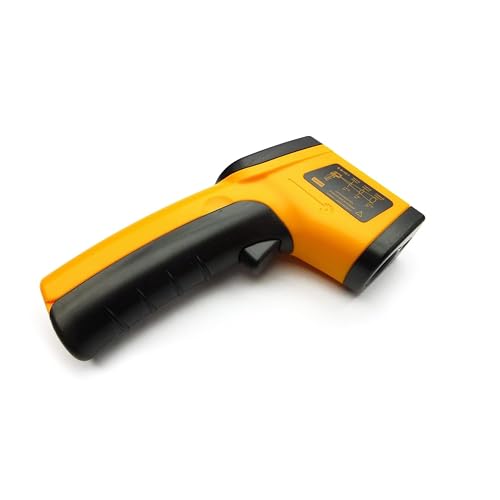
Digital Infrared Thermometer Gun
Non-contact surface temperature verification for basking spots. Fastest way to confirm your BTS or bearded dragon's basking surface is hitting the correct temperature without disturbing the animal.
Check Price on Amazon
Zoo Med ReptiSoil Substrate
Works well as a burrowing substrate for blue tongue skinks. Holds shape for tunneling while maintaining appropriate moisture levels. Safe for adult BTS and avoids the impaction risk of fine sand.
Check Price on AmazonBrumation: The Seasonal Variable Most Beginner Guides Miss
Bearded dragons commonly enter brumation — a reptile analog to hibernation — in autumn and winter. Blue tongue skinks rarely exhibit true brumation in captivity, though they may slow down seasonally.
Brumation is one of the most misunderstood aspects of bearded dragon ownership, and it sends many first-time owners into a panic.
Bearded dragons in brumation may stop eating for weeks to months, sleep almost constantly, become non-responsive, and show no interest in basking. In a non-brumating reptile, these are signs of serious illness. In a brumating beardie, they are normal. The challenge for new owners is distinguishing between a healthy brumating dragon and a sick one.
Key brumation indicators in bearded dragons: appetite drop starting in October-November, increased sleeping, decreased activity, continuing to drink water occasionally. If your dragon is losing significant body weight, showing labored breathing, or has mushy texture to its body, these are illness signs — not brumation. See our bearded dragon brumation guide for the full breakdown.
Blue tongue skinks do not typically enter full brumation in captivity, though some may show a mild activity reduction in winter months. This makes BTS maintenance more predictable year-round — there is no seasonal behavioral shift to navigate.
Which Fits YOUR Life? A Scenario Guide
Skip the abstract difficulty ratings. The right lizard depends on which real-world care demands fit your lifestyle.
You Want a Low-Maintenance Feeding Schedule
Best match: Blue Tongue Skink
BTS eat every 2-3 days as adults (some keepers feed every other day). Each meal is a mix of dog food, greens, and occasionally fruit — simple to prepare if you buy the right dog food and keep a rotation of greens on hand. No live insect colonies, no gut-loading, no calcium-dusting insects before every meal.
Bearded dragons require live insects (especially as juveniles), gut-loading those insects 24-48 hours before feeding, calcium-dusting before each insect feeding, and daily fresh salad preparation.
You're a First-Time Reptile Owner Who Worries About "Getting the Care Wrong"
Best match: Bearded Dragon (Northern BTS is close second)
Bearded dragon care is exceptionally well-documented. There is a huge community of experienced keepers, detailed care guides, an active r/BeardedDragons community, and consistent care parameters. A first-time keeper who does their research has access to the most thorough species-specific knowledge base in the hobby.
Blue tongue skinks are also well-covered, but the subspecies variable adds complexity for new keepers who may not know which subspecies they have — or may be sold the wrong care parameters for their specific animal.
You Want Maximum Interactivity and Social Behavior
Best match: Bearded Dragon
Bearded dragons are frequently described as the most socially interactive lizard in the hobby. The arm-waving, head-bobbing, beard-darkening behavioral repertoire gives keepers a lizard that seems to communicate. They recognize their owners, often come to the front of the enclosure at feeding time, and actively seek basking spots near human activity.
Blue tongue skinks are calm and tolerant — but not particularly communicative. Their social repertoire is limited compared to bearded dragons. If behavioral richness is what you want, the bearded dragon wins.
You Want a Lizard That Tolerates Irregular Schedules
Best match: Blue Tongue Skink
BTS are significantly more tolerant of husbandry inconsistency than bearded dragons. A bearded dragon with incorrect UVB for extended periods faces real MBD risk. A bearded dragon with inadequate basking temps becomes chronically sluggish and immunosuppressed. The bearded dragon's demanding UVB and temperature requirements mean the lighting setup must be right, and must stay right.
BTS are more forgiving. Their slightly lower UVB zone and cooler basking temps create more margin for imperfect setups. This makes them better suited to keepers who are still learning or who travel occasionally.
You're Planning for the Longest Possible Commitment
Best match: Blue Tongue Skink
BTS average 15-20+ years in captivity. Bearded dragons average 10-15 years. If you want a reptile that will be with you for two decades, BTS have a meaningful lifespan advantage. For a first-time large lizard owner, a 10-15 year bearded dragon may be a better fit for an uncertain long-term timeline.
| Your Situation | Best Match | Reason |
|---|---|---|
| Hate buying live insects | Blue Tongue Skink | Dog food handles the protein load |
| Want the best-documented care | Bearded Dragon | Largest knowledge base in the hobby |
| Want maximum social interaction | Bearded Dragon | Arm-wave, head-bob, beard display |
| Worried about getting lighting wrong | Blue Tongue Skink | Slightly more forgiving UVB zone |
| Want a 20+ year companion | Blue Tongue Skink | Longer lifespan by 5-10 years |
| Have kids who want to handle daily | Blue Tongue Skink | More tolerant of frequent handling |
| Seasonal brumation concerns | Blue Tongue Skink | Rarely enter true brumation |
For broader species comparison context, see our leopard gecko vs blue tongue skink and general reptile lighting guide.
Health and Veterinary Considerations
Both species are generally hardy when kept in proper conditions, but each has its characteristic health vulnerabilities.
Bearded dragons commonly develop metabolic bone disease (MBD) when UVB is inadequate — it is the most prevalent preventable disease in captive beardies. Symptoms include soft or rubbery jaw bones, limb tremors, and inability to support body weight. MBD is directly tied to insufficient UVB and calcium, making the lighting setup a genuine health imperative rather than a preference.
Blue tongue skinks are susceptible to respiratory infections when humidity is inappropriate for their subspecies — too dry for Indonesian locales, or chronically wet for Northern animals. Scale rot can develop in damp conditions with inadequate drainage. Both conditions require veterinary attention.
For either species, an exotic reptile vet visit within the first month of ownership is strongly recommended. Establishing a relationship before an emergency makes treatment significantly faster and less stressful. For illness warning signs that apply to both species, see our reptile illness signs guide.
Pro Tip: For either species, weigh your lizard monthly using a kitchen scale. Tracking weight trends is the single most useful early indicator of health problems — weight loss that precedes visible symptoms by weeks can prompt a vet visit that catches issues before they become critical.
Decision Framework: The Two Key Questions
After all of this, two questions will make the decision clear:
Question 1: Does live insect management fit your lifestyle?
If managing a feeder insect colony, gut-loading insects 24-48 hours before meals, and dusting insects with calcium powder before every feeding sounds realistic for your schedule — the bearded dragon's diet system is manageable. If any part of that sounds like a dealbreaker, the blue tongue skink's dog-food-and-greens system is dramatically simpler.
Question 2: Are you prepared to build and verify a high-output lighting system?
A bearded dragon's lighting setup requires a T5 HO UVB tube (the strongest available for common pet reptiles), a high-wattage basking bulb, correct positioning, temperature verification with a thermometer, and UVI verification ideally with a Solarmeter. If this setup process sounds interesting and manageable — the bearded dragon's interactive personality more than rewards the effort. If it sounds like an anxiety-inducing technical project, the blue tongue skink's slightly more forgiving requirements are a better fit.
Choose a Blue Tongue Skink if you:
- Prefer feeding variety over insect management
- Want a calmer, more tolerant handling experience
- Plan for a 15-20+ year commitment
- Have or may later add children who want frequent handling sessions
- Own a Northern subspecies (easiest entry point)
- Want a reptile that does not seasonally enter brumation
- Are building your first reptile setup and want more margin for error on lighting
Choose a Bearded Dragon if you:
- Want the most interactive, socially expressive lizard in the hobby
- Are committed to learning and maintaining a high-output UVB setup
- Want access to the largest, most active keeper community for support
- Prefer a shorter maximum commitment (10-15 years)
- Are comfortable with daily salad prep and live insect management
- Want a lizard that will visibly recognize and respond to you
Both the blue tongue skink and bearded dragon are exceptional lizards. There is no wrong choice if you match the animal to your actual lifestyle rather than what you think you can manage under ideal conditions.
Ready to go deeper? Our bearded dragon species page and blue tongue skink species page cover full care profiles for each animal. For lighting specifics, see our bearded dragon lighting guide and BTS lighting guide. If you are still early in your research, our best pet lizards for beginners guide and 10 common first-time lizard owner mistakes will help you avoid the most expensive beginner errors.
Recommended Gear
Arcadia Dragon 14% T5 HO UVB Tube
The gold-standard UVB tube for bearded dragons. Delivers the Zone 4 output bearded dragons require — stronger than standard 10.0 tubes and necessary for preventing MBD in this species.
Check Price on AmazonGrain-Free Canned Dog Food for BTS (Nulo or Merrick Turkey)
The most convenient BTS staple protein. Single-protein grain-free turkey or salmon formulas are well-accepted by blue tongue skinks and eliminate the need for maintaining live feeder insect colonies.
Check Price on AmazonZen Habitats 4×2×2 Reptile Enclosure
Suitable for both species at the minimum adult enclosure size. Front-opening panels simplify daily care routines. PVC panels retain heat more efficiently than glass for either species.
Check Price on AmazonInkbird ITC-308 Dual-Stage Thermostat
Essential for both BTS and bearded dragon setups. Prevents dangerous temperature overshooting and maintains consistent thermal gradients. Dual-outlet controls both heating and cooling simultaneously.
Check Price on AmazonDigital Infrared Thermometer Gun
Non-contact surface temperature verification for basking spots. Fastest way to confirm your BTS or bearded dragon's basking surface is hitting the correct temperature without disturbing the animal.
Check Price on AmazonZoo Med ReptiSoil Substrate
Works well as a burrowing substrate for blue tongue skinks. Holds shape for tunneling while maintaining appropriate moisture levels. Safe for adult BTS and avoids the impaction risk of fine sand.
Check Price on AmazonFrequently Asked Questions
Both are considered beginner-appropriate large lizards. Bearded dragons have the larger keeper community and more documentation, making problems easier to troubleshoot. Blue tongue skinks (especially Northern subspecies) have slightly more forgiving UVB requirements and a simpler feeding system with dog food as a staple protein. If you are comfortable building and maintaining a high-output lighting setup, bearded dragons are an excellent first lizard. If lighting complexity concerns you more than diet complexity, start with a Northern BTS.
References & Sources
Related Articles

Leopard Gecko vs Blue Tongue Skink: How Much Lizard Do You Actually Want?
Leopard gecko vs blue tongue skink: compact desktop pet vs room-demanding floor lizard. Find out which fits your space, budget, and lifestyle before you buy.

Bearded Dragon vs Leopard Gecko: Which Pet Lizard Is Right for You?
Bearded dragon vs leopard gecko: compare daily care time, UVB lighting needs, diet complexity, brumation risk, and true costs to find your ideal lizard.

Blue Tongue Skink Common Health Issues: Signs, Causes & Treatment
Learn the most common blue tongue skink health issues, warning signs, and vet-backed treatments. Spot problems early and keep your skink healthy for 20+ years.