
How to Heat a Crested Gecko Tank (Without Overheating)
Cold climates can seriously stress crested geckos out. Pick the right crested gecko heat lamp — CHE or DHP with a thermostat — and browse our top picks.

✓Recommended Gear
In this guide, we cover everything you need to know and recommend 6 essential products. Check prices and availability below.
TL;DR: Crested geckos need 68-78°F with a hard ceiling of 82°F — overheating is more dangerous than cold for this species. In winter, a 25-40W ceramic heat emitter on a thermostat or room-level space heater works best; in summer, block direct sunlight and add fans to prevent lethal heat spikes above 85°F.
Your thermostat drops to 58°F on a January night and your crested gecko is sprawled out, barely moving, eyes half-closed. You panic. Did you do something wrong? No — but your heating setup is failing you both. Crested geckos are far more temperature-sensitive than most beginner guides admit, and in cold climates, a "set it and forget it" heat lamp just doesn't cut it.
This guide closes the gap. You'll learn exactly which heaters work for cold climates, how to pair them with a thermostat, and what to do when the power goes out at 2 AM in February.
Why Crested Geckos and Cold Climates Don't Mix
The short answer: crested geckos are not cold-hardy, and sustained temperatures below 60°F can be fatal.
Originating from New Caledonia — a tropical island off Australia with year-round temperatures between 68–80°F — crested geckos have no physiological mechanism for tolerating true cold. They didn't evolve for it. Unlike bearded dragons or leopard geckos that experience seasonal drops in their native range, New Caledonia maintains remarkably stable warmth.
The Cold-Lethargy Warning Sign
When ambient temperature falls below 65°F, most crested geckos enter a state of cold-induced lethargy. They stop eating, stop moving, and their digestive system slows dramatically. Food left in the stomach during cold periods can rot, causing bacterial infections.
Persistent exposure below 60°F compounds the risk further. According to Reptifiles' crested gecko care guide, sustained cold is one of the most common preventable causes of illness in captive crested geckos.
Pro Tip: The golden rule for crested geckos is "safer to be too cool than too warm." But that only applies within the safe zone of 65–82°F. Below 60°F is not "too cool" — it's dangerous.
Target Temperature Ranges at a Glance
| Zone | Target Range | Danger Point |
|---|---|---|
| Daytime ambient | 72–78°F | Above 85°F |
| Warm zone (top) | 80–82°F | Above 85°F |
| Cool zone (bottom) | 70–75°F | Below 60°F sustained |
| Nighttime | 65–72°F | Below 60°F sustained |
If your home drops below 65°F at night in winter, you need supplemental heating. Full stop.
Choosing the Right Heat Source for Cold Climates
Not all heat sources are equal when your ambient room temperature is fighting you. A standard basking bulb is designed to create a localized hot spot, not to raise ambient enclosure temperature by 10–15°F.
For cold climates, you need either a Ceramic Heat Emitter (CHE) or a Deep Heat Projector (DHP) — both emit heat without visible light, so they're safe to run 24/7.
Ceramic Heat Emitters (CHE): The Reliable Standard
CHEs are porcelain bulbs that screw into a standard lamp fixture and emit infrared heat with zero light. They're widely available, affordable, and effective for small to medium enclosures.
**The [Zoo Med Nano Ceramic Heat Emitter (25W)](https://www.amazon.com/dp/B01KVC3I6Y?tag=krawlo-20 is ideal for 18" x 18" terrariums. It outputs gentle, consistent heat that raises ambient temps without spiking hot zones. Pair it with a dimmer thermostat and it handles cold nights reliably.
CHEs have one weakness: they only emit infrared-C (far infrared), which warms the air but doesn't penetrate tissue the way sunlight does. For most crested geckos this is fine — they're not basking species — but it means the radiant warmth feels less natural.
Deep Heat Projectors (DHP): The Upgraded Option
DHPs are a newer technology that emit both infrared-A and infrared-B — the same wavelength mix as sunlight. They warm tissue directly, not just the surrounding air. Think of the difference between standing in the sun versus standing next to a radiator: the sun feels warmer even at the same air temperature.
**The [Arcadia Deep Heat Projector (25W)](https://www.amazon.com/dp/B0D4ZLFX9T?tag=krawlo-20 is our top pick for crested geckos in cold climates. It mounts inside or outside the enclosure, runs cool to the touch on the exterior, and provides deep-penetrating warmth that's been shown to improve digestion and immune function in reptiles. According to Pangea Reptile's heating guide, deep heat technology is increasingly recommended by experienced keepers for exactly this reason.
Pro Tip: The Arcadia DHP runs cooler than a CHE at equivalent wattage, making it safer in small mesh-top enclosures where you might accidentally touch the fixture.
CHE vs. DHP: Head-to-Head
| Factor | CHE (25W) | DHP (25W) |
|---|---|---|
| Heat type | Infrared-C only | Infrared-A + B + C |
| Light emission | None | None |
| Safe for 24/7 use | Yes | Yes |
| Typical cost | $8–15 | $35–50 |
| Penetrates tissue | No | Yes |
| Best for | Budget setups | Long-term investment |
Bottom line: Both work. If you're on a budget, a CHE with a thermostat is completely adequate. If you want the best biology for your gecko, the DHP is worth the premium.

Arcadia Deep Heat Projector 25W
Emits infrared-A and B like natural sunlight, providing deep tissue warmth that supports digestion and immunity — the best single heater for cold-climate crested gecko enclosures.
Check Price on Amazon
Zoo Med Nano Ceramic Heat Emitter 25W
Reliable, affordable CHE sized perfectly for 18x18 terrariums, emits zero light for 24/7 use, and pairs well with any on/off or dimming thermostat.
Check Price on AmazonCHE vs. Deep Heat Projector
Side-by-side comparison
| Feature | Ceramic Heat Emitter (CHE) | Deep Heat Projector (DHP) |
|---|---|---|
| IR Type | Infrared-C only (surface heat) | Infrared-A + B + C (penetrating) |
| Tissue Penetration | No — warms air only | Yes — like natural sunlight |
| Light Emission | None — safe 24/7 | None — safe 24/7 |
| Cost | $8–15 | $35–50 |
Our Take: Both work. Start with a CHE on a thermostat for budget setups; upgrade to the Arcadia DHP for better biology.
Thermostats: Non-Negotiable in Cold Climates
Running any heat source without a thermostat is one of the most dangerous mistakes you can make. This is especially true in cold climates, where your heater runs longer and harder — which dramatically increases the risk of overheating if ambient room temps rise unexpectedly.
How Thermostats Work
A thermostat sits between your heater and the power outlet. A probe inside your enclosure reads the temperature and cuts power to the heater when it hits your target. When temps drop, power resumes. Simple — but absolutely essential.
For crested geckos, you need either a dimming thermostat (which reduces power rather than cutting it entirely, giving smoother temperature control) or a basic on/off thermostat for CHEs.
Recommended Thermostats
**The [Inkbird ITC-306T WiFi Thermostat](https://www.amazon.com/dp/B08M5K5DC2?tag=krawlo-20 is our top pick for cold-climate keepers. It connects to your phone via an app so you can monitor your gecko's enclosure temperature from anywhere — critical when you're away and temperatures are dropping. Priced around $35–45, it's the best value smart thermostat on the market.
**The [Zoo Med ReptiTemp Digital Thermostat](https://www.amazon.com/dp/B0BGS517FT?tag=krawlo-20 is a simpler on/off unit that works reliably with CHEs. No app, no WiFi — just plug in, set your target temp, and forget it. Ideal for keepers who prefer simplicity over smart features.
Pro Tip: Always plug your heat source into the thermostat outlet, then plug the thermostat into the wall — not the other way around. Reversing this is a common beginner mistake that bypasses all temperature control.
Setting Your Thermostat
- Place the probe at mid-enclosure height, not directly under the heater
- Set daytime target: 75–78°F ambient
- Set nighttime target: 68–72°F (most programmable thermostats allow dual setpoints)
- Do not set nighttime temp below 65°F — this is your hard floor
Inkbird ITC-306T WiFi Thermostat
App-controlled smart thermostat with dual day/night setpoints and phone alerts — essential for cold-climate keepers who want remote monitoring when temperatures drop overnight.
Check Price on Amazon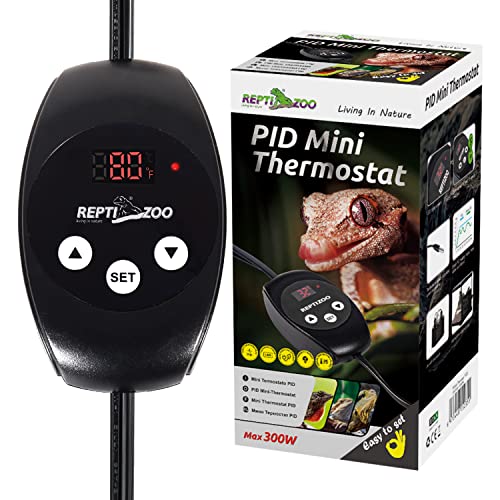
Zoo Med ReptiTemp Digital Thermostat
Simple, reliable on/off thermostat for CHE setups — no app required, just plug in and set your target temperature for dependable temperature control.
Check Price on AmazonMounting and Fixture Setup
Where you place your heater matters as much as which heater you choose.
Crested geckos are arboreal — they live in the upper half of their enclosure. Your heat source should warm the upper ambient zone without creating a scorch point.
Fixture Selection
**The [Fluker's Clamp Lamp with Dimmer 8.5"](https://www.amazon.com/dp/B003H200QC?tag=krawlo-20 is the standard fixture for CHEs and DHPs. Its ceramic socket handles the high heat output, and the built-in dimmer lets you manually fine-tune output before your thermostat takes over. Avoid plastic-socket lamp fixtures — they melt.
Placement Guidelines
- CHE / DHP: Mount on top of the mesh lid, aimed downward into the upper third
- Maintain at least 6–8 inches between the emitter and your gecko's highest resting point
- For bioactive or planted enclosures: mount externally on the side, 2–3 inches from the glass
- Never mount a CHE or DHP inside a glass-sided enclosure without adequate ventilation
Temperature Monitoring
A thermostat probe alone isn't enough verification. Use a **[Govee WiFi Thermometer/Hygrometer](https://www.amazon.com/dp/B09BVLP9C5?tag=krawlo-20 placed at gecko-level inside the enclosure. It logs temperature history and sends phone alerts if temps exceed your set limits — invaluable when a cold snap hits at 3 AM.
Pro Tip: Run your heating setup for 48 hours before introducing your gecko. Check temps at multiple points throughout the day to confirm the thermostat is cycling correctly in your home's ambient temperature.

Fluker's Clamp Lamp with Dimmer 8.5"
Ceramic socket fixture that safely handles CHE and DHP heat output, with a built-in dimmer for manual fine-tuning before your thermostat takes over.
Check Price on Amazon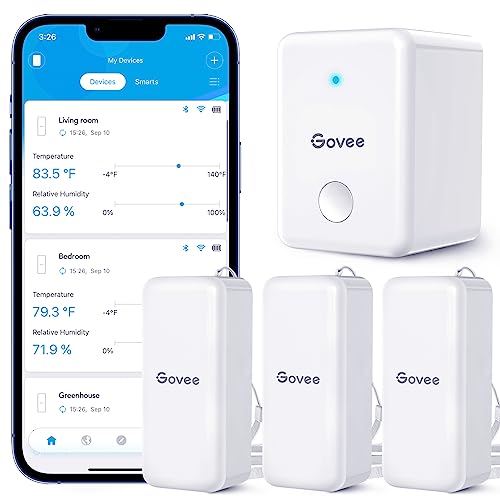
Govee WiFi Thermometer Hygrometer
Logs temperature and humidity history inside the enclosure and sends phone alerts when limits are exceeded — the best early warning system for cold snaps.
Check Price on AmazonSeasonal Heating Strategy for Cold Climates
Your heating needs in January are not the same as in July — and your setup should reflect that.
If your home stays above 72°F year-round (with air conditioning in summer), your heater may barely run in summer and work hard all winter. This is fine — that's what the thermostat is for. But in very cold climates, additional strategies help.
Layered Heating Approach
For rooms that drop below 60°F at night in winter, a single 25W CHE may not be enough. Consider:
- Upgrade to 40W CHE: More wattage for larger enclosures or colder rooms
- Add an under-tank heater (UTH): Tape a small UTH to the outside-bottom of a glass tank, plugged into a separate thermostat probe at floor level
- Enclosure placement: Move the enclosure away from exterior walls, drafts, and windows in winter
- Insulation: Wrap three sides of the enclosure with foam insulation panels in extreme cold
Room Heating vs. Enclosure Heating
If your whole room drops below 60°F, supplemental enclosure heating alone may struggle. It's more efficient to heat the room to at least 65°F and let your enclosure heater handle the remaining 10°F lift. Running a small space heater in your reptile room overnight is often cheaper than asking a 25W CHE to compensate for a 50°F room.
For a broader look at reptile setups that handle temperature extremes, see our beginner reptile guide which covers species-by-species climate needs.
Power Outage Emergency Protocol
No one talks about this — and it's exactly the section cold-climate keepers need.
A winter power outage is a real risk. Here's how to protect your gecko when the grid fails.
Immediate Steps (First 30 Minutes)
- Check current enclosure temperature with your Govee thermometer
- If above 65°F — you have time, monitor every 30 minutes
- If approaching 65°F — move to your emergency plan immediately
Emergency Heating Options
- Chemical hand warmers: Place 2–3 warmers in a sock, tape to outside of enclosure. Never put directly inside — too hot. Maintains 65–68°F for 6–8 hours.
- Cooler + warm water bottles: Place your gecko (in a deli cup with ventilation holes) inside a small cooler with warm (not hot) water bottles. Maintains temp for 2–4 hours.
- Your body: In extreme situations, carry your gecko inside a breathable cloth pouch against your chest. Your body heat will keep them safe for hours.
- Generator or UPS battery: A small 300W UPS battery can run a 25W CHE for 10+ hours. Worth the investment if you live in an area with frequent outages.
Pro Tip: Keep a bag of chemical hand warmers in your reptile cabinet year-round. They cost $8–12 for a 40-pack and could save your gecko's life during a winter outage.
After Power Returns
Do not rush to return your gecko to the enclosure. Verify the thermostat is cycling correctly and temps have stabilized at 72–76°F for at least 1 hour before reintroducing them.
Power Outage Emergency Protocol
Cold-climate keepers: act within the first 30 minutes
Check Current Temperature
0–5 minRead enclosure temp immediately.
Tip: If above 65°F, you have time — monitor every 30 min.
Deploy Chemical Hand Warmers
5–10 minPlace 2–3 hand warmers in a sock and tape to outside of enclosure. Never inside.
Tip: Maintains 65–68°F for 6–8 hours.
Cooler + Warm Water Bottles (If Needed)
Place gecko in ventilated deli cup inside a cooler with warm water bottles.
Tip: Maintains safe temp for 2–4 hours.
Verify After Power Returns
1+ hr post-restoreConfirm thermostat cycling correctly and temps stable at 72–76°F for at least 1 hour.
Cost Comparison: Heating Methods
Another gap in competitor coverage: what does all this actually cost to run?
A 25W CHE running 24/7 draws approximately 0.6 kWh per day. At the U.S. average electricity rate of $0.16/kWh, that's about $0.10/day or $3.00/month. Even running it 24/7 through a cold winter, your heating costs are minimal.
| Heater | Wattage | Daily Cost | Monthly Cost |
|---|---|---|---|
| CHE 25W (24/7) | 25W | ~$0.10 | ~$3.00 |
| DHP 25W (24/7) | 25W | ~$0.10 | ~$3.00 |
| CHE 40W (24/7) | 40W | ~$0.15 | ~$4.60 |
| Space heater (8hr/night) | 1500W | ~$0.64 | ~$19.20 |
The math strongly favors a dedicated reptile heater over room heating. Even a 40W CHE running continuously costs less than heating your room for a few hours a night.
Recommended Gear
Arcadia Deep Heat Projector 25W
Emits infrared-A and B like natural sunlight, providing deep tissue warmth that supports digestion and immunity — the best single heater for cold-climate crested gecko enclosures.
Check Price on AmazonZoo Med Nano Ceramic Heat Emitter 25W
Reliable, affordable CHE sized perfectly for 18x18 terrariums, emits zero light for 24/7 use, and pairs well with any on/off or dimming thermostat.
Check Price on AmazonInkbird ITC-306T WiFi Thermostat
App-controlled smart thermostat with dual day/night setpoints and phone alerts — essential for cold-climate keepers who want remote monitoring when temperatures drop overnight.
Check Price on AmazonFluker's Clamp Lamp with Dimmer 8.5"
Ceramic socket fixture that safely handles CHE and DHP heat output, with a built-in dimmer for manual fine-tuning before your thermostat takes over.
Check Price on AmazonGovee WiFi Thermometer Hygrometer
Logs temperature and humidity history inside the enclosure and sends phone alerts when limits are exceeded — the best early warning system for cold snaps.
Check Price on AmazonZoo Med ReptiTemp Digital Thermostat
Simple, reliable on/off thermostat for CHE setups — no app required, just plug in and set your target temperature for dependable temperature control.
Check Price on AmazonFrequently Asked Questions
Not necessarily a visible-light lamp, but they do need supplemental heat if your home drops below 72°F during the day or 65°F at night. A Ceramic Heat Emitter or Deep Heat Projector runs safely 24/7 without disrupting their day/night cycle.
References & Sources
Related Articles

Veiled Chameleon Heating and Lighting Guide: The Three-Light Setup Explained
Veiled chameleons need three separate light sources and a nightly drop to 65°F. Learn how to set up the full lighting stack for your screen cage today.

Blue Tongue Skink Heating Guide: Temperatures, Subspecies & Real Setup Advice
Blue tongue skink heating guide: Indonesian vs Northern BTS temperature differences, Deep Heat Projectors vs halogen bulbs, and 4x2x2 setup walkthrough.

Bearded Dragon Heating & Thermostat Guide
Get bearded dragon heating right: basking temps, halogen bulb setup, thermostat types, and why heat mats are wrong for BDs. Full setup guide.