
Black-Headed Python Care: Complete Owner's Guide
Black-headed python care guide covering their extreme heat needs, ophiophagous diet, enclosure setup, and why captive-bred specimens cost $500–2000+. Start here.

✓Recommended Gear
In this guide, we cover everything you need to know and recommend 7 essential products. Check prices and availability below.
TL;DR: Black-headed pythons (Aspidites melanocephalus) are 5–7 ft Australian constrictors with extreme basking needs (surface temps of 120–140°F) and a natural diet that includes venomous snakes — in captivity they eat rodents but should never be housed with other reptiles. Captive-bred specimens cost $500–$2,000+ due to rarity, and this species is best suited for keepers who already have python experience. With proper care they live 20+ years.
The black-headed python (Aspidites melanocephalus) is unlike any other python you've kept. With a jet-black, heat-absorbing head, an iridescent banded body, and a diet that includes other snakes — including venomous ones — this Australian species demands a keeper who understands its very specific biology.
Here's the bottom line upfront: black-headed pythons are not beginner snakes. They require surface basking temperatures that exceed most other pythons, a secure enclosure that can contain a powerful 7-foot constrictor, and ideally a keeper who already has python experience. But for the right person, a well-kept BHP is a 20+ year companion that is genuinely one of the most striking reptiles in the hobby.
This guide covers everything — from why their black head is a physiological adaptation rather than a color morph, to the legal import history that makes every captive-bred specimen worth $500–$2,000+.
What Makes Black-Headed Pythons Unique
The black head is functional, not decorative. In the wild, Aspidites melanocephalus bastes in morning sun by pushing its dark head above the surface of sand or leaf litter. The melanin-rich head absorbs infrared radiation rapidly, warming the snake's core while the body stays concealed from predators. This behavioral thermoregulation strategy means BHPs are extremely efficient at using solar (or lamp) heat.
They're also one of the few pythons in the genus Aspidites — a basal lineage that diverged from other pythons early in evolution. Aspidites pythons lack the heat-sensing labial pits found in most python species. Instead of hunting warm-blooded prey by heat signature, they specialize in eating other reptiles, particularly lizards and snakes.
Black-headed pythons regularly kill and consume venomous snakes — including elapids like king brown snakes and taipans — and appear to have a partial resistance to their venom. This ophiophagous (snake-eating) tendency is the single most important thing to understand about feeding and cohabitation for this species.
Adults average 5–7 feet (1.5–2.1 m) with some individuals reaching 8 feet (2.4 m). They're muscular, heavy-bodied, and strong for their length. Lifespan in captivity is 20–30 years with good husbandry — this is a long-term commitment.
Are Black-Headed Pythons Good Pets?
For experienced keepers: yes, emphatically. They're generally calmer than carpet pythons once established, don't have the feeding strikes of some larger pythons, and are fascinating to observe. For true beginners: start with a ball python or children's python first.
Pro Tip: All black-headed pythons sold in the US are descended from legally exported stock — Australia banned reptile exports in 1960. Any BHP you buy today is a captive-bred descendant of those original imported animals. This closed gene pool is why prices remain high and why you must buy from a reputable breeder with documented lineage.
Enclosure Setup
The minimum enclosure for an adult black-headed python is 6 feet L × 2 feet W × 2 feet H (180 × 60 × 60 cm). For a large female or any snake approaching 7 feet, go to 8 feet × 2 feet × 2 feet. These are robust constrictors — undersizing the enclosure leads to stress and repeated escape attempts.
Juveniles (under 3 feet) can be kept in a 36" × 18" × 18" enclosure. Upgrade when the snake's body fills more than 2/3 of the enclosure length.
Enclosure Type
Black-headed pythons need high ambient temperatures that are difficult to maintain in screen-top glass terrariums:
- PVC enclosures — top choice. Retain heat efficiently, easy to clean, hold humidity at set points. Brands like Vision, Animal Plastics (AP), or custom PVC builds are favored by serious BHP keepers.
- Melamine/wood enclosures with sealed interiors — excellent heat retention, often more affordable than PVC.
- Glass terrariums — workable with a solid or partially covered top to retain heat, but require more powerful and expensive heating setups.
- Screen enclosures — not suitable. Cannot maintain the ambient temperatures this species needs.
Security is non-negotiable. A locking front-opening design is strongly preferred over top-opening. A BHP can push surprising force against a lid.
Pro Tip: Front-opening enclosures reduce stress during maintenance. Reaching from above mimics a predator attack for snakes — this is the primary trigger for feeding strikes and defensive biting in BHPs that have otherwise calm dispositions.
Minimum Enclosure Dimensions
Adult (Standard)
6 ft L × 2 ft W × 2 ft H
180 × 60 × 60 cm minimum
Large Adult (7 ft+)
8 ft L × 2 ft W × 2 ft H
For large females approaching 7+ feet
Juvenile (<3 ft)
36" × 18" × 18"
Upgrade when body fills >2/3 of enclosure length
Temperature Requirements
This is the most critical and most commonly mismanaged aspect of black-headed python care. BHPs require ambient temperatures 5–10°F warmer than ball pythons, and surface basking temps that rival some desert lizards.
| Zone | Temperature |
|---|---|
| Basking surface | 105–115°F (40–46°C) |
| Warm side (ambient air) | 88–95°F (31–35°C) |
| Cool side (ambient air) | 78–82°F (25–28°C) |
| Nighttime low | 72–78°F (22–26°C) |
The warm-side ambient temperature is notably higher than what most keepers are used to for pythons. A ball python thrives with an 88°F warm side; a BHP needs 90–95°F to maintain proper digestion and immune function. Getting this wrong is the single most common cause of regurgitation and respiratory illness in captive BHPs.
Building a Proper Thermal Gradient
The gradient from the hot side to the cool end must be genuine — at least a 15°F difference. A snake that cannot escape to a cooler zone will overheat.
The black head behavior translates directly into captive management: position your basking spot so the snake can extend its head into the heat zone while the body remains in a cooler hide. This is how they naturally thermoregulate.
Heating Equipment
- **[Radiant heat panel (RHP)](https://www.amazon.com/dp/B0FNRMTF5B?tag=krawlo-20 — the gold standard for large PVC enclosures. Mounted to the ceiling, provides ambient radiant heat without a visible light source. Most serious BHP keepers use RHPs as the primary heat source.
- **[Ceramic heat emitter (CHE)](https://www.amazon.com/dp/B096JWWQMC?tag=krawlo-20 — good secondary or basking supplement. No light output, all heat. Use 100–150W for large enclosures.
- **[Reptile thermostat (dimming/proportional)](https://www.amazon.com/dp/B0BGS517FT?tag=krawlo-20 — non-negotiable. A dimming thermostat (like the Spyder Robotics Herpstat or Inkbird dimming model) is superior to on/off thermostats for large high-heat enclosures because it maintains stable temps without temperature cycling.
- Infrared temperature gun — the only way to accurately verify 105–115°F surface temperatures.
Under-tank heaters are not recommended as primary heat sources for BHPs. They are too difficult to regulate at the high ambient temperatures required, and surface temps needed at the basking spot are most efficiently delivered from overhead.
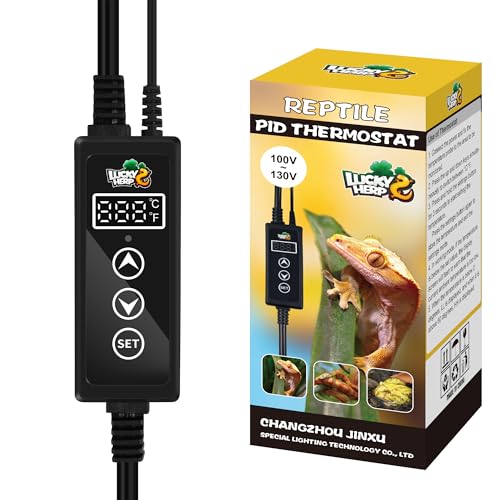
Herpstat 1 Dimming Thermostat
Proportional dimming control maintains stable 90-95°F ambient without temperature cycling — essential for BHP's high and precise heat requirements.
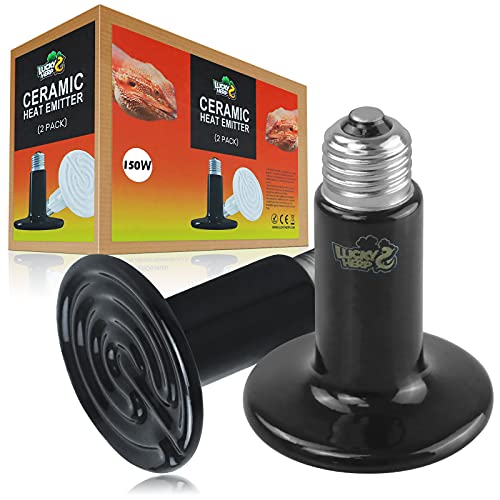
Ceramic Heat Emitter 150W
No-light heat source that delivers the sustained 105-115°F surface basking temps BHPs need without disrupting day/night cycles.
Etekcity Lasergrip Infrared Thermometer
The only accurate tool for verifying 105-115°F basking surface temperatures — digital probe thermometers cannot measure surface temps correctly.
Critical Temperature Zones
Basking Surface
105–115°F
Most critical; use temperature gun to verify
Warm Side (Ambient)
88–95°F
Required for proper digestion & immune function
Cool Side (Ambient)
78–82°F
Escape zone; must differ by ≥15°F from warm side
Nighttime Low
72–78°F
Temperature drop triggers natural behavior
Lighting
Black-headed pythons in the wild bask in open sunlight to thermoregulate. In captivity, a visible light source on a timer is beneficial for several reasons:
- Establishes a day/night photoperiod cycle that stabilizes behavior and feeding
- Provides a heat gradient reference point the snake can navigate visually
- Supports natural activity patterns
UVB is currently debated for BHPs. There's no definitive captive study proving BHPs require UVB for D3 synthesis the way a diurnal lizard does — they're crepuscular hunters in the wild. However, recent research on crepuscular snakes suggests low-level UVB exposure (Ferguson Zone 1–2, UVI 0.5–1.0) is beneficial. A low-output UVB bulb like the Arcadia ShadeDweller Pro T5 6% is a sensible addition without risk of over-exposure.
Run lights on a 12-hour on / 12-hour off cycle year-round, or adjust slightly for seasonal variation if you intend to breed.
Humidity
Black-headed pythons are native to the tropical and subtropical regions of northern Australia — not pure desert. They require moderate humidity levels that many keepers underestimate.
| Parameter | Target |
|---|---|
| Ambient humidity | 50–70% |
| During shed cycle | 60–70% |
| Inside humid hide | 70–80% |
Maintain humidity using a water bowl large enough for soaking, a substrate that holds some moisture, and light misting as needed. The humid hide on the cool side is important — especially during shedding cycles.
Signs of too-low humidity: incomplete sheds (stuck skin, retained eye caps). Signs of too-high humidity combined with incorrect temperatures: respiratory wheezing, mucus, scale rot. The solution to both is correct temperature gradient first — a warm enough enclosure dries moisture naturally without becoming desiccating.
Substrate
Use 2–4 inches of a moisture-retaining substrate that allows light digging. Black-headed pythons are semi-fossorial — they partially bury themselves and their hides should complement this behavior.
Recommended Substrates
- Cypress mulch — excellent moisture retention, naturalistic, easy to spot-clean, resists mold at correct temps. The preferred choice for many experienced BHP keepers.
- Zoo Med Eco Earth (compressed coconut fiber) — holds humidity well, soft burrowing texture, good odor control.
- 60/40 topsoil and play sand mix — naturalistic, allows deep burrowing, excellent for bioactive setups.
- Paper towels or newspaper — acceptable for juveniles in quarantine or medical care situations only. Not for permanent setups.
Avoid:
- Cedar or pine shavings (aromatic oils are toxic)
- Fine sand as the only substrate (too drying, poor traction for heavy-bodied snake)
- Reptile carpet (traps shed skin, harbors bacteria, causes rostral abrasion from nose-rubbing)
Spot-clean waste immediately. Full substrate replacement every 2–3 months, or when odor becomes noticeable despite spot-cleaning.
Pro Tip: Deep substrate (4–6 inches) in the cool half of the enclosure gives your BHP a microclimate to burrow into. This is a natural thermoregulatory behavior — they regulate core body temp by partially burying into slightly cooler substrate while using the ambient warm air above.
Hides
Provide at least two hides — one on the warm side, one on the cool side. Black-headed pythons are secretive and will refuse to thrive without secure hides they fit into snugly.
For large adults, purpose-built hides or modified storage containers work well. The hide should be just large enough for the snake to coil inside — a hide that's too large provides no sense of security. Half-logs, cork bark rounds, and commercial plastic hides all work.
A humid hide on the cool side — lined with damp sphagnum moss — is essential during shedding periods.
Diet and Feeding
Feeding black-headed pythons requires understanding their ophiophagous nature. This is not an academic point — it directly affects what prey you offer and how you manage feeding sessions.
What They Eat
In the wild, BHPs eat a mix of lizards, small mammals, and other snakes. In captivity, the vast majority of keepers feed:
- Pre-killed or frozen/thawed mice and rats — the standard captive diet. Most captive-bred BHPs accept rodents readily.
- Appropriately sized rats — adults should eat rats, not mice. Prey diameter should be roughly equal to the widest part of the snake's body.
- Quail or other birds — useful as a diet switch for problem feeders or during breeding season.
Snake prey in captivity is generally unnecessary and discouraged. The ophiophagous nature is a wild adaptation — captive BHPs eating a rodent-based diet are well-nourished and show no nutritional deficit compared to snake-fed individuals.
Feeding Frequency
| Age | Prey Size | Frequency |
|---|---|---|
| Juvenile (under 2 ft) | Fuzzy/pinky rat | Every 5–7 days |
| Subadult (2–4 ft) | Small rat | Every 7–10 days |
| Adult (4 ft+) | Medium/large rat | Every 10–14 days |
| Large adult (6 ft+) | Large rat or rabbit | Every 14–21 days |
Avoid overfeeding. BHPs in captivity can easily become obese, particularly females. An obese BHP is at higher risk for reproductive complications, fatty liver disease, and shortened lifespan. Feed to maintain a firm body without visible obesity (excessive lateral widening of the spine, rolls of fat visible on the sides).
Feeding Strikes and Safety
Black-headed pythons are generally calmer feeders than some python species, but large adults delivering a feeding strike carry significant force. Always use feeding tongs — never free-hand feed a BHP.
The ophiophagous instinct creates one specific risk: a BHP can and will attempt to consume a second snake if one is present during feeding. Never cohabitate two BHPs — not even temporarily during feeding sessions. This is species behavior, not exceptional aggression.
Pro Tip: Feed pre-killed or frozen/thawed prey exclusively. Live prey can injure your snake during constriction attempts (particularly live rats with incisor bites). Frozen/thawed prey is nutritionally equivalent and far safer for both the snake and keeper.
Water and Hydration
Provide a water bowl large enough for your BHP to soak in — this species soaks before and during shedding cycles. A bowl that only allows drinking, not soaking, is insufficient.
Change water every 2–3 days or immediately if the snake defecates in the bowl (common behavior). Scrub the bowl with a reptile-safe disinfectant (diluted chlorhexidine or F10SC) weekly.
For large adults, cat litter trays or dishpans make practical, inexpensive soaking vessels.
Handling and Temperament
Black-headed pythons have a reputation as one of the more manageable large Australian pythons — typically calmer than carpet pythons of comparable size once they're established. That said, temperament varies between individuals, and all BHPs require consistent, respectful handling to maintain their calm disposition.
Taming Protocol
- First 2 weeks: No handling. Allow the snake to settle, eat its first meal, and defecate before any contact.
- First month: Brief 5–10 minute sessions. Hook first to let the snake know handling — not feeding — is beginning.
- Ongoing: 15–30 minute sessions, 2–3x per week maximum. Always use a hook to initiate for the first 30–60 days.
Reading Body Language
- Calm, exploratory movement — relaxed and comfortable
- Neck flattening into an S-curve — defensive posture, back off and give space
- Rapid tongue-flicking toward you after feeding — heat-sensing (labial pits absent in Aspidites), feeding mode still active — don't handle for 48 hours post-feeding
- Repeated striking at glass — stress, improper temperatures, or hunger
Pro Tip: BHPs lack the heat-sensing labial pits of most pythons. They rely on olfactory cues (Jacobson's organ) rather than infrared sensing for prey detection. Washing hands thoroughly with unscented soap before handling removes prey odors that can trigger a feeding response.
Shedding
Expect shedding every 6–10 weeks for juveniles, less frequently for adults (4–6 times per year). Signs of impending shed: eyes turn opaque blue-grey, coloration dulls, appetite typically drops or disappears.
During the shed cycle:
- Increase humid hide moisture
- Ensure soaking water is available
- Minimize handling — vision is impaired and snakes are more defensive
- Do not attempt to assist shedding until 24 hours after the shed process begins
A healthy BHP in correct humidity should shed in one piece. Patchy or incomplete sheds indicate humidity is too low, or the snake lacked appropriate rough surfaces to rub against during ecdysis.
If retained eye caps (spectacles) occur: soak the snake for 20–30 minutes in warm water, then gently use a damp cloth to attempt removal. If eye caps remain stuck after soaking, see a reptile vet — do not force removal.
Common Health Issues
Most BHP health problems trace to husbandry failures, particularly temperature management.
Regurgitation
The #1 cause is insufficient ambient temperature. A BHP that cannot reach 90–95°F on the warm side cannot digest prey effectively. Handling within 48 hours of feeding is a secondary cause.
Response protocol: Remove uneaten prey immediately. Wait 7–10 days before attempting to feed again, starting with a smaller prey item. If regurgitation recurs, review temperatures before anything else.
Respiratory Infection (RI)
Cause: Ambient temperatures too low combined with high humidity — the classic recipe for bacterial respiratory infections in pythons. Signs: Wheezing, open-mouth breathing, mucus at nares, lethargy, head tilting upward ("stargazing" in severe cases). Treatment: Requires a reptile vet — antibiotics, temperature correction, supportive care. Do not attempt home treatment with OTC remedies.
Inclusion Body Disease (IBD)
A viral disease (caused by arenaviruses) that affects boid snakes. Signs: regurgitation, neurological symptoms (stargazing, loss of coordination, inability to right itself), progressive deterioration. There is no treatment. IBD is fatal and contagious to other boid snakes. A confirmed IBD-positive snake should be euthanized, and all enclosures and equipment thoroughly disinfected or discarded.
Buying from reputable captive-bred breeders significantly reduces IBD risk compared to animals of unknown origin.
Mites
Signs: Tiny moving black or red dots on the snake's body or in the water bowl, excessive soaking, rubbing against enclosure walls. Treatment: Zoo Med Reptile Mite Spray or veterinarian-prescribed treatment. Clean and treat the entire enclosure — mites live in substrate and decor, not just on the snake.
Pro Tip: Find a reptile-experienced vet before you bring your BHP home. The Association of Reptilian and Amphibian Veterinarians (ARAV) directory lists board-certified reptile vets by region. A general practice vet unfamiliar with snake anatomy is not equipped to diagnose and treat serious BHP conditions.
Legality and Sourcing
Black-headed pythons are legal to own in most US states — check your state and local regulations before purchasing. They are not federally restricted under the Lacey Act.
All US captive-bred BHPs descend from animals legally exported from Australia prior to the 1960 export ban. The closed gene pool, limited breeding pairs, and slow captive reproduction rates keep prices at $500–$2,000+ for healthy captive-bred specimens. Treat any BHP offered for significantly less with serious scrutiny — ask for lineage documentation, health records, and vet checks.
Buy only from established captive-bred breeders, preferably those who have been working with BHPs for multiple generations. Avoid online classifieds with no documentation.
How Black-Headed Pythons Compare to Similar Species
| Species | Adult Length | Difficulty | Heat Needs | Price Range |
|---|---|---|---|---|
| Black-headed python | 5–7 ft | Advanced | Very high (95°F ambient) | $500–$2,000 |
| Carpet python | 5–9 ft | Intermediate | Moderate (85–90°F) | $150–$600 |
| Ball python | 3–5 ft | Beginner | Moderate (88°F) | $50–$500 |
| Children's python | 2–4 ft | Beginner | Moderate (88°F) | $80–$300 |
If you're drawn to Australian pythons but not yet ready for the thermal demands of a BHP, the children's python is an excellent starting point from the same continent — smaller, more forgiving, and similarly calm in temperament.
Recommended Gear
Herpstat 1 Dimming Thermostat
Proportional dimming control maintains stable 90-95°F ambient without temperature cycling — essential for BHP's high and precise heat requirements.
Ceramic Heat Emitter 150W
No-light heat source that delivers the sustained 105-115°F surface basking temps BHPs need without disrupting day/night cycles.
Etekcity Lasergrip Infrared Thermometer
The only accurate tool for verifying 105-115°F basking surface temperatures — digital probe thermometers cannot measure surface temps correctly.

Zoo Med Eco Earth Coconut Fiber Substrate
Holds 50-70% humidity naturally, soft enough for BHP burrowing behavior, and odor-resistant for large python enclosures.
Arcadia ShadeDweller Pro T5 6% UVB
Low-output UVB designed for crepuscular and forest-dwelling reptiles — provides Ferguson Zone 1-2 UVB benefit without over-exposure risk for BHPs.

Large Reptile Hide Box (XL)
Snug-fitting hides are essential for BHP security — a snake that can't hide properly will be chronically stressed and refuse food.

Feeding Tongs (16-inch stainless steel)
16-inch tongs keep hands safely out of strike range — never free-hand feed a large BHP. Essential safety equipment for any keeper.
Frequently Asked Questions
Adults average 5–7 feet (1.5–2.1 m), with exceptional individuals reaching 8 feet (2.4 m). Females tend to be longer and heavier than males. Full adult size is typically reached at 4–6 years of age.
References & Sources
Related Articles

White-Lipped Python Care: The Complete Guide
White-lipped python care explained: rainbow iridescence, high-humidity tropical setup, feeding nippy juveniles, and everything that makes them unlike any other python. Start here.

Green Tree Python Care: The Complete Guide
This guide contains affiliate links. Complete green tree python care covering locality differences, the juvenile color change, perch design, and advanced feeding techniques.

Children's Python Care: The Complete Owner's Guide
Children's python care made simple: enclosure, temperatures, feeding, and handling for this 3-foot Australian python. The ideal first snake for small spaces. Start here.