
Ball Python Care Guide: Habitat, Diet & Health
Complete ball python care guide for beginners. Covers enclosure setup, overhead heating, frozen-thawed feeding, feeding refusal fixes, handling tips, and common health issues.

✓Recommended Gear
In this guide, we cover everything you need to know and recommend 6 essential products. Check prices and availability below.
TL;DR: Ball pythons are 3–5 ft, 20–30 year snakes needing a 4×2×2 ft enclosure with an 88–92°F warm side, 76–80°F cool side, 60–80% humidity, and overhead heating (CHE or Deep Heat Projector preferred over heat mats). Feed frozen/thawed rodents every 5–7 days for hatchlings scaling to every 10–14 days for adults, sized to roughly the widest part of the snake's body. Feeding refusals are extremely common and usually tied to pre-shed, incorrect temperatures, or seasonal behavior — not illness.
Ball pythons are the most popular pet snakes in the world — and by a significant margin. They're consistently among the top three reptiles sold in the United States, favored for their docile temperament, manageable size, and stunning morph diversity. For a beginner wanting their first snake, few species are better suited.
That said, ball pythons have specific care requirements that, when ignored, lead to the hobby's most common frustrations: feeding refusals, stuck sheds, and respiratory issues. This guide covers everything you need to set up your snake correctly from day one — including the equipment choices the hobby has shifted toward in recent years.
Species Overview
Origin and Natural Habitat
The ball python (Python regius) is native to West and Central Africa, primarily found across Ghana, Togo, Benin, Nigeria, and neighboring countries. According to ReptiFiles, they inhabit grasslands, open forests, and the edges of agricultural areas, where they shelter in burrows and termite mounds.
This origin tells us something critical: ball pythons are ground-dwelling, semi-fossorial snakes that spend much of their time in the humid, stable microclimate of underground burrows. Their care requirements — high humidity, warm belly heat, secure hiding spaces — directly reflect this natural lifestyle.
Size and Lifespan
Adult ball pythons typically measure 3-5 feet in total length. Females generally grow larger, reaching 4-5 feet at maturity. Males tend to stay in the 3-4 foot range.
This is one of the longest-lived common pet snakes. With proper care, ball pythons regularly live 20-30 years in captivity. Community data from long-term keepers shows some individuals surpassing 40 years. This is a significant commitment — longer than most dog breeds.
Temperament
Ball pythons are named for their defensive behavior: when threatened, they curl into a tight ball with their head protected at the center. In captivity with regular handling, this behavior rarely appears.
Well-acclimated ball pythons are calm, slow-moving, and curious. They rarely bite unprovoked. Most bites happen during feeding (a food response, not aggression) or when handlers move too fast and trigger a defensive reaction. Compared to species like veiled chameleons, ball pythons have a much more forgiving temperament for beginners.
Keeper insight: Ball pythons have individual personalities. Some are immediately handleable; others need several weeks of patience before they relax. Based on widespread keeper reports, consistent, calm daily interaction — even without picking the snake up — significantly shortens the acclimation window.
Ball Python Quick Reference
Size (adult)
3–5 feet
Females 4–5 ft, males 3–4 ft
Lifespan
20–30 years
Some individuals exceed 40 years with proper care
Origin
West & Central Africa
Grasslands, forests, termite mounds
Temperament
Docile, slow-moving
Curl into ball when threatened; rarely bite
Is a Ball Python Right for You?
True Cost of Ownership
Many beginners are surprised by the upfront investment a proper setup requires. Community data consistently shows that underinvesting in the enclosure and heating leads to the most common care failures.
| Cost Category | Typical Range |
|---|---|
| Enclosure (PVC 4x2x2) | $300-600 |
| Heating (DHP + thermostat) | $80-150 |
| Thermometers + hygrometers | $30-60 |
| Substrate (initial fill) | $20-40 |
| Hides and decor | $30-80 |
| The snake itself | $50-200 (normal morph) |
| Total initial setup | $500-1,100+ |
Ongoing costs are modest: $20-40/month covers frozen feeders and substrate replacements. Annual vet checkups typically run $80-200 depending on your area.
Time Commitment
Ball pythons are relatively low-maintenance compared to lizards like bearded dragons or crested geckos. Daily care takes 5-10 minutes: check temperatures, spot-clean if needed, provide fresh water.
Feeding sessions happen every 7-14 days depending on the snake's age. Each session takes under 10 minutes. The most time-intensive part of ball python keeping is the setup and troubleshooting phase in the first few months.
Habitat Setup
Enclosure Size
Ball pythons are often sold with the outdated advice to start small. Community data and veterinary guidance have shifted away from this approach. A snake that is stressed from an enclosure that is too large is rare — a snake stressed from an enclosure that is too small is extremely common.
| Life Stage | Minimum Size | Recommended |
|---|---|---|
| Hatchling (0-6 months) | 20 gallon / 2x1.5x1 | 2x2x1 or similar |
| Juvenile (6-18 months) | 3x2x1.5 | 4x2x1.5 |
| Adult (18+ months) | 4x2x1.5 | 4x2x2 |
PVC vs. Glass — What the Hobby Has Learned
This is the most significant shift in ball python keeping over the past decade. Glass terrariums dominated early in the hobby; PVC (polyvinyl chloride) and ABS plastic enclosures now dominate serious keeper setups.
Why the hobby moved to PVC:
- Heat retention: PVC walls insulate; glass radiates heat outward, requiring more powerful (and expensive) equipment
- Humidity retention: Glass enclosures with mesh tops lose humidity fast, making the 60-80% target difficult to maintain
- Light reduction: Ball pythons are crepuscular to nocturnal. Opaque PVC walls reduce ambient light stress significantly
- Security: Enclosed sides give the snake a "hide" feeling even in the open enclosure
Glass tanks can work well with modifications — blocking mesh with aluminum foil, adding a secondary humid hide, and using more powerful heating equipment. But PVC is the lower-effort path to optimal conditions.
Setup note: Before purchasing a PVC enclosure, measure your space carefully. A 4x2x2 enclosure is a substantial piece of furniture. A **[PVC Reptile Enclosure 4x2x2](https://www.amazon.com/dp/B0DRSHBP5S?tag=krawlo-20 is the standard adult configuration, offering the floor space ball pythons need without wasted vertical height.
Substrate
Substrate selection directly impacts humidity stability. Based on keeper reports and guidance from sources like The Bio Dude, the best substrate options for ball pythons are:
Top choices:
- Coconut fiber (coco coir) — excellent moisture retention, easy to work with, affordable
- Cypress mulch — resists mold well, good humidity buffer, very popular with experienced keepers
- Sphagnum moss — ideal for the humid hide and as a supplemental layer in the enclosure
- Bioactive mixes — a combination of coco coir, topsoil, and sand; used in live-planted setups
Substrate depth matters: Aim for at least 3-4 inches of depth, which allows the snake to partially burrow — behavior that directly reflects their natural semi-fossorial lifestyle.
Avoid: Paper towel (functional for quarantine only, provides no humidity buffer), reptile carpet (harbors bacteria, mold, and mites), and cedar or pine (contain toxic phenols).
Hides and Enrichment
Two hides are non-negotiable. Ball pythons without adequate hiding options are chronically stressed — and a stressed ball python stops eating.
- Warm-side hide — placed directly over or near the warm zone
- Cool-side hide — provides escape from heat
- Humid hide — a hide packed with damp sphagnum moss, placed on the warm side. Critical during shed cycles
Hides should be just large enough for the snake to fit inside with light body contact on the walls. Oversized hides provide less security. Snug = safe in a ball python's perspective.
Enrichment keepers often overlook:
- Low-profile climbing branches or cork tubes at ground level
- Fake leaf litter or ground cover for natural foraging behavior
- Varied hide shapes (flat rock-style vs. dome-style) to provide sensory novelty
- Feeding in different locations rotated occasionally to stimulate natural hunting patterns
Behavioral note: Ball pythons that have environmental enrichment — varied hides, textures, and sensory elements — show fewer stress behaviors than snakes in bare enclosures. Community data from keepers running enriched setups report higher feeding consistency and calmer handling sessions.

PVC Reptile Enclosure 4x2x2
PVC panels hold heat and humidity far better than glass, reducing equipment costs and keeper stress. The industry standard enclosure type for serious ball python keepers.
Check Price on AmazonGovee Bluetooth Thermometer Hygrometer
Dual-probe digital monitoring with smartphone app alerts. Tracks both temperature and humidity in real time — a must-have for dialing in ball python conditions.
Check Price on AmazonTemperature and Heating
Temperature Targets
Accurate temperature management is the single most important element of ball python care. Temperatures that are too low impair digestion and immune function; temperatures that are too high cause heat stress and can be fatal.
| Zone | Target Temperature |
|---|---|
| Warm hide floor (belly heat) | 88-92°F |
| Warm ambient air | 82-86°F |
| Cool side ambient | 76-80°F |
| Nighttime drop (all zones) | 72-78°F |
The Shift to Overhead Heating
Under-tank heaters (UTHs) were the default recommendation for ball pythons for many years. The hobby has significantly shifted away from UTHs as a primary heat source, and for good reason.
Why overhead heating is now preferred:
- Ball pythons are thigmothermic — they absorb warmth by pressing against warm surfaces. But they also thermoregulate using ambient air temperature, which UTHs do not raise effectively
- No depth penetration — UTHs only heat the very bottom surface. A thick layer of substrate (3-4 inches, as recommended) insulates against a UTH, making it nearly useless
- Fire and burn risk — UTHs without thermostats have caused enclosure fires and thermal burns on snake bellies
- Infrared spectrum — modern overhead heat sources like the Deep Heat Projector (DHP) produce infrared A and B wavelengths that penetrate into muscle tissue, the same way solar radiation does
Best overhead heating options:
- Deep Heat Projector (DHP) — currently the top recommendation from most experienced keepers. The **[Arcadia Deep Heat Projector](https://www.amazon.com/dp/B0BSHS996Y?tag=krawlo-20 produces full-spectrum infrared for true physiological warmth
- Ceramic Heat Emitter (CHE) — emits heat without light. A solid, affordable choice that has been used successfully for decades
- Radiant Heat Panel (RHP) — mounts to the ceiling inside the enclosure. Excellent ambient air heating with low light emission
- Halogen flood bulbs — produce visible light and heat; useful if supplemental UVB lighting is not being used separately
UTH as supplemental belly heat: Some keepers still use a thermostat-controlled UTH as a supplemental belly heat source under one section of the enclosure floor. This is acceptable when combined with an overhead primary heat source — just never as the only heat provider.
Thermostats Are Not Optional
Every heat source must be connected to a thermostat. This is non-negotiable. A heat source running without a thermostat will overheat your enclosure, stress your snake, and can cook your animal if it malfunctions overnight.
A **[precision thermostat like the Inkbird](https://www.amazon.com/dp/B08Y5JDYFY?tag=krawlo-20 provides digital control, programmable day/night cycles, and safety cutoffs. For more options, see our best reptile thermometers guide.
Thermostat types:
- On/off thermostat — cheapest, cycles heat on and off; some temperature fluctuation is normal
- Dimming/PWM thermostat — reduces heat output to maintain precise temperatures; preferred for CHEs and DHPs
- Pulse proportional thermostat — preferred for UTHs
Monitoring: Always use a digital thermometer/hygrometer combo with probes placed at the warm hide floor level and the cool side. Stick-on dial thermometers are wildly inaccurate and should never be trusted for ball python temperatures. For a full comparison, see our best reptile hygrometers guide.
Humidity Management
Target Range
Ball pythons need 60-80% relative humidity year-round, with the upper end (70-80%) prioritized in the 2-4 weeks before and during a shed cycle.
Humidity below 50% causes:
- Stuck shed (dysecdysis), especially over the eye caps
- Dehydration over time
- Respiratory irritation
Humidity above 90% for extended periods causes:
- Scale rot and bacterial skin infections
- Respiratory infections
- Mold growth in substrate
Practical Humidity Strategies
Substrate depth is your primary humidity regulator. A deep substrate layer acts as a humidity buffer — you water it periodically (like a terrarium), and it releases moisture slowly over days.
Additional strategies based on keeper reports:
- Humid hide: A hide half-filled with damp sphagnum moss maintained year-round. This gives your snake access to a high-humidity microenvironment whenever it needs one
- Partially blocked ventilation: If using a glass enclosure with a full mesh top, cover 50-75% with aluminum foil or acrylic to reduce evaporation
- Misting: Light misting of substrate (not directly on the snake) once or twice weekly helps maintain baseline humidity
- Water bowl size: A large, heavy water bowl increases ambient humidity through natural evaporation
Monitor with a digital hygrometer — analog dial types are not accurate enough for ball python humidity management.
Diet and Feeding
Frozen-Thawed is the Standard
Ball pythons are strict carnivores that eat whole prey animals in captivity. The reptile keeping community has reached strong consensus: frozen-thawed (F/T) prey is safer and better than live feeding in virtually all situations.
Why frozen-thawed:
- Live rodents bite back — documented cases of rodent bites causing serious injuries and even death in snakes left unsupervised
- Frozen prey eliminates the risk of parasites and bacterial contamination that live prey can carry
- F/T prey is more convenient, cheaper per unit, and available in consistent sizes
- Most captive-bred ball pythons readily accept F/T from hatch
According to PetMD's care sheet, the prey item should be approximately the same diameter as the widest part of the snake's body. A slight lump after feeding is normal.
Feeding Schedule
| Age | Prey Item | Frequency |
|---|---|---|
| Hatchling (0-3 months) | Pinky or fuzzy mouse | Every 5-7 days |
| Juvenile (3-12 months) | Hopper mouse or small rat | Every 7-10 days |
| Sub-adult (12-24 months) | Small-medium rat | Every 10-14 days |
| Adult (2+ years) | Medium-large rat | Every 14-21 days |
Thawing and Presenting Prey
Proper prey presentation dramatically improves feeding acceptance. Community data shows these methods consistently work best:
- Thaw completely — refrigerator overnight, then warm in a sealed bag in hot water (105-110°F) for 15-20 minutes. Never microwave.
- Check internal temperature — prey should feel warm throughout, not just on the surface
- Present with tongs — always use reptile feeding tongs rather than your hands. This separates your scent from the food scent and keeps your fingers safe
- Wiggle the prey — gentle movement mimics live prey and triggers the feeding response
- Feed in dim lighting — ball pythons are crepuscular; low light conditions trigger feeding drive more reliably
Feeding safety: Always wash hands before and after feeding. Never handle your snake for 48-72 hours after a feeding to allow digestion without stress regurgitation.
Feeding Refusal — The Ball Python Problem
Feeding refusal is the single most commonly reported challenge with ball pythons. Community data suggests most keepers experience at least one extended feeding refusal within their snake's first two years. Understanding the causes prevents panic and prevents the most harmful mistake: force-feeding.
Most common causes of feeding refusal:
| Cause | Signs | Solution |
|---|---|---|
| Pre-shed | Dull skin, cloudy eyes | Wait 7-10 days, offer 2-3 days after shed |
| Wrong temperature | Below 88°F warm side | Fix thermostat, recheck with probes |
| Humidity too low | Wrinkled skin, stuck shed | Raise humidity, add humid hide |
| Stress | Frequent handling, new location | Reduce interaction, cover enclosure sides |
| Prey too small | Snake ignores prey | Upsize to next prey size |
| Breeding season | October-March, often males | Normal seasonal behavior; maintain care |
| Wrong prey scent | Switched from mice to rats | Transition gradually or scent prey |
| Environmental stress | External noise, vibration, bright light | Move to quieter location, reduce light |
Troubleshooting techniques based on keeper reports:
- Paper bag method: Place snake and prey item together in a sealed paper bag for 30-60 minutes in a dark, quiet room
- Scenting: Rub prey item on a chicken neck or another acceptable protein to add novel scent
- Prey switching: Offer a different prey species temporarily (gerbil, hamster) to break a feeding strike, then transition back
- Braining: Last resort for long-term refusals — exposing prey brain tissue releases strong scent cues. Consult a vet before attempting.
When refusal requires veterinary attention: If your ball python refuses food for more than 6-8 consecutive weeks without an obvious cause (shed cycle, breeding season), schedule an exam. Cryptosporidiosis, internal parasites, and respiratory infections all cause feeding cessation.
Handling and Behavior
Acclimation Period
New ball pythons need time to settle. Based on keeper consensus, allow a minimum of 2 weeks without handling after bringing your snake home. Feed successfully twice before attempting any significant handling sessions.
During this period:
- Maintain strict temperature and humidity parameters
- Keep the enclosure in a low-traffic area
- Do not open the enclosure unnecessarily
- Cover the sides of a glass enclosure if the snake seems restless
Handling Technique
Ball pythons are ground-dwelling snakes and feel most secure when supported from below:
- Approach from the side — never from directly above (triggers bird-of-prey response)
- Use a slow, confident scoop under the mid-body
- Support the full length — never let more than 1/3 of the body hang unsupported
- Allow the snake to move freely between your hands rather than gripping
- Keep early sessions to 10-15 minutes maximum
Once acclimated, most ball pythons tolerate 30-60 minute handling sessions without stress. Avoid handling within 48 hours of feeding and during shed cycles.
Stress Indicators
Ball pythons communicate stress clearly to attentive keepers. Learn to recognize these early warning signs:
High stress:
- Striking repeatedly at the glass or enclosure walls
- Refusing to stay still — constant movement and escape attempts
- S-curve posture with flattened head (defensive display)
- Musking (releasing a foul-smelling secretion)
- Regurgitating after feeding
Mild stress:
- Curling into a tight ball during handling (give more time to acclimate)
- Tongue-flicking excessively without exploring
- Remaining in hide 24/7 without feeding
Key principle: Most ball python behavioral issues trace back to environmental problems — incorrect temperatures, humidity outside range, inadequate hides, or too much ambient light. Fix the environment before attributing the behavior to the snake's personality.
Health and Common Issues
Respiratory Infections
Respiratory infections are among the most common ball python health problems and almost always trace back to husbandry failures — temperatures too low, humidity too high, or a combination of both.
Symptoms include:
- Wheezing or crackling breath sounds
- Mucus or bubbles around nostrils or mouth
- Labored breathing or open-mouth breathing
- Lethargy and loss of appetite
Respiratory infections require veterinary-prescribed antibiotics. Raise warm-side temperatures to 88-90°F while awaiting your appointment — this supports immune function. Never attempt home treatment.
Stuck Shed (Dysecdysis)
Healthy ball pythons shed their entire skin in one piece. Retained shed — especially over the eye caps — is a serious problem. Retained eye caps left for multiple sheds can cause permanent eye damage.
Prevention: Maintain 60-80% humidity consistently and provide a year-round humid hide.
For minor stuck shed: Soak the snake in warm water (88-90°F) for 20-30 minutes, then gently roll retained skin off with a damp cloth. Never pull retained eye caps — this requires veterinary removal.
Inclusion Body Disease (IBD)
IBD is a severe, fatal viral disease caused by arenaviruses and hartmaniviruses. It is contagious between snakes and has no treatment or cure. Any snake showing neurological symptoms — corkscrewing, star-gazing (looking up with neck bent backward), inability to right itself — must be isolated immediately and examined by a vet.
IBD is the primary reason experienced keepers quarantine all new snakes for a minimum of 90 days before housing them near existing collections.
Mites
Serpent mites (Ophionyssus natricis) are tiny red or black parasites visible around the eyes, nostrils, and under chin scales. A mite infestation causes anemia, stress, and feeding refusal in severe cases.
Signs: Tiny moving dots on the snake and around the enclosure, the snake soaking excessively in its water bowl (trying to drown mites), and visible irritation around eye area.
Treatment requires treating the snake and completely replacing the entire enclosure setup — all substrate, hides, and decorations. Consult a reptile vet for appropriate treatment protocols.
When to See a Vet Immediately
- Wheezing, bubbling, or open-mouth breathing
- Neurological symptoms: star-gazing, corkscrewing, loss of coordination
- Retained eye caps after a shed
- Visible mites or scale rot
- No bowel movement for 4+ weeks
- Sudden weight loss or refusal to eat for 6+ consecutive weeks
- Any swelling around the jaw or body
This article is for informational purposes only and is not a substitute for professional veterinary advice. Always consult a qualified reptile veterinarian for health concerns.
Where to Buy a Ball Python
Captive-Bred vs. Wild-Caught
Always purchase captive-bred (CB) ball pythons. Wild-caught imports — while declining in the US hobby — carry heavy parasite loads, are significantly more stressed, and have a much lower rate of acclimating to captivity. A captive-bred hatchling from a reputable source is calmer, healthier, and more likely to feed reliably from day one.
Finding a Reputable Breeder
| Source | Price Range | Notes |
|---|---|---|
| Reputable CB breeder | $50-300 (normal) / $500-5,000+ (rare morph) | Best option |
| Reptile expo | $40-500+ | Varies widely; ask for feeding records |
| Online marketplaces (MorphMarket) | $50-1,000+ | Vet seller reviews carefully |
| Pet store chain | $50-150 | Often unknown history, may be wild-caught |
| Rescue/rehome | $0-50 | Unknown history; quarantine strictly |
Morph Considerations
Ball pythons come in over 5,000 documented color and pattern morphs. Normal (wild-type) animals make excellent pets and are the most affordable. Designer morphs carry some considerations:
- Spider morph and related morphs (Champagne, Hidden Gene Woma): Linked to a neurological condition called wobble syndrome. Affected snakes show head tilting and difficulty righting themselves. The welfare implications of purchasing these morphs are actively debated in the community.
- Blue-eyed Lucy (BEL) and Ultramel: Generally healthy but high price; stunning animals that require the same care as any ball python
Health Check Before Purchase
Before committing, ask the seller for feeding records (at least 3 consecutive successful feeds) and observe:
- Alert, responsive — not limp or unresponsive
- Clean vent area — no stuck feces or discharge
- Smooth, complete scales — no wrinkled skin, lesions, or retained shed
- Clear eyes — not cloudy (unless in shed) and fully round without sunken appearance
- Healthy weight — spine should not be visibly prominent; ribs should not be sharply angular
- Clean nostrils — no mucus or bubbling
After purchase: Quarantine your new snake for 60-90 days in a separate room from any other reptiles. Schedule a vet exam with a fecal parasite test within the first 4-6 weeks.
UVB Lighting — Is It Needed?
Ball pythons were historically kept without any UVB lighting, and many keepers continue this approach successfully. However, research and keeper observations from the past decade have added nuance to this question.
Current community consensus:
- Ball pythons are not strictly dependent on UVB the way diurnal lizards like bearded dragons are
- They are crepuscular to nocturnal in the wild; their UVB exposure is naturally low
- However, keeper reports suggest that ball pythons given access to low-level UVB (T5 6% or equivalent Ferguson Zone 1) show increased activity, improved appetite, and appear more engaged
- Providing a 12-hour light/dark cycle — even with just ambient room light — is important for circadian rhythm regulation
If you choose to add UVB: Mount a low-output T5 UVB tube (6% or similar) on a 12-hour timer. Ensure the snake can choose to avoid the UVB light entirely if it prefers — don't force exposure.
For other beginner-friendly reptiles with different care profiles, explore our guides on leopard geckos and crested geckos, or see our full best night heat for reptiles roundup for heating equipment recommendations.
Recommended Gear
PVC Reptile Enclosure 4x2x2
PVC panels hold heat and humidity far better than glass, reducing equipment costs and keeper stress. The industry standard enclosure type for serious ball python keepers.
Check Price on Amazon
Arcadia Deep Heat Projector
Produces infrared A and B radiation that penetrates deep into tissue, mimicking the sun's heating spectrum. The current best-in-class overhead heat source for ball pythons.
Check Price on Amazon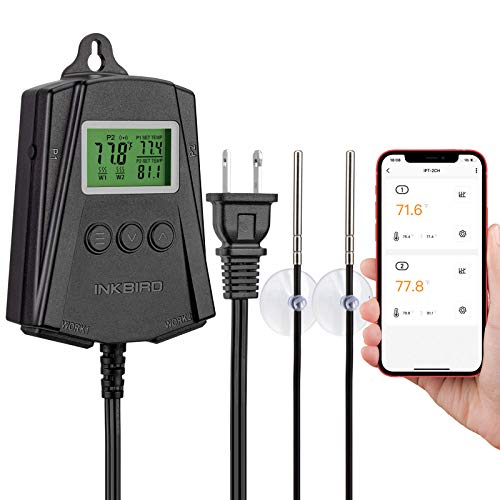
Inkbird Thermostat Temperature Controller
Precision thermostat essential for running any heat source safely. Prevents dangerous overheating and maintains consistent temperatures without manual adjustment.
Check Price on AmazonGovee Bluetooth Thermometer Hygrometer
Dual-probe digital monitoring with smartphone app alerts. Tracks both temperature and humidity in real time — a must-have for dialing in ball python conditions.
Check Price on Amazon
Frozen Feeder Rats Mixed Sizes
Ethically frozen and CO2-euthanized rodents. Frozen-thawed prey is safer than live feeding and eliminates the risk of rodent bites injuring your snake.
Check Price on Amazon
Reptile Feeding Tongs Stainless Steel
Long stainless tongs allow safe prey presentation without your hand near the snake's strike zone. Critical safety tool for every feeding session.
Check Price on AmazonFrequently Asked Questions
Feeding frequency depends on age. Hatchlings eat every 5-7 days, juveniles every 7-10 days, and adults every 10-14 days. Prey size should be roughly the same diameter as the thickest part of the snake's body. Always use frozen-thawed prey — live rodents can injure your snake.
References & Sources
Related Articles

Expert Ball Python Tank Setup Guide
Learn the essential steps to creating the perfect ball python tank setup, ensuring your pet thrives in a safe and comfortable environment.

Ball Python Heating Guide: CHE vs DHP vs Halogen Compared
CHE, DHP, halogen, or heat mats -- which actually works for ball pythons? This guide breaks down every heat source with real temperature targets and thermostat comparisons.

White-Lipped Python Care: The Complete Guide
White-lipped python care explained: rainbow iridescence, high-humidity tropical setup, feeding nippy juveniles, and everything that makes them unlike any other python. Start here.