7 Best Snake Foods (Frozen Mice, Rats & More) (2026)
Frozen mice, rats, or something different? Here are the 7 best snake foods for 2026, ranked by quality, safety, and value.


This article contains affiliate links. If you make a purchase through these links, we may earn a small commission at no extra cost to you. See our affiliate disclosure for details.
We recommend 7 picks here. Our top choice is the Perfect Prey Frozen Mice — check price and availability below.
How we choose: we compare published specifications against the care requirements in veterinary and species-care literature, and weigh those against what long-time keepers report. We do not test products ourselves and we do not restate Amazon star ratings. The 5 sources behind this article are listed at the bottom.
Quick Comparison
- Prey type
- -
- Available sizes
- -
- Sold frozen
- -
- Bulk pricing
- -
- Best for
- -
- Prey type
- -
- Available sizes
- -
- Sold frozen
- -
- Bulk pricing
- -
- Best for
- -
- Prey type
- -
- Available sizes
- -
- Sold frozen
- -
- Bulk pricing
- -
- Best for
- -
- Prey type
- -
- Available sizes
- -
- Sold frozen
- -
- Bulk pricing
- -
- Best for
- -
- Prey type
- -
- Available sizes
- -
- Sold frozen
- -
- Bulk pricing
- -
- Best for
- -
- Prey type
- -
- Available sizes
- -
- Sold frozen
- -
- Bulk pricing
- -
- Best for
- -
- Prey type
- -
- Available sizes
- -
- Sold frozen
- -
- Bulk pricing
- -
- Best for
- -
Prices are estimates only. Actual prices on Amazon may vary.
Choosing the right snake food comes down to one core question: what's the safest, most nutritious option your snake will actually eat?
For 95% of captive snakes, the answer is frozen-thawed whole prey — mice or rats, depending on species and size. Everything else is a variation on that theme or a specialized solution for edge cases.
This guide covers the 7 best snake food options in 2026, ranked for quality, safety, and value. Whether you're feeding a juvenile corn snake its first pinky or maintaining a multi-species collection, you'll leave knowing exactly what to buy.
Quick Picks
| Product | Best For | Price |
|---|---|---|
| Perfect Prey Frozen Mice | Best overall — all colubrids and pythons | $20–$60 |
| Layne Labs Frozen Rats | Ball pythons, boas, large pythons | $30–$90 |
| MiceDirect Frozen Feeders | Best value — multi-snake collections | $18–$55 |
| Reptilinks Sausage Feeders | Picky eaters, non-rodent species | $25–$65 |
| RodentPro Bulk Frozen | Breeders and large collections | $40–$150 |
| Live Prey (local stores) | Avoid — use only as last resort | $3–$6 each |
| Fluker's Freeze-Dried | Insectivorous species only | $8–$15 |
Our Top Picks
Quick recommendations
Corn snakes, king snakes, milk snakes, and any snake that eats mice
Ball pythons, boa constrictors, and larger colubrid species
Budget-conscious keepers and mid-size multi-snake collections
Picky eaters, hunger-striking ball pythons, and insectivorous species
Breeders and large collections needing volume pricing
Detailed Reviews
1. Perfect Prey Frozen Mice
Best Overall
Perfect Prey Frozen Mice
Pros
- •Individually quick-frozen for consistent texture and nutrition
- •Wide size range from pinky to jumbo adult
- •Strong cold chain — arrives solidly frozen
- •Reliable sizing batch-to-batch
- •Bulk and subscription options available
Cons
- •Slightly higher per-unit cost than high-volume bulk suppliers
- •Minimum order quantity required for best pricing
Bottom Line
Perfect Prey is the benchmark for frozen feeder mice — and it earned that reputation by doing the basics right, consistently. Every mouse is individually quick-frozen at the facility immediately after processing, which locks in nutritional value and prevents freezer burn. The result is a product that thaws cleanly without the gray, mushy texture that cheap feeders often develop. Available sizes run from pinkies (newborns, roughly 2–5g) through fuzzy, hopper, adult, and jumbo adults. That range covers everything from a juvenile corn snake on its first pinky to a large adult colubrid eating adult mice. The sizing is reliable batch-to-batch, which matters when you're trying to match prey to your snake's current body diameter. Perfect Prey ships in insulated packaging with dry ice, and arrival quality is consistently reported as excellent across keeper forums. The mice arrive solidly frozen, not partially thawed, which is a real differentiator from budget suppliers who cut corners on cold chain logistics. For keepers running a single snake or a small collection, the per-count pricing is reasonable. Bulk packs (25–100 count) bring the per-mouse cost down significantly. If you're maintaining multiple snakes or feeding a larger species that cycles through prey faster, Perfect Prey's subscription options are worth exploring. The only meaningful downside is the price point relative to ordering from large-volume suppliers like RodentPro. You're paying a slight premium for quality control and packaging — a trade-off most keepers consider worthwhile.
2. Layne Labs Frozen Rats
Best Frozen Rats
Layne Labs Frozen Rats
Pros
- •Full size range from pups to extra-large adults
- •Higher nutritional density than mice — ideal for rats-only species
- •Decades-long reputation in the hobby
- •Heavy-gauge packaging prevents freezer odor
- •Reliable national cold chain shipping
Cons
- •Rats require larger freezer space than mice
- •Higher per-item cost vs. mice — but fewer items needed per feeding
Bottom Line
Rats are the right feeder for a huge segment of captive snakes — ball pythons, boas, larger colubrids, blood pythons, and any species that outgrows mice. Layne Labs has been one of the most respected frozen feeder suppliers in the hobby for decades, and their frozen rats reflect that experience. Sizes cover the full spectrum from rat pups through small, medium, large, and extra-large. A young ball python starts on rat pups or small rats; an adult female ball python typically eats medium to large rats. Adult boa constrictors move into large and extra-large territory. The size progression is well-calibrated and consistent. Nutritionally, rats are superior to mice for many species. Rats have a higher fat content than mice, which suits calorie-dense feeders like ball pythons well — but it also means portion control matters. One rat is filling. One mouse often isn't, leading some keepers to feed multiple mice and inadvertently overfeed. Layne Labs packages in heavy-gauge poly bags that prevent freezer odor transfer. They ship nationally with proven cold chain logistics. The rats arrive ready to freeze or thaw immediately depending on your needs. This is the go-to frozen rat source for keepers who want quality without unnecessary complexity. Order in bulk (25–50 count) to bring per-unit cost down and reduce shipping frequency.
3. MiceDirect Frozen Feeders
Best Value
MiceDirect Frozen Feeders
Pros
- •Aggressive bulk pricing — best per-unit value
- •Broad selection including multimammate mice and rabbit kits
- •Consistent sizing
- •Easy online ordering and repeat order system
Cons
- •Occasional partial thaw reports on extreme-distance summer shipping
- •Individual quick-freeze precision slightly below top-tier suppliers
Bottom Line
MiceDirect is the value pick that doesn't compromise where it matters. Their frozen mice and rat selection covers the same size range as premium suppliers, but pricing is structured to reward bulk buyers aggressively. If you're feeding multiple snakes or have a species that eats frequently, MiceDirect's pricing model is genuinely hard to beat. The product quality is solid — mice are properly frozen, thaw evenly, and are sized consistently. They're not quite at the Perfect Prey level of individual quick-freeze precision, but for the vast majority of keeper scenarios, the difference is negligible. Healthy, established snakes eat both without hesitation. Where MiceDirect stands out is selection breadth. They offer mice and rats in all sizes, plus options like rabbit kits for very large constrictors and multimammate mice (African soft-furred rats) for snakes that prefer smaller prey — useful for picky feeders who refuse standard mice. Cold chain performance is generally good, though forum feedback occasionally notes partial thawing on very long-distance summer shipments. Order in larger quantities during cooler months to reduce risk. For keepers on a budget running a mid-size collection, MiceDirect is the most sensible default choice.
4. Reptilinks Sausage Feeders
Best Alternative Prey
Reptilinks Sausage Feeders
Pros
- •Whole-prey nutrition in an easy-to-store format
- •Excellent for snakes that refuse rodents — bird, rabbit, quail options
- •Appropriate for naturally insectivorous or bird-eating species
- •Multiple widths for accurate prey sizing
- •Edible intestine casing — no waste
Cons
- •Not a replacement for whole prey in most species
- •Higher cost per gram than frozen mice or rats
- •Some snakes refuse the unfamiliar texture initially
Bottom Line
Reptilinks occupies a unique niche in snake feeding: whole-prey sausages made from ground whole animals, encased in an edible intestine casing. They're not a replacement for whole prey in most situations, but they solve a real problem — snakes that refuse frozen-thawed rodents but will eat something that smells and moves differently. The lineup includes rabbit, quail, guinea fowl, and blended options. Nutritionally, they're complete: bones, organs, meat, and intestine in the correct proportions. The texture is different from whole prey but nutritionally equivalent when made from whole-animal inputs. Reptilinks are also useful for snakes that eat non-rodent prey in the wild. Rough green snakes, garter snakes, and some hognose snakes naturally prefer frogs, fish, or birds over rodents. The quail and guinea fowl links give these species an appropriate frozen option without requiring live prey or fresh-caught alternatives. For standard rodent-eaters, Reptilinks aren't a first-line feeder — they're a tool for problem-solving. A ball python in a hunger strike that refuses frozen mice will sometimes accept a rabbit or quail link as a bridge food to restart feeding. Sizing is excellent: they come in multiple widths to match snake body diameter, and they're easy to portion. Storage is straightforward — freeze flat and thaw as needed.
5. RodentPro Bulk Frozen Feeders
Best for Collections
RodentPro Bulk Frozen Feeders
Pros
- •Best bulk pricing in the hobby — lowest cost per unit at scale
- •Complete size range: mice, rats, rabbits, guinea pigs
- •Proven supplier for zoos and large breeders
- •Strong cold chain for volume orders
Cons
- •Requires dedicated chest freezer for large orders
- •Minimum order quantities for best pricing
- •Less practical for single-snake keepers
Bottom Line
RodentPro is the high-volume play. If you maintain five or more snakes — or even three snakes of any size that eat rats — RodentPro's bulk pricing structure becomes the most economical option in the hobby. Orders of 50, 100, or 200+ units bring per-unit costs down to levels no smaller supplier can match. Quality is consistent and well-regarded across the community. RodentPro has been supplying zoos, breeders, and large collections for years, and their cold chain infrastructure is built for volume. Mice and rats arrive in good condition on standard orders. The selection covers mice (all sizes), rats (all sizes), rabbits, and guinea pigs. For large constrictors — reticulated pythons, Burmese pythons, and large adult boas — the rabbit and guinea pig options remove the inconvenience of needing multiple rats per feeding. The main consideration is freezer space. A 100-count order of adult rats requires meaningful freezer real estate. Most serious keepers run a dedicated chest freezer for feeders, which makes RodentPro's volumes practical. If you're working with a standard home freezer, order size accordingly. Shipping cost per unit is also effectively lower on bulk orders, since the fixed shipping cost is spread across more prey items. Calculate total landed cost (product + shipping) when comparing suppliers — RodentPro wins at volume.
6. Live Prey Mice (PetSmart / Local Pet Stores) — Avoid for Snakes
What to Avoid
Live Prey Mice (PetSmart / Local Pet Stores) — Avoid for Snakes
Pros
- •Available locally without shipping
- •Some very picky snakes may initially accept live over frozen
Cons
- •Serious bite injury risk to the snake
- •Highest per-unit cost — 5–10x more expensive than bulk frozen
- •No bulk storage option
- •Ethical concerns around unnecessary prey animal suffering
- •Many experienced keepers and vets actively recommend against it
Bottom Line
Live prey is included here because it's what most new snake keepers start with — and it's the option most experienced keepers move away from quickly. Understanding why matters. The core problem is bite risk. A mouse or rat is a prey animal with functional teeth, claws, and the instinct to defend itself. A snake that misses its strike, or a snake that's simply not hungry, will get bitten. Rodent bites cause puncture wounds and lacerations that frequently become infected. In the worst cases, live prey has killed snakes. Beyond safety, live prey creates unnecessary stress. The prey animal experiences fear during the encounter. The snake is forced to perform a full predatory sequence even if it's not hungry or not in the right physiological state. Over time, this can condition some snakes — particularly ball pythons — to associate feeding with stress rather than reward. Live prey also has practical downsides: you need a local source, you can't buy in advance, and mice from pet stores are significantly more expensive per unit than frozen suppliers. A $4 mouse from a pet store is ten times the cost of a bulk frozen feeder. Frozen-thawed is safer, cheaper, more ethical, and just as nutritionally complete. The only legitimate use case for live prey is a snake that categorically refuses frozen-thawed despite all troubleshooting attempts — and even then, prey-switched training is preferable before resorting to live feeding long-term. If you're new to snake keeping, start frozen. You'll never go back.
7. Fluker's Freeze-Dried Crickets (Supplemental Only)
Supplemental Only
Fluker's Freeze-Dried Crickets (Supplemental Only)
Pros
- •Convenient for small, insectivorous snake species
- •No refrigeration needed — shelf-stable storage
- •Widely available at pet stores
- •Good supplemental variety for appropriate species
Cons
- •Completely inappropriate as a primary diet for most snakes
- •Nutritionally incomplete vs. whole prey
- •No use case for pythons, boas, or rodent-eating colubrids
Bottom Line
Freeze-dried insects occupy a small but legitimate place in snake feeding for very specific species — primarily small, insectivorous snakes like rough green snakes, DeKay's brown snakes, smooth earth snakes, and juvenile garter snakes. For those species, freeze-dried crickets and mealworms provide a convenient, mess-free supplemental prey option. Fluker's is the most widely available brand, and the quality is consistent. Freeze-drying preserves protein content reasonably well, though fat content decreases and moisture is eliminated entirely. Rehydrating freeze-dried prey by soaking briefly in warm water before feeding improves palatability and prevents dehydration. The critical limitation: freeze-dried insects are NOT appropriate as a primary diet for any snake. They lack the complete nutritional profile of whole prey — including bones, organs, and adequate fat ratios. Used as a supplement or variety food for insectivorous species, they're fine. Used as a staple, they cause nutritional deficiencies over time. For standard colubrid and python/boa keepers, this product is essentially irrelevant. Mention it here because some keepers make the mistake of using freeze-dried prey as a primary food source after seeing it marketed as "reptile food" — and that's a mistake worth avoiding explicitly. Buy frozen mice or rats. Use Fluker's only if you maintain genuinely insectivorous snake species.
Frozen vs. Live: Which Is Better?
Frozen-thawed wins. Full stop. Here's why it matters for your snake's health.
Safety: A live rodent is a prey animal with teeth and claws. If the snake misses its strike or simply isn't hungry, the rodent will bite back. Rodent bites cause puncture wounds and lacerations that frequently become infected. In severe cases, bite wounds have killed snakes. According to ReptiFiles' feeding guidelines, frozen-thawed prey eliminates this risk entirely.
Nutrition: Frozen prey is nutritionally identical to fresh. Flash-freezing preserves protein, fat, and calcium content. There's no meaningful nutritional difference between a well-handled frozen mouse and a freshly dispatched live one.
Cost: A live mouse from a pet store costs $3–$6. A bulk frozen feeder from a quality supplier costs $0.50–$2 depending on size. Over a snake's 15–25 year lifespan, that difference compounds significantly.
Ethics: Frozen prey eliminates the stress and suffering of the prey animal. Most experienced keepers and herpetological veterinarians recommend frozen-thawed as the default. The Spruce Pets' snake feeding guide documents the welfare and safety case clearly.
If you have a new snake that refuses frozen-thawed, there are troubleshooting steps — see the section below. But start with frozen, and stay with frozen.
How to Choose the Right Prey Size
Prey size is the most common mistake new keepers make. The rule is simple:
Prey width = 1 to 1.5x the widest point of the snake's body.
Measure your snake at its widest point (mid-body). The prey item should be approximately the same diameter — slightly larger is fine, significantly larger causes regurgitation.
Size Guide by Species and Age
| Snake | Juvenile | Sub-adult | Adult |
|---|---|---|---|
| Corn snake | Pinky mouse | Fuzzy / hopper | Adult mouse |
| Ball python | Fuzzy rat / rat pup | Small rat | Medium–large rat |
| King snake | Pinky mouse | Hopper | Adult mouse |
| Boa constrictor | Fuzzy rat | Medium rat | Large–XL rat |
| Milk snake | Pinky mouse | Hopper | Adult mouse |
For ball python feeding specifics, ReptiFiles recommends matching rat size carefully — an oversized rat is a common cause of regurgitation in juveniles.
For your corn snake's diet, mice are the natural prey choice throughout life — no need to switch to rats.
How to Thaw Frozen Snake Food
Proper thawing matters. Improperly thawed prey causes regurgitation and, in worst cases, bacterial contamination.
The correct method:
- Remove the frozen prey from its packaging and place it in a sealed zip-lock bag.
- Submerge the bag in warm (not hot) water — roughly 100–105°F (38–40°C).
- Let it sit for 15–30 minutes depending on size. A pinky thaws in 15 minutes; an adult rat takes 25–35 minutes.
- Check internal temperature with a thermometer — should reach at least 90°F (32°C) at the core.
- Offer immediately using feeding tongs. Never leave thawed prey in the enclosure overnight.
NEVER use a microwave. Microwaving creates hot spots that can cause mouth burns and destroys the scent profile snakes use to identify prey. It also partially cooks the prey, altering texture.
Refrigerator thawing (24 hours in advance): Acceptable for slow planners, but warm water is faster and produces better scent release, which improves feeding response — especially useful for picky eaters.
Feeding Frequency by Species and Age
Overfeeding is as harmful as underfeeding. Obese snakes develop fatty liver disease and reduced lifespan.
| Species / Age | Frequency | Notes |
|---|---|---|
| Juvenile snakes (under 1 year) | Every 5–7 days | Growing fast — higher frequency needed |
| Sub-adult snakes | Every 7–10 days | Slowing growth rate |
| Adult corn / king snakes | Every 10–14 days | One adult mouse per feeding |
| Adult ball pythons | Every 10–14 days | One appropriately sized rat |
| Adult boa constrictors | Every 14–21 days | Large prey item, longer digestion |
| Large pythons (adults) | Every 21–30 days | Very large prey — extended digestion time |
For the complete ball python care guide, including feeding schedules by age, see our full guide.
Troubleshooting Picky Eaters
Some snakes — especially ball pythons — are notorious for hunger strikes. A ball python can refuse food for weeks, sometimes months, without medical concern if it's otherwise healthy. That said, a refusal beyond 6–8 weeks in a juvenile warrants a vet check.
Try these steps in order:
-
Check enclosure temps first. Cold prey is one cause of refusal, but cold enclosures are more common. A ball python won't feed below 80°F ambient. Verify your ball python enclosure temperatures before blaming the food.
-
Warm the prey more. Bring the prey to 100–105°F surface temperature before offering. Ball pythons hunt warm-blooded prey — a warm, scented item triggers the feeding response better.
-
Scent the prey. Rub the frozen-thawed mouse with the shed skin from another snake (if available), a piece of tuna in water, or the inside of a garter snake can. The unfamiliar scent can trigger a feeding response in reluctant feeders.
-
Try a different prey type. Ball pythons that refuse mice will often take rats. Snakes that refuse standard feeders sometimes accept Reptilinks in a novel protein (quail, rabbit) as a bridge food.
-
Feed in a separate container. Some snakes associate their home enclosure with safety, not feeding. A plain tub with no substrate can trigger a more instinctive feeding response.
-
Braining (last resort). Cutting the prey's skull to expose brain tissue releases a strong scent that almost always triggers a response. Effective but messy — use only after other methods fail.
If your snake is losing significant weight, showing lethargy, or has visible parasites, consult a reptile veterinarian. A hunger strike with otherwise normal behavior is usually not an emergency. Weight loss plus behavioral changes is.
Our Final Verdict

Perfect Prey Frozen Mice
Perfect Prey is the benchmark for frozen feeder mice — and it earned that reputation by doing the basics right, consistently. Every mouse is individually quick-frozen at the facility immediately after processing, which locks in nutritional value and prevents freezer burn. The result is a product that thaws cleanly without the gray, mushy texture that cheap feeders often develop. Available sizes run from pinkies (newborns, roughly 2–5g) through fuzzy, hopper, adult, and jumbo adults. That range covers everything from a juvenile corn snake on its first pinky to a large adult colubrid eating adult mice. The sizing is reliable batch-to-batch, which matters when you're trying to match prey to your snake's current body diameter. Perfect Prey ships in insulated packaging with dry ice, and arrival quality is consistently reported as excellent across keeper forums. The mice arrive solidly frozen, not partially thawed, which is a real differentiator from budget suppliers who cut corners on cold chain logistics. For keepers running a single snake or a small collection, the per-count pricing is reasonable. Bulk packs (25–100 count) bring the per-mouse cost down significantly. If you're maintaining multiple snakes or feeding a larger species that cycles through prey faster, Perfect Prey's subscription options are worth exploring. The only meaningful downside is the price point relative to ordering from large-volume suppliers like RodentPro. You're paying a slight premium for quality control and packaging — a trade-off most keepers consider worthwhile.
Layne Labs Frozen Rats
Rats are the right feeder for a huge segment of captive snakes — ball pythons, boas, larger colubrids, blood pythons, and any species that outgrows mice. Layne Labs has been one of the most respected frozen feeder suppliers in the hobby for decades, and their frozen rats reflect that experience. Sizes cover the full spectrum from rat pups through small, medium, large, and extra-large. A young ball python starts on rat pups or small rats; an adult female ball python typically eats medium to large rats. Adult boa constrictors move into large and extra-large territory. The size progression is well-calibrated and consistent. Nutritionally, rats are superior to mice for many species. Rats have a higher fat content than mice, which suits calorie-dense feeders like ball pythons well — but it also means portion control matters. One rat is filling. One mouse often isn't, leading some keepers to feed multiple mice and inadvertently overfeed. Layne Labs packages in heavy-gauge poly bags that prevent freezer odor transfer. They ship nationally with proven cold chain logistics. The rats arrive ready to freeze or thaw immediately depending on your needs. This is the go-to frozen rat source for keepers who want quality without unnecessary complexity. Order in bulk (25–50 count) to bring per-unit cost down and reduce shipping frequency.
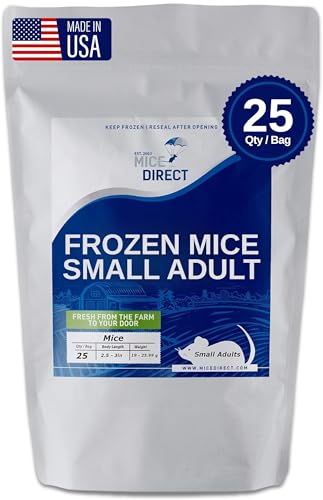
MiceDirect Frozen Feeders
MiceDirect is the value pick that doesn't compromise where it matters. Their frozen mice and rat selection covers the same size range as premium suppliers, but pricing is structured to reward bulk buyers aggressively. If you're feeding multiple snakes or have a species that eats frequently, MiceDirect's pricing model is genuinely hard to beat. The product quality is solid — mice are properly frozen, thaw evenly, and are sized consistently. They're not quite at the Perfect Prey level of individual quick-freeze precision, but for the vast majority of keeper scenarios, the difference is negligible. Healthy, established snakes eat both without hesitation. Where MiceDirect stands out is selection breadth. They offer mice and rats in all sizes, plus options like rabbit kits for very large constrictors and multimammate mice (African soft-furred rats) for snakes that prefer smaller prey — useful for picky feeders who refuse standard mice. Cold chain performance is generally good, though forum feedback occasionally notes partial thawing on very long-distance summer shipments. Order in larger quantities during cooler months to reduce risk. For keepers on a budget running a mid-size collection, MiceDirect is the most sensible default choice.
Frequently Asked Questions
No. Snakes are obligate whole-prey feeders. They require the complete nutritional profile of whole animals — bones, organs, fur, and all. Chicken breast and beef lack calcium, gut content, and appropriate fat ratios. Long-term feeding of non-whole-prey causes severe nutritional deficiencies and shortened lifespan.
References & Sources
- https://www.thesprucepets.com/feeding-snakes-frozen-mice-1239476
- https://reptifiles.com/best-reptile-food/
- https://reptifiles.com/corn-snake-care-guide/corn-snake-food/
- https://reptifiles.com/ball-python-care-guide/ball-python-feeding/
- https://reptifiles.com/boa-constrictor-care/what-do-boa-constrictors-eat/
Related Articles

Best Food for Box Turtles: Your Complete Feeding Guide
Discover the best food for box turtles! Learn about their natural diet, essential nutrients, safe foods, and feeding schedules from a vet tech and reptile expert.

Best Food for Dubia Roaches: Complete Feeding Guide
Discover the best food for dubia roaches — from fresh produce to roach chow — to gut load your feeders and boost your reptile's nutrition every time.

Best Food for Chameleons: A Complete Feeding Guide
Discover the best food for chameleons — from staple feeder insects to safe veggies and gut-loading tips. Keep your chameleon healthy with this complete guide.