Best Reptile Heat Bulb: Top Picks for Every Species
Find the best reptile heat bulb for your species. Compare halogen, ceramic, and mercury vapor options with temperature charts and expert setup tips.


This article contains affiliate links. If you make a purchase through these links, we may earn a small commission at no extra cost to you. See our affiliate disclosure for details.
We recommend 5 picks here. Our top choice is the PAR38 Halogen Flood Bulb (75–100W) — check price and availability below.
How we choose: we compare published specifications against the care requirements in veterinary and species-care literature, and weigh those against what long-time keepers report. We do not test products ourselves and we do not restate Amazon star ratings. The 5 sources behind this article are listed at the bottom.
Quick Comparison
- Main Contribution
- Primary Basking Heat
- Role in Safety
- Moderate (requires thermostat)
- Visible Output
- Light & Heat
- Estimated Price Range
- $10-20
- Target Use Case
- Daytime Basking Spot
- Main Contribution
- Ambient/Overnight Heat
- Role in Safety
- Moderate (requires thermostat)
- Visible Output
- Heat Only
- Estimated Price Range
- $25-50
- Target Use Case
- Nocturnal/Ambient Warmth
- Main Contribution
- Deep Penetrating Heat
- Role in Safety
- Moderate (requires thermostat)
- Visible Output
- Heat Only
- Estimated Price Range
- $40-80
- Target Use Case
- Deep Tissue Basking (24/7)
- Main Contribution
- Temperature Control
- Role in Safety
- Critical (prevents overheating)
- Visible Output
- None
- Estimated Price Range
- $60-120
- Target Use Case
- Any Heat Source Control
- Main Contribution
- Temperature Verification
- Role in Safety
- Critical (ensures accuracy)
- Visible Output
- Laser Pointer
- Estimated Price Range
- $20-40
- Target Use Case
- Basking Temp Accuracy
Prices are estimates only. Actual prices on Amazon may vary.
Getting the heat right in your reptile's enclosure isn't just about comfort — it's survival. Reptiles are ectotherms. They can't generate body heat on their own. Without the right heat source, they can't digest food, fight off illness, or behave normally.
The tricky part? Walk into any pet store and you'll see dozens of bulbs with confusing names and conflicting claims. Halogen, ceramic, infrared, mercury vapor — it's overwhelming. This guide cuts through the noise. You'll learn exactly which type of heat bulb fits your species, how to set it up correctly, and the mistakes that most beginners make.
What Is Infrared Heat — and Why Should You Care?
Here's something most product labels don't tell you: not all heat is the same.
Infrared (IR) is radiant heat — the same warmth you feel from the sun on your face. Most reptile heat bulbs work by emitting infrared radiation. But there are three distinct types, and they behave very differently:
- Near Infrared (IR-A): Deepest penetration into tissue. Warms muscles and organs, not just skin. Closely mimics natural sunlight.
- Mid Infrared (IR-B): Moderate penetration. Found in standard incandescent and halogen bulbs.
- Far Infrared (IR-C): Surface-level heat only. This is what ceramic heat emitters produce.
For basking species like bearded dragons, blue-tongue skinks, and monitors, IR-A matters most. It penetrates deep into muscle tissue, helping your reptile truly thermoregulate — not just feel warm on the surface. For nocturnal species that just need ambient warmth, far infrared (CHEs) gets the job done fine.
Heat Bulb Types at a Glance
Halogen Flood Bulb
IR-A + IR-B, Visible light
Best for daytime basking species
Ceramic Heat Emitter (CHE)
IR-C, Zero visible light
Ideal for nocturnal species & overnight heat
Mercury Vapor Bulb (MVB)
IR-A + UVB combined
All-in-one solution, expensive
Deep Heat Projector
IR-A + IR-B, No visible light
Deep tissue warming for desert species
Red/Blue Night Bulbs
IR-B, Visible light
Not recommended — disrupts sleep
Species-Specific Temperature Targets
Bearded Dragon
100–110°F (38–43°C) basking
Cool side 80–85°F, Night 65–75°F
Blue-Tongue Skink
105–115°F (40–46°C) basking
Cool side 75–85°F, Night 65–75°F
Ackie Monitor
120–130°F (49–54°C) basking
Cool side 80–90°F, Night 70–75°F
Leopard Gecko
88–92°F (31–33°C) basking
Cool side 73–80°F, Night 68–72°F
Ball Python
88–92°F (31–33°C) basking
Cool side 76–82°F, Night 72–80°F
Corn Snake
85–90°F (29–32°C) basking
Cool side 72–80°F, Night 65–75°F
Top Reptile Heat Bulbs by Type
Quick recommendations
Hardware store halogen produces IR-A + IR-B at fraction of pet store price. Available in 40–60W, 75–100W, 150W+
Zero visible light. Perfect for leopard geckos, crested geckos, ball pythons. No sleep disruption. Pair with pulse proportional thermostat
Emits IR-A + IR-B without light. Essential for Ackie monitors and uromastyx. Deep muscle-warming penetration. $35–$65
Combines UVB + strong IR-A heat in one bulb. Expensive but simplifies setup. $45–$90. Best for bearded dragons and red-eared sliders
Mistakes to Avoid
What you need to know
Red and blue night bulbs disrupt sleep — reptiles have tetrachromatic vision and can see these wavelengths. Use CHE or DHP instead
Always use a thermostat. Without one, room temperature changes, bulb aging, and seasonal shifts affect enclosure heat dangerously
Skip stick-on strip thermometers — they measure air temperature, not surface heat, and are often off by 15–20°F. Use a digital IR temperature gun
Match wattage to enclosure size: 40–60W for small setups, 75–100W for standard 40-gallon terrariums, 150W+ for large enclosures
Verify actual basking spot temperature with a thermostat — never guess. Your reptile's digestion, immunity, and behavior depend on hitting exact ranges
Detailed Reviews
1. PAR38 Halogen Flood Bulb (75–100W)
Best Value
PAR38 Halogen Flood Bulb (75–100W)
Pros
- •Produces IR-A and IR-B, closely mimicking natural sunlight's penetrating heat.
- •Cost-effective alternative to reptile-branded basking bulbs.
- •Ideal for daytime basking species requiring deep tissue warmth.
- •Widely available in hardware stores.
Cons
- •Emits visible light, unsuitable for overnight heating.
- •Requires a thermostat for safe operation.
- •Can create localized hot spots if not properly regulated.
Bottom Line
These readily available flood bulbs offer highly effective IR-A and IR-B radiation, crucial for deep tissue heating in basking reptiles. They provide a budget-friendly and efficient heat source for most daytime species.
2. Ceramic Heat Emitter for Reptiles
Editor's Choice
Ceramic Heat Emitter for Reptiles
Pros
- •Emits heat without visible light, suitable for 24/7 use and nocturnal animals.
- •Provides consistent ambient warmth.
- •Durable and long-lasting when paired with a quality fixture.
Cons
- •Only produces IR-C (surface-level heat), not suitable as a primary basking spot for most diurnal species.
- •Requires a thermostat for safe and consistent temperature control.
- •Can contribute to enclosure dehydration if humidity is not monitored.
Bottom Line
Ceramic Heat Emitters deliver non-light emitting far infrared heat, making them an excellent choice for ambient warmth, especially for nocturnal species or as an overnight heat source. They are a reliable tool for maintaining enclosure temperatures without disrupting light cycles.
3. Reptile Deep Heat Projector
Premium Pick
Reptile Deep Heat Projector
Pros
- •Emits penetrating IR-A and IR-B, closely mimicking natural solar heat.
- •Produces heat without visible light, allowing for 24/7 use without disturbing light cycles.
- •Promotes deep tissue warming crucial for thermoregulation in many species.
Cons
- •Typically more expensive than other lightless heat sources.
- •Requires a dimming thermostat for optimal performance and safety.
- •May require a specific fixture type for proper installation.
Bottom Line
Deep Heat Projectors provide unparalleled non-light emitting IR-A and IR-B, offering the closest simulation of natural solar penetration for reptile metabolism. They are a premium choice for species demanding deep tissue warmth day and night.
4. Dimming Thermostat for Reptile Enclosures
Best Overall
Dimming Thermostat for Reptile Enclosures
Pros
- •Maintains precise and consistent basking temperatures, preventing overheating or insufficient heat.
- •Extends the lifespan of heat bulbs by regulating power output.
- •Crucial safety device, preventing thermal burns and fire hazards.
- •Allows for gradual changes in heat output, mimicking natural fluctuations.
Cons
- •Represents an additional upfront cost to the heating setup.
- •Requires careful calibration and placement of the temperature probe.
- •Can be bulky and take up space outside the enclosure.
Bottom Line
A dimming thermostat is an indispensable safety and efficiency device for any reptile heating setup, ensuring stable and safe temperatures while maximizing bulb longevity. Its ability to finely control heat output makes it a non-negotiable component for serious reptile keepers.
5. Infrared Temperature Gun
Editor's Choice
Infrared Temperature Gun
Pros
- •Provides instant and accurate surface temperature readings of basking spots and substrate.
- •Eliminates guesswork and inaccuracies common with stick-on thermometers.
- •Non-invasive, minimizing stress to the animal during temperature checks.
Cons
- •Measures surface temperature only, not ambient air temperature.
- •Requires regular battery replacement.
- •An additional purchase beyond the primary heating setup.
Bottom Line
An infrared temperature gun is the most critical monitoring tool for accurately assessing surface temperatures within a reptile enclosure, providing instant and precise data for basking spot optimization. It eliminates unreliable readings and is fundamental for proactive husbandry.
Types of Reptile Heat Bulbs — Compared
Before picking a bulb, you need to know what's out there. Here's a clear breakdown:
| Bulb Type | Emits Light? | IR Type | Best For |
|---|---|---|---|
| Halogen Flood Bulb | Yes | IR-A + IR-B | Daytime basking species |
| Ceramic Heat Emitter (CHE) | No | IR-C | Nocturnal species, overnight heat |
| Mercury Vapor Bulb (MVB) | Yes | IR-A + UVB | All-in-one UVB + heat solution |
| Deep Heat Projector | No | IR-A + IR-B | Desert species, deep tissue warming |
| Red / Blue Night Bulbs | Yes | IR-B | Not recommended — disrupts sleep |
The takeaway: most daytime baskers do best with a halogen flood bulb. Nocturnal species need a CHE or deep heat projector. Red and blue bulbs are a marketing gimmick — skip them entirely.
Basking Temperature Guide by Species
This is where most beginners go wrong. They buy a bulb, guess at placement, and never actually measure the temperature. Don't guess — your reptile's digestion, immunity, and behavior all depend on hitting the right numbers.
Here are the target basking temperatures for the most common pet reptiles:
| Species | Basking Spot | Cool Side | Night Temp |
|---|---|---|---|
| Bearded Dragon | 100–110°F (38–43°C) | 80–85°F | 65–75°F |
| Blue-Tongue Skink | 105–115°F (40–46°C) | 75–85°F | 65–75°F |
| Ackie Monitor | 120–130°F (49–54°C) | 80–90°F | 70–75°F |
| Leopard Gecko | 88–92°F (31–33°C) | 73–80°F | 68–72°F |
| Ball Python | 88–92°F (31–33°C) | 76–82°F | 72–80°F |
| Corn Snake | 85–90°F (29–32°C) | 72–80°F | 65–75°F |
| Red-Eared Slider | 90–95°F (32–35°C) | Water: 75–80°F | 65–70°F |
Always verify your basking spot with a digital infrared temperature gun — not a stick-on strip thermometer. Strip thermometers measure air temperature, not surface temperature. They're often off by 15–20°F. An IR gun is cheap, accurate, and indispensable.
The Best Reptile Heat Bulbs by Type
Halogen Flood Bulbs — Best for Most Basking Species
Here's a secret the reptile industry doesn't want you to know: the best basking bulbs aren't sold at pet stores. They're sold at hardware stores.
PAR38 or BR30 halogen flood bulbs produce the same IR-A and IR-B output as expensive reptile-branded basking bulbs — at a fraction of the price. They're bright, they produce focused heat, and they're available in every wattage you'd need.
Choose your wattage based on enclosure size and ambient room temperature:
- 40–60W → small enclosures, desktop setups
- 75–100W → standard 40-gallon terrariums
- 150W+ → large enclosures or species needing extreme heat
Always pair your halogen bulb with a dimming thermostat. This lets you dial in the exact temperature rather than swapping bulbs.
Ceramic Heat Emitters (CHE) — Best for Nocturnal Species
CHEs emit heat but zero visible light. That makes them ideal for species active at night — leopard geckos, crested geckos, ball pythons — because they won't interfere with your animal's day/night cycle.
A quality [ceramic heat emitter](https://www.amazon.com/dp/B096JWWQMC?tag=krawlo-20 should feel dense and heavy. Cheap ones crack under repeated heat cycling. Pair yours with a pulse proportional thermostat to keep temperatures stable — CHEs can overheat an enclosure surprisingly fast.
CHEs are also useful for maintaining overnight temperatures in cooler rooms. Many keepers run a halogen during the day and switch to a CHE after lights out.
Deep Heat Projectors — Best for Desert Species
Deep heat projectors (DHPs) are one of the most exciting developments in reptile keeping in recent years. They emit IR-A and IR-B without any visible light — deep, penetrating warmth with no light disruption.
They're especially valuable for species like Ackie monitors and uromastyx. According to ReptiFiles' Ackie monitor care guide, reaching muscle-warming temperatures is essential for digestion and immune function — and DHPs do exactly that.
(Estimates only — actual prices on Amazon may vary.) A [deep heat projector](https://www.amazon.com/dp/B0C44VQ3LV?tag=krawlo-20 typically costs $35–$65. They last far longer than halogen bulbs, making them cost-effective over time.
Mercury Vapor Bulbs — Best All-in-One Option
Mercury vapor bulbs combine UVB output with strong IR-A heat in a single bulb. If you want to simplify your setup and reduce the number of fixtures, they're a solid choice for sun-loving species.
The downsides: they're expensive, require specific deep dome fixtures, and can't be used with dimmers or thermostats. You control heat output by adjusting the bulb's distance from the basking surface.
(Estimates only — actual prices on Amazon may vary.) Expect to pay $45–$90 for a quality MVB. They're overkill for a ball python, but excellent for bearded dragons and red-eared sliders that need both strong UVB and intense heat. For bearded dragon-specific temperature needs, ReptiFiles has a thorough breakdown worth reading.
5 Common Mistakes With Reptile Heat Bulbs
Mistake 1: Using Red or Blue Night Bulbs
This is the single most common mistake in reptile keeping. Red and blue "night bulbs" are everywhere — and they're almost universally marketed as safe for nighttime use because "reptiles can't see them."
That's flat-out wrong. Reptiles have tetrachromatic vision, meaning they see more colors than humans do — including red and blue wavelengths. Running these bulbs at night causes sleep disruption and chronic stress. Ditch them. Use a CHE or DHP instead.
Mistake 2: Skipping the Thermostat
Running a heat bulb without a thermostat is like driving without a speedometer. You're guessing. Room temperature changes, bulbs age, and seasons shift — all of which affect your enclosure's temperature. A thermostat removes the guesswork and protects your animal from dangerous heat spikes. It's non-negotiable.
Mistake 3: Trusting Strip Thermometers
Those stick-on strip thermometers that come with starter kits are nearly useless for measuring basking spots. They measure air temperature in one fixed spot. Your basking surface could be 20°F hotter. Get a handheld infrared thermometer — it's the most important tool in your reptile setup.
Mistake 4: Wrong Distance From the Basking Surface
Wattage doesn't equal temperature. A 100W bulb 18 inches from the basking rock produces a very different temperature than the same bulb 6 inches away. Always measure and adjust by height before swapping bulbs. Start at a moderate wattage and move the fixture up or down until you hit your target.
Mistake 5: Using Cheap Plastic Fixtures
Plastic dome fixtures melt, crack, and sometimes catch fire with higher-wattage bulbs. Always check the maximum wattage rating on your fixture. For anything above 60W, use a ceramic socket dome — not plastic. It's a small upgrade that prevents real danger.
How to Set Up Your Heat Bulb Step by Step
This takes about 10 minutes and will save you weeks of troubleshooting:
- Place your basking surface — a flat rock, wood slab, or cork bark works well.
- Position your dome fixture directly above the basking spot.
- Install the bulb and power it on.
- Wait 15 minutes, then measure the surface temperature with your IR gun.
- Adjust the fixture height until you hit your species' target basking temp.
- Connect your thermostat probe near (but not directly on) the basking spot.
- Set the thermostat 2–3°F below your target as a buffer.
- Check temperatures again the following day — room conditions can shift things overnight.
For a complete species-specific setup, the Zen Habitats corn snake lighting and heating guide is an excellent model for how to think about the full thermal environment — not just the basking spot.
Dimming vs. Pulse Thermostat — Which Do You Need?
Not all thermostats work with all bulbs. Using the wrong type can shorten bulb life or cause flickering.
- Halogen and incandescent bulbs → Use a dimming thermostat. It reduces voltage to lower heat output smoothly.
- Ceramic heat emitters and deep heat projectors → Use a pulse proportional thermostat. It cycles power on and off rapidly to maintain temperature.
- Mercury vapor bulbs → No thermostat. Control heat by adjusting height. Use a timer to manage photoperiod.
Putting It All Together
Choosing the best reptile heat bulb comes down to two questions: Is your species a daytime basker, and does it need light at night?
For most setups, a halogen flood bulb from the hardware store paired with a dimming thermostat is the most effective and affordable solution. Add a CHE for overnight heating if your room drops below 65°F. If you keep desert species, a deep heat projector is worth the investment for that deep IR-A output.
For a broader look at how heat bulbs compare to other heating tools, our heat lamp for reptiles setup guide walks through complete enclosure heating strategies. And if you're still narrowing down options, our best heat lamps for reptiles comparison stacks the top products side by side.
Measure your temperatures. Use a thermostat. Adjust by distance, not wattage. Do those three things and you'll give your reptile exactly the thermal environment it needs to thrive.
Our Final Verdict

PAR38 Halogen Flood Bulb (75–100W)
These readily available flood bulbs offer highly effective IR-A and IR-B radiation, crucial for deep tissue heating in basking reptiles. They provide a budget-friendly and efficient heat source for most daytime species.
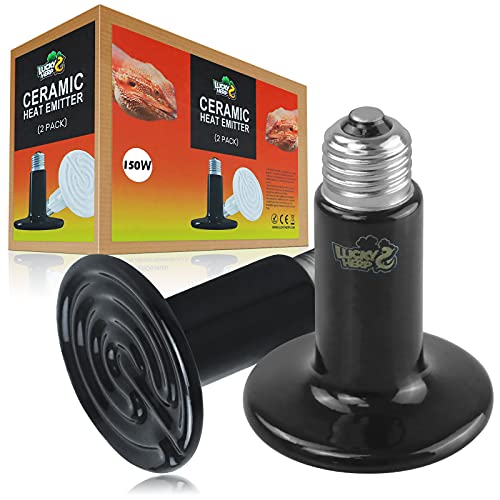
Ceramic Heat Emitter for Reptiles
Ceramic Heat Emitters deliver non-light emitting far infrared heat, making them an excellent choice for ambient warmth, especially for nocturnal species or as an overnight heat source. They are a reliable tool for maintaining enclosure temperatures without disrupting light cycles.

Reptile Deep Heat Projector
Deep Heat Projectors provide unparalleled non-light emitting IR-A and IR-B, offering the closest simulation of natural solar penetration for reptile metabolism. They are a premium choice for species demanding deep tissue warmth day and night.
Frequently Asked Questions
Wattage depends on your enclosure size and the ambient room temperature — not just your species. For most standard 40-gallon setups, a 75–100W halogen bulb is a good starting point. Adjust the fixture height to hit your species' target basking temperature rather than swapping bulbs. Smaller tanks may only need 40–60W, while large enclosures for desert species may require 150W or more.
References & Sources
- https://reptifiles.com/choosing-the-best-reptile-heat-lamp/
- https://www.zenhabitats.com/blogs/reptile-care-sheets-resources/corn-snake-complete-lighting-and-heating-guide?srsltid=AfmBOor0gAHRWkwmbctjeQ66nNkxXsTKiQRLo7ZDTeza7FoWYXVqbNbM
- https://reptifiles.com/bearded-dragon-care/bearded-dragon-temperatures-uvb/
- https://reptifiles.com/ball-python-care-guide/ball-python-humidity-temperatures/
- https://reptifiles.com/ackie-monitor-care/ackie-monitor-temperatures-heating/
Related Articles

Best Heat Bulb for Reptiles: 2026 Buyer's Guide
Find the best heat bulb for your reptile in 2026. We compare halogen, ceramic, incandescent, and deep heat projectors so you can buy with confidence.

Best Heat Lamp for Reptiles: A 2026 Buyer's Guide
Looking for the best heat lamp to keep your reptile healthy and warm? Our 2026 guide reviews top bulb types and safety tips for the perfect setup.

Best Heat Lamp for Ball Python: A 2026 Keeper's Guide
Confused about the best heat lamp for your ball python? Our expert guide breaks down the top choices, safety tips, and proper setup for a thriving snake.