Best Heat Lamp for Ball Python: A 2026 Keeper's Guide
Confused about the best heat lamp for your ball python? Our expert guide breaks down the top choices, safety tips, and proper setup for a thriving snake.


This article contains affiliate links. If you make a purchase through these links, we may earn a small commission at no extra cost to you. See our affiliate disclosure for details.
We recommend 6 picks here. Our top choice is the Arcadia Deep Heat Projector — check price and availability below.
How we choose: we compare published specifications against the care requirements in veterinary and species-care literature, and weigh those against what long-time keepers report. We do not test products ourselves and we do not restate Amazon star ratings. The 6 sources behind this article are listed at the bottom.
Quick Comparison
- Primary Heat Type (IR Spectrum)
- Infrared-A & Infrared-B (deep-penetrating)
- Light Emission
- None — infrared only
- Use Pattern
- 24/7 year-round
- Thermostat Type Required
- Dimming thermostat required
- Typical Lifespan
- Several years
- Enclosure Humidity Impact
- Neutral — no drying effect
- Primary Heat Type (IR Spectrum)
- Infrared-C only (surface heat)
- Light Emission
- None — infrared only
- Use Pattern
- 24/7 year-round
- Thermostat Type Required
- Any type (on/off, pulse, or dimming)
- Typical Lifespan
- Very long-lasting
- Enclosure Humidity Impact
- Negative — notorious for drying humidity
- Primary Heat Type (IR Spectrum)
- Infrared-A & Infrared-B (with visible light)
- Light Emission
- Bright visible light
- Use Pattern
- Daytime only (10-12 hours)
- Thermostat Type Required
- Dimming thermostat required
- Typical Lifespan
- Moderate (frequent replacement)
- Enclosure Humidity Impact
- Neutral — no drying effect
- Primary Heat Type (IR Spectrum)
- Housing/Fixture (no heat)
- Light Emission
- N/A
- Use Pattern
- N/A
- Thermostat Type Required
- N/A
- Typical Lifespan
- Years
- Enclosure Humidity Impact
- Neutral
- Primary Heat Type (IR Spectrum)
- Measurement only
- Light Emission
- N/A
- Use Pattern
- N/A
- Thermostat Type Required
- N/A
- Typical Lifespan
- Years
- Enclosure Humidity Impact
- Neutral
- Primary Heat Type (IR Spectrum)
- Measurement only
- Light Emission
- N/A
- Use Pattern
- N/A
- Thermostat Type Required
- N/A
- Typical Lifespan
- Years
- Enclosure Humidity Impact
- Neutral
Prices are estimates only. Actual prices on Amazon may vary.
Choosing the best heat lamp for your ball python can feel overwhelming. With so many options on the shelf—halogen, ceramic, 'basking bulbs', deep heat projectors—it's easy to get lost. But getting your snake's heating right is one of the most important things you'll do as a keeper. The right heat source isn't just about warmth; it's about their health, digestion, and overall well-being.
As a team of long-time keepers and herpetological specialists, we've tested nearly every type of heat bulb on the market. We're here to cut through the confusion. This guide will walk you through exactly what your ball python needs, which lamps deliver it best, and how to build a safe and effective heating system from the ground up.
Why Proper Heating is Non-Negotiable for Ball Pythons
Ball pythons, like all reptiles, are ectothermic. This means they rely entirely on external sources to regulate their body temperature. Unlike us, they can't generate their own body heat. In their native habitat in West and Central Africa, they thermoregulate by moving between sun-warmed patches and cooler, shaded burrows.
In captivity, it's our job to provide that thermal choice. A proper heat source does several critical things:
- Powers Digestion: Warmth is essential for a ball python to properly digest its meals. Without adequate heat, food can rot in their gut, leading to regurgitation, illness, and even death.
- Supports Immunity: A snake that is too cold is a snake with a suppressed immune system. Correct temperatures help them fight off potential respiratory infections and other common ailments.
- Encourages Natural Behavior: Access to a warm basking spot encourages natural behaviors, allowing them to warm up and move around their enclosure as they would in the wild.
Incorrect heating is one of the most common causes of health problems in captive ball pythons. A lamp that's too hot can cause severe burns, while insufficient heat leads to a cascade of stress and illness. This is why just picking any bulb off the shelf isn't enough; you need the right kind of heat.
Why Proper Heating Matters
What you need to know
Powers Digestion: Warmth is essential for ball pythons to properly digest meals; without it, food can rot in their gut
Supports Immunity: Correct temperatures help fight off respiratory infections and common ailments
Encourages Natural Behavior: Access to warm basking spots allows them to thermoregulate as they would in the wild
Temperature Gradient Zones
Basking Surface
88-92°F (31-33°C)
Warm Side Ambient
80-85°F (27-29°C)
Cool Side Ambient
75-80°F (24-27°C)
Nighttime
72-78°F (22-26°C)
Deep Heat Projector vs Ceramic Heat Emitter
Side-by-side comparison
| Feature | Deep Heat Projector (DHP) | Ceramic Heat Emitter (CHE) |
|---|---|---|
| Heat Quality | ★Deep-penetrating IR-A & IR-B, warms from inside out | Surface-level IR-C only |
| Visible Light | None — safe 24/7 | None — safe 24/7 |
| Lifespan | Years of use | Long-lasting |
| Thermostat Needs | Requires dimming thermostat | ★Works with any thermostat type |
| Humidity Impact | ★Minimal | Significantly dries enclosure |
| Upfront Cost | Higher | ★More affordable |
Our Take: DHPs are the gold standard for heat quality and natural thermoregulation, while CHEs offer versatility and affordability for budget-conscious keepers.
Detailed Reviews
1. Arcadia Deep Heat Projector
Best Overall
Arcadia Deep Heat Projector
Pros
- •Superior Heat Quality — deep-penetrating infrared mimics natural sun heat
- •No Visible Light — perfect for 24/7 operation without disrupting day/night cycle
- •Long Lifespan — lasts for years, good long-term investment
Cons
- •Higher Upfront Cost compared to other heat sources
- •Requires Dimming Thermostat for safe operation
Bottom Line
The gold standard for 24/7 ball python heating. Produces infrared-A and infrared-B that penetrate deep into muscle tissue, providing the most natural and efficient warmth available.
2. Ceramic Heat Emitter (CHE)
Best Value
Ceramic Heat Emitter (CHE)
Pros
- •No Visible Light — excellent for 24/7 heating without disrupting sleep cycle
- •Durable and Resistant to Humidity — very long-lasting
- •Works with Any Thermostat Type — compatible with on/off, pulse, or dimming
Cons
- •Surface-Level Heat Only — infrared-C is less natural and efficient than deep-penetrating heat
- •Notorious for Drying Out Enclosure — requires extra vigilance with misting and humidity-retaining substrate
Bottom Line
A classic, durable heat source that produces infrared-C. Versatile and works with any thermostat type, but provides only surface-level heat and dries out enclosures.
3. Halogen Flood Lamp
Best for Daytime Basking
Halogen Flood Lamp
Pros
- •Excellent Heat Spectrum — high levels of infrared-A provide natural, effective basking heat
- •Promotes Basking — combination of bright light and intense heat encourages natural behavior
- •Energy Efficient — produces more heat and light per wattage than older incandescent bulbs
Cons
- •Daytime Use Only — the bright light must be turned off at night
- •Shorter Lifespan — requires more frequent replacement than DHPs or CHEs
Bottom Line
The ideal daytime heat source that creates a powerful, focused basking spot with bright light and high-quality infrared-A. Promotes natural basking behavior and establishes clear day/night cycles.
4. Dome Lamp Fixture with Ceramic Socket
Essential Component
Dome Lamp Fixture with Ceramic Socket
Pros
- •Ceramic Socket — safe and won't melt under high heat
- •Proper Wattage Rating — ensures safe operation
- •Sturdy Construction — essential for positioning lamp safely above screen top
Cons
- •Requires Proper Placement — must be positioned on metal mesh screen with air circulation
Bottom Line
Essential safety component for heat lamp operation. Must have ceramic socket (not plastic, which can melt) and be rated for your bulb's wattage.
5. Digital Thermometer with Probe
Essential Monitoring
Digital Thermometer with Probe
Pros
- •Accurate Temperature Measurement — digital display for precise readings
- •Probe Design — allows placement exactly where needed (1 inch above substrate)
- •Essential for Gradient Monitoring — only way to verify correct temperature zones
Cons
- •Requires Two Units Minimum — one unit cannot measure both zones accurately
Bottom Line
Essential monitoring tool for maintaining proper temperature gradients. Requires at least two units to measure both warm and cool sides of the enclosure.
6. Infrared Temp Gun
Premium Pick
Infrared Temp Gun
Pros
- •Instant, Precise Readings — point-and-shoot measurement of hottest spot
- •Non-Contact Measurement — no probe needed, ideal for surface readings
- •Critical for Safety — only way to verify basking temps are safe and effective
Cons
- •Single Purpose Tool — only useful for measuring surface temperature
Bottom Line
Specialized tool for measuring the exact basking surface temperature directly under the heat lamp. The only way to ensure your basking zone stays in the critical 88-92°F range.
Understanding Your Ball Python's Temperature Needs
To choose the right lamp, you first need to know your temperature targets. Ball pythons don't thrive at one single temperature. They need a thermal gradient, which is a range of temperatures from a hot basking area to a cooler retreat. This allows them to move around and heat or cool their body as needed.
Here are the target temperatures you must create in your enclosure:
| Gradient Zone | Temperature Range (Fahrenheit) | Temperature Range (Celsius) |
|---|---|---|
| Basking Surface Temp | 88-92°F | 31-33°C |
| Warm Side Ambient | 80-85°F | 27-29°C |
| Cool Side Ambient | 75-80°F | 24-27°C |
| Nighttime Temperature | 72-78°F | 22-26°C |
Achieving this gradient is impossible without the right equipment. The most reliable way to maintain these temperatures with precision is by pairing your heat lamp with a quality thermostat. You can learn all about them in our complete Best Ball Python Thermostat: A Buyer's Guide (2026). This isn't just a recommendation; it's a critical piece of safety equipment.
Types of Heat Lamps: The Pros and Cons
Now for the main event: the bulbs themselves. Not all heat lamps create heat in the same way. The type of infrared radiation they produce matters. Let's break down the most common options.
Deep Heat Projectors (DHPs) - The Gold Standard
A Deep Heat Projector, or DHP, is a relatively new technology that has quickly become the top recommendation from reptile experts. It's designed to mimic the heat from the sun more closely than any other emitter.
DHPs produce Infrared-A (IR-A) and Infrared-B (IR-B), which are forms of heat that penetrate deep into a reptile's muscle tissue, warming them from the inside out. This is much more effective and natural than just heating the air or the surface of their scales.
Pros:
- Superior Heat Quality: The deep-penetrating heat is the most efficient and natural way for a snake to warm up.
- No Visible Light: DHPs produce zero light, making them the perfect 24/7 heat source. You can run one all day and all night without disrupting your snake's day/night cycle.
- Long Lifespan: These bulbs are known to last for years, making them a good long-term investment.
Cons:
- Higher Upfront Cost: DHPs are more expensive than other bulbs.
- Requires Dimming Thermostat: To work correctly and safely, a DHP must be connected to a dimming thermostat.
For most keepers, the Arcadia brand [Deep Heat Projector](https://www.amazon.com/dp/B0BSHS996Y?tag=krawlo-20 is the go-to choice and is widely considered the best heat lamp for a ball python available today.
Ceramic Heat Emitters (CHEs) - The Classic Choice
For decades, the [Ceramic Heat Emitter](https://www.amazon.com/dp/B096JWWQMC?tag=krawlo-20 or CHE, has been a staple in reptile keeping. These are porcelain heating devices that screw into a standard lamp fixture. They get very hot and radiate heat downward.
CHEs produce only Infrared-C (IR-C), a type of heat that only warms the surface of whatever it hits—the air, the substrate, and the top of your snake's skin. It doesn't have the deep-penetrating effect of a DHP.
Pros:
- No Visible Light: Like a DHP, a CHE is lightless, making it great for providing heat 24/7.
- Durable: CHEs are very long-lasting and resistant to humidity.
- Versatile: They work with any thermostat type (on/off, pulse, or dimming).
Cons:
- Surface-Level Heat: IR-C is a less natural and efficient form of heat.
- Dries Out Enclosure: CHEs are notorious for zapping humidity from the air. If you use one, you'll need to be extra vigilant about misting and using a humidity-retaining substrate. Choosing the right foundation can make all the difference, and our Best Substrate for Ball Pythons: A Complete Guide can help you decide.
Halogen Flood Lamps - The Basking Specialist
A [Halogen Flood Lamp](https://www.amazon.com/dp/B0D2H4R77X?tag=krawlo-20 is the best option for creating a powerful, focused basking spot during the daytime. Unlike DHPs and CHEs, halogens produce bright, visible light along with a powerful spectrum of heat, including high levels of IR-A and IR-B.
This makes them excellent for encouraging natural basking behavior and establishing a clear day/night cycle. They are far more efficient and produce a better quality of heat than standard incandescent basking bulbs.
Pros:
- Excellent Heat Spectrum: The high levels of IR-A provide very natural and effective heat for basking.
- Promotes Basking: The combination of bright light and intense heat is perfect for a daytime basking zone.
- Energy Efficient: Halogens produce more heat and light for their wattage than older incandescent bulbs.
Cons:
- Daytime Use Only: The bright light means you must turn it off at night.
- Shorter Lifespan: Halogen bulbs typically need to be replaced more often than DHPs or CHEs.
The Absolute WORST "Heat" Source for a Ball Python
Walk into any big-box pet store, and you'll see shelves of colored bulbs—red, blue, purple, often marketed as "night lights." Avoid them. All of them.
Red and other colored bulbs are harmful to ball pythons. The long-standing myth is that reptiles can't see red light. This has been thoroughly debunked by modern science. They absolutely can see it, and having a red or blue light on all night is like trying to sleep with a colored party light in your bedroom. It completely disrupts their circadian rhythm (their internal day/night clock), leading to stress and unnatural behavior.
The heat they produce is also poor-quality IR-C. There is no benefit to using them over a DHP or CHE. For a healthy and happy snake, stick to heat sources that produce no light at all for nighttime warmth.
Similarly, you should never use a heat rock. These devices are infamous for malfunctioning and causing horrific burns to reptiles. They provide unsafe, unregulated, and localized heat that your snake can't escape.
Building the Perfect Heating System
The bulb is just one component. To deliver heat safely and effectively, you need a complete system. This includes the fixture, a thermostat, and thermometers.
The Lamp Fixture Matters!
You must use a lamp dome fixture with a ceramic socket. Plastic sockets can melt under the high temperatures produced by heat lamps, creating a serious fire hazard. The fixture should also be rated for the wattage of the bulb you're using. A high-quality [Dome Lamp Fixture](https://www.amazon.com/dp/B0CWDR98FZ?tag=krawlo-20 is a small but critical investment.
For safety, always place the fixture on top of a sturdy metal mesh screen top, ensuring there's space for air to circulate. Never let the bulb come into direct contact with your snake.
A Thermostat is NOT Optional
Let's be perfectly clear: A heat lamp of any kind MUST be plugged into a thermostat. There are no exceptions.
A thermostat regulates the power going to the heat lamp to maintain the target temperature you set. Without one, the lamp will run at full power continuously, quickly overheating your enclosure to dangerous levels. This can burn your snake or start a fire. A thermostat is the single most important piece of reptile safety equipment you can own.
Remember, a thermostat is different from a thermometer. A thermometer measures temperature, while a thermostat controls it.
Monitoring Your Temps: Digital Thermometers
How do you know if your gradient is correct? You have to measure it. You need at least two accurate [Digital Thermometers with Probes](https://www.amazon.com/dp/B08R65W98H?tag=krawlo-20 Place one probe about an inch above the substrate on the warm side, and the other probe in the same position on the cool side.
To measure the basking surface itself, the best tool is an [Infrared Temp Gun](https://www.amazon.com/dp/B0B71HFH9K?tag=krawlo-20 This lets you point and shoot to get an instant, precise reading of the hottest spot directly under your lamp. This is the only way to ensure your basking zone is in that 88-92°F sweet spot.
Sample Setups for Every Keeper
Let's put it all together. Here are two recommended setups that provide excellent care.
(Estimates only — actual prices on Amazon may vary.)
The Gold Standard Setup (Highly Recommended)
This setup provides the most natural forms of heat and a perfect day/night cycle.
- Primary 24/7 Heat: An [Arcadia Deep Heat Projector](https://www.amazon.com/dp/B0BSHS996Y?tag=krawlo-20 connected to a high-quality dimming thermostat. This runs 24/7 to maintain ambient temperatures and provide overnight warmth.
- Daytime Basking Heat: A [Halogen Flood Lamp](https://www.amazon.com/dp/B0D5RG9NHV?tag=krawlo-20 connected to a second dimming thermostat. This lamp should be on a timer for 10-12 hours a day to create a bright, warm basking spot and a clear photoperiod.
- Lighting: If your halogen doesn't provide enough visible light for the whole enclosure, you can add a low-wattage, full-spectrum LED light bar on the same timer. Our guide to the Best Light for a Ball Python: A Complete Guide (2026) covers this in detail.
The Reliable & Simple Setup
This is a more budget-friendly setup that is still very safe and effective.
- Primary 24/7 Heat: A [Ceramic Heat Emitter](https://www.amazon.com/dp/B096JWWQMC?tag=krawlo-20 connected to a thermostat (dimming is still best). This will provide all the necessary heat for your gradient, day and night.
- Lighting: A low-wattage LED light bar on a timer for 10-12 hours a day. Since the CHE produces no light, you must provide a separate light source to create a day/night cycle for your snake.
- Key Consideration: With this setup, you must pay close attention to your humidity levels. A large water bowl and a moisture-retaining substrate will be essential to counteract the drying effect of the CHE.
Final Thoughts
Choosing the best heat lamp for your ball python boils down to understanding their needs. A Deep Heat Projector is undeniably the best all-around choice, offering superior, natural heat 24/7. A CHE is a reliable, time-tested alternative, especially for nighttime heat, while a halogen lamp is the undisputed champion for creating a daytime basking spot.
Whatever bulb you choose, remember that it's only one part of the system. Pairing it with a high-quality dome fixture and, most importantly, a thermostat is non-negotiable for the safety and health of your beloved ball python. By investing in the right heating equipment, you're taking the most important step toward giving your snake a long, healthy, and comfortable life.
Our Final Verdict

Arcadia Deep Heat Projector
The gold standard for 24/7 ball python heating. Produces infrared-A and infrared-B that penetrate deep into muscle tissue, providing the most natural and efficient warmth available.
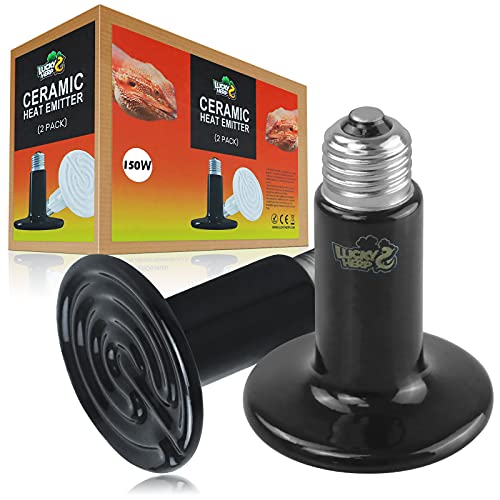
Ceramic Heat Emitter (CHE)
A classic, durable heat source that produces infrared-C. Versatile and works with any thermostat type, but provides only surface-level heat and dries out enclosures.

Halogen Flood Lamp
The ideal daytime heat source that creates a powerful, focused basking spot with bright light and high-quality infrared-A. Promotes natural basking behavior and establishes clear day/night cycles.
Frequently Asked Questions
Yes, most homes get cooler than a ball python's required nighttime temperature of 72-78°F. However, this heat MUST come from a lightless source like a Deep Heat Projector (DHP) or a Ceramic Heat Emitter (CHE) to avoid disrupting their sleep cycle.
References & Sources
- https://www.zenhabitats.com/blogs/reptile-care-sheets-resources/ball-python-complete-lighting-and-heating-guide?srsltid=AfmBOor4NcZZQcRN7S_LQlVip_W7TkcZScS5eBkWoVS65khn3Gwl8JLz
- https://reptifiles.com/ball-python-care-guide/ball-python-humidity-temperatures/
- https://community.morphmarket.com/t/heat-source-for-ball-python/42499
- https://www.thesprucepets.com/ball-python-lighting-1239263
- https://reptifiles.com/choosing-the-best-reptile-heat-lamp/
- https://reptifiles.com/ball-python-care-guide/shopping-list/
Related Articles

6 Best Ball Python Heating Setups: Deep Heat Projectors, CHEs & Thermostats (2026)
Ball pythons need precise overhead heat, not under-tank heaters. We break down the 6 best heating products for 2026 — from the Arcadia Deep Heat Projector to budget thermostats — with everything you need to set up a safe, humidity-friendly thermal gradient.

Best Ball Python Lighting: Photoperiod, Optional UVB & Night Heat (2026)
Ball pythons don't need basking lights — photoperiod matters most. We researched 6 products that match a BP's crepuscular biology and Ferguson Zone 1 needs.

Best Ball Python Starter Kit: Essential Supplies Explained
Discover the essential supplies you need to create the perfect habitat for your new ball python. Learn what to look for in a starter kit and avoid common mistakes.