Best Heat Lamp for Leopard Gecko: A Keeper's 2026 Guide
Confused about heating? Our expert guide reveals the best heat lamp for your leopard gecko, covering temperatures, wattage, UVB, and safe setup for a thriving pet.


This article contains affiliate links. If you make a purchase through these links, we may earn a small commission at no extra cost to you. See our affiliate disclosure for details.
We recommend 4 picks here. Our top choice is the Arcadia Halogen Basking Spot — check price and availability below.
How we choose: we compare published specifications against the care requirements in veterinary and species-care literature, and weigh those against what long-time keepers report. We do not test products ourselves and we do not restate Amazon star ratings. The 6 sources behind this article are listed at the bottom.
Quick Comparison
- Product Type
- Halogen bulb
- Produces Visible Light
- Yes
- Primary Function
- Daytime basking heat
- Heat Spectrum
- Infrared-A & Infrared-B
- Thermostat Type Required
- Dimming thermostat recommended
- Recommended Mounting Location
- One side of enclosure (creates basking zone)
- Product Type
- Deep Heat Projector bulb
- Produces Visible Light
- No
- Primary Function
- Nighttime or 24/7 heat
- Heat Spectrum
- Infrared-A & Infrared-B
- Thermostat Type Required
- Dimming or on/off thermostat
- Recommended Mounting Location
- One side of enclosure
- Product Type
- Dome fixture
- Produces Visible Light
- N/A
- Primary Function
- Bulb mounting/safety
- Heat Spectrum
- N/A
- Thermostat Type Required
- N/A
- Recommended Mounting Location
- Over mesh top safely
- Product Type
- Linear T5 UVB tube
- Produces Visible Light
- Yes
- Primary Function
- UVB light spectrum
- Heat Spectrum
- UVB (no heat)
- Thermostat Type Required
- Standard timer or thermostat
- Recommended Mounting Location
- Same side as heat lamp
Prices are estimates only. Actual prices on Amazon may vary.
Choosing the best heat lamp for your leopard gecko can feel overwhelming. With so many bulbs, wattages, and colors on the market, it's easy to get lost. But getting the heating right is one of the most important things you can do for your gecko's health and well-being. Don't worry, we're here to cut through the confusion.
As reptile keepers with decades of combined experience, we've tested just about every heating product out there. We'll walk you through exactly what your leopard gecko needs to thermoregulate properly, stay healthy, and live a long, happy life. Think of this as the definitive guide to warming your favorite little lizard.
Do Leopard Geckos Actually Need a Heat Lamp?
This is a common question, especially since leopard geckos are crepuscular, meaning they are most active at dawn and dusk. For a long time, many keepers relied solely on under-tank heat mats. The thinking was that since they absorb heat from the ground (belly heat), a heat mat was all they needed. However, our understanding of their natural behavior has evolved significantly.
In the wild, leopard geckos come from the arid grasslands and rocky deserts of Pakistan, Afghanistan, and India. While they hide in burrows during the hottest part of the day, they absolutely absorb heat from the sun-warmed environment. They will emerge in the morning or late afternoon to soak up warmth from rocks that have been baked by the sun. This overhead heat is a more natural and effective way for them to thermoregulate.
A heat lamp provides a focused basking spot that allows your gecko to heat its entire body, just as it would in nature. This type of heat, particularly infrared-A and infrared-B from a halogen bulb, penetrates deeper into their tissue than the surface-level heat from a mat. This process, called cryptic basking, is crucial for digestion, immune function, and overall metabolic health.
So, yes, a heat lamp is now considered the gold standard for providing your leopard gecko with the warmth it needs to thrive. It creates a proper temperature gradient that a heat mat alone simply can't achieve.
Ideal Temperature Ranges
Basking Surface
94°F–97°F
Up to 100°F acceptable
Warm Side Ambient
90°F–92°F
Cool Side Ambient
70°F–77°F
Nighttime Drop
65°F–70°F
Heat Lamp Types: Head-to-Head
Side-by-side comparison
| Feature | Halogen Flood Lamp | Deep Heat Projector (DHP) |
|---|---|---|
| Heat Type | Infrared-A & B (deep penetration) | Infrared-A & B (deep penetration) |
| Visible Light | ★Bright white light | No light |
| Day Use | ★Excellent primary heat source | Good with separate UVB lighting |
| Night Use | Not recommended | ★Excellent for 24/7 or nighttime |
Our Take: Halogen is the gold standard for daytime heating; DHPs excel as supplemental or nighttime-only heat.
Halogen Wattage by Enclosure Size
20L Tank
50-watt
40 Breeder Tank
75-watt
Large (48"×24"+)
100–150-watt
Detailed Reviews
1. Arcadia Halogen Basking Spot
Best Overall
Arcadia Halogen Basking Spot
Pros
- •High Infrared-A and Infrared-B heat penetration
- •Bright white light encourages natural basking behavior
- •Designed specifically for reptiles
- •Creates ideal temperature gradient
Cons
- •Produces visible light (not suitable for 24/7 heating if darkness needed at night)
Bottom Line
The top recommendation for primary daytime heating. Produces high levels of Infrared-A and Infrared-B heat that mimics the sun's natural spectrum, encouraging basking behavior and promoting deeper tissue penetration essential for metabolic health.
2. Arcadia Deep Heat Projector
Best for Nighttime Heating
Arcadia Deep Heat Projector
Pros
- •Produces beneficial Infrared-A and Infrared-B
- •No visible light output (suitable for 24/7 use)
- •Can supplement or replace daytime heat with separate UVB lighting
- •Perfect for homes requiring nighttime heating
Cons
- •No visible light output (may not encourage natural basking behavior as much as halogen)
Bottom Line
Excellent alternative that produces the same beneficial Infrared-A and Infrared-B as halogen but without visible light. Ideal for 24/7 heating or as a standalone nighttime heat source.
3. Fluker's Deep Dome Lamp Fixture
Essential Equipment
Fluker's Deep Dome Lamp Fixture
Pros
- •Ceramic socket for safety and durability
- •Rated for higher wattage than typical bulbs
- •Reliable construction
- •Affordable accessory
Cons
- •Requires separate thermostat for temperature control
Bottom Line
Reliable fixture designed to safely mount heat lamp bulbs. Features a ceramic socket rated for higher wattage than your bulb, ensuring durability and safety in your gecko's setup.
4. Arcadia ShadeDweller ProT5 UVB Kit
Best UVB Lighting
Arcadia ShadeDweller ProT5 UVB Kit
Pros
- •Low-output spectrum appropriate for crepuscular species
- •Allows gecko to self-regulate vitamin D3 production
- •Works with heat lamp to create natural sunlight zone
- •Prevents metabolic bone disease naturally
Cons
- •Requires separate mounting alongside heat lamp fixture
Bottom Line
Widely considered the best UVB solution for leopard geckos. Low-output linear tube provides essential UVB for natural vitamin D3 synthesis without over-exposure, perfectly complementing your heat lamp setup.
Understanding Your Leopard Gecko's Temperature Needs
Leopard geckos are ectotherms, which means they rely on their environment to regulate their body temperature. Providing a range of temperatures (a thermal gradient) inside their enclosure is essential. This allows them to move between warm and cool areas to heat up or cool down as needed.
Your goal is to create a hot side and a cool side. The heat lamp will be positioned over the hot side to create a specific basking spot. The rest of the tank will naturally form the rest of the gradient.
Here are the ideal temperatures you should aim for, as recommended by leading sources like ReptiFiles:
| Location | Temperature Range (Fahrenheit) |
|---|---|
| Basking Surface | 94°F - 97°F (up to 100°F is acceptable) |
| Warm Side Ambient | 90°F - 92°F |
| Cool Side Ambient | 70°F - 77°F |
| Nighttime Drop | 65°F - 70°F |
To measure these temperatures accurately, you can't rely on the stick-on dial thermometers. They are often inaccurate and only measure the air temp where they are placed. You need a digital thermometer with a probe to measure ambient air temperatures and, most importantly, an infrared temperature gun to get precise surface readings of your basking spot.
What to Look for in a Leopard Gecko Heat Lamp
Now that you know the 'why', let's get into the 'what'. Finding the best heat lamp for a leopard gecko involves choosing the right type of bulb. Not all heat bulbs are created equal!
Bulb Type: Halogen is King
For daytime heating, a halogen flood lamp is the top recommendation from herpetological experts. Here's why:
- Superior Heat Spectrum: Halogen bulbs produce high levels of Infrared-A and Infrared-B, which are the same wavelengths of heat produced by the sun. This heat penetrates deep into your gecko's muscles, warming them more efficiently and naturally than other heat sources.
- Bright, Visible Light: They produce bright, white light that encourages natural basking behavior and helps regulate your gecko's day/night cycle.
- Creates an Ideal Gradient: The focused beam of a halogen lamp makes it easy to create a perfect basking spot while leaving the other side of the enclosure cool.
A great example is the [Arcadia Halogen Basking Spot](https://www.amazon.com/dp/B0CPKB2G53?tag=krawlo-20 These are designed specifically for reptiles and provide an excellent heat and light combination.
Other Bulb Options
-
Deep Heat Projectors (DHPs): A [Deep Heat Projector](https://www.amazon.com/dp/B0BSHS996Y?tag=krawlo-20 is another fantastic option. Like halogens, they produce beneficial Infrared-A and Infrared-B. The key difference is they produce no visible light. This makes them an excellent choice for 24/7 heating if your home gets very cold, or as a standalone nighttime heat source if needed. You can also use one as the primary heat source during the day if you provide separate lighting (like UVB).
-
Ceramic Heat Emitters (CHEs): CHEs screw into a standard dome fixture but produce no light, only heat. However, they only produce Infrared-C, which is a much weaker, surface-level heat. It warms the air more than the gecko itself. While they can be used for supplemental nighttime heat in a pinch, they are not recommended as a primary, daytime heat source. A DHP is a far superior lightless option.
-
Colored 'Night' Bulbs: Avoid red, purple, or blue 'night' bulbs. Reptiles, including leopard geckos, can see these colors. Using them at night can disrupt their circadian rhythm, leading to stress and poor sleep. A complete drop in light is healthier for them.
Choosing the Right Wattage
(Estimates only — actual prices on Amazon may vary.)
Leopard gecko heat lamp wattage depends on several factors:
- Enclosure Size: A larger enclosure will require a higher wattage bulb.
- Room Temperature: If your house is cool, you'll need more power.
- Bulb Distance: The height of the lamp above the basking spot dramatically affects the surface temperature.
Here’s a very general starting point, but you MUST measure your temperatures and adjust accordingly:
| Enclosure Size (Gallons) | Recommended Halogen Wattage |
|---|---|
| 20 Long | 50-watt |
| 40 Breeder | 75-watt |
| Larger (e.g., 48"x24") | 100-watt or 150-watt |
This cannot be stressed enough: You cannot simply pick a wattage and hope it's right. You must use it with a thermostat to control the output and a temp gun to verify the results.
The Great Debate: Do Leopard Geckos Need UVB?
This is the other half of the lighting and heating puzzle. So, do leopard geckos need a UVB or heat lamp? The answer is both. They serve completely different purposes.
- A heat lamp provides heat for thermoregulation.
- A UVB lamp provides specific light rays that allow your gecko to produce vitamin D3 in its skin.
Without vitamin D3, your gecko cannot absorb calcium from its food, leading to Metabolic Bone Disease (MBD). MBD is a painful and often fatal condition where the body leaches calcium from the bones, causing them to become soft, deformed, and easily fractured. If you're looking for other beginner-friendly pets you might also enjoy our guide to the 5 Best Gecko Pets for Beginners (2026 Keeper's Guide).
While you can provide D3 through supplements, providing low-level UVB allows the gecko to self-regulate its D3 production, just as it would in the wild. This is a much safer and more natural method. For a crepuscular species like a leopard gecko, you don't need a powerful UVB light. A low-output linear tube is perfect. The Arcadia ShadeDweller ProT5 UVB Kit is widely considered the best choice. It should be mounted on the same side as your heat lamp to create a zone of 'sunlight' for your gecko.
Setting Up Your Heat Lamp Safely and Effectively
Once you have the best heat lamp for your leopard gecko, proper setup is critical for safety and performance.
The #1 Most Important Tool: A Thermostat
If you take only one thing away from this guide, let it be this: you MUST use a thermostat with any heat source. A heat lamp without a thermostat is a fire hazard and can easily overheat and kill your pet. There are no exceptions.
A thermostat has a probe that you place near the basking spot. It constantly measures the temperature and adjusts the power to the lamp to keep it at the target you set. For halogen bulbs and DHPs, a dimming thermostat is essential. It gently raises and lowers the power, which is more efficient and greatly extends the life of your bulb. An on/off thermostat will constantly be flicking the bulb on and off at full power, which is jarring for the animal and will burn out your expensive bulbs quickly. Our guide to the Best Heat Lamp Thermostat Timer with Outlet (2026 Guide) can help you choose the right one.
Fixtures and Placement
- Use a quality dome fixture: Make sure the fixture has a ceramic socket and is rated for a higher wattage than your bulb. The [Fluker's Deep Dome Lamp Fixture](https://www.amazon.com/dp/B0002DHODG?tag=krawlo-20 is a reliable choice.
- Position it safely: The lamp should be on a lamp stand or securely suspended over the mesh top of the enclosure. It should never be placed directly on the mesh.
- Create the gradient: Place the lamp fixture all the way to one side of the tank. This will create your basking spot and warm side, leaving the opposite end to serve as the cool side. Make sure you provide a flat basking surface (like a piece of slate or rock) directly under the lamp.
Do Leopard Geckos Need Heat at Night?
For most homes, the answer is no. Leopard geckos are perfectly adapted for a nighttime temperature drop into the mid-60s Fahrenheit. A drop in temperature is a natural part of their cycle. If your house stays at 65°F or warmer overnight, you do not need any supplemental heat.
If your home regularly drops below 65°F at night, then you should provide a lightless heat source. A Deep Heat Projector (DHP) or a Ceramic Heat Emitter (CHE) set to a low temperature (e.g., 68°F) on a thermostat is the ideal solution. This prevents the enclosure from getting dangerously cold while still allowing for a natural temperature drop.
Conclusion: Your Gecko's Perfect Slice of Sunshine
Creating the perfect thermal environment is the cornerstone of good husbandry. While setting up a heat mat might seem simpler, it doesn't compare to the benefits of overhead heating. By providing a proper basking spot, you're encouraging natural behaviors and promoting a healthier, more active pet.
To recap, the best heat lamp for a leopard gecko is a halogen flood bulb. It provides the most natural form of heat and encourages basking. Always pair it with a dimming thermostat to ensure safety and precise control. And don't forget to add a low-level linear UVB light, like the ShadeDweller, to complete your gecko's 'sunshine zone'. By investing in this setup, you're not just buying equipment; you're providing the essential energy your leopard gecko needs to truly thrive. Properly caring for their environment, including choosing the right substrate as detailed in our guide on the Best Bedding for Leopard Geckos, is key to their well-being.
Our Final Verdict

Arcadia Halogen Basking Spot
The top recommendation for primary daytime heating. Produces high levels of Infrared-A and Infrared-B heat that mimics the sun's natural spectrum, encouraging basking behavior and promoting deeper tissue penetration essential for metabolic health.

Arcadia Deep Heat Projector
Excellent alternative that produces the same beneficial Infrared-A and Infrared-B as halogen but without visible light. Ideal for 24/7 heating or as a standalone nighttime heat source.
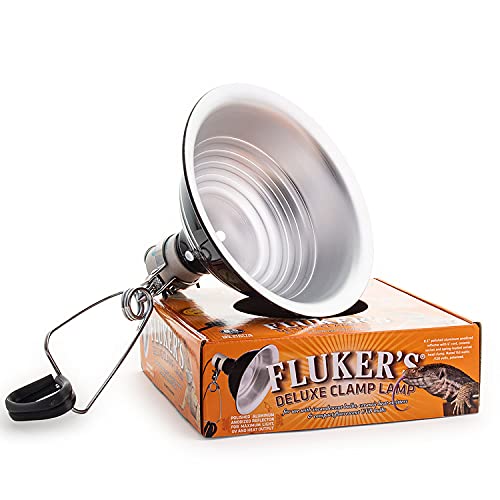
Fluker's Deep Dome Lamp Fixture
Reliable fixture designed to safely mount heat lamp bulbs. Features a ceramic socket rated for higher wattage than your bulb, ensuring durability and safety in your gecko's setup.
Frequently Asked Questions
They need both. A heat lamp provides the necessary warmth for thermoregulation and digestion. A UVB lamp allows them to produce vitamin D3, which is essential for calcium absorption and preventing Metabolic Bone Disease (MBD). They serve two separate but equally important functions.
References & Sources
- https://reptifiles.com/choosing-the-best-reptile-heat-lamp/
- https://reptifiles.com/leopard-gecko-care/leopard-gecko-temperatures-humidity/
- https://www.thesprucepets.com/do-leopard-geckos-need-uvb-5186413
- https://reptifiles.com/leopard-gecko-care/shopping-list/
- https://reptifiles.com/wp-content/uploads/2020/10/Leopard-Gecko-Care-Sheet-PDF.pdf
- https://reptifiles.com/ackie-monitor-care/ackie-monitor-temperatures-heating/
Related Articles

Best Heat Lamp for Reptiles: A 2026 Buyer's Guide
Looking for the best heat lamp to keep your reptile healthy and warm? Our 2026 guide reviews top bulb types and safety tips for the perfect setup.

Best Heat Lamp for Ball Python: A 2026 Keeper's Guide
Confused about the best heat lamp for your ball python? Our expert guide breaks down the top choices, safety tips, and proper setup for a thriving snake.

Best Heat Lamp Thermostat Timer with Outlet (2026 Guide)
Tired of manually switching lights and guessing temperatures? Discover the best heat lamp thermostat timer with outlet to automate your reptile's care and ensure their safety.