Best Heat Bulb for Reptiles: 2026 Buyer's Guide
Find the best heat bulb for your reptile in 2026. We compare halogen, ceramic, incandescent, and deep heat projectors so you can buy with confidence.


This article contains affiliate links. If you make a purchase through these links, we may earn a small commission at no extra cost to you. See our affiliate disclosure for details.
We recommend 4 picks here. Our top choice is the Incandescent Basking Bulbs — check price and availability below.
How we choose: we compare published specifications against the care requirements in veterinary and species-care literature, and weigh those against what long-time keepers report. We do not test products ourselves and we do not restate Amazon star ratings. The 6 sources behind this article are listed at the bottom.
Quick Comparison
- Price Range
- $5-$15
- Light Emission
- Visible light (daytime only)
- Lifespan
- 3-6 months
- Infrared Type
- IR-A
- Heat Penetration
- Skin surface to medium
- Best Use Case
- Daytime basking for common reptiles
- Price Range
- $10-$25
- Light Emission
- Visible light (daytime only)
- Lifespan
- Significantly longer than incandescent
- Infrared Type
- IR-A
- Heat Penetration
- Deep surface heat
- Best Use Case
- Intense daytime basking (desert species)
- Price Range
- Budget (no light cost)
- Light Emission
- None (nighttime safe)
- Lifespan
- Up to 5 years
- Infrared Type
- IR-C
- Heat Penetration
- Surface only
- Best Use Case
- Nighttime ambient heat and nocturnal species
- Price Range
- $40-$70
- Light Emission
- None (24/7 safe)
- Lifespan
- Significantly longer than incandescent
- Infrared Type
- IR-A & IR-B
- Heat Penetration
- Deep tissue (most penetrating)
- Best Use Case
- 24/7 consistent warmth without light
Prices are estimates only. Actual prices on Amazon may vary.
Picking the best heat bulb for your reptile sounds simple — until you're staring at a shelf full of options with no idea what any of them mean. Incandescent, halogen, ceramic, deep heat projector... it adds up fast.
Get the wrong one and your reptile won't digest food properly, won't be active, and may even get sick. Get the right one and your setup basically runs itself.
This guide breaks it all down in plain language. Let's get into it.
What Is Infrared Heat — and Why Does It Matter?
Reptiles are ectotherms. That means they can't generate their own body heat. They depend on external sources — in the wild, that's the sun.
The sun doesn't just warm the air around your reptile. It emits infrared radiation (IR), which heats tissue directly. There are three types:
| IR Type | Wavelength | Penetration | Best For |
|---|---|---|---|
| IR-A | 700–1400 nm | Deep tissue | Basking, digestion |
| IR-B | 1400–3000 nm | Skin surface | General warmth |
| IR-C | 3000+ nm | Surface only | Ambient heat |
The best heat bulb options for reptiles try to mimic the sun's infrared spectrum as closely as possible. This isn't just about warmth — deep IR-A heat actually supports digestion, immune function, and muscle activity.
That's why bulb type matters a lot more than most beginners realize.
Infrared Spectrum Guide
IR-A (700–1400 nm)
Deep tissue penetration
Best for basking and digestion
IR-B (1400–3000 nm)
Skin surface warming
General warmth support
IR-C (3000+ nm)
Surface only
Ambient heat only
Heat Bulb Options & Costs
Everything you need to get started
Ceramic Heat Emitter vs. Deep Heat Projector
Side-by-side comparison
| Feature | Ceramic Heat Emitter | Deep Heat Projector |
|---|---|---|
| Heat Spectrum | IR-C only (surface heat) | ★IR-A & IR-B (deep tissue) |
| Light Emission | None (nighttime safe) | None (24/7 safe) |
| Tissue Penetration | Minimal | ★Deep |
| Cost | ★Budget-friendly | Higher upfront ($40–70) |
| Proven Track Record | ★30+ years standard | Newer technology |
Our Take: CHE is fine for ambient nighttime heat on a budget; DHP is the long-term health choice, especially for snakes.
Species Temperature Requirements
Bearded Dragon
100–110°F basking
Cool side 80–85°F, warm side 90–95°F
Ball Python
88–92°F basking
Cool side 76–80°F, warm side 86–88°F
Leopard Gecko
88–92°F basking
Cool side 70–75°F, warm side 85–90°F
Blue-Tongued Skink
100–105°F basking
Cool side 75–80°F, warm side 90–95°F
Red-Eared Slider
85–90°F basking
Water temp 70–75°F
Detailed Reviews
1. Incandescent Basking Bulbs
Best Value
Incandescent Basking Bulbs
Pros
- •Affordable
- •Natural visible light
- •Many wattage options
Cons
- •Burn out faster than other types
- •Not ideal for 24/7 use
Bottom Line
Classic reptile heat bulbs producing focused visible light plus IR-A heat. Cheap, easy to find, and available in many wattages for reliable basking setups.
2. Halogen Flood Bulbs
Best for Intense Heat
Halogen Flood Bulbs
Pros
- •Intense sun-like heat
- •Long lifespan
- •Efficient
Cons
- •Can run very hot — positioning is critical
Bottom Line
Upgraded incandescent technology producing more intense IR-A heat with longer lifespan. Experienced keepers consider these the best heat bulb for species needing scorching basking spots.
3. Ceramic Heat Emitters (CHEs)
Best Budget Pick
Ceramic Heat Emitters (CHEs)
Pros
- •No light emission
- •Long lifespan (up to 5 years)
- •Consistent ambient heat
Cons
- •Only surface-level heat
- •Can reduce humidity if overused
Bottom Line
No visible light, IR-C only heat source ideal for nighttime heating. Incredibly durable and proven technology that can last up to five years, making them a long-term value.
4. Deep Heat Projectors (DHPs)
Best Overall
Deep Heat Projectors (DHPs)
Pros
- •Mimics solar IR spectrum
- •Safe for 24/7 use
- •Deep tissue warming
Cons
- •Higher upfront cost
- •Relatively new technology
Bottom Line
Newest heating technology emitting IR-A and IR-B spectrum with no visible light. Penetrates deep into tissue and can run 24/7, gaining strong following as the best long-term health option.
Types of Heat Bulbs: Which One Is Right for You?
There's no single best heat bulb for every reptile. It depends on your species, your enclosure, and whether you need daytime or nighttime heat. Here's a breakdown of your main options.
Incandescent Basking Bulbs
These are the classic reptile heat bulbs. They produce focused visible light plus IR-A heat — exactly what heliothermic reptiles need for a proper basking spot.
[Incandescent basking bulbs](https://www.amazon.com/dp/B0B55TLWFD?tag=krawlo-20 are cheap, easy to find, and available in a wide range of wattages. They're a reliable choice for bearded dragons, blue-tongued skinks, and other sun-loving species.
(Estimates only — actual prices on Amazon may vary.) Most run $5–$15 each.
Pros: Affordable, natural visible light, many wattage options
Cons: Burn out faster than other types, not ideal for 24/7 use
Halogen Flood Bulbs
Halogen bulbs are the upgraded version of incandescent bulbs. They run hotter, emit more IR-A, and last longer. Many experienced keepers consider [halogen flood bulbs](https://www.amazon.com/dp/B0C1GWBY2D?tag=krawlo-20 the best heat bulb for species that need an intense basking spot.
Think monitor lizards, uromastyx, tegu, and ackie monitors. These animals bask in scorching desert sun — and halogen comes closest to replicating that.
(Estimates only — actual prices on Amazon may vary.) Halogen floods typically cost $10–$25 and outlast standard incandescent bulbs by a significant margin.
Pros: Intense sun-like heat, long lifespan, efficient
Cons: Can run very hot — positioning is critical
Ceramic Heat Emitters (CHEs)
A [ceramic heat emitter](https://www.amazon.com/dp/B096JWWQMC?tag=krawlo-20 produces no visible light at all — only IR-C heat. That makes it the go-to for nighttime heating without messing with your reptile's light cycle.
CHEs are widely used for nocturnal species and as overnight supplemental heat in larger enclosures. They're also incredibly durable — a quality CHE can last up to five years.
Pros: No light emission, long lifespan, consistent ambient heat
Cons: Only surface-level heat, can reduce humidity if overused
Deep Heat Projectors (DHPs)
The deep heat projector is the newest technology in reptile heating. It emits IR-A and IR-B — a full spectrum of penetrating heat — but with no visible light. That means you can run it 24/7 without disrupting day/night cycles.
[Deep heat projectors](https://www.amazon.com/dp/B0C44VQ3LV?tag=krawlo-20 have gained a strong following as the best heat bulb for snakes and other species that need consistent thermal gradients without bright light.
(Estimates only — actual prices on Amazon may vary.) DHPs typically run $40–$70 upfront but last significantly longer than most alternatives.
Pros: Mimics solar IR spectrum, safe for 24/7 use, deep tissue warming
Cons: Higher upfront cost, relatively new technology
Deep Heat Projector vs. Ceramic Heat Emitter: Which Is Better?
This is one of the most debated topics in the reptile hobby right now. Here's the honest take.
Ceramic Heat Emitters have been the standard for decades. They're proven, affordable, and work well for ambient overnight heat. If budget is tight, a CHE on a thermostat is absolutely fine.
Deep Heat Projectors emit a broader infrared spectrum and penetrate deeper into your reptile's tissue. Many keepers who've switched report better feeding responses, more activity, and healthier overall animals.
The verdict? For ambient overnight heat on a budget, a CHE does the job. But if you want the best heat bulb for long-term health — especially for snakes — a DHP is worth the investment.
For context on how this plays out with specific species, the hognose snake heating guide at reptifiles.com offers a great breakdown of why deeper heat matters.
Choosing the Right Basking Temperature
The best heat bulb won't help if your temperatures are wrong. Every reptile species has specific thermal requirements. Here's a quick reference:
| Species | Cool Side | Warm Side | Basking Spot |
|---|---|---|---|
| Bearded Dragon | 80–85°F | 90–95°F | 100–110°F |
| Ball Python | 76–80°F | 86–88°F | 88–92°F |
| Leopard Gecko | 70–75°F | 85–90°F | 88–92°F |
| Blue-Tongued Skink | 75–80°F | 90–95°F | 100–105°F |
| Red-Eared Slider | 70–75°F (water) | — | 85–90°F |
Always verify temps with a digital thermometer or temperature gun — don't guess. Probe thermometers are great for continuous monitoring. Temperature guns are perfect for spot-checking the basking surface.
If your enclosure runs too hot, use a lower wattage bulb or raise the fixture. Too cool? Go up in wattage or lower the fixture closer to the basking spot. A dimming thermostat makes this whole process much easier.
Detailed species-specific guides are available on reptifiles.com — including bearded dragon temperature requirements and ball python heating.
Which Bulb Gives Off the Most Heat?
Halogen floods at 90–150 watts produce the most intense, focused heat of any common reptile bulb. They're the top choice for species needing basking spots above 105°F — like ackie monitors, uromastyx, and some agama species.
Deep heat projectors don't necessarily create the hottest surface temperature, but they penetrate deeper into tissue. For reptiles, that penetration is arguably more important than raw surface heat.
Incandescent bulbs sit in the middle. They're reliable and come in many wattages, making them easy to dial in.
For a side-by-side comparison of top heating products on the market, our Best Heat Lamp for Reptiles buyer's guide goes into even more detail.
Best Heat Bulb by Reptile Type
Not sure which option fits your specific animal? Here's a quick cheat sheet.
Bearded Dragons
Bearded dragons need an intense, focused basking spot with high IR-A output. A [halogen basking bulb](https://www.amazon.com/dp/B0B55TLWFD?tag=krawlo-20 is the best heat bulb for their basking zone. Pair it with a CHE or DHP for overnight warmth.
For a deeper dive, check out our Best Heat Lamp for Bearded Dragon guide.
Ball Pythons
Ball pythons don't need a bright basking light — they're mostly nocturnal. A deep heat projector is the best heat bulb choice here. It gives them gentle, penetrating warmth without any light disruption.
According to reptifiles.com, ball python heating is all about a consistent warm side — not a harsh spotlight.
Leopard Geckos
Leos are crepuscular. They don't need intense basking lights. A low-wattage incandescent or halogen for a warm spot, combined with an under-tank heater on a thermostat, works great. Add a CHE or DHP if your room temps drop below 65°F at night.
Tortoises
Tortoises need both heat and UVB. You can use a [mercury vapor bulb](https://www.amazon.com/dp/B0B55TLWFD?tag=krawlo-20 to combine both in one fixture, or run a halogen flood for heat alongside a separate UVB strip light. Large outdoor-style enclosures often need multiple heat sources.
Snakes (General)
Most snakes do best with a DHP or CHE for ambient warmth, plus a belly heat source (under-tank heater or heat cable) on a thermostat. They don't need bright basking lights — it can actually stress them out.
How to Set Up Your Heat Bulb Correctly
Even the best heat bulb can cause problems if it's set up wrong. Follow these steps:
- Choose your bulb based on species needs and enclosure size.
- Install it in a dome fixture with a ceramic socket — plastic sockets can melt or crack.
- Connect to a thermostat. A dimming thermostat for basking bulbs; an on/off thermostat for CHEs and DHPs.
- Place the thermostat probe at the basking surface — not in the air.
- Run it for 24 hours before adding your reptile. Verify temps at multiple times of day.
- Adjust as needed — raise or lower the fixture, or swap wattages.
Never spray water near a hot bulb — thermal shock can shatter the glass. And don't rely on guesswork when positioning. Burns from heat lamps are one of the most common reptile vet emergencies.
For a complete walkthrough of safe heat lamp setups, see our Heat Lamp for Reptiles: Complete Setup & Safety Guide.
Safety Tips You Shouldn't Skip
- Always use a thermostat. It protects your reptile and extends bulb life.
- Use a ceramic socket. Non-negotiable for high-wattage bulbs.
- Keep safe distance. Your reptile should never be able to touch the bulb.
- Replace on schedule. Even bulbs that still glow lose output over time. Swap incandescents every 3–6 months.
- Don't leave unattended at first. Monitor temps closely during the first week.
Final Thoughts
There's no single best heat bulb for every reptile — but there's definitely a best one for yours. Here's the quick summary:
- Halogen floods: Best for intense basking species (bearded dragons, monitors, uromastyx)
- Incandescent bulbs: Reliable all-rounder for most common reptiles
- Ceramic heat emitters: Best budget option for nighttime ambient heat
- Deep heat projectors: Best overall for long-term reptile health, especially snakes
Pair any of these with a quality thermostat, verify your temps with a reliable thermometer, and you've got a heating setup your reptile will thrive in.
Our Final Verdict

Incandescent Basking Bulbs
Classic reptile heat bulbs producing focused visible light plus IR-A heat. Cheap, easy to find, and available in many wattages for reliable basking setups.

Halogen Flood Bulbs
Upgraded incandescent technology producing more intense IR-A heat with longer lifespan. Experienced keepers consider these the best heat bulb for species needing scorching basking spots.
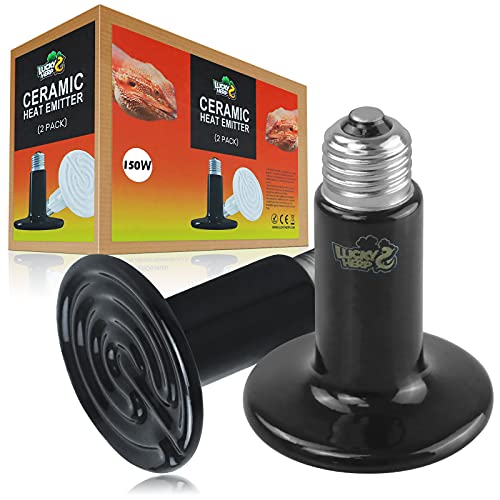
Ceramic Heat Emitters (CHEs)
No visible light, IR-C only heat source ideal for nighttime heating. Incredibly durable and proven technology that can last up to five years, making them a long-term value.
Frequently Asked Questions
Halogen flood bulbs at high wattages (90–150W) produce the most intense, focused heat. They're ideal for desert species that need basking spots above 105°F. Deep heat projectors don't necessarily run hotter on the surface, but they penetrate deeper into tissue, which is more important for reptile health overall.
References & Sources
- https://reptifiles.com/choosing-the-best-reptile-heat-lamp/
- https://reptifiles.com/bearded-dragon-care/bearded-dragon-temperatures-uvb/
- https://reptifiles.com/ball-python-care-guide/ball-python-humidity-temperatures/
- https://reptifiles.com/ackie-monitor-care/ackie-monitor-temperatures-heating/
- https://reptifiles.com/heterodon-hognose-snake-care/hognose-temperatures-humidity-lighting/
- https://reptifiles.com/red-eared-slider-care/red-eared-slider-uvb-lighting/
Related Articles

Best Reptile Heat Bulb: Top Picks for Every Species
Find the best reptile heat bulb for your species. Compare halogen, ceramic, and mercury vapor options with temperature charts and expert setup tips.

Best Heat Lamp for Reptiles: A 2026 Buyer's Guide
Looking for the best heat lamp to keep your reptile healthy and warm? Our 2026 guide reviews top bulb types and safety tips for the perfect setup.

Best Heat Lamp for Ball Python: A 2026 Keeper's Guide
Confused about the best heat lamp for your ball python? Our expert guide breaks down the top choices, safety tips, and proper setup for a thriving snake.