Best Pet Turtles for Beginners: 10 Species Ranked
Looking for the best pet turtles? We rank 10 top species by care difficulty, size, and temperament — so you can find your perfect turtle match.


This article contains affiliate links. If you make a purchase through these links, we may earn a small commission at no extra cost to you. See our affiliate disclosure for details.
We recommend 5 picks here. Our top choice is the Aquatic Turtle Pellets (Zoo Med or Fluker's) — check price and availability below.
How we choose: we compare published specifications against the care requirements in veterinary and species-care literature, and weigh those against what long-time keepers report. We do not test products ourselves and we do not restate Amazon star ratings. The 6 sources behind this article are listed at the bottom.
Quick Comparison
- Product Category
- Feeding
- Estimated Price Range
- $10-30
- Primary Benefit
- Nutritional Foundation
- Ongoing Maintenance/Replacement
- Daily Feeding
- Product Category
- Filtration
- Estimated Price Range
- $80-200
- Primary Benefit
- Superior Water Quality
- Ongoing Maintenance/Replacement
- Monthly Cleaning
- Product Category
- Lighting
- Estimated Price Range
- $30-60
- Primary Benefit
- Prevents Metabolic Bone Disease
- Ongoing Maintenance/Replacement
- 6-12 Month Replacement
- Product Category
- Habitat Setup
- Estimated Price Range
- $15-40
- Primary Benefit
- Essential Dry Basking Area
- Ongoing Maintenance/Replacement
- As Needed Cleaning
- Product Category
- Enclosure
- Estimated Price Range
- $200-400
- Primary Benefit
- Simplified Habitat Setup
- Ongoing Maintenance/Replacement
- Initial Setup Only
Prices are estimates only. Actual prices on Amazon may vary.
Turtles are one of the most unique pets you can keep. They're prehistoric-looking, surprisingly interactive, and can live for decades with the right care. But not every species suits a beginner.
Some turtles need enormous tanks. Others require very specific water conditions. And a few are just... bad-tempered. Choosing the right species makes all the difference between a rewarding experience and a frustrating one.
This guide breaks down the 10 best pet turtles for beginners and experienced keepers alike. We'll cover what makes each species great — and what challenges to expect before you bring one home.
What to Look for in a Pet Turtle
Before we dive into specific species, here's what separates a good pet turtle from a difficult one:
- Adult size — A 6-inch turtle needs far less space than a 12-inch one
- Temperament — Some turtles tolerate handling well; others never warm up to it
- Care difficulty — Water quality, heating, and UVB requirements vary widely
- Lifespan — Many pet turtles live 20–40 years. This is a long-term commitment.
- Availability — Captive-bred turtles are healthier and more ethical than wild-caught ones
Keep these factors in mind as you read through the list.
Choosing Your First Turtle
What you need to know
Adult size matters — 6-inch turtles need far less space than 12-inch ones
Temperament varies — some tolerate handling well, others never warm up to it
Care difficulty differs — water quality, heating, and UVB requirements vary widely
Lifespan is 20–40 years — this is a long-term commitment
Choose captive-bred turtles — they're healthier and more ethical than wild-caught
Red-Eared Slider Care Specs
Adult Size
8–12 inches
Tank Size
75–100 gallons for adults
Water Temp
75–80°F
Basking Temp
90–95°F
Lifespan
20–30 years
UVB Lighting
Required
Musk Turtle Care Specs
Adult Size
3–5 inches
Best for small spaces
Tank Size
20–30 gallons
Water Temp
70–78°F
Basking Temp
85–90°F
Water Depth
10–12 inches max
UVB Lighting
Recommended
Detailed Reviews
1. Aquatic Turtle Pellets (Zoo Med or Fluker's)
Editor's Choice
Aquatic Turtle Pellets (Zoo Med or Fluker's)
Pros
- •Formulated specifically for aquatic turtles, not generic fish food.
- •High protein content supports healthy growth and development.
- •Provides essential vitamins and minerals for long-term health.
- •Convenient and easy to feed daily.
Cons
- •Cannot be the sole diet; requires supplementation with fresh foods.
- •Overfeeding can quickly degrade water quality.
Bottom Line
These specialized pellets form the dietary cornerstone for aquatic turtles, providing essential nutrients for growth and vitality. Formulated with high protein, they support overall health when integrated into a balanced diet.
2. High-Capacity Canister Filter for Turtle Tanks
Premium Pick
High-Capacity Canister Filter for Turtle Tanks
Pros
- •Handles high bioload from turtles effectively.
- •Provides multi-stage filtration (mechanical, chemical, biological).
- •Maintains superior water clarity and quality for extended periods.
- •Reduces the frequency of water changes compared to smaller filters.
Cons
- •Higher initial cost compared to internal or hang-on-back filters.
- •Requires periodic maintenance to clean media and prevent clogs.
- •Can be bulky and take up space outside the tank.
Bottom Line
An oversized canister filter is paramount for maintaining pristine water conditions in a turtle habitat, effectively managing the significant waste they produce. Its powerful mechanical, chemical, and biological filtration capabilities ensure a healthy environment.
3. T5 HO UVB Bulb for Turtles (Arcadia or Zoo Med)
Best Overall
T5 HO UVB Bulb for Turtles (Arcadia or Zoo Med)
Pros
- •Delivers crucial UVB rays for vitamin D3 synthesis.
- •Prevents metabolic bone disease and other calcium deficiencies.
- •T5 HO technology provides strong, broad-spectrum UVB penetration.
- •Available from reputable reptile-specific brands ensuring proper output.
Cons
- •Requires replacement every 6-12 months as UVB output degrades.
- •Needs a compatible T5 HO fixture, adding to initial cost.
- •Can be fragile and requires careful handling during installation.
Bottom Line
Essential for indoor turtle setups, a T5 HO UVB bulb enables vital vitamin D3 synthesis and calcium metabolism, preventing severe health issues. These high-output bulbs provide the critical ultraviolet radiation required for a turtle's long-term well-being.
4. Turtle Basking Platform
Budget Pick
Turtle Basking Platform
Pros
- •Allows turtles to fully dry off, preventing shell rot and skin infections.
- •Facilitates thermoregulation by allowing access to heat and UVB lamps.
- •Provides a stress-reducing safe haven outside the water.
- •Easy to clean and maintain hygiene in the basking area.
Cons
- •Some designs can be unstable for larger or more active turtles.
- •May take up significant tank space, reducing swimming area.
- •Requires proper placement to align with heat and UVB lamps.
Bottom Line
A sturdy basking platform provides a vital dry area for aquatic turtles to fully exit the water, aiding in thermoregulation and immune function. Designed to be stable and easy to clean, it reduces stress and promotes overall health.
5. Aquatic Turtle Starter Kit (75-gallon)
Best Value
Aquatic Turtle Starter Kit (75-gallon)
Pros
- •Convenient all-in-one solution for first-time turtle owners.
- •Eliminates guesswork and ensures compatibility of basic components.
- •75-gallon size is suitable for many juvenile to adult beginner turtle species.
- •Often provides cost savings compared to buying individual items.
Cons
- •Included filter may not always be sufficient for a growing turtle's bioload.
- •Lighting components (UVB, heat) might need upgrading or additional purchase.
- •Limits customization options for experienced keepers.
Bottom Line
This comprehensive 75-gallon starter kit simplifies initial setup for new turtle owners by bundling essential components like a tank, filter, and basking dock. It offers a convenient, pre-selected solution for creating a suitable habitat, particularly for popular beginner species.
1. Red-Eared Slider (Trachemys scripta elegans)
The red-eared slider is the most popular pet turtle in the world — and for good reason. They're hardy, adaptable, and reasonably forgiving of beginner mistakes.
You've probably seen them before: medium-sized turtles with a bright red stripe behind each eye. Adults reach 8–12 inches and live 20–30 years in captivity.
Care at a glance:
- Tank size: 75–100 gallons for adults
- Water temp: 75–80°F
- Basking temp: 90–95°F
- UVB lighting: Required
The main downside? They get big. A juvenile fits in a 20-gallon tank, but you'll need to upgrade as they grow. Plan ahead if you go this route.
Red-eared sliders are strong swimmers and active throughout the day. You'll actually watch your turtle doing things — basking, exploring, swimming to greet you at feeding time. That makes them genuinely fun to observe.
2. Painted Turtle (Chrysemys picta)
Painted turtles are native to North America and are among the most commonly kept aquatic turtles in the hobby. There are four subspecies — western, eastern, midland, and southern — with the western painted turtle being most popular.
Adults reach 4–10 inches depending on subspecies and sex. They're colorful, active, and adapt well to captivity.
Care at a glance:
- Tank size: 75–100 gallons for adults
- Water temp: 70–78°F
- Basking temp: 90°F
- UVB lighting: Required
Painted turtles are similar to red-eared sliders in care needs. If you've already researched sliders, you know most of what you need here.
One advantage: painted turtles tend to be slightly calmer than sliders. Some individuals become quite comfortable with their owners over time.
3. Mississippi Map Turtle (Graptemys pseudogeographica kohnii)
Map turtles are a great pick if you want a smaller aquatic turtle with a bit of personality. Female Mississippi map turtles reach about 6–10 inches, while males stay much smaller — around 3.5–5 inches.
They're named for the map-like markings on their shells. They're active, alert turtles that spend a lot of time basking.
Care at a glance:
- Tank size: 75 gallons for females
- Water temp: 72–78°F
- Basking temp: 90–95°F
- UVB lighting: Required
- Diet: More carnivorous than sliders — they love snails and invertebrates
Map turtles are sensitive to poor water quality, so a solid filtration system is non-negotiable. Stay on top of water changes and feeding, and they thrive.
4. Common Musk Turtle (Sternotherus odoratus)
If you want a small aquatic turtle that doesn't need a massive tank, the common musk turtle is your best option. Adults max out at just 3–5 inches — small enough to keep in a 20–30 gallon setup for life.
The "stinkpot" nickname comes from their defense mechanism: when threatened, they release a musky odor. In captivity, well-adjusted musk turtles rarely bother with this.
Care at a glance:
- Tank size: 20–30 gallons
- Water temp: 70–78°F
- Basking temp: 85–90°F
- UVB lighting: Recommended
- Water depth: Keep it shallow (10–12 inches max — they're not strong swimmers)
Musk turtles are a fantastic choice for apartment keepers or anyone with limited space. They're feisty little turtles with big personalities. Don't underestimate them just because they're small.
5. Yellow-Bellied Slider (Trachemys scripta scripta)
The yellow-bellied slider is a close relative of the red-eared slider — same genus, nearly identical care needs. You can identify them by the yellow markings on their chin, neck, and the bottom of their shell.
Adults reach 8–13 inches. They're active, curious turtles that do very well in captivity.
Care at a glance:
- Tank size: 75–100 gallons for adults
- Water temp: 75–80°F
- Basking temp: 90–95°F
- UVB lighting: Required
If you like the idea of a red-eared slider but want something slightly different, the yellow-bellied slider is a natural alternative. Care requirements are nearly identical, so you won't be starting from scratch on research.
6. African Sideneck Turtle (Pelusios castaneus)
African sideneck turtles are fascinating because of how they retract their heads — sideways, folding the neck to the side rather than pulling straight back. That quirky adaptation makes them stand out.
They're medium-sized, reaching 7–9 inches as adults. They're active and curious, and many individuals become personable with regular interaction.
Care at a glance:
- Tank size: 75 gallons
- Water temp: 72–78°F
- Basking temp: 90°F
- UVB lighting: Required
- Diet: Omnivorous — pellets, live prey, and leafy greens
African sidenecks are generally hardy and adaptable. They're a great choice if you want something a little different from the standard North American species.
7. Eastern Box Turtle (Terrapene carolina carolina)
Box turtles are land turtles — not aquatic. If you'd rather skip the aquarium setup entirely, the eastern box turtle is worth serious consideration.
Adults reach 4.5–6 inches. They're iconic North American turtles with beautiful dome-shaped shells and yellow or orange markings.
Care at a glance:
- Enclosure: Large outdoor pen or indoor terrarium (minimum 4x8 feet for adults)
- Temp: 70–85°F ambient, 85–90°F warm side
- Humidity: 60–80%
- UVB lighting: Required
- Diet: Omnivorous — earthworms, slugs, berries, leafy greens
Box turtles have a hinged plastron (the bottom shell) that lets them seal themselves shut completely. It's an impressive feature you'll want to show every visitor.
One important note: box turtles do best in outdoor enclosures where they get natural sunlight. Indoor-only setups require a well-dialed UVB lighting system. According to The Spruce Pets, box turtles also need access to a shallow water dish for soaking — they drink and defecate in water, so keep it clean.
8. Reeve's Turtle (Mauremys reevesii)
Reeve's turtles are an Asian species gaining real traction in the Western hobby. They're small to medium-sized (4–9 inches), relatively easy to care for, and known for being quite docile — some individuals actually tolerate handling well.
If you want a turtle that's more likely to accept being picked up, Reeve's turtles are one of your best options.
Care at a glance:
- Tank size: 40–75 gallons
- Water temp: 72–78°F
- Basking temp: 88–92°F
- UVB lighting: Required
- Diet: Omnivorous
Reeve's turtles are also more cold-tolerant than many tropical species, which can simplify heating in cooler homes. A solid starting point for a second or third turtle keeper.
9. Spotted Turtle (Clemmys guttata)
Spotted turtles are small, striking, and a great choice for keepers with limited space. Adults reach just 3.5–5 inches — one of the smallest pet turtle species you can keep.
Their black shells dotted with bright yellow spots are genuinely stunning. They're protected in some states, so make sure you source only captive-bred specimens from a reputable breeder.
Care at a glance:
- Tank size: 30–40 gallons
- Water temp: 65–72°F (cooler than most turtles — this is important)
- Basking temp: 80–85°F
- UVB lighting: Required
- Diet: Omnivorous — heavy on invertebrates
Spotted turtles aren't for complete beginners. They need cooler water temperatures and careful attention to water quality. But for intermediate keepers who want something beautiful and uncommon, they're hard to beat.
10. Wood Turtle (Glyptemys insculpta)
Wood turtles are considered one of the most intelligent turtle species. Research has shown they can learn maze tasks at a rate comparable to rats — which sounds wild, but it translates to turtles that are genuinely interactive and responsive in ways most species aren't.
They're semi-aquatic, spending time both in water and on land. Adults reach 5.5–9 inches.
Care at a glance:
- Enclosure: Large outdoor pen ideal; indoor setups need dedicated land and water areas
- Temp: 70–80°F ambient
- Humidity: Moderate
- UVB lighting: Required
- Diet: Omnivorous — fruits, mushrooms, earthworms, leafy greens
Wood turtles are protected across most of their native range, so captive-bred specimens are essential. Find a reputable breeder who can document the turtle's captive origin before purchasing.
Aquatic vs. Land Turtle: Which One Fits Your Life?
Most people picture an aquatic turtle when they think "best pet turtle." But terrestrial and semi-aquatic species deserve serious consideration, depending on your setup.
| Feature | Aquatic Turtle | Land Turtle (Box Turtle) |
|---|---|---|
| Setup | Aquarium with filter | Terrarium or outdoor pen |
| Space needed | 75–100 gallons (adults) | 4x8 ft enclosure minimum |
| Maintenance | Water changes + filtration | Humidity + substrate care |
| Handling | Usually tolerates it | Varies by individual |
| Lifespan | 20–40 years | 30–80+ years |
Both types need UVB lighting, a proper temperature gradient, and a varied diet. Don't skip the basics regardless of which species you choose.
Setting Up Your Turtle's Home
No matter which species you pick, every turtle needs these four things done right.
Water Filtration
Turtles are messy. Way messier than fish. You need a filter rated for 2–3x your actual tank volume. If you have a 50-gallon tank, get a filter rated for 100–150 gallons. This is one of the most important investments you'll make for your turtle's health. Dirty water leads to shell rot, respiratory infections, and a miserable turtle.
UVB Lighting
Turtles need UVB light to synthesize vitamin D3 and metabolize calcium. Without it, they develop metabolic bone disease — a painful, preventable condition. A T5 HO UVB bulb from a reputable reptile brand is the standard recommendation. The same core UVB principles that apply to lizards and snakes apply here — our guide on best pet lizards for beginners covers the basics of UVB setup in helpful detail.
Basking Area
All aquatic turtles need a dry basking spot where they can fully exit the water. The basking area should reach 90–95°F. Turtles need this heat to regulate their immune function, digestion, and overall health. A basking platform that's too small or too cool is a common beginner mistake.
Diet
Most pet turtles do well on a base of high-quality pellets supplemented with:
- Leafy greens (romaine, dandelion greens, collard greens)
- Live or frozen protein (earthworms, feeder fish, crickets)
- Occasional fruits and vegetables
Avoid iceberg lettuce — it's nutritionally empty. Go easy on protein for adult turtles; juveniles need more of it. For a broader look at reptile feeding and care principles, our guide on best pet snakes for beginners covers overlapping nutrition concepts that apply across many reptile species.
The 4-Inch Rule Explained
You may have seen references to the "4-inch rule" when shopping for turtles. In the US, it's been illegal since 1975 to sell turtles with a shell length under 4 inches for commercial purposes. The law was passed to reduce salmonella transmission, particularly to young children.
This doesn't mean turtles under 4 inches don't exist — it means you can't legally buy or sell them commercially. And regardless of size, all turtles can carry salmonella. Always wash your hands after handling any reptile, and teach children to do the same.
How Long Do Pet Turtles Live?
This is the fact most new turtle owners underestimate the most. Red-eared sliders commonly live 20–30 years. Box turtles can reach 50–80 years. Some tortoise species outlive their owners entirely.
According to PetMD's guide on turtle lifespans, a turtle you bring home today could still be alive when you're retired. That's not a reason to avoid getting one — it's a reason to choose carefully and commit fully. Many experienced turtle keepers include their animals in estate planning.
Quick Comparison: All 10 Species at a Glance
| Species | Adult Size | Tank/Enclosure | Difficulty | Best For |
|---|---|---|---|---|
| Red-Eared Slider | 8–12 in | 75–100 gal | Beginner | First turtle |
| Painted Turtle | 4–10 in | 75–100 gal | Beginner | Active watchers |
| Mississippi Map | 3.5–10 in | 75 gal | Beginner | Space-conscious keepers |
| Common Musk | 3–5 in | 20–30 gal | Beginner | Small spaces |
| Yellow-Bellied Slider | 8–13 in | 75–100 gal | Beginner | Slider alternative |
| African Sideneck | 7–9 in | 75 gal | Intermediate | Unique look |
| Eastern Box Turtle | 4.5–6 in | 4x8 ft pen | Intermediate | Land turtle fans |
| Reeve's Turtle | 4–9 in | 40–75 gal | Beginner | Handleable species |
| Spotted Turtle | 3.5–5 in | 30–40 gal | Intermediate | Small and beautiful |
| Wood Turtle | 5.5–9 in | Large outdoor | Intermediate | Interactive keepers |
Final Thoughts
The best pet turtle is the one that fits your actual lifestyle — your space, your budget, and how much maintenance you're willing to do.
If you're just starting out, the common musk turtle (tiny tank, forgiving care) or the red-eared slider (widely available, extremely well-documented husbandry) are the safest first picks.
Whatever species you choose, set up the habitat before you bring the turtle home. Don't skip the UVB light. Don't undersize the filter. And don't forget — this animal could still be with you 30 years from now.
That's a relationship worth starting right.
Our Final Verdict
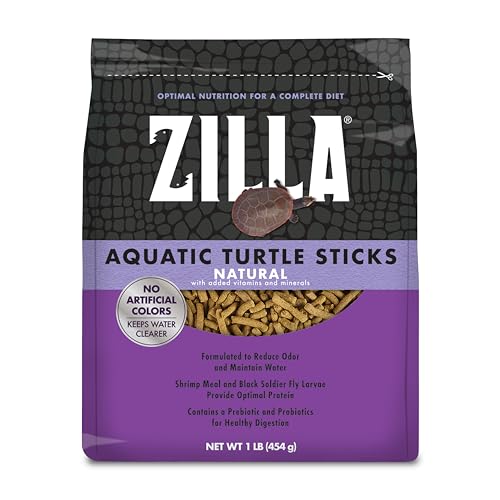
Aquatic Turtle Pellets (Zoo Med or Fluker's)
These specialized pellets form the dietary cornerstone for aquatic turtles, providing essential nutrients for growth and vitality. Formulated with high protein, they support overall health when integrated into a balanced diet.

High-Capacity Canister Filter for Turtle Tanks
An oversized canister filter is paramount for maintaining pristine water conditions in a turtle habitat, effectively managing the significant waste they produce. Its powerful mechanical, chemical, and biological filtration capabilities ensure a healthy environment.

T5 HO UVB Bulb for Turtles (Arcadia or Zoo Med)
Essential for indoor turtle setups, a T5 HO UVB bulb enables vital vitamin D3 synthesis and calcium metabolism, preventing severe health issues. These high-output bulbs provide the critical ultraviolet radiation required for a turtle's long-term well-being.
Frequently Asked Questions
For most beginners, the red-eared slider or common musk turtle are the best starting points. Red-eared sliders are widely available, hardy, and have well-documented care needs. Common musk turtles are ideal if space is limited — they only need a 20–30 gallon tank as adults.
References & Sources
- https://www.petmd.com/reptile/aquatic-turtle-care-sheet
- https://www.thesprucepets.com/types-of-pet-turtles-4788330
- https://www.thesprucepets.com/pet-aquatic-turtles-1237254
- https://www.thesprucepets.com/mud-turtles-1238354
- https://www.petmd.com/reptile/how-long-do-turtles-and-tortoises-live
- https://www.thesprucepets.com/before-you-get-a-box-turtle-1238462
Related Articles

Best Pet Turtles to Have: 10 Great Choices for Keepers
Looking for the best pet turtles to have? Our expert guide ranks 10 popular species, covering their care, size, and temperament for beginners and beyond.

Best Substrate for Aquatic Turtles: Sand or Gravel?
Choosing the best substrate for aquatic turtles affects water quality, health, and behavior. Here's what actually works — and what to avoid.

Best Pet Lizard Species: Top Picks for New & Experienced Keepers
Discover the best pet lizard species for your home! Our expert guide covers top choices like leopard geckos and bearded dragons, focusing on care, temperament, and suitability.