Best Feeder Insects for Leopard Geckos (2026)
Best feeder insects for leopard geckos ranked by Ca:P ratio, fat content, and safety — 7 picks with a feeding schedule and gut-load guide for every life stage.


This article contains affiliate links. If you make a purchase through these links, we may earn a small commission at no extra cost to you. See our affiliate disclosure for details.
We recommend 7 picks here. Our top choice is the Josh's Frogs Dubia Roaches — check price and availability below.
How we choose: we compare published specifications against the care requirements in veterinary and species-care literature, and weigh those against what long-time keepers report. We do not test products ourselves and we do not restate Amazon star ratings. The 2 sources behind this article are listed at the bottom.
Your leopard gecko's health is built one feeding at a time. Unlike crested geckos or gargoyle geckos, leopard geckos are strict insectivores — there is no commercial complete diet to fall back on. Every meal is a feeder insect, which means feeder selection determines your gecko's protein, fat, calcium, and vitamin intake entirely.
The core nutritional challenge is Ca:P ratio. The ideal calcium-to-phosphorus ratio for reptile feeders is 2:1. No common insect achieves this naturally — dubia roaches reach 0.308%, crickets reach 0.081%, and mealworms reach a dismal 0.040%. This is why calcium dusting at every feeding is non-negotiable, and why feeder selection matters far more than most new keepers realize.
We analyzed nutritional data from veterinary nutrition research, reviewed keeper community feedback across major reptile forums, and cross-referenced ReptiFiles' leopard gecko care guide to rank the seven best feeder insects available today. Here is what the science and keeper experience show.
Quick Comparison: All 7 Feeder Insects
| Feeder | Protein | Fat | Ca:P Ratio | Classification |
|---|---|---|---|---|
| Josh's Frogs Dubia Roaches | 23.4% | 7.2% | 0.308% | Staple |
| Josh's Frogs Crickets | 21.3% | 6.0% | 0.081% | Staple |
| Josh's Frogs Black Soldier Fly Larvae | ~17% | ~9% | Naturally high | Staple |
| Josh's Frogs Mealworms | 20.3% | 12.7% | 0.040% | Supplemental |
| Josh's Frogs Superworms | 17.4% | 17.9% | 0.053% | Occasional |
| Josh's Frogs Silkworms | 9.3% | 1.1% | 0.075% | Supplemental |
| Josh's Frogs Waxworms | 15.5% | 22.2% | 0.131% | Treat only |
Pro Tip: Feeder insects should never exceed the space between your leopard gecko's eyes in width. Oversized feeders cause stress, regurgitation, and impaction risk — particularly dangerous in juveniles and animals with lower gut motility.
Our Top Picks
Quick recommendations
All leopard geckos as the primary staple feeder — best overall nutrition, safety, and ease of colony maintenance
Leopard geckos that need prey drive stimulation or keepers without access to dubia roaches — use as a rotation...
Keepers who want a no-dust feeding day or a calcium boost rotation — pairs perfectly with dubia roaches on alternate...
Supplemental feeding alongside a dubia roach or cricket staple — convenient for travel or emergencies, not for...
Key Takeaways
What you need to know
Our top pick is the Josh's Frogs Dubia Roaches — all leopard geckos as the primary staple feeder — best overall nutrition, safety, and ease of colony maintenance.
Week 1: — Calcium without D3 (if your gecko has access to a UVB light) OR calcium with D3 (if no UVB light is provided).
Week 2: — Calcium + multivitamin powder.
Frequency: — Daily feeding, or every other day minimum.
Quantity: — As many appropriately sized insects as the gecko will eat in 10–15 minutes.
Feeder priority: — Dubia roaches or crickets as staple — high protein, manageable fat.
Detailed Reviews
1. Josh's Frogs Dubia Roaches
Best Overall
Josh's Frogs Dubia Roaches
Pros
- •Highest protein of any common staple feeder at 23.4%
- •Cannot climb smooth walls — safe to leave briefly in enclosure without bite risk
- •Best Ca:P ratio among non-BSFL feeders at 0.308%
- •Long lifespan in colony (1–3 years) — easy to maintain at home
Cons
- •Illegal to keep or breed in some US states (Florida, Hawaii) — check local laws
- •Still require calcium dusting before every feeding
- •More expensive per insect than crickets or mealworms
Bottom Line
Dubia roaches are the single best staple feeder insect for leopard geckos. With 23.4% protein and a Ca:P ratio of 0.308% — more than three times better than mealworms — they combine high nutrition with zero bite risk. They cannot climb smooth enclosure walls, they do not make noise, and they live 1–3 years in a colony, making them easy to maintain. Community data from keeper forums and ReptiFiles consistently places dubia roaches at the top of every leopard gecko feeding rotation.
2. Josh's Frogs Crickets
Best for Prey Drive
Josh's Frogs Crickets
Pros
- •Best for stimulating prey drive — erratic movement triggers active hunting
- •21.3% protein makes them a nutritionally solid staple
- •Widely available at pet stores nationwide — easiest to source locally
- •Low cost per insect compared to dubia roaches
Cons
- •Will bite geckos if left unattended — must remove uneaten crickets within 15 minutes
- •Poor Ca:P ratio (0.081%) requires heavy calcium dusting at every feeding
- •Noisy and can escape enclosure — harder to manage than roaches
Bottom Line
Crickets are the most widely available staple feeder insect and excel at stimulating prey drive — their erratic jumping triggers natural hunting behavior that dubia roaches cannot replicate as effectively. At 21.3% protein they are nutritionally close to dubia roaches, but their Ca:P ratio of 0.081% is poor and they pose a genuine bite risk to sleeping geckos. With consistent gut-loading and calcium dusting, crickets work well as a rotation feeder or primary feeder for keepers who cannot source dubia roaches.
3. Josh's Frogs Black Soldier Fly Larvae
Best Calcium
Josh's Frogs Black Soldier Fly Larvae
Pros
- •Only common feeder with a naturally high Ca:P ratio — no calcium dusting required
- •Soft-bodied and zero bite risk — safe for juveniles
- •Wriggle actively on the enclosure floor — excellent movement trigger for leopard geckos
- •Affordable and available from multiple reputable suppliers
Cons
- •Lower protein (~17%) than dubia roaches or crickets
- •Deficient in fat-soluble vitamins A, D, E, K when used as the sole long-term feeder
- •Short shelf life — use within 1–2 weeks of delivery
Bottom Line
Black Soldier Fly Larvae (BSFL), sometimes sold as Calciworms or NutriGrubs, are the only commonly available feeder insect with a naturally balanced Ca:P ratio. While their protein at approximately 17% is lower than dubia roaches or crickets, the natural calcium content eliminates the need for calcium dusting on feeding days when BSFL are offered. Research analyzed from herpetological nutrition sources confirms their Ca:P is the closest to the ideal 2:1 of any standard feeder. Use them in rotation — not as the sole feeder — because they are deficient in fat-soluble vitamins long-term.
4. Josh's Frogs Mealworms
Most Accessible
Josh's Frogs Mealworms
Pros
- •Most accessible feeder — available at virtually every pet store
- •Easy to store in the refrigerator for weeks without maintenance
- •20.3% protein — nutritionally acceptable when properly supplemented
- •Low cost and widely available in bulk
Cons
- •High fat at 12.7% causes obesity when overfed
- •Worst Ca:P ratio of the staple-adjacent feeders at 0.040%
- •Mealworm-only diets are a well-documented path to nutrient deficiency and fatty liver disease
Bottom Line
Mealworms are the most accessible feeder insect in the hobby — available at every big-box pet store — but they are supplemental, not staple. At 12.7% fat and a Ca:P ratio of only 0.040%, they are the most nutritionally imbalanced common feeder. A mealworm-only diet causes obesity and nutrient deficiency within months; community data and veterinary nutrition sources consistently document this failure pattern. Use mealworms as a rotation supplement alongside dubia roaches or crickets, not as a primary feeder.
5. Josh's Frogs Superworms
Best for Adults
Josh's Frogs Superworms
Pros
- •High caloric density — ideal for breeding females and underweight adults
- •Very high palatability — accepted by virtually all leopard geckos immediately
- •Longer shelf life than crickets — easier to keep between feedings
- •Larger size provides good gut-load surface area for nutritional loading
Cons
- •17.9% fat causes obesity and selective feeding if offered more than once weekly
- •Poor Ca:P ratio (0.053%) — requires calcium dusting every feeding
- •Not appropriate for juveniles — fat content is too high for growing animals
Bottom Line
Superworms are the best feeder insect for adult leopard geckos that need extra calories — breeding females recovering from egg production, underweight adults, or animals coming out of illness. At 17.4% protein and 17.9% fat, they deliver a significant caloric punch. Their Ca:P is poor at 0.053%, so calcium dusting is mandatory. Keeper-reported palatability is nearly universal — geckos almost never refuse superworms, which also makes them a selective feeding risk if offered too often. Limit to once per week maximum for adults; never feed to juveniles.
6. Josh's Frogs Silkworms
Best Hydration
Josh's Frogs Silkworms
Pros
- •Ultra-low fat at 1.1% — ideal for weight management and juvenile growth
- •82.7% moisture content provides excellent hydration support
- •Zero bite risk — safe to offer without active supervision
- •Better Ca:P ratio than mealworms or superworms
Cons
- •Higher cost per insect than mealworms or crickets
- •Short shelf life — must be used within 1–2 weeks of arrival
- •Seasonal availability can make consistent sourcing difficult
Bottom Line
Silkworms are one of the most nutritionally balanced feeder insects available for leopard geckos. At only 1.1% fat and with 82.7% moisture content, they are the lowest-fat high-protein option on this list and deliver meaningful hydration with every feeding. Their Ca:P ratio of 0.075% is better than mealworms and superworms, and they cannot bite. Keeper communities consistently recommend silkworms for juveniles, shedding animals, and geckos showing signs of dehydration. The limiting factors are cost and inconsistent seasonal availability.
7. Josh's Frogs Waxworms
Best Treat
Josh's Frogs Waxworms
Pros
- •Extremely palatable — nearly every leopard gecko accepts them immediately
- •Useful appetite stimulant for sick or anorexic geckos
- •Soft-bodied — easy to digest and low injury risk
Cons
- •22.2% fat — highest fat content of any common feeder insect
- •Causes selective feeding and appetite suppression when overused
- •Minimal protein and poor Ca:P ratio — almost no nutritional value beyond calories
Bottom Line
Waxworms are the most palatable feeder insect on this list and the most dangerous one to overuse. At 22.2% fat — higher than any other common feeder — and with minimal nutritional value beyond calories, waxworms should be used only as an occasional treat or appetite stimulant for sick, underweight, or anorexic geckos. Community data shows that geckos offered waxworms more than once or twice a month often become selective feeders, refusing dubia roaches and eventually going on prolonged hunger strikes. Keep them in the treat category strictly.
Detailed Reviews: Staple Feeders First
1. Josh's Frogs Dubia Roaches — Best Overall
Josh's Frogs Dubia Roaches are the best staple feeder insect for leopard geckos, full stop. Community data from leopard gecko keeper forums, ReptiFiles care documentation, and veterinary nutrition research all point to the same conclusion: dubia roaches deliver the best combination of protein, manageable fat content, and Ca:P ratio of any readily available feeder.
At 23.4% protein and 7.2% fat, they provide excellent muscle-building nutrition without the obesity risk of mealworms or superworms. Their Ca:P ratio of 0.308% is more than three times better than mealworms. They cannot climb smooth glass or plastic enclosure walls, cannot bite hard enough to injure a gecko, and produce no noise.
Gut-load Josh's Frogs Dubia Roaches for 24–48 hours before every feeding. Use calcium-rich greens — collard greens, dandelion leaves, turnip greens — and avoid spinach and beet greens which block calcium absorption with oxalic acid. Dust lightly with calcium powder immediately before offering.
For leopard geckos that can be legally kept in your state, Josh's Frogs Dubia Roaches should form the backbone of every feeding rotation. Pair them with Josh's Frogs Black Soldier Fly Larvae on alternate feeder days for added nutritional breadth.
2. Josh's Frogs Crickets — Best for Prey Drive
Josh's Frogs Crickets are the most commonly used staple feeder in the hobby — and for good reason. Their erratic jumping and movement triggers predatory behavior in leopard geckos more effectively than slower-moving dubia roaches. For picky eaters or geckos that have been fed only mealworms, switching to crickets often reignites feeding response when dubia roaches are refused.
At 21.3% protein and 6.0% fat, Josh's Frogs Crickets are nutritionally close to dubia roaches. The critical difference is Ca:P — at 0.081%, they require significantly heavier calcium supplementation than roaches. According to VCA Hospitals' reptile nutrition guidance, inadequate calcium supplementation with cricket-based diets is among the most common preventable causes of metabolic bone disease in captive leopard geckos.
Bite risk is the other major drawback. Cricket bites are well-documented in keeper communities — uneaten crickets will bite a sleeping gecko, causing open wounds and significant stress.
- Remove all uneaten crickets within 15 minutes of every feeding session
- Never leave crickets in the enclosure overnight
- Always calcium-dust at every single feeding
- Gut-load for 24–48 hours before offering — an unfed cricket has dramatically lower nutritional value
Josh's Frogs Crickets are a legitimate staple feeder when managed correctly. For keepers without access to dubia roaches, they are the best alternative. For keepers who have both, rotate crickets weekly to maintain prey drive and reduce dubia roach dependency.
3. Josh's Frogs Black Soldier Fly Larvae — Best Calcium
Josh's Frogs Black Soldier Fly Larvae (also sold as Calciworms or NutriGrubs) are the only common feeder insect with a naturally high Ca:P ratio — approximately 1.5:1 based on nutritional analysis reviewed across herpetological nutrition literature. That means no calcium dusting required on days you offer BSFL.
For leopard geckos, this is a meaningful advantage. The constant calcium dusting routine is one of the most common areas where keepers slip up over time. Building Josh's Frogs Black Soldier Fly Larvae into your rotation creates built-in no-dust feeding days without sacrificing calcium intake.
Pro Tip: BSFL are deficient in fat-soluble vitamins (A, D, E, K) when used as the sole feeder long-term. Rotate them with dubia roaches or crickets and maintain your regular multivitamin supplement schedule regardless of which feeder you offer. See our leopard gecko supplements guide for the full protocol.
BSFL wriggle actively when placed on a flat surface — leopard geckos respond well to this movement. They are soft-bodied, carry zero bite risk, and are affordable from quality suppliers. Their main limitations are protein content (~17%, lower than dubia or crickets) and a short shelf life of one to two weeks after delivery.
For most keepers, Josh's Frogs Black Soldier Fly Larvae are the ideal second feeder in a two-insect rotation alongside Josh's Frogs Dubia Roaches.
Detailed Reviews: Supplemental Feeders
4. Josh's Frogs Mealworms — Most Accessible
Let's start with the honest assessment: Josh's Frogs Mealworms are the most misused feeder insect in the leopard gecko hobby. Community data shows that mealworm-only diets — common among new keepers who buy them at pet stores — cause obesity and nutrient deficiency within months. At 12.7% fat and a Ca:P ratio of only 0.040%, exclusive mealworm feeding is a documented path to fatty liver disease and metabolic bone disease.
That said, Josh's Frogs Mealworms have a legitimate role as a supplemental feeder when used correctly:
- Easy to store: refrigerate at 50°F (10°C) and they live for weeks with minimal care
- 20.3% protein is solid when calcium-supplemented properly
- Widely available in bulk at low cost — convenient for travel or emergencies
- Most leopard geckos accept them readily
The key is frequency. Mealworms should represent no more than 20–25% of your gecko's total feeder intake by volume. Use them as a convenient rotation option, not as the primary food source. Always calcium-dust before offering, and prioritize gut-loading with calcium-rich greens even more than you would with higher Ca:P feeders.
If your leopard gecko has been on a mealworm-only diet, transition gradually by introducing Josh's Frogs Dubia Roaches or crickets alongside mealworms, then reduce mealworm frequency over several weeks. Abrupt diet changes in leopard geckos can trigger food refusal. Our leopard gecko diet guide covers transition protocols in detail.
5. Josh's Frogs Silkworms — Best Hydration
Josh's Frogs Silkworms are the most nutritionally unique feeder on this list: only 1.1% fat, 82.7% moisture content, zero bite risk, and a Ca:P ratio of 0.075% — better than mealworms or superworms. For a leopard gecko species that evolved in semi-arid environments, the extremely high moisture content of silkworms provides meaningful hydration support that other feeders cannot match.
Keeper communities consistently recommend Josh's Frogs Silkworms for:
- Juvenile leopard geckos that are not yet reliable drinkers from shallow water dishes
- Adult geckos showing early signs of dehydration (tacky skin, sunken eyes, retained shed)
- Shedding animals — the moisture supports skin loosening and reduces stuck shed risk
- Weight management in overweight adults — ultra-low fat with adequate protein
The downsides are cost and availability. Silkworms are more expensive per insect than any other feeder on this list, their shelf life is only one to two weeks after arrival, and supply can be seasonal. For everyday feeding, Josh's Frogs Dubia Roaches remain more practical. But for targeted nutritional support in specific situations, Josh's Frogs Silkworms are worth having on hand.
For more information on calcium and vitamin supplementation to pair with your insect rotation, see our best calcium supplements for albino geckos guide and our leopard gecko supplements guide.
Detailed Reviews: Occasional and Treat Feeders
6. Josh's Frogs Superworms — Best for Adults
Josh's Frogs Superworms should be approached the same way a doctor approaches high-calorie meal supplements: powerful, useful in specific situations, and dangerous when misused. At 17.9% fat — second only to waxworms on this list — superworms deliver significant caloric density that is genuinely therapeutic for breeding females recovering from egg production, animals coming out of illness or injury, or chronically underweight adults.
Keeper palatability data is nearly universal: leopard geckos almost never refuse Josh's Frogs Superworms. This is both a feature and a warning sign. Geckos that receive superworms too frequently become selective feeders — they begin refusing dubia roaches and crickets in anticipation of superworms. Once this selective feeding pattern develops, it is difficult to reverse.
Practical rules for superworm use:
- Adults only — never feed superworms to juveniles under 12 months
- Maximum once per week, and only when extra calories are justified
- Always calcium-dust before offering (Ca:P of 0.053% is poor)
- Remove uneaten superworms within 30 minutes — they cannot pupate in the enclosure but should not be left overnight
Pro Tip: Use Josh's Frogs Superworms as a weight-restoration tool, not a regular feeder. Once your gecko reaches a healthy body weight (assess by visible fat pads in the tail), return to dubia roaches as the primary feeder and reserve superworms for once-monthly enrichment at most.
7. Josh's Frogs Waxworms — Best Treat
Josh's Frogs Waxworms are the candy of the leopard gecko world. At 22.2% fat — the highest of any feeder on this list — and with minimal protein value relative to that fat load, they should be offered once or twice per month at most, as an occasional treat or appetite stimulant for geckos that are ill or in a hunger strike.
The problem with Josh's Frogs Waxworms is not the insects themselves — it is keeper behavior. They are so palatable that geckos accept them instantly, which makes keepers want to offer them frequently. Community data shows that geckos fed waxworms more than twice monthly commonly develop selective feeding patterns within weeks, going on extended hunger strikes when waxworms are withheld.
- Offer waxworms at most twice per month for healthy adults
- Never feed during juvenile growth phase (under 12 months)
- Useful as an appetite stimulant for anorexic or recently ill geckos
- Not a nutritional tool — purely a behavioral and palatable reward
If your gecko refuses all other feeders and will only accept waxworms, treat this as a health signal, not a preference. Consult a reptile veterinarian, as prolonged appetite changes in leopard geckos can indicate underlying illness.
Gut-Loading and Dusting Guide
Feeder insect nutrition is not fixed at purchase. What your insect eats in the 24–48 hours before you feed it to your gecko determines a significant portion of that meal's nutritional value. This is gut-loading, and it is non-negotiable for leopard geckos whose entire diet depends on insect quality.
What to Use for Gut-Loading
The goal is to increase the calcium and beta-carotene content of the feeder insect before it becomes a meal.
Best gut-load vegetables (high calcium, low oxalate):
- Collard greens
- Dandelion leaves and flowers
- Turnip greens
- Mustard greens
- Endive
Avoid for gut-loading:
- Spinach (oxalic acid blocks calcium absorption)
- Beet greens (high oxalate)
- Iceberg lettuce (near-zero nutritional value)
- Citrus fruits (too acidic)
Commercial gut-load products like Repashy Bug Burger or Fluker's High-Calcium Cricket Diet can supplement fresh greens. For a detailed review of gut-load products, see our best insect gut-load guide.
Calcium Dusting Protocol
The two-week supplement rotation is the standard protocol recommended by ReptiFiles and confirmed by community data across keeper forums:
- Week 1: Calcium without D3 (if your gecko has access to a UVB light) OR calcium with D3 (if no UVB light is provided)
- Week 2: Calcium + multivitamin powder
Repeat this rotation indefinitely. The alternating schedule prevents both calcium deficiency (metabolic bone disease risk) and D3 over-supplementation toxicity — both of which are documented health risks in captive leopard geckos according to VCA Hospitals' reptile care resources.
BSFL are the one exception: because their Ca:P ratio is naturally high, calcium dusting is optional on BSFL feeding days. However, multivitamin supplementation remains on schedule regardless of which feeder is offered.
For the full supplement selection guide including brand recommendations, see our best breeding gecko vitamins guide.
Feeding Schedule by Age
Feeding frequency changes significantly between juvenile and adult leopard geckos. Overfeeding adults and underfeeding juveniles are both common keeper errors.
Juvenile Leopard Geckos (Under 12 Months)
Juveniles are in active growth phase and need frequent, protein-rich feeding:
- Frequency: Daily feeding, or every other day minimum
- Quantity: As many appropriately sized insects as the gecko will eat in 10–15 minutes
- Feeder priority: Dubia roaches or crickets as staple — high protein, manageable fat
- Silkworms: Excellent addition for hydration support
- Avoid: Superworms (too high fat), waxworms (too high fat, selective feeding risk)
- Supplement: Every feeding — calcium is critical during bone development
Adult Leopard Geckos (12+ Months)
Adults have slower metabolism and are at greater obesity risk:
- Frequency: Every other day, or 2–3 times per week
- Quantity: 5–8 appropriately sized insects per feeding session
- Feeder rotation: Dubia roaches as primary, BSFL or crickets for variety, mealworms occasionally
- Superworms: Once per week maximum when caloric boost is needed
- Waxworms: Treat only, once or twice per month
- Supplement: Calcium at every feeding; multivitamin every other week
Pro Tip: Monitor your adult leopard gecko's tail fat reserves monthly. A well-fed adult has a moderately plump tail with visible roundness but no overhanging sides. A severely obese tail indicates overfeeding — reduce insect quantity and eliminate high-fat feeders immediately. An extremely thin tail signals underfeeding or illness — increase frequency and consult a vet if it does not respond within two to three weeks.
For a complete overview of leopard gecko care beyond feeding — including enclosure setup, heating, and lighting — visit our leopard gecko species guide.
Our Final Verdict
Josh's Frogs Dubia Roaches
Dubia roaches are the single best staple feeder insect for leopard geckos. With 23.4% protein and a Ca:P ratio of 0.308% — more than three times better than mealworms — they combine high nutrition with zero bite risk. They cannot climb smooth enclosure walls, they do not make noise, and they live 1–3 years in a colony, making them easy to maintain. Community data from keeper forums and ReptiFiles consistently places dubia roaches at the top of every leopard gecko feeding rotation.
Josh's Frogs Crickets
Crickets are the most widely available staple feeder insect and excel at stimulating prey drive — their erratic jumping triggers natural hunting behavior that dubia roaches cannot replicate as effectively. At 21.3% protein they are nutritionally close to dubia roaches, but their Ca:P ratio of 0.081% is poor and they pose a genuine bite risk to sleeping geckos. With consistent gut-loading and calcium dusting, crickets work well as a rotation feeder or primary feeder for keepers who cannot source dubia roaches.
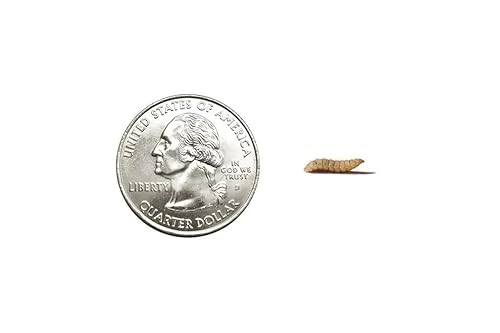
Josh's Frogs Black Soldier Fly Larvae
Black Soldier Fly Larvae (BSFL), sometimes sold as Calciworms or NutriGrubs, are the only commonly available feeder insect with a naturally balanced Ca:P ratio. While their protein at approximately 17% is lower than dubia roaches or crickets, the natural calcium content eliminates the need for calcium dusting on feeding days when BSFL are offered. Research analyzed from herpetological nutrition sources confirms their Ca:P is the closest to the ideal 2:1 of any standard feeder. Use them in rotation — not as the sole feeder — because they are deficient in fat-soluble vitamins long-term.
Frequently Asked Questions
Dubia roaches are the best overall staple feeder insect for leopard geckos. They have the highest protein of any common feeder (23.4%), a Ca:P ratio more than three times better than mealworms, cannot climb smooth enclosure walls, and pose zero bite risk. For most keepers, dubia roaches should form the backbone of the feeding rotation, supplemented with black soldier fly larvae on alternate feeder days.
References & Sources
Related Articles

Best Leopard Gecko Food (2026): Top Feeder Insects Ranked
Leopard geckos are strict insectivores. We ranked the 7 best feeder insects by nutrition, availability, and ease — dubia roaches, crickets, BSFL, and more.

Best Leopard Gecko Starter Kit: Complete Buyer's Guide
Find the best leopard gecko starter kit for beginners. We break down enclosures, heating, substrate, and accessories so you set up right the first time.

Finding the Best Place to Buy Feeder Insects Online: Your Ultimate Guide
Discover the top online retailers for feeder insects to ensure your reptile pets get fresh, nutritious meals. Our guide covers crickets, mealworms, roaches, and more, helping you find reliable sources with great prices and shipping.