Best Leopard Gecko Humidity: Your Complete Guide
Struggling with shedding or respiratory issues? Our guide explains the best leopard gecko humidity levels, how to manage them, and the crucial role of a humid hide.


This article contains affiliate links. If you make a purchase through these links, we may earn a small commission at no extra cost to you. See our affiliate disclosure for details.
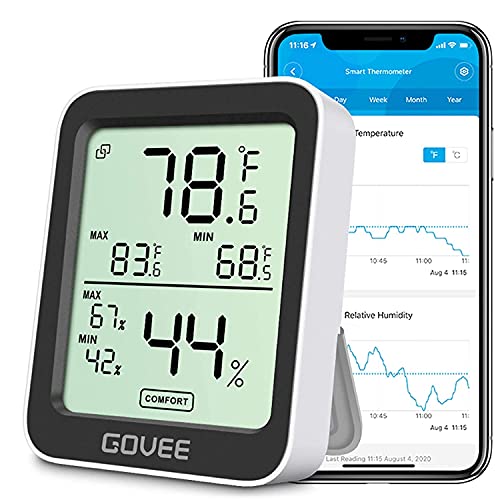
We recommend 3 picks here. Our top choice is the Govee Digital Hygrometer/Thermometer — check price and availability below.
How we choose: we compare published specifications against the care requirements in veterinary and species-care literature, and weigh those against what long-time keepers report. We do not test products ourselves and we do not restate Amazon star ratings. The 3 sources behind this article are listed at the bottom.
Quick Comparison
- Product Type
- Measuring Tool
- Directly Controls Humidity
- No (Measures only)
- Price Range
- $
- Setup Complexity
- Low (plug-in or battery)
- Ongoing Maintenance
- Regular (periodic checks)
- Primary Benefit
- Accurate environmental monitoring
- Product Type
- Moisture Medium
- Directly Controls Humidity
- Yes (Increases)
- Price Range
- $
- Setup Complexity
- Low (fill and place)
- Ongoing Maintenance
- Frequent (check every 2 days)
- Primary Benefit
- Maintains shed-friendly humidity
- Product Type
- Ventilation Solution
- Directly Controls Humidity
- Yes (Decreases excess)
- Price Range
- $$
- Setup Complexity
- Medium (replaces existing lid)
- Ongoing Maintenance
- Low (occasional inspection)
- Primary Benefit
- Prevents respiratory issues from excess humidity
Prices are estimates only. Actual prices on Amazon may vary.
Getting the environment right for your leopard gecko can feel like a balancing act. You've got the temperature gradient, the lighting, and the substrate dialed in. But there's one environmental factor that keepers often overlook or get wrong: humidity. It’s a common point of confusion, and incorrect levels are a leading cause of health problems.
Many people hear that leopard geckos are "desert" reptiles and assume they need bone-dry conditions. That's a myth we're here to bust. While they don't need a tropical rainforest, providing the right kind of humidity is absolutely essential for their health, especially when it comes to shedding.
This guide will walk you through everything you need to know about the best leopard gecko humidity. We'll cover the ideal ambient range, the non-negotiable need for a humid hide, and how to troubleshoot levels that are too high or too low. You'll learn how to create a microclimate that empowers your gecko to thrive, just as it would in the wild.
Why Humidity Matters So Much for Leopard Geckos
Humidity isn't just a number on a dial; it's a critical component of your gecko's health that impacts two major areas: shedding and respiration.
Perfect Sheds Depend on It
The most common and immediate problem caused by improper humidity is dysecdysis, or a difficult/stuck shed. Leopard geckos shed their entire skin in one piece (and then usually eat it!). For the old skin to separate properly, it needs moisture. Without access to a humid environment, the skin becomes dry and brittle.
When this happens, pieces of shed get stuck. The most dangerous areas are the tiny toes and the tip of the tail. As this stuck shed dries, it constricts like a rubber band, cutting off circulation. If not corrected, this can lead to the loss of toes, a tail tip, or nasty infections. Stuck shed around the eyes is also common and can cause significant irritation or even damage their vision.
A healthy, well-hydrated gecko with access to proper humidity will have a clean, complete shed every time. It’s the number one reason to get your humidity management right.
Respiratory Health
While low humidity causes shedding problems, consistently high ambient humidity creates a different danger: respiratory infections. Leopard geckos are adapted to arid environments. Their respiratory systems are not equipped to handle constantly damp, stagnant air. High humidity creates the perfect breeding ground for harmful bacteria and mold in the enclosure, which your gecko can then inhale.
Signs of a respiratory infection (RI) include:
- Wheezing or clicking sounds when breathing
- Open-mouth breathing
- Bubbles or mucus around the nostrils or mouth
- Lethargy and loss of appetite
Maintaining the correct balance—not too dry, and definitely not too wet—is the key to preventing these serious health issues.
Humidity Zones
Ambient Humidity
30-40%
Prevents respiratory infections and mold growth
Humid Hide
70-80%
Essential for shedding and hydration
Critical Impacts
What you need to know
Low humidity causes dysecdysis—stuck shed can constrict toes and tail, cutting off circulation
Stuck shed around eyes can cause serious irritation or vision damage
High ambient humidity creates bacterial and mold growth leading to respiratory infections
A humid hide is non-negotiable—it lets geckos self-regulate like in natural burrows
Detailed Reviews
1. Govee Digital Hygrometer/Thermometer
Best Overall
Govee Digital Hygrometer/Thermometer
Pros
- •Precise, easy-to-read dual measurements (humidity + temperature)
- •Bluetooth models allow remote tracking from your phone
- •Probe placement enables measurement in specific zones without display obstruction
- •Compact and affordable compared to professional grade equipment
Cons
- •Requires careful probe placement for accurate ambient readings
- •Need to avoid placement near heat sources or directly over water bowls
Bottom Line
A dual-function digital hygrometer/thermometer with probe model and Bluetooth connectivity that provides accurate humidity and temperature readings essential for monitoring your gecko's enclosure.
2. Zoo Med Sphagnum Moss
Best Value
Zoo Med Sphagnum Moss
Pros
- •Highly effective at retaining moisture for extended periods
- •Natural material safe for geckos
- •Widely available and affordable
- •Easy to place in hide containers and replace when needed
Cons
- •Requires regular monitoring every couple of days to prevent drying out
- •Can become moldy if left too wet or not properly ventilated
Bottom Line
A natural, moisture-retaining substrate designed to maintain proper dampness in the humid hide without becoming waterlogged or overly wet.
3. Terrarium Screen Mesh Lid
Premium Pick
Terrarium Screen Mesh Lid
Pros
- •Dramatically improves air exchange and ventilation throughout enclosure
- •Solves high humidity problems caused by solid glass lids trapping moisture
- •Allows UVB light penetration while maintaining screen durability
- •Described as the #1 solution for humidity control issues
Cons
- •Requires ensuring light fixtures don't block screen ventilation
- •May allow small insects to enter without additional barriers
Bottom Line
A replacement enclosure lid with full mesh screening that provides superior air circulation, solving the most common cause of excessive humidity in glass tank setups.
Your Gecko's Natural Habitat: Not Just a Dry Desert
To understand your gecko's needs, let's look at where they come from. Leopard geckos are native to the arid and semi-arid grasslands and rocky deserts of Afghanistan, Pakistan, northwestern India, and Iran. According to ReptiFiles, a trusted care source, this region is not a barren, sandy wasteland like the Sahara. It's a landscape of packed earth, rocks, and dry grasses that experiences distinct temperature and humidity fluctuations, including seasonal monsoons.
The key here is that they are crepuscular, meaning they are most active at dawn and dusk. During the hottest, driest parts of the day, they aren't out basking in the sun. Instead, they retreat into cooler, more humid underground burrows or deep within rock crevices. These “microclimates” are central to their survival.
Your job as a keeper isn't to recreate a desert; it's to recreate their niche within that desert. This means providing a generally dry enclosure with a specific, humid retreat they can use whenever they need it.
The Ideal Leopard Gecko Humidity Range: A Two-Part System
The secret to perfect leopard gecko humidity is to stop thinking of it as one single number. You need to manage two distinct zones: the overall ambient humidity of the enclosure and the high humidity inside a dedicated hide.
1. Ambient Enclosure Humidity: 30-40%
This is the general humidity level of the air in the main part of your gecko's tank. A range of 30-40% is the sweet spot. It's dry enough to prevent respiratory infections and discourage mold growth, while closely mimicking the air in their natural environment.
In most homes, the ambient room humidity falls within or very close to this range, so you may not need to do much to maintain it. However, you must measure it to be sure. We'll cover how to do that in a moment.
2. The Humid Hide: 70-80%
This is the most critical piece of the humidity puzzle. A humid hide (also called a moisture hide or shed box) is a small, enclosed space within the tank that contains a damp substrate. This creates a pocket of high humidity that your gecko can enter and exit as it pleases.
This hide serves several vital functions:
- Aids Shedding: This is the main purpose. When your gecko is about to shed (their skin will look dull and pale), they will spend a lot of time in the humid hide. The moisture soaks the old skin, allowing it to come off easily and completely.
- Hydration: Geckos can absorb a small amount of moisture through their skin, and this hide helps them stay properly hydrated.
- Self-Regulation: It empowers your gecko to control its own exposure to humidity, just as it would by seeking out a damp burrow in the wild.
Providing a humid hide is not optional. It is a fundamental requirement for responsible leopard gecko care. This is so important we have a full article on Setting Up a Leopard Gecko Humid Hide: A Comprehensive Guide.
How to Measure and Monitor Humidity
You can't manage what you don't measure. Guessing your humidity levels is a recipe for failure. You need a reliable tool to get accurate readings.
Get a Digital Hygrometer
The only tool for this job is a digital hygrometer. The cheap, analog stick-on dials you see in pet store kits are notoriously inaccurate and should be avoided. A good digital hygrometer/thermometer combo will give you precise, easy-to-read data on both temperature and humidity.
For ultimate accuracy, consider a model with a probe. This allows you to place the display on the outside of the tank while positioning the small probe exactly where you want to measure. A great and affordable option is the [Govee Digital Hygrometer/Thermometer](https://www.amazon.com/dp/B07Y36FWTT?tag=krawlo-20 Many models even have Bluetooth, letting you track conditions over time from your phone.
Probe Placement
To get a good sense of the overall ambient humidity, place the hygrometer probe on the cool side of the enclosure, about halfway up the tank wall. This prevents a falsely low reading from being too close to the heat source. Do not place it directly over the water bowl, as that will give you a falsely high reading. For best results, use two hygrometers—one on the cool side and one on the warm side—to monitor the gradient.
How to Raise Low Humidity
If you're consistently seeing your ambient humidity dip below 30%, you may need to make some adjustments. The most important solution is already in place: the humid hide. But here are a few other tricks.
Perfect Your Humid Hide
This is your primary tool. A simple, effective humid hide can be made from a small plastic food container with a smooth-edged hole cut in the side or lid. Fill it with a moisture-retaining substrate like Zoo Med Sphagnum Moss, paper towels, or coco fiber. The substrate should be damp, not dripping wet. Squeeze out all excess water before putting it in the hide. Check it every couple of days to make sure it hasn't dried out.
Use a Larger Water Bowl
The larger the surface area of the water in the bowl, the more evaporation will occur, which will gently raise the ambient humidity in the tank. Placing the water bowl partially on the warm side of the tank can increase this effect, but be sure it doesn't raise levels too much.
Light Misting (With Caution)
Lightly misting a portion of the enclosure once in the morning can provide a temporary humidity boost that evaporates throughout the day. However, be very careful not to overdo it. You should never see condensation running down the walls, and the substrate shouldn't become soggy. Avoid misting in the evening, as the drop in temperature can leave the tank too damp overnight.
Substrate Choices
Your choice of substrate can also play a role. While loose sand is not recommended for other health reasons, a bioactive mix or certain soil/clay blends can hold a bit of moisture and create a more stable humidity level. Choosing the right base for their home is key, as we cover in our Best Substrate for Leopard Geckos: A Complete Guide.
Help! My Leopard Gecko's Humidity Is Too High
For most keepers, the more common problem is humidity that's too high (consistently above 50-60%). This is a more dangerous issue than low humidity and must be corrected promptly.
The #1 Solution: Increase Ventilation
By far, the most common cause of high humidity is inadequate ventilation. Glass aquariums with solid or mostly-solid lids are notorious for trapping moisture. The single best thing you can do is switch to a [Terrarium Screen Mesh Lid](https://www.amazon.com/dp/B000QFQ30K?tag=krawlo-20 This allows air to circulate freely, letting excess moisture escape. If your tank already has a screen lid, ensure it isn't being blocked by a large light fixture or other items sitting on top.
Other Fixes for High Humidity
If ventilation isn't the only issue, here are other steps you can take:
- Use a Smaller Water Bowl: Less surface area means less evaporation.
- Ensure Substrate Isn't Soaked: If you're using a substrate that holds moisture, make sure it's not overly wet. You may need to let it dry out or mix in more dry components.
- Use a Mini Dehumidifier: For keepers in very humid climates, a small, reusable dehumidifier pack placed on top of the screen lid can help pull moisture out of the air. In extreme cases, a dehumidifier may be needed for the room itself.
- Add a Small Fan: A tiny USB-powered computer fan can be placed to blow across the top of the screen lid (not directly into the tank). This drastically improves air exchange and lowers humidity.
The Link Between Temperature, Lighting, and Humidity
It's important to remember that all your environmental parameters are connected. Your heating and lighting choices directly impact humidity. Heat lamps, deep heat projectors, and ceramic heat emitters all produce dry heat that will lower ambient humidity. Under-tank heating pads have less of an effect.
This is another reason why a proper temperature gradient is so important. A warm side (87-92°F) and a cool side (75-80°F) allow your gecko to thermoregulate, and this temperature difference also creates a humidity gradient. The air on the warm side will be drier than the air on the cool side. Once you have their environment dialed in, you can focus on their meals using our Leopard Gecko Diet Guide: What to Feed Your Gecko.
Final Thoughts
Mastering leopard gecko humidity isn't about chasing a perfect number 24/7. It's about providing your gecko with choices. By maintaining a stable, drier ambient environment (30-40%) and offering a constant, reliable humid retreat (70-80%), you empower your gecko to manage its own needs. This two-zone system is the single best way to ensure perfect sheds, protect respiratory health, and give your pet the best quality of life.
Always monitor with a digital hygrometer, check your humid hide substrate regularly, and ensure your enclosure has excellent ventilation. With these principles in place, you'll have a happy, healthy gecko for years to come.
Our Final Verdict
Govee Digital Hygrometer/Thermometer
A dual-function digital hygrometer/thermometer with probe model and Bluetooth connectivity that provides accurate humidity and temperature readings essential for monitoring your gecko's enclosure.
Zoo Med Sphagnum Moss
A natural, moisture-retaining substrate designed to maintain proper dampness in the humid hide without becoming waterlogged or overly wet.

Terrarium Screen Mesh Lid
A replacement enclosure lid with full mesh screening that provides superior air circulation, solving the most common cause of excessive humidity in glass tank setups.
Frequently Asked Questions
Yes, for the general enclosure, an ambient humidity level that is consistently at 60% is too high and can lead to dangerous respiratory infections and fungal growth. However, a humidity level of 60-80% is ideal inside a dedicated humid hide, which is essential for proper shedding.
References & Sources
Related Articles

Best Leopard Gecko Starter Kit: Complete Buyer's Guide
Find the best leopard gecko starter kit for beginners. We break down enclosures, heating, substrate, and accessories so you set up right the first time.

Best Leopard Gecko Accessories: Complete Setup Guide
Discover the best leopard gecko accessories: hides, heat mats, thermostats, UVB lights, décor, and more — everything your leo needs to thrive in 2026.

Best Terrarium for Leopard Gecko: Top Picks & Setup Guide
Find the best terrarium for leopard gecko with our expert guide. Covers minimum size, top tank picks, heating, hides, and full setup tips for a thriving gecko.