Best Travel Carriers for Leopard Geckos (2026)
We researched the best travel carriers for leopard geckos. Our top 6 picks for vet visits, moving, and road trips — plus essential heat pack safety tips.


This article contains affiliate links. If you make a purchase through these links, we may earn a small commission at no extra cost to you. See our affiliate disclosure for details.
We recommend 6 picks here. Our top choice is the Exo Terra Faunarium — check price and availability below.
How we choose: we compare published specifications against the care requirements in veterinary and species-care literature, and weigh those against what long-time keepers report. We do not test products ourselves and we do not restate Amazon star ratings. The 3 sources behind this article are listed at the bottom.
Quick Comparison
- Insulation
- Low
- Opacity
- Clear
- Ventilation
- Angled slits
- Secure Lid
- Clip-lock
- Best Trip Length
- Any
- Price
- $8–15
- Insulation
- High
- Opacity
- Opaque
- Ventilation
- Small holes
- Secure Lid
- Latch
- Best Trip Length
- 1+ hours
- Price
- $15–25
- Insulation
- Very Low
- Opacity
- Clear
- Ventilation
- Large openings
- Secure Lid
- Snap-on
- Best Trip Length
- <30 min
- Price
- $5–10
- Insulation
- N/A (heat source)
- Opacity
- N/A
- Ventilation
- N/A
- Secure Lid
- N/A
- Best Trip Length
- 1+ hours
- Price
- $2–5/ea
- Insulation
- Low
- Opacity
- Clear
- Ventilation
- Built-in slits
- Secure Lid
- Snap-lid
- Best Trip Length
- Any
- Price
- $8–12
- Insulation
- Medium
- Opacity
- Opaque
- Ventilation
- DIY drilled
- Secure Lid
- Clip-latch
- Best Trip Length
- Any
- Price
- $3–5
Prices are estimates only. Actual prices on Amazon may vary.
Moving a leopard gecko from Point A to Point B sounds straightforward. It is not.
Leopard geckos are ectotherms — they cannot generate their own body heat. The moment you take them out of their enclosure, the clock starts ticking. According to BeWild Reptile Rescue, reptiles can and will get loose in vehicles and disappear behind dashboards if not properly contained. Temperature drops, visual stress, and physical jostling can turn a routine vet trip into a medical emergency.
We analyzed keeper reports, breeder shipping practices, and veterinary transport guidelines to identify the six best carrier options for leopard geckos — plus the critical temperature and preparation steps that most guides skip.
Quick Comparison Table
| Pick | Price | Best For | Insulation | Opacity |
|---|---|---|---|---|
| Exo Terra Faunarium | $8–15 | All-purpose transport | Low | Clear |
| Komodo Reptile Travel Box | $15–25 | Long trips (1+ hr) | High | Opaque |
| Lee's Kritter Keeper | $5–10 | Quick vet runs | Very Low | Clear |
| UniHeat 40-Hour Heat Pack | $2–5/ea | Cold weather heat source | N/A | N/A |
| Exo Terra Breeding Box | $8–12 | Hatchlings & juveniles | Low | Clear |
| Sterilite Small Clip Box | $3–5 | DIY budget carrier | Medium | Opaque |
Our Top Picks
Quick recommendations
Vet visits, short trips, and general-purpose gecko transport
Road trips over 1 hour, relocations, and stress-sensitive geckos
Trips over 1 hour, cold weather transport, and overnight shipping
Key Takeaways
What you need to know
Our top pick is the Exo Terra Faunarium — vet visits, short trips, and general-purpose gecko transport.
For trips under 30 minutes in mild weather (70–80°F ambient), the Faunarium alone is sufficient. For anything longer or colder, pair it with a UniHeat 40-Hour Heat Pack and an insulated lunch bag.
Place a digital probe thermometer through one ventilation hole so you can monitor interior temperature without opening the lid.
Short trips (<1 hour, mild weather): — A hand warmer (HotHands) wrapped in cloth is sufficient.
Long trips (1+ hours or cold weather): — Use a UniHeat 40-hour pack.
Winter transport (below 50°F outside): — UniHeat pack + insulated bag + cloth barrier.
Detailed Reviews
1. Exo Terra Faunarium
Best Overall
Exo Terra Faunarium
Pros
- •Secure locking lid prevents escape during transport
- •Angled ventilation slits balance airflow and heat retention
- •Clear body allows visual monitoring without opening
- •Built-in carrying handle for easy one-handed transport
- •Multiple sizes from Small to X-Large
- •Stackable design for multi-gecko transport
Cons
- •Clear walls let gecko see outside movement — can increase stress
- •Thin plastic offers minimal insulation alone
- •Some units arrive cracked from shipping (inspect on delivery)
Bottom Line
The Exo Terra Faunarium is the most widely recommended reptile transport container for good reason. It features angled ventilation slits along both sides that provide airflow without creating large heat-losing openings. The clear plastic body lets you monitor your gecko without opening the lid, and the top-mounted carrying handle makes one-handed transport easy. Available in Small, Medium, Large, and Flat sizes, it covers everything from a single juvenile to a full-grown adult. The lid locks securely with side clips — no risk of escape during a bumpy car ride.
2. Komodo Reptile Travel Box
Best for Long Trips
Komodo Reptile Travel Box
Pros
- •Thicker walls provide better insulation than standard carriers
- •Opaque body blocks outside visual stimuli — reduces stress
- •Secure latch system prevents lid separation
- •Small ventilation holes retain heat while allowing airflow
- •Purpose-designed for reptile transport
Cons
- •Opaque walls make visual monitoring harder without opening lid
- •More expensive than basic alternatives
- •Fewer size options compared to Exo Terra
Bottom Line
The Komodo Reptile Travel Box is purpose-built for reptile transport with thicker walls than standard plastic carriers. The secure latch system keeps the lid firmly closed, and the ventilation holes are small enough to retain warmth while allowing adequate airflow. The opaque body is a genuine advantage — leopard geckos cannot see the outside world moving past, which significantly reduces travel stress. This is the carrier to reach for when trips exceed an hour.
3. Lee's Kritter Keeper
Best Budget
Lee's Kritter Keeper
Pros
- •Available at virtually every pet store
- •Very affordable — often under $7
- •Multiple sizes from Mini to X-Large
- •Snap-on lid is simple and functional
- •Clear body allows easy monitoring
Cons
- •Thin plastic provides almost no thermal insulation
- •Large ventilation openings lose heat rapidly
- •Clear walls increase visual stress during transport
- •Lid clips can weaken over time — check before each trip
Bottom Line
The Lee's Kritter Keeper is the carrier most gecko keepers already own. It is cheap, widely available at every pet store, and comes in sizes from Mini to X-Large. The ventilated lid snaps into place, and the clear body gives full visibility. That said, the Kritter Keeper has real drawbacks for transport: the thin plastic walls provide almost no insulation, the large ventilation openings lose heat quickly, and the clear body exposes your gecko to visual stressors. Adequate for a quick vet run, but not ideal for anything longer.
4. UniHeat 40-Hour Heat Pack
Best Heat Source
UniHeat 40-Hour Heat Pack
Pros
- •Industry standard used by professional reptile shippers
- •Consistent 40-hour heat output — no spike-and-fade
- •Reliable in temperatures down to 20°F outside
- •Individually sealed — activates only when opened
- •Inexpensive per unit when bought in packs
Cons
- •Must be wrapped in cloth — direct contact causes burns
- •Single-use only — cannot be turned off once activated
- •Overkill for trips under 30 minutes in mild weather
Bottom Line
Temperature control is the single most important factor in safe gecko transport. The UniHeat 40-Hour Heat Pack is the shipping industry standard — used by professional reptile breeders for overnight and multi-day live animal shipments. It activates on contact with air and provides consistent warmth for up to 40 hours. Unlike hand warmers that spike hot and fade fast, the UniHeat maintains a steady temperature curve designed for live animal safety. Tape it to the underside of the carrier lid or wrap it in a cloth layer and place it next to (never under) the gecko.
5. Exo Terra Breeding Box
Best for Hatchlings
Exo Terra Breeding Box
Pros
- •Compact size prevents small geckos from sliding during transport
- •Secure snap-lid with built-in ventilation slits
- •Small interior space feels secure for juveniles and hatchlings
- •Lightweight and easy to fit inside an insulated bag
- •Affordable enough to keep one per gecko
Cons
- •Too small for full-grown adult leopard geckos
- •Clear walls require a cloth drape to reduce stress
- •Limited airflow compared to larger carriers
Bottom Line
If you need to transport a juvenile or hatchling leopard gecko, the Exo Terra Breeding Box is the right size. Standard carriers are often too large for small geckos — the animal slides around during stops and turns, adding physical stress on top of the environmental stress. The Breeding Box is compact, has a secure snap-lid with ventilation, and the smaller interior space makes your gecko feel more enclosed and secure. The clear walls are a minor drawback, but draping a cloth over the box solves that instantly.
6. Sterilite Small Clip Box
Best DIY Option
Sterilite Small Clip Box
Pros
- •Opaque body blocks visual stress — calmer gecko during transport
- •Clip-latch lid locks securely — no escape risk
- •Thick plastic walls retain heat better than thin carriers
- •Extremely affordable — keep one per gecko
- •Easy to modify with drilled ventilation holes
Cons
- •Requires DIY modification — must drill ventilation holes
- •No built-in carrying handle
- •Not purpose-designed — some keepers prefer dedicated reptile carriers
Bottom Line
The Sterilite Small Clip Box is the DIY favorite among experienced gecko keepers. Drill 10–15 small holes (1/8-inch) in the lid or upper walls, line the bottom with damp paper towel, and you have a transport container that outperforms many dedicated reptile carriers. The opaque body blocks outside visual stimuli. The clip-latch lid locks firmly. And the thick plastic walls retain heat better than thin-walled pet store carriers. At $3–5, you can keep several on hand and dedicate one per gecko.
Detailed Reviews
1. Exo Terra Faunarium — Best Overall
The Exo Terra Faunarium is the default recommendation for gecko transport, and the community consensus backs it up. The angled ventilation slits along both sides provide airflow without creating the large heat-losing gaps found on standard pet store carriers.
The top-mounted carrying handle lets you carry it one-handed while managing doors, car seats, and vet office check-ins. The lid locks with side clips — firm enough that a determined gecko cannot push it open.
One consideration: the clear plastic walls mean your gecko can see the world moving past. For stress-sensitive animals, drape a light cloth or paper towel over the outside to block visual stimuli.
Pro Tip: For trips under 30 minutes in mild weather (70–80°F ambient), the Faunarium alone is sufficient. For anything longer or colder, pair it with a UniHeat 40-Hour Heat Pack and an insulated lunch bag.
For enclosure setup after transport, see our Best Leopard Gecko Terrariums guide.
2. Komodo Reptile Travel Box — Best for Long Trips
When a trip exceeds an hour — whether it is a vet appointment across town or a cross-state relocation — the Komodo Reptile Travel Box earns its premium price.
The thicker walls retain heat noticeably better than thin-walled alternatives. The secure latch system keeps the lid locked during bumpy roads. Most importantly, the opaque body means your gecko cannot see outside movement. Leopard geckos are crepuscular prey animals — watching unfamiliar shapes rush past a car window triggers a genuine stress response.
The tradeoff is monitoring. You cannot visually check on your gecko without opening the lid, which lets warm air escape. For long drives, resist the urge to peek every 20 minutes.
Pro Tip: Place a digital probe thermometer through one ventilation hole so you can monitor interior temperature without opening the lid.
3. Lee's Kritter Keeper — Best Budget
Every reptile keeper has owned a Lee's Kritter Keeper at some point. They are cheap, they are everywhere, and they work in a pinch.
For a 15-minute drive to the vet, a Kritter Keeper lined with damp paper towel is perfectly adequate. The snap-on lid holds, and the clear body lets you monitor your gecko continuously.
The problems emerge on longer trips. The thin plastic walls bleed heat rapidly. The large ventilation openings on the lid accelerate that heat loss. In winter, a Kritter Keeper without supplemental heat can drop below safe temperatures in minutes.
If budget is the primary concern, pair the Kritter Keeper with a hand warmer (HotHands brand works for trips under 2 hours) wrapped in cloth and placed on top of the lid. Then slide the whole assembly into an insulated lunch bag.
4. UniHeat 40-Hour Heat Pack — Best Heat Source
This is not a carrier — it is the single most important accessory you put inside one.
The UniHeat 40-Hour Heat Pack is the reptile shipping industry standard. Professional breeders use these for overnight FedEx shipments of live animals across the country. They activate on contact with air and maintain a steady warmth for up to 40 hours — unlike hand warmers that spike hot, plateau briefly, and then die.
According to VCA Animal Hospitals, reptiles are ectotherms whose metabolism and immune function are directly tied to environmental temperature. Letting a leopard gecko drop below 65°F during transport can suppress immune function and trigger cold stress.
Critical safety rule: Never place a heat pack in direct contact with your gecko. Wrap it in a cloth, a sock, or tape it to the underside of the carrier lid. Direct contact causes thermal burns.
- Short trips (<1 hour, mild weather): A hand warmer (HotHands) wrapped in cloth is sufficient
- Long trips (1+ hours or cold weather): Use a UniHeat 40-hour pack
- Winter transport (below 50°F outside): UniHeat pack + insulated bag + cloth barrier
For more on leopard gecko temperature requirements, see our Leopard Gecko Heating Guide.
5. Exo Terra Breeding Box — Best for Hatchlings
A common mistake is putting a tiny gecko in a large carrier. The animal slides from wall to wall during every stop and turn, adding physical stress on top of the environmental and visual stress.
The Exo Terra Breeding Box solves this with a compact footprint. The smaller interior space keeps a juvenile or hatchling leopard gecko feeling enclosed and secure — closer to the tight hides they prefer in their enclosure.
The snap-lid with built-in ventilation slits locks firmly. The box is lightweight enough to fit inside an insulated lunch bag with a heat pack for winter transport.
Pro Tip: For hatchlings under 3 inches, add a small piece of crumpled paper towel as a makeshift hide inside the Breeding Box. A gecko that can tuck itself into a dark space will stress significantly less during transport.
6. Sterilite Small Clip Box — Best DIY Option
Ask experienced gecko breeders what they ship animals in, and many will point to a modified Sterilite Small Clip Box before any branded reptile product.
The setup takes five minutes: drill 10–15 small holes (1/8-inch drill bit) in the lid or upper walls for ventilation. Line the bottom with a damp paper towel. Done.
Why does this outperform dedicated carriers? Three reasons. First, the opaque walls block all visual stimuli. Second, the clip-latch lid is genuinely secure — more so than many snap-on pet store lids. Third, the thicker plastic retains heat better than thin-walled transparent carriers.
At $3–5 per box, breeders keep a dedicated one for each gecko. No cross-contamination risk, no cleaning between animals.
Buying Guide: How to Choose a Gecko Travel Carrier
Four factors separate a safe gecko transport from a risky one.
1. Insulation and Heat Retention
This is the factor most first-time keepers underestimate. Your leopard gecko needs to stay between 75–85°F during transport. Below 65°F, cold stress sets in. Above 95°F, heat stress is equally dangerous.
Thick-walled containers (Komodo, Sterilite) retain heat better than thin-walled ones (Kritter Keeper). For any trip in weather below 70°F, add an insulated lunch bag or small cooler bag as an outer layer.
2. Opacity: Can Your Gecko See Outside?
Dark or opaque containers reduce stress. Leopard geckos are prey animals. When they can see large shapes moving rapidly outside their container — cars, buildings, people — they interpret it as predator activity.
Opaque options: Komodo Travel Box, Sterilite Clip Box.
Clear options that need a cloth drape: Exo Terra Faunarium, Exo Terra Breeding Box, Kritter Keeper.
3. Ventilation: Enough but Not Too Much
You need airflow to prevent CO2 buildup. You do not need a fully screened lid that dumps all your carrier's warmth in 10 minutes.
Ideal ventilation: small holes or angled slits (Faunarium, Komodo). Poor ventilation for transport: large mesh openings (Kritter Keeper).
4. Lid Security: No Escape Routes
Leopard geckos are persistent escape artists. A lid that pops open during a car stop means a lost gecko under your dashboard — a scenario that is extremely common according to keeper reports.
Test the lid before every trip. Press on the corners. Shake the container gently. If there is any flex or gap, use a rubber band or strip of tape as backup.
Temperature Control: The #1 Priority
Every other aspect of gecko transport is secondary to temperature. According to the MSD Veterinary Manual, temperatures outside a reptile's preferred optimum temperature zone can alter drug metabolism, suppress immune function, and cause debilitation.
Safe Temperature Range During Transport
| Zone | Temperature | Status |
|---|---|---|
| Danger — Cold | Below 65°F | Cold stress, immune suppression, potentially fatal |
| Caution — Cool | 65–74°F | Gecko is sluggish, supplement heat |
| Safe | 75–85°F | Target range for transport |
| Caution — Warm | 86–94°F | Monitor closely, improve ventilation |
| Danger — Hot | Above 95°F | Heat stress, potentially fatal |
Heat Pack Placement
Never place a heat pack directly under or against your gecko. Wrap the heat pack in a cloth layer (a sock works) and tape it to the underside of the carrier lid. Heat rises — lid placement warms the air inside the carrier evenly without creating a hot spot on the floor.
Alternatively, place the wrapped heat pack beside the gecko (not under) so the animal can move toward or away from the warmth. This gives your gecko a thermal gradient inside the carrier — the same principle behind the warm side / cool side setup in their enclosure.
Insulated Outer Layer
For trips in cold weather, place the entire carrier inside an insulated lunch bag or small soft cooler. This adds a significant thermal buffer. The combination of heat pack + insulated bag + carrier maintains safe temperatures even in winter.
For more on proper heating principles, see our Leopard Gecko Heating Guide.
Pre-Trip Checklist: Before You Leave
Preparation makes the difference between a smooth trip and an emergency.
24 Hours Before Travel
- Stop feeding. An empty stomach prevents regurgitation during the stress of transport. Leopard geckos can safely go 24–48 hours without food.
- Prepare the carrier. Line the bottom with a damp (not wet) paper towel for traction and humidity.
- Check the lid. Test every clip, latch, or snap. Replace any carrier with a loose lid.
1 Hour Before Travel
- Activate heat pack (if needed). UniHeat packs need about 15–20 minutes to reach operating temperature.
- Wrap heat pack in cloth and secure it to the lid or side of the carrier.
- Place a small hide (crumpled paper towel or piece of cork bark) inside the carrier.
- Do NOT add a water dish. It will spill. Hydrate your gecko before departure and offer water immediately on arrival.
During Transport
- Secure the carrier. Place it on a flat car seat with a seatbelt around it, or in a footwell wedged so it cannot slide.
- Keep the car at 72–78°F. Avoid blasting heat directly at the carrier.
- No music or loud talking near the carrier — vibration and noise add stress.
- Do not open the carrier to check on your gecko unless absolutely necessary. Every opening dumps warm air.
For Vet Visits Specifically
Bring a written summary of your gecko's recent care: last feeding date, last shed, enclosure temperatures, any behavioral changes. Photos of your setup help the vet assess husbandry quickly. For signs to watch for, see our Reptile Illness Signs guide.
Our Final Verdict
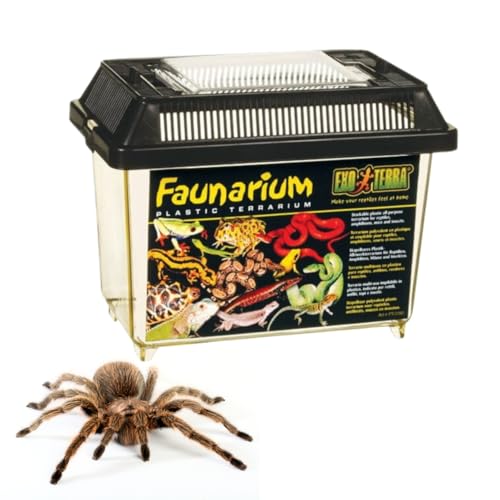
Exo Terra Faunarium
The Exo Terra Faunarium is the most widely recommended reptile transport container for good reason. It features angled ventilation slits along both sides that provide airflow without creating large heat-losing openings. The clear plastic body lets you monitor your gecko without opening the lid, and the top-mounted carrying handle makes one-handed transport easy. Available in Small, Medium, Large, and Flat sizes, it covers everything from a single juvenile to a full-grown adult. The lid locks securely with side clips — no risk of escape during a bumpy car ride.

Komodo Reptile Travel Box
The Komodo Reptile Travel Box is purpose-built for reptile transport with thicker walls than standard plastic carriers. The secure latch system keeps the lid firmly closed, and the ventilation holes are small enough to retain warmth while allowing adequate airflow. The opaque body is a genuine advantage — leopard geckos cannot see the outside world moving past, which significantly reduces travel stress. This is the carrier to reach for when trips exceed an hour.
Lee's Kritter Keeper
The Lee's Kritter Keeper is the carrier most gecko keepers already own. It is cheap, widely available at every pet store, and comes in sizes from Mini to X-Large. The ventilated lid snaps into place, and the clear body gives full visibility. That said, the Kritter Keeper has real drawbacks for transport: the thin plastic walls provide almost no insulation, the large ventilation openings lose heat quickly, and the clear body exposes your gecko to visual stressors. Adequate for a quick vet run, but not ideal for anything longer.
Frequently Asked Questions
With proper temperature management (75–85°F) and a secure carrier, leopard geckos can travel safely for 12–24 hours. Professional breeders routinely ship geckos via overnight courier using insulated boxes and UniHeat packs. For trips beyond 4 hours, add a small piece of moist paper towel or sphagnum moss for humidity.
References & Sources
Related Articles

Best Reptile Travel Carrier: Top Picks for 2026
Find the best reptile travel carrier for your snake, lizard, or gecko. We break down top picks by species, trip length, and temperature needs.

Best 4x2x2 Reptile Enclosure: Top Picks & Reviews 2026
Find the best 4x2x2 reptile enclosure for your pet. We compare PVC, wood, and hybrid options from Zen Habitats, Kages, and more — with honest pros and cons.

Best Bearded Dragon Accessories: Complete Setup Guide
Discover the best bearded dragon accessories for a thriving enclosure — basking platforms, hides, hammocks, climbing décor, and expert design tips for every budget.