Uromastyx Lifespan: How Long Do They Live?
*Affiliate disclosure: We earn from qualifying purchases.* Uromastyx live 15–20+ years in captivity — here's exactly what drives longevity and how to maximize it.


✓Recommended Gear
TL;DR: Uromastyx live 15–20 years in captivity on average, with Egyptian uromastyx (U. aegyptia) consistently achieving the longest captive lifespans at 18–25+ years, while smaller species average 12–18 years. The four key variables separating a 10-year uromastyx from a 25-year one are heat (extreme basking temps are non-negotiable), diet (seed-based, high-fiber, minimal protein), UVB, and stress reduction. Wild uromastyx face predation and harsh resource competition that dramatically shorten their lives compared to well-maintained captive animals.
Uromastyx Lifespan: The Short Answer
A well-cared-for uromastyx lives 15–20 years in captivity, and some individuals reach 25–30 years. Wild specimens often live shorter lives due to predation and resource scarcity. Captive life, done right, is genuinely longer. The catch: "done right" is the operative phrase. Diet, heat, UVB, and stress are the four variables that separate a 10-year lizard from a 25-year one.
Bottom line: Expect 15–20 years from a healthy captive uromastyx. Hit every care pillar consistently and 25+ years is realistic.
Lifespan by Species
Uromastyx is a genus of 18+ species with meaningfully different size and longevity ranges. Smaller species tend to live slightly shorter lives; larger species often exceed 20 years.
| Species | Common Name | Avg Captive Lifespan |
|---|---|---|
| U. aegyptia | Egyptian uromastyx | 18–25 years |
| U. ornata | Ornate uromastyx | 15–20 years |
| U. geyri | Saharan / Niger uromastyx | 15–20 years |
| U. ocellata | Ocellated uromastyx | 15–20 years |
| U. acanthinura | Mali / Bell's uromastyx | 15–20 years |
| U. dispar | Saharan spiny-tailed lizard | 12–18 years |
| U. thomasi | Thomas's uromastyx | 12–18 years |
Egyptian uromastyx (U. aegyptia) consistently log the longest lifespans in captivity — 20-year individuals are documented, and 25-year animals are reported by long-term keepers. Their large thermal mass may confer metabolic advantages.
Pro Tip: When buying, ask the seller which species — not just "uromastyx" — you're getting. Mali and ornate uros are the two most common in the hobby; both live comparable lifespans.
Lifespan by Species
Egyptian Uromastyx
18–25 years
Longest-lived species consistently documented
Ornate, Saharan, Ocellated
15–20 years
Most common in captive hobby
Mali, Thomas's, Dispar
12–18 years
Smaller species typically shorter lived
Life Stage Timeline
Understanding each stage helps you calibrate care intensity:
| Stage | Age | Key Priorities |
|---|---|---|
| Hatchling | 0–3 months | Daily feeding, precise heat, minimal handling stress |
| Juvenile | 3–12 months | Growth nutrition, UVB optimization, socialization |
| Sub-adult | 1–3 years | Transition to adult feeding frequency, enclosure sizing |
| Adult | 3–10 years | Maintenance diet, annual vet checks, enrichment |
| Senior | 10+ years | Monitor weight/eyes, softer food textures, reduced stress |
Juveniles are the most at-risk stage. A uromastyx that clears its first 12 months under correct husbandry has strong odds of reaching 15+ years.
Uromastyx Life Stages & Care Priorities
Hatchling
0–3 monthsDaily feeding, precise heat control, minimal handling stress
Tip: Most vulnerable stage—survival here sets trajectory for 15+ years
Juvenile
3–12 monthsGrowth nutrition, UVB optimization, gentle socialization
Tip: Clearing first 12 months dramatically increases 15+ year odds
Sub-adult
1–3 yearsTransition to adult feeding frequency, proper enclosure sizing
Adult
3–10 yearsMaintenance diet, annual vet checks, enrichment activities
Senior
10+ yearsMonitor weight and eyes, softer food textures, stress reduction
Tip: 25+ year lifespan is realistic with consistent care from hatchling stage
The 4 Biggest Factors That Determine Lifespan
1. Heat and Basking Temps
Uromastyx are thermophiles — they run their entire metabolism off external heat. Basking spot must reach 120–140°F (49–60°C). Cool side should hold 85–95°F (29–35°C). Ambient ambient should not drop below 80°F (27°C) during the day.
Chronic under-heating is the single most common slow killer in captive uromastyx. A lizard that can never fully thermoregulate cannot properly digest food, absorb nutrients, or mount an immune response. The result is a slow decline that owners often misattribute to old age or disease when the real culprit is a basking bulb that's 20°F too cool.
Pro Tip: Measure basking surface temp with an infrared temperature gun, not an ambient probe. Probe readings 6 inches above the surface will read 15–30°F lower than actual surface contact temperature.
2. UVB Quality and Placement
Uromastyx require high-output UVB — the desert UV environment they evolved in is among the most intense on Earth. A 10.0 T5 HO bulb or equivalent is the minimum. The bulb should span at least two-thirds of the enclosure length and sit 8–12 inches above the basking surface (no glass or mesh between bulb and lizard).
Poor UVB leads to vitamin D3 deficiency → calcium deficiency → metabolic bone disease. MBD manifests as soft jaw, rubbery limbs, and stress fractures. It shortens lifespan dramatically and is almost entirely preventable.
Replace UVB bulbs every 6 months even if they still emit visible light — UV output degrades well before the bulb burns out.
3. Diet Composition
Uromastyx are strict herbivores. The correct adult diet is:
- 60–70% dark leafy greens (collard greens, dandelion greens, mustard greens, turnip greens)
- 20–25% other vegetables (bell pepper, butternut squash, shredded zucchini)
- 10–15% dry seeds and legumes (millet, lentils, split peas, quinoa)
- 0–5% treats (berries, mango — weekly maximum)
Insects are not recommended for adults. The old advice of 20–30% insect protein is now rejected by experienced keepers — uromastyx are physiologically herbivores and excess protein stresses kidneys over a long life.
For a complete breakdown of what to feed and what to avoid, see our Uromastyx Diet: Complete Feeding Guide.
Pro Tip: Calcium supplementation is not optional. Dust greens with a calcium-without-D3 powder 3–4 times per week. Add D3 calcium once weekly. A multivitamin every 10–14 days covers the rest.
4. Stress Load
Chronic stress suppresses the reptile immune system and accelerates aging. Major stress sources:
- Enclosure too small — adults need minimum 4×2×2 ft (48×24×24 in); bigger is always better
- No burrow or hide — uromastyx are burrowing lizards; a hide is a biological need, not a decoration
- Visible predators — dogs, cats, or young children pressing against the glass trigger continuous stress responses
- Co-habitation aggression — two males together, or any pairing in insufficient space, causes slow chronic stress
- Frequent handling before taming — new animals need 2–4 weeks to acclimate before regular handling
Bottom line: A low-stress environment is as important as correct temperatures for long-term health. Check Uromastyx Lizard Care Guide for full enclosure setup.
The 4 Critical Factors for Lifespan
What you need to know
Heat & Basking Temps: 120–140°F (49–60°C) basking spot required; under-heating is the #1 silent killer
UVB Quality: 10.0 T5 HO minimum, spanning 2/3+ of enclosure, 8–12 inches above basking—replace every 6 months
Herbivore Diet: 60–70% leafy greens, 20–25% vegetables, 10–15% seeds; avoid insect-heavy adult diet that stresses kidneys
Stress Reduction: Minimum 4×2×2 ft enclosure, burrow/hide access, no visible predators, solitary housing (no co-habitation)
What Shortens Uromastyx Lifespan
| Risk Factor | Impact | Fix |
|---|---|---|
| Basking temps below 110°F | Immune suppression, slow digestion | Upgrade bulb; verify with IR gun |
| No UVB / weak UVB | MBD, calcium deficiency | High-output 10.0 T5 HO, replace every 6 mo |
| High humidity (>40%) | Respiratory infection, scale rot | Improve ventilation; remove water bowl |
| Insect-heavy adult diet | Kidney stress, fatty liver over time | Transition to herbivore-only diet |
| Small enclosure / no hide | Chronic stress, weakened immunity | Minimum 4×2 ft footprint; add burrow |
| No supplements | MBD, vitamin deficiency | Calcium 3–4×/wk, multivitamin 2×/mo |
| Skipping vet checks | Undetected parasites, infections | Annual fecal exam; find a reptile vet |
Common Lifespan Killers to Avoid
What you need to know
Chronic under-heating (below 110°F): Immune suppression and poor nutrient absorption
Weak or missing UVB: Metabolic bone disease—nearly 100% preventable with 10.0 T5 HO replacement every 6 months
High humidity (>40%) or water bowl: Respiratory infections and scale rot in this desert-adapted species
Small enclosure without hides: Continuous stress response that weakens immunity and accelerates aging
Sectionimage: Lifespan milestones
Female vs. Male Lifespan
There is limited published data comparing male vs. female uromastyx lifespan. Anecdotally, some keepers report that egg-laying females have shorter lifespans if they experience repeated clutches in poor body condition — a phenomenon also observed in bearded dragons and tortoises.
If you keep a female and she shows signs of follicular development (visible bulges near hips, restless digging behavior), ensure calcium supplementation is elevated and body condition is excellent before and after laying. Egg-binding (dystocia) is life-threatening and a top cause of premature death in captive female reptiles.
Males in well-managed enclosures show no evidence of shorter lifespan than females.
Brumation: Natural Pause, Not a Problem
Adult uromastyx often undergo brumation — a partial hibernation — in late fall and winter. During brumation they eat little or nothing, move slowly, and may hide for days or weeks at a time. Brumation can last 2–4 months.
This is normal and does not shorten lifespan. In fact, some herpetologists believe brumation may support longevity by reducing metabolic wear. Do not force-feed a brumating uromastyx. Reduce lighting to 10 hours/day in November–February and allow cooler ambient temps (75–80°F). Resume normal care in March.
Pro Tip: A uromastyx that skips brumation entirely is also fine — many captive animals in consistently warm indoor environments never brumate. What matters is that the animal is eating well and behaving normally during active months.
Signs Your Uromastyx Is Aging Well
- Consistent appetite with no sudden drops outside brumation season
- Bright, alert eyes — no cloudiness or sunken appearance
- Skin that sheds in complete or near-complete pieces (irregular sheds can signal dehydration or illness)
- Active basking behavior every day the lights come on
- Stable weight — no visible hip bones, ribs, or neck folds indicating muscle loss
- Regular, well-formed droppings with clear urate cap
Signs to Watch in Senior Uromastyx (10+ Years)
As uromastyx age, watch for:
- Decreased appetite — normal in brumation; outside that season warrants a vet call
- Weight loss without dietary change — possible organ decline or parasites
- Cloudy eyes between sheds — may indicate dehydration or retained eye caps
- Soft jaw or limb deformity — late-stage MBD
- Labored breathing or open-mouth breathing — respiratory infection; urgent vet needed
Annual vet checks become essential at 10+ years. A reptile-experienced vet can run bloodwork to catch organ stress before it becomes irreversible.
How to Maximize Your Uromastyx's Lifespan
The five-point longevity checklist:
- Heat correctly — basking surface 120–140°F verified with an IR gun, every single day
- Run quality UVB — 10.0 T5 HO, replaced every 6 months, no glass blocking it
- Feed herbivore-appropriate food — dark leafy greens daily, seeds as supplement, calcium dusted consistently
- Minimize chronic stress — adequate space, hide available, calm environment
- See a reptile vet annually — fecal exam catches parasites; bloodwork catches silent organ issues
For complete enclosure and care setup, see our Uromastyx Lizard Care Guide: Essential Tips for Beginners and Uromastyx species profile.
Our Top Picks for Uromastyx Longevity
The right equipment directly impacts how many healthy years your uromastyx lives.
Arcadia Desert 14% UVB T5 HO Lamp
The gold standard for desert reptile UVB. The 14% output replicates the intense UV environment uromastyx evolved in. Paired with correct mounting distance (8–12 inches from basking surface), this bulb prevents D3 deficiency and supports a full immune system. Replace every 12 months (longer rated output than most T5s).
Zoo Med ReptiSun 10.0 T5 HO UVB Bulb
The most widely available high-output UVB option for uromastyx. Trusted by the reptile community for decades. Replace every 6 months. Works well in standard T5 HO fixtures and Zen Habitats enclosures. Keep one spare so you never run dark between replacement cycles.
[Etekcity Infrared Thermometer Gun](https://www.amazon.com/dp/B00DMI632G?tag=krawlo-20
An IR temperature gun is the only accurate way to verify basking surface temps. Dial-probe and stick-on thermometers are consistently inaccurate for surface readings. This is the single most impactful diagnostic tool for uromastyx lifespan — if you know your temps are correct, you've eliminated the most common slow killer.
Rep-Cal Calcium Powder Without Vitamin D3
Finely milled calcium that adheres well to leafy greens. Use 3–4 times per week. This is the daily-use calcium supplement — pair it with a separate D3 formula once weekly and a multivitamin every 10–14 days for a complete supplement stack.
Rep-Cal Herptivite Multivitamin
A reptile multivitamin covering trace minerals, B-complex vitamins, and beta-carotene. Add to the salad every 10–14 days. Consistent multivitamin use prevents the slow micronutrient deficiencies that accumulate over a 15–20 year life.
[Zoo Med Habba Hut Natural Cork Bark Hide](https://www.amazon.com/dp/B000QFR6AQ?tag=krawlo-20
A naturalistic hide that gives your uromastyx a secure retreat — reducing chronic stress, which directly impacts longevity. Uromastyx are burrowing animals; a proper hide is as essential as food and heat. Cork bark is durable, easy to clean, and tolerates the high basking temps of a uromastyx enclosure.
[Zen Habitats 4x2x2 Reptile Enclosure](https://www.amazon.com/dp/B0DJFXCBTK?tag=krawlo-20
The minimum footprint for an adult uromastyx. Zen Habitats enclosures are well-ventilated, hold heat efficiently, and are sized correctly for active desert lizards. Chronic stress from undersized housing is a documented lifespan-shortener — get the size right from the start.
Final Word
Uromastyx are genuinely long-lived lizards. A well-kept animal is a 15–25 year commitment — longer than many cats, longer than many dogs. That's not a warning; it's one of the best things about keeping them. Get the heat right, run quality UVB, feed a true herbivore diet, and keep stress low. Do those four things consistently and your uromastyx has every chance of outliving the decade.
Bottom line: Lifespan is not luck — it's the cumulative result of every care decision you make. Start with verified basking temps and a high-output UVB bulb. Everything else builds from there.
Recommended Gear
Arcadia Desert 14% UVB T5 HO Lamp
14% output matches the intense UV environment uromastyx evolved in; longer rated lifespan than most T5 bulbs means fewer replacement cycles
Check Price on AmazonZoo Med ReptiSun 10.0 T5 HO UVB Bulb
Most widely available and trusted high-output UVB option; prevents the D3 deficiency and MBD that cut years off a uromastyx's life
Check Price on Amazon
Etekcity Infrared Thermometer Gun
IR gun is the only reliable way to verify basking surface temps — dial probes read 15–30°F too low, leading to chronic under-heating
Check Price on Amazon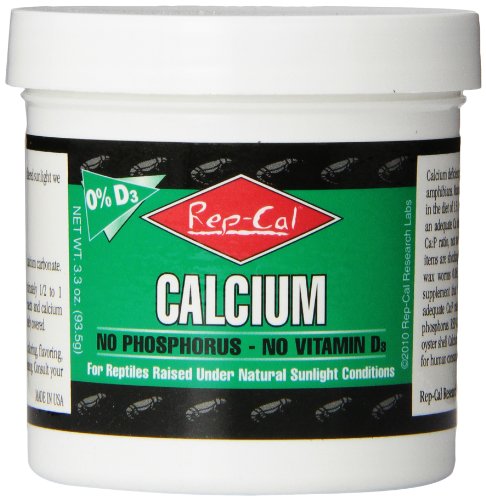
Rep-Cal Calcium Powder Without Vitamin D3
Finely milled formula adheres to salad leaves without clumping; prevents MBD with consistent 3–4x weekly use
Check Price on Amazon
Rep-Cal Herptivite Multivitamin
Covers B-complex vitamins, trace minerals, and beta-carotene that a greens-only diet may not fully supply over a 15–20 year life
Check Price on Amazon
Zoo Med Cork Bark Hide
A proper hide is a biological need for burrowing uromastyx; chronic stress from no hide suppresses immunity and shortens lifespan
Check Price on Amazon
Zen Habitats 4x2x2 Reptile Enclosure
Correctly-sized enclosure eliminates chronic stress from restricted movement; Zen Habitats ventilation design supports the low-humidity desert environment uromastyx need
Check Price on AmazonFrequently Asked Questions
Most captive uromastyx live 15–20 years with proper care. Egyptian uromastyx frequently reach 20–25 years. Some individuals in optimal conditions have been reported at 25–30 years. The key variables are heat, UVB quality, herbivore-appropriate diet, and low chronic stress.
References & Sources
- https://reptifiles.com/uromastyx-care-sheet/
- https://www.thesprucepets.com/uromastyx-care-1239574
- https://www.petmd.com/reptile/arid-lizard-care-sheet
- https://dubiaroaches.com/blogs/lizards/what-can-uromastyx-eat?srsltid=AfmBOor2u4h7ZtOZUq8rF4tWxyE2PpTj_ybWUBm_gbd3xZhjxreZb5P5
- https://www.allanglescreatures.com/blogs/news/uromastyx-lifespan-care-what-every-owner-should-know
Related Articles

Uromastyx Care: Complete Guide for Beginners
Uromastyx care guide -- hot basking temps, dry enclosures, seed-based diet, and UVB requirements for these stunning desert lizards.

Bearded Dragon Morphs: Complete Visual Directory
Every bearded dragon morph organized by category — color, pattern, scale type, and combo. Genetics type, rarity tier, price range, and links to our deep-dive morph guides.

Veiled Chameleon Diet Schedule: What and How Often to Feed
Learn exactly what to feed your veiled chameleon, how often to feed by age, which insects are best, and how to gut-load and supplement properly.