Corn Snake Enclosure Setup: The Complete Guide
*Affiliate links included — we may earn a commission at no extra cost to you.* The definitive corn snake enclosure guide: size progression by age, escape-proofing, and budget vs premium builds.


✓Recommended Gear
TL;DR: Corn snakes (Pantherophis guttatus) are notorious escape artists — more die from exposure after escaping than from disease — so every enclosure needs binder clips on screen tops, sealed cable gaps, and no gaps larger than 0.25 inches. Enclosure sizes progress from a 10-gallon for hatchlings to a minimum 4'×2'×2' PVC or glass setup for adults, with 3–5 inches of substrate depth required since corn snakes are obligate burrowers. The warm side should reach 85–88°F (under-tank heater on thermostat), and ambient humidity should stay at 40–60% with increases to 60–70% during shed cycles.
Corn snakes (Pantherophis guttatus) are the most popular beginner snake in North America — for good reason. They're docile, hardy, and come in over 800 color morphs. But they're also notorious escape artists, and more corn snakes die from exposure after escaping a poorly secured enclosure than from any disease.
This guide focuses specifically on the enclosure: what size you actually need at each life stage, which enclosure type wins for corn snakes, how to build a functional setup on any budget, and the escape-proofing checklist that will keep your snake inside. For complete husbandry including feeding and handling, see our corn snake care guide.
Why Corn Snake Enclosure Setup Matters More Than You Think
The enclosure is the single most important variable in corn snake health. Get it right and your corn snake will eat consistently, shed cleanly, and live 15-20 years. Get it wrong and you'll deal with:
- Chronic respiratory infections from cool, damp conditions
- Failed sheds from humidity that's too low or too high
- Escape and death from exposure, dehydration, or household hazards
- Feeding refusals caused by stress from feeling exposed
Corn snakes are crepuscular burrowers. In the wild they occupy loose leaf litter, rock crevices, and abandoned burrows in the eastern US. A good enclosure mimics that: secure lid, deep substrate, multiple hides, and a proper thermal gradient.
Age-Based Size Progression Table
This is the most important table in this guide. Corn snake owners routinely make two mistakes: starting hatchlings in adult-sized enclosures (causes stress and feeding refusals), or keeping juveniles in tiny tanks too long (stunts exploration and feeding confidence).
| Life Stage | Age | Length | Minimum Enclosure | Notes |
|---|---|---|---|---|
| Hatchling | 0-3 months | 10-14" (25-35 cm) | 10-gallon (20" × 10" × 12") | Small enclosure reduces stress, makes prey easier to find |
| Juvenile | 3-12 months | 15-30" (38-76 cm) | 20-gallon long (30" × 12" × 12") | Upgrade when snake exceeds 18 inches consistently |
| Subadult | 12-24 months | 30-48" (76-122 cm) | 40-gallon breeder (36" × 18" × 16") | Snakes this size need full warm-to-cool gradient |
| Adult | 2+ years | 48-72" (122-183 cm) | 4' × 2' × 2' (120 × 60 × 60 cm) | Minimum for full-grown adults; bigger is always better |
Key rule: Upgrade when your corn snake can stretch to more than ⅔ the enclosure length. A corn snake curled in a space with no room to fully extend is overcrowded.
Pro Tip: Don't start a hatchling in a 40-gallon tank hoping to "save money on upgrades." A large, open space overwhelms hatchlings — they can't find their hides, they feel exposed to predators, and feeding refusals within the first week are common. Start small, upgrade methodically.
Corn Snake Size & Enclosure Progression
Hatchling (0-3 mo)
10-gallon (20"×10"×12")
Reduces stress, aids prey finding
Juvenile (3-12 mo)
20-gallon long (30"×12"×12")
Upgrade when snake exceeds 18"
Subadult (12-24 mo)
40-gallon breeder (36"×18"×16")
Full warm-to-cool gradient needed
Adult (2+ years)
4'×2'×2' minimum
Bigger is always better
Enclosure Types Compared
Not all enclosures are equal for corn snakes. Here's how the main options stack up:
| Type | Heat Retention | Humidity Control | Escape Security | Best For |
|---|---|---|---|---|
| Glass terrarium (screen top) | Poor-Moderate | Poor (screen loses moisture) | Moderate (latches vary) | Hatchlings, short-term setups |
| Glass terrarium (glass top) | Good | Good | High | Intermediate keepers |
| PVC enclosure | Excellent | Excellent | High | Adults, bioactive builds |
| Wood/melamine enclosure | Excellent | Moderate | High | Adults (not humid setups) |
| Plastic tub (rack system) | Good | Good | Excellent | Breeders, hatchlings |
| Screen enclosure | Very Poor | Very Poor | Low | Not recommended for corn snakes |
Glass Terrariums with Screen Tops
The most common setup for beginners — widely available at pet stores. The screen top is the weak point: it bleeds heat and humidity, forcing you to cover it partially with aluminum foil or a glass sheet to maintain proper conditions. Most screen-top tanks also have clips that a determined corn snake can bypass.
Best use: Hatchling through juvenile stages, where small size makes management easier.
Exo Terra Allglass Terrarium 20 Gallon is a popular choice — front-opening doors reduce stress versus top-entry designs.
PVC Enclosures (Adult-Preferred)
For adult corn snakes, PVC enclosures are the gold standard. They retain heat well, hold humidity without modification, have locking doors, and are lighter than equivalent glass setups. The front-sliding door design is also significantly less stressful for the snake than reaching in from above (which mimics a predator attack from the sky).
Recommended: Zen Habitats 4' × 2' × 2' PVC Panel Enclosure. Well-ventilated, front-opening, excellent thermal retention, and sized correctly for most adult corn snakes.
Zen Habitats 4x2x2 Reptile Enclosure
Plastic Tub / Rack Systems
Used almost universally by professional corn snake breeders. Plastic tubs (Sterilite, IRIS) in a rack system with under-tank heating cables provide excellent thermal management, good humidity retention, and near-impenetrable security once properly modified. Not aesthetically driven — this is the functional, utilitarian option.
Pro Tip: If you're using a screen-top glass tank, cover 60-70% of the screen with glass or aluminum foil to reduce heat and humidity loss. Leave the area above the heat source uncovered for safety. This single modification can raise enclosure humidity by 15-20% and reduce basking lamp wattage requirements significantly.
Enclosure Types for Corn Snakes
PVC Enclosure
Best for adults
Excellent heat retention, locking doors, front-opening
Glass + Glass Top
Good for intermediate
Good humidity control, requires proper latch security
Glass + Screen Top
Hatchlings only
Loses heat/humidity, needs 60-70% screen covering
Plastic Tub Rack
Breeder standard
Excellent thermal control, utilitarian, not aesthetic
Temperature and Humidity Requirements
Corn snakes are ectotherms — they regulate body temperature by moving between warm and cool zones. This is not optional: a snake stuck at one temperature cannot digest properly, fight infection, or complete a normal shed.
Temperature Targets
| Zone | Target Temperature |
|---|---|
| Warm side (basking surface) | 82-85°F (28-29°C) |
| Warm side (air) | 80-82°F (27-28°C) |
| Cool side (air) | 70-75°F (21-24°C) |
| Nighttime (all zones) | 65-72°F (18-22°C) |
Corn snakes do not need intense basking heat like desert species. They are woodland snakes — moderate warmth at the warm end is correct.
Humidity Targets
40-60% ambient humidity is ideal. During shed cycles (when the snake's eyes turn blue-gray), bump to 60-70% by misting one side of the enclosure or adding a humid hide with damp sphagnum moss.
Measure with a digital hygrometer — analog gauges sold at pet stores are notoriously inaccurate.
Heating Equipment
Under-tank heater (UTH) + thermostat is the recommended heating method:
- Place UTH under the warm side only — never under the entire enclosure floor
- Connect to a thermostat (non-negotiable — without one you cannot control surface temperature and burns are likely)
- Target 82-85°F on the warm side substrate surface measured with a temperature gun
Vivarium Electronics VE-100 Thermostat — widely trusted in the hobby, accurate to ±1°F, proportional control mode extends UTH lifespan.
Pro Tip: Never run a UTH without a thermostat. UTH surface temperatures without a thermostat can exceed 120°F — corn snakes can and do get thermal burns when hiding on an uncontrolled UTH. The thermostat is the second most important piece of equipment after the enclosure itself.
Vivarium Electronics VE-100 Thermostat
Proportional control mode extends UTH lifespan and provides precise temperature management — the single most important safety device in any snake enclosure.
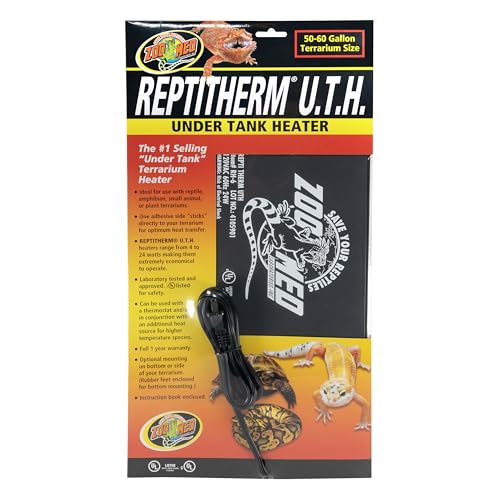
Zoo Med ReptiTherm Under Tank Heater
The standard UTH for corn snakes — reliable, widely available, and sized to fit common tank footprints. Always pair with a thermostat.
Etekcity Lasergrip Infrared Thermometer
The only accurate way to verify UTH surface temperature — digital probe thermometers cannot measure surface heat correctly. Verify warm-side surface temps at 82-85°F before introducing your snake.
Temperature & Humidity Targets
Warm side (basking)
82-85°F (28-29°C)
Substrate surface, use thermostat
Warm side (air)
80-82°F (27-28°C)
Allows proper thermoregulation
Cool side (air)
70-75°F (21-24°C)
Provides temperature gradient
Ambient humidity
40-60% normal, 60-70% during sheds
Use digital hygrometer for accuracy
Substrate: Deep Enough to Burrow
Corn snakes are obligate burrowers in the wild. Shallow substrate stresses them and contributes to feeding refusals and hiding issues. Minimum 3 inches (7.5 cm) of substrate; 4-5 inches is better.
Recommended Substrates
| Substrate | Humidity | Burrowing | Notes |
|---|---|---|---|
| Aspen shavings | Low-Medium | Good | Best for dry setups; mold risk if too wet |
| Coconut fiber (coco coir) | Medium-High | Excellent | Best for bioactive; holds humidity well |
| Cypress mulch | Medium-High | Good | Great humidity retention, naturalistic |
| Bioactive mix (topsoil + coco coir + sand) | High | Excellent | Best long-term; self-maintaining |
| Paper towels | N/A | None | Hatchlings and quarantine only |
Avoid:
- Cedar or pine shavings — aromatic oils cause respiratory damage and liver toxicity
- Calcium sand — impaction risk, wrong substrate for woodland snake
- Gravel or reptile carpet — no burrowing, abrasion injuries on belly scales
Zilla Bark Blend (cypress mulch) is a widely available, budget-friendly option that holds humidity well and allows burrowing.
Hides: The Two-Hide Rule
Every corn snake enclosure needs a minimum of two hides: one on the warm side, one on the cool side. This is not optional — it's thermoregulation. Your snake needs to choose its temperature without also choosing between feeling secure and feeling exposed.
A corn snake with only one hide will be forced to bask or rest in the open. This creates chronic low-grade stress that suppresses appetite and immune function.
Choosing the Right Hide
Hide sizing is critical. The snake should be able to coil inside and feel its body touching all sides. A hide that's too large provides no security benefit.
- **[Exo Terra Snake Cave](https://www.amazon.com/dp/B08CVF3JQR?tag=krawlo-20 — heavy resin, stays in place, tight-fitting entrance
- Zoo Med Reptile Shelter 3-in-1 — includes built-in humid chamber useful during shed cycles
- Cork bark flats/rounds — naturalistic, multiple size options, excellent for bioactive setups
Add a third humid hide using a plastic container with a damp sphagnum moss filling on the cool side — this is invaluable during shed cycles and significantly reduces retained shed incidents.
The Escape-Proofing Checklist
Corn snakes are the Houdinis of the pet snake world. A motivated corn snake will probe every millimeter of the enclosure perimeter for weaknesses. They can compress their bodies through gaps smaller than you'd believe possible, and they apply sustained pressure to latches and screens.
Run through this checklist before your snake's first night in the enclosure:
- Lid/door latches test: Apply moderate upward pressure to all four corners of a screen top — does it flex? Does any clip pop? Replace cheap clips with binder clips as a backup.
- Screen integrity: Check for rust, holes, or bent mesh. Corn snakes can push through compromised screen.
- Cable pass-throughs: Any cord entering the enclosure (UTH cable, thermostat probe) creates a gap. Seal with foam weatherstripping or cable grommets.
- Front door alignment: PVC and glass front-opening doors must close flush with no corner gaps. Slide a business card along the seal — if it passes through, the snake eventually will too.
- Lid weight: Keep a heavy book or clip on screen-top lids. Corn snakes push from below — they're stronger than they look.
- Temperature gradient check: Confirm warm side and cool side temps before adding the snake. A snake at the wrong temperature will search for a better microclimate and probe every exit.
- Water dish stability: Heavy ceramic only — a tipped water dish can create a humidity event and a stressed, searching snake.
- Room sweep plan: Before every feeding and handling session, note your snake's exact position. If you ever can't find them, search low first — corn snakes hide under furniture against walls.
Pro Tip: Buy a padlock or combination lock for your enclosure latch, especially if children or other adults are in the home. The most common escape event isn't a latch failure — it's someone not closing the door completely after viewing the snake.
Décor and Enrichment
Corn snakes are more cognitively active than often credited. A barren enclosure with only a hide and water dish creates a bored snake that's more likely to pace, refuse food, and stress-rub its nose raw on the glass.
Minimum décor for any corn snake enclosure:
- 2 correctly sized hides (warm + cool side)
- 1 water dish (heavy ceramic, large enough to soak in)
- 1-2 climbing branches or cork bark logs (they do climb)
- 1 humid hide with sphagnum moss
- Optional: live or artificial plants for cover
Do NOT overfill. Your snake needs open floor space to thermoregulate properly. Aim for 60% floor coverage max — the snake should have clear pathways between zones.
Budget vs. Premium Build Comparison
Two complete adult corn snake setups, different price points — both functional.
| Item | Budget Build | Premium Build |
|---|---|---|
| Enclosure | 40-gallon glass tank (screen top) — $80 | Zen Habitats 4×2×2 PVC — $250 |
| Heating | Zoo Med UTH medium — $20 | Vivarium Electronics VE-100 + UTH — $75 |
| Thermostat | Inkbird ITC-306A — $25 | Included above |
| Substrate | Aspen shavings — $15 | Coco coir + topsoil bioactive mix — $30 |
| Hides | 2× plastic hides — $15 | 2× cork bark rounds + humid hide — $45 |
| Water dish | Plastic bowl — $5 | Heavy ceramic crock — $15 |
| Décor | 1 plastic branch — $10 | Cork bark log + artificial plants — $40 |
| Thermometer | Digital probe — $10 | Temp gun + digital hygrometer — $30 |
| Total | ~$180 | ~$485 |
Budget verdict: Fully functional, corn snake will thrive with proper management. Main tradeoff is screen-top humidity management and weaker escape security.
Premium verdict: PVC enclosure eliminates humidity management hassle, better thermal retention, front-opening doors reduce stress, and the bioactive substrate becomes self-maintaining over time.
Pro Tip: If budget is a constraint, prioritize spending on the thermostat over any other item. A $25 Inkbird thermostat on a budget UTH is safer than a premium UTH running uncontrolled. Thermal burns are one of the most common — and preventable — corn snake injuries.
Lighting: Does a Corn Snake Need UVB?
The honest answer: yes, low-level UVB is beneficial, though not strictly required for survival. Corn snakes are crepuscular and partly fossorial, but they do receive incidental UV exposure in the wild. Recent research suggests even nocturnal and crepuscular snakes benefit from low-level UVB (UVI 0.5-1.0) for D3 synthesis and immune function.
What's non-negotiable: a 12-hour light cycle (lights on during the day). This regulates circadian rhythms and feeding behavior. Using ambient room light is acceptable — the room just needs regular day/night cycles.
For keepers who want to provide UVB: a Zoo Med 2.0 T8 or Arcadia 6% T5 tube provides appropriate low-level output without risk of over-exposure.
Do NOT use a heat lamp as the primary heat source. Corn snakes need darkness to feel secure during their primary activity periods (dawn and dusk). An overhead heat lamp creates a hostile, exposed feeling and suppresses natural behavior. UTH + thermostat only.
Cleaning and Maintenance Schedule
| Task | Frequency |
|---|---|
| Spot-clean feces and urates | Within 24 hours of noticing |
| Refresh water dish | Every 2-3 days (daily in warm weather) |
| Wipe glass interior (algae, humidity streaks) | Weekly |
| Inspect all hides for mold or substrate buildup | Weekly |
| Check thermostat probe position | Weekly |
| Full substrate replacement (aspen/cypress) | Every 2-3 months |
| Full enclosure disinfect (F10SC or diluted bleach) | Every 3-4 months |
| UVB bulb replacement (if using) | Every 12 months |
For bioactive setups: spot-clean only — the isopod/springtail cleanup crew handles waste decomposition. Deep cleans are unnecessary and disruptive.
Setting Up the Enclosure: Step-by-Step
This is the order that makes sense. Don't add the snake until Step 8.
- Place enclosure in final location — moving it later with a snake inside is stressful
- Install UTH under warm-side only, plug into thermostat
- Add substrate — minimum 3 inches, distribute more to burrowing zones
- Position hides — warm-side hide directly above UTH zone; cool-side hide at opposite end
- Fill and place water dish on cool side — heavy enough not to tip
- Add décor (branches, cork, plants) — avoid overcrowding the floor
- Run the enclosure for 24-48 hours before adding the snake — verify temps with a temperature gun and confirm the thermostat is holding its set point accurately
- Introduce the snake — place it directly into a hide rather than in the center of the enclosure
- Leave it alone for 5-7 days — don't handle, minimize disturbance during the initial settling period
Pro Tip: After introducing a new corn snake, leave a light sheet of paper towel near the hide. If you see it disturbed after a few days, the snake is exploring — a good sign. If the snake hasn't moved at all after 7 days and isn't eating, recheck temperatures. A corn snake that isn't warm enough will not move, eat, or defecate.
Species and Care Resources
For complete corn snake husbandry beyond the enclosure, visit our corn snake care guide. For in-depth species background and morph information, see the corn snake species profile. Shopping for a ready-made enclosure setup? Our best corn snake enclosures guide includes tested product picks across budget tiers.
Recommended Gear
Zen Habitats 4x2x2 PVC Reptile Enclosure
Best adult corn snake enclosure — excellent heat retention, front-opening doors reduce stress, lockable, and sized correctly for most full-grown adults.
Vivarium Electronics VE-100 Thermostat
Proportional control mode extends UTH lifespan and provides precise temperature management — the single most important safety device in any snake enclosure.
Zoo Med ReptiTherm Under Tank Heater
The standard UTH for corn snakes — reliable, widely available, and sized to fit common tank footprints. Always pair with a thermostat.
Exo Terra Snake Cave Reptile Hide
Heavy resin construction stays in place when the snake pushes against it — small entrance opening provides genuine security feeling, not just a visual cover.
Zilla Bark Blend Reptile Substrate
Cypress mulch blend that holds humidity well, allows 3-5 inch burrowing depth, and is readily available at most pet retailers — solid budget substrate choice.
Inkbird ITC-306A Reptile Thermostat
Budget-friendly thermostat for keepers who want the safety of a thermostat at a lower price point — accurate, reliable, and widely used by beginner corn snake keepers.
Etekcity Lasergrip Infrared Thermometer
The only accurate way to verify UTH surface temperature — digital probe thermometers cannot measure surface heat correctly. Verify warm-side surface temps at 82-85°F before introducing your snake.
Frequently Asked Questions
Adult corn snakes need a minimum 4' × 2' × 2' (120 × 60 × 60 cm) enclosure. Hatchlings start in a 10-gallon, juveniles in a 20-gallon long, and subadults in a 40-gallon breeder. Upgrade when your snake can stretch to more than ⅔ the enclosure length.
References & Sources
Related Articles

Snake Terrarium Setup: The Complete Guide
This article contains affiliate links. Set up the perfect snake terrarium with a species-specific size matrix, glass vs PVC vs tub comparison, and a 10-step checklist for any species.

Corner Setup Guide: Optimize Your Reptile's Enclosure
Learn how to use every corner of your reptile's enclosure strategically — from basking zones to cool retreats — for a healthier, happier pet.

Black Throat Monitor Care: Size, Diet and Enclosure
Learn black throat monitor care, including adult size, enclosure dimensions, temperature, humidity, diet, temperament, and whether this large lizard suits you.