6 Best Uromastyx Foods & Seed Mixes (2026)
We ranked the 6 best uromastyx foods for 2026 — from purpose-built pellets to DIY seed mixes and supplements your uro actually needs.


This article contains affiliate links. If you make a purchase through these links, we may earn a small commission at no extra cost to you. See our affiliate disclosure for details.
We recommend 6 picks here. Our top choice is the Rep-Cal Uromastyx Food — check price and availability below.
How we choose: we compare published specifications against the care requirements in veterinary and species-care literature, and weigh those against what long-time keepers report. We do not test products ourselves and we do not restate Amazon star ratings. The 4 sources behind this article are listed at the bottom.
Quick Comparison
- Type
- Commercial Pelleted Diet
- Primary Ingredients
- Grains, vegetables, alfalfa
- Protein Content
- ~10%
- Requires Fresh Greens
- Yes (as base diet)
- Oxalate Risk
- Low
- Price Range
- $10–$18
- Type
- Commercial Pellet/Seed Mix
- Primary Ingredients
- Seeds, grains, dried greens
- Protein Content
- ~12%
- Requires Fresh Greens
- Yes (as base diet)
- Oxalate Risk
- Low
- Price Range
- $12–$22
- Type
- Herbivore Complete Diet
- Primary Ingredients
- Timothy hay, alfalfa, vegetables
- Protein Content
- ~14%
- Requires Fresh Greens
- Yes (as base diet)
- Oxalate Risk
- Low
- Price Range
- $15–$28
- Type
- DIY Seed & Lentil Mix
- Primary Ingredients
- Millet, lentils, bird seed base
- Protein Content
- ~18% (lentil-heavy mix)
- Requires Fresh Greens
- Yes (as base diet)
- Oxalate Risk
- Low (depends on seeds chosen)
- Price Range
- $5–$12 (DIY)
- Type
- Reptile Vitamin Supplement
- Primary Ingredients
- Vitamins A, D3, E, B-complex
- Protein Content
- N/A (supplement)
- Requires Fresh Greens
- No (dusted on food)
- Oxalate Risk
- None
- Price Range
- $10–$18
- Type
- Calcium Supplement
- Primary Ingredients
- Calcium carbonate, D3
- Protein Content
- N/A (supplement)
- Requires Fresh Greens
- No (dusted on food)
- Oxalate Risk
- None
- Price Range
- $8–$15
Prices are estimates only. Actual prices on Amazon may vary.
Understanding the Uromastyx Diet
Uromastyx — or spiny-tailed lizards — are true herbivores. Unlike bearded dragons, they don't eat insects. They thrive on plants: leafy greens, seeds, and dried flowers. If you're new to keeping one, read our full uromastyx care guide for enclosure and lighting setup first.
In the wild, uromastyx range across North Africa, the Middle East, and Central Asia. They eat seeds, dried grasses, flowering plants, and tough desert leaves. Their diet is very low in moisture. They've evolved to pull water from food, not from standing water.
According to ReptiFiles, the ideal captive diet closely mirrors this wild pattern — dry, fibrous, and plant-based.
The right balance for captive uromastyx:
- 50–60% leafy greens and vegetables — collard greens, mustard greens, endive, dandelion greens, escarole
- 30–40% seeds, lentils, and grains — millet, split red lentils, quinoa, dried split peas (no sunflower seeds)
- Occasional flowers — hibiscus, dandelion flowers, rose petals (plain, no pesticides)
No feeder insects for adults. High insect protein stresses the kidneys of a lizard built for plant fiber. Juveniles under 6 months can have occasional small amounts — but it's optional.
Basking temps matter too. You need 120–130°F on the surface, 95–105°F on the warm side. Food offered to a cold uro won't digest. This is a serious health risk.
Safe and Unsafe Foods for Uromastyx
Safe Foods (Feed Regularly)
Leafy Greens (staple)
- Collard greens
- Mustard greens
- Dandelion greens (no pesticides)
- Endive and escarole
- Turnip greens
- Spring mix (without spinach)
Seeds and Grains (30–40% of diet)
- Millet (any variety)
- Split red lentils
- Dried split peas
- Quinoa (cooked or dry)
- Small bird seed mixes (without sunflower seeds)
Vegetables (occasional)
- Butternut squash
- Yellow squash
- Snap peas
- Bell pepper (small amounts)
- Shredded carrot
Flowers (occasional treat)
- Hibiscus flowers and leaves
- Dandelion flowers
- Rose petals (unsprayed)
- Nasturtiums
Unsafe Foods (Avoid Entirely)
| Food | Why to Avoid |
|---|---|
| Insects (regular feeding) | Excess protein causes kidney stress |
| Avocado | Toxic — contains persin |
| Onion, garlic, chives | Thiosulfates toxic to reptiles |
| Rhubarb | High oxalic acid — dangerous |
| Spinach | High oxalates bind calcium |
| Iceberg lettuce | Near-zero nutrition, high water |
| Citrus fruits | High acid, disrupts digestion |
| Sunflower seeds | High fat, high oxalates |
| Any animal protein (adults) | Kidney overload risk |
| Wild-caught insects | Pesticide and parasite risk |
Oxalates are worth flagging. Foods high in oxalic acid — spinach, beet greens, swiss chard — bind calcium in the gut. Your uro can't absorb it. Since calcium deficiency is already a risk in captive reptiles, high-oxalate greens make it worse. Dubiaroaches.com's uromastyx diet guide has a solid breakdown of safe vs. risky greens. Stick to the low-oxalate staples — collard greens, mustard greens, and endive — as your daily rotation.
Detailed Reviews
1. Rep-Cal Uromastyx Food
Best Overall
Rep-Cal Uromastyx Food
Pros
- •Purpose-formulated for uromastyx (not a cross-marketed iguana diet)
- •Low moisture content appropriate for desert species
- •Good fiber and alfalfa base mirrors natural diet
- •Consistent vitamin and mineral baseline
- •Widely available at pet stores and online
Cons
- •Should be a diet component, not the sole food source
- •Some batches vary in pellet size
- •Not organic — trace pesticide residues possible in grain ingredients
Bottom Line
Rep-Cal Uromastyx Food is the closest thing to a purpose-built commercial diet for spiny-tailed lizards, and it earns the top spot on this list because of exactly that focus. Most reptile diets are formulated for iguanas or bearded dragons and then cross-marketed — Rep-Cal actually designed this formula with uromastyx physiology in mind: low moisture, high-fiber greens and grains, and no animal protein. The pellet base includes alfalfa, grains, and a blend of dried vegetables that mirrors the semi-arid scrubland diet these lizards eat in the wild. Uromastyx in their natural habitat across North Africa and the Middle East consume a rotating menu of dry seeds, flowering plants, and tough-leafed greens — and this formula does a reasonable job approximating that nutrient profile in shelf-stable form. One thing to note: Rep-Cal Uromastyx Food should be used as a component of the diet, not the whole diet. We recommend using it as roughly 20-30% of the total food offered, with the rest coming from fresh leafy greens (collard greens, mustard greens, endive) and a seed/lentil mix. When used this way, it provides a consistent vitamin and mineral baseline that makes managing the overall diet much easier. The pellets have low water content, which is appropriate — uromastyx get almost all of their hydration from food, and high-moisture foods can cause digestive issues in a species adapted to near-waterless conditions. Avoid soaking or wetting these pellets before feeding. For keepers who want a reliable commercial anchor for their uromastyx diet without the complexity of a fully DIY approach, Rep-Cal Uromastyx Food is the best starting point available.
2. Zoo Med Natural Uromastyx Food
Best Seed Mix Formula
Zoo Med Natural Uromastyx Food
Pros
- •Includes dried hibiscus flowers — a uromastyx favorite
- •Cleaner ingredient list with fewer synthetic additives
- •Seed-forward formula closely mirrors wild foraging behavior
- •High palatability, even for picky juveniles
- •Good variety of textures encourages natural feeding behavior
Cons
- •Slightly higher protein from quinoa — monitor total protein intake with adults
- •Pricier per ounce than Rep-Cal
- •Dried floral ingredients lose potency over time — check freshness date
Bottom Line
Zoo Med Natural Uromastyx Food takes a slightly different approach than Rep-Cal — it leans into the seed-and-grain side of uromastyx nutrition with a blend that includes millet, quinoa, and dried floral ingredients alongside the more common pellet base. This makes it especially appealing for keepers who want to reduce the prep work involved in sourcing and mixing a separate seed rotation. The 'natural' branding here is meaningful — Zoo Med uses fewer synthetic binders and colorants than many competitors, and the ingredient list is noticeably cleaner. The inclusion of dried hibiscus flowers is a particularly nice touch: hibiscus is one of the safest and most enthusiastically eaten flowers by uromastyx, and having it integrated into a shelf-stable mix means your lizard gets that enrichment benefit even when fresh flowers aren't available. Texture and palatability are strong. In our experience, uromastyx tend to be somewhat selective eaters — particularly juveniles — and Zoo Med's seed-forward formula tends to be accepted readily, even by pickier individuals. The variety of textures (fine seeds vs. larger grains vs. pellet pieces) also encourages natural foraging behavior. The main limitation is protein content: this mix runs slightly higher than ideal for adult uromastyx if fed in large quantities. The quinoa component, while nutritious, bumps the overall protein percentage up in a way that can be a concern if you're already feeding lentil-heavy seed mixes. Use this as a supplement to a greens-first diet rather than the centerpiece, and you'll get excellent results. At the $12-22 price range, Zoo Med Natural Uromastyx Food delivers strong value, especially for keepers who appreciate not having to source hibiscus flowers separately.
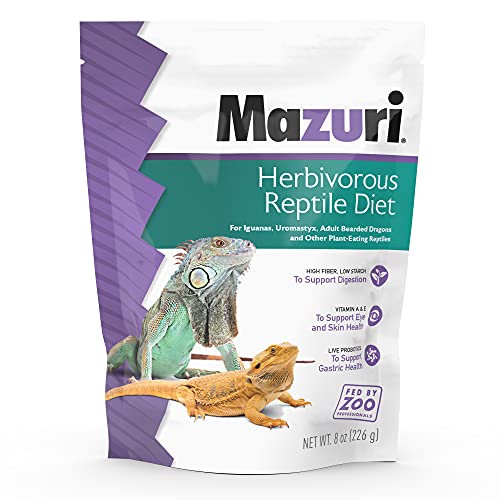
3. Mazuri Herbivorous Reptile Diet
Best Premium Option
Mazuri Herbivorous Reptile Diet
Pros
- •Zoo-grade formula developed with veterinary nutritionists
- •Excellent calcium-to-phosphorus ratio — strong MBD prevention
- •High-fiber timothy hay and alfalfa base
- •Trusted by professional breeders and zoos
- •Large bags available for cost-effective bulk purchasing
Cons
- •Not uromastyx-specific — general herbivore formula
- •Larger pellet size may need breaking up for juveniles
- •Higher price point than brand-specific alternatives
- •Slight moisture content — offer dry, not wet
Bottom Line
Mazuri is a respected name in zoo-grade herbivore nutrition, and their Herbivorous Reptile Diet lives up to that reputation. This isn't a uromastyx-specific product — it's formulated for herbivorous lizards broadly — but the nutrient profile is excellent for spiny-tailed lizards, and many experienced uromastyx keepers swear by it. What sets Mazuri apart is the research backing. Their formulas are developed in collaboration with veterinary nutritionists and are used by zoos, professional breeders, and wildlife sanctuaries worldwide. The timothy hay and alfalfa base provides high fiber in a form that's appropriate for herbivores, and the calcium-to-phosphorus ratio is carefully balanced — a critical factor for preventing metabolic bone disease in captive reptiles. The pellets are larger than Rep-Cal or Zoo Med, which works well for adult uromastyx but may need to be broken up for juveniles under 6 inches. They're also slightly higher moisture than ideal for a desert species when fresh — we recommend offering them dry and allowing your uromastyx to eat at will rather than mixing with water. For uromastyx specifically, Mazuri Herbivorous Reptile Diet works best as a rotation item rather than a daily staple. Offering it 2-3 times per week alongside fresh mustard greens, collard greens, and a seed mix gives your lizard the benefit of Mazuri's excellent vitamin/mineral profile without over-relying on any single commercial product. The price point is the main barrier — Mazuri runs $15-28 depending on bag size, making it one of the more expensive options on this list. The larger bags offer better value per ounce, and the diet stores well in an airtight container.
4. Wild Harvest Millet & Lentil Seed Mix (DIY Base)
Best Budget / DIY
Wild Harvest Millet & Lentil Seed Mix (DIY Base)
Pros
- •Most cost-effective option — under $10 for months of seed supply
- •Fully customizable to your individual lizard's needs and preferences
- •Rotating ingredients provides superior nutritional variety
- •Millet and lentils are among the safest, most nutritionally appropriate seeds
- •Encourages natural foraging behavior with varied textures
Cons
- •Requires sourcing multiple ingredients separately
- •No built-in vitamin/mineral supplementation — must dust separately
- •More prep work than commercial options
- •Quality varies by seed source — check for mold and freshness
Bottom Line
The most experienced uromastyx keepers will tell you that no commercial product fully replicates the nutritional diversity of a well-constructed DIY seed mix, and they're right. A homemade lentil and millet seed rotation is the gold standard for the seed component of a uromastyx diet — and it's also the most budget-friendly option on this list. The base formula used by most experienced keepers is simple: split red lentils (30%), millet (30%), small bird seed mix without sunflower seeds (20%), dried split peas (10%), and quinoa (10%). The key is rotating ingredients weekly to prevent deficiencies from over-reliance on any single seed, and to keep your uromastyx from imprinting on one texture. Wild bird seed mixes are a practical and cost-effective base ingredient — look for mixes without sunflower seeds, which are too high in fat and oxalates for regular use. Millet is the ideal primary seed: low-fat, low-oxalate, and widely accepted by even picky eaters. Lentils provide a protein and fiber boost that's appropriate for uromastyx (unlike insects, lentil protein is plant-based and well-tolerated). For this listing, we're recommending the DIY approach as a category because it consistently outperforms single-product seed mixes when done correctly. You can assemble 2-3 lbs of base seed mix for under $10 — enough to last a single adult uromastyx several months. Always offer seeds dry (never soaked) and in a shallow dish separate from greens. One important note: seeds should make up no more than 30-40% of the total diet. The seed component is important for enrichment, foraging behavior, and calorie density, but leafy greens should always be the majority of what you offer.
5. Arcadia EarthPro-A Reptile Supplement
Best Vitamin Supplement
Arcadia EarthPro-A Reptile Supplement
Pros
- •Natural vitamin D3 from lichen — safer for high-UVB species
- •Chelated minerals for superior bioavailability
- •Comprehensive B-vitamin complex and natural vitamin E
- •Excellent value — one tub lasts 6-12 months
- •Widely trusted by professional reptile keepers and breeders
Cons
- •Less available in US physical pet stores than Rep-Cal brands
- •Premium price vs. generic supplements
- •Natural D3 means slight variation batch to batch (minor concern)
Bottom Line
Arcadia EarthPro-A is widely regarded as one of the best all-in-one reptile vitamin and mineral supplements available, and it's our top recommendation for uromastyx keepers who want a single supplement that covers most nutritional bases without over-supplementing any one nutrient. The key differentiator for EarthPro-A is its use of natural vitamin D3 from lichen rather than synthetic D3. For UVB-basking species like uromastyx — which require strong UVB exposure (12% or higher, like Arcadia's own T5 bulbs) and produce significant endogenous D3 — the risk of vitamin D3 toxicity from over-supplementation is real. EarthPro-A's natural D3 source is considered safer for high-UVB species than synthetic alternatives. The formula also includes a comprehensive B-vitamin complex, natural vitamin E, and chelated minerals that are bioavailable in a way that cheaper supplements often are not. For uromastyx specifically, the magnesium and potassium content is a useful bonus: desert herbivores in the wild get significant electrolyte input from the seeds and flowers they consume, and captive diets don't always replicate this. Application is simple: dust food lightly 2-3 times per week. A light coating is all that's needed — you want to see a faint white dusting on leafy greens or seed mix, not a thick powder layer. Over-supplementation of fat-soluble vitamins (A, D, E, K) is a legitimate health risk, so follow the manufacturer's recommended frequency. EarthPro-A is slightly harder to find in US pet stores than Rep-Cal supplements but is readily available online. The price per gram is excellent — a single tub lasts most keepers 6-12 months.
6. Rep-Cal Calcium with Vitamin D3
Best Calcium Supplement
Rep-Cal Calcium with Vitamin D3
Pros
- •Ultra-fine powder that clings well to greens and seeds
- •Affordable and widely available
- •Calcium carbonate is well-absorbed by herbivorous lizards
- •D3-free version available for flexible supplementation protocols
- •Easy shaker-top container
Cons
- •Not a complete supplement — needs pairing with multi-vitamin
- •Synthetic D3 — use at reduced frequency if also using EarthPro-A
- •Carbonate form is slightly less bioavailable than calcium gluconate (minor difference)
Bottom Line
A calcium supplement is non-negotiable for captive uromastyx, and Rep-Cal Calcium with Vitamin D3 is the most accessible, consistently available, and cost-effective option for most keepers. Calcium deficiency — and the resulting metabolic bone disease — is one of the most common and preventable health problems in captive reptiles, and dusting with a calcium supplement is the primary prevention tool. Rep-Cal uses calcium carbonate as its base, which is well-absorbed and appropriate for a herbivorous lizard's digestive system. The included vitamin D3 helps with calcium metabolism, though keepers with strong UVB setups (which all uromastyx enclosures should have) can also use the D3-free version of this product on most dusting days, reserving the D3 formula for once-weekly use to avoid over-supplementation. For uromastyx, the dusting protocol we recommend: use plain calcium (no D3) 4-5 times per week, and the D3 version once per week. If you're also using EarthPro-A or another multi-vitamin, scale back D3 supplementation accordingly — you don't want to combine multiple D3 sources at full frequency. The powder is ultra-fine and clings well to leafy greens and seed mixes without clumping. The shaker-top container makes application easy and mess-free. At $8-15, Rep-Cal Calcium is one of the most affordable quality supplements on the market, and a single container will last the average keeper several months. One limitation: Rep-Cal doesn't include a full vitamin complex, so it should be paired with a multi-vitamin supplement like EarthPro-A rather than used as a standalone nutritional solution.
Feeding Schedule by Age
Juveniles (Under 12 Months)
Juvenile uromastyx are growing rapidly and need to eat daily. Offer a fresh mix of leafy greens and seeds every day, removing uneaten food within a few hours to prevent spoilage. At this stage, variety is especially important — expose your juvenile to many different greens and seeds so they develop a broad palate and don't imprint on a single food source.
- Frequency: Daily
- Portion: Enough to fill the food dish about halfway — they should finish most of it
- Seed ratio: Can be slightly higher (up to 40%) at this age to support growth
- Supplements: Dust with calcium (no D3) 5x/week, multivitamin 2x/week
Sub-Adults and Adults (12 Months+)
Adult uromastyx can be fed daily or every other day, depending on body condition. A healthy adult should have a slightly rounded belly and visible muscle tone along the spine — not a bony ridge (underweight) or a wide, dragging belly (overweight).
- Frequency: Daily to every other day
- Portion: Sized to your lizard — a food dish with a fresh salad roughly the size of their head is a common guideline
- Seed ratio: Reduce to 30-35% for adults to avoid excess calories
- Supplements: Calcium (no D3) 4x/week, multivitamin 2x/week
Always offer food in the morning, after your basking lamps have been on for at least 30 minutes. Uromastyx need to be warmed up to digest properly — food offered to a cold lizard is food wasted.
Hydration: Why Uromastyx Rarely Drink
One of the most common mistakes new uromastyx keepers make is worrying that their lizard isn't drinking. Uromastyx are one of the most drought-adapted vertebrates on earth — they've evolved to extract all necessary moisture from the plants they eat, and many individuals will never voluntarily drink from a water dish.
This has important implications for their diet:
- High-moisture foods (cucumber, zucchini, watermelon) can actually cause loose stools and digestive issues. These aren't appropriate staples.
- Dry seeds are appropriate and desirable — don't soak or wet them before feeding.
- A water dish can be provided but should be shallow and changed daily if present. Don't worry if your uromastyx ignores it.
During shedding, some uromastyx will drink more than usual — this is normal. A shallow soak (lukewarm, 5-10 minutes, supervised) can help with difficult sheds and is one of the few times supplemental water is genuinely beneficial.
How to Supplement Correctly
Two supplements are essential for all captive uromastyx:
1. Calcium (dusted on food) Calcium deficiency leads to metabolic bone disease (MBD). It's one of the most preventable conditions in captive reptiles. Dust food with a calcium supplement at least 4–5 times per week. We cover the top options in our best reptile calcium supplements guide.
- Strong UVB setup (12% T5 or equivalent)? Use calcium WITHOUT D3 most days. Add D3 once per week.
- Weaker or uncertain UVB? Use calcium WITH D3 two to three times per week.
2. Multivitamin A reptile multivitamin fills nutritional gaps that fresh food alone won't cover. Use it twice per week — no more. Over-supplementing fat-soluble vitamins (A, D3, E) is a real toxicity risk. Follow the label and use less rather than more.
Never stack multiple D3 sources on the same day. Track your dusting schedule.
Speaking of lighting — a consistent photoperiod protects your uro's metabolism. A best reptile light timer takes the guesswork out of on/off cycles.
Final Tips for Feeding Success
A few practical notes from experienced keepers:
- Rotate greens weekly. Using only collard greens every day creates nutritional monotony. Rotate between 3–4 staple greens. Introduce new ones periodically.
- Chop, don't shred. Uromastyx prefer bite-sized pieces they can pick up and carry. Finely shredded salads may be ignored by picky individuals.
- Separate seed dishes from greens. A shallow flat dish for seeds next to the greens dish lets you monitor each component separately.
- Remove uneaten food daily. Rotting greens spike enclosure humidity. That's a problem for a species built for arid conditions.
- Watch body condition, not quantity. Your lizard's body tells you more than a portion size. Adjust based on whether they're gaining or maintaining weight.
- Use a quality commercial mix as your base. Rep-Cal Uromastyx Food is a reliable starting point — purpose-formulated and widely available.
Ready to Upgrade Your Uro's Diet?
A balanced diet is the foundation of uromastyx health. Start with a quality commercial mix, supplement with fresh greens daily, and adjust based on your uro's activity and weight.
Our Final Verdict
Rep-Cal Uromastyx Food
Rep-Cal Uromastyx Food is the closest thing to a purpose-built commercial diet for spiny-tailed lizards, and it earns the top spot on this list because of exactly that focus. Most reptile diets are formulated for iguanas or bearded dragons and then cross-marketed — Rep-Cal actually designed this formula with uromastyx physiology in mind: low moisture, high-fiber greens and grains, and no animal protein. The pellet base includes alfalfa, grains, and a blend of dried vegetables that mirrors the semi-arid scrubland diet these lizards eat in the wild. Uromastyx in their natural habitat across North Africa and the Middle East consume a rotating menu of dry seeds, flowering plants, and tough-leafed greens — and this formula does a reasonable job approximating that nutrient profile in shelf-stable form. One thing to note: Rep-Cal Uromastyx Food should be used as a component of the diet, not the whole diet. We recommend using it as roughly 20-30% of the total food offered, with the rest coming from fresh leafy greens (collard greens, mustard greens, endive) and a seed/lentil mix. When used this way, it provides a consistent vitamin and mineral baseline that makes managing the overall diet much easier. The pellets have low water content, which is appropriate — uromastyx get almost all of their hydration from food, and high-moisture foods can cause digestive issues in a species adapted to near-waterless conditions. Avoid soaking or wetting these pellets before feeding. For keepers who want a reliable commercial anchor for their uromastyx diet without the complexity of a fully DIY approach, Rep-Cal Uromastyx Food is the best starting point available.
Zoo Med Natural Uromastyx Food
Zoo Med Natural Uromastyx Food takes a slightly different approach than Rep-Cal — it leans into the seed-and-grain side of uromastyx nutrition with a blend that includes millet, quinoa, and dried floral ingredients alongside the more common pellet base. This makes it especially appealing for keepers who want to reduce the prep work involved in sourcing and mixing a separate seed rotation. The 'natural' branding here is meaningful — Zoo Med uses fewer synthetic binders and colorants than many competitors, and the ingredient list is noticeably cleaner. The inclusion of dried hibiscus flowers is a particularly nice touch: hibiscus is one of the safest and most enthusiastically eaten flowers by uromastyx, and having it integrated into a shelf-stable mix means your lizard gets that enrichment benefit even when fresh flowers aren't available. Texture and palatability are strong. In our experience, uromastyx tend to be somewhat selective eaters — particularly juveniles — and Zoo Med's seed-forward formula tends to be accepted readily, even by pickier individuals. The variety of textures (fine seeds vs. larger grains vs. pellet pieces) also encourages natural foraging behavior. The main limitation is protein content: this mix runs slightly higher than ideal for adult uromastyx if fed in large quantities. The quinoa component, while nutritious, bumps the overall protein percentage up in a way that can be a concern if you're already feeding lentil-heavy seed mixes. Use this as a supplement to a greens-first diet rather than the centerpiece, and you'll get excellent results. At the $12-22 price range, Zoo Med Natural Uromastyx Food delivers strong value, especially for keepers who appreciate not having to source hibiscus flowers separately.
Mazuri Herbivorous Reptile Diet
Mazuri is a respected name in zoo-grade herbivore nutrition, and their Herbivorous Reptile Diet lives up to that reputation. This isn't a uromastyx-specific product — it's formulated for herbivorous lizards broadly — but the nutrient profile is excellent for spiny-tailed lizards, and many experienced uromastyx keepers swear by it. What sets Mazuri apart is the research backing. Their formulas are developed in collaboration with veterinary nutritionists and are used by zoos, professional breeders, and wildlife sanctuaries worldwide. The timothy hay and alfalfa base provides high fiber in a form that's appropriate for herbivores, and the calcium-to-phosphorus ratio is carefully balanced — a critical factor for preventing metabolic bone disease in captive reptiles. The pellets are larger than Rep-Cal or Zoo Med, which works well for adult uromastyx but may need to be broken up for juveniles under 6 inches. They're also slightly higher moisture than ideal for a desert species when fresh — we recommend offering them dry and allowing your uromastyx to eat at will rather than mixing with water. For uromastyx specifically, Mazuri Herbivorous Reptile Diet works best as a rotation item rather than a daily staple. Offering it 2-3 times per week alongside fresh mustard greens, collard greens, and a seed mix gives your lizard the benefit of Mazuri's excellent vitamin/mineral profile without over-relying on any single commercial product. The price point is the main barrier — Mazuri runs $15-28 depending on bag size, making it one of the more expensive options on this list. The larger bags offer better value per ounce, and the diet stores well in an airtight container.
Frequently Asked Questions
Cucumber and iceberg lettuce are not recommended as staples. Both are extremely high in water content, which can cause loose stools in a desert species adapted to low-moisture food. Iceberg lettuce also has virtually no nutritional value. Occasional small amounts of cucumber won't cause harm, but neither food should be a regular part of the diet.
References & Sources
Related Articles

Best Food for Box Turtles: Your Complete Feeding Guide
Discover the best food for box turtles! Learn about their natural diet, essential nutrients, safe foods, and feeding schedules from a vet tech and reptile expert.

Best Food for Dubia Roaches: Complete Feeding Guide
Discover the best food for dubia roaches — from fresh produce to roach chow — to gut load your feeders and boost your reptile's nutrition every time.

Best Food for Chameleons: A Complete Feeding Guide
Discover the best food for chameleons — from staple feeder insects to safe veggies and gut-loading tips. Keep your chameleon healthy with this complete guide.