7 Best Substrates for Leopard Geckos (Safe & Bioactive)
Compare 7 expert-reviewed substrates for leopard geckos — from bioactive pre-mixes to budget DIY blends. Includes safe options and 5 substrates to avoid.


This article contains affiliate links. If you make a purchase through these links, we may earn a small commission at no extra cost to you. See our affiliate disclosure for details.
We recommend 7 picks here. Our top choice is the Bio Dude Terra Sahara — check price and availability below.
How we choose: we compare published specifications against the care requirements in veterinary and species-care literature, and weigh those against what long-time keepers report. We do not test products ourselves and we do not restate Amazon star ratings. The 5 sources behind this article are listed at the bottom.
Quick Comparison
- Type
- Bioactive Pre-Mix
- Digging Support
- Excellent
- Maintenance
- Low
- Bioactive Compatible
- Yes
- Best For
- Bioactive setups
- Price Range
- $$$
- Type
- Bioactive Pre-Mix
- Digging Support
- Excellent
- Maintenance
- Low
- Bioactive Compatible
- Yes
- Best For
- Premium keepers
- Price Range
- $$$$
- Type
- Pre-Mixed Soil
- Digging Support
- Good
- Maintenance
- Medium
- Bioactive Compatible
- Yes
- Best For
- Budget naturalistic
- Price Range
- $$
- Type
- Moldable Clay
- Digging Support
- Excellent (tunnels)
- Maintenance
- Low
- Bioactive Compatible
- No
- Best For
- Tunnel builders
- Price Range
- $$
- Type
- Natural Sand
- Digging Support
- Good (in mixes)
- Maintenance
- Medium
- Bioactive Compatible
- In mixes
- Best For
- DIY mix component
- Price Range
- $
- Type
- Hardening Substrate
- Digging Support
- Moderate
- Maintenance
- Medium
- Bioactive Compatible
- No
- Best For
- Naturalistic look
- Price Range
- $$
- Type
- Solid Surface
- Digging Support
- None
- Maintenance
- Very Low
- Bioactive Compatible
- No
- Best For
- Easy cleaning
- Price Range
- $
Prices are estimates only. Actual prices on Amazon may vary.
Choosing the right substrate for your leopard gecko is one of the most debated topics in reptile keeping. Search any forum and you'll find passionate arguments about sand, paper towels, bioactive mixes, and everything in between. The truth is simpler than the internet makes it seem: most substrates are safe when your husbandry is solid, and a few are dangerous regardless of how perfect your setup is.
This guide cuts through the noise. We researched and analyzed seven substrate options ranging from premium bioactive mixes to zero-cost solutions, and we'll tell you exactly which ones work, which ones don't, and why.
For the complete leopard gecko setup picture, see our leopard gecko care guide and best terrariums roundup.
The Impaction Myth: What Science Actually Says
Let's address the elephant in the room. "Sand causes impaction" is the single most repeated piece of leopard gecko advice online — and it's largely wrong.
Impaction research from The Bio Dude and veterinary literature shows that substrate ingestion is rarely the primary cause of gut blockages. The real culprits are husbandry problems that weaken digestion:
- Dehydration — the #1 cause. Dry gut contents harden and block the intestines.
- Insufficient heat — leopard geckos need a warm basking zone (88-92°F) to digest food properly. Low temps slow gut motility.
- Lack of UVB — emerging research links low vitamin D to reduced intestinal motility. UVB helps leopard geckos synthesize D3 naturally.
- Parasites and illness — sick geckos are far more likely to develop blockages regardless of substrate.
Wild leopard geckos live on rocky, sandy, clay-packed terrain. They ingest small amounts of substrate every time they catch a cricket. Evolution did not design a species that dies from touching dirt.
That said, not all substrates are equal. Calcium sand, walnut shell, and other engineered substrates can genuinely cause problems. The distinction is between natural loose substrates (safe for healthy geckos) and processed substrates marketed to reptile keepers (often unsafe). We'll cover exactly what to avoid below.
Our Top Picks
Quick recommendations
Budget-conscious keepers who want a step up from paper towels
Keepers who want to build custom tunnels and caves
Key Takeaways
What you need to know
Our top pick is the Bio Dude Terra Sahara — keepers who want a bioactive setup without diy mixing.
Dehydration — — the #1 cause. Dry gut contents harden and block the intestines.
Insufficient heat — — leopard geckos need a warm basking zone (88-92°F) to digest food properly. Low temps slow gut motility.
Lack of UVB — — emerging research links low vitamin D to reduced intestinal motility. UVB helps leopard geckos synthesize D3 naturally.
Parasites and illness — — sick geckos are far more likely to develop blockages regardless of substrate.
Powder blue isopods — or powder orange isopods — the workhorses that eat waste and shed skin.
Detailed Reviews
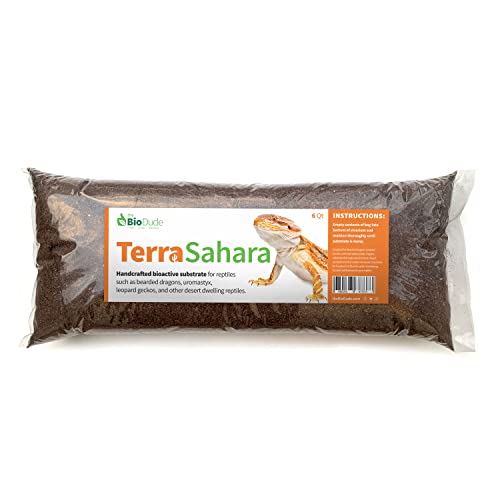
1. Bio Dude Terra Sahara
Best Overall
Bio Dude Terra Sahara
Pros
- •Ready-to-use bioactive formula — no mixing required
- •Excellent burrowing texture that holds tunnels
- •Supports isopod and springtail cleanup crews
- •Widely recommended by experienced keepers and breeders
Cons
- •Higher cost than DIY topsoil/sand mix
- •36 Qt bag may not fully cover enclosures larger than 40 gallons
- •Not available in most pet stores — online only
Bottom Line
Terra Sahara is the gold standard for leopard gecko bioactive setups. This pre-mixed substrate combines organic topsoil, sand, and clay in proportions optimized for arid species. It supports burrowing, holds humidity in the moist hide zone, and sustains cleanup crews (isopods and springtails) that break down waste. The 36-quart bag fills a standard 40-gallon enclosure at the recommended 4-inch depth. If you want a bioactive setup without the guesswork of mixing your own substrate, this is the one to buy.
2. Arcadia EarthMix Arid
Premium Pick
Arcadia EarthMix Arid
Pros
- •Volcanic lava dust adds minerals and improves drainage
- •Supports live plant growth directly in the substrate
- •Excellent tunnel-holding consistency
- •Backed by Arcadia's reptile lighting research team
Cons
- •Most expensive substrate option on this list
- •Limited US Amazon availability — may need specialty retailers
- •Heavier than other substrates due to volcanic content
Bottom Line
Arcadia's EarthMix Arid is a UK-developed bioactive substrate that stands apart from competitors thanks to its volcanic lava dust and worm manure blend. The volcanic component improves drainage and adds trace minerals, while the organic matter supports live plant growth. It packs well for burrowing and tunneling. This is a premium product favored by advanced keepers in Europe, and it's gaining traction in the US market. If you're building a showcase bioactive vivarium, EarthMix Arid delivers the best results.
3. Zoo Med ReptiSoil
Best Value
Zoo Med ReptiSoil
Pros
- •Available at most pet stores and online
- •Affordable price point for large enclosures
- •Decent moisture retention for humid hides
- •No mixing or preparation needed
Cons
- •Higher peat moss content holds more moisture than ideal for arid species
- •Does not support bioactive cleanup crews as well as Terra Sahara
- •Tunnels collapse more easily than clay-based substrates
Bottom Line
ReptiSoil is a budget-friendly pre-mixed substrate that works well for naturalistic leopard gecko setups. It blends peat moss, soil, sand, and carbon, creating a loose substrate that supports light burrowing and holds moderate humidity. It's not specifically designed for arid bioactive setups like Terra Sahara, but it works as an affordable stepping stone toward a naturalistic enclosure. Available at most pet stores, making it the easiest option to find locally.
4. Zoo Med Excavator Clay
Best for Burrowing
Zoo Med Excavator Clay
Pros
- •Moldable — create custom tunnels, caves, and ledges
- •Mimics natural clay substrate found in gecko habitat
- •Firm surface that's gentle on joints
- •No loose particles to accidentally ingest
Cons
- •Setup requires patience — must dry 24-48 hours after molding
- •Cracks if it dries out completely and then gets wet
- •Difficult to spot-clean compared to loose substrates
- •Not bioactive compatible
Bottom Line
Excavator Clay is unique — you mix it with water, mold it into shape, and it hardens into a firm surface that your leopard gecko can dig through. This lets you create custom tunnels, caves, and ledges that mimic the rocky, clay-packed terrain leopard geckos inhabit in the wild. The dried surface is firm enough to walk on but soft enough for geckos to scratch and burrow into over time. It's the best option for keepers who want to build a custom hardscape that encourages natural digging behavior.
5. Jurassic Natural Australian Desert Sand
Best Sand for Mixing
Jurassic Natural Australian Desert Sand
Pros
- •Natural, chemical-free — no dyes or calcium additives
- •Finer grain than hardware store play sand
- •Excellent component for DIY topsoil/sand mixes
- •More natural color than white play sand
Cons
- •Should NOT be used alone — only as a mix component
- •More expensive than hardware store play sand
- •10 lb bag may not be enough for large enclosures
Bottom Line
This is a natural, chemical-free desert sand collected from Australian dunes. It has a finer grain than play sand and contains no dyes or calcium additives. On its own, pure sand is not ideal for leopard geckos — but mixed 30-40% with organic topsoil, it creates an excellent DIY substrate that rivals pre-made options at a fraction of the cost. The 10-pound bag provides the sand component for one 40-gallon enclosure when combined with topsoil.
6. Exo Terra Stone Desert Substrate
Best Hardscape
Exo Terra Stone Desert Substrate
Pros
- •Beautiful natural desert colors and texture
- •Hardens into a realistic landscape
- •Supports light burrowing and digging
- •Good heat conductivity for belly warmth
Cons
- •Difficult to reshape once fully dried
- •Heavier than loose substrates
- •Not bioactive compatible
- •More expensive per volume than other hardscape options
Bottom Line
Stone Desert is a naturally sourced clay substrate that hardens after being shaped, creating a realistic desert landscape. Unlike Excavator Clay, it comes in natural desert colors (Sonoran Ocher, Bahariya Black) and is designed to look like dried desert ground when set. It supports moderate burrowing and creates a visually striking enclosure. The trade-off is less flexibility than Excavator Clay — it's harder to reshape once dry.
7. Natural Slate Tile
Best Easy-Clean
Natural Slate Tile
Pros
- •Extremely easy to clean — wipe and disinfect
- •Excellent heat conduction from under-tank heaters
- •Zero impaction risk
- •Lasts forever — no replacement needed
Cons
- •No burrowing or digging opportunity
- •Does not retain humidity for moist hides
- •Less natural appearance than loose substrates
- •Must be paired with a dig box for enrichment
Bottom Line
Slate tile is the simplest, most hygienic substrate option for leopard geckos. Cut to size at any hardware store (or buy pre-cut reptile slate online), it provides a flat, easy-to-clean surface that conducts heat from under-tank heaters efficiently. Many keepers use slate as their primary substrate with a loose substrate dig box on one side for enrichment. It's the best choice for quarantine setups, keepers with sick geckos, or anyone who values minimal maintenance above naturalism.
Types of Leopard Gecko Substrates
Loose Substrates (Naturalistic)
Loose substrates include soil, sand, clay, and mixes of these materials. They allow burrowing, support natural behavior, and create the most visually natural enclosure. The key is using the right materials at the right depth.
For leopard geckos, the ideal loose substrate is a topsoil and play sand mix (roughly 70% topsoil, 30% sand by volume) packed at least 4 inches deep. This ratio mimics the hard-packed, sandy clay of their native Afghan and Pakistani habitat. Pre-made options like Bio Dude Terra Sahara and Arcadia EarthMix Arid take the guesswork out of mixing your own.
Solid Substrates (Low-Maintenance)
Solid substrates include slate tile, ceramic tile, paper towels, and shelf liner. They offer zero impaction risk and easy cleaning. The trade-off is no burrowing opportunity, which is a significant enrichment loss for a species that naturally digs burrows and tunnels in the wild.
Paper towels are the standard recommendation for hatchlings, quarantine setups, and newly acquired geckos. Natural Slate Tile is the best permanent solid substrate — it conducts heat well and looks better than paper towels.
Bioactive Substrates (Self-Cleaning)
Bioactive setups use a specific substrate mix combined with live cleanup crews — isopods and springtails that eat waste, mold, and shed skin. A properly established bioactive enclosure reduces cleaning to occasional spot checks and water top-ups.
Bio Dude Terra Sahara is the most popular pre-made bioactive substrate for arid species. It's specifically formulated to support cleanup crew colonies while maintaining the low humidity that leopard geckos need. For a premium option, Arcadia EarthMix Arid adds volcanic lava dust for better drainage and mineral content.
What to Look for When Choosing Substrate
Impaction Safety
Avoid anything with large, sharp, or chemically treated particles. Natural soil and sand at the right grain size pass through a healthy gecko's digestive system without issue. Calcium-based sands, walnut shell, and gravel are the real dangers.
Digging and Burrowing Support
Leopard geckos are natural burrowers. In the wild, they dig tunnels to thermoregulate and hide from predators. A substrate that holds tunnels — like a topsoil/sand mix or Zoo Med Excavator Clay — provides enrichment that flat surfaces cannot.
If you use a solid substrate, add a dig box filled with loose substrate in one corner of the enclosure. This gives your gecko a digging outlet without committing the entire floor to loose substrate.
Moisture Retention
Your gecko needs a humid hide (70-80% humidity) for healthy shedding. The substrate around this hide should hold some moisture without staying waterlogged. Topsoil-based substrates do this naturally. Pure sand and clay dry out too quickly. If your substrate doesn't retain moisture well, mist the humid hide area daily.
Ease of Cleaning
Bioactive setups are the lowest maintenance — the cleanup crew handles daily waste. Slate tile is next — wipe and disinfect weekly. Loose substrates without a cleanup crew need spot-cleaning every few days and full replacement every 2-3 months.
Cost Over Time
Here's what each option actually costs per year for a standard 40-gallon enclosure:
| Substrate | Initial Cost | Annual Cost | Notes |
|---|---|---|---|
| Paper Towels | ~$5 | ~$50 | Replace weekly |
| DIY Topsoil/Sand | ~$15 | ~$30 | Replace every 3-4 months |
| Zoo Med ReptiSoil | ~$20 | ~$60 | Replace every 2-3 months |
| Bio Dude Terra Sahara | ~$35 | ~$35 | Bioactive — rarely needs full replacement |
| Slate Tile | ~$15 | ~$0 | Lasts forever |
| Arcadia EarthMix Arid | ~$45 | ~$45 | Bioactive — rarely needs full replacement |
Bioactive substrates have a higher upfront cost but save money long-term because the cleanup crew maintains the substrate indefinitely.
5 Substrates You Should Never Use
Not all substrates sold in pet stores are safe. Here's what to avoid and why:
1. Calcium Sand
Calcium sand (also sold as "vita-sand" or "digestible sand") is marketed as a safe alternative because it's supposedly digestible. It's not. Calcium sand clumps when wet, forming hard masses in the gut. Worse, leopard geckos may actively eat it because it tastes like calcium, dramatically increasing the amount ingested. This is the one substrate that genuinely does cause impaction even in healthy geckos.
2. Walnut Shell
Ground walnut shell has sharp, jagged particles that can cut internal tissue if ingested. It also clumps when wet, creating the same impaction risk as calcium sand. Despite being sold in pet stores, it has no place in a leopard gecko enclosure.
3. Reptile Carpet
Reptile carpet was once considered the "safe" default. It's not dangerous in the traditional sense, but it creates real problems. Gecko toenails catch in the fibers, potentially pulling nails out. Bacteria builds up in the fabric faster than you can clean it. And despite washing, carpet harbors bacteria that simple laundering can't eliminate.
4. Cedar and Pine Shavings
Wood shavings from cedar and pine release aromatic oils (phenols) that are toxic to reptiles. These volatile compounds damage the respiratory system and liver. This applies to all reptiles, not just leopard geckos. Never use cedar or pine products in any reptile enclosure.
5. Gravel and Large Pebbles
Gravel pieces are too large to pass through the digestive system if swallowed and too hard on joints for daily walking. They also trap waste between stones, creating bacterial breeding grounds that are impossible to fully clean.
Setting Up a Bioactive Leopard Gecko Enclosure
Bioactive is the gold standard for leopard gecko substrate — and it's simpler than most people think.
Substrate Layer
Fill your enclosure with 4-6 inches of bioactive substrate (Bio Dude Terra Sahara or a DIY mix of 60% organic topsoil and 40% play sand). Pack it down firmly. Deeper is better — your gecko will dig tunnels and the cleanup crew needs vertical space to work.
Drainage Layer (Optional)
For arid species like leopard geckos, a drainage layer is optional. If your enclosure retains too much moisture (usually only an issue in PVC enclosures with poor ventilation), add 1-2 inches of hydroton clay balls beneath the substrate, separated by a mesh screen.
Cleanup Crew
The cleanup crew is what makes bioactive work. For arid leopard gecko setups, use:
- Powder blue isopods or powder orange isopods — the workhorses that eat waste and shed skin
- Arid springtails — tiny bugs that consume mold and fungal growth
- Start with 20-30 isopods and a culture of springtails per enclosure
Give the cleanup crew 2-4 weeks to establish before adding your gecko. Provide leaf litter (oak or magnolia) and small bark pieces as food and shelter for the crew.
Live Plants (Optional)
Live plants are not required but add oxygen, visual appeal, and hiding spots. For leopard gecko enclosures, choose arid-tolerant species: aloe, haworthia, sansevieria, and sedums all thrive in the low humidity and warm temps. See our guide to plants for leopard gecko terrariums for the full list.
Choosing Substrate by Life Stage
Hatchlings and Juveniles (Under 6 Months)
Use paper towels. Young leopard geckos are clumsy eaters and ingest more substrate accidentally. Their smaller body size also means even small blockages can become serious. Paper towels eliminate the risk entirely and make it easy to monitor droppings — critical for tracking the health of a growing gecko.
Sub-Adults (6-12 Months, Over 45g)
Transition to loose substrate or a naturalistic setup. Start with a 50/50 split — paper towels on one side, loose substrate on the other. This lets your gecko explore loose substrate while you monitor for any issues. If droppings remain healthy after 2-3 weeks, switch the entire enclosure to loose substrate.
Adults (12+ Months)
Full loose substrate or bioactive setup. Adult leopard geckos have fully developed digestive systems and the body mass to pass small amounts of ingested substrate without issue. This is when bioactive setups with Bio Dude Terra Sahara or a DIY mix really shine.
DIY Substrate Mix: The Best Budget Option
If you don't want to buy a pre-made mix, the best DIY substrate for leopard geckos is simple:
Recipe: 70% organic topsoil / 30% play sand (by volume)
- Buy organic topsoil from a hardware store (check the label — no fertilizers, no perlite, no added chemicals)
- Buy play sand (washed, screened play sand — NOT construction sand)
- Mix thoroughly in a bucket or wheelbarrow
- Fill your enclosure 4-6 inches deep and pack firmly
- Mist lightly and let it settle for 24 hours before adding your gecko
Total cost: roughly $10-15 for a 40-gallon enclosure. This is essentially what Bio Dude Terra Sahara is — topsoil, sand, and clay — without the pre-mixed convenience.
For a richer mix that supports bioactive setups, add 10% bentonite clay or Zoo Med Excavator Clay powder. The clay helps the substrate hold tunnels and gives the cleanup crew better habitat structure.
Building a new enclosure? Don't forget the heating and lighting setup — check our leopard gecko diet guide for feeding tips that complement a naturalistic habitat.
Our Final Verdict
Bio Dude Terra Sahara
Terra Sahara is the gold standard for leopard gecko bioactive setups. This pre-mixed substrate combines organic topsoil, sand, and clay in proportions optimized for arid species. It supports burrowing, holds humidity in the moist hide zone, and sustains cleanup crews (isopods and springtails) that break down waste. The 36-quart bag fills a standard 40-gallon enclosure at the recommended 4-inch depth. If you want a bioactive setup without the guesswork of mixing your own substrate, this is the one to buy.
Arcadia EarthMix Arid
Arcadia's EarthMix Arid is a UK-developed bioactive substrate that stands apart from competitors thanks to its volcanic lava dust and worm manure blend. The volcanic component improves drainage and adds trace minerals, while the organic matter supports live plant growth. It packs well for burrowing and tunneling. This is a premium product favored by advanced keepers in Europe, and it's gaining traction in the US market. If you're building a showcase bioactive vivarium, EarthMix Arid delivers the best results.

Zoo Med ReptiSoil
ReptiSoil is a budget-friendly pre-mixed substrate that works well for naturalistic leopard gecko setups. It blends peat moss, soil, sand, and carbon, creating a loose substrate that supports light burrowing and holds moderate humidity. It's not specifically designed for arid bioactive setups like Terra Sahara, but it works as an affordable stepping stone toward a naturalistic enclosure. Available at most pet stores, making it the easiest option to find locally.
Frequently Asked Questions
Pure sand alone is not ideal, but sand mixed with topsoil (30-40% sand) is excellent and mimics their natural habitat. The fear that sand kills geckos is largely a myth — impaction is caused by poor husbandry (dehydration, low temps), not the sand itself.
References & Sources
- https://reptifiles.com/leopard-gecko-care/leopard-gecko-substrate/
- https://www.thebiodude.com/blogs/reptile-and-amphibian-husbandry-basics/does-substrates-cause-impaction-in-reptiles
- https://www.thebiodude.com/blogs/gecko-caresheets/leopard-gecko-caresheet-2024-updated
- https://arcadiareptile.com/earthpro/substrate/earthmix-arid/
- https://www.zenhabitats.com/blogs/reptile-care-sheets-resources/leopard-gecko-complete-substrate-guide
Related Articles

Best Substrate for Aquatic Turtles: Sand or Gravel?
Choosing the best substrate for aquatic turtles affects water quality, health, and behavior. Here's what actually works — and what to avoid.

Best Leopard Gecko Starter Kit: Complete Buyer's Guide
Find the best leopard gecko starter kit for beginners. We break down enclosures, heating, substrate, and accessories so you set up right the first time.

Best Substrate for Box Turtle: Create a Healthy Habitat
Discover the best substrate for your box turtle to ensure a healthy and stimulating environment. From natural to DIY options, we've got you covered.