Best Leopard Gecko Vitamins: Top Picks for 2026
Find the best leopard gecko vitamins and calcium supplements to prevent MBD and keep your gecko healthy. Expert picks, dosing schedule, and what to avoid.


This article contains affiliate links. If you make a purchase through these links, we may earn a small commission at no extra cost to you. See our affiliate disclosure for details.
We recommend 5 picks here. Our top choice is the Repashy Calcium Plus All-in-One Supplement — check price and availability below.
How we choose: we compare published specifications against the care requirements in veterinary and species-care literature, and weigh those against what long-time keepers report. We do not test products ourselves and we do not restate Amazon star ratings. The 6 sources behind this article are listed at the bottom.
Quick Comparison
- Supplement Type
- All-in-One Powder
- D3 Included
- Yes
- Vitamin A Source
- Beta-carotene
- Primary Use Frequency
- Daily
- UVB Setup Complementary
- Yes
- Supplement Type
- Multivitamin Powder
- D3 Included
- Yes
- Vitamin A Source
- Preformed
- Primary Use Frequency
- Weekly/Bi-weekly
- UVB Setup Complementary
- Yes
- Supplement Type
- Calcium Powder
- D3 Included
- No
- Vitamin A Source
- Beta-carotene
- Primary Use Frequency
- Daily
- UVB Setup Complementary
- Required with UVB (or separate D3)
- Supplement Type
- Calcium Powder
- D3 Included
- No
- Vitamin A Source
- N/A
- Primary Use Frequency
- Daily
- UVB Setup Complementary
- Ideal with UVB
- Supplement Type
- Live Feeder Insect
- D3 Included
- N/A
- Vitamin A Source
- N/A (from gut-load)
- Primary Use Frequency
- Staple Feeder
- UVB Setup Complementary
- N/A
Prices are estimates only. Actual prices on Amazon may vary.
Your leopard gecko can't stay healthy on live feeders alone. In the wild, insects eat a rich, varied diet — and those nutrients pass right along to whatever eats them. In captivity, crickets and mealworms raised in a box just don't have that same nutritional depth.
That gap is exactly why supplementation matters. The right vitamins and calcium powders fill in what feeders can't provide — and using them correctly is one of the most impactful things you can do for your gecko's long-term health.
Let's break down exactly what your gecko needs, how to use it, and which products are worth buying.
Why Leopard Geckos Need Vitamins and Supplements
Wild leopard geckos eat dozens of different insect species. Those insects feed on plants, seeds, and decaying organic matter — loading up on vitamins, minerals, and calcium along the way. When a wild gecko eats, it absorbs all of that.
Your captive feeders? Not so much. A cricket raised on simple chow doesn't have anywhere near that nutritional variety. This is sometimes called the "empty calorie" problem in reptile husbandry.
The most serious consequence is metabolic bone disease (MBD). It's caused by calcium and vitamin D3 deficiency, and it leads to soft or deformed bones, muscle tremors, and — in advanced cases — death. According to ReptiFiles, MBD is one of the leading causes of early death in captive reptiles. The good news: it's almost entirely preventable with consistent supplementation.
Vitamin A deficiency is also common and causes eye problems, recurring respiratory infections, and abnormal shedding. Getting your supplement routine right protects against both.
Top Vitamin & Supplement Products
Quick recommendations
Combines calcium, D3, and full vitamin profile. Uses beta-carotene for safe daily use. Ultrafine texture sticks to insects exceptionally well.
Decades of proven use in reptile keeping. Widely available at pet stores and online. Solid multivitamin + mineral formula.
UK brand trusted by serious keepers. Ultrafine, light-colored formula with natural beta-carotene. Safe for daily use.
Dedicated calcium supplement for setups with UVB lighting. Prevents D3 over-supplementation.
Supplement Schedule by Age
Juveniles (0–12 months)
Calcium + D3 every feeding
Multivitamin once per week
Adults (12+ months)
Calcium + D3 every feeding
Multivitamin once every 1–2 weeks
Breeding females
Calcium + D3 every feeding
Multivitamin once per week
Key principle
More is not better
Over-supplementing causes toxicity like under-supplementing causes deficiency
Calcium + D3 vs Reptile Multivitamin
Side-by-side comparison
| Feature | Calcium + D3 | Reptile Multivitamin |
|---|---|---|
| Primary role | Bone density, muscle contractions, nerve function | Vitamin A, B-complex, trace minerals |
| Frequency (adults) | ★Every feeding | Once every 1–2 weeks |
| Why essential | Prevents metabolic bone disease (MBD) | Prevents eye problems & respiratory infections |
| Vitamin A form | Indirect via D3 pathway | ★Beta-carotene (safe, no toxicity risk) |
Our Take: Both are essential — use together for complete nutrition coverage.
How to Dust Feeder Insects
Prepare container
1 minutePlace live feeders in a small zip-lock bag or deli cup
Add powder
30 secondsAdd a small pinch of supplement powder to the container
Coat insects
30 secondsShake gently until lightly coated. Aim for a thin, barely-visible white dusting.
Tip: Over-coating can deter picky eaters and cause digestive upset
Feed immediately
Offer coated insects to your gecko right away
Tip: The coating starts falling off within minutes
Detailed Reviews
1. Repashy Calcium Plus All-in-One Supplement
Best Overall
Repashy Calcium Plus All-in-One Supplement
Pros
- •All-in-one formula simplifies supplementation needs.
- •Includes calcium, D3, and safe beta-carotene for Vitamin A.
- •Ultrafine grind adheres effectively to feeder insects for optimal delivery.
- •Formulated for safe and regular use at every feeding opportunity.
Cons
- •Higher initial cost compared to single-purpose supplements.
- •May not be suitable for all highly specialized or sensitive gecko needs without additional research.
- •Requires consistent application for optimal, long-term health benefits.
Bottom Line
This all-in-one supplement simplifies a complete routine by providing calcium, D3, and safe vitamin A from beta-carotene in a single, ultrafine powder. Its design allows for daily application, effectively adhering to feeders for consistent nutritional intake.
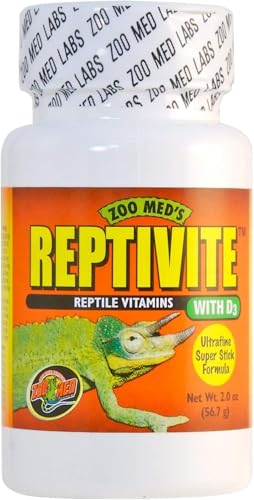
2. Zoo Med Reptivite with D3 Multivitamin
Best Value
Zoo Med Reptivite with D3 Multivitamin
Pros
- •Provides a complete profile of essential vitamins and minerals.
- •Includes D3, critical for calcium absorption and metabolic function.
- •Long-standing reputation and widespread successful use in reptile keeping.
- •Designed for intermittent use as part of a rotational supplementation schedule.
Cons
- •Not intended for daily use; requires careful scheduling to avoid over-supplementation of fat-soluble vitamins.
- •Does not provide the primary calcium required for daily intake, necessitating a separate calcium powder.
- •Beta-carotene content for safe Vitamin A conversion is not explicitly highlighted.
Bottom Line
This established multivitamin offers a full spectrum of vitamins and minerals, including D3, crucial for preventing common deficiencies. Its formulation is ideal for a less frequent, rotational schedule alongside a daily calcium source.
3. Arcadia EarthPro-A Reptile Calcium Supplement
Premium Pick
Arcadia EarthPro-A Reptile Calcium Supplement
Pros
- •Premium, high-quality calcium source formulated for daily feeding.
- •Contains natural beta-carotene for safe Vitamin A conversion, preventing toxicity.
- •Ultrafine powder ensures excellent adhesion to feeders, minimizing waste.
- •Favored by experienced keepers for its clean, well-researched formulation.
Cons
- •Does not contain D3, requiring a separate D3 supplement or adequate UVB lighting.
- •Higher price point reflects its premium quality and specialized ingredients.
- •Primarily focused on calcium and Vitamin A; not a full multivitamin solution.
Bottom Line
This premium calcium supplement is designed for daily use, delivering essential calcium alongside natural beta-carotene for safe vitamin A synthesis. Its ultrafine grind and clean formulation make it a top choice for discerning keepers committed to high-quality nutrition.
4. Zoo Med ReptiCalcium without D3
Budget Pick
Zoo Med ReptiCalcium without D3
Pros
- •Pure calcium source without D3, ideal for UVB-equipped setups.
- •Helps prevent D3 over-supplementation when using artificial UVB lighting.
- •Affordable and readily available for consistent daily use.
- •Ultrafine powder ensures good adhesion to feeder insects for efficient delivery.
Cons
- •Requires active UVB lighting or a separate D3 source to prevent Metabolic Bone Disease (MBD).
- •Does not offer additional vitamins or minerals, requiring a separate multivitamin.
- •Misuse without proper D3 provision can lead to severe health issues.
Bottom Line
This plain calcium supplement is specifically formulated for setups utilizing UVB lighting, allowing geckos to synthesize their own D3 and preventing over-supplementation. Its affordability and ultrafine texture make it a practical daily calcium source.
5. Dubia Roaches Feeder Insects
Editor's Choice
Dubia Roaches Feeder Insects
Pros
- •Superior calcium-to-phosphorus ratio compared to crickets or mealworms.
- •Highly nutritious and easily gut-loaded for optimal nutrient transfer to geckos.
- •Longer lifespan and less odor than crickets, making them easier to keep.
- •Significantly improves overall nutritional density of a gecko's staple diet.
Cons
- •Live insect care requires dedicated space, appropriate housing, and attention.
- •Can be more expensive than crickets or mealworms as a primary food source.
- •Legality of keeping them as feeders may vary by region or local regulations.
Bottom Line
Dubia roaches are a nutritionally superior feeder insect, offering an excellent calcium-to-phosphorus ratio and easy gut-loading capabilities for maximum benefit. Incorporating them as a staple significantly enhances a leopard gecko's diet and complements supplementation efforts.
The Two Supplements Every Leo Owner Needs
You don't need a shelf full of products. Two supplement types cover the core nutritional gaps for most healthy leopard geckos.
Calcium + D3
Calcium is the single most important supplement you'll use. It supports bone density, muscle contractions, and proper nerve function. Without enough calcium, your gecko's body starts pulling it from its own bones — and that's when MBD sets in.
Vitamin D3 is what makes calcium absorption possible. Without it, dietary calcium goes largely unused. Most leopard gecko setups don't include UVB lighting, which means geckos can't synthesize D3 from light the way they would in nature. They have to get it through their food — via dusted feeders.
When shopping for calcium, look for:
- Contains vitamin D3 (unless you run UVB — more on that below)
- No added phosphorus — feeders already supply plenty
- Ultrafine grind — sticks to insects better and is easier to digest
Reptile Multivitamin
Calcium + D3 handles bone health, but your gecko also needs vitamin A, B-complex vitamins, and trace minerals that feeders simply don't provide in adequate amounts.
Vitamin A is especially critical. Deficiency shows up as cloudy eyes, respiratory infections, and poor skin quality. But here's an important caveat: preformed vitamin A (retinol) is toxic in excess. Always choose a multivitamin that uses beta-carotene instead — your gecko's body converts it to vitamin A as needed, which eliminates toxicity risk.
For a closer look at how supplements fit into your gecko's overall diet, check out our Leopard Gecko Diet Guide for the full picture.
How to Use Supplements: Dusting and Gut-Loading
There are two main delivery methods for supplements, and both play a role in a complete nutrition strategy.
Dusting Feeder Insects
Dusting means lightly coating live feeders in supplement powder right before offering them. Here's how to do it:
- Place your live feeders in a small zip-lock bag or deli cup
- Add a small pinch of supplement powder
- Shake gently until insects are lightly coated
- Feed immediately — the coating starts falling off within minutes
The key word is lightly. You want a thin, barely-visible white dusting. Over-coating can deter picky eaters and may cause digestive upset.
Gut-Loading
Gut-loading means feeding your feeder insects a nutritious diet for 24–48 hours before feeding them to your gecko. Healthier feeders = more nutritious meals.
Good gut-load foods include:
- Dark leafy greens (collard greens, mustard greens, dandelion)
- Carrots, squash, and sweet potato
- Commercial gut-load products
Gut-loading complements dusting — it doesn't replace it. Think of dusting as your reliable safety net and gut-loading as a bonus that makes each feeding more nutritious.
Supplementation Schedule: How Often Is Enough?
More isn't always better with supplements. Over-supplementing can cause toxicity just like under-supplementing causes deficiency. Here's a simple, vet-recommended schedule:
| Gecko Age | Calcium + D3 | Reptile Multivitamin |
|---|---|---|
| Juvenile (0–12 months) | Every feeding | Once per week |
| Adult (12+ months) | Every feeding | Once every 1–2 weeks |
| Breeding female | Every feeding | Once per week |
Juveniles grow fast and need more calcium than adults. For hatchlings and young geckos, dusting every single feeding is the right call.
If your setup includes UVB lighting, you can alternate between calcium with D3 and plain calcium (without D3) for adult feedings. Consistent UVB exposure allows some D3 synthesis through skin, so you don't need it in every dusting. But if you're not running UVB — which is most leo keepers — always use D3-containing calcium.
The Best Leopard Gecko Vitamins on the Market
These are the products with the strongest track records among experienced keepers, based on ingredient quality, community feedback, and long-term use.
Repashy Calcium Plus
Repashy is one of the most respected names in reptile nutrition, and Calcium Plus is their flagship all-in-one supplement. It combines calcium, D3, and a full vitamin profile in a single powder — which makes your routine much simpler.
It uses beta-carotene for vitamin A (not preformed retinol), so it's safe for regular use without toxicity risk. The powder is ultrafine and sticks to insects exceptionally well. Many keepers use this as their single supplement, alternating with plain calcium occasionally.
(Estimates only — actual prices on Amazon may vary.) [Repashy Calcium Plus](https://www.amazon.com/dp/B08B57H9MG?tag=krawlo-20 typically runs in the mid-range price tier and lasts a long time given how little you use per feeding.
Zoo Med Reptivite with D3
Zoo Med has been a staple brand in reptile keeping for decades, and Reptivite with D3 is their complete multivitamin + mineral formula. It's widely available at pet stores and online, making it easy to grab in a pinch.
It's a solid, reliable product used successfully by countless keepers over the years. The grind is slightly coarser than Repashy, but it still coats feeders adequately.
Use this as your multivitamin rotation supplement (every 1–2 weeks) alongside a dedicated calcium product. [Zoo Med Reptivite](https://www.amazon.com/dp/B07SKBGQSJ?tag=krawlo-20 is one of the most commonly recommended multivitamins for leos.
Arcadia EarthPro-A
Arcadia is a UK brand with a strong international following among serious reptile keepers. EarthPro-A is their core calcium supplement — ultrafine, light-colored, and formulated for use at every feeding.
It uses natural beta-carotene for vitamin A and is designed to be safe for daily use. The formula is clean with no unnecessary fillers. If you want a premium calcium that you can use confidently every feeding, this is an excellent choice.
[Arcadia EarthPro-A](https://www.amazon.com/dp/B0B57KL69G?tag=krawlo-20 is harder to find in brick-and-mortar stores but is easy to order online.
Zoo Med ReptiCalcium without D3
If you do use UVB lighting in your leopard gecko setup, you'll want a plain calcium option for most feedings. Over-supplementing D3 isn't commonly a problem with powder supplements, but using plain calcium for most feedings and D3 calcium occasionally is the best practice when UVB is present.
Zoo Med ReptiCalcium without D3 is the go-to for this. It's affordable, widely available, and ultra-fine. [Zoo Med ReptiCalcium](https://www.amazon.com/dp/B000UJPHL8?tag=krawlo-20 is a simple, reliable option.
Pangea Fruit Mix Complete
This one's a bit unconventional for leopard gecko use — Pangea Fruit Mix is technically a crested gecko diet. But some leo keepers offer it occasionally as a vitamin-delivery treat. Some geckos will lick it voluntarily, getting a vitamin boost in a no-stress way.
It's completely optional. But if you have a picky eater who resists dusted feeders, Pangea Fruit Mix can be a useful tool in your kit.
Warning Signs: When Supplementation Isn't Working
Even with a good routine, things can go wrong. Knowing what to look for lets you catch problems early.
Signs of calcium/D3 deficiency:
- Tremors or twitching, especially in the limbs
- Soft, rubbery, or visibly bent limbs or jaw
- Difficulty walking or weak grip
- Lethargy out of proportion to temperature
Signs of vitamin A deficiency:
- Cloudy eyes unrelated to a shed cycle
- Recurring respiratory infections
- Abnormal or retained shed, especially around the toes
Signs of over-supplementation:
- Sudden appetite loss
- Lethargy or weakness
- Swollen or calcified soft tissue (rare with powder supplements, more common with liquid vitamins)
If you see any of these signs, consult a reptile-experienced vet. MBD and hypervitaminosis both require professional diagnosis — don't try to treat them at home by changing your supplement dose.
Choosing Better Feeder Insects
Your supplement routine works better when it starts with high-quality feeders. Crickets and mealworms are common, but they're not the most nutritious options available.
Upgrade your feeder rotation with:
| Feeder | Why It's Good | Use As |
|---|---|---|
| Dubia roaches | Great Ca:P ratio, easy to gut-load | Staple |
| Black soldier fly larvae | Naturally high calcium | Staple or supplement |
| Silkworms | Soft, high protein and calcium | Variety feeder |
| Superworms | High protein, good gut-load candidates | Occasional treat |
| Waxworms | High fat, minimal nutrition | Rare treat only |
Mealworms are fine in moderation, but their poor calcium-to-phosphorus ratio and high fat content make them a weak staple. Dubia roaches, by contrast, are one of the best overall feeders you can use — and they're easy to maintain at home.
Getting the enclosure right matters just as much as nutrition. See our guide on Best Substrate for Leopard Geckos for a complete breakdown of habitat setup.
How to Store Supplements Properly
Vitamins degrade over time. Heat, moisture, and light all speed up that process. Here's how to keep your supplements effective:
- Store in a cool, dry location — never near a heat lamp or on top of the enclosure
- Keep lids tightly closed after each use
- Use a clean, dry scoop — don't double-dip with a wet tool
- Check expiration dates — discard anything older than 12–18 months
- If powder clumps or smells unusual, replace it immediately
A tub of Repashy or Zoo Med that's been sitting open and damp isn't doing your gecko any favors, even if it looks fine.
Common Mistakes to Avoid
A few errors come up again and again in the reptile keeping community:
Using human vitamins. Don't do it. Human supplements are formulated for completely different biology and often contain preformed vitamin A at doses that are toxic to reptiles.
Skipping D3 without UVB. If you don't have a UVB bulb in your setup, your gecko cannot synthesize D3 on its own. It must come from supplements. Skipping D3 while skipping UVB is a fast track to MBD.
Multivitamin every feeding. Once every 1–2 weeks is enough for adults. More than that risks vitamin accumulation — especially if you're already using an all-in-one like Repashy Calcium Plus.
Using supplements with phosphorus. Feeder insects already supply adequate phosphorus. Adding more through supplements can throw off the calcium-to-phosphorus ratio and actually impair calcium absorption.
Putting It All Together
A solid supplement routine for your leopard gecko doesn't have to be complicated. Pick a quality calcium + D3 powder for regular feedings, add a multivitamin every couple of weeks, and stay consistent.
The biggest factor isn't which brand you choose — it's showing up reliably. A gecko that gets properly dusted feeders at every meal, week after week, will be dramatically healthier than one who gets sporadic intensive supplementation.
ReptiFiles' guide to reptile vitamins is one of the most thorough resources available for understanding the science behind supplementation — worth bookmarking if you want to go deeper.
And if you're still getting to know your new gecko, our guide on Do Leopard Geckos Like to Be Held? is a great next read — understanding your gecko's behavior and stress signals is part of keeping them healthy long-term.
Our Final Verdict

Repashy Calcium Plus All-in-One Supplement
This all-in-one supplement simplifies a complete routine by providing calcium, D3, and safe vitamin A from beta-carotene in a single, ultrafine powder. Its design allows for daily application, effectively adhering to feeders for consistent nutritional intake.
Zoo Med Reptivite with D3 Multivitamin
This established multivitamin offers a full spectrum of vitamins and minerals, including D3, crucial for preventing common deficiencies. Its formulation is ideal for a less frequent, rotational schedule alongside a daily calcium source.

Arcadia EarthPro-A Reptile Calcium Supplement
This premium calcium supplement is designed for daily use, delivering essential calcium alongside natural beta-carotene for safe vitamin A synthesis. Its ultrafine grind and clean formulation make it a top choice for discerning keepers committed to high-quality nutrition.
Frequently Asked Questions
Adults should have feeders dusted with calcium + D3 at every feeding, typically 2–3 times per week. Juveniles under 12 months should be dusted at every single feeding since they're actively growing and need more calcium for bone development.
References & Sources
- https://reptifiles.com/leopard-gecko-care/leopard-gecko-feeding/
- https://reptifiles.com/reptile-vitamins-reptile-calcium/
- https://www.thebiodude.com/blogs/gecko-caresheets/leopard-gecko-caresheet-2024-updated?srsltid=AfmBOophF4WueJdkle7QYAsQZ4T6yicxU9FTzO6-KgvYBngHihMK95_a
- https://www.petmd.com/reptile/leopard-gecko-care-sheet
- https://reptifiles.com/leopard-gecko-care/
- https://www.petmd.com/reptile/what-do-geckos-eat
Related Articles

Best Vitamins for Breeding Leopard Geckos (2026)
Breeding leopard geckos need supplements at every feeding — not alternating. See our 6 top calcium, D3, and vitamin picks to prevent MBD in gravid females.

Best Leopard Gecko Starter Kit: Complete Buyer's Guide
Find the best leopard gecko starter kit for beginners. We break down enclosures, heating, substrate, and accessories so you set up right the first time.

Best Vitamins for Tortoises: Your Guide to Optimal Health
Unlock the secrets to optimal tortoise health! Discover the best vitamins for tortoises, including calcium, D3, and more, for strong shells and vibrant lives. Learn how to supplement safely.