Best Heat Lamp for Bearded Dragon: A 2026 Keeper's Guide
Confused about the best heat lamp for your bearded dragon? Our 2026 guide covers bulb types, wattage, setup, and the ideal temperatures to keep your pet healthy.


This article contains affiliate links. If you make a purchase through these links, we may earn a small commission at no extra cost to you. See our affiliate disclosure for details.
We recommend 2 picks here. Our top choice is the BN-LINK Digital Dimming Thermostat — check price and availability below.
How we choose: we compare published specifications against the care requirements in veterinary and species-care literature, and weigh those against what long-time keepers report. We do not test products ourselves and we do not restate Amazon star ratings. The 6 sources behind this article are listed at the bottom.
Quick Comparison
- Product Type
- Temperature Controller/Thermostat
- Socket Type
- Ceramic required
- Temperature Control
- Automatic dimming control
- Primary Function
- Regulate basking spot temperature
- Bulb Compatibility
- Halogen/incandescent only (not MVB)
- Installation Required
- Mounted to enclosure, probe placement
- Product Type
- Fixture Housing
- Socket Type
- Ceramic socket included
- Temperature Control
- Manual/Passive housing
- Primary Function
- Direct and contain heat from bulb
- Bulb Compatibility
- Any bulb within wattage rating
- Installation Required
- Direct fixture mount above basking area
Prices are estimates only. Actual prices on Amazon may vary.
Giving your bearded dragon the right environment is the most important thing you can do as a keeper. A huge part of that is heat. In the wild, these lizards spend hours basking in the hot Australian sun. In your home, it's your job to recreate that warmth. Choosing the best heat lamp for your bearded dragon can feel overwhelming, but it's the key to their health, digestion, and happiness.
Without proper heat, a bearded dragon can't digest its food, leading to serious issues like impaction. Their immune system weakens, and they become lethargic and stressed. This guide will walk you through everything you need to know, from bulb types and wattage to the perfect temperature gradient, so you can build a setup that helps your dragon thrive.
Why the Right Heat Lamp is Crucial for Your Bearded Dragon
Bearded dragons are ectothermic, or "cold-blooded." This doesn't mean their blood is actually cold; it means they can't produce their own body heat. They rely entirely on their environment to warm up and cool down. This process, called thermoregulation, is vital for every single one of their bodily functions.
A proper heat lamp provides the energy for this. When your dragon basks under a warm light, it's not just getting cozy. It's actively raising its body temperature to the optimal level needed to digest food, power its immune system, and fuel its activity. Think of the basking spot as your dragon's personal solar-powered charging station.
Without a focused, warm basking area, a bearded dragon simply cannot function properly. They'll stop eating, become inactive, and are much more susceptible to metabolic bone disease, respiratory infections, and other serious health conditions. So, finding the best heat lamp for your bearded dragon isn't just about comfort—it's about survival.
Your goal is to create a temperature gradient in the enclosure. This means one end is hot (the basking spot) and the other end is cool. This allows your dragon to move around and regulate its own temperature throughout the day, just as it would in nature. The heat lamp is the engine that drives this all-important gradient.
Heat Bulb Types Compared
What you need to know
Halogen flood bulbs: Best for most keepers—bright light + focused heat without UVB, can use with thermostat
Mercury vapor bulbs: All-in-one heat/light/UVB but produce extreme heat, can't be thermostat-dimmed, expensive with short UVB lifespan
Ceramic heat emitters: Night-only heat (no light), must always use thermostat, prevents sleep disruption
Recommended Heat Lamp Wattage by Tank Size
40 Gallon Enclosure
50-75W
75 Gallon Enclosure
75-100W
120+ Gallon Enclosure
100-150W
Temperature Gradient Targets
Basking Surface (Adults)
95–105°F
Basking Surface (Babies/Juveniles)
105–110°F
Warm Side (Ambient)
85–95°F
Cool Side (Ambient)
75–80°F
Nighttime
65–75°F
Detailed Reviews
1. BN-LINK Digital Dimming Thermostat
Best Overall
BN-LINK Digital Dimming Thermostat
Pros
- •Automates temperature control for safety
- •Dimming function prevents bulb flashing and extends bulb lifespan
- •Maintains perfectly stable basking temperature
- •Continuous power adjustment instead of harsh on/off cycling
Cons
- •Cannot be used with mercury vapor bulbs (reduces UVB output)
- •Requires initial investment for proper setup
Bottom Line
The single most important piece of equipment after the lamp itself. Automates temperature control and uses continuous dimming instead of on/off switching to keep basking spots perfectly stable while extending bulb life.
2. Fluker's Repta-Clamp Lamp
Recommended
Fluker's Repta-Clamp Lamp
Pros
- •Ceramic socket (required for safety with high-wattage bulbs)
- •Deep dome design directs heat straight down
- •Widely available and reliable
- •Wattage rated to prevent overheating and fire hazards
Cons
- •Must verify wattage rating matches your bulb
- •Does not include thermostat control
Bottom Line
A reliable and widely available dome fixture option for mounting heat bulbs. Features a ceramic socket rated for high wattages and deep dome design that directs heat effectively downward.
Types of Heat Bulbs: What Are Your Options?
When you walk into a pet store or browse online, you'll see a dizzying array of bulbs. Let's break down the most common types so you can understand what they do and which one is right for your setup.
Incandescent and Halogen Flood Bulbs
For most keepers, a halogen flood bulb is the best heat lamp for a bearded dragon. These are essentially what you'd find at a hardware store. They produce a great combination of bright, white light and focused downward heat, which is perfect for creating a basking spot.
Halogens are a more modern, efficient version of the classic incandescent bulb. They tend to last longer and produce a more intense heat for the same amount of wattage. This is exactly what you want for a sun-loving reptile. You'll get a powerful beam of heat that warms the surface of the basking spot effectively, mimicking the sun. These bulbs do not produce UVB, so you will need a separate, dedicated UVB light source.
Mercury Vapor Bulbs (MVBs)
Mercury vapor bulbs are an "all-in-one" option that produces heat, visible light, and UVB radiation. On paper, this sounds like the perfect solution. However, they come with significant drawbacks that make them less than ideal for the average keeper.
First, MVBs cannot be connected to a thermostat, especially not a dimming one. Dimming the bulb to control heat also reduces or eliminates the UVB output, defeating the purpose of the bulb. Second, they are expensive and have a much shorter effective lifespan for UVB (usually 6 months) than a dedicated UVB tube. Finally, they often produce an extreme amount of heat, which can be difficult to manage in enclosures smaller than 120 gallons.
While they have their place in very large, open-topped enclosures, most bearded dragon setups are better served by separating the heat and UVB sources. This gives you far more control over both essential elements.
Ceramic Heat Emitters (CHEs)
Ceramic heat emitters are unique because they produce heat but no light at all. They look like a flat, black lightbulb and screw into a standard ceramic socket. Because they don't emit light, they are the perfect choice for providing supplemental heat, especially at night.
If your home's temperature drops below 65°F at night, a CHE is the only safe way to provide warmth without disrupting your dragon's sleep cycle with light. They must always be connected to a thermostat to prevent the enclosure from dangerously overheating. CHEs get extremely hot and can cause severe burns if not regulated.
They are not a suitable primary, daytime heat source because they don't provide the bright light that stimulates natural basking behavior. Your dragon needs that bright light to signal that it's time to warm up for the day.
Finding the Best Heat Lamp for Your Bearded Dragon's Enclosure
Choosing the right bulb is only half the battle. You also need to pick the right wattage and control it properly to ensure your dragon's safety and well-being. This is where many new keepers make mistakes.
Matching Wattage to Enclosure Size
(Estimates only — actual prices on Amazon may vary.)
The wattage you need is directly related to the size of your enclosure and the ambient temperature of your room. A bigger tank requires a more powerful bulb to create an effective basking spot. Here are some general starting points, but you will need to test and measure temperatures to get it perfect.
| Enclosure Size | Recommended Basking Bulb Wattage |
|---|---|
| 40 Gallon | 50-75 watts |
| 75 Gallon | 75-100 watts |
| 120+ Gallon | 100-150 watts |
Remember, these are just starting points. A cool room will require a higher wattage bulb than a warm room. An enclosure with a screen top will lose more heat than one with a solid top. The only way to know for sure is to measure your temperatures with an infrared temp gun. A safe way to handle this is also considering different types of bedding. If you need some ideas, check out our guide on the Best Bedding for Bearded Dragons: A Keeper's Guide.
The Importance of a Dimming Thermostat
This is the single most important piece of equipment after the lamp itself. A thermostat automates temperature control, protecting your pet from overheating. While any thermostat is better than none, a dimming thermostat is essential for basking bulbs.
Instead of just turning the bulb on and off at full power (which causes annoying flashing and drastically shortens bulb life), a dimming thermostat works like a dimmer switch. It provides continuous power to the bulb but adjusts the intensity to keep the temperature perfectly stable. For example, a [BN-LINK Digital Dimming Thermostat](https://www.amazon.com/dp/B01I15S6OM?tag=krawlo-20 will ensure your basking spot stays exactly where you set it, providing consistent and reliable heat all day long.
What’s The Proper Temperature And Humidity For A Bearded Dragon?
Creating the right thermal environment is all about the gradient. Your dragon needs a range of temperatures to choose from. You'll measure these temperatures using a digital thermometer with a probe for ambient (air) temps and an infrared temp gun for the basking surface.
Here are the target temperatures you should aim for:
| Zone | Temperature Range (Fahrenheit) |
|---|---|
| Basking Surface | 95-105°F (Adults), 105-110°F (Babies/Juveniles) |
| Warm Ambient Side | 85-95°F |
| Cool Ambient Side | 75-80°F |
| Nighttime | 65-75°F |
Basking Surface: This is the most important temperature. Use a temp gun to measure the surface of the rock or wood directly under your heat lamp. It needs to be hot.
Warm/Cool Sides: The air temperature on the warm side should be lower than the basking spot itself, while the cool side should offer a place for your dragon to escape the heat entirely. This gradient is crucial for thermoregulation.
Humidity: Bearded dragons are desert animals and require a dry environment. The ideal humidity level is between 30% and 40%. Consistently high humidity can lead to deadly respiratory infections. A digital hygrometer will help you monitor these levels accurately.
Answering Common Lighting & Heating Questions
Let's tackle some of the most frequent questions keepers have about their bearded dragon's heating and lighting setup.
What's the right light schedule?
Keep it simple and consistent. Your bearded dragon's lights should be on for 12 to 14 hours a day and completely off for 10 to 12 hours at night. This mimics a natural day/night cycle, which is essential for regulating their circadian rhythm.
The easiest way to manage this is with a simple outlet timer. Plug all your daytime lights (heat and UVB) into the timer and set it to turn on in the morning and off at night. This automation means you'll never forget, and your dragon will have a stable, predictable schedule.
Do bearded dragons need heat at night?
Usually, no. As long as the temperature in your house doesn't drop below about 65°F, a nighttime temperature drop is not only safe but also natural and beneficial. This cool-down period is part of their natural cycle.
If your home does get colder than 65°F, you need to provide a lightless source of heat. This is where a Ceramic Heat Emitter (CHE) is the perfect tool. Connect the CHE to a thermostat set to around 70°F. It will only kick on if the temperature falls too low, providing just enough warmth to keep your dragon safe without producing any light that would disturb its sleep. Some keepers use an under-tank heater, but choosing the Best Heating Mat for Bearded Dragon (2026): 5 Safe Under-Tank Options is crucial for safety and proper use.
Are red lights bad for bearded dragons?
Yes. This is one of the most harmful myths in reptile keeping. You should never use a red, blue, purple, or any colored light in your bearded dragon's enclosure, day or night.
The marketing for these bulbs claims that reptiles can't see the colored light, making them ideal for nighttime heating or viewing. This is completely false. Scientific studies have shown that reptiles, including bearded dragons, can see red light perfectly well. Using a red light at night is like forcing your dragon to sleep with a bright light on in their bedroom. It severely disrupts their sleep cycle, leading to chronic stress, a suppressed immune system, and poor overall health.
For daytime, you want bright, white light. For nighttime, you want complete darkness. There are no exceptions.
Setting Up Your Heat Lamp Safely
Proper equipment is non-negotiable for preventing fires and ensuring your pet's safety.
Choosing the Right Dome Fixture
Your heat lamp fixture, or dome, must be chosen carefully. First, it absolutely must have a ceramic socket. Plastic sockets will melt under the intense heat of a basking bulb, creating a serious fire hazard. Second, check the maximum wattage rating on the dome. Ensure it is rated for a higher wattage than the bulb you plan to use. A [Fluker's Repta-Clamp Lamp](https://www.amazon.com/dp/B0002DHOE0?tag=krawlo-20 is a reliable and widely available option.
Choose a deep dome fixture. This helps direct the heat straight down and ensures the face of the bulb doesn't stick out, reducing the risk of you or your dragon coming into contact with it.
Placement and Distance
Always place the heat lamp on one end of the enclosure, never in the middle. This is how you create the temperature gradient. Position it directly above the spot where you want your dragon to bask—a flat, non-porous rock or a sturdy piece of driftwood works perfectly.
Finding the correct distance between the bulb and the basking spot is a process of trial and error. This is why an adjustable lamp stand is so useful. You can raise or lower the lamp until your temp gun confirms the basking surface is at the perfect temperature (95-110°F). It's a balance of wattage and distance, all fine-tuned by your dimming thermostat.
Conclusion: The Key to a Healthy Dragon
Choosing the best heat lamp for your bearded dragon doesn't have to be complicated. For the vast majority of keepers, a high-quality halogen flood bulb paired with a dimming thermostat is the winning combination. It provides the intense, focused heat they need for basking, digestion, and activity.
Remember the key principles: create a temperature gradient, measure your temperatures accurately with a temp gun, and provide a consistent 12-hour day/night cycle. And most importantly, never, ever use colored lights. By investing in the right heating equipment and setting it up correctly, you're providing the foundation for a long, healthy, and happy life for your bearded dragon.
Our Final Verdict

BN-LINK Digital Dimming Thermostat
The single most important piece of equipment after the lamp itself. Automates temperature control and uses continuous dimming instead of on/off switching to keep basking spots perfectly stable while extending bulb life.
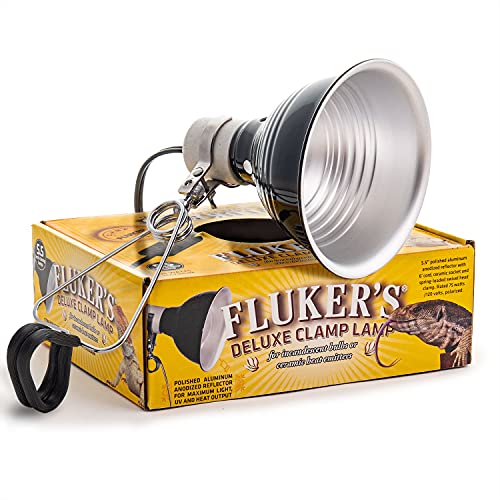
Fluker's Repta-Clamp Lamp
A reliable and widely available dome fixture option for mounting heat bulbs. Features a ceramic socket rated for high wattages and deep dome design that directs heat effectively downward.
Frequently Asked Questions
A halogen flood light is generally the best primary heat source. It creates an effective basking spot with intense heat and bright light that encourages natural basking behavior. It must be paired with a separate, high-quality UVB tube light and controlled by a dimming thermostat.
References & Sources
- https://www.zenhabitats.com/blogs/reptile-care-sheets-resources/bearded-dragon-complete-lighting-and-heating-guide?srsltid=AfmBOorZQd1eetYWhURgCVkips4P_PqGTHbmAX_XI0UH9hPmI6wcpZoN
- https://reptifiles.com/bearded-dragon-care/bearded-dragon-temperatures-uvb/
- https://reptifiles.com/choosing-the-best-reptile-heat-lamp/
- https://www.thesprucepets.com/bearded-dragon-lighting-1238402
- https://reptifiles.com/wp-content/uploads/2023/09/Bearded-Dragon-Care-Sheet-ReptiFiles.pdf
- https://reptifiles.com/bearded-dragon-care/shopping-list/
Related Articles

Best Heat Lamp for Reptiles: A 2026 Buyer's Guide
Looking for the best heat lamp to keep your reptile healthy and warm? Our 2026 guide reviews top bulb types and safety tips for the perfect setup.

Best Heat Lamp for Ball Python: A 2026 Keeper's Guide
Confused about the best heat lamp for your ball python? Our expert guide breaks down the top choices, safety tips, and proper setup for a thriving snake.

Best Heat Lamp for Leopard Gecko: A Keeper's 2026 Guide
Confused about heating? Our expert guide reveals the best heat lamp for your leopard gecko, covering temperatures, wattage, UVB, and safe setup for a thriving pet.