7 Best Foods for Lizards: By Diet Type & Species (2026)
The best food for your lizard depends on its diet type. This guide covers all four: insectivores, herbivores, omnivores, and frugivores — with 7 top-rated feeders and diets.


This article contains affiliate links. If you make a purchase through these links, we may earn a small commission at no extra cost to you. See our affiliate disclosure for details.
We recommend 7 picks here. Our top choice is the Dubia Roaches (Live Feeder Insects) — check price and availability below.
How we choose: we compare published specifications against the care requirements in veterinary and species-care literature, and weigh those against what long-time keepers report. We do not test products ourselves and we do not restate Amazon star ratings. The 4 sources behind this article are listed at the bottom.
Quick Comparison
- Diet Type
- Insectivore / Omnivore
- Food Format
- Live feeder insect
- Key Nutrient Benefit
- High protein, gut-load ready
- Requires Dusting
- Yes
- Best Species
- Bearded dragon, leopard gecko, monitor
- Availability
- Online (specialty)
- Price Range
- $$
- Diet Type
- Frugivore / Omnivore
- Food Format
- Powder-mix gel diet (CGD)
- Key Nutrient Benefit
- Complete fruit + protein balance
- Requires Dusting
- No (complete diet)
- Best Species
- Crested gecko, gargoyle gecko
- Availability
- Online & pet stores
- Price Range
- $$$
- Diet Type
- Omnivore
- Food Format
- Powder-mix gel diet
- Key Nutrient Benefit
- Balanced omnivore nutrition
- Requires Dusting
- No (complete diet)
- Best Species
- Blue tongue skink, tegu
- Availability
- Online & pet stores
- Price Range
- $$$
- Diet Type
- Omnivore / Herbivore
- Food Format
- Dry pellet
- Key Nutrient Benefit
- Fiber, vitamins, plant protein
- Requires Dusting
- Partial (add calcium)
- Best Species
- Bearded dragon, uromastyx
- Availability
- Pet stores & online
- Price Range
- $
- Diet Type
- Herbivore
- Food Format
- Dry pellet
- Key Nutrient Benefit
- High fiber, low protein for strict herbivores
- Requires Dusting
- Partial (add D3)
- Best Species
- Uromastyx, iguana
- Availability
- Online (specialty)
- Price Range
- $$
- Diet Type
- Insectivore / Omnivore
- Food Format
- Live feeder insect
- Key Nutrient Benefit
- Natural Ca:P 1.5:1 — no dusting needed
- Requires Dusting
- No (minimal)
- Best Species
- All insectivore & omnivore lizards
- Availability
- Online & some pet stores
- Price Range
- $$
- Diet Type
- Universal (Supplement)
- Food Format
- Powder supplement
- Key Nutrient Benefit
- Full vitamin + trace mineral profile
- Requires Dusting
- Applied directly to feeders
- Best Species
- All lizard species
- Availability
- Online & pet stores
- Price Range
- $$$
Prices are estimates only. Actual prices on Amazon may vary.
The Four Lizard Diet Types: What You Need to Know First
Before buying any food for your lizard, you need to know its diet type. Giving the wrong food category — even expensive, premium products — can cause serious nutritional disease over time. There are four fundamental lizard diet types:
| Diet Type | What They Eat | Common Species |
|---|---|---|
| Insectivore | Primarily live insects | Leopard gecko, chameleon, crested gecko (partly) |
| Omnivore | Insects + vegetables + fruit | Bearded dragon, blue tongue skink, tegu |
| Herbivore | Exclusively plants, greens, vegetables | Green iguana, uromastyx, chuckwalla |
| Frugivore | Fruit-based, with some insect protein | Crested gecko, gargoyle gecko, day gecko |
Getting this wrong is one of the most common mistakes in lizard keeping. Feeding a strict herbivore like a uromastyx a high-protein insect diet will cause fatal kidney disease within months. Feeding a pure insectivore like a leopard gecko only plant matter will lead to rapid starvation. Match the food to the biology, not your preference.
For deeper dives by species, see our guides on best bearded dragon food, best crested gecko food, and best blue tongue skink food.
Quick Species-to-Food Reference
| Species | Diet Type | Primary Food | Supplement Priority |
|---|---|---|---|
| Bearded dragon | Omnivore (juvenile: 70% insect / adult: 70% veg) | Dubia roaches + collard greens | Calcium + vitamin A |
| Leopard gecko | Insectivore | Dubia roaches + BSFL | Calcium + D3 |
| Crested gecko | Frugivore | Pangea CGD + occasional insects | Minimal (CGD is complete) |
| Blue tongue skink | Omnivore | Repashy gel + lean protein + greens | Calcium |
| Uromastyx | Herbivore | Mazuri pellets + dark leafy greens | D3 + calcium |
| Green iguana | Herbivore | Dark leafy greens + Mazuri | Calcium |
| Chameleon | Insectivore | Dubia roaches + hornworms + crickets | Calcium + vitamin A |
| Ackie monitor | Insectivore | Dubia roaches + BSFL + whole prey | Calcium |
This table covers the core principle: insectivores and omnivores need live feeders as their primary protein source. Herbivores and frugivores do not.
Detailed Reviews
1. Dubia Roaches (Live Feeder Insects)
Best for Insectivores
Dubia Roaches (Live Feeder Insects)
Pros
- •Best protein-to-fat ratio of all common feeder insects (~22% protein)
- •No odor, no noise — far easier to house than crickets
- •Cannot climb smooth walls — minimal escape risk
- •Excellent gut-load retention for longer periods
- •Accepted readily by nearly all insectivore and omnivore lizards
Cons
- •Illegal in Florida and Hawaii
- •Higher per-insect cost than crickets
- •Require a breathable container and light gut-load maintenance
Bottom Line
Dubia roaches are the single best live feeder insect for insectivore and omnivore lizards. They deliver approximately 22% protein by dry weight, a far better fat-to-protein ratio than crickets, zero odor, and zero escape risk on smooth surfaces — making them dramatically easier to manage than crickets. Their thick, soft body is digestible at all life stages, from juvenile bearded dragons and leopard geckos to large monitors and tegus. Dubias retain gut-load nutrition longer than any other common feeder, so the nutritional effort you put into their food reliably reaches your lizard. They are the top choice for bearded dragons, leopard geckos, blue tongue skinks, ackie monitors, savannah monitors, and any other insectivore or omnivore species. Note: dubia roaches are illegal in Florida and Hawaii — use black soldier fly larvae as your primary feeder if you live in those states.
2. Pangea Fruit Mix Complete Crested Gecko Diet
Best for Frugivores
Pangea Fruit Mix Complete Crested Gecko Diet
Pros
- •Complete balanced diet — no additional supplements required
- •Real fruit ingredients accepted by even picky feeders
- •Trusted by professional breeders for multi-generational feeding
- •Covers frugivores and frugivore-omnivores in a single formula
- •Shelf-stable powder with long storage life
Cons
- •Must be mixed fresh every 24 hours to prevent spoilage
- •Not suitable for strict insectivores or herbivores
- •Premium price compared to DIY fruit blends
Bottom Line
Pangea Fruit Mix Complete is the gold standard crested gecko diet (CGD) and the best food available for frugivore lizards like crested geckos and gargoyle geckos. Mixed with water to a smoothie consistency and served in shallow cups, it provides a complete balanced diet that can replace live feeders entirely — though offering insects 1–2 times per week is still recommended for enrichment and behavioral health. The formula contains real fruit ingredients (banana, papaya, fig), insect protein from black soldier fly larvae meal, and a balanced vitamin and mineral profile including vitamin D3 and calcium at the correct ratio. Pangea is trusted by professional crested gecko breeders worldwide and has produced multiple generations of healthy geckos on this diet alone. The Fruit Mix Complete formula is the most versatile in the Pangea range — suitable for crested geckos, gargoyle geckos, day geckos, and most other frugivore gecko species.
3. Repashy Superfoods Savory Slider / Day Gecko Diet
Best for Omnivores
Repashy Superfoods Savory Slider / Day Gecko Diet
Pros
- •Complete omnivore nutrition from a single product
- •Gel format — accepted by most omnivore lizards without hesitation
- •Excellent for travel, illness, or when fresh food is unavailable
- •Trusted reptile nutrition brand with decades of research
- •Covers blue tongue skinks, tegus, omnivore monitors, day geckos
Cons
- •Requires preparation with boiling water
- •Best used as part of a varied diet, not as the sole food source
- •Higher cost per feeding day than fresh produce
Bottom Line
Repashy Superfoods makes the best omnivore gel diets on the market, and the range covers blue tongue skinks, tegus, omnivore monitors, day geckos, and other species that eat both animal and plant matter. Mixed with boiling water to form a firm, sliceable gel, Repashy products are convenient, shelf-stable before mixing, and nutritionally complete for the species they target. The Savory Slider formula is specifically designed for blue tongue skinks and similarly omnivorous lizards, delivering balanced macronutrients from animal and plant sources without the guesswork of assembling a varied fresh diet. It works best as part of a mixed diet — rotate with fresh vegetables, cooked lean proteins, and occasional live feeders rather than feeding Repashy exclusively long-term. For blue tongue skink owners in particular, this is the most reliable commercial option available.
4. Zoo Med Natural Bearded Dragon Food
Best Pellet Food
Zoo Med Natural Bearded Dragon Food
Pros
- •Widely available in pet stores nationwide
- •Lower cost than most specialty reptile diets
- •Combines plant and animal ingredients for omnivore species
- •Good supplemental food to reduce fresh-prep frequency
- •Accepted by most bearded dragons and uromastyx
Cons
- •Must be softened with water before feeding to avoid impaction
- •Not a complete diet — fresh greens and live feeders still required
- •Lower nutritional density than premium gel diets
Bottom Line
Zoo Med Natural Bearded Dragon Food is the most accessible pellet-format food for omnivore lizards in the bearded dragon family, and it also works well for uromastyx as a supplemental veggie component. The formula combines plant-based ingredients — dried fruits, vegetables, and grasses — with moderate protein from dried insects. It is designed to complement, not replace, fresh greens and live feeders: use it as a 20–30% component of the overall diet to add nutritional variety and reduce prep time on days when fresh produce is limited. The pellets must be softened with a few drops of water before feeding to prevent impaction risk, particularly for juveniles. Zoo Med is widely available in pet stores, making this one of the most accessible commercial lizard foods for general use.
5. Mazuri Herbivorous Reptile Diet
Best for Herbivores
Mazuri Herbivorous Reptile Diet
Pros
- •Highest-fiber commercial reptile diet — matches herbivore digestive needs
- •Formulated by zoo nutrition specialists (Purina Mazuri brand)
- •Trusted at zoos and professional breeding programs globally
- •Vitamin D3 fortified — supports bone health under UVB
- •Available in bulk — cost-effective for multiple animals
Cons
- •Specialty product — harder to find than Zoo Med at general pet stores
- •Large bag sizes may be more than hobby keepers need
- •Must be softened with water and rotated with fresh greens
Bottom Line
Mazuri Herbivorous Reptile Diet is the leading commercial food for strict herbivore lizards, including uromastyx, spiny-tailed monitors, green iguanas, and chuckwallas. Formulated by Purina's exotic animal nutrition team, it provides a high-fiber, low-protein, vitamin D3-fortified pellet that closely matches the nutritional profile of the arid grasses and vegetation these species eat in the wild. The high fiber content is critical for uromastyx and iguanas, whose digestive systems are designed for bulky plant matter and will suffer long-term from a low-fiber, high-protein diet. Mazuri is the food of choice at zoos, wildlife sanctuaries, and professional breeding facilities worldwide. It is best offered softened with water and rotated with fresh dark leafy greens such as collard greens, dandelion greens, and endive. For iguana and uromastyx keepers, this is the single most important commercial product to stock.
6. Black Soldier Fly Larvae (Nutrigrubs / Calciworms)
Best Calcium Feeder
Black Soldier Fly Larvae (Nutrigrubs / Calciworms)
Pros
- •Natural Ca:P ratio of 1.5:1 — net calcium without dusting
- •Excellent for preventing metabolic bone disease in all lizards
- •Soft body — accepted by virtually all insectivore and omnivore species
- •Legal in all US states — no geographic restrictions like dubia roaches
- •Require minimal maintenance at room temperature
Cons
- •Lower protein content than dubia roaches — use in rotation, not alone
- •Pupate quickly in warm conditions — use within 1–2 weeks of receiving
- •Smaller size limits suitability for very large monitors and tegus
Bottom Line
Black soldier fly larvae (BSFL), sold under brand names like Nutrigrubs, Calciworms, and Phoenix Worms, are the most nutritionally distinctive feeder insect available for lizards. Their standout property is a natural calcium-to-phosphorus ratio of approximately 1.5:1 — the reverse of every other common feeder insect — which means they deliver a net calcium benefit without any supplemental dusting. This makes them uniquely valuable for preventing metabolic bone disease (MBD), the most common nutritional disorder in captive lizards. At 17% protein and 9% fat, they are slightly lower in protein than dubia roaches but the calcium advantage makes them an indispensable rotation feeder for all insectivore and omnivore lizards. They are also extremely well accepted — their soft wriggling body triggers a strong feeding response in even picky feeders. Offer BSFL 2–3 times per week as part of a varied feeder rotation for maximum nutritional benefit.
7. Arcadia EarthPro-A Reptile Supplement
Best Supplement
Arcadia EarthPro-A Reptile Supplement
Pros
- •Beta carotene (safe provitamin A) — no D3 or vitamin A toxicity risk
- •Full trace mineral and amino acid profile from prey-analysis research
- •Trusted by reptile vets and professional breeders worldwide
- •Works with natural UVB — designed for the modern bioactive keeper
- •Universal — suitable for all lizard diet types and species
Cons
- •Higher price than budget calcium powders
- •Less available in general pet stores — usually ordered online
- •Must be paired with proper UVB lighting to work as intended
Bottom Line
Arcadia EarthPro-A is the highest-quality universal reptile supplement available and the best choice for dusting feeder insects or sprinkling on salads for any lizard species. Unlike older-generation vitamin powders that use preformed vitamin A (retinol) and excess D3 — both of which can accumulate to toxic levels — EarthPro-A uses beta carotene as a safe provitamin A source and is engineered to work alongside D3 synthesized naturally through UVB exposure. The formula includes a full trace mineral profile, amino acids modeled on prey animal composition, and no unnecessary fillers. It is the supplement of choice for serious reptile keepers, professional breeders, and reptile-specialist veterinarians across Europe and North America. Use it at every feeding for juveniles and every other feeding for adult lizards, always alongside a quality T5 UVB tube appropriate for your species. EarthPro-A is the foundation of any responsible supplement protocol regardless of whether your lizard is an insectivore, herbivore, omnivore, or frugivore.
Feeding Frequency by Age
Age matters as much as diet type. Young lizards grow rapidly and need protein-dense meals daily. Adults require less frequent feeding to avoid obesity — a common problem in captive bearded dragons, blue tongue skinks, and tegus.
Juveniles (under 12 months):
- Insectivores and omnivores: Feed insects twice daily, as many as they will eat in 10 minutes
- Herbivores: Fresh salad available daily
- Frugivores (crested geckos): Fresh CGD daily, insects 2–3x per week
Adults (12 months and older):
- Insectivores: Feed 3–5x per week, reduce portion size
- Omnivores: Feed insects 3x per week, fresh greens daily
- Herbivores: Fresh salad daily, commercial pellets 2–3x per week
- Frugivores: CGD every 1–2 days, insects once per week
According to PetMD's reptile nutrition guidelines, overfeeding is one of the leading causes of obesity-related liver disease in captive lizards, particularly in species like bearded dragons and blue tongue skinks that readily overeat.
Choosing the Right Feeder Insects
For insectivore and omnivore lizards, live feeder insects form the foundation of the diet. Not all feeders are equal.
Dubia roaches are the superior choice for most keepers. They offer the best protein-to-fat ratio (~22% protein, ~7% fat), hold gut-load nutrition longer than crickets, produce no odor, and cannot escape smooth-walled containers. They are the recommended primary feeder for bearded dragons, leopard geckos, monitors, and tegus.
Black soldier fly larvae (BSFL) — sold as Nutrigrubs, Calciworms, or Phoenix Worms — have a unique natural calcium-to-phosphorus ratio of approximately 1.5:1. Most feeder insects have a strongly inverted Ca:P ratio (crickets are approximately 1:9), which means they actively deplete calcium from your lizard's body unless dusted before every feeding. BSFL are a net calcium source, making them an important rotation feeder for preventing metabolic bone disease (MBD). Offer them 2–3 times per week alongside your primary feeder.
Crickets remain the most available feeder insect at general pet stores, but they are nutritionally inferior to dubias and require consistent calcium dusting at every feeding due to their poor Ca:P ratio. Use them as a backup when dubias are unavailable, not as a staple. According to Reptifiles' reptile food guide, crickets should always be gut-loaded for at least 24 hours and dusted with calcium before every feeding.
You can buy live dubia roaches on Amazon or find black soldier fly larvae feeders here.
Gut-Loading: The Multiplier That Most Keepers Ignore
Gut-loading means feeding your feeder insects highly nutritious food for 24–48 hours before offering them to your lizard. The nutritional content of a feeder insect reflects exactly what it has recently eaten — a cricket fed cardboard is almost nutritionally empty. A cricket fed dark leafy greens, sweet potato, and quality gut-load powder transfers all of that nutrition to your lizard.
The best gut-load foods for feeder insects include:
- Collard greens, dandelion greens, kale
- Squash, sweet potato, carrot
- Commercial gut-load powder (Repashy Bug Burger, Arcadia InsectFuel)
- Avoid citrus, spinach, iceberg lettuce — low nutrition or oxalate-heavy
Never skip gut-loading. It is arguably more important than which feeder insect you choose.
Supplements: What Every Lizard Needs
No matter what your lizard's diet type is, supplementation is required in captivity. Wild lizards get vitamin D3 from intense UV exposure, calcium from prey bones and mineral-rich plants, and trace vitamins from a varied wild diet. Captive lizards cannot replicate this without your help.
Calcium powder should be dusted on feeder insects at every feeding for juveniles and 3–4x per week for adults. Choose a calcium carbonate powder without D3 if your lizard is under quality UVB lighting (the UVB produces D3 naturally). Use calcium + D3 only if your setup lacks UVB.
Vitamin supplement should be used once per week for adults, more frequently for juveniles. Arcadia EarthPro-A is the best option for keepers with proper UVB: it uses beta carotene (safe provitamin A) rather than preformed vitamin A, which can accumulate to toxic levels with overdosing.
What to avoid: Never use a supplement containing both high preformed vitamin A and high D3 at every feeding. Hypervitaminosis A and D3 toxicity are both real risks with improper supplementation schedules.
For blue tongue skink-specific nutrition, Reptifiles' blue tongue skink diet guide is the most comprehensive free resource available and is worth reading in full.
Foods to Avoid Across All Lizard Types
Some foods are harmful regardless of your lizard's diet type:
| Food | Risk | Affected Species |
|---|---|---|
| Fireflies / lightning bugs | Lethal toxins | All lizards |
| Avocado | Persin toxicity | Herbivores, omnivores |
| Rhubarb | Oxalic acid poisoning | Herbivores, omnivores |
| Spinach (in large amounts) | Calcium-binding oxalates | All lizards |
| Wild-caught insects | Pesticide / parasite exposure | All lizards |
| Dairy products | Cannot digest lactose | All lizards |
| Dog or cat food (long-term) | Incorrect protein/fat ratio | All lizards |
| Iceberg lettuce | Near-zero nutrition, causes diarrhea | Herbivores, omnivores |
According to PetMD's gecko nutrition guide, wild-caught insects are one of the leading sources of parasites in captive geckos and should always be replaced with captive-bred feeders from reputable suppliers.
Our Final Verdict
Dubia Roaches (Live Feeder Insects)
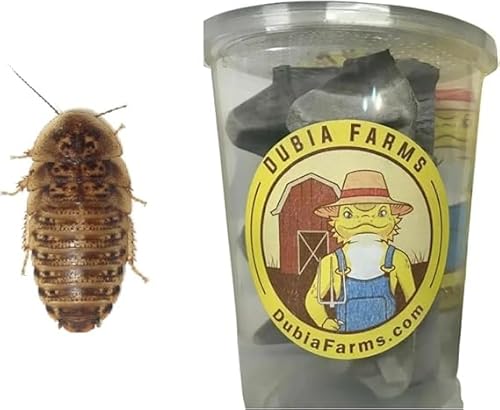
Dubia roaches are the single best live feeder insect for insectivore and omnivore lizards. They deliver approximately 22% protein by dry weight, a far better fat-to-protein ratio than crickets, zero odor, and zero escape risk on smooth surfaces — making them dramatically easier to manage than crickets. Their thick, soft body is digestible at all life stages, from juvenile bearded dragons and leopard geckos to large monitors and tegus. Dubias retain gut-load nutrition longer than any other common feeder, so the nutritional effort you put into their food reliably reaches your lizard. They are the top choice for bearded dragons, leopard geckos, blue tongue skinks, ackie monitors, savannah monitors, and any other insectivore or omnivore species. Note: dubia roaches are illegal in Florida and Hawaii — use black soldier fly larvae as your primary feeder if you live in those states.

Pangea Fruit Mix Complete Crested Gecko Diet
Pangea Fruit Mix Complete is the gold standard crested gecko diet (CGD) and the best food available for frugivore lizards like crested geckos and gargoyle geckos. Mixed with water to a smoothie consistency and served in shallow cups, it provides a complete balanced diet that can replace live feeders entirely — though offering insects 1–2 times per week is still recommended for enrichment and behavioral health. The formula contains real fruit ingredients (banana, papaya, fig), insect protein from black soldier fly larvae meal, and a balanced vitamin and mineral profile including vitamin D3 and calcium at the correct ratio. Pangea is trusted by professional crested gecko breeders worldwide and has produced multiple generations of healthy geckos on this diet alone. The Fruit Mix Complete formula is the most versatile in the Pangea range — suitable for crested geckos, gargoyle geckos, day geckos, and most other frugivore gecko species.
Repashy Superfoods Savory Slider / Day Gecko Diet
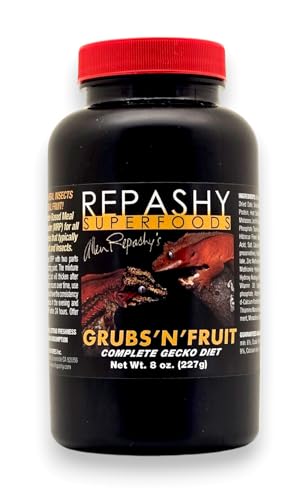
Repashy Superfoods makes the best omnivore gel diets on the market, and the range covers blue tongue skinks, tegus, omnivore monitors, day geckos, and other species that eat both animal and plant matter. Mixed with boiling water to form a firm, sliceable gel, Repashy products are convenient, shelf-stable before mixing, and nutritionally complete for the species they target. The Savory Slider formula is specifically designed for blue tongue skinks and similarly omnivorous lizards, delivering balanced macronutrients from animal and plant sources without the guesswork of assembling a varied fresh diet. It works best as part of a mixed diet — rotate with fresh vegetables, cooked lean proteins, and occasional live feeders rather than feeding Repashy exclusively long-term. For blue tongue skink owners in particular, this is the most reliable commercial option available.
Frequently Asked Questions
There is no single 'best food for all lizards' because diet type varies by species. Insectivores like leopard geckos need live insects as their primary food. Herbivores like uromastyx need dark leafy greens and high-fiber pellets. Omnivores like bearded dragons need a mix of insects and vegetables. Always identify your species' diet type before choosing food.
References & Sources
Related Articles

Best Food for Box Turtles: Your Complete Feeding Guide
Discover the best food for box turtles! Learn about their natural diet, essential nutrients, safe foods, and feeding schedules from a vet tech and reptile expert.

Best Food for Dubia Roaches: Complete Feeding Guide
Discover the best food for dubia roaches — from fresh produce to roach chow — to gut load your feeders and boost your reptile's nutrition every time.

Best Food for Chameleons: A Complete Feeding Guide
Discover the best food for chameleons — from staple feeder insects to safe veggies and gut-loading tips. Keep your chameleon healthy with this complete guide.