
Leopard Gecko Tank Setup: Enclosure, Heating & Hides for a Ground-Dweller
Leopard geckos need belly heat, not overhead—and a 20-gallon tank is too small for an adult. This setup guide covers floor temps, hide placement, and substrate.

✓Recommended Gear
In this guide, we cover everything you need to know and recommend 4 essential products. Check prices and availability below.
TL;DR: Leopard geckos need a minimum 20-gallon (30×12×12 inch) enclosure as adults, though 40-gallon breeder tanks (36×18×18 inches) are strongly preferred for proper thermal gradients. The essential components are a thermostat-controlled under-tank heater or halogen overhead lamp for a warm side of 88–92°F, three hides (warm, cool, moist), and a non-particulate substrate like tile, paper towel, or shelf liner to eliminate impaction risk. Avoid tall tanks — leopard geckos are ground dwellers and height is wasted space that can't support a functional temperature gradient.
You walked out of the pet store with a 20-gallon tank, an under-tank heater, and a bag of CalciSand. The sales rep said it was everything you need.
Here's the problem: leopard geckos are ground-dwelling, thermoregulating lizards — and that setup misses two of the three things they need most. The 20-gallon is too small to create a proper temperature gradient. CalciSand is a documented impaction risk. And the UTH, while correct, needs a thermostat to be safe.
This guide covers the right setup from the start, so your leo can live 15–20+ years the way they're meant to.
Enclosure Size and Type
Minimum enclosure for a single adult leopard gecko: 36 × 18 inches (90 × 45 cm) floor space — approximately a 40-gallon long tank.
A 20-gallon (24 × 12 inches) is often sold as "starter" for leos. It's not appropriate for adults because:
- Not enough length for a hot end and cool end to differ meaningfully
- Too narrow for a leo to fully turn around in multiple directions
- Limits behavioral enrichment — a leo in a 20-gallon paces constantly
Glass vs. PVC vs. Tubs
| Type | Pros | Cons |
|---|---|---|
| 40-gallon glass long | Widely available, affordable ($80–$150) | Loses heat; requires more heating hardware |
| PVC front-opening | Retains heat well, professional look | More expensive ($200–$400) |
| Sterilite tub / tub enclosure | Cheapest; retains heat; great for multiple animals | Less visibility |
For a single pet leo, a 40-gallon glass tank is perfectly sufficient. Use a screen lid with clips — leos can push open unsecured lids.
Pro Tip: Avoid tall aquarium formats. Leopard geckos are terrestrial — they use floor space, not vertical height. A 40-gallon "long" (36×18×18) is much better than a 40-gallon "breeder" (36×18×16) is better than any tall tank of similar volume.
Tank Size & Type
Minimum floor space
36 × 18 inches
~40-gallon long tank
Avoid
20-gallon (24×12 in)
Too narrow for proper thermal gradient
Recommended type
40-gallon glass long
Affordable ($80–$150), widely available
Why not tall tanks
Leopard geckos are ground-dwellers
Height is wasted space; they don't use vertical area
Heating: Belly Heat Is the Key
This is the single most important concept for leopard gecko husbandry. Leopard geckos are crepuscular/nocturnal and are adapted to absorb heat from warm substrate surfaces, not from overhead basking like a bearded dragon.
Under Tank Heater (UTH) Setup
A UTH covering one-third of the floor (the warm end) is the foundation of a leo setup:
- Position: Under the warm-side glass, NOT under the cool end or centered
- Thermostat: REQUIRED. An unregulated UTH can reach 120°F+ and cause burns through the glass. This is not optional.
- Target substrate surface temperature (above UTH): 88–92°F
- Cool side ambient temperature: 70–75°F
**[Zoo Med ReptiTherm Under Tank Heater](https://www.amazon.com/dp/B07KKHZPMG?tag=krawlo-20 is the most common UTH. Pair it with an **[Inkbird ITC-306T thermostat](https://www.amazon.com/dp/B08Y5JDYFY?tag=krawlo-20 — set the probe on the substrate above the UTH.
Do Leopard Geckos Need a Basking Light?
An overhead basking lamp is optional, not required. Many keepers run leos successfully with UTH only. However, an overhead daylight bulb (no heat output) provides:
- Natural day/night light cycle
- Better visibility of the animal
- Potential behavioral benefits
If you add a light, use a low-wattage LED or T8 fluorescent. Do not use an overhead heat lamp as the primary heat source — it heats the air, not the substrate, and leos will stay away from it.

Zoo Med ReptiTherm Under Tank Heater Medium
The standard UTH for 40-gallon leo enclosures — covers the warm third of the floor for proper belly heat
Check Price on Amazon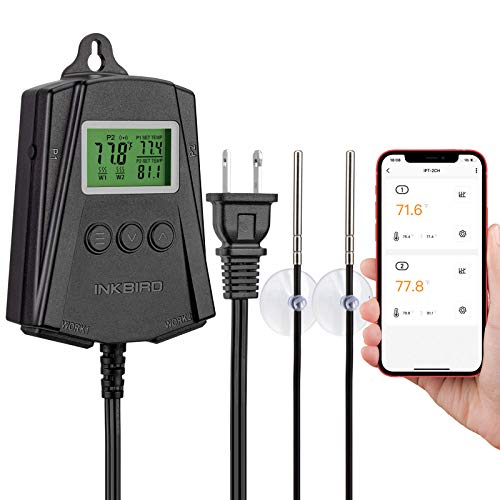
Inkbird ITC-306T Thermostat Temperature Controller
Required safety device for any UTH — prevents overheating that causes burns; sets exact substrate temperature
Check Price on AmazonHeating Specifications
Warm side substrate temp
88–92°F
Above the UTH, critical for digestion
Cool side ambient temp
70–75°F
Allows thermoregulation
UTH coverage
One-third of floor
Only the warm end, never centered
Thermostat
Required
Unregulated UTH can reach 120°F+ and burn through glass
Basking lamp
Optional
Use low-wattage LED/T8 for light cycle, never as primary heat
Substrate: What Works and What Doesn't
The substrate debate in leopard gecko keeping is intense, but the science is clearer than the forums suggest.
Best Options for Leopard Geckos
Paper towels / newspaper — Best for quarantine and juveniles under 4 months. Easy to monitor feces and clean. No visual appeal but zero risk.
Tile (slate or ceramic) — Popular for adult leos. Easy to clean, no impaction risk, holds heat from UTH well. The main downside: no burrowing, which is a natural leo behavior.
Organic topsoil or excavator clay — Allows natural burrowing. Use fine-particle, no additives. Depth of 2–3 inches is sufficient for leos (they're lighter burrowers than skinks). Mix with play sand at 70/30 soil/sand for a burrowing substrate.
Substrates to Avoid
- CalciSand / colored sands — Calcium-based sands are marketed as safe but cause impaction, especially in juvenile leos. Multiple necropsy reports document gut impactions from these products.
- Walnut shell — Sharp edges, documented gut injuries
- Cedar or pine shavings — Toxic aromatic oils
- Reptile carpet — Toes catch in loops; impossible to fully sanitize
Pro Tip: If you want loose substrate for burrowing enrichment, wait until your leo is at least 6 months old and eating well before switching from paper towels. Juveniles are at highest impaction risk.
Substrate Selection: Safe vs. Dangerous
What you need to know
✓ Best: Paper towels, slate/ceramic tile, or fine-particle topsoil mix (70/30 soil/sand) at 2–3 inches for burrowing
✗ Avoid: CalciSand and colored sands (documented impaction), walnut shell (sharp edges), cedar/pine (toxic oils), reptile carpet (toe catch)
⚠ Transition rule: Keep juveniles under 6 months on paper towels — highest impaction risk at this age
Pro tip: Wait until leopard gecko is eating reliably before switching from paper towels to loose substrate
Hides: The Three-Hide System
Every leopard gecko setup needs exactly three hides. This isn't a preference — it's a welfare requirement.
The Three-Hide Rule
-
Warm hide — placed on the warm end directly above the UTH. This is where the leo retreats to digest and thermoregulate. Must be completely dark inside.
-
Cool hide — on the cool end. Provides security when the leo wants to avoid heat.
-
Moist hide — a hide with moist substrate (paper towels soaked in water, or coconut coir). Placed in the middle. Used for shedding — leos visit the moist hide when preparing to shed to soften the skin.
A leo without a moist hide will have chronic shedding problems — retained shed on toes (which cuts off circulation) and around eyes (which can cause blindness). This is the most preventable welfare issue in leo keeping.
Hide Sizing
Hides should be just large enough for the gecko to fully enter and turn around — snug, not spacious. A hide that's too large doesn't provide the security feeling leos need.
**[Exo Terra Gecko Cave](https://www.amazon.com/dp/B008YDHDD2?tag=krawlo-20 is designed specifically for this species. For the moist hide, any sealed plastic container with a hole cut in the side works perfectly.
The Three-Hide Rule
What you need to know
Warm hide on the warm end directly above the UTH — essential for digestion and thermoregulation
Cool hide on the cool end — provides security and escape from heat
Moist hide with wet substrate in the middle — prevents chronic shedding problems and retained shed on toes/eyes
Without a moist hide, leopard geckos develop circulation loss and potential blindness from stuck shed
UVB Lighting
Leopard geckos can technically survive without UVB, but recent research increasingly supports providing low-level UVB for long-term health benefits.
For keepers who want to provide UVB:
- Zoo Med ReptiSun 5.0 compact or T8 — appropriate level for a crepuscular species
- Place 8–10 inches from the substrate
- Run 10–12 hours per day
This is optional, not mandatory. If you choose not to use UVB, ensure calcium supplement with D3 is dusted onto feeders twice weekly.
Water and Humidity
Leopard geckos are desert animals that need low ambient humidity — 30–40% — but they need access to fresh water at all times.
- Water dish: Small, shallow ceramic bowl — changed daily
- Location: Cool end only — placing water on the warm end creates unwanted humidity spikes near the heat source
- Never: Mist the entire enclosure. This raises humidity above what leos tolerate and promotes bacterial growth in substrate.
The moist hide handles shedding humidity needs. The rest of the enclosure should stay dry.
Full Setup Shopping List
| Item | Recommendation |
|---|---|
| Enclosure | 40-gallon long (36×18×18) glass tank |
| Under tank heater | Zoo Med ReptiTherm (size: medium for 40-gal) |
| Thermostat | Inkbird ITC-306T |
| Thermometer | Digital probe thermometer + infrared gun |
| Substrate | Tile or paper towels (safe choice) |
| Warm hide | Exo Terra Gecko Cave or equivalent |
| Cool hide | Any snug plastic hide |
| Moist hide | Plastic container with hole + coconut coir |
| Water dish | Small ceramic bowl |
| Lighting (optional) | T8 or T5 5.0 UVB + daylight LED |
Pro Tip: Total cost for a quality adult leo setup: $150–$300 depending on enclosure choice. Buying the right setup the first time costs less than replacing a 20-gallon and all its accessories when the leo outgrows it.
Recommended Gear
Zoo Med ReptiTherm Under Tank Heater Medium
The standard UTH for 40-gallon leo enclosures — covers the warm third of the floor for proper belly heat
Check Price on AmazonInkbird ITC-306T Thermostat Temperature Controller
Required safety device for any UTH — prevents overheating that causes burns; sets exact substrate temperature
Check Price on Amazon
Exo Terra Gecko Cave Medium
Purpose-built snug hide for leopard geckos — maintains the tight fit leos prefer for security
Check Price on Amazon
Zoo Med Coconut Fiber Substrate
Use in the moist hide to provide ideal humidity for shedding — keeps moisture without becoming soggy
Check Price on AmazonFrequently Asked Questions
An adult leopard gecko needs at minimum a 36×18 inch floor space (40-gallon long tank). A 20-gallon tank is too small for adults — it doesn't allow proper temperature gradient from warm to cool end, and restricts natural movement. Bigger is always better, with no upper size limit.
References & Sources
Related Articles

Blue Tongue Skink Tank Setup: Enclosure Size, Substrate & Heating Guide
Forget the pet store 40-gallon advice—blue tongue skinks need at least 4×2×2 feet. This setup guide covers everything from substrate depth to basking temperatures.

Bearded Dragon Tank Setup: Complete Guide
Step-by-step bearded dragon tank setup guide with exact temperatures, UVB specs, substrate options, and tested product picks. Includes wild habitat mapping, seasonal cycles, and feeding setup.

Green Iguana Enclosure Setup: Why Most Tanks Fail by Year 3
Adult iguanas need a room-sized enclosure—6×4×6 feet minimum. Most commercial tanks fail by year three. This guide covers what actually works for this demanding species.