
Banded Gecko Care: Complete Guide for Beginners
Banded gecko care decoded: cooler temps than leopard geckos, tail-waving defense, and why these tiny desert natives thrive in compact setups. Start here.

✓Recommended Gear
In this guide, we cover everything you need to know and recommend 7 essential products. Check prices and availability below.
TL;DR: Western banded geckos (Coleonyx variegatus) are small (4–6 inch), nocturnal North American desert geckos that need a cooler thermal profile than most pet geckos — warm side 80–85°F versus 88–92°F for leopard geckos — in a 10-gallon minimum enclosure with a moist hide for shedding. Feed small live insects (crickets, small dubia) every 2–3 days and dust with calcium at each feeding. Their unique tail-waving defense display and compact care requirements make them excellent micro-gecko pets for small spaces.
You're looking at a gecko the size of your finger that waves its tail like a scorpion, thrives in a 10-gallon tank, and needs temperatures lower than almost any other common pet gecko. The western banded gecko (Coleonyx variegatus) is one of North America's most charming native reptiles — and one of the most misunderstood.
Here's the problem: most keepers set up banded gecko enclosures exactly like leopard gecko enclosures, and then wonder why their gecko is stressed, overheated, and hiding 24/7. Banded geckos are not the same as leopard geckos. They need a different thermal profile, different humidity gradient, and a different management approach.
This guide explains every distinction — plus the full care breakdown so your banded gecko can thrive for a decade or more.
What Makes Banded Geckos Unique
Western banded geckos are the only eyelidded gecko native to the American Southwest. Found across the Mojave, Sonoran, and Great Basin deserts from California to western Texas and into Baja Mexico, they fill the same ecological niche that leopard geckos occupy in South Asia — small, insectivorous, nocturnal, burrowing ground geckos.
But the similarities end there. Banded geckos live at higher elevations and in microhabitats that are significantly cooler than the hot flat desert most people imagine. They shelter under rocks and in crevices during the day, emerging after dark when temperatures have dropped to the 70s°F. Their ideal body temperature is lower than most gecko species.
Adult size ranges from 4–6 inches (10–15 cm) total length — with the tail making up roughly half. They're slender, delicate-looking geckos with soft, almost translucent skin, moveable eyelids, and vertical slit pupils that glow amber under a torch at night.
Lifespan with good care: 6–10 years in captivity, with some individuals exceeding that mark.
The Tail-Waving Defense
Banded geckos have a distinctive defensive behavior that surprises new keepers: when threatened, they curl and slowly wave their tail like a scorpion. This is thought to be a predator confusion tactic — mimicking the threat display of venomous arthropods common in their desert habitat.
You'll see this behavior when:
- A hand approaches too quickly from above
- They're placed in an unfamiliar environment
- Another animal or gecko invades their space
It is not a sign of illness — it's a completely normal behavioral display. A gecko that tail-waves is telling you to slow down and give it space.
Are Banded Geckos Good Pets?
Yes — for the right keeper. Their small size, modest space requirements, and interesting nocturnal behavior make them ideal for:
- Keepers in apartments or small spaces
- Experienced gecko keepers wanting a North American native species
- Intermediate hobbyists who've mastered leopard gecko care and want a new challenge
They are not ideal for frequent handlers. Banded geckos are shy and fragile compared to leopard geckos, and their delicate skin and small size mean rough handling causes real stress. They're best appreciated as a display animal rather than a lap gecko.
Pro Tip: Always source captive-bred banded geckos. Wild-caught specimens are heavily stressed, parasite-laden, and rarely adapt to captivity well. Captive-bred individuals tame down much faster and live significantly longer.
Banded Gecko Species Profile
Adult Size
4–6 inches (10–15 cm)
Tail is roughly half of total length
Lifespan
6–10+ years
With proper care in captivity
Native Habitat
American Southwest
Mojave, Sonoran, Great Basin deserts
Activity Pattern
Strictly nocturnal
Emerges after dark when temps drop to 70s°F
Signature Defense
Tail-waving display
Mimics venomous arthropods to confuse predators
Best For
Apartments & small spaces
Shy geckos—not ideal for frequent handling
Enclosure Setup
A single adult western banded gecko needs a minimum of 10 gallons (20" L × 10" W × 12" H). Unlike bearded dragons or ackie monitors, banded geckos don't need large enclosures — they're micro-geckos that use space efficiently. A 20-gallon long (30" × 12" × 12") is the comfortable upgrade and allows a better temperature gradient.
For a pair (one male, one female), use a 20-gallon long minimum. For two females, the same applies. Never house two males together — they are territorial and will fight.
Enclosure Type
Banded geckos need good ventilation and low humidity on the warm side:
- Glass terrariums with screen top: Best option — excellent visibility, good airflow, easy to heat one end while keeping the other cool
- PVC enclosures: Good heat retention, but often overkill for a species with modest heating needs
- Screen enclosures: Not suitable — lose too much heat and cannot maintain a gradient
Front-opening enclosures are preferred since approaching from above triggers the defensive tail-wave in nervous geckos.
Pro Tip: A 10-gallon tank with a screen lid is an excellent starter setup for a single banded gecko. The small footprint means the thermal gradient is easy to manage with a single low-wattage heat lamp or a small UTH on one end.
Temperature Requirements
This is where banded gecko care diverges sharply from leopard gecko care. Banded geckos come from high-desert and rocky canyon habitats where nighttime temperatures routinely drop into the 60s°F and daytime highs — even on the surface of rocks in shade — rarely exceed the upper 80s°F where these geckos actually shelter.
| Zone | Temperature |
|---|---|
| Warm side surface (hide) | 80–85°F (27–29°C) |
| Warm side air | 78–82°F (25–28°C) |
| Cool side air | 68–75°F (20–24°C) |
| Nighttime | 65–72°F (18–22°C) |
Compare that to leopard geckos: warm side 85–90°F, basking surface up to 94°F. Banded geckos run significantly cooler across the board. A banded gecko in a leopard gecko setup will be chronically overheated, will hide constantly, will eat poorly, and will have a shortened lifespan.
Heating Equipment
Because banded geckos need gentle, low-level heat rather than intense basking spots, their heating setup is simpler and cheaper than most reptiles:
- Under-tank heater (UTH) on one end — the most effective primary heat source; place under one-third of the enclosure (warm side only)
- Plug the UTH into a thermostat — set to 82–84°F surface temperature; this is non-negotiable, unregulated UTHs cause burns and substrate fires
- Low-wattage incandescent or halogen lamp (25–40W) — optional daytime ambient top-heat for the warm side; turn off at night
Never use a heat rock — they have hot spots that burn skin and cannot be regulated safely.
A digital thermometer with a probe placed inside the warm hide gives you the exact temperature your gecko experiences. Ambient room thermometers are useless for this.
Zoo Med Reptitherm Under Tank Heater
The ideal primary heat source for banded geckos — provides gentle belly heat without the intense basking spots that overheat this cool-desert species.
Inkbird ITC-306A Reptile Thermostat
Regulates the UTH to prevent overheating — critical for a species where the difference between 82°F and 92°F is the difference between comfort and chronic stress.
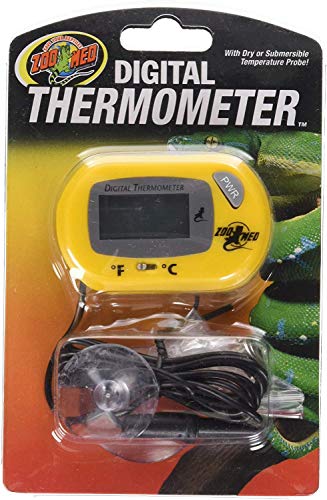
Zoo Med Digital Thermometer with Probe
Accurate warm-hide temperature monitoring — the probe placed inside the gecko's warm hide gives actual experienced temperature, not room temperature.
Temperature Profile: Banded vs Leopard Gecko
Side-by-side comparison
| Feature | Banded Gecko | Leopard Gecko |
|---|---|---|
| Warm Side Surface | 80–85°F | ★85–90°F |
| Basking Peak | ~85°F max | ★Up to 94°F |
| Cool Side Air | ★68–75°F | 75–80°F (typical) |
| Nighttime | ★65–72°F | 70–75°F |
Our Take: Banded geckos require significantly cooler temperatures than leopard geckos—using the same setup causes chronic overheating, hiding, poor feeding, and shortened lifespan.
UVB Requirements
Banded geckos are nocturnal and do not require UVB lighting for survival. In the wild, they emerge after dark and never bask under direct sun. Unlike desert heliotherms such as uromastyx or collared lizards, banded geckos synthesize vitamin D3 through their diet and nocturnal UVB exposure is minimal.
That said, a low-output UVB lamp can be beneficial if offered:
- Use a T5 HO 2% or T8 5.0 UVB tube — the lowest output options available
- Run it 10–12 hours per day to simulate natural photoperiod
- Mount at least 16–18 inches from the enclosure floor — you want incidental, not intense UVB
- Provide plenty of hides so the gecko can choose whether to be in UVB light or not
If you don't use UVB, ensure your vitamin D3 supplementation is consistent (see Supplements section below). Many healthy captive banded geckos have been kept for years without UVB — but it's an easy added benefit if you're already lighting the enclosure.
Humidity
Banded geckos need a dry warm side and a slightly moist cool side. Their Southwestern desert habitat is arid overall, but rocky terrain creates microhabitats with localized moisture — crevices, under-rock refugia, and canyon walls hold humidity that the open desert does not.
| Zone | Target Humidity |
|---|---|
| Warm side | 20–35% |
| Cool side (ambient) | 35–50% |
| Inside moist hide | 60–70% |
The Moist Hide — Non-Negotiable
Every banded gecko setup needs one moist hide on the cool side filled with slightly damp coconut fiber or sphagnum moss. This microhabitat serves multiple critical functions:
- Prevents retained shed (dysecdysis) — a common issue in banded geckos
- Provides a moisture refuge the gecko uses voluntarily
- Reduces overall humidity stress on the enclosure — the gecko gets moisture where it needs it
Check and re-dampen the moist hide every 2–3 days. Replace substrate inside it monthly to prevent mold.
Pro Tip: During shed cycles (every 4–6 weeks for adults), increase the moist hide moisture slightly. A banded gecko that soaks in its moist hide longer than usual is about to shed — this is normal. Do not disturb it.
Substrate
Use 2–3 inches of a mix of fine sand and organic topsoil (70% sand, 30% topsoil) or compressed coconut fiber. Banded geckos are active burrowers that need a substrate they can dig through to thermoregulate and hide.
Good Substrate Options
- **[Fine reptile sand + organic topsoil mix](https://www.amazon.com/dp/B0002DIZKC?tag=krawlo-20 Best naturalistic option; mimics their rocky sandy desert habitat
- **[Compressed coconut fiber (coco coir)](https://www.amazon.com/dp/B01CN8ZRYA?tag=krawlo-20 Clean, dust-free, holds moisture well in the moist hide area; good for juveniles
- Paper towels: Quarantine setups only — easy to monitor fecal output and hydration in new animals
Substrates to Avoid
- Calcium sand: Marketed as digestible but a real impaction risk; avoid
- Cedar or pine shavings: Toxic aromatic oils
- Reptile carpet: Catches toenails, harbors bacteria, causes injury
- Bare glass/tile only: No burrowing opportunity; causes chronic stress
Spot-clean daily. Full substrate change every 3–4 months.
Hides and Enrichment
Every banded gecko enclosure needs at minimum three hides: one warm, one cool, and one moist (cool side). Without adequate hides, a banded gecko will be permanently stressed — they are a crevice-dwelling species that relies on complete concealment to feel safe.
- Warm hide: Positioned over the UTH; a small rock-style hide or cork bark flat
- Cool hide: Opposite end; any smooth-interior hide the gecko fits snugly in
- Moist hide: Cool side; tupperware with a hole cut in the lid, filled with damp coconut fiber
Add cork bark flats, flat slate pieces, and small sandstone rocks for surface texture and visual cover. Banded geckos explore their enclosure at night and will use every hide and structure you provide.
Pro Tip: Size hides to fit the gecko snugly — not with excess room. A gecko that fits tightly in its hide feels more secure. If the gecko can turn around freely, the hide is too big.
Diet and Feeding
Banded geckos are strictly insectivorous. Unlike blue tongue skinks or bearded dragons, they eat no fruit, vegetables, or plant matter. Their entire diet in the wild consists of insects, spiders, small scorpions, and similar invertebrates.
In captivity, feed only appropriately sized prey — the golden rule is nothing wider than the space between the gecko's eyes.
Primary Feeders
- Crickets — widely available, good nutritional profile; must be gut-loaded before feeding
- Dubia roaches — best staple feeder; soft-bodied, nutritious, lower in chitin than crickets
- Mealworms — acceptable 2–3 times per week; higher fat than roaches or crickets
- Black soldier fly larvae (BSFL / Nutrigrubs) — excellent calcium-to-phosphorus ratio; a great rotation feeder
- Small discoid roaches — legal in all US states (dubia are banned in Florida)
Occasional Feeders
- Waxworms — high fat; treat only, 1–2 per week maximum
- Hornworms — high water content; useful during shedding or dehydration
- Silkworms — nutritious; offer if available
- Small house geckos or pinky mice: Never — banded geckos are invertebrate specialists
Feeding Schedule
| Age | Prey Size | Frequency | Amount |
|---|---|---|---|
| Juvenile (0–4 months) | Pinhead cricket / small BSFL | Daily | 5–8 insects per feeding |
| Subadult (4–12 months) | Small cricket / small roach | Every other day | 6–10 insects |
| Adult (12+ months) | Medium cricket / small roach | Every 2–3 days | 4–8 insects |
Feed at dusk or after lights out — banded geckos are nocturnal and most active in the first 2–3 hours after dark. Offering food during the day when they're in a torpid state results in ignored prey and uneaten crickets that can stress or even bite your gecko.
Remove any uneaten feeders from the enclosure after 15–20 minutes. Crickets left overnight will disturb and bite the gecko.
Supplements
| Supplement | Frequency | Notes |
|---|---|---|
| Calcium without D3 | Every feeding (if using UVB) | Dust lightly on insects |
| Calcium with D3 | Every other feeding (if no UVB) | Don't over-supplement D3 |
| Multivitamin | 1–2× per week | Repashy Supervite or Arcadia EarthPro-A |
Gut-load your feeders 24 hours before use with collard greens, sweet potato, or a commercial gut-load. An empty cricket provides almost no nutrition.
Pro Tip: Banded geckos are small and easy to overfeed. A healthy adult should have a slightly rounded tail base — not a pencil-thin tail (underweight) and not a fat, bumpy tail (obese). The tail is their fat reserve; monitor it as a body condition indicator.

Repashy Calcium Plus All-In-One Supplement
An all-in-one calcium + vitamin D3 + multivitamin supplement ideal for banded geckos kept without dedicated UVB lighting — simplifies the supplementation routine.

Josh's Frogs Dubia Roaches (Small)
Best staple feeder for banded geckos — soft-bodied with better calcium-to-phosphorus ratio than crickets, less noise, and no risk of biting a sleeping gecko.
Water and Hydration
Always provide a small, shallow water dish on the cool side. The dish should be shallow enough that a small gecko cannot drown — a bottle cap or a 1–2 inch wide ceramic dish works well. Change water daily.
Banded geckos also drink water droplets from surfaces. A light misting of the cool-side glass wall every 2–3 days provides drinking droplets. Do not mist the warm side or the substrate broadly — you want the warm end to stay dry.
Signs of dehydration include: wrinkled skin, sunken eyes, retained shed that won't release, and lethargy. Dehydrated geckos can be given a 15-minute lukewarm soak in shallow water.
Handling and Temperament
Banded geckos are more skittish than leopard geckos, particularly as juveniles. Their small size and fragile tails make rough handling genuinely dangerous. With patient, consistent handling starting young, captive-bred individuals can become calm and curious — but they'll never be as handleable as a well-tamed leopard gecko.
See our full reptile taming guide for the general methodology. For banded geckos specifically:
Taming Protocol
- First 2 weeks: No handling. Let the gecko settle, eat consistently, and associate you with food delivery only.
- Week 3: Hand-feed with tongs — let the gecko approach your hand.
- Week 4+: Short handling sessions of 2–3 minutes, at dusk when the gecko is naturally active. Scoop from below — never grab from above.
- Always handle low — over a carpet or bed. A dropped banded gecko from waist height can suffer serious injury.
The Tail-Wave During Handling
If your gecko tail-waves while you're handling it, stop and return it to the enclosure. This is a clear communication: it's uncomfortable. Forced continued handling after this signal leads to tail autotomy (voluntary tail drop) — a defense mechanism that stresses the animal significantly. The tail does regenerate, but it grows back as cartilage, not bone, and looks different from the original.
Signs of Stress
- Persistent tail-waving whenever approached
- Hiding for 24+ hours after feeding is established
- Refusing food for more than 2 weeks (outside of breeding season)
- Dark, stress coloration
- Rapid breathing at rest
Shedding
Adult banded geckos shed every 4–6 weeks; juveniles shed more frequently as they grow rapidly. The process typically completes overnight — banded geckos usually eat their shed skin, which is normal.
Signs shed is coming: dull skin, slightly blue-gray coloration over the eyes, decreased appetite for 1–2 days before shed.
Retained shed (dysecdysis) is the most common husbandry-related health issue in banded geckos. Watch for:
- Retained skin on toe tips — constricts blood flow and can cause toe loss
- Retained eye caps — causes vision problems
- Patches of dull, stuck skin on the body
To assist stuck shed: 15–20 minute soak in shallow lukewarm water, then gently roll the skin off with a damp cotton swab. Never forcibly pull retained eye caps — see a vet.
Prevention: maintain the moist hide, ensure humidity on the cool side is 35–50%, and add rough-textured surfaces like cork bark for the gecko to rub against.
Common Health Issues
Most banded gecko health problems stem directly from husbandry errors — primarily overheating, inadequate humidity, or incorrect feeding.
Metabolic Bone Disease (MBD)
Cause: Calcium deficiency or vitamin D3 deficiency (rare in banded geckos if supplemented correctly, since they don't require intense UVB). Signs: Soft jaw, kinked spine, tremors, pathological fractures, difficulty walking. Prevention: Calcium supplementation every feeding + multivitamin 1–2× per week. Treatment: Requires a reptile vet — calcium injections, husbandry correction.
Dysecdysis (Retained Shed)
Cause: Low humidity, no moist hide, rough surfaces lacking, or underlying illness. Signs: Patches of old skin remaining days after shed; discoloration on toes or eyes. Prevention: Moist hide always available; cool side humidity 35–50%. Treatment: Lukewarm soaks + damp cotton assistance for body shed; vet for eye caps.
Cryptosporidiosis
Cause: Cryptosporidium protozoan parasite — common in wild-caught geckos, rare in well-sourced captive-bred stock. Signs: Chronic weight loss despite eating well, bloating, regurgitation, wasting. Diagnosis and Treatment: Requires PCR fecal test at a reptile vet; no reliable cure — supportive care. Prevention: Buy captive-bred only. Quarantine new geckos for 60–90 days in a separate room with separate equipment.
Respiratory Infections
Cause: Chronically cool temperatures, combined with high humidity. Signs: Wheezing, open-mouth breathing, mucus at nostrils, lethargy. Prevention: Keep the warm side at 80–85°F and ensure the warm side stays dry.
Pro Tip: Set up a relationship with a reptile vet before you need one. The Association of Reptilian and Amphibian Veterinarians (ARAV) directory lists qualified specialists by region. Exotic vets who primarily treat dogs and cats are often not equipped to treat reptile conditions accurately.
Banded Gecko vs. Leopard Gecko — Key Differences
New keepers frequently apply leopard gecko husbandry to banded geckos — a mistake that leads to chronic overheating and stress. Here's the comparison:
| Parameter | Western Banded Gecko | Leopard Gecko |
|---|---|---|
| Warm side surface temp | 80–85°F | 88–92°F |
| Cool side air temp | 68–75°F | 75–80°F |
| Adult size | 4–6 inches | 8–11 inches |
| Minimum enclosure | 10 gal | 20 gal |
| Handleability | Moderate (more skittish) | High (very docile) |
| UVB required | No (beneficial) | No (beneficial) |
| Native range | American Southwest | South/Central Asia |
| Tail autotomy risk | Higher (very fragile tail) | Moderate |
If you're choosing between the two species, visit our leopard gecko care guide and leopard gecko vs. crested gecko comparisons. Banded geckos are the better pick if you want a native species in a compact setup; leopard geckos are better for keepers who want a more handleable gecko.
Recommended Gear
Zoo Med Reptitherm Under Tank Heater
The ideal primary heat source for banded geckos — provides gentle belly heat without the intense basking spots that overheat this cool-desert species.
Inkbird ITC-306A Reptile Thermostat
Regulates the UTH to prevent overheating — critical for a species where the difference between 82°F and 92°F is the difference between comfort and chronic stress.

Eco Earth Compressed Coconut Fiber Substrate
Clean, dust-free substrate that holds moisture in the moist hide while staying dry elsewhere — ideal for the banded gecko's humidity gradient needs.
Repashy Calcium Plus All-In-One Supplement
An all-in-one calcium + vitamin D3 + multivitamin supplement ideal for banded geckos kept without dedicated UVB lighting — simplifies the supplementation routine.
Josh's Frogs Dubia Roaches (Small)
Best staple feeder for banded geckos — soft-bodied with better calcium-to-phosphorus ratio than crickets, less noise, and no risk of biting a sleeping gecko.
Exo Terra Snake & Reptile Hideout (Small)
Snug, smooth-interior hide that banded geckos use as a secure daytime retreat — the curved interior mimics rock crevice conditions that make this species feel safe.
Zoo Med Digital Thermometer with Probe
Accurate warm-hide temperature monitoring — the probe placed inside the gecko's warm hide gives actual experienced temperature, not room temperature.
Frequently Asked Questions
Beginner-friendly with caveats. Their small enclosure size and simple diet make logistics easy, but their temperature requirements are unusual — they run cooler than most pet geckos (warm side 80–85°F vs. 88–92°F for leopard geckos). Intermediate reptile keepers will find them straightforward. First-time reptile owners may find a leopard gecko more forgiving.
References & Sources
Related Articles

What Do Turtles Eat? A Complete Keeper's Guide
Wondering what turtles eat? Our complete guide covers the ideal diet for your pet turtle, from commercial foods and proteins to essential veggies and supplements.

Turtle vs Tortoise: 5 Key Differences Explained for Keepers
Confused about the turtle vs tortoise debate? Our expert guide breaks down their habitat, diet, shells, and anatomy to help you understand these amazing chelonians.

White-Lipped Python Care: The Complete Guide
White-lipped python care explained: rainbow iridescence, high-humidity tropical setup, feeding nippy juveniles, and everything that makes them unlike any other python. Start here.