Turtle Tank Setup Guide: Step-by-Step for Beginners
Complete turtle tank setup guide -- tank size, filtration, basking areas, UVB lighting, water temperature, and substrate for aquatic turtles.


✓Recommended Gear
TL;DR: A proper turtle tank requires a tank sized to at least 10 gallons per inch of shell length (75–100 gallons for most adult sliders), a canister filter rated for 2–3× the tank volume, a basking platform with a 75–100W lamp reaching 85–90°F, and a T5 HO UVB 5.0 or 10.0 bulb. Water temperature should be kept at 75–80°F for common species like red-eared sliders. Under-filtering and inadequate UVB are the two most common setup mistakes.
Setting up a proper turtle tank is more involved than a fish aquarium but less complicated than many people fear. The key differences from fish keeping: you need a basking area, much stronger filtration, UVB lighting, and appropriate water temperatures. This guide covers everything you need to set up a tank for common aquatic turtles like red-eared sliders, yellow-bellied sliders, and painted turtles.
What You Need: Complete Equipment List
Before buying your turtle, gather all equipment:
- Tank -- appropriately sized (see below)
- Filtration -- rated for 2-3x tank volume
- Basking platform -- large enough for the turtle to fully emerge
- Basking lamp -- 75-100W incandescent or halogen
- UVB light -- T5 HO 5.0 or 10.0
- Aquarium heater -- submersible, with thermometer
- Thermometers -- one for water, one for basking spot
- Substrate (optional -- some setups are bare-bottom)
- Dechlorinator -- for tap water
Complete Equipment Checklist
Everything you need to get started
Step 1: Choose the Right Tank Size
The most common mistake: Buying a tank that's too small.
- Hatchlings: Start with a 40-gallon breeder -- they grow surprisingly fast
- Adults (8-10"): 75-100 gallon minimum; use the "10 gallons per inch of shell" guideline
- Large adults (10-12"+): 100-150 gallon or outdoor pond
[75-100 gallon aquarium tanks](https://www.amazon.com/dp/B09WYXZ61D?tag=krawlo-20 are the standard for single adult slider-type turtles. Stock tanks and Rubbermaid tubs are economical alternatives for adults.
Tank Size by Life Stage
Hatchlings
40-gallon breeder
Grow quickly; plan for upgrade
Adults (8-10")
75-100 gallons minimum
Use 10 gal/inch of shell guideline
Large Adults (10-12"+)
100-150 gallons
Or outdoor pond
Step 2: Install the Filtration
Turtles produce far more waste than fish of similar size. Under-filtering is a leading cause of sick turtles.
Recommended: [Canister filter rated for 2-3x tank volume](https://www.amazon.com/dp/B0DCJ59TDZ?tag=krawlo-20 -- if you have a 75-gallon tank, use a filter rated for 150-225+ gallons.
Alternatively, a hang-on-back power filter rated significantly above your tank volume works for smaller tanks.
Establish beneficial bacteria before adding your turtle (nitrogen cycle): run the filter for 2-4 weeks with an ammonia source.
Step 3: Set Up the Basking Area
Sliders and painted turtles bask extensively -- they need to fully emerge from the water and warm up under a lamp. A basking area where they stay wet or can only partially emerge is inadequate.
Basking platform options:
- Commercial floating turtle dock -- easiest to install; self-leveling
- Stack of flat rocks -- natural looking; must be stable
- Cork bark platform on supports -- naturalistic
Basking lamp: A 75-100W basking spotlight positioned 8-12 inches above the platform. Target 90-95 degrees F at the platform surface.
Step 4: Install UVB Lighting
UVB is essential for shell health (vitamin D3 synthesis). Without it, metabolic bone disease and soft shell develop over time.
- [T5 HO 5.0 or 10.0 UVB bulb](https://www.amazon.com/dp/B0C5MQ7MSJ?tag=krawlo-20 positioned over the basking area
- Replace every 6 months (UVB output degrades before visible light does)
- Run 10-12 hours per day on a timer
UVB Lighting Essentials
Bulb Type
T5 HO 5.0 or 10.0
Essential for vitamin D3 synthesis
Placement
Over basking area
Prevents metabolic bone disease
Replacement Schedule
Every 6 months
Output degrades before visible light
Daily Duration
10-12 hours
Use timer for consistency
Step 5: Heat the Water
Target 74-78 degrees F for common slider and painted turtle species. Cold water causes immune suppression and poor digestion.
Use a [submersible aquarium heater](https://www.amazon.com/dp/B07H2KRWFF?tag=krawlo-20 rated for your tank volume, with an external thermometer to verify. Guard the heater with a [heater guard/cover](https://www.amazon.com/dp/B07J9QJ7YX?tag=krawlo-20 -- turtles can crack unprotected heaters.
Step 6: Substrate (Optional)
Bare-bottom tanks are easiest to clean. If you want substrate:
- [Large river rocks](https://www.amazon.com/dp/B0C6D2FH3J?tag=krawlo-20 -- too large to ingest; easy to clean
- Large-grain gravel -- must be large enough not to be ingested (marble-size or larger)
- Fine sand/gravel -- higher impaction risk; harder to clean
Avoid small gravel and decorative stones that can be accidentally swallowed.
Step 7: Add Dechlorinated Water
Treat tap water with [reptile-safe water conditioner](https://www.amazon.com/dp/B00ESBHMXK?tag=krawlo-20 before adding to the tank. Chlorine and chloramines are toxic to turtles.
Fill to a depth of at least 2x the turtle's shell length -- turtles need enough depth to swim, turn, and right themselves if flipped.
Ongoing Maintenance
- Water changes: 25-30% weekly, regardless of filter
- Filter cleaning: Monthly (rinse media in tank water, not tap water)
- Water testing: Ammonia and nitrite should be 0; nitrate below 20 ppm
- Basking area: Clean weekly -- turtles defecate there too
Common Setup Mistakes
- Tank too small -- will cause stunted growth and behavioral stress
- Filter too weak -- ammonia buildup causes serious illness
- No basking area -- turtles can't thermoregulate without it
- No UVB -- shell and bone problems develop over months
- Water too cold -- immune suppression and poor digestion
Avoid general reptile keeping pitfalls with our lizard owner mistakes guide.
Top 5 Setup Mistakes to Avoid
What you need to know
Tank too small causes stunted growth and behavioral stress
Filter too weak leads to ammonia buildup and serious illness
No basking area prevents thermoregulation
No UVB causes shell and bone problems over months
Water too cold suppresses immunity and digestion
Recommended Gear

75-100 Gallon Aquarium Tank
Standard adult slider tank size -- bigger is always better
Check Price on Amazon
Canister Filter for Turtle Tank
Rate for 2-3x your tank volume -- turtles produce far more waste than fish
Check Price on AmazonFloating Turtle Basking Dock
Self-adjusting with water level -- turtle must fully emerge from water
Check Price on Amazon
T5 HO UVB Lamp for Turtles
Essential for shell health -- replace every 6 months
Check Price on Amazon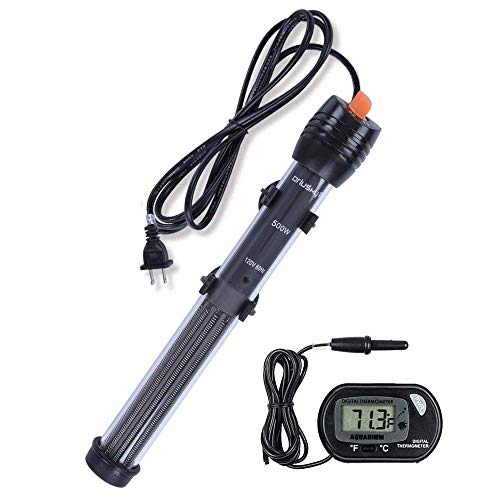
Submersible Aquarium Heater
Maintains 74-78F water temperature -- use a heater guard to prevent breakage
Check Price on AmazonFrequently Asked Questions
Minimum 2x the turtle's shell length in depth; adults need 75-100+ gallon total volume.
References & Sources
Related Articles

Red Eared Slider Turtle Care: A Comprehensive Guide
Learn everything you need to know about caring for your red eared slider turtle, from housing to feeding and health.

Yellow-Bellied Slider Care: Complete Turtle Guide
Yellow-bellied slider care guide -- tank setup, basking, filtration, water temperature, feeding, and health for this popular aquatic turtle.

Sulcata Tortoise Care: The Giant Comes With Responsibilities
Sulcata tortoise care guide -- the third largest tortoise in the world needs space, heat, and a lifetime commitment. Complete care guide inside.