Leopard Gecko Lifespan: How Long Do They Really Live?
Leopard geckos live 15–20+ years in captivity. Learn the 5 factors that determine lifespan, male vs. female differences, and the exact care protocol for 20+ years.


✓Recommended Gear
TL;DR: Captive leopard geckos (Eublepharis macularius) typically live 15–20 years, with males trending longer than females, and documented records reaching 28+ years — far exceeding their 5–8 year wild lifespan. The five key factors determining lifespan are temperature (warm-side floor 88–92°F), diet quality, UVB/lighting, stress levels, and veterinary care. A chronically cold leopard gecko cannot properly digest food, leading to bacterial gut infections that are the leading cause of early death.
You're considering a leopard gecko — or you already have one — and you want to know: how long will this animal be in your life?
The honest answer is a long time. Longer than most people expect. A well-kept leopard gecko will routinely outlive dogs, cats, and most other common pets.
Bottom line up front: Captive leopard geckos typically live 15–20 years, with many reaching 20+ and documented cases hitting 28 years. Wild individuals rarely exceed 5–8 years. The gap is entirely down to husbandry.
If you're new to keeping these animals, read our complete leopard gecko care guide first — lifespan and husbandry are inseparable topics.
How Long Do Leopard Geckos Live? (By the Numbers)
The average well-kept leopard gecko lives 15–20 years. Males trend slightly longer than females due to the energy demands of egg production in breeding females.
| Setting | Typical Lifespan | Record/Outlier |
|---|---|---|
| Wild (E. macularius) | 5–8 years | ~10 years |
| Average captive | 15–20 years | — |
| Record captive (male) | — | 28+ years |
| Record captive (female) | — | ~22 years |
Pro Tip: When buying a leopard gecko, treat it like adopting a 15-year commitment. Many rescue organizations report geckos surrendered at 10+ years old by owners who hadn't planned for long-term care costs.
Wild vs. Captive: Why the Gap Is So Large
In Pakistan, Afghanistan, and northwest India — the natural range of Eublepharis macularius — leopard geckos face predators, temperature extremes, food scarcity, parasites, and disease. Surviving to age 5 is an achievement.
In captivity, you eliminate nearly every one of those threats. The result: an animal that can express its full biological lifespan potential.
Leopard Gecko Lifespan by the Numbers
Wild Lifespan
5–8 years
Predators, temperature extremes, parasites
Average Captive
15–20 years
Proper husbandry makes the difference
Record (Male)
28+ years
Documented cases in captivity
Record (Female)
~22 years
Breeding females average shorter lifespans
The 5 Factors That Determine Lifespan
Lifespan is not fixed — it's a function of five controllable variables. Nail these, and 20 years is realistic. Miss them, and you'll see chronic illness and early death.
1. Temperature (The Single Biggest Factor)
Leopard geckos are ectotherms. Every metabolic process — digestion, immune function, cellular repair — depends on body temperature.
Target ranges:
- Warm side floor temp: 88–92°F (31–33°C)
- Cool side: 72–77°F (22–25°C)
- Nighttime: No lower than 65°F (18°C)
A gecko kept too cold cannot digest food properly. Undigested food rots in the gut, causing bacterial infections. Chronic low temperatures are the leading cause of premature death in captive leopard geckos.
Always verify with a digital thermometer probe placed directly on the substrate surface. Dial gauges mounted on glass walls are notoriously inaccurate.
For a full breakdown of heating equipment and setup, see our leopard gecko heating guide.
Pro Tip: Use an [under-tank heat mat](https://www.amazon.com/dp/B07WC83SQZ?tag=krawlo-20 controlled by a thermostat — never plug a heat mat directly into the wall. Unregulated heat mats have burned geckos to death and caused house fires. A $20–$30 thermostat is cheap insurance.
2. Diet Quality and Supplementation
Metabolic bone disease (MBD) is the most common nutrition-related killer of captive leopard geckos. It is caused by calcium deficiency, vitamin D3 deficiency, or incorrect calcium:phosphorus ratios — all preventable.
Core supplementation protocol:
- Calcium without D3: Available at all times in a small dish (geckos self-regulate)
- Calcium with D3: Dust feeders 2x per week for juveniles, 1–2x per week for adults
- Multivitamin: Dust feeders 1x per week
Feeder variety also matters. A gecko fed only mealworms for years will develop deficiencies. Rotate with dubia roaches, crickets, black soldier fly larvae, and occasional waxworms as treats. See our leopard gecko diet guide for a full feeding schedule by age.
According to PetMD's leopard gecko care sheet, calcium supplementation is non-negotiable for long-term health — and [Repashy Calcium Plus](https://www.amazon.com/dp/B08B57H9MG?tag=krawlo-20 remains one of the most reliable all-in-one options on the market.
3. Hydration and Humidity
Leopard geckos look like desert animals, but they're from semi-arid rocky regions — not barren sand dunes. Chronic dehydration causes kidney failure, retained sheds, and shortened lifespan.
- Always provide a shallow water dish, refreshed every 1–2 days
- Maintain a moist hide (humidity inside: 70–80%) using damp sphagnum moss or coconut fiber
- During shedding, mist the moist hide lightly to support the process
Pro Tip: If you notice your gecko's skin looking dull or retained shed building up on the toes, the moist hide needs to be damper. Stuck shed on toes cuts off circulation and can cause toe loss within days.
4. Stress Levels
Chronic stress suppresses immune function. A gecko that is permanently stressed will get sick more often and die younger.
Common stress sources:
- Housing multiple geckos together — females can sometimes be co-housed, but males NEVER. Even females often do better solo.
- Inadequate hides — each gecko needs at minimum a warm hide, a cool hide, and a moist hide
- Over-handling — especially in the first 4–6 weeks after bringing a new gecko home
- Visible predators (cats, dogs) staring at the tank constantly
- Inadequate photoperiod — leopard geckos need 10–12 hours of light/dark cycling year-round
5. Veterinary Care
Most leopard gecko deaths from parasites, respiratory infections, and MBD are 100% survivable if caught early. The problem is that most owners don't notice symptoms until the gecko is critically ill.
Signs to watch for:
- Weight loss despite eating
- Lethargy outside of normal cool-season slowdown
- Wheezing, open-mouth breathing
- Swollen limbs, jaw, or abdomen
- Watery or foul-smelling droppings
- Retained shed after 48 hours
Finding a reptile-experienced vet before you have an emergency is critical. Not all general vets are equipped to treat reptiles. The Association of Reptilian and Amphibian Veterinarians (ARAV) maintains a member directory you can search by zip code.
The 5 Factors That Determine Lifespan
What you need to know
Temperature (88–92°F warm side) controls digestion and immune function — the #1 factor
Diet quality and calcium supplementation prevent metabolic bone disease
Hydration + moist hide (70–80% humidity) prevents kidney failure and retained sheds
Stress levels from co-housing, inadequate hides, or poor photoperiod suppress immunity
Routine veterinary care catches parasites, infections, and MBD before they're critical
Male vs. Female Lifespan: What the Data Shows
Males generally live longer than females. This is well-established in the captive leopard gecko community and likely comes down to breeding stress.
| Sex | Average Captive Lifespan | Notes |
|---|---|---|
| Male | 15–20+ years | Less metabolic stress, no egg production |
| Female (non-breeding) | 15–18 years | Comparable to males if not bred |
| Female (active breeding) | 10–15 years | Each clutch costs significant calcium and energy |
If you plan to keep a female but not breed her, she can live just as long as a male — but watch for infertile egg binding (dystocia), which can occur even in females that have never been with a male. Provide a lay box with moist substrate regardless.
Pro Tip: Overbreeding females is one of the most common causes of premature death in the hobby. If you breed, limit females to 2–3 clutches (4–6 eggs) per season and give them at least one year off between breeding seasons.
Male vs. Female Lifespan
Side-by-side comparison
| Feature | Male | Female |
|---|---|---|
| Average Lifespan | ★15–20+ years | 15–18 years (non-breeding) / 10–15 years (breeding) |
| Metabolic Stress | ★Lower — no egg production | High during breeding seasons |
| Special Considerations | Watch for aggression with other males | Can get egg-bound even without males present |
Our Take: Males typically live 2–5 years longer due to lower metabolic demands, but non-breeding females can match male lifespans.
Lifespan by Age Stage
Understanding what's normal at each life stage helps you catch problems early.
| Stage | Age | Key Characteristics |
|---|---|---|
| Juvenile | 0–6 months | Rapid growth, eat daily, fragile |
| Sub-adult | 6–18 months | Growth slows, establish feeding rhythm |
| Adult | 18 months–10 years | Peak health, most stable |
| Senior | 10–15+ years | Metabolism slows, may eat less |
| Geriatric | 15+ years | Reduced activity, may lose weight gradually |
Signs of Normal Aging (Not Illness)
As your gecko ages past 10 years:
- Reduced appetite is normal — seniors may go from eating 5x/week to 2–3x/week
- Slower movement — no longer the sprinting juvenile you remember
- Color fading — normal melanin changes, not disease
- Muscle mass loss — some is normal; dramatic loss warrants a vet visit
The key distinction: gradual change over months is aging; sudden change over days or weeks is illness.
How to Maximize Your Leopard Gecko's Lifespan
The protocol that gets geckos to 20+ years consistently:
- Thermostat-regulated under-tank heat mat — warm floor surface 88–92°F, verified with probe thermometer
- Full supplementation routine — calcium dish always out, D3 and multivitamin dusted on schedule
- Three hides minimum — warm, cool, moist
- Fresh water daily — in a shallow dish they can't drown in
- Diverse feeder rotation — never a single-feeder diet
- Annual vet check — fecal exam for parasites, weight check, general assessment
- Solo housing — except intentional breeding pairs under supervision
- Consistent photoperiod — 12 hours light, 12 hours dark via a timer
- Low-stress environment — minimal handling in first month, no stressors in their sightline
- Weight log — weigh monthly on a digital kitchen scale; sudden drops are the earliest illness signal
Pro Tip: A healthy adult leopard gecko weighs 45–90 grams (females) or 55–100 grams (males). The tail should be plump — a skinny tail means the gecko is drawing on fat reserves. This is your single best visual health indicator.
Products That Support a Long, Healthy Life
The right gear makes a measurable difference. These are the tools that consistently appear in setups owned by geckos that live 20+ years.
Recommended Gear

Inkbird Thermostat Controller
Plug-and-play thermostat that keeps heat mats at a precise floor temperature. Prevents overheating and eliminates the #1 cause of gecko burns.
Check Price on Amazon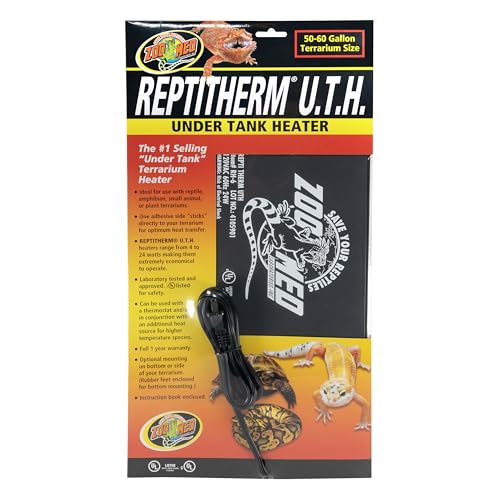
Zoo Med Repti Therm Under Tank Heater
Reliable under-tank heat mat that provides the belly heat leopard geckos need for digestion and immune function.
Check Price on AmazonDigital Reptile Thermometer with Probe
Dial thermometers mounted on tank glass can read 10–15°F lower than actual floor temperatures. A probe thermometer placed on the substrate surface gives accurate readings.
Check Price on Amazon
Repashy Calcium Plus LoD Supplement
An all-in-one supplement that simplifies the calcium/D3/multivitamin routine. Reduces the risk of MBD and covers most nutritional bases in one product.
Check Price on Amazon
Josh's Frogs Sphagnum Moss
Long-fiber sphagnum moss holds moisture perfectly for the humid hide without getting soggy or molding quickly. Critical for healthy sheds.
Check Price on AmazonFluker's Buffet Blend Adult Variety Pack
Rotating feeder types prevents nutritional gaps that a single-feeder diet causes over years. Variety is one of the underrated longevity factors.
Check Price on AmazonAmerican Weigh Scales Digital Kitchen Scale
Monthly weight tracking is the earliest warning system for illness in leopard geckos. A 10% drop in weight over 4–6 weeks warrants a vet visit.
Check Price on AmazonFrequently Asked Questions
With proper husbandry, leopard geckos typically live 15–20 years in captivity. Males may reach 20–28 years. This makes them one of the longest-lived reptile pets available to hobbyists.
References & Sources
- https://www.petmd.com/reptile/how-long-do-leopard-geckos-live
- https://www.thesprucepets.com/leopard-geckos-1236911
- https://reptifiles.com/wp-content/uploads/2020/10/Leopard-Gecko-Care-Sheet-PDF.pdf
- https://www.petmd.com/reptile/leopard-gecko-care-sheet
- https://www.petmd.com/reptile/leopard-geckos-all-you-need-know
Related Articles

Leopard Gecko Mouth Rot: Signs, Treatment and Prevention
Learn leopard gecko mouth rot warning signs, veterinary treatment, supportive enclosure care, and prevention. Avoid home antibiotics or antiseptics without guidance.

Do Leopard Geckos Like to Be Held? Find Out Here
Discover whether leopard geckos enjoy being held, how to handle them safely, and signs they’re comfortable. Plus, expert tips for building trust with your pet.

African Fat Tail Gecko Care: The Complete Guide
Master african fat tail gecko care with this complete guide covering housing, humidity, heating, diet, and the beginner mistakes that send geckos to the vet.