Best Uromastyx Heating: Equipment & Setup Guide
Get the best uromastyx heating setup right. Basking temps, equipment picks, thermostat types, and the mistakes that hurt most desert lizards.


This article contains affiliate links. If you make a purchase through these links, we may earn a small commission at no extra cost to you. See our affiliate disclosure for details.
We recommend 5 picks here. Our top choice is the Halogen PAR38 Flood Basking Bulb (100W–150W) — check price and availability below.
How we choose: we compare published specifications against the care requirements in veterinary and species-care literature, and weigh those against what long-time keepers report. We do not test products ourselves and we do not restate Amazon star ratings. The 3 sources behind this article are listed at the bottom.
Quick Comparison
- Primary Function
- Directional Basking Heat
- Light Emission
- Yes
- Wattage Range
- 100W-150W
- Temperature Control Required
- Yes (Dimmer Thermostat)
- Approximate Price Range
- $15-30
- Primary Function
- Nighttime Ambient Heat
- Light Emission
- No
- Wattage Range
- 100W
- Temperature Control Required
- Yes (On/Off Thermostat)
- Approximate Price Range
- $20-40
- Primary Function
- Automated Temperature Control
- Light Emission
- N/A (Controls light-emitting sources)
- Wattage Range
- N/A (Controls wattage)
- Temperature Control Required
- N/A (Is the controller)
- Approximate Price Range
- $40-80
- Primary Function
- Surface Temperature Measurement
- Light Emission
- N/A (Measurement tool)
- Wattage Range
- N/A (No wattage)
- Temperature Control Required
- N/A (Measurement tool)
- Approximate Price Range
- $15-35
- Primary Function
- Deep Penetrating Supplemental Heat
- Light Emission
- No
- Wattage Range
- 50W-80W
- Temperature Control Required
- Yes (Dimmer or Pulse Thermostat)
- Approximate Price Range
- $30-50
Prices are estimates only. Actual prices on Amazon may vary.
Uromastyx are desert lizards built for extreme heat. They come from North Africa, the Middle East, and parts of South Asia — places where rocks hit 140°F (60°C) at midday. If you want your uromastyx to eat well, grow properly, and stay healthy, you need to replicate that heat at home.
This guide covers the best uromastyx heating equipment, how to build a proper thermal gradient, how to measure temperatures accurately, and the mistakes that trip up most new keepers.
Why Heating Is So Critical for Uromastyx
Most reptiles need warmth to function. Uromastyx take it to another level. They need basking spots that are genuinely hot — 120–130°F at the surface. Here's why.
Uromastyx are hindgut fermenters. They eat mostly seeds, flowers, and leafy greens. That plant matter needs to ferment in their gut to become digestible. Fermentation only works efficiently at high temperatures. When the basking spot is too cool, digestion slows down. Over time, this causes chronic health problems.
A uromastyx kept at 105°F will survive — but it won't thrive. You'll notice poor appetite, slow growth, and constant lethargy. Dial in the heat, and these lizards transform into active, engaging pets.
Uromastyx Temperature Requirements
Basking surface
120–130°F (49–54°C)
Hot side ambient
95–105°F (35–41°C)
Cool side ambient
80–85°F (27–29°C)
Nighttime (lights off)
65–75°F (18–24°C)
Our Top Picks
Quick recommendations
Intense, directional heat that mimics desert sunlight; cheap and widely available
Heat without light preserves sleep cycle; essential for homes dropping below 65°F
Infrared-B and C wavelengths provide deep-penetrating heat beyond skin surface
Silent, even ambient heat for 6×2×2+ setups; 15,000+ hour lifespan
Thermostat Types Compared
Side-by-side comparison
| Feature | On/Off Thermostat | Dimmer/Proportional Thermostat |
|---|---|---|
| Temperature Control | Binary on/off at set point | ★Gradual power reduction for stability |
| Best For | CHEs and heat panels | Halogen basking bulbs |
| Flickering | Can flicker with incandescent bulbs | ★Smooth dimming prevents flickering |
| Bulb Lifespan | Moderate wear from cycling | ★Extended by smooth operation |
Our Take: Use dimmer on basking bulb (smooth heat); on/off on nighttime CHE (simple and reliable).
Detailed Reviews
1. Halogen PAR38 Flood Basking Bulb (100W–150W)
Best Overall
Halogen PAR38 Flood Basking Bulb (100W–150W)
Pros
- •Produces intense, directional heat essential for proper uromastyx basking.
- •Supports efficient digestion and thermoregulation due to high heat output.
- •Widely available at hardware stores, avoiding specialized reptile markups.
- •Cost-effective and straightforward to replace when needed.
Cons
- •Requires a dimmer thermostat to prevent dangerous temperature spikes.
- •Emits visible light, making it unsuitable for nighttime heating.
- •Can contribute to lower ambient humidity if not properly managed.
Bottom Line
Halogen flood bulbs are the gold standard for creating intense, directional basking heat, critical for uromastyx digestion and thermoregulation. Their broad availability and cost-effectiveness make them a practical choice for reptile keepers.
2. Ceramic Heat Emitter (100W)
Best Value
Ceramic Heat Emitter (100W)
Pros
- •Produces heat without visible light, preventing disruption to sleep cycles.
- •Effective for maintaining consistent ambient temperatures during the night.
- •Durable and offers a long operational lifespan.
- •Increases overall enclosure temperature without significantly altering humidity.
Cons
- •Does not provide UVB or visible light spectrums.
- •Becomes very hot to the touch and requires a protective cage to prevent burns.
- •Does not create a directed basking spot, only contributes to ambient heat.
Bottom Line
Ceramic heat emitters provide radiant warmth without emitting light, making them perfect for maintaining stable overnight temperatures. They are crucial for preventing dangerous temperature drops in environments where ambient temperatures fall below optimal nighttime ranges.
3. Dimmer Thermostat for Reptiles
Editor's Choice
Dimmer Thermostat for Reptiles
Pros
- •Automatically regulates bulb output, maintaining stable and safe temperatures.
- •Prevents dangerous overheating and ensures consistent thermal gradients.
- •Extends the lifespan of heating bulbs by preventing power surges and constant on/off cycling.
- •Crucial for accurately replicating natural thermal environments.
Cons
- •Adds to the initial setup cost of the heating system.
- •Requires careful initial calibration to achieve desired temperature ranges.
- •Not typically suitable for on/off cycling of non-light emitting heat sources like CHEs.
Bottom Line
A dimmer thermostat is an indispensable safety device that automatically regulates the output of basking bulbs, preventing hazardous temperature fluctuations. It ensures consistent thermal gradients while extending the lifespan of heating elements by reducing stress from constant on/off cycling.
4. Infrared Temperature Gun
Budget Pick
Infrared Temperature Gun
Pros
- •Provides accurate, instantaneous surface temperature readings.
- •Essential for verifying critical basking spot temperatures of 120-130°F.
- •Allows measurement without disturbing the animal or enclosure setup.
- •More reliable than air probes or stick-on thermometers for surface temperatures.
Cons
- •Measures surface temperature, not ambient air temperature.
- •Requires manual checks rather than continuous, automated monitoring.
- •Can be overlooked by new keepers, leading to inaccurate thermal assessment.
Bottom Line
An infrared temperature gun provides instant and accurate surface temperature readings, which is vital for monitoring the basking area in a uromastyx enclosure. This tool allows keepers to verify that critical basking surface temperatures meet the species' specific physiological needs, unlike less reliable air probes.
5. Reptile Deep Heat Projector (50W–80W)
Premium Pick
Reptile Deep Heat Projector (50W–80W)
Pros
- •Emits IR-B and IR-C, promoting deeper tissue penetration and physiological benefits.
- •Provides a more natural and complete thermal spectrum when used alongside a basking bulb.
- •Does not emit visible light, suitable for 24/7 use if ambient warmth is needed.
- •Beneficial for muscle tissue and overall physiological function, especially in larger setups.
Cons
- •Higher initial cost compared to standard ceramic heat emitters.
- •Typically functions as a supplemental heat source, not a primary basking bulb.
- •Requires a separate thermostat or dimmer for accurate temperature control.
Bottom Line
Deep Heat Projectors emit beneficial infrared-B and infrared-C wavelengths, penetrating deeply into reptile tissues to provide comprehensive warmth. When combined with a halogen basking bulb, they create a more natural and complete thermal environment, particularly advantageous for larger enclosures.
Uromastyx Temperature Requirements
Here's the thermal breakdown you need to hit every day:
| Zone | Target Temperature |
|---|---|
| Basking surface | 120–130°F (49–54°C) |
| Hot side ambient | 95–105°F (35–41°C) |
| Cool side ambient | 80–85°F (27–29°C) |
| Nighttime (lights off) | 65–75°F (18–24°C) |
These aren't rough guidelines — they're the conditions that allow uromastyx physiology to work properly. Don't estimate. Measure.
The Best Heating Equipment for Uromastyx
There's no single best product that works for every setup. Your enclosure size, room temperature, and budget all factor in. Here's what actually works.
Halogen Basking Bulbs: Your Core Heat Source
For the basking spot, nothing beats a high-wattage halogen flood bulb. Halogens produce intense, directional heat that mimics sunlight hitting a desert rock. They're cheap, widely available, and easy to replace.
Look for PAR38-style halogen floods in the 75W–160W range depending on enclosure size. A 40-gallon tank typically needs 75–100W. A 4x2x2 enclosure usually needs 100–150W. Always verify the basking surface temperature with a temperature gun and adjust bulb height until you hit your target.
Mount the bulb above a flat slate tile or rock. Those materials absorb and radiate heat naturally — just like the desert rock surfaces uromastyx seek out in the wild.
Best for: Primary basking heat in all enclosure sizes Lifespan: 1,000–2,000 hours; plan to replace every 3–6 months
Ceramic Heat Emitters: Silent Nighttime Heat
A [ceramic heat emitter (CHE)](https://www.amazon.com/dp/B096JWWQMC?tag=krawlo-20 generates heat without any light. That makes it perfect for nighttime heating — you don't want a bright bulb disrupting your lizard's sleep cycle.
Most healthy adult uromastyx tolerate nighttime temperatures dropping to 65–70°F. If your home stays above that overnight, you may not need a CHE at all. But if temperatures in your home dip below 65°F in winter, a 100W CHE on a thermostat is the right solution.
Always pair a CHE with a thermostat. Without one, it can overheat your enclosure faster than you'd expect.
Best for: Nighttime heating in cool homes Lifespan: 5+ years with proper use
Deep Heat Projectors: Advanced Thermal Quality
Deep heat projectors (DHPs) are newer technology worth knowing about. They emit infrared-B and infrared-C wavelengths — the same deep-penetrating heat produced by the sun. Standard halogen bulbs mostly emit infrared-A, which heats the skin surface but doesn't penetrate into muscle tissue as deeply.
A [reptile deep heat projector](https://www.amazon.com/dp/B0C44VQ3LV?tag=krawlo-20 placed on the warm side adds quality heat alongside your basking bulb. Many experienced uromastyx keepers use one alongside a halogen bulb for a more complete thermal environment. It runs 24/7 on a dimmer thermostat.
DHPs cost more upfront than a CHE, but they last much longer and provide a qualitatively better heat experience for your lizard.
Best for: Supplemental daytime heat, especially in large enclosures Lifespan: 10,000+ hours
Radiant Heat Panels: Best for Large Enclosures
For large enclosures (6x2x2 and up), radiant heat panels are worth considering. They mount to the ceiling of the enclosure and radiate gentle, even heat downward — similar to how the sun warms the ground across a wide area.
Radiant heat panels work best as a secondary heat source. Use one for ambient warmth on the hot side and a halogen bulb for the focal basking spot. This two-source setup gives you precise control over both ambient and basking temperatures independently.
(Estimates only — actual prices on Amazon may vary.) Panels typically run $80–$200 depending on wattage. They're silent, long-lasting, and very reliable.
Best for: Ambient heating in large custom enclosures Lifespan: 15,000+ hours
Thermostats: Not Optional
Don't skip this. A thermostat is the single most important piece of equipment in your heating setup.
Thermostats regulate temperature automatically. Without one, your CHE or heat panel will run at full power indefinitely. Even a relatively cool night, an unregulated 150W CHE inside a well-insulated enclosure can drive temperatures dangerously high.
There are three main thermostat types:
On/off thermostats cut power when the set temperature is reached and restore it when temps drop. They work great with CHEs and heat panels. Some flicker when used with incandescent bulbs.
Dimmer/proportional thermostats reduce power gradually to maintain a steady temperature. They're the better choice for basking bulbs — smooth dimming extends bulb life and prevents flickering that stresses some lizards.
Pulse thermostats rapidly cycle power on and off. Best for CHEs; not recommended for halogen or incandescent bulbs.
For most uromastyx setups: use a dimmer thermostat on your basking bulb and an on/off thermostat on your nighttime CHE. That combination covers all your temperature management needs.
Not sure which thermostat to buy? Our best digital thermostats for reptiles guide breaks down the top-rated options with a full comparison.
How to Measure Temperature Correctly
Wrong measurements lead to wrong setups. Here's how to measure accurately.
Use a Temperature Gun for Basking Surfaces
A temperature gun (infrared thermometer) is the only reliable way to measure the basking surface. You point it at the rock and get an instant reading in seconds.
Stick-on dial thermometers and probe thermometers measure air temperature — not surface temperature. A probe hanging near the basking area might read 105°F air temp while the actual rock surface hits 125°F. Don't guess. Use a temperature gun every time you adjust your setup.
Digital Probe Thermometers for Ambient Temps
Use a digital probe thermometer to track the cool side ambient temperature. Place one probe at cool-end substrate level — about 4 inches off the ground. This tells you the temperature your uromastyx retreats to when it needs to cool down.
If the cool side consistently runs above 90°F, your lizard has nowhere to escape the heat. That's a real problem.
Setting Up the Thermal Gradient: Step by Step
Here's how to build a proper gradient from scratch:
-
Mount your basking bulb at one end of the enclosure, 10–14 inches above a flat slate tile or rock slab. Tilt it slightly so heat concentrates on the basking surface.
-
Test the basking surface with your temperature gun. Adjust bulb height until you hit 120–130°F. Higher = cooler, lower = hotter.
-
Check the hot side ambient temperature about 6–8 inches from the basking spot at substrate level. It should read 95–105°F.
-
Check the cool side ambient at substrate level. It should read 80–85°F.
-
Turn off all lights and measure nighttime temperature after 30 minutes. Above 65°F? You're fine. Below? Install a CHE on a thermostat set to 68°F.
-
Add your UVB bulb — a T5 HO UVB lamp spanning 50–75% of the enclosure length. UVB works alongside your heating, not instead of it.
Get all of this right before you introduce your uromastyx. It's much easier to fix temperatures in an empty enclosure.
Enclosure Size and Heating
Your heating choices scale with enclosure size. Here's a practical guide:
| Enclosure Size | Basking Bulb Wattage | Notes |
|---|---|---|
| 40 gallon | 75–100W halogen | Single hot spot setup |
| 4x2x2 | 100–150W halogen | Full thermal gradient possible |
| 6x2x2 | 150–200W or heat panel | Consider dual heat sources |
| 8x4x4+ | 200W+ or multiple bulbs | Two basking spots recommended |
Adult uromastyx need at minimum a 4x2x2 enclosure. Juveniles can start in a 40-gallon. Whatever size you use, always maintain a temperature gradient — don't heat the whole enclosure evenly.
Common Heating Mistakes to Avoid
Using an Under-Tank Heater
Under-tank heaters go under the enclosure floor. Uromastyx thermoregulate from above — the sun heats their backs, not their bellies. Belly heat doesn't help them.
They also dig. Deep substrate insulates against under-tank heat, making it largely useless anyway. Under-tank heaters make sense for some species — our Best Heating Mat for Bearded Dragon guide explains when belly heat works — but for uromastyx, skip them entirely.
Not Getting the Basking Spot Hot Enough
This is the most common mistake by far. Keepers worry about burning their lizard, so they aim for 105–110°F. The result is a lizard that refuses to eat or seems permanently cold.
Trust the biology. Uromastyx in the wild actively choose surfaces at 130–140°F. Their bodies are designed for it. A proper basking spot won't hurt them.
Heating the Entire Enclosure Evenly
If your whole enclosure runs at 95°F with no cool retreat, your uromastyx can't self-regulate. It needs a genuine temperature gradient — from hot basking zone down to a cooler retreat area. Even on hot days, always maintain a cool side at 80–85°F.
Relying Solely on Room Temperature at Night
If your home cools significantly in winter, room temperature alone won't cut it. You need active nighttime heating via CHE on a thermostat. Don't assume the enclosure stays warm enough — measure it.
Seasonal Heating Adjustments
Uromastyx naturally slow down in winter — a process called brumation (a reptile equivalent of hibernation). Some experienced keepers allow a slight seasonal temperature reduction: basking spot down to 110–115°F, cool side down to 75–78°F, and photoperiod shortened to 10–11 hours of light per day.
This isn't required. Many captive uromastyx skip brumation entirely with no health issues. But if you're interested in breeding, a winter cool-down cycle can stimulate breeding behavior in spring.
If you keep a consistent year-round setup, just maintain stable temperatures and a 12–14 hour photoperiod throughout.
Hatchlings vs. Adults: Same Rules Apply
Hatchlings and juveniles need the same temperatures as adults. Don't reduce the basking spot for young uromastyx — they need the heat just as much, if not more, for proper growth. What changes is enclosure size and the number of hides available. But the thermal targets stay exactly the same.
Final Heating Checklist
Before introducing your uromastyx, verify all six of these:
- Basking surface: 120–130°F confirmed with temperature gun
- Hot side ambient: 95–105°F
- Cool side ambient: 80–85°F
- Nighttime temperature: stays above 65°F, or CHE installed and tested
- Thermostat installed and calibrated
- UVB bulb installed alongside heating
Get these right and your uromastyx will reward you with strong appetite, active basking behavior, and a long healthy life. Nearly every husbandry problem in uromastyx traces back to temperature. Nail the heat first and the rest of the care becomes much easier.
If you're building out your reptile knowledge more broadly, our best pet lizards for beginners guide covers heating requirements for several popular species — useful context if you're keeping or considering multiple lizards.
Our Final Verdict
Halogen PAR38 Flood Basking Bulb (100W–150W)
Halogen flood bulbs are the gold standard for creating intense, directional basking heat, critical for uromastyx digestion and thermoregulation. Their broad availability and cost-effectiveness make them a practical choice for reptile keepers.
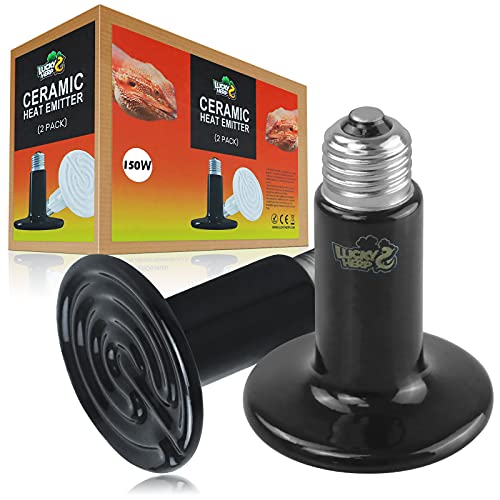
Ceramic Heat Emitter (100W)
Ceramic heat emitters provide radiant warmth without emitting light, making them perfect for maintaining stable overnight temperatures. They are crucial for preventing dangerous temperature drops in environments where ambient temperatures fall below optimal nighttime ranges.
Dimmer Thermostat for Reptiles
A dimmer thermostat is an indispensable safety device that automatically regulates the output of basking bulbs, preventing hazardous temperature fluctuations. It ensures consistent thermal gradients while extending the lifespan of heating elements by reducing stress from constant on/off cycling.
Frequently Asked Questions
Use a high-wattage halogen basking bulb (100–150W) positioned over a flat rock at one end of the enclosure. Aim for a basking surface temperature of 120–130°F, a hot side ambient of 95–105°F, and a cool side retreat of 80–85°F. Always verify temps with a temperature gun and use a dimmer thermostat on your basking bulb.
References & Sources
Related Articles

Best Red Footed Tortoise Heating Setup (2026 Guide)
Struggling to get your Red-Footed Tortoise's temperatures right? Our expert guide covers the best heating options, setup tips, and why a thermostat is essential.

Best Pac Man Frog Heating: A Complete Setup Guide (2026)
Struggling with the best Pac Man frog heating setup? Our expert guide covers the safest, most effective methods, from heat mats to CHEs, ensuring your frog's health and comfort.

Best Mexican Black Kingsnake Heating: Top Picks
Find the best Mexican black kingsnake heating setup with our expert guide. Learn target temps, top products, and thermostat tips for a healthy snake.