Best Mexican Black Kingsnake Heating: Top Picks
Find the best Mexican black kingsnake heating setup with our expert guide. Learn target temps, top products, and thermostat tips for a healthy snake.


This article contains affiliate links. If you make a purchase through these links, we may earn a small commission at no extra cost to you. See our affiliate disclosure for details.
We recommend 5 picks here. Our top choice is the Reptile Under-Tank Heater (UTH) — check price and availability below.
How we choose: we compare published specifications against the care requirements in veterinary and species-care literature, and weigh those against what long-time keepers report. We do not test products ourselves and we do not restate Amazon star ratings. The 3 sources behind this article are listed at the bottom.
Quick Comparison
- Primary Function
- Digestion & Belly Heat
- Visible Light Output
- No
- Recommended Thermostat Type
- On/Off
- Typical Placement
- Under-tank (external)
- Estimated Price Range
- $15-30
- Primary Function
- Ambient Air Warming
- Visible Light Output
- No
- Recommended Thermostat Type
- Pulse-Proportional/Dimming
- Typical Placement
- Overhead (internal)
- Estimated Price Range
- $20-40
- Primary Function
- Temperature Regulation
- Visible Light Output
- N/A
- Recommended Thermostat Type
- N/A (is the thermostat)
- Typical Placement
- External Unit (probe internal)
- Estimated Price Range
- $40-100
- Primary Function
- Deep Tissue Basking
- Visible Light Output
- No
- Recommended Thermostat Type
- Pulse-Proportional/Dimming
- Typical Placement
- Overhead (internal)
- Estimated Price Range
- $40-60
- Primary Function
- Temperature Monitoring
- Visible Light Output
- N/A
- Recommended Thermostat Type
- N/A (is monitoring)
- Typical Placement
- Internal (probe at spot)
- Estimated Price Range
- $10-20
Prices are estimates only. Actual prices on Amazon may vary.
Mexican black kingsnakes are some of the most stunning snakes in the hobby. That deep, glossy, jet-black scales make them hard to resist. But keeping them healthy long-term comes down to one thing more than almost anything else: getting the heating right.
These snakes come from the hot, arid Sonoran Desert of northwestern Mexico and the southwestern United States. In the wild, they move between warm sunny spots and cool shaded retreats throughout the day. Your job in captivity is to replicate that temperature gradient — a warm end, a cool end, and everything in between.
Get this right, and your snake will thrive for 20+ years. Get it wrong, and you'll be dealing with digestive problems, respiratory infections, and a chronically stressed animal.
This guide covers the best Mexican black kingsnake heating options, the exact temperatures you need to hit, and the gear that'll get you there.
Why Heating Matters So Much
Reptiles are ectotherms. They don't generate their own body heat — they depend entirely on their environment to regulate their temperature. This process is called thermoregulation, and it affects almost every biological function a snake has.
When your Mexican black kingsnake gets too cold, its metabolism slows down. It can't digest food properly. Undigested food rots in the gut and causes serious health issues. Its immune system weakens, making it vulnerable to infections. Long-term cold stress is one of the leading causes of disease in captive snakes.
Overheating is equally dangerous. Temperatures above 90°F (32°C) cause rapid stress, and sustained high temps can be fatal. Snakes don't pant or sweat — they have very limited ways to cool down if the environment is too hot.
The solution is a proper thermal gradient. Your snake moves toward the warm end to digest and warm up, and retreats to the cool end to rest and regulate. This is natural behavior, and it only works if both ends of the enclosure are within the right temperature range.
Target Temperature Zones
Warm Side (Air)
80–85°F
27–29°C ambient
Warm Hide (Floor)
85–88°F
29–31°C surface
Cool Side (Air)
70–75°F
21–24°C ambient
Nighttime Drop
65–70°F
18–21°C natural
Heating Equipment Options
Everything you need to get started
Why Heating Matters
What you need to know
Reptiles are ectotherms—they cannot generate their own body heat and depend on the environment
Cold stress slows metabolism, impairs digestion, and weakens immune response
Temperatures above 90°F cause rapid stress and can be fatal
A proper thermal gradient allows natural thermoregulation and long-term health
Detailed Reviews
1. Reptile Under-Tank Heater (UTH)
Best Value
Reptile Under-Tank Heater (UTH)
Pros
- •Provides direct, concentrated belly heat crucial for digestion.
- •Can be easily affixed to the exterior of a glass or plastic enclosure.
- •Available in various sizes to suit different enclosure dimensions.
- •Energy-efficient for targeted heating when correctly sized.
Cons
- •Requires a thermostat for safe and accurate temperature regulation.
- •Does not effectively heat ambient air temperatures.
- •Can pose burn risks if not properly insulated or regulated.
Bottom Line
An essential heat source for creating a warm spot with critical belly heat, aiding in digestion for Mexican black kingsnakes. It must always be used in conjunction with a reliable thermostat to prevent overheating and ensure safety.
2. Ceramic Heat Emitter (CHE)
Editor's Choice
Ceramic Heat Emitter (CHE)
Pros
- •Emits heat without producing any light, suitable for 24/7 use.
- •Increases ambient air temperature effectively, especially in larger setups.
- •Long-lasting and durable ceramic construction.
- •Can help maintain a stable thermal gradient in colder environments.
Cons
- •Requires a thermostat (pulse-proportional works best) to prevent overheating.
- •Does not provide deep heat penetration like DHPs.
- •Can dry out the air if not balanced with proper humidity.
Bottom Line
A reliable source for consistent ambient heat, particularly useful for maintaining crucial overnight temperatures without disturbing the snake's day/night cycle. It is highly recommended for larger enclosures or supplementing UTHs in cooler environments.
3. Reptile Thermostat (On/Off or Pulse-Proportional)
Best Overall
Reptile Thermostat (On/Off or Pulse-Proportional)
Pros
- •Essential safety device for preventing overheating and underheating.
- •Maintains precise and consistent target temperatures.
- •On/Off models are ideal for resistive heaters like UTHs.
- •Pulse-proportional models prevent temperature fluctuations with radiant heaters (CHEs, DHPs).
- •Extends the lifespan of heating elements by preventing constant on/off cycling.
Cons
- •Initial cost can be a barrier for some keepers.
- •Requires proper placement of the probe for accurate readings.
- •Can fail if not a quality unit, posing a risk to the animal.
Bottom Line
An absolutely critical piece of equipment for any reptile heating setup, ensuring that all heat sources operate within safe and optimal temperature ranges. Investing in a high-quality thermostat is paramount for the long-term health and safety of your Mexican black kingsnake.
4. Arcadia Deep Heat Projector
Premium Pick
Arcadia Deep Heat Projector
Pros
- •Emits infrared-A and infrared-B, mimicking natural sun warmth for deeper tissue penetration.
- •Promotes more natural thermoregulation and basking behaviors.
- •Provides heat without emitting visible light, suitable for 24/7 use.
- •More efficient at directing heat downward compared to CHEs.
Cons
- •Higher initial cost compared to UTHs or basic CHEs.
- •Requires a dimming or pulse-proportional thermostat for optimal control.
- •Needs a ceramic lamp holder and heat-resistant fixture.
Bottom Line
An advanced heating option that delivers a naturalistic form of infrared heat, encouraging more active and appropriate thermoregulatory behaviors. Its deep penetrating warmth is highly beneficial for the overall health and well-being of Mexican black kingsnakes.
5. Digital Reptile Probe Thermometer
Budget Pick
Digital Reptile Probe Thermometer
Pros
- •Provides precise and continuous real-time temperature readings.
- •Critical for verifying thermostat accuracy and heat source performance.
- •Easy to use with a simple digital display.
- •Allows for accurate monitoring of the exact temperature at the warm hide floor.
Cons
- •May require battery replacement periodically.
- •Probe can be dislodged by active snakes if not secured properly.
- •Measures only one spot, requiring multiple units for a full gradient picture.
Bottom Line
An indispensable tool for any reptile owner, providing essential, real-time temperature data to ensure all heating equipment is functioning correctly. Accurate temperature monitoring is as crucial as the heating devices themselves for preventing health issues.
Understanding Their Natural Habitat
The Mexican black kingsnake (Lampropeltis getula nigrita) is native to the Sonoran Desert. This is one of North America's hottest, driest environments — daytime surface temps can exceed 100°F in summer.
But here's the thing: Mexican black kingsnakes are smart about heat. They're crepuscular, meaning they're most active at dawn and dusk. During the hottest parts of the day, they retreat underground, under rocks, or into burrows where temperatures are significantly cooler.
Nighttime temps in the Sonoran Desert can drop dramatically — sometimes into the 60s°F even in summer. In winter, the region experiences genuine cold, and these snakes brumate (a reptile form of hibernation).
What this tells us about captive care:
- They need a warm side, but not scalding hot
- They need a genuine cool retreat
- Nighttime temperature drops are natural and healthy
- They're more tolerant of cooler temps than many tropical species
Temperature Ranges You Need to Hit
Here are the target temperatures for a Mexican black kingsnake enclosure, based on care resources from Reptifiles and The BioDude:
| Zone | Target Temperature |
|---|---|
| Warm side (ambient air) | 80–85°F (27–29°C) |
| Warm hide (floor surface) | 85–88°F (29–31°C) |
| Cool side (ambient air) | 70–75°F (21–24°C) |
| Nighttime drop | 65–70°F (18–21°C) |
Notice that the warm side tops out around 85°F. Mexican black kingsnakes don't need the intense basking temperatures that bearded dragons or monitors require. They're a temperate species, not tropical. Many keepers overheat their enclosures by applying tropical snake logic to a desert colubrid — don't make that mistake.
The Best Heating Options for Mexican Black Kingsnakes
There's no single "right" way to heat a Mexican black kingsnake enclosure. The best setup depends on your enclosure size, your ambient room temperature, and your budget. Here's a breakdown of every heating method worth considering.
Under-Tank Heaters (UTH)
An under-tank heater (UTH) is a heating pad that sits underneath the enclosure. It warms the substrate from below, creating belly heat — which is exactly how snakes warm up in the wild (by lying on sun-warmed rocks and soil).
For Mexican black kingsnakes, a UTH is one of the most popular primary heat sources. It's affordable, reliable, and effective for enclosures up to about 4 feet in length. Place it under the warm side of the enclosure, covering roughly one-third of the floor area — never the entire bottom.
(Estimates only — actual prices on Amazon may vary.) A quality UTH runs about $20–$40. They're one of the most cost-effective heating tools available.
Browse reptile under-tank heaters on Amazon to find the right size for your enclosure. Sizing matters — get one that covers roughly 1/3 of the enclosure floor on the warm side.
One important limitation: UTHs only heat the substrate directly. In a large enclosure or a cold room, they may not bring ambient air temperatures up to the 80–85°F range on the warm side. In those cases, you'll need a supplemental overhead heat source.
Always — always — use a thermostat with a UTH. Without one, the pad can overheat to dangerous levels. More on thermostats below.
Ceramic Heat Emitters (CHE)
A ceramic heat emitter (CHE) screws into a standard dome lamp fixture and produces heat without any light. That makes it ideal for 24/7 use, including nighttime.
CHEs work by heating the air — they raise ambient temperatures on the warm side. They're especially valuable in larger enclosures (4+ feet) where a UTH alone won't get ambient temps into the 80–85°F range. They're also a great choice if your room gets cold at night.
(Estimates only — actual prices on Amazon may vary.) CHEs cost $10–$20 each, plus $15–$30 for a quality dome fixture. That puts the total setup at $25–$50 — very reasonable.
Find [ceramic heat emitters on Amazon](https://www.amazon.com/dp/B096JWWQMC?tag=krawlo-20 Choose wattage based on enclosure size and room temperature — 50W to 100W covers most setups.
Pair your CHE with a pulse-proportional or on/off thermostat. Without one, a CHE will overheat your enclosure fast.
Deep Heat Projectors (DHP)
The deep heat projector is newer technology from Arcadia that's become increasingly popular in the reptile keeping community. Instead of just warming the air like a CHE, a DHP emits infrared-A and infrared-B radiation — the same wavelengths that the sun produces.
These wavelengths penetrate deep into muscle tissue, warming your snake from the inside out. It's a more naturalistic type of warmth than what a CHE produces. Many keepers report that snakes thermoregulate more actively under a DHP, which suggests the animals respond differently to this type of heat.
(Estimates only — actual prices on Amazon may vary.) DHPs are pricier — around $60–$90 — but many reptile keepers consider them a worthwhile long-term investment for the health benefits they provide.
Search for [deep heat projectors on Amazon](https://www.amazon.com/dp/B0BSHS996Y?tag=krawlo-20 The 50W version is a good starting point for medium-sized enclosures.
Like all heat sources, DHPs must be used with a thermostat — specifically a pulse-proportional model.
Radiant Heat Panels
Radiant heat panels mount inside the top of an enclosure and radiate heat downward. They're efficient and low-profile, which is why they're popular in large rack systems and breeding operations.
For a single Mexican black kingsnake enclosure, a radiant panel is usually overkill unless you have a very large setup (5+ feet) or you're running multiple enclosures in the same room. They're worth knowing about, but most hobbyist keepers won't need them.
What About Heat Rocks?
Don't use them. Heat rocks heat unevenly, with hot spots that can cause serious thermal burns before your snake even realizes it's too hot. They've injured countless reptiles over the years. The reptile keeping community widely agrees: heat rocks are not safe. Skip them entirely.
Thermostats: Non-Negotiable
Every heat source you use needs to be plugged into a thermostat. This isn't optional — it's one of the most important pieces of equipment in your entire setup.
A thermostat monitors the temperature inside your enclosure via a probe and automatically adjusts power to the heat source to maintain your target temperature. Without one, your UTH or CHE simply keeps getting hotter, with no upper limit.
There are three main thermostat types:
| Type | Best For | How It Works |
|---|---|---|
| On/Off (mat stat) | UTHs | Switches power fully on or off to maintain setpoint |
| Pulse-proportional | CHEs, DHPs | Pulses power in short bursts to fine-tune temp |
| Dimmer/rheostat | Radiant panels | Reduces voltage to lower output |
For most Mexican black kingsnake setups:
- Use an on/off thermostat with a UTH
- Use a pulse-proportional thermostat with a CHE or DHP
- If you're running both a UTH and a CHE, look for a dual-channel model that controls two heat sources simultaneously
For a full comparison of the best options, our Best Reptile Thermostats review breaks down the top picks at every price point.
Setting Up Your Temperature Gradient
Once you have your heating equipment, here's how to set it up properly.
Step 1 — Place your heat sources correctly Put your UTH under the warm end of the enclosure (not centered — off to one side). If you're using a CHE or DHP, mount it directly above the warm end.
Step 2 — Connect everything to thermostats Plug each heat source into its thermostat. Place the thermostat probe on the floor surface of the warm hide — this is the most important temperature to control, since it's where your snake will spend most of its time.
Step 3 — Run for 24 hours before adding your snake Let everything stabilize with no animal inside. You want consistent, predictable temperatures before your snake moves in.
Step 4 — Measure both ends of the gradient Use a second thermometer on the cool side. You need to verify the full gradient — warm side AND cool side — is within target range.
Step 5 — Adjust and fine-tune Tweak your thermostat setpoints until both ends fall within the ranges listed in the temperature table above. Small adjustments matter — a 5°F difference can affect how actively your snake thermoregulates.
Monitoring Temperature Accurately
Good temperature monitoring is just as important as good heating equipment. You can't manage what you don't measure.
Digital probe thermometers are the most affordable and reliable option for most keepers. Place the probe on the floor of the warm hide. These give you a continuous reading without disturbing your snake.
Infrared temperature guns let you spot-check surface temperatures anywhere in the enclosure instantly. Point it at the substrate, the hide, the cool side floor — wherever you want a reading. Great for quick verification.
Digital thermometer/hygrometer combos let you monitor temperature and humidity at the same time. Mexican black kingsnakes don't need high humidity (30–50% is fine), but it's helpful to keep an eye on it.
Check out reptile probe thermometers on Amazon to find one that suits your setup.
Common Heating Mistakes to Avoid
Even experienced keepers make these errors. Here's what to watch out for.
No thermostat on the UTH — The most common mistake. A UTH without a thermostat will overheat. Some keepers assume UTHs are "safe" without one. They're not.
Probe in the wrong location — If your thermostat probe is floating in the air instead of on the floor of the warm hide, your actual floor temperatures may be 10–15°F higher than your setpoint. Always probe the surface where your snake will actually be.
No cool side — If your entire enclosure is warm, your snake can't thermoregulate. A cool side below 76°F is essential. If your cool side is too warm, reduce heating output or add more ventilation.
Assuming room temperature is enough — If your room drops below 65°F at night or in winter, you need active heating. Don't assume ambient room temperatures will stay warm enough year-round.
Too much heat — Some keepers see "desert snake" and assume they need scorching temps. Mexican black kingsnakes are crepuscular animals that avoid the hottest part of the day. Aim for 85°F on the warm side — not 95°F.
Seasonal Adjustments and Brumation
In their native habitat, Mexican black kingsnakes experience a genuine winter cooling period. Many keepers replicate this in captivity by allowing a brumation period — gradually lowering temperatures in fall and keeping the snake cooler for 6–8 weeks.
This isn't strictly required for a pet snake, but it can support long-term health and — if you're interested in breeding — is often necessary to trigger reproductive behavior.
If you choose to cool your snake:
- Stop feeding 2–3 weeks before cooling begins (so food has time to digest)
- Gradually reduce temperatures over 1–2 weeks rather than dropping all at once
- Target nighttime temps of 55–60°F, daytime 65–70°F during brumation
- Keep fresh water available at all times
- Resume normal temperatures gradually in late winter/early spring
Putting It All Together
For most Mexican black kingsnake keepers, the ideal heating setup looks like this:
- UTH under the warm side, plugged into an on/off thermostat
- CHE or DHP above the warm end for ambient air heat (especially in larger enclosures or cold rooms)
- Thermostat for each heat source, with probes positioned on the warm hide floor
- Digital thermometer on the cool side to verify the full gradient
- Two hides — one on the warm end, one on the cool end
If you want to compare heating pad options in more detail, our guide on the best reptile heating pad options covers top brands and sizing recommendations. And if you're pairing an overhead heat source with your setup, our best heat lamps for reptiles comparison will help you choose the right wattage and fixture.
Mexican black kingsnakes are hardy, adaptable animals that do well in captivity when their basic needs are met. Nail the heating, and you'll have a stunning, healthy snake that thrives for decades.
Our Final Verdict
Reptile Under-Tank Heater (UTH)
An essential heat source for creating a warm spot with critical belly heat, aiding in digestion for Mexican black kingsnakes. It must always be used in conjunction with a reliable thermostat to prevent overheating and ensure safety.
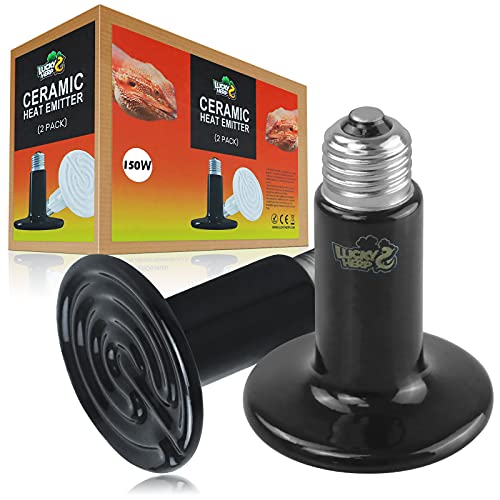
Ceramic Heat Emitter (CHE)
A reliable source for consistent ambient heat, particularly useful for maintaining crucial overnight temperatures without disturbing the snake's day/night cycle. It is highly recommended for larger enclosures or supplementing UTHs in cooler environments.

Reptile Thermostat (On/Off or Pulse-Proportional)
An absolutely critical piece of equipment for any reptile heating setup, ensuring that all heat sources operate within safe and optimal temperature ranges. Investing in a high-quality thermostat is paramount for the long-term health and safety of your Mexican black kingsnake.
Frequently Asked Questions
The warm side should be 80–85°F (27–29°C) ambient, with the warm hide floor surface reaching 85–88°F (29–31°C). The cool side should stay at 70–75°F (21–24°C). Nighttime temperatures can drop to 65–70°F, which mimics their natural environment.
References & Sources
- https://reptifiles.com/kingsnake-care-sheet/
- https://www.thebiodude.com/blogs/snake-caresheets/mexican-black-kingsnake-care-sheet-lampropeltis-getula-nigrita?srsltid=AfmBOoq5Jx_Ewmo-jq_QzEr6B3SGelLIh07j51fM0QZuO69xDZqpHiIi
- https://www.zenhabitats.com/blogs/reptile-care-sheets-resources/king-snake-general-reptile-care-guide-reptifiles?srsltid=AfmBOooEsJY7SCPRQUPwJPp-5XfOLsBplDZ3G3Ghi01mPChNS35dmN44
Related Articles

Best Mexican Black Kingsnake Food: Full Feeding Guide
Discover the best food for Mexican black kingsnakes: prey sizing, feeding schedules, frozen vs. live, and tips for picky eaters. Science-backed feeding guide.

Best Mexican Black Kingsnake Substrate: Top 5 Picks
Find the best Mexican black kingsnake substrate for burrowing, humidity, and hygiene. Covers ReptiChip, aspen, bioactive mixes, and what to avoid.

Best Mexican Black Kingsnake Enclosure: Top Picks
Find the best Mexican black kingsnake enclosure for your snake. We cover top tank picks, ideal size, heating, substrate, and hides to keep your MBK thriving.