Best Tokay Gecko Enclosure: Top Picks & Setup Guide
Find the best tokay gecko enclosure for your arboreal lizard. We cover size, materials, temperature, humidity, and top picks to get it right.


This article contains affiliate links. If you make a purchase through these links, we may earn a small commission at no extra cost to you. See our affiliate disclosure for details.
We recommend 5 picks here. Our top choice is the Exo Terra Tall Glass Terrarium (24" × 18" × 36") — check price and availability below.
How we choose: we compare published specifications against the care requirements in veterinary and species-care literature, and weigh those against what long-time keepers report. We do not test products ourselves and we do not restate Amazon star ratings. The 4 sources behind this article are listed at the bottom.
Quick Comparison
- Product Type
- Enclosure
- Primary Function
- Habitat
- Tokay Gecko Suitability
- Adult Minimum Size
- Estimated Price Range
- $200-350
- Product Type
- Heating Control
- Primary Function
- Temperature Regulation
- Tokay Gecko Suitability
- Safety/Efficiency
- Estimated Price Range
- $25-75
- Product Type
- Humidity Control
- Primary Function
- Humidity Automation
- Tokay Gecko Suitability
- Essential for Humidity
- Estimated Price Range
- $70-150
- Product Type
- Decor/Enrichment
- Primary Function
- Climbing/Hiding
- Tokay Gecko Suitability
- Key Enrichment
- Estimated Price Range
- $15-40
- Product Type
- Lighting
- Primary Function
- Vitamin D3 Synthesis
- Tokay Gecko Suitability
- Long-term Health
- Estimated Price Range
- $20-45
Prices are estimates only. Actual prices on Amazon may vary.
Tokay geckos are stunning — but they're not your average beginner lizard. These bold, feisty geckos are nocturnal climbers that need a very specific setup to stay healthy and thrive in captivity. Getting the best tokay gecko enclosure right is the most important first step you can take.
The right enclosure gives your tokay plenty of vertical space, proper humidity, secure ventilation, and lots of places to hide and climb. In this guide, we break down exactly what to look for — and share our top picks so you can get set up with confidence.
What Makes the Best Tokay Gecko Enclosure?
Tokay geckos (Gekko gecko) are large, arboreal lizards native to Southeast Asia. In the wild, they live in rainforest canopies, along cliff faces, and yes — inside human homes. They're built for climbing. A flat, horizontal fish tank just won't cut it.
Here's what separates a good enclosure from a great one:
- Vertical space — Tokays need height, not just floor area
- Secure latches — These guys are escape artists. Seriously.
- Proper ventilation — Good airflow prevents respiratory infections
- High humidity retention — Aim for 60–80% relative humidity
- Easy misting access — You'll be misting at least once a day
If an enclosure checks all five of those boxes, you're off to a great start.
Tokay Gecko Enclosure Size Guide
Juvenile (0–6 months)
12" × 12" × 18" (tall)
Minimum recommended
Sub-adult (6–12 months)
18" × 18" × 24" (tall)
Growing room needed
Adult (1+ years)
24" × 18" × 36" or larger
Sweet spot for single gecko
Ideal Adult Setup
24" × 24" × 48"
~120 gallons vertical space
Pair Housing (minimum)
36" wide × 48" tall
Males are territorial — never house 2 males
Enclosure Material Comparison
Side-by-side comparison
| Feature | Glass | PVC |
|---|---|---|
| Humidity Retention | Excellent — holds 60–80% easily | Excellent — best-in-class moisture control |
| Cost | ★$100–300 (Exo Terra, Zilla) | $400+ upfront investment |
| Weight & Durability | Heavy, fragile, easy to clean | ★Lightweight, durable, long-lasting |
| Best For | Most keepers, good climates | Dry climates, breeding projects |
Our Take: Glass works great for most keepers. PVC is worth the premium investment if you're in a dry climate or planning long-term care.
Non-Negotiable Enclosure Features
What you need to know
Front-opening doors — essential for safe handling; reduces stress and bite risk vs. top-opening access
Dual locking latches — tokays are escape artists; one latch is not enough
Raised bottom frame — allows safe use of under-tank heater on cooler nights if needed
Full top screen ventilation — ensures proper UVB penetration and prevents stale, damp air buildup
Tokay Gecko Temperature Zones
Basking Spot
88–90°F
Warm side with low-wattage bulb
Warm Side Ambient
80–85°F
General warm area
Cool Side Ambient
72–76°F
Retreat zone for thermoregulation
Nighttime Low
68–72°F
Natural daily cooling cycle
Essential Equipment
Reptile thermostat
Required for ALL heat sources — prevents dangerous spikes
Detailed Reviews
1. Exo Terra Tall Glass Terrarium (24" × 18" × 36")
Best Overall
Exo Terra Tall Glass Terrarium (24" × 18" × 36")
Pros
- •Vertical dimensions (24"x18"x36") perfectly meet adult tokay gecko minimums.
- •Front-opening doors facilitate easy access for maintenance and feeding.
- •Dual locks prevent escapes from agile and strong geckos.
- •Full top screen ensures proper ventilation for respiratory health.
Cons
- •Glass construction can be heavy and difficult to move.
- •Higher price point due to specialized features and size.
- •Requires additional heating and lighting equipment (not included).
Bottom Line
This terrarium is specifically engineered to provide an optimal habitat for arboreal reptiles like tokay geckos. Its thoughtful design elements address key husbandry needs, from security to ventilation.
2. Reptile Thermostat (Proportional or On/Off)
Editor's Choice
Reptile Thermostat (Proportional or On/Off)
Pros
- •Prevents dangerous temperature fluctuations and overheating of heat sources.
- •Enhances energy efficiency by maintaining precise temperature settings.
- •Available in proportional and on/off models for various heating elements.
- •Crucial safety device for all supplemental reptile heating equipment.
Cons
- •Adds an additional, albeit necessary, cost to the overall setup.
- •Requires careful calibration and monitoring during initial installation.
- •Only controls temperature, not humidity or light cycles independently.
Bottom Line
A reptile thermostat is an indispensable safety and efficiency device for any heated enclosure. It ensures stable temperatures, protecting inhabitants from harm while optimizing energy consumption.
3. Automatic Reptile Misting System
Premium Pick
Automatic Reptile Misting System
Pros
- •Automates consistent daily misting, ensuring stable humidity levels (60-80%).
- •Reduces manual effort and provides peace of mind when away from home.
- •Essential for maintaining humidity overnight when manual misting is impractical.
- •Helps prevent dehydration and respiratory issues in high-humidity species.
Cons
- •Initial cost can be a significant investment compared to manual misting.
- •Requires regular refilling of the water reservoir.
- •Installation can be more complex than basic enclosure setup.
Bottom Line
An automatic misting system reliably delivers the high humidity levels essential for tokay geckos, freeing keepers from daily manual tasks. It provides consistent moisture, crucial for the gecko's health, particularly during unsupervised periods.
4. Cork Bark Tubes for Reptile Enclosures
Best Value
Cork Bark Tubes for Reptile Enclosures
Pros
- •Offers natural, secure hiding spots essential for nocturnal geckos.
- •Provides excellent climbing surfaces due to its textured nature.
- •Resistant to rot and degradation in high-humidity environments.
- •Adds aesthetic appeal and mimics a natural rainforest canopy.
Cons
- •Can be relatively expensive depending on size and quantity needed.
- •May require cleaning or baking before initial use to ensure sterility.
- •Large pieces can take up significant enclosure space if not planned properly.
Bottom Line
Cork bark tubes are a foundational décor item for arboreal enclosures, offering vital climbing and hiding opportunities. Their natural durability makes them ideal for humid environments, supporting both enrichment and aesthetic needs.
5. T5 HO UVB Reptile Bulb (6% / 5.0)
Editor's Choice
T5 HO UVB Reptile Bulb (6% / 5.0)
Pros
- •Supports crucial calcium metabolism for long-term bone health.
- •Provides appropriate low-output UV intensity for arboreal species.
- •T5 HO technology ensures efficient and consistent UVB delivery.
- •Helps prevent metabolic bone disease (MBD) and other related health issues.
Cons
- •Requires a separate fixture (ballast and reflector), increasing overall cost.
- •Bulb needs replacement every 6-12 months for optimal UV output.
- •Can contribute to increased power consumption when running daily.
Bottom Line
A low-output T5 HO UVB bulb is vital for the long-term health of tokay geckos, aiding in calcium absorption and preventing deficiencies. It provides essential, species-appropriate ultraviolet light without the risk of overexposure.
How Big Should a Tokay Gecko Enclosure Be?
Size matters a lot with tokay geckos. Adults reach 10–14 inches in length, making them one of the largest gecko species you can keep. They need real room to move, climb, and thermoregulate properly.
Here's the minimum recommended size by life stage:
| Life Stage | Minimum Enclosure Size |
|---|---|
| Juvenile (under 6 months) | 12" × 12" × 18" (tall) |
| Sub-adult (6–12 months) | 18" × 18" × 24" (tall) |
| Adult (1+ years) | 24" × 18" × 36" or larger |
For a single adult tokay, a 24" × 18" × 36" enclosure is the sweet spot. Bigger is always better — a 24" × 24" × 48" is ideal if your budget allows. That's roughly equivalent to 120 gallons of vertical space, and your gecko will use every single inch of it.
Want to house a pair? Go at least 36" wide with 48" of height. And keep this in mind — tokay geckos are intensely territorial. Housing two males together is a recipe for serious injury.
Glass vs. Screen vs. PVC — Which Material Wins?
The three main enclosure materials each have real pros and cons for tokay geckos. Let's break it down so you can pick the right one for your situation.
Glass Terrariums
Glass is the most popular choice for good reason. It retains humidity well, looks great, and is easy to clean. Front-opening glass terrariums from brands like Exo Terra and Zilla are favorites among tokay keepers worldwide.
The main downside is weight — glass is heavy and can be fragile. But for most setups, it's the best all-around choice, especially for keepers who are new to this species.
Screen Enclosures
Screen cages offer excellent ventilation — but that's also their biggest weakness. They struggle to hold humidity, which is a serious problem for a gecko that needs 60–80% humidity consistently. Screen enclosures require near-constant misting and are much harder to maintain in dry climates.
For tokay geckos, screen cages aren't ideal unless you live somewhere naturally very humid year-round.
PVC and Foam Board Enclosures
PVC and similar materials like ABS foam board are the gold standard for humidity retention. They're lightweight, durable, and hold heat and moisture extremely well. The downside is cost — quality PVC enclosures run significantly more than glass.
If you're serious about keeping tokay geckos long-term or planning a breeding project, a PVC enclosure is worth the investment. You'll spend less on heating and misting over time.
Bottom line: Glass works great for most keepers. PVC is the better call if you're in a dry climate or keeping a pair.
Top Features to Look For When Shopping
Not all terrariums are built the same. Here's what to prioritize.
Front-Opening Doors
This is non-negotiable. Tokay geckos are defensive and lightning-fast. Reaching down from the top causes major stress — and stressed tokays will bite. Front-opening enclosures let you approach from the side, which is far less threatening to your gecko and far less dangerous to your fingers.
Dual Locking Latches
Tokay geckos are notorious escape artists. One latch is not enough. Look for enclosures with two secure locking points on the doors. You really don't want to come home to a free-roaming tokay — they're fast, they bite hard, and they don't let go easily.
Raised Bottom Frame
A raised bottom frame lets you safely use an under-tank heater (UTH) if needed. While tokay geckos are primarily arboreal, gentle bottom heat can help on cooler nights in certain climates.
Full Top Screen Ventilation
A full top screen allows proper UVB lighting to penetrate the enclosure and provides additional airflow to prevent stale, damp air. Make sure the mesh is tight enough that juveniles can't squeeze through gaps.
Setting Up the Perfect Tokay Gecko Habitat
Once you've picked the right enclosure, it's time to build out the inside. Here's everything your tokay gecko needs to thrive.
Substrate
Tokay geckos need a substrate that holds moisture well without getting waterlogged. Your best options are:
- Coconut fiber (coco coir) — excellent moisture retention, soft on skin
- Bioactive mix (topsoil + coarse sand + coco coir) — ideal for naturalistic planted setups
- Paper towels — easy to clean, great for quarantine or very young juveniles
Avoid dry substrates like reptile sand or loose calcium sand. These cause dehydration and pose an impaction risk if ingested during feeding.
Aim for at least 3–4 inches of substrate depth. This keeps the bottom layer moist while allowing the surface to dry slightly — mimicking the natural forest floor conditions tokays evolved in.
Temperature and Heating
Tokay geckos are tropical lizards. They need warmth, but not extreme heat. Here's the thermal gradient you're aiming for:
| Zone | Target Temperature |
|---|---|
| Basking spot | 88–90°F |
| Warm side ambient | 80–85°F |
| Cool side ambient | 72–76°F |
| Nighttime low | 68–72°F |
Use a low-wattage basking bulb positioned on one side to create a proper temperature gradient. A [reptile thermostat](https://www.amazon.com/dp/B01I15S6OM?tag=krawlo-20 is essential — never run any heat source without one. It protects your gecko from dangerous temperature spikes and saves you from worrying overnight.
Avoid hot rocks and under-tank heaters as your primary heat source. Tokay geckos regulate body temperature through ambient air, not belly contact like some other reptiles.
UVB Lighting
UVB for geckos is still debated, but the evidence increasingly supports providing low-level UVB for tokay geckos. In the wild, they're regularly exposed to dappled UV light — even at night in open areas near forest edges and human structures.
A low-output T5 UVB bulb (6% or a compact 5.0 bulb) supports calcium metabolism and long-term bone health. It's not strictly required, but it's a smart practice for any keeper who wants to provide truly optimal care.
Keep the photoperiod at 12 hours on and 12 hours off to support natural day/night cycles. For more detail on UVB setups for arboreal gecko species, our guide on the best UVB light for crested gecko covers the same core principles.
Humidity and Misting
Tokay geckos need 60–80% relative humidity throughout their enclosure at all times. That means daily misting — and sometimes twice daily in dry climates or during winter when indoor heating drops ambient humidity.
Mist the enclosure each evening before lights go out. Focus on the walls and plants rather than spraying directly on your gecko. Droplets on the glass also serve as drinking water — tokays strongly prefer lapping droplets over drinking from a still water bowl.
(Estimates only — actual prices on Amazon may vary.) An automatic reptile misting system (typically $30–$80) is worth every penny. It keeps humidity consistent without daily manual effort and reduces the amount of handling your gecko needs to endure.
Track humidity with a quality digital hygrometer mounted in the middle of the enclosure. Aim for 70% as your daily average, with a slight overnight dip to mimic natural dewfall patterns.
Décor and Climbing Structures
This is where your setup really comes alive — and where your tokay gecko's personality will show. These are active, intelligent animals that will explore and use every inch of vertical space you provide.
Stock your enclosure with:
- Cork bark tubes and flats — essential for hiding, perching, and feeling secure
- Bamboo poles or driftwood — excellent natural climbing structures
- Live or artificial plants — pothos, bromeliads, and philodendrons all thrive at tokay humidity levels
- Magnetic ledges — stick directly to glass walls for extra perching spots at different heights
Create distinct zones in the enclosure. One side should be dense and shaded — that's your gecko's retreat. The other side should be more open for basking and activity. Dense plant coverage dramatically reduces stress, especially during the first few weeks after you bring your gecko home.
Live plants aren't just decorative. They actively help maintain humidity, support a bioactive ecosystem, and create a far more natural environment. Pothos is nearly indestructible and one of the best plants you can put in any humid reptile setup.
If you're exploring substrate and enrichment options for other lizard species too, our guide on the best substrate for leopard geckos shows how habitat requirements can vary dramatically between gecko species.
Our Top Tokay Gecko Enclosure Picks
(Estimates only — actual prices on Amazon may vary.)
Best Overall — Exo Terra Tall Glass Terrarium (24" × 18" × 36") This hits every mark for adult tokay geckos. Front-opening doors, dual locks, raised bottom frame, full top screen, and excellent visibility. It's purpose-built for reptiles, widely available, and competitively priced at around $150–$200. This is what most tokay keepers use and recommend.
Best for Serious Keepers — PVC Arboreal Enclosure (24" × 24" × 48") A PVC reptile enclosure in this size is the ultimate tokay gecko setup. Superior humidity retention, lightweight, and built to last. Ideal for dry climates, breeding pairs, or keepers committed to long-term excellence. Expect to spend $300–$500 for a quality unit.
Budget Pick — Repurposed Tall Aquarium with Secure Screen Lid A used 40–55 gallon tall aquarium can work in a pinch. You'll need to add supplemental latches and ensure the lid is escape-proof. It's not the ideal solution, but it works for keepers on a tight budget who aren't ready to invest in a purpose-built terrarium.
Quick Reference: Tokay Gecko Enclosure Requirements
| Parameter | Requirement |
|---|---|
| Minimum size (adult) | 24" × 18" × 36" tall |
| Ideal size | 24" × 24" × 48" tall |
| Best material | Glass (most keepers) or PVC (dry climates) |
| Basking spot | 88–90°F |
| Cool side ambient | 72–76°F |
| Nighttime low | 68–72°F |
| Humidity | 60–80% |
| Substrate depth | 3–4 inches minimum |
| UVB | Recommended (T5 6% or compact 5.0) |
| Misting frequency | Daily; twice daily in dry climates |
A Final Word on Security
We can't stress this enough — tokay geckos bite hard and don't let go. Before placing your gecko in any enclosure, test every single latch. Wiggle the doors. If anything feels loose, add supplemental locks before your gecko goes in.
A tokay loose in your home is stressed, extremely difficult to catch, and genuinely dangerous to handle when cornered. The right best tokay gecko enclosure isn't just about your gecko's health — it's about keeping everyone in the house safe too.
For keepers who are newer to reptile keeping in general, our overview of the best reptile enclosure for beginners is a solid foundation before stepping into more specialized setups like the tokay's.
Get the enclosure right, and you'll have a gecko that's healthier, less stressed, and far more interesting to observe. It's the single most important investment you'll make for your tokay.
Our Final Verdict
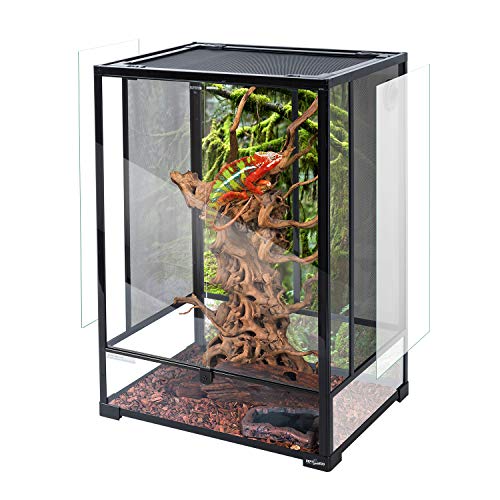
Exo Terra Tall Glass Terrarium (24" × 18" × 36")
This terrarium is specifically engineered to provide an optimal habitat for arboreal reptiles like tokay geckos. Its thoughtful design elements address key husbandry needs, from security to ventilation.
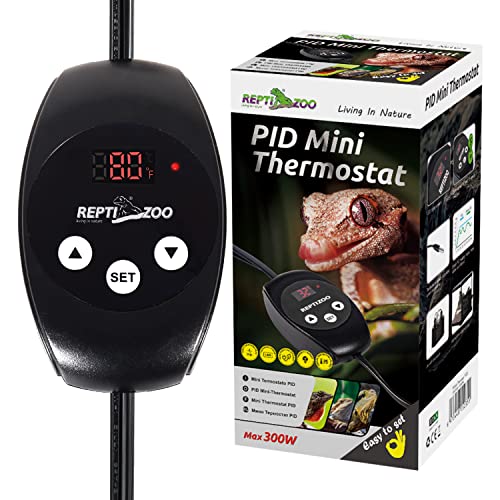
Reptile Thermostat (Proportional or On/Off)
A reptile thermostat is an indispensable safety and efficiency device for any heated enclosure. It ensures stable temperatures, protecting inhabitants from harm while optimizing energy consumption.
Automatic Reptile Misting System
An automatic misting system reliably delivers the high humidity levels essential for tokay geckos, freeing keepers from daily manual tasks. It provides consistent moisture, crucial for the gecko's health, particularly during unsupervised periods.
Frequently Asked Questions
The best enclosure for a tokay gecko is a tall, front-opening glass terrarium with dual locking latches. The Exo Terra 24" × 18" × 36" is widely recommended for single adults. PVC enclosures are the premium option for keepers in dry climates or those with breeding pairs.
References & Sources
Related Articles

Best 4x2x2 Reptile Enclosure: Top Picks & Reviews 2026
Find the best 4x2x2 reptile enclosure for your pet. We compare PVC, wood, and hybrid options from Zen Habitats, Kages, and more — with honest pros and cons.

Best Plants for Your Chameleon Enclosure: A Krawlo Guide
Discover the best plants for your chameleon enclosure, from safe live options to essential faux choices. Create a thriving, natural habitat with our expert guide.

Finding the Best Chameleon Enclosure: A 2026 Guide
Choosing the best chameleon enclosure is key to a healthy pet. This guide covers the top picks for size, material (screen vs. glass), and setup for 2026.