Best Sulcata Tortoise Heating: Top Picks & Setup Guide
Find the best sulcata tortoise heating for basking, nighttime warmth, and outdoor night boxes. Complete setup guide with top picks for all ages and enclosure types.


This article contains affiliate links. If you make a purchase through these links, we may earn a small commission at no extra cost to you. See our affiliate disclosure for details.
We recommend 5 picks here. Our top choice is the ZooMed Powersun Mercury Vapor Bulb — check price and availability below.
How we choose: we compare published specifications against the care requirements in veterinary and species-care literature, and weigh those against what long-time keepers report. We do not test products ourselves and we do not restate Amazon star ratings. The 4 sources behind this article are listed at the bottom.
Quick Comparison
- Primary Function
- Basking & UVB
- Light Emission
- Yes (Visible & UV)
- UVB Emission
- Yes
- Thermostat Compatibility
- Dimming/Proportional
- Typical Wattage/Capacity
- 100-160W
- Primary Function
- Nighttime Ambient Heat
- Light Emission
- No
- UVB Emission
- No
- Thermostat Compatibility
- On/Off Thermostat
- Typical Wattage/Capacity
- 100W
- Primary Function
- Night Box/Floor Heat
- Light Emission
- No
- UVB Emission
- No
- Thermostat Compatibility
- On/Off Thermostat
- Typical Wattage/Capacity
- 40-80W
- Primary Function
- Temperature Control
- Light Emission
- No (Control Unit)
- UVB Emission
- No
- Thermostat Compatibility
- Controls On/Off
- Typical Wattage/Capacity
- Up to 1000W+
- Primary Function
- Supplemental Body Heat
- Light Emission
- No
- UVB Emission
- No
- Thermostat Compatibility
- On/Off Thermostat
- Typical Wattage/Capacity
- 50-80W
Prices are estimates only. Actual prices on Amazon may vary.
Sulcata tortoises come from one of the hottest, driest places on Earth — the Sahel and Sahara Desert regions of sub-Saharan Africa. These giants are built for scorching heat. When you keep one at home, replicating that warmth isn't optional. It's survival.
Get the heating wrong and your tortoise will stop eating, become lethargic, and eventually get sick. Get it right and you'll have an active, thriving animal that can live 70+ years.
This guide covers the best sulcata tortoise heating options available — from basking bulbs to night box heat mats — plus exactly how to set everything up.
What Temperature Does a Sulcata Tortoise Need?
Before you buy anything, know your targets. Sulcatas need a thermal gradient so they can move between warm and cool zones to regulate their own body temperature.
| Zone | Target Temperature |
|---|---|
| Basking spot (surface) | 100–110°F (38–43°C) |
| Warm side ambient | 85–95°F (29–35°C) |
| Cool side ambient | 75–85°F (24–29°C) |
| Nighttime minimum | 65–70°F (18–21°C) |
Never let temperatures drop below 60°F (15°C) for any extended period. Sustained cold causes respiratory infections, metabolic shutdown, and long-term organ damage. Sulcatas aren't cold-tolerant like some other tortoise species — they need consistent warmth year-round.
Baby sulcatas are especially sensitive. Keep hatchlings and juveniles on the warmer end of the range, and don't let nighttime lows drop below 70°F for animals under two years old.
Temperature Zones for Sulcata Tortoises
Basking Spot
100–110°F
38–43°C surface temperature
Warm Side Ambient
85–95°F
29–35°C
Cool Side Ambient
75–85°F
24–29°C
Nighttime Minimum
65–70°F
18–21°C — never below 60°F
Top 5 Sulcata Heating Solutions
Quick recommendations
Single source for heat, UVB, UVA, and visible light. Achieves 100–110°F basking temps. Lasts 6–12 months.
Delivers 70–75°F warmth without light disruption. Affordable, long-lasting. Must use with thermostat.
Even, consistent infrared heating from overhead. Lasts 10+ years. Higher upfront cost but long-term value.
Purpose-built for outdoor night box heating. Water-resistant and durable. Maintains 70–75°F with thermostat.
12-micron infrared penetrates muscle tissue. No light emission, runs 24/7. Ideal secondary heat source.
Indoor Tortoise Table Heating Setup
Everything you need to get started
Detailed Reviews
1. ZooMed Powersun Mercury Vapor Bulb
Best Overall
ZooMed Powersun Mercury Vapor Bulb
Pros
- •Provides intense basking heat necessary for thermoregulation.
- •Delivers vital full-spectrum UVB radiation for calcium metabolism.
- •Combines heat and UVB in a single overhead fixture, optimizing enclosure space.
- •Highly efficient setup for replicating natural solar conditions in indoor environments.
Cons
- •Higher initial cost compared to separate heating and UVB elements.
- •Requires a sturdy dome fixture with a ceramic socket designed for high wattage.
- •Not ideal for use with on/off thermostats as frequent cycling can reduce bulb lifespan.
- •Can produce significant heat, potentially unsuitable for very small enclosures.
Bottom Line
This mercury vapor bulb offers an efficient, all-in-one solution for providing essential basking heat and full-spectrum UVB, crucial for sulcata tortoise health. Its combined functionality simplifies enclosure setup by reducing the number of required fixtures.
2. Ceramic Heat Emitter 100W
Editor's Choice
Ceramic Heat Emitter 100W
Pros
- •Emits infrared heat efficiently without producing any visible light.
- •Maintains consistent ambient temperatures throughout the night.
- •Does not disrupt the tortoise's natural day/night cycle or sleep patterns.
- •Durable and long-lasting heating element, suitable for continuous operation.
Cons
- •Does not provide any light or beneficial UVB radiation.
- •Can contribute to lower humidity levels if not monitored and managed.
- •Requires a ceramic dome fixture rated for the wattage to prevent fire hazards.
Bottom Line
This ceramic heat emitter provides crucial infrared warmth for maintaining safe nighttime temperatures without emitting any disruptive light. It is an ideal solution for preventing temperature drops that can harm sulcata tortoises during cooler hours.
3. Kane Reptile Heat Mat
Premium Pick
Kane Reptile Heat Mat
Pros
- •Purpose-built for large reptiles, ensuring adequate size and heat output.
- •Provides reliable and even heat distribution across its surface.
- •Flexible and water-resistant construction makes it durable for night box use.
- •Safer and more robust for large, heavy tortoises compared to standard under-tank heaters.
Cons
- •Primarily provides belly heat; not suitable as a sole primary heat source for ambient temperatures.
- •Requires proper insulation and integration within a night box for optimal effectiveness.
- •Does not emit light or UVB radiation, necessitating other fixtures for these needs.
Bottom Line
The Kane Reptile Heat Mat delivers consistent and safe supplemental heat specifically for large reptiles within an insulated night box. Its robust, water-resistant design ensures durability and reliable warmth for outdoor or large indoor enclosures.
4. Inkbird Reptile Thermostat
Editor's Choice
Inkbird Reptile Thermostat
Pros
- •Automatically cycles heating elements to maintain precise target temperatures.
- •Prevents dangerous overheating and ensures stable thermal gradients.
- •Compatible with various heating devices, including CHEs, heat mats, and radiant panels.
- •Functions as an essential safety device, protecting both the tortoise and equipment.
Cons
- •On/off cycling is generally not recommended for mercury vapor bulbs, which prefer dimming.
- •Requires careful placement of the temperature probe for accurate environmental readings.
- •Adds an additional component to the enclosure setup that requires monitoring.
Bottom Line
This reliable on/off thermostat is crucial for preventing temperature fluctuations and dangerous overheating in reptile enclosures. It automatically manages heating devices to maintain a consistent, safe thermal environment for sulcata tortoises.
5. Arcadia Deep Heat Projector
Editor's Choice
Arcadia Deep Heat Projector
Pros
- •Emits 12-micron infrared radiation that penetrates muscle tissue more effectively.
- •Aids tortoises in warming up faster and more thoroughly, simulating natural solar absorption.
- •Provides 24/7 supplemental warmth without any light emission, preserving natural cycles.
- •Contributes to improved digestion and overall metabolic function by warming the body core.
Cons
- •Higher initial purchase cost compared to traditional ceramic heat emitters.
- •Requires a suitable ceramic E27 lamp holder capable of handling its heat output.
- •Does not provide UVB radiation, which must be supplied by a separate fixture.
Bottom Line
The Arcadia Deep Heat Projector delivers deep penetrating infrared-A and infrared-B radiation, mimicking natural solar warmth to efficiently warm a tortoise's core body temperature. It offers effective 24/7 supplemental heat without disrupting the natural light cycle.
The Best Heating Options for Sulcata Tortoises
There's no single perfect heater. The right setup depends on your specific situation — indoor tortoise table, outdoor pen with a night box, or a combination of both. Here's what actually works.
1. Mercury Vapor Bulbs — Best All-in-One Basking Solution
Mercury vapor bulbs (MVBs) are the gold standard for sulcata basking heat. A single [mercury vapor bulb](https://www.amazon.com/dp/B0778F753P?tag=krawlo-20 produces intense heat, visible light, UVA radiation, and UVB — all in one fixture. That's a massive advantage for simplifying your setup.
For an indoor enclosure, a 100–160 watt MVB (brands like ZooMed Powersun or Arcadia Bird of Paradise) delivers everything your sulcata needs from one overhead position. It's the closest thing to real sunlight you can create indoors.
Why MVBs work so well:
- Create the intense basking temps sulcatas need (100–110°F surface temp)
- Provide UVB, which is essential for vitamin D3 synthesis and calcium metabolism
- Eliminate the need for a separate UVB tube
- Good quality MVBs last 6–12 months
The limitation? MVBs are bright and hot — they're strictly a daytime heat source. You'll need a separate solution for nighttime warmth.
2. Ceramic Heat Emitters — Best for Nighttime Heating
When the lights go off, your sulcata still needs warmth. [Ceramic heat emitters (CHEs)](https://www.amazon.com/dp/B096JWWQMC?tag=krawlo-20 solve this perfectly. They produce radiant infrared heat with zero light — so your tortoise gets warmth without any disruption to its day/night cycle.
CHEs screw into a standard ceramic socket (always use a porcelain fixture — they get extremely hot) and connect to a thermostat. A 100–150 watt CHE can maintain ambient overnight temperatures of 70–75°F in a well-insulated enclosure without any problem.
Critical rule: always pair a CHE with a thermostat. Running a CHE without temperature control will overheat your enclosure. A basic on/off thermostat handles this job perfectly well.
CHEs are affordable, long-lasting, and foolproof. Every sulcata keeper should have at least one.
3. Radiant Heat Panels — Best for Large Indoor Enclosures
If you're building a permanent indoor enclosure for a growing sulcata, [radiant heat panels](https://www.amazon.com/dp/B0FNRMTF5B?tag=krawlo-20 are worth serious consideration. These panels mount overhead and emit even, consistent infrared heat downward — similar to how the sun warms the ground.
Brands like Reptile Basics and Pro Products manufacture panels from 40 watts (small enclosures) up to 500+ watts (large rooms or shed conversions). They're efficient, extremely long-lasting, and maintain very stable temperatures without hot spots.
The upfront cost is higher than a basic CHE, but a quality radiant panel can last a decade or more. If you're committing to a large permanent setup, it's the right long-term investment.
4. Kane and Stanfield Heat Mats — Best for Night Box Heating
An insulated night box is essential for outdoor sulcata enclosures in any climate with cool evenings. And the best way to heat that night box is with a purpose-built reptile heat mat designed for continuous use.
Kane reptile heat mats and [Stanfield heat mats](https://www.amazon.com/dp/B0BNP6QBKB?tag=krawlo-20 are specifically engineered for this application. They're flexible, water-resistant, and built to handle the weight and movement of a large tortoise without damage. Standard under-tank heaters aren't designed for this kind of use — these mats are.
Place the mat on the floor or a low wall inside the night box, connect it to a thermostat set to 70–75°F, and you're done. A well-insulated night box with one of these mats will stay warm through surprisingly cold nights.
Pro tip: Line the interior walls of your night box with foam insulation board from any hardware store. This dramatically reduces heat loss and makes your heat mat far more effective — especially on cold nights.
5. Deep Heat Projectors — Best for Extra Body-Warming Heat
[Arcadia deep heat projectors](https://www.amazon.com/dp/B0BSHS996Y?tag=krawlo-20 are a newer technology that's genuinely useful for sulcatas. These devices emit 12-micron infrared radiation — the same wavelength as natural sunlight — which penetrates muscle tissue more effectively than standard heat bulbs.
A deep heat projector works best as a secondary heat source alongside your basking lamp. It provides what keepers call "body heat" — the kind of warmth that helps a cold tortoise recover faster and promotes better thermoregulation. It emits no light, so it can run 24 hours if needed.
These are especially useful in colder climates or during winter months when ambient temperatures drop and you need supplemental warmth without disrupting light cycles.
How to Set Up Heating: Indoor vs. Outdoor
The products are only part of the equation. Setup matters just as much.
Indoor Tortoise Table Setup
For a young or juvenile sulcata indoors, a typical heating setup looks like this:
- Basking zone: MVB or halogen flood bulb positioned over one end of the enclosure. Aim for 100–110°F surface temp directly under the bulb.
- Ambient heat: CHE on a thermostat to maintain 80–85°F on the warm side when the basking lamp is off.
- Cool zone: The opposite end of the enclosure with no direct heat source — this naturally falls to 75–80°F.
- Nighttime heat: CHE on thermostat set to 70–75°F, running through the night.
- Temperature monitoring: Digital probe thermometer plus an infrared temp gun for basking spot checks.
A large enclosure matters here. Young sulcatas can start in a 4x8 foot tortoise table, but they grow fast. Adults can exceed 100 pounds and need outdoor space — a permanent indoor setup for a full-grown sulcata isn't realistic.
Outdoor Pen with Night Box Setup
In USDA Zone 9 and warmer, many sulcata owners keep their tortoises outside year-round. Even then, cool nights require a heated shelter.
A basic outdoor night box setup:
- Insulated box: Plywood construction with foam board insulation, large enough for your tortoise to turn around.
- Floor heat: Kane or Stanfield heat mat on the floor, connected to a thermostat set to 70°F minimum.
- Overhead warmth (if needed): CHE or small radiant panel inside the box for extra ambient heat on cold nights.
- Entry flap: A hanging rubber or carpet flap over the entrance significantly reduces heat loss.
In Zone 8 or cooler, bring your sulcata indoors during winter months. These tortoises cannot survive freezing temperatures or sustained cold below 50°F.
For more on building the right outdoor space, see our guide on African spurred tortoise housing — it covers enclosure design and environmental setup in detail.
The One Accessory You Can't Skip: A Quality Thermostat
Every heater in your setup — CHE, heat mat, radiant panel — needs a thermostat. No exceptions.
(Estimates only — actual prices on Amazon may vary.)
A basic on/off thermostat runs around $30–$50 and works fine for most applications. A proportional (dimming) thermostat — which gradually reduces power instead of cycling on/off — provides more stable temperatures and runs $80–$150. For precise basking spot control, a proportional thermostat is worth the extra investment.
Herpstat thermostats are trusted by serious keepers for their reliability. [Inkbird thermostats](https://www.amazon.com/dp/B08Y5JDYFY?tag=krawlo-20 offer good performance at a lower price point and work well for overnight ambient control.
Also invest in two thermometers: an infrared temp gun for checking basking surface temperatures, and a digital probe thermometer with min/max memory for monitoring ambient temps and overnight lows. You can't manage what you don't measure.
How to Tell If Your Sulcata Is Too Cold
Your tortoise communicates through behavior. Here's what to watch for:
Signs of a too-cold sulcata:
- Unusual lethargy or sluggishness beyond normal resting
- Refusing food or eating significantly less than normal
- Staying in the cool zone and avoiding the basking spot
- Closed or half-closed eyes for most of the day
- Runny nose, wheezing, or labored breathing (emergency — see a vet immediately)
A healthy, properly heated sulcata should be active and alert during daylight hours, basking in the morning, and showing a strong appetite on feeding days. If your tortoise seems stuck in slow mode, check your temperatures first — it's almost always a heating issue.
Respiratory symptoms combined with lethargy signal a potential respiratory infection, which is a medical emergency for tortoises. Don't wait to see if it improves. Contact a reptile vet right away.
Budget-Friendly Heating That Actually Works
(Estimates only — actual prices on Amazon may vary.)
You don't need expensive equipment to keep a sulcata healthy. Here's a solid budget setup:
- Basking lamp: A [halogen flood bulb (PAR38, 90–100W)](https://www.amazon.com/dp/B0CGX95VSJ?tag=krawlo-20 makes an excellent basking lamp for $5–$10 per bulb. Pair it with a separate UVB tube fixture.
- Night heat: A [100W ceramic heat emitter](https://www.amazon.com/dp/B096JWWQMC?tag=krawlo-20 costs $10–$20 and lasts for years.
- Thermostat: An Inkbird ITC-306A or similar on/off thermostat runs around $30–$40.
- Night box insulation: DIY foam board from a hardware store costs a fraction of commercial products and works just as well.
Total for a functional heating setup: under $100 for a young or juvenile sulcata. That's completely manageable.
As your tortoise grows and your understanding of its needs deepens, you can upgrade components over time. Starting simple and doing it correctly beats starting expensive and doing it wrong.
For a full picture of sulcata husbandry beyond heating — diet, substrate, enclosure size, and health basics — check out the sulcata tortoise care guide for everything in one place.
Common Heating Mistakes to Avoid
Even experienced keepers make these errors. Knowing them upfront saves you trouble.
Using heat rocks: Avoid these entirely. They create dangerously uneven hot spots that can cause thermal burns. Sulcatas have limited heat sensitivity on their undersides and won't move away in time.
Skipping the thermostat: A CHE or heat mat running unchecked will cook your enclosure. Always use a thermostat — it's not optional.
Only measuring air temperature: Air temp and basking surface temp are very different numbers. Always measure both. Use an infrared temp gun on the basking spot itself.
Using heat mats as the only heat source indoors: Heat mats are great for night boxes and supplemental floor warmth. But they shouldn't be your only heat source for an indoor enclosure. Sulcatas need overhead radiant heat, not just bottom heat.
Forgetting seasonal adjustments: Indoor ambient temperatures shift with the seasons, especially in older homes. A setup that keeps your tortoise comfortable in July may leave it cold in December. Monitor temps year-round and adjust as needed.
Getting the heating right is the single highest-impact thing you can do for your sulcata's long-term health. A well-heated sulcata is active, hungry, and thriving. Everything else in the care sheet builds on this foundation.
Our Final Verdict

ZooMed Powersun Mercury Vapor Bulb
This mercury vapor bulb offers an efficient, all-in-one solution for providing essential basking heat and full-spectrum UVB, crucial for sulcata tortoise health. Its combined functionality simplifies enclosure setup by reducing the number of required fixtures.
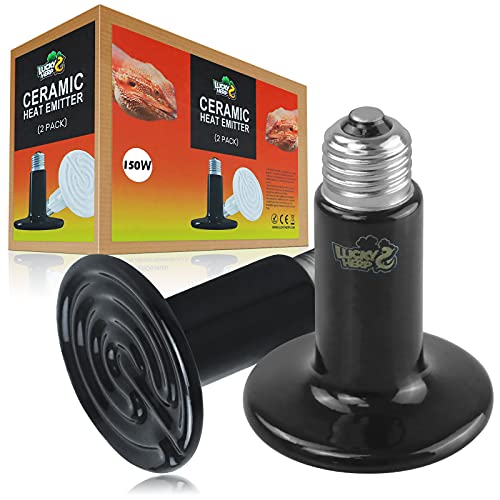
Ceramic Heat Emitter 100W
This ceramic heat emitter provides crucial infrared warmth for maintaining safe nighttime temperatures without emitting any disruptive light. It is an ideal solution for preventing temperature drops that can harm sulcata tortoises during cooler hours.
Kane Reptile Heat Mat
The Kane Reptile Heat Mat delivers consistent and safe supplemental heat specifically for large reptiles within an insulated night box. Its robust, water-resistant design ensures durability and reliable warmth for outdoor or large indoor enclosures.
Frequently Asked Questions
Kane heat mats and Stanfield heat mats are the best options for sulcata tortoises, especially for heating a night box. They're purpose-built for reptile use, water-resistant, and designed to handle the weight and activity of a large tortoise. Always pair them with a thermostat set to 70–75°F.
References & Sources
Related Articles

Best Hay for Sulcata Tortoise: Top Picks & Tips
Discover the best hay for sulcata tortoises — from orchard grass to timothy. Learn which hays are safe, nutritious, and where to buy them.

Best Bedding for Sulcata Tortoise: A Keeper's Guide
Choosing the best bedding for a Sulcata tortoise is vital for their health. Our guide covers safe, effective substrates to prevent impaction and maintain proper humidity.

Best Red Footed Tortoise Heating Setup (2026 Guide)
Struggling to get your Red-Footed Tortoise's temperatures right? Our expert guide covers the best heating options, setup tips, and why a thermostat is essential.