Best Russian Tortoise Heating: Complete Setup Guide
Find the best Russian tortoise heating setup with our expert guide. Learn the right temps, top products, and how to avoid costly mistakes that stress your tortoise.


This article contains affiliate links. If you make a purchase through these links, we may earn a small commission at no extra cost to you. See our affiliate disclosure for details.
We recommend 5 picks here. Our top choice is the Halogen Flood Basking Bulb (50–75W) — check price and availability below.
How we choose: we compare published specifications against the care requirements in veterinary and species-care literature, and weigh those against what long-time keepers report. We do not test products ourselves and we do not restate Amazon star ratings. The 4 sources behind this article are listed at the bottom.
Quick Comparison
- Type of Device
- Heat Source (Light Emitting)
- Primary Function
- Create Basking Spot
- Emits Light
- Yes (Visible + UVA/UVB)
- Requires External Controller
- Yes (Thermostat)
- Estimated Price Range
- $10-20
- Type of Device
- Heat Source (Non-Light Emitting)
- Primary Function
- Boost Ambient/Night Heat
- Emits Light
- No
- Requires External Controller
- Yes (Thermostat)
- Estimated Price Range
- $15-30
- Type of Device
- Temperature Controller
- Primary Function
- Regulate Heat Source
- Emits Light
- N/A (Controls Light)
- Requires External Controller
- N/A (Is Controller)
- Estimated Price Range
- $40-80
- Type of Device
- Spot Temperature Reader
- Primary Function
- Measure Surface Temp
- Emits Light
- No
- Requires External Controller
- No
- Estimated Price Range
- $15-25
- Type of Device
- Ambient Temperature Monitor
- Primary Function
- Monitor Ambient Gradient
- Emits Light
- No
- Requires External Controller
- No
- Estimated Price Range
- $10-20
Prices are estimates only. Actual prices on Amazon may vary.
Getting the heating right for your Russian tortoise is one of the most important things you'll do as an owner. Too cold, and your tortoise won't digest food properly. Too hot, and you risk dangerous overheating. Get it just right, and you'll have a healthy, active tortoise that thrives for decades.
This guide covers everything you need to know about the best Russian tortoise heating options — from basking bulbs to thermostats — with practical product recommendations and real temperature targets to aim for.
Why Heating Matters So Much for Russian Tortoises
Russian tortoises (Agrionemys horsfieldii) are desert animals from Central Asia. In the wild, they spend their days moving between warm basking spots and cooler shade to regulate their body temperature. This behavior is called thermoregulation, and it's critical to their survival.
In captivity, your job is to recreate that temperature gradient. Without a proper thermal range, your tortoise can't:
- Digest food properly
- Fight off infections
- Absorb calcium (which prevents metabolic bone disease)
- Stay active and alert
A sick tortoise often starts with a heating problem. Getting this right from day one saves a lot of heartache later.
Russian Tortoise Temperature Targets
Basking Spot
95–105°F
(35–40°C)
Warm Side Ambient
80–85°F
(27–29°C)
Cool Side Ambient
70–75°F
(21–24°C)
Nighttime Low
60–70°F
(15–21°C)
Why Heating Matters for Russian Tortoises
What you need to know
Proper heating enables healthy digestion and metabolism
Thermal gradient prevents metabolic bone disease by allowing calcium absorption
Temperature control supports immune function and infection resistance
Heating keeps tortoises active, alert, and naturally behaving
Setting Up Your Temperature Gradient
Position the Basking Lamp
Mount the basking lamp over one end of the enclosure, about 12–15 inches above the substrate
Achieve Target Basking Temperature
Use an infrared thermometer to measure the basking surface (not air) and aim for 100–105°F
Create a Cool Zone
The opposite end should naturally fall to 70–75°F at room temperature for thermoregulation
Never Center the Heat
Ensure a clear temperature gradient across the enclosure, not one uniform hot zone
Detailed Reviews
1. Halogen Flood Basking Bulb (50–75W)
Best Overall
Halogen Flood Basking Bulb (50–75W)
Pros
- •Mimics natural sunlight with intense, penetrating radiant heat
- •Provides UVA/UVB essential for tortoise health and digestion
- •Widely available in various wattages (50-75W is suitable)
- •Relatively inexpensive to purchase and replace
Cons
- •Shorter lifespan compared to non-light emitting heat sources
- •Emits light, making it unsuitable for 24/7 heat without disrupting photoperiod
- •Requires a compatible dimming thermostat for optimal and safe operation
Bottom Line
Halogen flood bulbs are the preferred basking light for Russian tortoises, emulating natural sunlight's intense, penetrating radiant heat. They are widely accessible and offer an economical solution for recreating vital basking conditions.
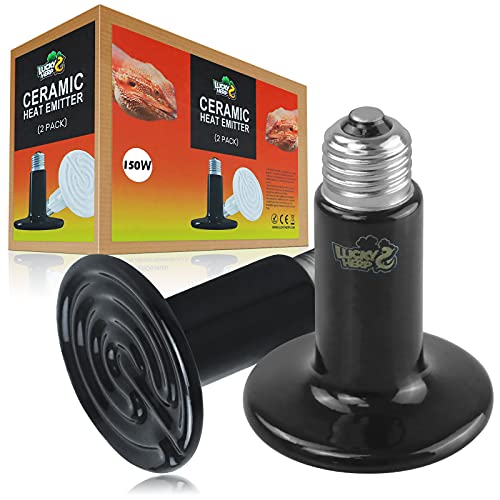
2. Ceramic Heat Emitter (100W)
Editor's Choice
Ceramic Heat Emitter (100W)
Pros
- •Produces heat without emitting light, preserving natural day-night cycles
- •Ideal for boosting ambient temperatures or providing nighttime heat
- •Offers long-lasting and consistent radiant heat output
- •Does not disrupt sleep patterns, vital for reptile well-being
Cons
- •Does not provide UVA/UVB light; separate UV source is required
- •Can contribute to lower humidity levels if not managed properly
- •Requires a ceramic fixture to safely withstand high operating temperatures
Bottom Line
Ceramic heat emitters are an excellent solution for increasing ambient enclosure temperatures without light emission, crucial for cooler rooms. They serve as reliable supplemental daytime warmth or essential nighttime backup heat when temperatures drop below 60°F.
3. Dimming Thermostat for Reptiles
Premium Pick
Dimming Thermostat for Reptiles
Pros
- •Prevents dangerous temperature fluctuations and overheating
- •Extends the lifespan of basking bulbs by smoothly regulating power
- •Maintains precise and stable temperatures at the basking spot
- •Reduces stress on heating elements by preventing constant on/off cycling
Cons
- •Higher initial cost compared to basic on/off thermostats
- •Only compatible with dimmable heating elements, not suitable for all types
- •Requires careful calibration to achieve desired temperature targets
Bottom Line
A dimming thermostat is indispensable for any reptile heating setup, providing precise regulation of basking bulb power. It effectively prevents dangerous temperature spikes and significantly prolongs the lifespan of heating elements.
4. Infrared Temperature Gun (Temp Gun)
Best Value
Infrared Temperature Gun (Temp Gun)
Pros
- •Provides instant, non-contact surface temperature readings
- •Essential for accurately setting basking spot temperatures (95–105°F)
- •Easy to use with a simple point-and-shoot operation
- •Ensures precise thermal environment without disturbing the tortoise
Cons
- •Does not measure ambient air temperature, only surface temps
- •Requires manual checks, not a continuous monitoring device
- •Accuracy can be affected by distance and target surface properties
Bottom Line
An infrared temperature gun is a critical tool for accurately measuring basking surface temperatures, eliminating guesswork from heating setup. It provides instant, precise readings directly at the tortoise's basking spot, ensuring optimal conditions.
5. Digital Thermometer with Dual Probes
Budget Pick
Digital Thermometer with Dual Probes
Pros
- •Monitors both warm and cool side ambient temperatures simultaneously
- •Provides continuous, real-time temperature readings
- •Helps identify and correct potential heating imbalances early
- •Features an easy-to-read digital display for quick assessment
Cons
- •Probes can be dislodged or soiled by active tortoises
- •Measures ambient air temperature, not direct surface temperature
- •Wires may be visible or require careful routing within the enclosure
Bottom Line
A digital thermometer with dual probes is crucial for monitoring the enclosure's thermal gradient, simultaneously displaying temperatures for both warm and cool sides. This continuous oversight allows keepers to easily identify and address heating inconsistencies early.
Russian Tortoise Temperature Requirements
Before you buy any heating equipment, you need to know your targets. Here's what the enclosure should look like at different zones:
| Zone | Temperature Range |
|---|---|
| Basking spot | 95–105°F (35–40°C) |
| Warm side ambient | 80–85°F (27–29°C) |
| Cool side ambient | 70–75°F (21–24°C) |
| Nighttime low | 60–70°F (15–21°C) |
Russian tortoises are actually more cold-tolerant than most reptiles. They can handle nighttime drops to 60°F without a problem. That's a big relief if your home gets cool at night — you often don't need extra nighttime heating.
According to ReptiFiles' Russian tortoise care sheet, the basking zone is where most keepers go wrong. Too many people use a single overhead bulb without measuring the actual surface temperature. Always use a temperature gun (infrared thermometer) to check the basking spot directly — not just the air above it.
Types of Heating Equipment
There's no single "best" heating setup. The right combination depends on your enclosure size, your home's ambient temperature, and your budget. Here's a breakdown of the main options.
Basking Bulbs (Essential)
A basking bulb is the foundation of any Russian tortoise heating setup. These are simple incandescent or halogen bulbs that produce heat AND visible light. Your tortoise will naturally gravitate toward the warm spot they create.
Halogen flood bulbs are a favorite among experienced keepers. They're cheap, widely available, and produce excellent radiant heat. A 50–75 watt halogen usually works well for a standard 4-foot tortoise table.
Important: Don't use red or blue "night" bulbs during the day. Russian tortoises can see those wavelengths, and it disrupts their light cycle. Stick to clear or white bulbs for daytime basking.
Keep the basking lamp on a timer — 12 to 14 hours of light per day in summer, 10 to 12 hours in winter. This mimics natural daylight cycles and keeps your tortoise's internal clock on track.
Ceramic Heat Emitters (CHE)
A [ceramic heat emitter](https://www.amazon.com/dp/B096JWWQMC?tag=krawlo-20 produces heat without any light. They're useful if you need to boost ambient temperatures without adding extra brightness.
CHEs are especially handy in cooler rooms where the ambient temperature drops below 70°F. You can run one alongside your basking bulb on a thermostat to maintain stable warm-side temps.
One thing to know: CHEs get extremely hot. Always use them with a ceramic socket (not a plastic one), and keep them well out of reach of your tortoise. A thermostat is non-negotiable with these.
Deep Heat Projectors (Advanced Option)
[Deep heat projectors](https://www.amazon.com/dp/B0C44VQ3LV?tag=krawlo-20 are a newer technology that works differently from traditional basking bulbs. Instead of just heating the surface, they emit infrared radiation that penetrates deeper into the animal's muscle tissue — closer to how natural sunlight works.
They're pricier, but many keepers who've switched swear by them. Russian tortoises that get proper deep heat often show better digestion and more natural basking behavior. If you have the budget, they're worth considering as a supplement (not a replacement) for your basking setup.
Under-Tank Heaters (Use With Caution)
This is where a lot of beginners make mistakes. Under-tank heating mats can work for some reptiles, but they're generally not the best choice for Russian tortoises.
Here's why: tortoises need overhead heat, not belly heat. In the wild, they absorb warmth from the sun above them — not from the ground. Under-tank mats can also lead to substrate fires or overheating if not properly controlled.
If you do use an under-tank heater (say, to boost a chilly basement setup), always run it through a thermostat and never use it as the primary heat source. Check out our guide to the best heating mat options for reptiles if you want to explore this further.
Thermostats (Non-Negotiable)
Every heat source you use should run through a thermostat. Every single one. This isn't optional.
A thermostat regulates power to your heater so temperatures stay stable and never spike dangerously high. Without one, a CHE or basking bulb can overheat an enclosure on a warm day — potentially killing your tortoise.
There are three main types:
- On/off thermostats — Basic and affordable. Turn the heater on and off to maintain a set temperature.
- Pulse thermostats — Better for ceramic heat emitters. Pulse power to maintain steady temps.
- Dimming thermostats — Best for basking bulbs. Smoothly adjust power output, which means stable light levels too.
[Dimming thermostats](https://www.amazon.com/dp/B0BGS517FT?tag=krawlo-20 are generally the most versatile. Brands like Herpstat and Inkbird make reliable options at different price points.
Setting Up Your Temperature Gradient
Here's the key principle: your tortoise needs a choice. One end of the enclosure should be warm, the other should be cool. Your tortoise moves between zones to self-regulate.
For a standard 4-foot tortoise table:
- Position the basking lamp over one end, about 12–15 inches above the substrate
- Aim for 100–105°F at the basking spot surface (measure with a temp gun)
- The opposite end should naturally fall to 70–75°F at room temperature
- If the cool end is too warm, make the enclosure larger or add ventilation
Never position heat sources in the center of the enclosure. Your tortoise needs a clear temperature gradient — not one uniform hot zone.
Measuring Temperature the Right Way
A digital thermometer with a probe gives you air temperature — that's useful for ambient readings. But for the basking spot, you need a temperature gun (infrared thermometer).
Point it directly at the basking surface (the rock or flat slate your tortoise sits on). That reading is what actually matters. Air temperature at basking spot height can be 10–15°F cooler than the surface your tortoise is touching.
For a complete Russian tortoise setup, read our complete beginner's guide to Russian tortoise care, which covers lighting, humidity, and substrate alongside heating.
Nighttime Heating: Do You Need It?
Most keepers don't need supplemental nighttime heat for Russian tortoises. These animals are naturally adapted to cold Central Asian nights. As long as your home doesn't drop below 60°F, your tortoise is fine without a nighttime heat source.
If your space regularly drops below 60°F at night, a low-wattage CHE on a thermostat can help. Set it to kick in only if temperatures drop below 60°F. This way, it runs rarely and doesn't disrupt the dark cycle.
Never use a red or blue "night" bulb. These are a holdover from old reptile keeping advice. We now know tortoises can see these wavelengths. They disrupt sleep and stress your animal. Stick to non-light-emitting heat sources at night.
Seasonal Adjustments
Russian tortoises naturally slow down in winter. In the wild, they brumate (reptile hibernation) for several months. In captivity, you have two options:
- Allow a cool-down period — Gradually reduce temperatures and photoperiod in fall, letting your tortoise slow down naturally
- Maintain summer conditions year-round — Keep temperatures and lighting stable so your tortoise stays active
Both approaches work. Many beginners find it easier to maintain stable conditions until they're more experienced. If you want to allow brumation, consult a vet experienced with tortoises first — it requires careful preparation.
For day-to-day heating, you may need to increase basking bulb wattage in winter if your home gets colder. Keep a thermometer in the enclosure and check it weekly. Seasonal room temperature swings can throw off your setup even if you haven't changed anything.
Outdoor Heating Considerations
If you house your Russian tortoise outdoors during warm months (which is highly recommended), heating looks completely different. Natural sunlight is far superior to any artificial setup.
Outdoor enclosures need:
- A sheltered basking area that gets direct sun for several hours a day
- A shaded retreat the tortoise can move to when overheated
- A weatherproof hide for cool nights or rainy days
- Monitoring on days above 95°F — even Russian tortoises can overheat
Bring your tortoise indoors if nighttime temperatures will drop below 50°F. At that point, you'll want your indoor heating setup ready to go.
For more on tortoise heating across species, our guide comparing bearded dragon heating setups shows how different desert reptiles share similar temperature requirements — useful context if you keep multiple species.
Common Heating Mistakes to Avoid
After years of helping keepers troubleshoot their setups, these are the mistakes we see most often:
Using only one temperature reading point. Always check both basking spot and cool side. One thermometer in the middle tells you nothing useful.
Skipping the thermostat. Even "low wattage" bulbs can spike temperatures on a warm day. Always use a thermostat.
Trusting the guess on basking height. The height you read online is a starting point, not a guarantee. Adjust based on actual measured temperatures.
Using a mesh screen that blocks infrared. Some screen lids reduce infrared heat transmission significantly. If your basking spot can't reach target temps, try moving the lamp closer or switching to a mesh-free option.
Using heating pads as the primary heat source. Russian tortoises need top-down heat. A mat alone won't cut it.
Quick Heating Checklist
Before you consider your setup complete, run through this:
- Basking spot measures 95–105°F with a temp gun
- Cool side stays at 70–75°F
- All heat sources connected to a thermostat
- Basking light on a 12–14 hour timer
- No red/blue "night" bulbs in use
- Nighttime low stays above 60°F (or CHE backup in place)
- Two temperature measurement points in the enclosure
If you can check every box, your Russian tortoise heating setup is solid.
Our Final Verdict

Halogen Flood Basking Bulb (50–75W)
Halogen flood bulbs are the preferred basking light for Russian tortoises, emulating natural sunlight's intense, penetrating radiant heat. They are widely accessible and offer an economical solution for recreating vital basking conditions.
Ceramic Heat Emitter (100W)
Ceramic heat emitters are an excellent solution for increasing ambient enclosure temperatures without light emission, crucial for cooler rooms. They serve as reliable supplemental daytime warmth or essential nighttime backup heat when temperatures drop below 60°F.

Dimming Thermostat for Reptiles
A dimming thermostat is indispensable for any reptile heating setup, providing precise regulation of basking bulb power. It effectively prevents dangerous temperature spikes and significantly prolongs the lifespan of heating elements.
Frequently Asked Questions
The best primary heat source for Russian tortoises is a basking bulb — either a halogen flood bulb or a clear incandescent. It provides both heat and visible light, which tortoises need to regulate their behavior naturally. For ambient heat boosts, a ceramic heat emitter (CHE) on a thermostat works well as a secondary source.
References & Sources
Related Articles

Best Bedding for Russian Tortoise: A Keeper's Guide
Searching for the best bedding for your Russian tortoise? Our expert guide reviews top substrates to ensure your pet stays healthy, happy, and can burrow naturally.

Best Red Footed Tortoise Heating Setup (2026 Guide)
Struggling to get your Red-Footed Tortoise's temperatures right? Our expert guide covers the best heating options, setup tips, and why a thermostat is essential.

Best Sulcata Tortoise Heating: Top Picks & Setup Guide
Find the best sulcata tortoise heating for basking, nighttime warmth, and outdoor night boxes. Complete setup guide with top picks for all ages and enclosure types.