Best Rosy Boa Heating: Setup Guide & Top Picks
Find the best rosy boa heating setup with our expert guide. Learn exact temps, top heating products, thermostat tips, and common mistakes to avoid.


This article contains affiliate links. If you make a purchase through these links, we may earn a small commission at no extra cost to you. See our affiliate disclosure for details.
We recommend 5 picks here. Our top choice is the Zoo Med ReptiTherm Under Tank Heater — check price and availability below.
How we choose: we compare published specifications against the care requirements in veterinary and species-care literature, and weigh those against what long-time keepers report. We do not test products ourselves and we do not restate Amazon star ratings. The 4 sources behind this article are listed at the bottom.
Quick Comparison
- Primary Function
- Primary Heating
- Light Emission
- No
- Requires Thermostat
- Yes (External)
- Placement/Application
- Under tank (External)
- Approx. Price Range
- $20-40
- Primary Function
- Temperature Control
- Light Emission
- N/A (Controls heaters)
- Requires Thermostat
- N/A (Is thermostat)
- Placement/Application
- External (Controls heaters)
- Approx. Price Range
- $30-50
- Primary Function
- Primary Heating
- Light Emission
- No
- Requires Thermostat
- Yes (External, dimming recommended)
- Placement/Application
- Overhead (Internal)
- Approx. Price Range
- $50-80
- Primary Function
- Supplemental/Primary Heating
- Light Emission
- No
- Requires Thermostat
- Yes (External)
- Placement/Application
- Overhead (Internal)
- Approx. Price Range
- $25-45
- Primary Function
- Temperature Monitoring
- Light Emission
- N/A (Monitors temp)
- Requires Thermostat
- No (Monitoring only)
- Placement/Application
- Internal (Probes in tank)
- Approx. Price Range
- $15-25
Prices are estimates only. Actual prices on Amazon may vary.
Getting the best rosy boa heating setup right is one of the most important things you can do for your snake. Rosy boas are tough little desert serpents, but they're cold-blooded — they can't regulate their own body temperature. If their enclosure is too cold, they can't digest food, fight off infection, or stay active. Get it wrong and you'll have a sick, stressed snake on your hands.
The good news? Rosy boas have pretty straightforward heating needs. They're not as demanding as chameleons or monitors. But there are still plenty of ways to mess it up — especially if you're relying on bad advice from pet store staff or outdated care sheets.
This guide covers everything: the exact temperatures your rosy boa needs, the best heating products on the market, how to use a thermostat, and the mistakes that trip up even experienced keepers.
Why Rosy Boas Need Proper Heat
Rosy boas (Lichanura trivirgata and related species) come from the arid scrublands and rocky desert slopes of the southwestern United States and northwestern Mexico. Out in the wild, they bask on sun-warmed rocks and retreat to cool burrows when they need to cool off.
In captivity, you're responsible for recreating that thermal environment. Your snake needs a warm side and a cool side in its enclosure. This is called a thermal gradient, and it's essential for normal behavior.
When your rosy boa is warm enough, it can:
- Digest meals properly (digestion basically stops below 75°F)
- Fight off pathogens with a healthy immune response
- Stay active and curious during its natural activity period
- Process nutrients and grow at a normal rate
When it's too cold, everything slows down — including your snake's ability to stay healthy.
Rosy Boa Temperature Requirements
Warm side (ambient)
85–88°F
29–31°C
Basking spot
88–90°F
31–32°C
Cool side (ambient)
72–78°F
22–26°C
Nighttime low
65–72°F
18–22°C
Top Rosy Boa Heating Options
Quick recommendations
Most popular option, affordable, effective for belly heat digestion
Excellent ambient warmth, efficient for larger enclosures
Penetrates substrate, long-wave infrared mimics natural sun warmth
Top Thermostat Picks
Quick recommendations
Well-regarded on/off thermostat, ideal for UTH control
Trusted by experienced keepers, reliable performance
Detailed Reviews
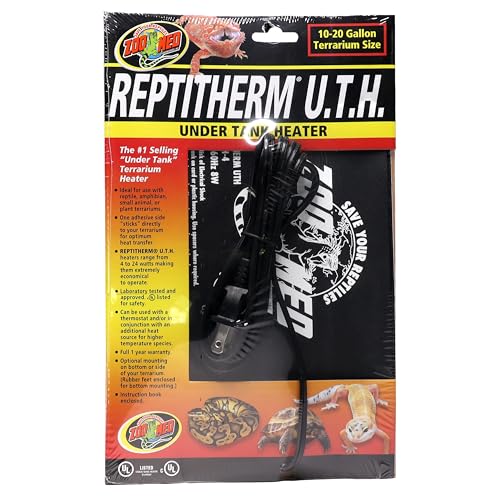
1. Zoo Med ReptiTherm Under Tank Heater
Editor's Choice
Zoo Med ReptiTherm Under Tank Heater
Pros
- •Trusted brand known for reptile heating products
- •Available in multiple sizes (10-, 20-, and 40-gallon tank compatibility)
- •Features a reliable adhesive backing for secure, long-term placement
- •Provides essential belly heat crucial for proper digestion in rosy boas
Cons
- •Requires a thermostat for safe and accurate temperature regulation
- •Primarily provides surface heat and contributes minimally to ambient air temperature
- •Improper installation or regulation can pose a burn risk to reptiles
Bottom Line
This under tank heater is a long-standing favorite among reptile keepers for its robust construction and effective belly heat delivery. Its availability in various sizes makes it adaptable for common rosy boa enclosure setups.
2. Inkbird ITC-306A Reptile Thermostat
Best Value
Inkbird ITC-306A Reptile Thermostat
Pros
- •Affordable and widely accessible for various budgets
- •Provides accurate on/off temperature regulation, crucial for safety
- •Simple and intuitive programming for ease of use
- •Features dual probe inputs for monitoring multiple points or redundant safety
Cons
- •On/off control can result in minor temperature fluctuations compared to dimming models
- •May not be ideal for very sensitive heating elements that benefit from proportional control
- •Requires careful placement of probes to ensure accurate readings
Bottom Line
This Inkbird thermostat offers an economical yet precise solution for managing reptile enclosure temperatures. Its user-friendly interface and dual-probe functionality make it a popular choice for maintaining stable thermal environments.
3. Arcadia Deep Heat Projector
Premium Pick
Arcadia Deep Heat Projector
Pros
- •Emits long-wave infrared heat that mimics natural sun warmth
- •Penetrates deep into substrate and body tissue for comprehensive heating
- •Produces heat without emitting any visible light, ideal for 24/7 use
- •Supports a naturalistic thermal environment for optimal digestion and immune function
Cons
- •Typically requires a dimming thermostat for optimal control and bulb longevity
- •Higher initial cost compared to many other conventional heating elements
- •Requires a sturdy dome fixture with a ceramic socket due to heat output
Bottom Line
The Arcadia Deep Heat Projector is a premium heating solution designed to provide deeply penetrating infrared warmth, superior to standard bulbs. It helps create a more naturalistic thermal gradient crucial for reptile health and well-being.
4. Zoo Med Ceramic Heat Emitter
Budget Pick
Zoo Med Ceramic Heat Emitter
Pros
- •Generates radiant heat without emitting visible light, perfect for nighttime
- •Supports continuous 24/7 heating without disturbing an animal's sleep cycle
- •Known for its durability and long operational lifespan, often lasting for years
- •Effectively raises ambient air temperature in an enclosure
Cons
- •Does not provide the deeply penetrating infrared found in DHPs
- •Can contribute to lower humidity levels if not managed in arid setups
- •Requires a thermostat for safe operation and to prevent overheating
Bottom Line
This ceramic heat emitter provides efficient radiant heat without any light output, making it an excellent choice for maintaining stable nighttime temperatures. Its robust construction ensures long-term reliability for continuous use.
5. Digital Probe Thermometer with Dual Sensors
Best Overall
Digital Probe Thermometer with Dual Sensors
Pros
- •Provides accurate, real-time temperature readings in the enclosure
- •Dual sensors enable simultaneous monitoring of both warm and cool sides
- •Essential for verifying the effectiveness of heating elements and thermostat accuracy
- •Clear, digital display for easy and quick temperature checks
Cons
- •Functions solely as a monitoring device; does not actively control temperature
- •Probes may be dislodged or moved by active snakes within the enclosure
- •Battery-operated, requiring periodic battery replacement
Bottom Line
An accurate digital thermometer with dual probes is indispensable for precisely monitoring a rosy boa's thermal gradient. It allows keepers to verify both warm and cool side temperatures concurrently, ensuring the enclosure remains within safe parameters.
Rosy Boa Temperature Requirements
Before you buy any heating equipment, you need to know your target temperatures. Here's the full breakdown:
| Zone | Temperature Range |
|---|---|
| Warm side (ambient) | 85–88°F (29–31°C) |
| Basking spot | 88–90°F (31–32°C) |
| Cool side (ambient) | 72–78°F (22–26°C) |
| Nighttime low | 65–72°F (18–22°C) |
These numbers come directly from expert care sheets including ReptiFiles and The Bio Dude. The warm side is where your rosy boa goes to digest and thermoregulate. The cool side is where it retreats when it needs to cool down.
One thing a lot of new keepers get wrong: surface temperature ≠ air temperature. An under-tank heater might create a surface temp of 95°F while the air above it is only 82°F. Always measure both with a quality digital thermometer or temperature gun.
Best Rosy Boa Heating Options
There are several solid ways to heat a rosy boa enclosure. Each method has pros and cons. Let's break them down.
Under-Tank Heaters (Heat Mats)
Under-tank heaters (UTHs) are thin adhesive pads that stick to the bottom outside of your enclosure. They warm the substrate from below, mimicking the belly heat rosy boas get from sun-warmed rocks in the wild.
UTHs are the most popular option for rosy boa keepers, and for good reason. They're affordable, easy to set up, and effective for belly heat — which is exactly what snakes need to digest meals.
A few things to know:
- Always use a thermostat with a UTH. Without one, these pads can overheat and burn your snake.
- Cover only one-third of the enclosure floor. This preserves the thermal gradient.
- Use a thin layer of substrate over the warm side so your snake can burrow without getting burned.
[Zoo Med ReptiTherm under-tank heater](https://www.amazon.com/dp/B00BUFWCNC?tag=krawlo-20 and [Fluker's heat mat](https://www.amazon.com/dp/B0D2MJGF49?tag=krawlo-20 are both well-regarded options in this category.
For more on heat mat options across reptile species, check out our guide on the Best Reptile Heating Pad: Top Picks & Buyer's Guide.
Radiant Heat Panels
Radiant heat panels (RHPs) mount to the ceiling inside the enclosure and radiate infrared heat downward. They're excellent for rosy boas because they provide even, ambient warmth across the enclosure without any light output.
RHPs are especially popular in rack systems where multiple snakes are kept. They're more expensive than UTHs but much more efficient at heating larger spaces.
Reptile Basics radiant heat panel is a trusted brand in this category. Always pair them with a thermostat.
Ceramic Heat Emitters (CHEs)
Ceramic heat emitters screw into a standard dome lamp fixture and produce heat without any visible light. They're a good option for adding ambient warmth — especially if your room temperature drops significantly at night.
CHEs don't provide focused belly heat the way UTHs do, so they work best in combination with an under-tank heater rather than as a standalone solution.
[Zoo Med Ceramic Heat Emitter](https://www.amazon.com/dp/B001F9CV7K?tag=krawlo-20 is the most commonly recommended brand. They're durable and reliable.
Deep Heat Projectors
Deep heat projectors (DHPs) are a newer technology that produces long-wave infrared radiation — the same kind of deep, penetrating warmth that the sun gives off. Unlike CHEs, DHPs can penetrate substrate and body tissue, warming your snake from the inside out more effectively.
For rosy boas kept in naturalistic or bioactive setups, a DHP is an excellent choice. They can be used as the primary heat source or to supplement a UTH.
[Arcadia Deep Heat Projector](https://www.amazon.com/dp/B0BSHS996Y?tag=krawlo-20 is the gold standard here. A bit pricier, but the quality shows.
Overhead Heat Lamps
Traditional heat bulbs work fine for rosy boas, though they're not strictly necessary since these snakes don't require intense basking the way lizards do. If you use a heat lamp, keep it on one side only and turn it off at night (more on that below).
A low-wattage bulb — 25W to 50W — is usually enough for a standard 20-gallon enclosure. Anything stronger risks overheating a small space.
Do You Need a Thermostat?
Yes. Full stop. A thermostat is non-negotiable for rosy boa heating.
Without a thermostat, your heating equipment will just run at full power — which can push surface temps to dangerous levels. A rosy boa sitting on a 105°F heat mat won't move away instinctively. It'll sit there and get burned.
There are three main types:
| Type | Best For | Cost Range |
|---|---|---|
| On/Off thermostat | UTHs, CHEs | Budget-friendly |
| Pulse-proportional thermostat | Most heat sources | Mid-range |
| Dimming thermostat | Heat lamps, RHPs, DHPs | Higher-end |
(Estimates only — actual prices on Amazon may vary.)
For most rosy boa keepers, an on/off thermostat is perfectly adequate for running a UTH. You set the target temperature, plug in your heater, and the thermostat cycles it on and off to maintain that temp.
[Inkbird ITC-306A thermostat](https://www.amazon.com/dp/B08Y5JDYFY?tag=krawlo-20 and [Vivarium Electronics VE-300](https://www.amazon.com/dp/B00U2VBR5O?tag=krawlo-20 are both well-regarded options used by experienced keepers.
For a deeper look at thermostat options, see our Best Reptile Thermostats Review.
Should You Turn Off Heat at Night?
This is one of the most commonly asked questions about rosy boa heating. The short answer: it depends on what type of heater you're using and your room temperature.
Rosy boas are native to desert environments where nighttime temperatures drop significantly. A natural temperature drop at night is not just acceptable — it's actually beneficial. It signals natural circadian rhythms, supports healthy hormone cycles, and can even help trigger breeding behavior.
Here's the practical rule:
- If your nighttime room temperature stays above 65°F, you can safely turn off overhead heat lamps at night.
- If your room drops below 65°F at night, keep a CHE or RHP running to prevent dangerously cold temps.
- Under-tank heaters can stay on 24/7 — they provide low-level belly heat and don't disturb sleep cycles with light.
Never let your rosy boa's enclosure drop below 60°F. That's cold enough to cause serious health problems.
Setting Up the Thermal Gradient
A thermal gradient just means your enclosure goes from warm on one end to cool on the other. Your rosy boa moves between zones to regulate its temperature, just like it would in the wild.
Here's how to set it up correctly:
- Place your heat source under one-third of the enclosure floor (for UTHs) or at one end of the ceiling (for RHPs/CHEs).
- Put hides on both the warm side AND the cool side. This is critical. Your snake needs to feel secure no matter where it is. A rosy boa that only has a warm-side hide will be forced to choose between feeling safe and thermoregulating — and it'll usually pick feeling safe, which means sitting in the wrong temperature zone.
- Measure temperatures on both sides with a digital probe thermometer or an infrared temperature gun. Don't guess.
- Check after 24 hours with your thermostat running before you put your snake in. Confirm the temps are where they need to be.
If you're also setting up a new enclosure for your rosy boa, check out our recommendations for the Best Rosy Boa Enclosure to make sure your housing is up to par before you install any heating.
Brumation: Do Rosy Boas Need It?
Brumation is the reptile equivalent of hibernation — a period of reduced activity and lowered body temperature during winter. Wild rosy boas brumate naturally from roughly October through February.
For captive rosy boas, brumation is optional unless you're planning to breed them. Many keepers successfully keep their rosy boas active year-round by maintaining consistent temperatures.
If you do want to brumate your rosy boa:
- Start gradually reducing temperatures in October
- Cool the enclosure down to 50–60°F over several weeks
- Do NOT feed for at least 2 weeks before cooling begins (undigested food can rot in a cooled snake)
- Keep fresh water available throughout
- Gradually warm back up in February–March
Never brumate a sick or underweight snake. Only healthy, well-fed animals should go through brumation.
Common Heating Mistakes to Avoid
Even experienced keepers make these errors. Here's what to watch out for:
Using a heat lamp as the only heat source. Overhead lamps create a warm spot at the top of the enclosure, but snakes need belly heat. If you rely on a lamp alone, your rosy boa's warm side might feel warm at the surface but the substrate will be cool.
Skipping the thermostat. We can't say this enough. Thermostats are $30–$60 and could save your snake's life. There's no good reason to skip one.
Putting the heat mat under the substrate inside the enclosure. Under-tank heaters go on the outside of the glass, not inside. Burying them in substrate creates a fire risk and makes temperature control impossible.
Only putting a hide on the warm side. Your rosy boa needs hides on both sides. If there's no cool-side hide, your snake will be stressed.
Using a hot rock. Hot rocks — the decorative kind that heat from within — are notorious for malfunctioning and burning reptiles. Never use them.
Checking temps with the wrong tool. Stick-on thermometers that come with beginner kits are notoriously inaccurate. Use a digital probe thermometer or a temperature gun instead.
Heating for Different Enclosure Sizes
The right heating setup also depends on your enclosure size. Rosy boas are typically kept in 20-gallon or 40-gallon breeder tanks, though hatchlings can start in smaller tubs.
| Enclosure Size | Recommended Heating |
|---|---|
| 10-gallon (hatchling tub) | Small UTH (4"×5") + thermostat |
| 20-gallon | Medium UTH (8"×12") + thermostat |
| 40-gallon breeder | Large UTH or RHP + thermostat |
| Rack system | RHP mounted to lid + thermostat |
For a 20-gallon, a [medium under-tank heater](https://www.amazon.com/dp/B076FLJDFQ?tag=krawlo-20 covering roughly the back third of the floor is the sweet spot. Pair it with a thermostat set to 88°F and you're in business.
Quick Heating Checklist
Before you introduce your rosy boa to its new enclosure, run through this list:
- Warm side surface temp: 88–90°F ✓
- Cool side ambient temp: 72–78°F ✓
- Thermostat installed and calibrated ✓
- Heat source covers no more than one-third of enclosure floor ✓
- Hide on warm side AND cool side ✓
- Temperatures stable for 24 hours before adding snake ✓
- Nighttime temperature plan in place ✓
If you can check every box, your heating setup is solid. Your rosy boa will thank you.
For new snake owners, rosy boas are one of the most beginner-friendly species you can choose. Their heating needs are simple compared to tropical species, and they're incredibly forgiving of minor temperature fluctuations. Learn the basics here, get your thermostat dialed in, and you'll have a healthy, thriving snake for decades to come. For more beginner-friendly options, see our list of Best Pet Snakes for Beginners.
Our Final Verdict
Zoo Med ReptiTherm Under Tank Heater
This under tank heater is a long-standing favorite among reptile keepers for its robust construction and effective belly heat delivery. Its availability in various sizes makes it adaptable for common rosy boa enclosure setups.

Inkbird ITC-306A Reptile Thermostat
This Inkbird thermostat offers an economical yet precise solution for managing reptile enclosure temperatures. Its user-friendly interface and dual-probe functionality make it a popular choice for maintaining stable thermal environments.

Arcadia Deep Heat Projector
The Arcadia Deep Heat Projector is a premium heating solution designed to provide deeply penetrating infrared warmth, superior to standard bulbs. It helps create a more naturalistic thermal gradient crucial for reptile health and well-being.
Frequently Asked Questions
An under-tank heater (UTH) paired with a quality thermostat is the most popular and effective choice for rosy boas. It provides belly heat that mimics sun-warmed rock surfaces in the wild. For larger enclosures or rack systems, a radiant heat panel is an excellent alternative. Always use a thermostat regardless of which heat source you choose.
References & Sources
- https://reptifiles.com/rosy-boa-care-sheet/
- https://community.morphmarket.com/t/rosy-boa-temps/50678
- https://www.thebiodude.com/blogs/snake-caresheets/rosy-boa-care-guide-and-bioactive-terrarium-maintenance?srsltid=AfmBOoqPSxS8eXY3hHRzeJfXEs6BzP1JUOphQbfsV12ljdi6BYsMcDoM
- https://dubiaroaches.com/blogs/snake-care/rosy-boa-care-sheet?srsltid=AfmBOop27cqsZGzb0Kxp7N4-QbaRgnvOfbxqlFHP9_4ZKRMfBYZ9UOfR
Related Articles

Best Live Plants for Snake Terrarium: A Comprehensive Guide
Discover the best live plants for your snake's terrarium to create a lush, natural, and enriching environment. Learn how to choose safe, beneficial plants and keep them thriving.

Best Snakes for Beginners: 5 Top Species Ranked
Looking for the best snakes for beginners? We rank the top 5 species by temperament, size, and care needs — corn snakes, ball pythons, rosy boas, and more.

Best Rosy Boa Lighting: A Guide to Optimal Husbandry
Discover the best rosy boa lighting setups for your pet. Learn about UVB, heating, and ambient lighting to create an ideal environment that promotes health and natural behaviors.