Best Reptile Water Conditioner: Top Picks for 2026
Find the best reptile water conditioner to keep your pet safe from chlorine and heavy metals. Compare top picks, learn how they work, and shop smart.


This article contains affiliate links. If you make a purchase through these links, we may earn a small commission at no extra cost to you. See our affiliate disclosure for details.
We recommend 5 picks here. Our top choice is the Zoo Med ReptiSafe Water Conditioner — check price and availability below.
How we choose: we compare published specifications against the care requirements in veterinary and species-care literature, and weigh those against what long-time keepers report. We do not test products ourselves and we do not restate Amazon star ratings. The 6 sources behind this article are listed at the bottom.
Quick Comparison
- Detoxification Scope
- Chlorine, Chloramines, Heavy Metals
- Additional Health/Ecosystem Benefits
- Electrolytes & Slime Coat
- Primary Target Audience
- All Reptile Keepers
- Concentration/Format
- Standard Liquid
- Detoxification Scope
- Chlorine, Chloramines, Heavy Metals
- Additional Health/Ecosystem Benefits
- None explicit
- Primary Target Audience
- Large Volume / Budget Keepers
- Concentration/Format
- Ultra-Concentrated Liquid
- Detoxification Scope
- Chlorine, Heavy Metals
- Additional Health/Ecosystem Benefits
- Aloe Vera (Shell & Skin)
- Primary Target Audience
- Aquatic Turtle Owners
- Concentration/Format
- Standard Liquid
- Detoxification Scope
- Chlorine, Chloramines
- Additional Health/Ecosystem Benefits
- Bioactive Safe
- Primary Target Audience
- Bioactive Vivarium Keepers
- Concentration/Format
- Standard Liquid
- Detoxification Scope
- Chlorine, Chloramines
- Additional Health/Ecosystem Benefits
- None explicit
- Primary Target Audience
- Multiple Enclosure Owners
- Concentration/Format
- Available in Large Sizes
Prices are estimates only. Actual prices on Amazon may vary.
If you fill your reptile's water dish straight from the tap, you might be doing more harm than you think. Tap water contains chlorine, chloramines, and heavy metals — all of which can irritate your reptile's skin, eyes, and digestive system over time. The fix is simple: a good reptile water conditioner.
But with a handful of products on the market, it's hard to know which one is actually worth buying. In this guide, we break down the best reptile water conditioners, explain exactly how they work, and help you pick the right one for your setup.
Why Tap Water Is Risky for Reptiles
Most of us don't think twice about tap water. But for reptiles, it's a different story.
Municipal water supplies are treated with chlorine or chloramines to kill bacteria and make the water safe for humans. That's great for us — but reptiles absorb water differently. Many soak regularly, and aquatic species like turtles and axolotls live directly in it.
Chlorine can strip the protective mucus layer from a reptile's skin and irritate sensitive tissue. Chloramines are even harder to neutralize because they don't just evaporate on their own like chlorine does. And heavy metals like copper and lead — which leach into tap water through old pipes — can accumulate in your reptile's body over time.
According to The Bio Dude's water quality guide, not all water sources are equal — and untreated tap water is one of the most common overlooked stressors in reptile husbandry.
Bottom line: if you're giving your reptile tap water without treating it first, a conditioner is one of the easiest upgrades you can make.
Why Tap Water Is Risky
What you need to know
Chlorine and chloramines strip protective mucus layer and irritate sensitive tissue
Heavy metals (copper, lead) from old pipes accumulate in your reptile's body over time
Aquatic species absorb water directly — chloramines don't evaporate on their own like chlorine
How Water Conditioners Work
What you need to know
Neutralizes chlorine and chloramines instantly
Detoxifies heavy metals (copper, lead, zinc) so they can't be absorbed
Adds beneficial electrolytes that support hydration
Includes slime coat protector for skin healing and wound treatment
Top Reptile Water Conditioners
Quick recommendations
Reptile-specific formula with electrolytes (calcium, potassium, magnesium), slime coat protection, and heavy metal detox
Highly concentrated — one 250ml bottle treats up to 2,500 gallons at $8–$12
Formulated for aquatic species with aloe vera extract for shell and skin health
Generously sized bottle with slime coat protection, ideal for large tortoise pools and big tanks
Detailed Reviews
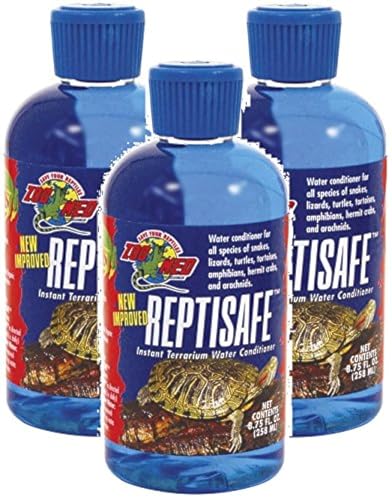
1. Zoo Med ReptiSafe Water Conditioner
Best Overall
Zoo Med ReptiSafe Water Conditioner
Pros
- •Comprehensive treatment: neutralizes chlorine, chloramines, and heavy metals.
- •Enhances reptile health: adds beneficial electrolytes for hydration.
- •Protects skin: includes a slime coat protector to reduce irritation.
- •Universal compatibility: safe for all reptile species, aquatic and terrestrial.
Cons
- •May be a standard concentration, requiring larger doses for very large water volumes.
- •Potentially higher price point compared to some budget-focused conditioners.
Bottom Line
As the industry-standard choice, Zoo Med ReptiSafe offers a comprehensive solution for tap water treatment, effectively neutralizing harmful chemicals. It goes beyond basic conditioning by adding beneficial electrolytes and a slime coat protector, making it suitable for all reptile types.
2. Seachem Prime Water Conditioner
Best Value
Seachem Prime Water Conditioner
Pros
- •Highly concentrated: treats thousands of gallons with minimal product.
- •Extremely cost-effective: provides excellent value for large-scale conditioning.
- •Efficient for large setups: ideal for big tanks, ponds, and multiple enclosures.
Cons
- •Requires precise dosing due to its high concentration to avoid overdosing.
- •Primarily focused on water detoxification; lacks added health benefits like electrolytes.
- •Not specifically formulated with skin/shell conditioners found in specialized products.
Bottom Line
Seachem Prime stands out for its exceptional concentration, offering an economical solution for conditioning vast quantities of water. Its high efficiency makes it a top choice for maintaining large aquatic habitats or for budget-conscious keepers.
3. API Turtle Water Conditioner
Editor's Choice
API Turtle Water Conditioner
Pros
- •Turtle-specific formulation: tailored precisely for aquatic turtle needs.
- •Supports shell and skin health: contains aloe vera for added benefits.
- •Standard detoxification: effectively removes chlorine and heavy metals.
- •Gentle on aquatic environments, minimizing stress to sensitive species.
Cons
- •Limited scope: not ideal for non-aquatic reptiles or other species.
- •May not be as highly concentrated as general-purpose conditioners.
- •Specific ingredients like aloe vera might not be desired for all aquatic setups.
Bottom Line
Specifically designed for aquatic turtles, API Turtle Water Conditioner not only removes harmful tap water chemicals but also includes aloe vera to promote shell and skin health. It provides targeted care for the unique requirements of turtle habitats.
4. Exo Terra Aquatize Terrarium Water Conditioner
Premium Pick
Exo Terra Aquatize Terrarium Water Conditioner
Pros
- •Bioactive safe: formulated not to harm live plants or microfauna.
- •Maintains ecosystem balance: essential for delicate bioactive environments.
- •Effective detoxification: removes chlorine and chloramines from tap water.
- •Prevents vivarium disruption, safeguarding beneficial organisms.
Cons
- •May not address heavy metals as comprehensively as other general-purpose conditioners.
- •Potentially a higher price point due to its specialized bioactive formula.
- •Specific use case means it is not a versatile, general-purpose conditioner for all setups.
Bottom Line
Exo Terra Aquatize is engineered for the delicate balance of bioactive terrariums, ensuring tap water is safe without impacting live plants or beneficial microfauna. It effectively neutralizes chlorine and chloramines, preserving the health of the vivarium ecosystem.
5. Fluval Water Conditioner
Budget Pick
Fluval Water Conditioner
Pros
- •Good value in larger sizes: economical for frequent, large-volume use.
- •Versatile all-rounder: suitable for various reptile enclosures and water dishes.
- •Effective chemical removal: neutralizes chlorine and chloramines reliably.
- •Practical for multiple setups, reducing the need for different products.
Cons
- •May lack specialized benefits (like electrolytes or aloe vera) found in niche conditioners.
- •Might not be as ultra-concentrated as products like Seachem Prime for extreme volumes.
- •As an 'all-rounder,' it is not specifically optimized for any single niche or species.
Bottom Line
Fluval Water Conditioner is a reliable all-purpose choice, offered in larger bottle sizes that provide excellent value for managing substantial water conditioning needs. It efficiently treats tap water for various reptile habitats, from turtle tanks to tortoise pools.
What Does a Reptile Water Conditioner Actually Do?
A reptile water conditioner is a liquid solution you add to tap water before use. It works by chemically neutralizing the harmful compounds in your water supply.
Here's what a quality conditioner typically does:
- Neutralizes chlorine and chloramines — instantly breaks them down so they can't irritate your reptile
- Detoxifies heavy metals — binds to copper, lead, and zinc so they can't be absorbed
- Conditions electrolytes — some formulas add beneficial electrolytes that support hydration
- Treats wounds — certain products include a slime coat protector that helps with skin healing
Some conditioners are designed specifically for reptiles. Others are marketed for fish but work just as well — we'll cover both below.
Is Fish Water Conditioner the Same as Reptile Water Conditioner?
Short answer: often yes, but read the label.
Many reptile and fish water conditioners share the same core chemistry. Products like Seachem Prime are extremely popular among reptile keepers, even though they're marketed for fish tanks. The MorphMarket community frequently recommends fish dechlorinators as effective and affordable alternatives to reptile-branded products.
The key difference is that some fish conditioners include ingredients specifically formulated for fish biology — like aloe for gill protection — that aren't harmful to reptiles, but aren't necessary either. As long as the product neutralizes chlorine, chloramines, and heavy metals, it's generally safe for reptiles.
Avoid products that contain ammonia-neutralizing ingredients if your enclosure uses beneficial bacteria — those additives can disrupt biological filtration. Always check the ingredient list before switching products.
The Best Reptile Water Conditioners
Here are our top picks, chosen for effectiveness, safety, and value.
1. Zoo Med ReptiSafe Water Conditioner — Best Overall
[Zoo Med ReptiSafe](https://www.amazon.com/dp/B00TNPHD58?tag=krawlo-20 is the gold standard for reptile keepers. It's one of the few conditioners designed specifically with reptiles in mind, and it shows.
ReptiSafe neutralizes chlorine and chloramines, detoxifies heavy metals, and adds electrolytes — calcium, potassium, and magnesium — that support hydration and overall health. It also contains a slime coat protector that's especially helpful for aquatic turtles and amphibians.
According to Zoo Med's official product page, ReptiSafe works instantly and is safe for all reptiles, amphibians, and invertebrates.
Best for: All reptile types — from geckos and snakes to turtles and tortoises.
| Feature | Details |
|---|---|
| Chlorine removal | Yes |
| Chloramine removal | Yes |
| Heavy metal detox | Yes |
| Electrolytes | Yes |
| Slime coat | Yes |
| Safe for amphibians | Yes |
Dosage: 1.25 ml per gallon of water.
2. Seachem Prime — Best Value
[Seachem Prime](https://www.amazon.com/dp/B00025694O?tag=krawlo-20 is a favorite in both the aquarium and reptile hobby. It's incredibly concentrated, which means a small bottle lasts a long time. A single 250ml bottle treats up to 2,500 gallons.
Prime detoxifies chlorine, chloramines, and ammonia, and it also works as a temporary ammonia detoxifier — useful if you have a filtered turtle or tortoise water setup. It doesn't add electrolytes, so it's a more minimal approach, but it handles the basics exceptionally well.
(Estimates only — actual prices on Amazon may vary.) At roughly $8–$12 for a 250ml bottle, it's one of the most cost-effective options on the market.
Best for: Turtle keepers, aquatic setups, and anyone conditioning large volumes of water regularly.
| Feature | Details |
|---|---|
| Chlorine removal | Yes |
| Chloramine removal | Yes |
| Heavy metal detox | Yes |
| Electrolytes | No |
| Ammonia detox | Yes (temporary) |
| Concentration | Very high (5x Prime) |
Dosage: 2 drops per gallon for standard conditioning.
3. API Turtle Water Conditioner — Best for Turtles
[API Turtle Water Conditioner](https://www.amazon.com/dp/B00ESBHMXK?tag=krawlo-20 is formulated with red-eared sliders, painted turtles, and other aquatic species in mind. It removes chlorine and heavy metals and includes an aloe vera extract that supports shell and skin health.
According to ReptiFiles' red-eared slider care guide, water quality is one of the most critical factors in keeping aquatic turtles healthy — and a dedicated conditioner is a non-negotiable part of that equation.
Best for: Aquatic turtles and semi-aquatic species.
4. Fluval Water Conditioner — Best for Large Enclosures
Fluval Water Conditioner is a solid all-rounder designed for aquatic environments. It neutralizes chlorine, chloramines, and heavy metals and adds a protective slime coat. It comes in a generously sized bottle and is well-priced for the volume you get.
If you're managing a large tortoise water area or a big turtle tank, Fluval gives you good coverage without breaking the bank.
Best for: Large water volumes, tortoise pools, big turtle enclosures.
5. Exo Terra Aquatize Terrarium Water Conditioner — Best for Bioactive Builds
[Exo Terra Aquatize](https://www.amazon.com/dp/B01DUZZLVY?tag=krawlo-20 is designed specifically for bioactive and naturalistic terrarium setups. It's gentle enough not to disrupt the beneficial bacteria in your substrate, and it removes chlorine and chloramines effectively.
If you're running a bioactive setup with live plants and a cleanup crew, this is the one to reach for. It won't nuke your microfauna the way some heavier-duty conditioners might.
Best for: Bioactive vivariums, dart frog setups, naturalistic enclosures.
How to Choose the Right Water Conditioner
Not every reptile needs the same product. Here's a quick breakdown to help you decide:
| Reptile Type | Best Pick | Why |
|---|---|---|
| Geckos, snakes, lizards | ReptiSafe | Electrolytes + slime coat for soaking |
| Aquatic turtles | Seachem Prime or API Turtle | Heavy metal + ammonia detox for large water volumes |
| Tortoises | ReptiSafe or Fluval | Electrolytes support hydration during soaks |
| Bioactive enclosures | Exo Terra Aquatize | Won't disrupt beneficial bacteria |
| Budget conscious | Seachem Prime | Extremely concentrated, long-lasting |
How to Use Reptile Water Conditioner
Using water conditioner is straightforward. Here's the process:
- Fill a clean container with tap water — a pitcher or bucket works well.
- Add the correct dose based on the bottle's instructions. Don't eyeball it; get a dosing syringe or use the cap if it has measurements.
- Stir or swirl the water to mix the conditioner thoroughly.
- Wait 30 seconds for the conditioner to fully neutralize the chlorine before adding the water to your enclosure or dish.
- Use immediately or store covered — conditioned water can be stored in a sealed container for a few days.
For soaking water (tortoises, bearded dragons), use the same process. Soak water should always be conditioned, since reptiles absorb water directly through their skin during a soak.
As The Spruce Pets notes in their turtle care guide, even short-term exposure to untreated tap water can cause irritation over time — so consistency matters.
Common Mistakes to Avoid
Using Too Much
More isn't better with water conditioners. Follow the dosing instructions. Overdosing won't necessarily harm your reptile, but it's wasteful and can affect pH in large enclosures.
Forgetting Soaking Water
Many keepers condition their reptile's drinking water but forget to condition soaking water. Tortoises and bearded dragons soak regularly and absorb water through their cloaca — always condition soak water too.
Relying on Conditioner Alone for Water Quality
Water conditioners remove harmful chemicals — they don't filter out waste, bacteria, or nitrates. If you keep aquatic turtles or any species with a large water feature, you still need a proper filtration system. The Spruce Pets' guide on aquarium cleaning covers filtration basics that apply equally well to reptile aquatic setups.
Using the Wrong Product
Some aquarium conditioners are formulated for marine (saltwater) use. Always verify you're using a freshwater product unless you're running a brackish turtle setup.
Does My Reptile Really Need Water Conditioner?
If you're using tap water — yes. Full stop.
The only exceptions are if you're using:
- RO (reverse osmosis) water — already stripped of chlorine and heavy metals
- Distilled water — same, but you may need to re-mineralize it for aquatic species
- Well water — doesn't have chlorine added, but may have other contaminants worth testing
For most reptile keepers, tap water is the daily reality, and a $10 bottle of conditioner is the cheapest and easiest way to protect your animal from a slow, invisible stressor.
If you're setting up a new enclosure and want to make sure you have all the basics covered, check out our guide to the best reptile enclosures for beginners — water quality is one of the first things we cover there too.
Final Thoughts
Repetile water conditioner isn't glamorous, but it's one of those small investments that makes a real difference to your animal's long-term health. The products on this list are all reliable, affordable, and easy to use.
Our top pick is Zoo Med ReptiSafe for its reptile-specific formula and added electrolytes. If you're on a budget or conditioning high volumes of water, Seachem Prime is hard to beat.
Either way, you're making the right call by treating your tap water before it reaches your reptile. It's one of those habits that separates good reptile keeping from great reptile keeping.
Looking for more ways to optimize your setup? Check out our best reptile heating pad guide to make sure your temperatures are dialed in as well.
Our Final Verdict
Zoo Med ReptiSafe Water Conditioner
As the industry-standard choice, Zoo Med ReptiSafe offers a comprehensive solution for tap water treatment, effectively neutralizing harmful chemicals. It goes beyond basic conditioning by adding beneficial electrolytes and a slime coat protector, making it suitable for all reptile types.

Seachem Prime Water Conditioner
Seachem Prime stands out for its exceptional concentration, offering an economical solution for conditioning vast quantities of water. Its high efficiency makes it a top choice for maintaining large aquatic habitats or for budget-conscious keepers.

API Turtle Water Conditioner
Specifically designed for aquatic turtles, API Turtle Water Conditioner not only removes harmful tap water chemicals but also includes aloe vera to promote shell and skin health. It provides targeted care for the unique requirements of turtle habitats.
Frequently Asked Questions
Yes, if you're using tap water. Tap water contains chlorine, chloramines, and heavy metals that can irritate a reptile's skin, eyes, and digestive system over time. A water conditioner neutralizes these chemicals instantly and makes the water safe.
References & Sources
- https://www.thebiodude.com/blogs/bioactive-terrarium-maintenance-guides-and-faqs/all-water-is-not-equal-the-art-of-watering-your-pet-reptile-and-water-features?srsltid=AfmBOooC7ZBXgT_qOhla7eO0cez5eHW046390AuGvpWk4LhBoBEcLdPm
- https://community.morphmarket.com/t/water-dechlorinater/33242
- https://zoomed.com/reptisafe-water-conditioner/
- https://reptifiles.com/red-eared-slider-care/red-eared-slider-filters-water-treatment/
- https://www.thesprucepets.com/keeping-water-in-your-turtle-tank-clean-1238362
- https://www.thesprucepets.com/aquarium-cleaning-supplies-1381094
Related Articles

Best Water Dish for Bearded Dragon: A Keeper's Guide
Struggling to find the best water dish for your bearded dragon? Our expert guide reviews the safest, most practical options to keep your beardie hydrated and healthy.

Best Ball Python Water Bowl: Top Picks & Buyer's Guide
Find the best ball python water bowl for drinking, soaking, and humidity. We cover sizing, materials, and top picks to keep your BP healthy.

Best Water Bowls for Geckos (2026)
Find the safest reptile water dish for your gecko. We researched 5 top bowls by depth, stability, and cleaning ease — see our top pick for hatchlings and adults.