Best Reptile Heat Lamp: Top Picks for Every Species
Find the best reptile heat lamp for your species. We compare halogen, ceramic, and mercury vapor options with temperature guides and expert buying tips.


This article contains affiliate links. If you make a purchase through these links, we may earn a small commission at no extra cost to you. See our affiliate disclosure for details.
We recommend 5 picks here. Our top choice is the Halogen Flood Basking Bulb (50W–100W) — check price and availability below.
How we choose: we compare published specifications against the care requirements in veterinary and species-care literature, and weigh those against what long-time keepers report. We do not test products ourselves and we do not restate Amazon star ratings. The 5 sources behind this article are listed at the bottom.
Quick Comparison
- Primary Heat Type/Function
- IR-A Basking Spot
- Light Output
- Yes
- Thermostat Compatibility
- Dimming Thermostat
- Typical Lifespan
- 6-12 Months
- Estimated Price
- $15-30
- Primary Heat Type/Function
- IR-C Ambient/Night
- Light Output
- No
- Thermostat Compatibility
- On/Off Thermostat
- Typical Lifespan
- 2-5 Years
- Estimated Price
- $20-40
- Primary Heat Type/Function
- IR-A/B Basking + UV
- Light Output
- Yes
- Thermostat Compatibility
- None (Self-regulating)
- Typical Lifespan
- 6-12 Months
- Estimated Price
- $40-80
- Primary Heat Type/Function
- Reflective Housing
- Light Output
- N/A (Holds Bulb)
- Thermostat Compatibility
- N/A (Manual Dimmer)
- Typical Lifespan
- 5+ Years
- Estimated Price
- $25-50
- Primary Heat Type/Function
- Automated Temp Control
- Light Output
- N/A (Regulates Bulbs)
- Thermostat Compatibility
- Dimmable Bulbs Only
- Typical Lifespan
- 3-5+ Years
- Estimated Price
- $40-70
Prices are estimates only. Actual prices on Amazon may vary.
Your reptile can't regulate its own body temperature. That means the heat lamp you choose isn't just a comfort item — it's a survival tool.
Get it right, and your pet thrives. Get it wrong, and you're looking at lethargy, poor digestion, a weakened immune system, and worse.
This guide covers everything you need: what types of heat lamps exist, how to match one to your specific species, what temperatures to aim for, and which products consistently deliver results.
Why Heat Lamps Are Non-Negotiable
Reptiles are ectotherms. They rely entirely on external heat sources to warm their bodies.
In the wild, they bask under the sun — absorbing infrared radiation to reach the temperatures their biology demands. In captivity, a good heat lamp replicates that solar energy.
Without proper heat, digestion slows or stops. The immune system weakens. Behavioral problems emerge, like hiding constantly or refusing food. Metabolic bone disease risk increases over time.
A quality heat lamp isn't a nice-to-have. It's the foundation of proper reptile care.
Understanding Infrared Heat Types
IR-A (Near Infrared)
Deep tissue penetration
Found in halogen & incandescent bulbs. Most beneficial for reptiles.
IR-B (Mid Infrared)
Moderate penetration
Also found in incandescent bulbs. Replicates natural sunlight.
IR-C (Far Infrared)
Surface warming only
Found in ceramic heat emitters & radiant panels. Best for ambient heat, not basking.
Heat Lamp Types at a Glance
What you need to know
**Halogen Flood Bulbs** — Gold standard; tight, intense basking with excellent IR-A output. Best for desert species (bearded dragons, tegus, monitors).
**Incandescent Basking Bulbs** — Classic & affordable; good IR-A/B output. Shorter lifespan than halogens.
**Ceramic Heat Emitters** — No light; IR-C only. Ideal for nighttime ambient heat; lasts 2–5 years.
**Mercury Vapor Bulbs** — All-in-one: light + UVA + UVB + heat. Expensive & high-wattage; overkill for small enclosures.
**Radiant Heat Panels** — Wide ambient warmth; no focused basking spot. Better for large snake enclosures.
Basking Temperature Guide by Species
Bearded Dragon
100–115°F (38–46°C)
Cool side: 80–85°F
Leopard Gecko
88–92°F (31–33°C)
Cool side: 72–77°F
Ball Python
88–92°F (31–33°C)
Cool side: 76–80°F
Blue-Tongue Skink
100–105°F (38–40°C)
Cool side: 75–80°F
Ackie Monitor
120–140°F (49–60°C)
Cool side: 80–85°F
Russian Tortoise
95–100°F (35–38°C)
Cool side: 70–75°F
Red-Eared Slider
90–95°F (32–35°C)
Cool side: 75–80°F
Heat Lamp Sizing Tips
What you need to know
**Enclosure size** — Larger enclosures need more wattage to heat effectively.
**Room temperature** — Cool rooms require higher wattage than warm ones.
**Species needs** — Desert species need higher temps than temperate ones.
**Distance matters** — Lamp placement affects surface temperature (farther = lower).
**Starting point** — Try 50W halogen for a 40-gallon enclosure; measure with a temperature gun and adjust.
Detailed Reviews
1. Halogen Flood Basking Bulb (50W–100W)
Best Overall
Halogen Flood Basking Bulb (50W–100W)
Pros
- •Produces beneficial IR-A radiation for deep tissue warming.
- •Effectively replicates natural sunlight basking conditions.
- •More energy-efficient than traditional incandescent bulbs.
- •Available in a practical range of wattages (50W-100W).
Cons
- •Emits light, making it unsuitable for 24/7 heat provision.
- •Requires a separate, lightless heat source for nighttime.
- •Can create localized hot spots if not properly regulated by a thermostat.
Bottom Line
Halogen flood bulbs are the gold standard for reptile basking, effectively replicating natural sunlight by emitting deep-penetrating IR-A radiation. Their superior efficiency compared to incandescent options delivers optimal heat for a primary basking spot.
2. Ceramic Heat Emitter (CHE) for Reptiles
Editor's Choice
Ceramic Heat Emitter (CHE) for Reptiles
Pros
- •Produces no light, ideal for undisturbed nighttime heating.
- •Provides long-lasting ambient heat with a 2–5 year lifespan.
- •Compatible with most standard dome lamp fixtures.
- •Effective for increasing overall enclosure ambient temperatures.
Cons
- •Emits only IR-C, providing surface-level warmth rather than deep tissue heat.
- •Does not replicate natural basking conditions or provide IR-A/IR-B.
- •Can contribute to lower humidity levels in arid setups without proper mitigation.
Bottom Line
Ceramic Heat Emitters are an excellent choice for providing consistent, lightless ambient heat during the night, ensuring a reptile's natural sleep cycle remains undisturbed. While effective for raising air temperatures, they only produce surface-warming IR-C radiation.
3. Mercury Vapor Bulb for Reptiles
Premium Pick
Mercury Vapor Bulb for Reptiles
Pros
- •Provides heat, UVA, and UVB radiation from a single bulb.
- •Simplifies complex lighting and heating setups for specific species.
- •High output suitable for larger enclosures and demanding desert species.
- •Eliminates the need for multiple separate bulbs and fixtures.
Cons
- •Not compatible with dimmer thermostats, posing a risk of overheating.
- •Not suitable for all species, particularly those sensitive to high UV levels.
- •Typically has a higher initial cost compared to single-purpose bulbs.
- •Requires specific fixture types due to size and intense heat output.
Bottom Line
Mercury Vapor Bulbs offer an all-in-one solution for heating, UVA, and UVB, streamlining the environmental setup for certain large desert reptiles. However, their high output and incompatibility with dimmers necessitate careful consideration for species-specific needs and enclosure size.
4. Reptile Dome Lamp Fixture with Dimmer
Best Value
Reptile Dome Lamp Fixture with Dimmer
Pros
- •Deep dome design maximizes downward heat and light reflection.
- •Accommodates high-wattage bulbs, typically up to 150W.
- •Aluminum-lined interior enhances heat projection and overall efficiency.
- •Integrated dimmer allows for manual adjustment of bulb intensity and heat.
Cons
- •The integrated dimmer may not be compatible with all bulb types (e.g., MVBs).
- •Requires a separate, external thermostat for automated temperature regulation.
- •Larger footprint may not be ideal for smaller or more compact enclosures.
Bottom Line
A deep dome lamp fixture with an aluminum-lined interior effectively directs heat downward, enhancing the efficiency of basking bulbs. The integrated dimmer provides manual control for light intensity and heat output, accommodating bulbs up to 150W.
5. Dimmer Thermostat for Reptile Basking Lamps
Budget Pick
Dimmer Thermostat for Reptile Basking Lamps
Pros
- •Provides precise temperature regulation for basking lamps.
- •Prevents dangerous overheating within the enclosure.
- •Significantly extends the operational lifespan of compatible bulbs.
- •Ensures consistent and safe basking temperatures vital for reptile health.
Cons
- •Only compatible with dimmable basking lamps (e.g., halogen, incandescent).
- •Not suitable for on/off control of ceramic heat emitters or mercury vapor bulbs.
- •Adds an additional component to the overall setup's cost and complexity.
Bottom Line
A dimmer thermostat is crucial for maintaining precise and safe basking temperatures by continuously adjusting the output of compatible halogen and incandescent bulbs. This advanced regulation prevents overheating while significantly prolonging bulb longevity, ensuring optimal reptile welfare.
What Is Infrared Heat?
Not all heat is the same, and understanding infrared will help you pick the right bulb.
Infrared (IR) is the part of the light spectrum we experience as heat. It's invisible to our eyes, but reptiles can feel — and in some cases see — it clearly.
There are three types:
- IR-A (Near Infrared): Penetrates deeply into muscle and tissue. Warms the animal from the inside out. Found in halogen and incandescent bulbs.
- IR-B (Mid Infrared): Moderate penetration. Also found in incandescent bulbs.
- IR-C (Far Infrared): Surface warming only. Found in ceramic heat emitters and radiant heat panels.
Most reptiles benefit most from IR-A and IR-B. These wavelengths replicate natural sunlight — they penetrate the skin and warm the body the way basking in the wild actually does.
Ceramic heat emitters only produce IR-C, which means surface-only warmth. They're useful for overnight ambient heat, but they aren't an ideal primary basking source.
For the best basking experience, choose a lamp that produces IR-A and IR-B. According to Reptifiles, halogen flood bulbs are the closest match to natural sunlight available in a standard bulb format.
Types of Reptile Heat Lamps
Let's walk through the main options you'll find on the market.
Halogen Flood Bulbs
Halogens have become the gold standard for serious reptile keepers. They produce a tight, intense basking spot with excellent IR-A output — the kind that penetrates tissue just like real sunlight.
They run hotter and brighter per watt than incandescent bulbs. That means you can often use a lower-wattage halogen to achieve the same basking surface temperature as a higher-wattage incandescent.
Best for: Bearded dragons, blue-tongue skinks, tegus, uromastyx, ackie monitors, tortoises
Drawbacks: Slightly more expensive than incandescent. Can shorten lifespan if dimmed too aggressively with incompatible thermostats.
Shop halogen basking bulbs on Amazon
Incandescent Basking Bulbs
The classic reptile bulb. These produce visible light and IR-A/IR-B heat. They're affordable, widely available, and work well for most diurnal (day-active) species.
They're a solid beginner option. The main downside is shorter lifespan compared to halogens and sometimes inconsistent wattage output between brands.
Best for: Most diurnal lizards, tortoises, basking turtles
Drawbacks: Shorter lifespan than halogens. Less efficient heat output per watt.
Shop incandescent reptile basking bulbs on Amazon
Ceramic Heat Emitters (CHEs)
CHEs produce zero light — only heat. That makes them ideal for nighttime heating when you don't want to disrupt your reptile's dark cycle.
They emit IR-C (far infrared), meaning surface warming rather than deep tissue penetration. Don't use a CHE as a daytime basking lamp substitute. Think of it as a nighttime ambient heater, not a basking source.
The big upside? They last a long time — often two to five years with continuous use.
Best for: Overnight ambient heat maintenance for most species
Drawbacks: No light output. Not suitable as a primary daytime basking source.
Shop ceramic heat emitters on Amazon
Mercury Vapor Bulbs (MVBs)
These are all-in-one powerhouses. Mercury vapor bulbs produce visible light, UVA, UVB, and IR-A heat simultaneously.
They're expensive and require specific fixtures that can handle their high wattage (100W or more). But for large enclosures or species with high UVB requirements, they dramatically simplify your setup.
Best for: Large desert lizards (iguanas, tegus, monitor lizards), tortoises in large outdoor-style enclosures
Drawbacks: High upfront cost. Require specific high-wattage dome fixtures. Overkill for small or mid-sized enclosures.
Shop mercury vapor bulbs for reptiles on Amazon
Radiant Heat Panels
Mounted to the enclosure ceiling, radiant heat panels emit low-level IR-C heat across a wide area. They're great for maintaining ambient warmth in large terrariums but won't create a focused basking spot.
Best for: Large enclosures needing whole-room ambient heat, large snake setups
Drawbacks: No focused basking spot. Not suitable as the sole heat source for most basking species.
Choosing the Right Basking Temperature
This is where most new keepers get tripped up. The right basking temperature isn't one number — it depends entirely on your species.
Here's a quick reference:
| Species | Basking Spot Temp | Cool Side Temp |
|---|---|---|
| Bearded Dragon | 100–115°F (38–46°C) | 80–85°F (27–29°C) |
| Leopard Gecko | 88–92°F (31–33°C) | 72–77°F (22–25°C) |
| Ball Python | 88–92°F (31–33°C) | 76–80°F (24–27°C) |
| Blue-Tongue Skink | 100–105°F (38–40°C) | 75–80°F (24–27°C) |
| Crested Gecko | No basking spot needed | 72–78°F (22–26°C) |
| Ackie Monitor | 120–140°F (49–60°C) | 80–85°F (27–29°C) |
| Russian Tortoise | 95–100°F (35–38°C) | 70–75°F (21–24°C) |
| Red-Eared Slider | 90–95°F (32–35°C) | 75–80°F (24–27°C) |
Always use a temperature gun (infrared thermometer) to measure the actual surface temperature of the basking spot — not air temperature. Air temps can read 10–15°F lower than the actual surface your reptile sits on.
For bearded dragons, Zen Habitats recommends pointing the temp gun directly at the basking rock or branch, not the air above it. The same principle applies across all species.
For ackie monitors, Reptifiles notes that surface basking temps of 130–150°F are acceptable and actually encouraged — these little monitors need intense heat to thrive.
How to Size Your Heat Lamp
Wattage needs vary based on several factors:
- Enclosure size — larger enclosures need more wattage to heat effectively
- Ambient room temperature — a cool room requires more wattage than a warm one
- Species requirements — desert species need higher temps than temperate ones
- Distance from basking spot — the farther the lamp, the lower the surface temp
A good starting point: try a 50W halogen for a 40-gallon enclosure. Then check the surface temp with your temperature gun and adjust up or down as needed.
Don't guess. Measure first, then adjust. It's faster and more accurate than the trial-and-error approach.
Always Use a Thermostat
A thermostat isn't optional — it's essential for any heat lamp setup.
Incandescent and halogen bulbs can easily overheat an enclosure on warm days. A thermostat automatically adjusts output to maintain a precise temperature. It also extends bulb life considerably.
For a complete guide on matching the right thermostat to your setup, check out our reptile thermostat guide.
Dimmer thermostats work best with incandescent and halogen basking bulbs. They reduce voltage to dial in exact temps without turning the bulb fully on and off.
On/off thermostats work with CHEs and other heat sources that don't tolerate dimming well.
Never use a dimmer thermostat with a ceramic heat emitter — it can damage the ceramic element over time.
Heat Lamp Safety Basics
A heat lamp set up incorrectly can start a fire or burn your reptile. These rules matter:
- Use a dome fixture rated for the bulb wattage — never exceed the fixture's rating
- Keep all flammable materials away from the bulb and dome — substrate, paper, decor, and bedding should never contact heat sources
- Use a secure clamp stand or mount — prevents the lamp from falling into the enclosure
- Inspect fixtures regularly — frayed cords and cracked sockets are fire hazards
- Don't use outdoor or weatherproof bulbs indoors — coatings on those bulbs aren't safe in enclosed reptile spaces
For a full walkthrough of heat lamp setup and wiring safety, our heat lamp setup guide covers it step by step.
Heat Lamps vs. Heat Mats: Do You Need Both?
Heat lamps provide overhead warmth and create a basking spot. Heat mats provide belly heat from below.
For most lizards and tortoises, overhead heat alone is sufficient — and more natural. In the wild, heat comes from the sun above, not warm ground.
For snakes, belly heat can be more useful because they digest food using contact warmth from below. Many snake keepers use a reptile heating pad on one side of the enclosure alongside a low-wattage ambient heat lamp.
For ball pythons specifically, Reptifiles recommends a radiant heat panel or overhead heat emitter rather than a heat mat as the primary heat source — but supplemental belly heat is still a valid option.
How Long to Run the Heat Lamp
Match the photoperiod to your species' natural habitat.
For most diurnal reptiles: 12–14 hours on during summer, 10–12 hours on during winter. A programmable timer makes this effortless.
Nighttime temperatures for most reptiles should stay above 65°F (18°C). If your room gets cold overnight, a CHE or low-wattage deep red bulb on a thermostat handles overnight ambient heat without disrupting sleep.
(Estimates only — actual prices on Amazon may vary.) Most complete heat lamp setups — dome fixture, bulb, thermostat, and timer — run around $40–$80 depending on the brands you choose.
Putting It All Together
The best reptile heat lamp setup for most keepers comes down to a simple combination:
- Halogen flood bulb for the daytime basking spot (50W–100W depending on enclosure size)
- Ceramic heat emitter for overnight ambient temperature maintenance
- Dimmer thermostat to regulate the halogen
- On/off thermostat (or the same unit with dual zones) for the CHE
- Temperature gun to verify actual surface temps
That's it. No complicated wiring, no expensive all-in-one units required. This combination works for the vast majority of diurnal reptile species.
If you have a large desert species with high UVB needs, step up to a mercury vapor bulb — it simplifies things considerably by handling heat and UVB in one fixture.
Conclusion
Choosing the best reptile heat lamp comes down to three things: your species' specific temperature needs, the size of your enclosure, and whether you need daytime light or nighttime-only heat.
For most keepers, a halogen flood bulb for daytime basking paired with a ceramic heat emitter for nighttime is the cleanest, most reliable setup available. Add a thermostat, verify temps with a temperature gun, and you've built a thermal environment your reptile can genuinely thrive in.
If you're unsure where to start, go with a halogen. It's the closest thing to natural sunlight in a bulb — and your reptile will thank you for it.
Related Setup Guides
Use our temperature and humidity checker, review the reptile thermostat setup guide, and confirm enclosure sizing with the terrarium size calculator.
Check Current Availability
Amazon inventory changes frequently. These precise searches avoid sending you to an expired listing:
Our Final Verdict

Halogen Flood Basking Bulb (50W–100W)
Halogen flood bulbs are the gold standard for reptile basking, effectively replicating natural sunlight by emitting deep-penetrating IR-A radiation. Their superior efficiency compared to incandescent options delivers optimal heat for a primary basking spot.
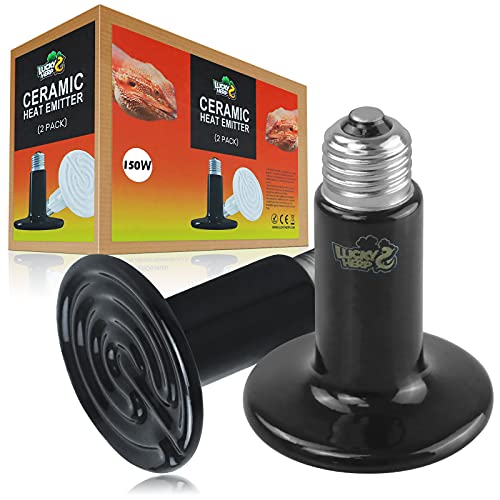
Ceramic Heat Emitter (CHE) for Reptiles
Ceramic Heat Emitters are an excellent choice for providing consistent, lightless ambient heat during the night, ensuring a reptile's natural sleep cycle remains undisturbed. While effective for raising air temperatures, they only produce surface-warming IR-C radiation.
Mercury Vapor Bulb for Reptiles
Mercury Vapor Bulbs offer an all-in-one solution for heating, UVA, and UVB, streamlining the environmental setup for certain large desert reptiles. However, their high output and incompatibility with dimmers necessitate careful consideration for species-specific needs and enclosure size.
Frequently Asked Questions
For halogen basking bulbs, Arcadia and Exo Terra are consistently well-reviewed by experienced keepers. For ceramic heat emitters, Fluker's and Zoo Med are reliable. That said, the bulb type matters more than the brand — a quality halogen flood bulb will outperform a branded incandescent every time.
References & Sources
- https://reptifiles.com/choosing-the-best-reptile-heat-lamp/
- https://www.zenhabitats.com/blogs/reptile-care-sheets-resources/bearded-dragon-complete-lighting-and-heating-guide?srsltid=AfmBOor_-OhBZq0rYSRDOnBXUD97CwxUjwy_3ojAyy1j0c29eF6y4PJQ
- https://reptifiles.com/ackie-monitor-care/ackie-monitor-temperatures-heating/
- https://reptifiles.com/bearded-dragon-care/bearded-dragon-temperatures-uvb/
- https://reptifiles.com/ball-python-care-guide/ball-python-humidity-temperatures/
Related Articles

Best UVB Bulb for Reptiles: 2026 Buyer's Guide
Find the best UVB bulb for your reptile in 2026. We compare T5 HO, T8, and mercury vapor options so your animal gets the vitamin D3 it needs to thrive.

Best Reptile Terrarium Background: Top Picks & Guide
Find the best reptile terrarium background for your setup. We cover foam, cork, vinyl, and DIY options — with tips on bioactive builds and species matching.

Best Digital Thermostats for Reptiles: 2026 Guide & Reviews
Discover the top digital thermostats for reptile enclosures in 2026, ensuring your pet stays healthy and comfortable.