Best Jumping Spider Heating: Keep Your Jumper Warm
Find the best jumping spider heating setup to keep your jumper active and healthy year-round. Heat mats, thermostats, and expert care tips included.


This article contains affiliate links. If you make a purchase through these links, we may earn a small commission at no extra cost to you. See our affiliate disclosure for details.
We recommend 5 picks here. Our top choice is the Small Reptile Heat Mat (4"×5" or 6"×8") — check price and availability below.
How we choose: we compare published specifications against the care requirements in veterinary and species-care literature, and weigh those against what long-time keepers report. We do not test products ourselves and we do not restate Amazon star ratings. The 2 sources behind this article are listed at the bottom.
Quick Comparison
- Product Type
- Heat source
- Produces Light
- No
- Wattage/Power
- Variable (mini/small)
- Humidity Impact
- Slightly dries enclosure
- Thermostat Required
- Yes (essential)
- Best For Setup Size
- Small to medium enclosures
- Product Type
- Temperature controller
- Produces Light
- N/A
- Wattage/Power
- Cycles on/off
- Humidity Impact
- N/A
- Thermostat Required
- N/A (is the thermostat)
- Best For Setup Size
- All sizes
- Product Type
- Heat source
- Produces Light
- No
- Wattage/Power
- 25W
- Humidity Impact
- Dries quickly
- Thermostat Required
- Yes (essential)
- Best For Setup Size
- Larger enclosures
- Product Type
- Monitoring device
- Produces Light
- N/A
- Wattage/Power
- Battery/AC powered
- Humidity Impact
- N/A
- Thermostat Required
- No
- Best For Setup Size
- All sizes
- Product Type
- Substrate system
- Produces Light
- No
- Wattage/Power
- N/A
- Humidity Impact
- Reduces fluctuations
- Thermostat Required
- No
- Best For Setup Size
- All sizes
Prices are estimates only. Actual prices on Amazon may vary.
Jumping spiders are one of the most rewarding invertebrate pets you can own. They're curious, intelligent, and surprisingly personable. But one question trips up almost every new keeper: do jumping spiders need heating — and if so, what's the best setup?
The short answer is: it depends on your home temperature. But getting it right really matters. The wrong heating setup can stress or even kill your spider. The right one keeps them active, eating well, and living a full, healthy life.
This guide covers everything you need to know about the best jumping spider heating options, how to use them safely, and which products actually work.
Do Jumping Spiders Actually Need Supplemental Heating?
Jumping spiders are ectotherms. That means they can't regulate their own body temperature — they depend entirely on their environment to stay warm.
Most commonly kept species thrive between 72°F and 82°F (22–28°C). If your home stays in that range all year, you might not need extra heating at all. But if temperatures dip below 70°F regularly — especially at night or during winter — your spider will feel it.
Watch for these signs your spider is too cold:
- Moving sluggishly or barely at all
- Refusing food for extended periods
- Staying hidden all day instead of exploring
- Not responding to movement or interaction
If any of these sound familiar, the enclosure is probably running too cool. Adding a heat source is usually the fix.
Temperature Targets
Daytime Target
72–82°F
(22–28°C)
Warm Side
80–85°F
(27–29°C)
Nighttime Minimum
65°F
(18°C) safe
Danger Zone
90°F+
(32°C+) lethal
Heat Mat Setup
Choose mat size
Mini or small (4"×5" or 6"×8") for most enclosures
Tip: Size to your enclosure
Mount on side wall
Stick or tape to outside of side wall, covering lower-to-mid section only
Tip: Never under the enclosure
Connect thermostat
Plug mat into thermostat, thermostat into wall outlet
Tip: Never plug directly to wall
Insert probe
Thread probe through vent, position on warm side at mid-height
Tip: Secure with tape if needed
Set temperature
Set thermostat to 78°F (25–26°C) as starting point
Tip: Fine-tune from here
Stabilize system
Run for 24–48 hours before adding spider
Tip: Verify stable temps first
Cross-check
Confirm readings with separate digital thermometer
Tip: Thermostat displays can drift
Signs Your Spider is Too Cold
What you need to know
Moving sluggishly or barely at all
Refusing food for extended periods
Staying hidden all day instead of exploring
Not responding to movement or interaction
Heating Setup Checklist
Everything you need to get started
Detailed Reviews
1. Small Reptile Heat Mat (4"×5" or 6"×8")
Best Overall
Small Reptile Heat Mat (4"×5" or 6"×8")
Pros
- •Affordable and accessible
- •Easy to install and use
- •No light disruption—preserves natural day/night cycle
- •Creates warm and cool microclimates for self-regulation
- •Simple 10-minute setup
Cons
- •Must use thermostat to prevent overheating
- •Requires careful side-mounting (never under enclosure)
- •Slightly reduces humidity—requires increased misting
Bottom Line
The go-to heating choice for most jumping spider keepers. Side-mounted heat mats provide consistent, gentle warmth without disrupting the natural light cycle.
2. Digital Reptile Thermostat (On/Off Type)
Best Value
Digital Reptile Thermostat (On/Off Type)
Pros
- •Prevents dangerous temperature spikes above 100°F
- •Maintains consistent target temperature with minimal effort
- •Affordable safety investment
- •Easy to set and fine-tune
Cons
- •Thermostat display probes can drift over time
- •Requires separate thermometer for verification
- •Must be cross-checked regularly for accuracy
Bottom Line
Essential safety device that cycles heat mats on and off to maintain precise temperatures. Non-negotiable for any jumping spider heating setup.
3. 25W Ceramic Heat Emitter
Best for Larger Setups
25W Ceramic Heat Emitter
Pros
- •Produces no light—ideal for dark rest periods
- •Provides steady, consistent heat
- •Good option for ambient warmth without disruption
- •Fits standard reptile lamp fixtures
Cons
- •Dries out enclosure quickly
- •Requires ceramic-socket fixture (not plastic)
- •Must use thermostat and monitor humidity closely
- •Requires frequent misting to maintain proper humidity
Bottom Line
A low-wattage ceramic emitter that provides steady ambient heat without producing light. Best for larger setups or keepers wanting alternative heating.
4. Digital Thermometer & Hygrometer with Remote Probe
Essential Monitoring
Digital Thermometer & Hygrometer with Remote Probe
Pros
- •Provides accurate, real-time temperature and humidity data
- •Remote probe allows precise placement inside enclosure
- •Far more reliable than analog dial thermometers
- •Critical for verifying thermostat accuracy
Cons
- •More expensive than cheap analog dials
- •Requires proper probe placement for accurate readings
Bottom Line
Essential monitoring tool for accurate temperature and humidity readings. Remote probe placement ensures reliable real-time data without guesswork.
5. The BioDude Terra Aranea Bioactive Substrate Kit
Premium Pick
The BioDude Terra Aranea Bioactive Substrate Kit
Pros
- •Holds moisture longer than standard substrates
- •Reduces humidity fluctuations when heat source runs
- •More natural enclosure environment
- •Stabilizes temperature and humidity parameters together
Cons
- •Premium pricing compared to standard substrates
- •More complex setup and maintenance
- •Requires knowledge of bioactive ecosystem maintenance
Bottom Line
Bioactive substrate kit designed specifically for spiders. Living substrate holds moisture longer and reduces humidity fluctuations naturally.
Ideal Temperature Range for Jumping Spiders
Jumping spiders don't need a dramatic basking spot like bearded dragons. They just need consistent, gentle warmth throughout their enclosure.
Here's the target range to aim for:
| Temperature Zone | Target Range |
|---|---|
| Daytime ambient | 72–82°F (22–28°C) |
| Optional warm side | 80–85°F (27–29°C) |
| Nighttime minimum | 65°F (18°C) |
| Danger zone (too hot) | Above 90°F (32°C) |
Consistency matters more than perfection. Wild temperature swings stress your spider more than a slightly cooler baseline. Stability is the goal.
Temperature and humidity work together, too. Most jumping spiders do best at 50–70% relative humidity. When you add heat, humidity can drop quickly — so you'll need to mist more often. For a full care overview, check out our Jumping Spider Care Guide: Housing, Feeding & Handling Tips.
The Best Heating Options for Jumping Spiders
You've got several solid options. Each one has its place depending on your setup, budget, and home environment.
Heat Mats — The Best Starting Point
For most jumping spider keepers, a [heat mat](https://www.amazon.com/dp/B0D2MJGF49?tag=krawlo-20 is the go-to choice. They're affordable, easy to use, and produce no light — so your spider's natural day/night cycle stays intact.
One critical rule: never put the heat mat under the enclosure. Jumping spiders are arboreal. Unlike burrowing reptiles, they can't retreat downward to escape heat. If the floor overheats, there's nowhere to go.
Instead, mount the heat mat on the outside of one side wall. Cover roughly one-third of the panel. This creates a warm side and a cooler side, giving your spider the ability to self-regulate throughout the day.
Always run the mat through a thermostat. Without one, surface temperatures can spike dangerously — especially inside a small, enclosed terrarium.
Thermostats — Not Optional
Every heat source in a jumping spider setup needs a thermostat. No exceptions.
Heat mats without thermostats can reach surface temps well above 100°F. In a small enclosure, that's a death sentence. A [digital reptile thermostat](https://www.amazon.com/dp/B01I15S6OM?tag=krawlo-20 cycles the mat on and off to hold your target temperature with minimal effort.
Set it to 78°F (25–26°C) as a starting point, then fine-tune based on readings from a separate thermometer. Don't just trust the thermostat display — always cross-check.
(Estimates only — actual prices on Amazon may vary.) A basic on/off thermostat runs around $20–$40. It's the most important safety investment in the entire setup.
Ceramic Heat Emitters (CHEs)
Ceramic heat emitters screw into a standard reptile lamp fixture and radiate steady heat without producing any light. That makes them a great option for keepers who want ambient warmth without disrupting the light cycle.
For jumping spiders, stick with low wattage. A [25W ceramic heat emitter](https://www.amazon.com/dp/B0FGVCXJ58?tag=krawlo-20 is usually plenty for a single small enclosure. Anything higher and you risk overheating a compact space fast.
CHEs do have one significant downside: they dry out the enclosure quickly. If you go this route, mist more frequently and monitor humidity closely. You'll also need a ceramic-socket fixture (not plastic — CHEs run hot) and, as always, a thermostat.
Room Heating
If you keep multiple exotic pets, heating the whole room is often the simplest and most efficient solution. A small space heater in your reptile or spider room keeps every enclosure in range without individual setups for each one.
This works especially well in a dedicated pet room. Just monitor the room temperature carefully — space heaters can vary, and you don't want temps swinging out of range overnight.
Heat Lamps — Use With Caution
Standard basking bulbs produce both heat and bright light. Jumping spiders do need a light cycle, but they also need dark rest periods.
If you use a heat lamp, put it on a timer — 12 hours on, 12 hours off is a good baseline. Keep the wattage low (25–40W for small enclosures).
Skip the red or blue "nocturnal" bulbs. There's no solid evidence they help, and research suggests jumping spiders can likely detect those wavelengths anyway.
For most setups, a heat mat handles warmth and a separate LED or UVA light handles the visual spectrum. It's simpler and more precise.
How to Set Up a Heat Mat for a Jumping Spider (Step-by-Step)
Setting this up takes about 10 minutes. Here's how to do it right:
- Choose the right size. A mini or small mat (4"×5" or 6"×8") is plenty for most jumping spider enclosures.
- Mount on the side. Stick or tape the mat to the outside of one side wall, covering the lower-to-mid section — not the full panel.
- Plug into the thermostat, not the wall. The thermostat sits between the mat and the outlet.
- Place the probe inside. Thread the thermostat probe through a vent or small gap. Position it on the warm side, at mid-height.
- Set to 78°F (25–26°C). This is a safe starting point. Adjust based on your readings.
- Run it for 24–48 hours before adding your spider. You want verified, stable temperatures first.
- Confirm with a separate thermometer. Thermostat displays can drift over time — always verify independently.
Temperature and Humidity: Managing Both at Once
Heat and humidity are a package deal. When you add heat, evaporation speeds up. Humidity drops faster than you'd expect in a small enclosure.
Target 50–70% relative humidity for most jumping spider species. The easiest approach: mist one side of the enclosure every 1–2 days with dechlorinated water. Leave the other side dry. This creates a moisture gradient alongside your temperature gradient — warm/cool and wet/dry — giving your spider full control of its microclimate.
A [combo digital thermometer and hygrometer](https://www.amazon.com/dp/B08R65W98H?tag=krawlo-20 with a remote probe is essential. The cheap analog dials that clip onto enclosures are notoriously inaccurate. A digital unit with a probe gives you reliable real-time data.
Live bioactive setups also help stabilize humidity naturally. Suppliers like The BioDude offer bioactive substrate kits designed specifically for spiders. The living substrate holds moisture longer, which reduces humidity fluctuations when your heat source is running — a nice bonus for keeping both parameters stable.
Species-Specific Temperature Needs
Most commonly kept jumping spiders have similar temperature needs, but there are small differences worth knowing.
| Species | Common Name | Ideal Temp Range |
|---|---|---|
| Phidippus regius | Regal Jumping Spider | 75–82°F (24–28°C) |
| Phidippus audax | Bold Jumping Spider | 72–80°F (22–27°C) |
| Hyllus diardi | Heavy Jumping Spider | 75–82°F (24–28°C) |
| Saitis barbipes | Saitis Jumping Spider | 70–78°F (21–26°C) |
| Hasarius adansoni | Adanson's House Jumper | 72–80°F (22–27°C) |
Tropical species like Phidippus regius and Hyllus diardi prefer the warmer end of the scale. Temperate species like Phidippus audax tolerate cooler temps better, but still benefit from supplemental heat during winter months.
For a deep dive on Regal jumping spider care specifically, check out our full guide: Jumping Spider as a Pet: Care Guide for Phidippus regius & Other Jumpers.
Signs Your Spider Is Too Cold or Too Hot
Both extremes show up as behavioral changes. Here's what to watch for:
Too cold:
- Sluggish or barely moving
- Refusing food consistently
- Staying in the hide all day
- Slow reaction to stimuli
Too hot:
- Pressing against cool glass or mesh
- Frantic, erratic movement
- Clustering near ventilation
- Refusing food (yes, both extremes cause appetite loss)
If you notice any of these, check your temperatures immediately. Most issues resolve quickly once temps are corrected.
Common Heating Mistakes to Avoid
These come up constantly in jumping spider communities. Don't let them happen to you.
Heat mat under the enclosure. Always side-mount. It's the single most common mistake — and one of the most dangerous.
Skipping the thermostat. Even a cheap on/off unit is infinitely better than running bare. This isn't optional.
Oversizing the heat source. A 100W bulb or large CHE in a tiny enclosure overheats fast. Match the wattage to the space.
Ignoring humidity when adding heat. They're connected. Always increase misting frequency when you add a heat source.
Not verifying with a separate thermometer. Thermostat probes drift over time. Always cross-check.
Using heat rocks. Heat rocks have wildly uneven heat distribution and can burn your spider without warning. Never use them.
Assuming room temperature is always fine. It might be in July. Check in January.
Quick Comparison: Heating Options at a Glance
| Method | Best For | Pros | Cons |
|---|---|---|---|
| Side-mounted heat mat | Most setups | Cheap, simple, no light | Needs thermostat, slightly dries enclosure |
| Ceramic heat emitter (25W) | Larger setups | No light, steady heat | Dries enclosure fast, needs fixture |
| Room space heater | Multiple pets | Heats everything at once | Less control per enclosure |
| Low-watt heat lamp (timer) | Optional basking | Natural look | Adds light, needs timer |
For most jumping spider keepers, a side-mounted [heat mat](https://www.amazon.com/dp/B08C98KNWR?tag=krawlo-20 paired with a thermostat is all you'll ever need. It's the simplest, safest, and most affordable combination.
If you're comparing heat mats and thermostats across multiple species, our Best Reptile Heating Pad: Top Picks & Buyer's Guide covers options that work across a wide range of setups.
Our Final Verdict
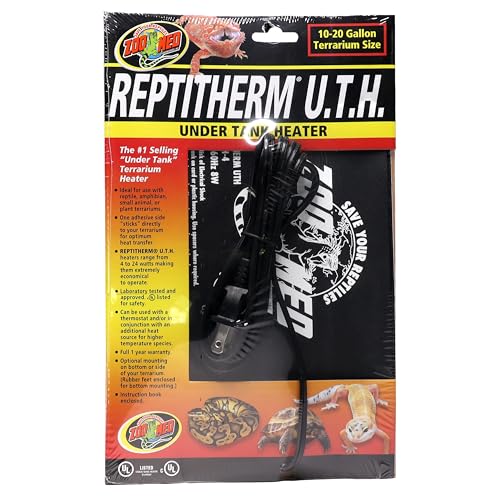
Small Reptile Heat Mat (4"×5" or 6"×8")
The go-to heating choice for most jumping spider keepers. Side-mounted heat mats provide consistent, gentle warmth without disrupting the natural light cycle.

Digital Reptile Thermostat (On/Off Type)
Essential safety device that cycles heat mats on and off to maintain precise temperatures. Non-negotiable for any jumping spider heating setup.
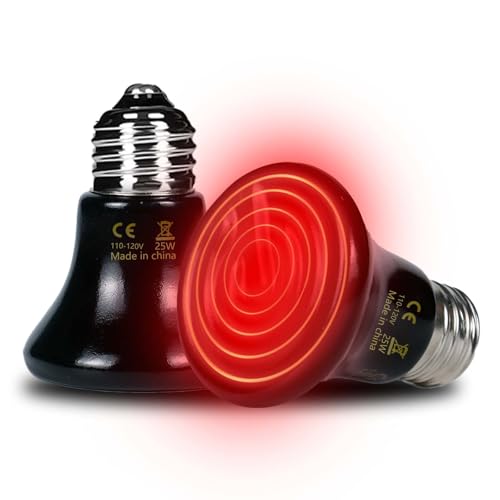
25W Ceramic Heat Emitter
A low-wattage ceramic emitter that provides steady ambient heat without producing light. Best for larger setups or keepers wanting alternative heating.
Frequently Asked Questions
Not always. If your home consistently stays above 72°F (22°C), a heat mat isn't required. But if temperatures drop below 70°F regularly — especially in winter — a side-mounted heat mat with a thermostat is the safest and easiest solution.
References & Sources
Related Articles

Best Jumping Spider Food: Top Picks for Your Spider
Discover the best jumping spider food options — from fruit flies to crickets and roaches. Learn feeding schedules, prey sizing, and what to avoid.

Best Jumping Spider Substrate: A Complete Guide
Searching for the best jumping spider substrate? Our guide covers top choices like bioactive mixes and coco fiber to help you create the perfect, healthy habitat.

Best Jumping Spider Lighting: A Complete Care Guide
Searching for the best jumping spider lighting? Discover why a simple LED on a timer is crucial for your pet's health, happiness, and natural hunting behavior.