Best Jumping Spider Enclosure: Top Picks & Setup Guide
Find the best jumping spider enclosure for your Phidippus or Hyllus. We cover size, ventilation, bioactive setups, and top picks for every budget.


This article contains affiliate links. If you make a purchase through these links, we may earn a small commission at no extra cost to you. See our affiliate disclosure for details.
We recommend 3 picks here. Our top choice is the Tall Acrylic or Glass Cross-Ventilated Enclosures (8x8x12) — check price and availability below.
How we choose: we compare published specifications against the care requirements in veterinary and species-care literature, and weigh those against what long-time keepers report. We do not test products ourselves and we do not restate Amazon star ratings. The 4 sources behind this article are listed at the bottom.
Quick Comparison
- Enclosure Type
- Acrylic or Glass
- Typical Dimensions
- 8×8×12 inches
- Ventilation
- Front + Top (Dual)
- Front-Opening Door
- Yes (magnetic/sliding)
- Maintenance Level
- Weekly spot-cleaning
- Best For Experience Level
- Beginners to Advanced
- Enclosure Type
- Glass Terrarium
- Typical Dimensions
- 18×18×36 cm (≈7×7×14 inches)
- Ventilation
- Top only (requires modification)
- Front-Opening Door
- Yes (dual doors)
- Maintenance Level
- Weekly spot-cleaning
- Best For Experience Level
- Intermediate to Advanced
- Enclosure Type
- Substrate + Bioactive Kit
- Typical Dimensions
- Custom (min. 10×10×16 with 3-4" substrate)
- Ventilation
- Top + Bottom (integrated)
- Front-Opening Door
- Varies by enclosure choice
- Maintenance Level
- Minimal after establishment
- Best For Experience Level
- Advanced (experienced keepers)
Prices are estimates only. Actual prices on Amazon may vary.
Jumping spiders are unlike any other pet invertebrate. They're curious, personable, and they'll stare right back at you with those big front eyes. But to keep them thriving, you need the right home. The best jumping spider enclosure gives them height to climb, airflow to breathe, and enough space to feel secure — not trapped.
This guide breaks down exactly what to look for. We cover size, ventilation, material, and our top enclosure picks so you can make a confident choice today.
Why the Right Enclosure Matters So Much
Jumping spiders (family Salticidae) are active, arboreal hunters. In the wild, they spend most of their time moving vertically — climbing plants, fences, and tree bark. If their enclosure is too small or too flat, they get stressed. A stressed jumping spider stops eating, becomes lethargic, and can develop mold in their retreat (the silk den they sleep in).
Good airflow is especially critical. Jumping spiders are sensitive to stagnant, humid air. Unlike tarantulas, they don't need high humidity — they need ventilation. A poorly vented enclosure leads to mold, bacterial growth, and respiratory problems.
The good news? Getting the enclosure right is straightforward once you know what to prioritize.
Recommended Enclosure Sizes by Spider Size
Adult Female (1.5–2 cm+)
10x10x16 inches recommended
8x8x12 minimum
Adult Male
8x8x12 inches recommended
6x6x8 minimum
Juvenile (1–1.5 cm)
8x8x10 inches recommended
6x6x8 minimum
Spiderling (< 1 cm)
6x6x8 inches recommended
4x4x6 minimum
Top Jumping Spider Enclosures
Quick recommendations
Front-opening magnetic doors, dual ventilation (mesh top + side vents), clear walls, secure closure—ideal for most keepers
Dual front-opening doors, raised bottom frame, excellent build quality, proven reliability in the hobby
Cost-effective, fully customizable ventilation, ideal for spiderlings, full design control
Complete bioactive substrate with living cleaner crew (springtails/isopods), low maintenance, stunning appearance
Detailed Reviews
1. Tall Acrylic or Glass Cross-Ventilated Enclosures (8x8x12)
Best Overall
Tall Acrylic or Glass Cross-Ventilated Enclosures (8x8x12)
Pros
- •Front-opening magnetic or sliding doors reduce spider stress
- •Dual ventilation (mesh top + front/side vents) prevents mold
- •Clear walls on three sides enable visual observation and enrichment
- •Widely available with secure closure designs
Cons
- •Generic search results may include poor-quality options
- •Requires careful vetting to ensure dual ventilation
- •Many options available making selection potentially overwhelming
Bottom Line
The most popular choice in the jumping spider hobby. Purpose-built arboreal invertebrate enclosures with front-opening magnetic doors, mesh top ventilation, and clear walls for visual stimulation.
2. Exo Terra Small Tall Terrarium (18x18x36 cm)
Premium Pick
Exo Terra Small Tall Terrarium (18x18x36 cm)
Pros
- •Dual front-opening doors make feeding easy without disturbing spider
- •Raised bottom frame adds stability for substrate heaters if desired
- •Excellent overall build quality and durability
- •Appropriate height-to-footprint ratio for arboreal species
Cons
- •Default ventilation is top-only and requires modification
- •Adding screen vent patch to side door is necessary for optimal airflow
- •Premium pricing
Bottom Line
Reliable glass terrarium with dual front doors and excellent build quality. Works well for a single adult jumping spider with optional bioactive setup. Requires adding a screen vent patch to one side door to improve airflow.
3. The Bio Dude Terra Aranea Bioactive Substrate Kits
Best for Bioactive Setups
The Bio Dude Terra Aranea Bioactive Substrate Kits
Pros
- •Includes living cleanup crew (springtails and isopods) that break down waste
- •Significantly reduces spot-cleaning after establishment
- •Naturalistic appearance with low mold risk
- •Works with live or artificial plants for visual appeal
Cons
- •Higher initial cost than simple setups
- •1–2 hours of setup time required
- •Requires careful monitoring during establishment phase
- •Better suited for experienced keepers
Bottom Line
Complete naturalistic bioactive setup with living substrate, springtails, and isopods for waste breakdown. Looks stunning and reduces maintenance significantly after establishment. Requires 3–4 inches of substrate depth and slightly more complex initial setup.
What to Look for in a Jumping Spider Enclosure
Height Over Footprint
Jumping spiders are vertical creatures. They'll almost always retreat to the highest point in their enclosure to sleep and feel safe. A tall enclosure matters more than a wide one.
A good rule of thumb: the enclosure should be at least 3x the body length of your spider in height. For adult females of larger species like Phidippus regius (the regal jumping spider), that means at least 10–12 inches tall.
Cross-Ventilation Is Non-Negotiable
This is the single biggest mistake new keepers make. You can't just have ventilation on one side. Cross-ventilation means airflow enters from one location and exits from another — usually mesh on the top plus mesh on the front or side.
This keeps the air moving. It prevents mold, keeps humidity from spiking, and mimics the open-air environments jumping spiders come from.
Front-Opening Doors Are a Big Plus
Jumping spiders startle easily when you reach down from above — that's the direction predators come from. Front-opening enclosures let you access the spider from the side, which is far less stressful for both you and your spider.
Top-open enclosures work, but they require more care during maintenance.
Clear Walls for Visual Stimulation
Jumping spiders are visually oriented. They like to watch their environment. Full glass or clear acrylic walls allow them to observe the room and stay mentally engaged. This matters more for jumpers than almost any other invertebrate.
Size: What's Actually Right?
A common question is whether bigger is always better. The answer is: mostly yes, but within reason.
| Spider Size | Minimum Enclosure | Recommended Enclosure |
|---|---|---|
| Spiderling (< 1 cm) | 4x4x6 inches | 6x6x8 inches |
| Juvenile (1–1.5 cm) | 6x6x8 inches | 8x8x10 inches |
| Adult female (1.5–2 cm+) | 8x8x12 inches | 10x10x16 inches |
| Adult male (smaller) | 6x6x8 inches | 8x8x12 inches |
An 8x8x12 enclosure is often cited as the sweet spot for adult jumping spiders. Is it too big? No. As long as there's plenty of decor and anchor points for retreats, even large enclosures work well. The key is furnishing the space properly so the spider doesn't feel exposed.
The Best Jumping Spider Enclosures: Our Top Picks
(Estimates only — actual prices on Amazon may vary.)
1. Tall Acrylic or Glass Cross-Ventilated Enclosures (8x8x12 or Similar)
These are the most popular choice in the hobby. Look for enclosures specifically designed for arboreal invertebrates — they have front-opening magnetic doors, a mesh top for ventilation, and optional side vents. Brands like Exo Terra (small sizes) and various arboreal invertebrate-specific manufacturers on Amazon offer solid options.
What to look for:
- Front-opening magnetic or sliding door
- Dual ventilation: mesh top + front or side vents
- Clear walls on at least three sides
- Secure closure (jumping spiders are escape artists)
Search for [jumping spider enclosure 8x8x12](https://www.amazon.com/dp/B0G5F75KJC?tag=krawlo-20 to find current in-stock options.
2. Exo Terra Nano or Small Terrariums
Exo Terra makes some of the most reliable small terrariums in the hobby. Their nano and small glass terrariums feature dual front doors, raised bottom frames for substrate heaters (not needed for jumpers, but adds stability), and excellent build quality.
The [Exo Terra Small Tall terrarium](https://www.amazon.com/dp/B0041P5PBE?tag=krawlo-20 (18x18x36 cm) works well for a single adult jumping spider with a bioactive setup. The front-opening doors make feeding easy without disturbing the spider from above.
One note: Exo Terra's default ventilation is top-only. Adding a screen vent patch to one side door panel improves airflow significantly for jumping spiders.
3. DIY Acrylic Enclosures with Mesh Panels
If you're handy, building a custom acrylic enclosure is cost-effective and lets you dial in exactly the ventilation you want. You can cut mesh panels into two or three sides for maximum airflow.
Many keepers in the community recommend this approach for spiderlings, since purpose-built spiderling enclosures can be expensive. A simple deli cup with mesh lid works short-term, but a proper ventilated acrylic box is the upgrade worth making.
Search for [small acrylic invertebrate enclosure with ventilation](https://www.amazon.com/dp/B0FMQV3385?tag=krawlo-20 for ready-made options.
4. Bioactive-Ready Enclosures (The Bio Dude Terra Aranea)
For keepers who want a naturalistic, low-maintenance setup, bioactive enclosures are the gold standard. The Bio Dude offers complete Terra Aranea bioactive substrate kits for spiders that pair well with their enclosure recommendations.
A bioactive setup includes a living substrate layer with springtails and isopods that break down waste, along with live or artificial plants. It looks stunning and reduces spot-cleaning significantly. The tradeoff is a slightly more complex initial setup.
For bioactive, you'll want an enclosure with at least 3–4 inches of substrate depth. A 10x10x16 or larger works best.
How to Set Up Your Jumping Spider Enclosure
Once you have the enclosure, the setup is what makes it a real home.
Substrate
Jumping spiders spend most of their time off the ground, so substrate is less critical than for ground-dwelling species. A 2–3 inch layer of coco fiber, peat-based mix, or The Bio Dude's Terra Aranea substrate works well. It holds slight moisture near the bottom without making the air humid.
Avoid substrates that compact heavily or stay wet — that's a mold invitation.
Anchor Points and Decor
This is where most keepers underinvest. Jumping spiders need multiple spots to:
- Anchor retreats: cork bark tubes, hollow logs, dried seed pods, or even folded paper hides work well
- Climb: cork flats on the walls, bamboo sticks, wooden dowels, or branches
- Hunt: open ground-level space where feeder insects can move freely
Cork bark is the most versatile decor material. It's lightweight, naturalistic, and easy to attach to enclosure walls with aquarium-safe silicone. For live plant options, pothos and bromeliads hold up well in jumping spider conditions. Check out the Reptifiles guide to vivarium decor for setup inspiration — many of the same principles apply to jumping spiders.
For artificial plants, silk plants or high-quality plastic plants work fine. Avoid anything with sharp wire tips that could injure the spider.
Temperature and Humidity
Jumping spiders don't need supplemental heat in most homes. Room temperature — anywhere from 70°F to 80°F (21–27°C) — is ideal. Temperatures above 85°F stress them out quickly.
Humidity should stay between 40–60%. You don't need to mist the enclosure daily. A light mist on one wall every 2–3 days gives the spider a chance to drink water droplets, which is how they hydrate in the wild.
If your home is very dry (below 30% humidity), mist slightly more often. If it's very humid (above 70%), prioritize ventilation over any additional misting.
Lighting
Jumping spiders are diurnal — they're active during the day and sleep at night. A consistent light cycle helps regulate their behavior and activity.
You don't need a specialized UVB bulb, though low-level UVB appears to be beneficial for long-term health in some studies. A simple [full-spectrum LED terrarium light](https://www.amazon.com/dp/B0C994C6YW?tag=krawlo-20 on a 12-hour timer works well. Natural indirect sunlight through a window also works — just avoid direct sun, which can overheat the enclosure fast.
Zoo Med makes several small-format terrarium lighting options worth considering. Check out their current lineup at zoomed.com.
Bioactive vs. Simple Setup: Which Is Right for You?
| Factor | Simple Setup | Bioactive Setup |
|---|---|---|
| Initial cost | Lower | Higher |
| Setup time | 30 minutes | 1–2 hours |
| Maintenance | Weekly spot-cleaning | Minimal after establishment |
| Appearance | Functional | Naturalistic, stunning |
| Best for | Beginners, spiderlings | Experienced keepers, adult spiders |
| Mold risk | Moderate | Low (cleanup crew handles it) |
For most beginners, a simple setup is the right call. It's easier to monitor the spider, spot problems early, and adjust humidity. Once you're comfortable with the species, a bioactive enclosure is a rewarding next step.
The community at Morph Market's jumping spider forum has excellent discussion threads on both approaches if you want real keeper opinions.
Common Setup Mistakes to Avoid
Using an enclosure with top-only ventilation. This is the number one mistake. Stagnant air = mold. Always have at least two ventilation points.
Going too small for spiderlings. It seems counterintuitive, but tiny deli cups with inadequate ventilation cause more problems than slightly larger enclosures. A well-furnished 6x6x8 cube works fine for juveniles.
Over-misting. More humidity does not mean a healthier spider. Jumping spiders evolved in arid to semi-arid environments. A damp enclosure is far more dangerous than a dry one.
No retreat structure. If your spider has nowhere to build its silken sleeping sac, it becomes anxious and stops eating. Always include at least one hide or tube near the top of the enclosure.
Leaving substrate too wet. Even if the air humidity looks fine, wet substrate at the bottom creates mold problems within a week. The substrate should be barely moist — not wet.
Caring for Your Jumping Spider Beyond the Enclosure
Once your enclosure is dialed in, your spider's long-term health comes down to feeding, handling, and observation. For a complete breakdown of diet, handling, and species-specific care, read our jumping spider care guide.
If you're still deciding whether a jumping spider is the right pet, our jumping spider as a pet guide covers personality, lifespan, difficulty level, and what to realistically expect as an owner.
The enclosure is the foundation. Get it right first, and everything else becomes much easier.
Final Thoughts
The best jumping spider enclosure combines vertical height, cross-ventilation, clear walls, and front-opening access. An 8x8x12 arboreal invertebrate enclosure hits all those marks for most adult jumping spiders. Pair it with cork bark, a light misting schedule, and a consistent light cycle — and you'll have a thriving, curious spider that lives a full, healthy life.
Don't overthink it. These spiders are surprisingly resilient when their basic needs are met. Start simple, observe your spider, and adjust as you go.
Our Final Verdict
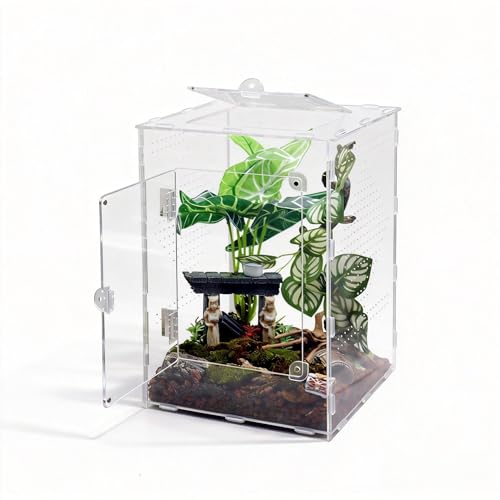
Tall Acrylic or Glass Cross-Ventilated Enclosures (8x8x12)
The most popular choice in the jumping spider hobby. Purpose-built arboreal invertebrate enclosures with front-opening magnetic doors, mesh top ventilation, and clear walls for visual stimulation.

Exo Terra Small Tall Terrarium (18x18x36 cm)
Reliable glass terrarium with dual front doors and excellent build quality. Works well for a single adult jumping spider with optional bioactive setup. Requires adding a screen vent patch to one side door to improve airflow.
The Bio Dude Terra Aranea Bioactive Substrate Kits
Complete naturalistic bioactive setup with living substrate, springtails, and isopods for waste breakdown. Looks stunning and reduces maintenance significantly after establishment. Requires 3–4 inches of substrate depth and slightly more complex initial setup.
Frequently Asked Questions
A tall, cross-ventilated enclosure with front-opening doors is ideal. Look for an 8x8x12 inch arboreal invertebrate enclosure with mesh on both the top and front or side panels. Clear walls, a secure closure, and enough interior height for a silk retreat near the top are the key features to prioritize.
References & Sources
Related Articles

Best Jumping Spider Food: Top Picks for Your Spider
Discover the best jumping spider food options — from fruit flies to crickets and roaches. Learn feeding schedules, prey sizing, and what to avoid.

Best Jumping Spider Substrate: A Complete Guide
Searching for the best jumping spider substrate? Our guide covers top choices like bioactive mixes and coco fiber to help you create the perfect, healthy habitat.

Best Jumping Spider Lighting: A Complete Care Guide
Searching for the best jumping spider lighting? Discover why a simple LED on a timer is crucial for your pet's health, happiness, and natural hunting behavior.