Best Insects for Crested Geckos: 6 Feeder Options Ranked (2026)
CGD alone is not enough. Crested geckos need live insects 1-2x per week — here are the 6 best feeder options ranked by protein, calcium, and practicality.


This article contains affiliate links. If you make a purchase through these links, we may earn a small commission at no extra cost to you. See our affiliate disclosure for details.
We recommend 6 picks here. Our top choice is the Dubia Roaches (Small/Medium) — check price and availability below.
How we choose: we compare published specifications against the care requirements in veterinary and species-care literature, and weigh those against what long-time keepers report. We do not test products ourselves and we do not restate Amazon star ratings. The 5 sources behind this article are listed at the bottom.
Quick Comparison
- Type
- Roach
- Protein (approx.)
- 21%
- Calcium : Phosphorus Ratio
- Low (needs dusting)
- Hydration Contribution
- Moderate
- Escape Risk
- Very Low
- Stimulates Hunting
- Yes
- Best For
- Staple feeder
- Type
- Fly Larvae
- Protein (approx.)
- 17%
- Calcium : Phosphorus Ratio
- 1.5:1 (natural balance)
- Hydration Contribution
- Moderate
- Escape Risk
- None
- Stimulates Hunting
- Yes (wriggling)
- Best For
- Calcium boost
- Type
- Cricket
- Protein (approx.)
- 21%
- Calcium : Phosphorus Ratio
- Low (needs dusting)
- Hydration Contribution
- Low
- Escape Risk
- High
- Stimulates Hunting
- Yes (jumps)
- Best For
- Budget option
- Type
- Caterpillar
- Protein (approx.)
- 23%
- Calcium : Phosphorus Ratio
- Low (needs dusting)
- Hydration Contribution
- Moderate
- Escape Risk
- None
- Stimulates Hunting
- Yes (slow crawl)
- Best For
- Picky eaters
- Type
- Caterpillar
- Protein (approx.)
- 9%
- Calcium : Phosphorus Ratio
- Low (needs dusting)
- Hydration Contribution
- High (85% moisture)
- Escape Risk
- Low
- Stimulates Hunting
- Yes (slow crawl)
- Best For
- Hydration treat
- Type
- Complete Diet (CGD)
- Protein (approx.)
- 21% (as fed)
- Calcium : Phosphorus Ratio
- Balanced (formula)
- Hydration Contribution
- Moderate
- Escape Risk
- None
- Stimulates Hunting
- No (CGD base)
- Best For
- Convenience/travel
Prices are estimates only. Actual prices on Amazon may vary.
Crested gecko diet (CGD) is one of the most convenient complete diets in the reptile hobby — but it is not enough on its own. Wild crested geckos on New Caledonia spend significant time hunting insects, spiders, and small invertebrates. That animal protein delivers amino acid profiles, movement-based enrichment, and micronutrients that no powder can fully replicate.
Feeding live insects 1–2 times per week is not optional enrichment. It is a core part of a nutritionally complete crested gecko diet, confirmed by ReptiFiles' crested gecko feeding research and Dubia Roaches' crested gecko care sheet.
This guide ranks the 6 best feeder insect options for crested geckos, covering protein content, calcium availability, practicality, and safety — so you can choose the right insects for your gecko's needs.
Quick Comparison: Top 6 Feeder Insects for Crested Geckos
| Feeder | Protein | Ca:P Ratio | Best For | Escape Risk |
|---|---|---|---|---|
| Dubia Roaches | 21% | Low | Staple | Very Low |
| BSFL (Nutrigrubs) | 17% | 1.5:1 ✓ | Calcium boost | None |
| Crickets | 21% | Low | Budget/enrichment | High |
| Silkworms | 23% | Low | Picky eaters | None |
| Hornworms | 9% | Low | Hydration treat | Low |
| Pangea Insects CGD | 21% | Balanced | Convenience | None |
Our Top Picks
Quick recommendations
High protein, no escape risk, quiet — ideal 1-2x/week staple
Natural 1.5:1 Ca:P ratio — no dusting required
Highest protein (23%), irresistible for food-refusing geckos
Real insect protein in CGD form — no live colony needed
Key Takeaways
What you need to know
Crested geckos need live insects 1–2x per week — CGD alone is not a complete diet.
Feeder insects must be no larger than the space between the gecko's eyes — use small/extra-small for most adults.
Dust all insects with calcium powder at every feeding (except BSFL, which have a natural 1.5:1 Ca:P ratio).
Dubia roaches are the best all-around staple: high protein, no escape risk, quiet.
Never feed mealworms, superworms, or wild-caught insects to crested geckos.
Silkworms are the go-to intervention feeder for geckos refusing food — their movement and texture are nearly irresistible.
Hornworms are a hydration treat only — limit to 1–2 per session, once every 1–2 weeks.
Detailed Reviews
1. Dubia Roaches (Small/Medium)
Best Staple Feeder
Dubia Roaches (Small/Medium)
Pros
- •High protein (21%) with manageable fat content
- •Cannot climb smooth surfaces — no escape risk
- •Quiet and nearly odorless compared to crickets
- •Long shelf life — survive for weeks with minimal care
- •Soft exoskeleton reduces impaction risk
Cons
- •Illegal to own in Florida and Hawaii due to invasive species laws
- •Must source from specialty feeder insect suppliers
Bottom Line
Dubia roaches are the gold-standard staple feeder for crested geckos. At 21% protein with a soft chitinous exoskeleton, they are easy for geckos to chew and digest. Dubias are quiet, odorless, cannot climb smooth glass, and will not escape into your home — a major quality-of-life advantage over crickets. For crested geckos, use small or extra-small dubias (1/4 inch or less) to stay within the eye-gap size rule. According to [ReptiFiles' feeder insect nutrition chart](https://reptifiles.com/feeder-insect-nutrition-facts-chart/), dubias deliver a strong protein-to-fat profile that supports muscle development without adding excessive lipid load.
2. Black Soldier Fly Larvae (BSFL / Nutrigrubs)
Best Calcium Source
Black Soldier Fly Larvae (BSFL / Nutrigrubs)
Pros
- •Natural Ca:P ratio of 1.5:1 — no dusting required
- •Wriggling movement reliably triggers hunting response
- •High moisture content aids hydration
- •Non-toxic if ingested without dusting — safe for under-supplemented geckos
- •No escape risk — slow crawl only
Cons
- •Lower protein (17%) than dubias or crickets — use as supplement, not sole staple
- •Pupate quickly at room temperature — must refrigerate or use promptly
Bottom Line
Black soldier fly larvae (BSFL), sold as Nutrigrubs, Phoenix Worms, or CalciWorms, are the only live feeder insect with a naturally favorable calcium-to-phosphorus ratio of approximately 1.5:1. Every other common feeder insect is heavily phosphorus-dominant, requiring supplemental calcium dusting to compensate. BSFL essentially dust themselves — the calcium is built into the larval body. According to [ReptiFiles' feeder nutrition data](https://reptifiles.com/feeder-insect-nutrition-facts-chart/), BSFL contain roughly 17% protein and 61% moisture, and the wriggling movement triggers feeding responses in even reluctant crested geckos. Store in a cool area (50–60°F) to slow pupation and extend usable life.
3. Crickets (Small/Pinhead)
Best Budget Option
Crickets (Small/Pinhead)
Pros
- •Highest trigger for natural hunting behavior
- •Available at almost every pet store
- •Lower cost per insect than most alternatives
- •21% protein — fully nutritious when gut-loaded
Cons
- •Loud chirping — disruptive overnight
- •Escape easily — can infest rooms
- •Will bite geckos if uneaten — remove after 15 minutes
- •Short shelf life — die within 1–2 weeks
Bottom Line
Crickets are the most widely available feeder insect on the planet and the food that crested geckos evolved alongside in the wild. At 21% protein, their nutritional value matches dubia roaches, and their erratic jumping triggers a strong hunting instinct in geckos that have become lethargic or food-unresponsive. The trade-off is practical: crickets escape, they chirp loudly at night, they can bite geckos if left uneaten, and they have a short shelf life. Use small or pinhead crickets (under 1/4 inch) for most adult crested geckos. [Dubia Roaches' crested gecko care sheet](https://dubiaroaches.com/blogs/gecko-care/crested-gecko-care-sheet) notes that cricket gut-loading quality directly affects the nutritional value passed to the gecko.
4. Silkworms
Best for Picky Eaters
Silkworms
Pros
- •Highest protein among common live feeders (23%)
- •Soft body — zero impaction risk, easy digestion
- •Extremely palatable — works on most picky geckos
- •No escape, no noise, no odor
- •Slow movement pattern crested geckos find irresistible
Cons
- •Most expensive per-insect cost in this roundup
- •Require mulberry leaf or silkworm chow to survive
- •Short lifespan — must be used within 1–2 weeks of arrival
Bottom Line
Silkworms are arguably the most palatable live feeder insect available for crested geckos. Their soft, smooth bodies, high moisture content, and slow crawling movement are nearly irresistible to most geckos — including long-term food refusers. At 23% protein (the highest in this roundup among whole insects), they outperform dubias and crickets on raw protein density. They have zero escape risk, no noise, and no odor. The limitation is cost: silkworms are significantly more expensive per insect than crickets or dubias, and they require a temperature-controlled environment (65–80°F) plus fresh mulberry leaf or artificial silkworm chow to stay alive. Use them as a premium rotation feeder or a picky-gecko intervention, not as a daily staple.
5. Hornworms (Small)
Best Hydration Treat
Hornworms (Small)
Pros
- •85% moisture — excellent hydration boost
- •Bright green color triggers visual prey response
- •No escape risk — slow crawl
- •Soft body — easy to digest
- •Ideal for stressed or dehydrated geckos
Cons
- •Low protein (9%) — poor nutritional profile if overfed
- •Grow extremely fast — must be used quickly at small size
- •Treat only — not suitable as a staple
- •Higher cost per insect than staple feeders
Bottom Line
Hornworms (Manduca sexta larvae) are a specialized treat feeder, not a staple — and the distinction matters. At 85% moisture content, they are the most hydrating live insect in this roundup, useful after power outages, shipping stress, or during hot summers when enclosure humidity drops. Their protein content is only about 9%, meaning geckos fed too many hornworms miss out on protein from other sources. Use small hornworms only (under 3/4 inch for most crested geckos) — they grow extremely fast and a large hornworm can overwhelm a gecko. Limit to 1–2 per feeding session, once every 1–2 weeks maximum. According to [PetMD's gecko feeding guide](https://www.petmd.com/reptile/what-do-geckos-eat), high-moisture feeders like hornworms are best used strategically rather than routinely.
6. Pangea Fruit Mix with Insects (CGD)
Best for Convenience
Pangea Fruit Mix with Insects (CGD)
Pros
- •Real insect protein (cricket + BSFL) built into the formula
- •No live insect management required
- •Shelf-stable — no refrigeration until mixed
- •Low-oxalate formula supports calcium absorption
- •Familiar format for geckos already eating CGD
Cons
- •Does not provide behavioral hunting enrichment
- •Insect content is lower than offering live feeders separately
- •More expensive per serving than raw feeder insects
Bottom Line
For keepers who want real insect protein without the logistics of live feeders, Pangea Fruit Mix with Insects solves the problem in powder form. The formula incorporates farm-raised crickets and black soldier fly larvae directly into the CGD base, delivering 21% protein in a shelf-stable format that stays mixed in the refrigerator for up to 48 hours. This is the most practical option for frequent travelers, multi-gecko households, or anyone who finds managing live insect colonies impractical. It does not replace the behavioral enrichment value of live prey — crested geckos benefit from hunting — but as a nutritional substitute for insect supplementation nights, it is the most convenient option in this roundup. Full nutrition details are available on [Pangea's product page](https://www.pangeareptile.com).
Do Crested Geckos Actually Need Live Insects?
Yes — and the reason comes down to biology, not preference.
CGD powders are formulated to meet baseline nutritional requirements, but insects provide complete animal protein with a different amino acid profile than plant-derived or egg-based protein. They also provide enrichment: the act of tracking, stalking, and capturing prey activates neurological pathways that a passive feeding cup never reaches.
According to ReptiFiles' crested gecko food guide, crested geckos fed exclusively on CGD without insect supplementation often show slower growth rates, reduced activity levels, and lower reproductive output compared to geckos on a mixed diet.
The recommended protocol:
- CGD is the dietary base — offered 3–4x per week for adults, daily for juveniles
- Live insects supplement CGD — offered 1–2x per week year-round
- Calcium + D3 dusting on all live insects, every feeding
For the full diet framework, see our crested gecko care guide.
Pro Tip: Never offer CGD and live insects in the same feeding session. Give insects alone on insect nights, and CGD alone on CGD nights. This lets you track intake accurately and ensures geckos consume both food types rather than eating only the one they prefer.
The Insect Size Rule: Non-Negotiable
Feeder insects must be no larger than the space between the crested gecko's eyes.
This is the most important safety rule in feeder selection and applies to every insect in this list. An insect that is too large causes several problems:
- Impaction risk — the chitinous exoskeleton of an oversized insect can partially block the digestive tract
- Stress injury — large crickets can bite and injure geckos, especially overnight
- Regurgitation — if a gecko swallows a too-large feeder, it often vomits, which stresses the digestive system
Size guide by gecko age:
| Gecko Age | Maximum Insect Size |
|---|---|
| Hatchling (0–3 months) | Pinhead crickets, micro BSFL |
| Juvenile (3–12 months) | 1/4 inch dubias, small crickets |
| Sub-adult (12–18 months) | 1/4–3/8 inch dubias, medium crickets |
| Adult (18+ months) | 3/8–1/2 inch dubias, small-medium crickets |
When in doubt, go smaller. A gecko can eat three small insects just as easily as one large one.
Calcium Dusting Protocol
With the exception of BSFL (which have a naturally favorable calcium:phosphorus ratio), all feeder insects in this list are heavily phosphorus-dominant. The Ca:P ratio of most common feeders ranges from 1:6 to 1:15 — the inverse of what crested geckos need.
Without corrective supplementation, a feeder-insect-only diet rapidly depletes calcium stores, leading to metabolic bone disease (MBD). The dusting protocol corrects this.
Standard dusting schedule:
| Supplement | Frequency | Notes |
|---|---|---|
| Calcium with D3 | Every insect feeding (if no UVB) | Most common setup |
| Calcium without D3 | Every insect feeding (if using UVB) | Prevents D3 over-supplementation |
| Multivitamin (Reptivite, Herptivite) | 1x per week | Dust one insect feeding per week |
How to dust:
- Place feeder insects in a small container or plastic bag
- Add a small pinch of calcium powder — just enough to lightly coat
- Shake gently for 3–5 seconds
- Offer immediately — powder falls off within minutes
For calcium supplement options, see our best crested gecko supplements guide.
Pro Tip: Over-dusting is a real problem. A thick white coating is too much — you want a light, barely visible film. Excess calcium powder consumed directly (not from insect tissue) can cause gut irritation.
How to Offer Insects: Tong Feeding vs. Free Roam
Both methods work. The choice depends on the insect type and your gecko's feeding behavior.
Tong Feeding (Recommended for Most Geckos)
- Hold the insect with soft silicone-tipped feeding tongs
- Wiggle gently in front of the gecko's face to trigger strike response
- Good for: dubias, silkworms, BSFL, hornworms
- Advantage: you control the feeding, can measure exactly how many insects were consumed
Free Roam (Acceptable for Confident Hunters)
- Place 3–5 insects loose in the enclosure at dusk
- Remove any uneaten insects after 15–20 minutes (especially crickets — they bite)
- Good for: dubias, crickets
- Advantage: provides full hunting enrichment — gecko must track and chase prey
Never free roam hornworms or large silkworms. These crawl into decor and substrate where they are difficult to retrieve, can drown in water dishes, and create hygiene issues.
Detailed Reviews
1. Dubia Roaches — Best Staple Feeder
Dubia roaches are the most practical high-quality staple feeder for crested geckos. The combination of 21% protein, low fat, soft exoskeleton, and zero escape risk makes them the default choice for keepers who want reliable nutrition without the management overhead of crickets.
Buy small or extra-small dubias (1/4 inch) for most crested geckos. A starter batch of 100–250 dubias lasts 3–6 weeks for a single gecko on a 2x/week feeding schedule. Store at room temperature (75–85°F) in a ventilated container with egg crate cardboard and feed them gut-load food — the nutritional quality of what the roach ate transfers directly to your gecko.
Note: Dubia roaches are illegal to possess in Florida and Hawaii. If you live in those states, black soldier fly larvae or crickets are your primary alternatives.
2. Black Soldier Fly Larvae — Best Calcium Source
BSFL are the single most important feeder insect for preventing MBD. Their natural 1.5:1 calcium-to-phosphorus ratio means every BSFL a gecko eats actively contributes to bone density rather than depleting it — without any dusting.
This does not mean you should skip dusting entirely on BSFL feeding nights (the multivitamin schedule still applies), but it does mean BSFL provide a meaningful calcium safety net for geckos whose keepers occasionally forget to dust. Use them at least once per week as a calcium-focused rotation alongside your primary staple.
3. Crickets — Best Budget Option
Crickets are the fastest way to trigger a hunting response in a lethargic or food-refusing gecko. Their unpredictable jumping pattern activates predatory instincts that dubia roaches, with their slower movement, sometimes do not. For budget-focused keepers with access only to a standard pet store, small crickets are a nutritionally sound choice when properly gut-loaded and dusted.
The management trade-offs are real: chirping overnight disturbs sleep, escaped crickets hide in furniture, and uneaten crickets will bite sleeping geckos. Always remove uneaten crickets within 15 minutes.
4. Silkworms — Best for Picky Eaters
When a crested gecko has been refusing CGD for two weeks or more, silkworms are the escalation step before a vet visit. Their irresistible slow crawl, soft body, and high moisture content produce feeding responses in geckos that have ignored every other food offered. Use them as the intervention feeder, then transition back to dubias or BSFL once the gecko is eating consistently.
Silkworms arrive in small cups or bags and need fresh mulberry leaves or artificial silkworm chow to survive. At 65–80°F, a batch lasts 1–2 weeks. Do not refrigerate — cold kills them.
5. Hornworms — Best Hydration Treat (Occasional Only)
Hornworms are the most hydrating feeder insect available. Their 85% moisture content makes them the best choice after a dehydration event: shipping stress, a power outage, or a temporary humidity drop. Offer 1–2 small hornworms (under 3/4 inch) once every 1–2 weeks maximum.
Do not make hornworms a regular staple. Their 9% protein is inadequate as a primary nutrition source. They also grow fast — a small hornworm can double in size within a week. Use them promptly or keep them at 60–65°F to slow growth.
According to PetMD's gecko feeding overview, high-moisture feeders like hornworms are best used as strategic supplements rather than regular feeders.
6. Pangea Fruit Mix with Insects — Best for Convenience
For keepers who travel frequently, manage multiple enclosures, or find live insect colony maintenance impractical, Pangea Fruit Mix with Insects is the most effective nutritional substitute. The farm-raised cricket and BSFL content in the formula delivers real insect protein without any live feeder management.
This does not fully replace the behavioral enrichment value of hunting live prey — for geckos in long-term captivity, behavioral enrichment matters. But as a convenience solution or temporary replacement during live feeder supply gaps, it outperforms any other CGD formula.
For a full breakdown of CGD options and how they compare, see our best crested gecko food guide.
Insects to Avoid
Not every insect sold at a pet store is safe for crested geckos. Avoid these:
| Insect | Why to Avoid |
|---|---|
| Mealworms | Hard chitin shell, very high fat (33%), low calcium — impaction and obesity risk |
| Superworms | Too large for most crested geckos, bite when threatened |
| Waxworms | 22% fat — effectively crested gecko candy. One or two as rare treats only |
| Wild-caught insects | Pesticide exposure, internal parasites, unknown pathogens |
| Fireflies / Lightning Bugs | Contain lucibufagin — a cardiotoxic compound. Fatal to geckos even in small amounts |
| Venomous species | Any wasp, bee, or stinging insect |
Never use wild-caught insects. The pesticide and parasite risk alone makes this an unacceptable practice. Even backyard crickets from pesticide-free areas can carry parasites that require veterinary treatment.
Feeding Frequency by Life Stage
| Life Stage | CGD Frequency | Live Insect Frequency |
|---|---|---|
| Hatchling (0–3 months) | Daily | 2–3x per week |
| Juvenile (3–12 months) | Daily | 2x per week |
| Sub-adult (12–18 months) | Every other day | 1–2x per week |
| Adult (18+ months) | 3–4x per week | 1–2x per week |
| Gravid female | Daily | 2–3x per week |
For juveniles under 6 months, prioritize BSFL and silkworms — their soft bodies and high digestibility reduce impaction risk during early skeletal development.
For comprehensive diet and husbandry guidance, see our crested gecko care guide and our best crested gecko food roundup for CGD options that pair well with live insect supplementation.
Our Final Verdict

Dubia Roaches (Small/Medium)
Dubia roaches are the gold-standard staple feeder for crested geckos. At 21% protein with a soft chitinous exoskeleton, they are easy for geckos to chew and digest. Dubias are quiet, odorless, cannot climb smooth glass, and will not escape into your home — a major quality-of-life advantage over crickets. For crested geckos, use small or extra-small dubias (1/4 inch or less) to stay within the eye-gap size rule. According to [ReptiFiles' feeder insect nutrition chart](https://reptifiles.com/feeder-insect-nutrition-facts-chart/), dubias deliver a strong protein-to-fat profile that supports muscle development without adding excessive lipid load.
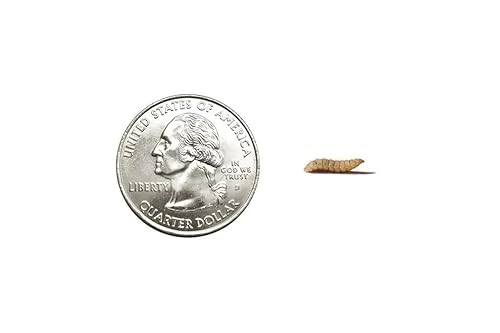
Black Soldier Fly Larvae (BSFL / Nutrigrubs)
Black soldier fly larvae (BSFL), sold as Nutrigrubs, Phoenix Worms, or CalciWorms, are the only live feeder insect with a naturally favorable calcium-to-phosphorus ratio of approximately 1.5:1. Every other common feeder insect is heavily phosphorus-dominant, requiring supplemental calcium dusting to compensate. BSFL essentially dust themselves — the calcium is built into the larval body. According to [ReptiFiles' feeder nutrition data](https://reptifiles.com/feeder-insect-nutrition-facts-chart/), BSFL contain roughly 17% protein and 61% moisture, and the wriggling movement triggers feeding responses in even reluctant crested geckos. Store in a cool area (50–60°F) to slow pupation and extend usable life.
Crickets (Small/Pinhead)
Crickets are the most widely available feeder insect on the planet and the food that crested geckos evolved alongside in the wild. At 21% protein, their nutritional value matches dubia roaches, and their erratic jumping triggers a strong hunting instinct in geckos that have become lethargic or food-unresponsive. The trade-off is practical: crickets escape, they chirp loudly at night, they can bite geckos if left uneaten, and they have a short shelf life. Use small or pinhead crickets (under 1/4 inch) for most adult crested geckos. [Dubia Roaches' crested gecko care sheet](https://dubiaroaches.com/blogs/gecko-care/crested-gecko-care-sheet) notes that cricket gut-loading quality directly affects the nutritional value passed to the gecko.
Frequently Asked Questions
Feed live insects 1–2 times per week for adult crested geckos, and 2–3 times per week for juveniles under 6 months. CGD should remain the dietary base offered on the other days. Always dust insects with calcium powder before every feeding, and rotate multivitamin dusting once per week.
References & Sources
- https://reptifiles.com/crested-gecko-care/crested-gecko-food/
- https://dubiaroaches.com/blogs/gecko-care/crested-gecko-care-sheet
- https://reptifiles.com/feeder-insect-nutrition-facts-chart/
- https://www.petmd.com/reptile/what-do-geckos-eat
- https://reptifiles.com/gargoyle-gecko-care-guide/gargoyle-gecko-food/
Related Articles

Finding the Best Place to Buy Feeder Insects Online: Your Ultimate Guide
Discover the top online retailers for feeder insects to ensure your reptile pets get fresh, nutritious meals. Our guide covers crickets, mealworms, roaches, and more, helping you find reliable sources with great prices and shipping.

Best Isopods and Springtails for Crested Geckos (2026)
Compare the best isopods and springtails for a crested gecko bioactive enclosure, including safe species, cleanup performance, and colony care tips.

Best Feeder Insects for Reptiles: Dubia Roaches & More
Discover the best feeder insects for reptiles, including Dubia roaches, crickets, and BSFL. We compare nutrition and gut-loading to help you choose.