Best Crested Gecko Heating and Temperature Setup (2026)
Crested geckos die above 82°F — but most homes are already the perfect temperature. This guide covers when you actually need heat, when you don't, and the 6 products that make monitoring and control foolproof.


This article contains affiliate links. If you make a purchase through these links, we may earn a small commission at no extra cost to you. See our affiliate disclosure for details.
We recommend 6 picks here. Our top choice is the Arcadia ShadeDweller ProT5 7% UVB Kit — check price and availability below.
How we choose: we compare published specifications against the care requirements in veterinary and species-care literature, and weigh those against what long-time keepers report. We do not test products ourselves and we do not restate Amazon star ratings. The 4 sources behind this article are listed at the bottom.
Most crested gecko heating articles get this backwards. They start with product recommendations before answering the question that actually matters first: does your gecko even need supplemental heat?
For the majority of keepers in temperate homes, the answer is no. Crested geckos thrive at 72–78°F — a range that matches normal room temperature in most houses and apartments. The bigger danger is overheating, not cold. Sustained temperatures above 82°F cause heat stress, organ failure, and death. This can happen within hours.
Understanding when to add heat, what products to use when you do, and how to prevent the far more common problem of overheating is the complete picture. That is what this guide covers.
Quick Comparison: Best Crested Gecko Heating Products
| Product | Purpose | Heat Output | Price |
|---|---|---|---|
| Arcadia ShadeDweller ProT5 7% UVB Kit | UVB + full-spectrum light | None | $55–$75 |
| Arcadia Deep Heat Projector 50W | Gentle supplemental heat | Infrared A+B | $50–$65 |
| Exo Terra Ceramic Heat Emitter 40W | Winter backup heat | Infrared | $15–$25 |
| Inkbird ITC-308 Digital Temperature Controller | Thermostat / safety shutoff | None | $35–$45 |
| Exo Terra Day/Night LED Fixture | Ambient light + day/night cycle | None | $40–$60 |
| Zoo Med Digital Thermometer Hygrometer | Temperature + humidity monitoring | None | $20–$30 |
Our Top Picks
Quick recommendations
Low 7% UVB matched to crested geckos — no overexposure risk, genuine photobiological benefit
Infrared-A and B for deep tissue warming without light disruption — the safest heat source for crested geckos
Non-negotiable safety equipment — prevents the #1 crested gecko killer: accidental overheating
Dual probe, min/max memory — the ground truth for everything else in your setup
Detailed Reviews
1. Arcadia ShadeDweller ProT5 7% UVB Kit
Best UVB + Light
Arcadia ShadeDweller ProT5 7% UVB Kit
Pros
- •Low 7% UVB output — matched to Ferguson Zone 1, no risk of UV overexposure
- •T5 linear tube distributes UV evenly; no hot spots
- •Included reflective fixture delivers full rated output
- •Zero heat output — won't contribute to dangerous temperature spikes
- •Supports calcium metabolism, natural behavior, and circadian rhythm
- •Widely recommended by ReptiFiles and Zen Habitats for crested geckos
Cons
- •More expensive than basic LED options
- •Tube replacement needed every 12 months as UV output degrades before visible light fades
Bottom Line
The Arcadia ShadeDweller ProT5 is the single best lighting upgrade a crested gecko keeper can make. It outputs a low-intensity 7% UVB — precisely matched to Ferguson Zone 1 arboreal species that live in dense leaf cover. Unlike T8 or coil UVB bulbs, the T5 linear tube distributes UV evenly across the entire enclosure rather than creating hot spots. The kit includes the reflective fixture, so you get the full rated output rather than the roughly 40% efficiency loss that comes with unhoused bulbs. ReptiFiles and Zen Habitats both cite Arcadia ShadeDweller as their top recommendation for crested geckos. UVB is not strictly required for crested geckos, but research increasingly shows it supports calcium metabolism, natural behavior, and immune function — with zero downside risk at ShadeDweller intensities. The low output also means zero heat contribution, which matters enormously for a species that overheats above 82°F.
2. Arcadia Deep Heat Projector 50W
Best Gentle Heat
Arcadia Deep Heat Projector 50W
Pros
- •Infrared-A and B output — gentle deep tissue warming, not surface burning
- •No visible light — day/night cycle completely unaffected
- •Works through glass and mesh without losing significant output
- •50W is appropriately modest for crested gecko enclosures
- •Pairs perfectly with a thermostat for precise temperature control
- •Long lifespan relative to ceramic and incandescent heat sources
Cons
- •Requires a thermostat — do not run without one
- •Higher upfront cost than basic ceramic heat emitters
Bottom Line
The Arcadia Deep Heat Projector (DHP) is the safest supplemental heat source for crested geckos precisely because it heats gently and deeply, not harshly. It emits infrared-A and infrared-B radiation — the same wavelengths as natural sunlight — which warms the gecko's body from the inside rather than cooking the surface of their skin. The 50W model is ideal for crested gecko enclosures because its output is modest enough that a properly sized thermostat can hold ambient temperature in the 72–78°F range without cycling excessively. Critically, the DHP produces no visible light, so it doesn't disrupt the day/night cycle. It also works through glass and mesh without significant efficiency loss. Most crested geckos never need supplemental heat — but if your room drops below 65°F in winter, this is the device to reach for first.
3. Exo Terra Ceramic Heat Emitter 40W
Best Winter Backup
Exo Terra Ceramic Heat Emitter 40W
Pros
- •No visible light — safe to run day and night without disrupting sleep
- •40W low output is safer for heat-sensitive crested geckos
- •Affordable and widely available ($15–$25)
- •Simple setup — screw into a standard ceramic bulb socket
- •Durable porcelain construction, long lifespan
- •Budget-friendly backup for winter cold snaps
Cons
- •Less efficient heat delivery than the Arcadia DHP (surface IR vs deep tissue IR)
- •Must be used with a thermostat — running uncontrolled risks lethal overheating
- •Does not support UVB or plant growth
Bottom Line
The Exo Terra Ceramic Heat Emitter 40W is the budget-reliable winter backup every crested gecko keeper should have on hand. It produces pure infrared heat with zero visible light, making it safe to run 24 hours a day without disrupting sleep or behavior. The 40W output is deliberately low — that is the feature, not a limitation. Crested geckos are sensitive to heat, and a 100W ceramic emitter is genuinely dangerous in a standard 18x18x24 enclosure without careful thermostat management. The 40W model gives you meaningful warmth while making it far harder to accidentally overshoot. Pair it with the Inkbird ITC-308 and set the high alarm at 80°F. It is not as sophisticated as the Arcadia DHP, but it costs a fraction of the price and is available at every pet store when you need it fast.
4. Inkbird ITC-308 Digital Temperature Controller
Best Thermostat
Inkbird ITC-308 Digital Temperature Controller
Pros
- •Cuts power to heat source automatically when set temperature is reached
- •Separate cooling outlet for fan control during summer heat waves
- •Dual display shows current + set temperature simultaneously
- •Accurate to ±0.1°F — no guesswork
- •Reliable over years of continuous operation
- •Prevents the #1 crested gecko killer: accidental overheating
Cons
- •Setup requires reading the manual to configure heating vs cooling mode correctly
- •Probe wire is short — may need an extension for tall enclosures
Bottom Line
The Inkbird ITC-308 is not optional — it is the most important safety device in a crested gecko setup. Crested geckos can die within hours of sustained exposure to temperatures above 82°F. Without a thermostat, any supplemental heat source is an uncontrolled risk. The ITC-308 plugs between your heat source and the wall outlet, reads temperature via a probe inside the enclosure, and cuts power to the heater when the set point is reached. It has a separate cooling outlet that can trigger a fan if temperature rises above a high alarm threshold — a useful feature during summer heat waves. The dual-display shows current and set temperature simultaneously. The ITC-308 is used by professional reptile breeders for a reason: it is accurate to ±0.1°F, reliable over years of continuous operation, and costs less than a vet visit. Set the heating target to 76°F and the high alarm to 80°F.
5. Exo Terra Day/Night LED Fixture
Best Ambient Light
Exo Terra Day/Night LED Fixture
Pros
- •Separate day/night LED banks for a natural photoperiod
- •Night mode lets you observe nocturnal behavior without disturbing the gecko
- •Supports low-to-medium light live plants for bioactive setups
- •Near-zero heat output — no temperature risk
- •Compatible with Exo Terra enclosure accessories
- •Long LED lifespan — no annual tube replacement
Cons
- •No UVB output — pair with ShadeDweller if UVB is desired
- •Day LED intensity is lower than T5 HO fixtures — not ideal for high-light plants
Bottom Line
The Exo Terra Day/Night LED delivers two things crested geckos genuinely benefit from: a consistent photoperiod and plant-supporting light output. The fixture has separate day and night LED banks — white LEDs for the daytime cycle, dim blue LEDs for a moonlight effect at night that lets you observe nocturnal behavior without disturbing the gecko. The light output supports low-to-medium light live plants like pothos, bromeliads, and ferns that are staples of bioactive crested gecko setups. It produces no meaningful UV, so it works alongside a ShadeDweller for the complete light stack, or as a standalone option for keepers who choose not to provide UVB. The LED construction means near-zero heat contribution — a critical feature for a species that cannot handle ambient temperature spikes.
6. Zoo Med Digital Thermometer Hygrometer
Best Monitoring
Zoo Med Digital Thermometer Hygrometer
Pros
- •Dual probe inputs — monitor two locations simultaneously
- •Displays temperature and humidity on one screen
- •Min/max memory catches overnight temperature excursions
- •Accurate to ±1°F — significantly better than kit thermometers
- •Affordable at $20–$30
- •Essential for confirming your thermostat is holding the correct set point
Cons
- •Battery compartment cover can be flimsy on some units
- •Probes are not waterproof — avoid direct misting contact
Bottom Line
You cannot manage what you cannot measure — and the Zoo Med Digital Thermometer Hygrometer gives you both temperature and humidity on a single display with dual probe inputs. Place one probe at the top of the enclosure and one at the bottom to track the thermal gradient, or use one probe for temperature and one for humidity at substrate level. The min/max memory function is particularly useful for crested gecko keepers: check the max temperature recorded overnight to catch any heating excursions before they become dangerous. The display is easy to read, the probes are long enough for most standard enclosures, and the $20–$30 price makes it the most cost-effective monitoring solution on this list. Do not rely on the thermometers included with starter kits — they are typically inaccurate by 3–5°F, which is the difference between a safe 78°F and a dangerous 82°F.
The 82°F Rule: Why Crested Geckos Overheat So Easily
Crested geckos (Correlophus ciliatus) are native to the cool, humid mountain forests of New Caledonia. Their natural habitat sits between 65°F and 78°F year-round. They evolved with no physiological tolerance for sustained heat.
According to ReptiFiles' crested gecko temperature guide, temperatures above 82°F (28°C) cause heat stress that can become fatal within hours. Unlike bearded dragons or ball pythons that can thermoregulate by moving to a cooler area, a crested gecko in a small enclosure in a hot room has nowhere to go.
The practical implication: every heating decision you make for a crested gecko is about precision, not power. You are not trying to create warmth — you are trying to maintain a narrow band and prevent any excursion above 82°F.
Ideal Crested Gecko Temperatures
| Zone | Daytime | Nighttime |
|---|---|---|
| Ideal | 72–76°F (22–24°C) | 65–72°F (18–22°C) |
| Acceptable | 70–78°F (21–26°C) | 63–72°F (17–22°C) |
| Danger zone | Above 80°F (27°C) | — |
| Critical | Above 82°F (28°C) | — |
Humidity targets: 60–80% with a daily wet/dry cycle — high after evening misting, dropping naturally to 50–60% by morning.
Do You Actually Need Supplemental Heat?
This is the most important question, and most articles skip it. The honest answer is: probably not.
If your home stays above 68°F throughout winter — even at night — your crested gecko is fine without any heat source. Crested geckos are genuinely cold-tolerant for a tropical species. Brief nighttime drops to 65°F are not just acceptable, they are beneficial. They mimic the natural temperature cycle and can stimulate breeding behavior in adult pairs.
You need supplemental heat if:
- Your room consistently drops below 65°F at night in winter
- You live in a climate with cold winters and your heating turns off overnight
- You keep your home unusually cool by preference (below 68°F year-round)
You do NOT need supplemental heat if:
- Your room stays 68–78°F throughout the day and night
- You live in a temperate climate with mild winters
- You are setting up a gecko for the first time in a normal apartment or house
According to Zen Habitats' crested gecko lighting and heating guide, the most common heating mistake keepers make is adding heat when none is needed, then watching helplessly as temperatures creep above 80°F.
Before buying any heat source: put a digital thermometer inside your empty enclosure for 48 hours. If the temperature stays above 68°F and below 78°F at all times, you are done. Skip the heater. Buy a better thermometer instead.
For a full walkthrough of crested gecko environment setup, see our crested gecko care guide.
UVB for Crested Geckos: Benefits and What the Science Says
Crested geckos are often listed as a species that "doesn't require UVB" — and technically, this is true. They can survive and reproduce without UV light provided their diet includes adequate vitamin D3 supplementation.
However, the research community has shifted. According to The BioDude's crested gecko care sheet, low-level UVB exposure produces measurable benefits:
- D3 synthesis: Geckos with UV access produce their own D3 through skin photosynthesis, which is more bioavailable than supplemental D3
- Circadian rhythm regulation: UV light signals natural photoperiod cues that affect sleep, activity, and breeding cycles
- Behavior: UV-exposed crested geckos show more natural basking postures and activity patterns
- Immune function: Some evidence links consistent UV access to improved immune response
The key is intensity. Standard reptile UVB bulbs designed for desert species (T5 10.0 or 12%) would overdose a crested gecko. The Arcadia ShadeDweller ProT5 7% UVB Kit is specifically calibrated for Ferguson Zone 1 species — animals that live in deep shade and receive low, filtered UV throughout the day.
If you provide UVB, reduce or eliminate powdered D3 supplementation to avoid D3 toxicity. Plain calcium powder (without D3) should still be offered regularly.
Detailed Reviews
1. Arcadia ShadeDweller ProT5 7% UVB Kit — Best UVB + Light
The Arcadia ShadeDweller ProT5 is the cornerstone of a complete crested gecko lighting setup. It solves the UVB problem cleanly: low enough output that there is no overexposure risk, high enough to deliver genuine photobiological benefit.
The T5 linear tube format matters. Compact fluorescent UVB bulbs (the coil type included with many starter kits) produce a cone-shaped UV zone with a hot spot directly beneath the bulb. At the edges of the enclosure, UV output drops dramatically. The ShadeDweller's linear tube covers the full length of your enclosure evenly, so your gecko receives consistent UV wherever it positions itself.
The included reflective fixture nearly doubles effective UV output compared to running the tube bare. This is not marketing — it is basic physics. Reflective backing redirects UV that would otherwise scatter upward into the enclosure.
Replace the tube every 12 months. UV output degrades steadily over time, but visible light output does not change — so a "working" bulb that is 18 months old may be delivering almost no UV while appearing perfectly functional.
Pair this with the Exo Terra Day/Night LED for evening ambient light, or run it as your sole lighting solution for daytime hours on a 12-hour on/off timer.
2. Arcadia Deep Heat Projector 50W — Best Gentle Heat
The Arcadia Deep Heat Projector represents a meaningful technical step forward from ceramic heat emitters. Conventional ceramic elements produce infrared-C radiation — wavelengths that heat the surface of the skin without penetrating tissue. The DHP produces infrared-A and infrared-B, which penetrate 2–3mm into muscle and tissue, mimicking the warming effect of direct sunlight.
For a crested gecko that spends most of its time at 72–76°F, this distinction matters less than it does for a basking species. The real reason to choose the DHP is its modulated output profile. It ramps up and down more smoothly than a ceramic emitter, which means your thermostat cycles less aggressively and ambient temperature stays more stable.
The 50W model is deliberately specified here. A 100W DHP in a standard 18x18x24 enclosure will push ambient temperatures into dangerous territory even with a thermostat cycling it — the thermal mass of the enclosure heats up between cycles. The 50W output gives the Inkbird ITC-308 enough headroom to maintain a stable setpoint at 75–76°F without overcooking the enclosure during the on-cycle.
Mount the DHP at the top of the enclosure, never on the side or bottom. Crested geckos spend time at all heights, and overhead heat is safer than heat from below.
3. Exo Terra Ceramic Heat Emitter 40W — Best Winter Backup
The Exo Terra Ceramic Heat Emitter 40W is the practical solution for cold-climate keepers who need reliable heat without spending $60 on a DHP. It does one thing: it converts electricity into heat with no light output. That is all you need from a backup heat source.
The low 40W rating is intentional. In a standard crested gecko enclosure, a 40W ceramic emitter controlled by the Inkbird ITC-308 will raise ambient temperature by roughly 5–8°F above room temperature depending on enclosure type and ventilation. That is enough to bring a 62°F winter room into the 70°F safe zone without any risk of shooting past 82°F even if the thermostat fails momentarily.
Avoid 60W, 75W, or 100W ceramic emitters for crested geckos unless you have a very large enclosure (36" tall or larger) and a well-calibrated thermostat with a documented failure mode test. The margin for error shrinks dramatically as wattage increases.
Screw the emitter into a ceramic bulb socket (never a plastic socket — heat emitters will melt them) positioned at the top of the enclosure.
4. Inkbird ITC-308 Digital Temperature Controller — Best Thermostat
This is the most important product on this list. The Inkbird ITC-308 is non-negotiable safety equipment. Running any supplemental heat source without a thermostat is gambling with your gecko's life.
The setup is straightforward: plug the ITC-308 into the wall, plug your heat source into the ITC-308's heating outlet, insert the probe into the enclosure, and set your target temperature. The controller cuts power to the heater when the set temperature is reached and restores power when it drops below a configurable differential — typically 1–2°F.
The cooling outlet is a practical bonus for crested gecko keepers. Connect a small USB-powered fan or a clip-on enclosure fan to the cooling outlet, set the cooling activation temperature to 80°F, and the fan activates automatically if something goes wrong during summer. This is a meaningful safety net.
Set your heating target to 75–76°F and your high alarm to 80°F. If the alarm triggers, investigate immediately — it means ambient room temperature has risen enough that the heat source is not even the problem anymore. See the summer cooling section below.
The dual display showing current temperature alongside set temperature makes it easy to verify the system is operating correctly at a glance.
5. Exo Terra Day/Night LED Fixture — Best Ambient Light
The Exo Terra Day/Night LED addresses a problem keepers overlook: crested geckos are crepuscular, meaning they are most active at dawn and dusk. A photoperiod that includes gradual transitions — not just an abrupt on/off switch — supports natural behavior and reduces stress.
The day LED bank provides sufficient light for plant growth in bioactive enclosures planted with pothos, bromeliads, and epipremnum — the core flora of New Caledonian-inspired setups. It is not bright enough for high-light species like succulents or demanding ferns, but for the shade-adapted plants most appropriate for crested gecko enclosures, the output is adequate.
The night LED bank is blue and dim — genuinely dim, not "dimmer than the day mode." It lets you observe nocturnal feeding and activity without triggering a stress response. Crested geckos become active around 30–60 minutes after lights-out, and the moonlight mode lets you watch without disturbing them.
Zero heat contribution makes this safe to leave on 12 hours without any temperature impact. On a timer: day LEDs on at 7am, day LEDs off at 7pm, night LEDs on 7pm, night LEDs off at 11pm or whenever you go to bed.
For a complete look at how to set up a full lighting schedule, see our best crested gecko enclosure guide.
6. Zoo Med Digital Thermometer Hygrometer — Best Monitoring
The Zoo Med Digital Thermometer Hygrometer is the ground truth for everything else in this guide. Every product recommendation above depends on your ability to measure what is actually happening inside the enclosure, not what you expect to be happening.
Starter kit thermometers — the dial-type analog gauges included with Exo Terra and Zilla kits — are typically off by 3–5°F. For a species with a danger zone starting at 82°F, a 5°F error is the difference between a reading of "safe 77°F" and an actual "dangerous 82°F." Discard analog dial thermometers.
The Zoo Med Digital's dual probe inputs let you place one probe at mid-height (where your gecko spends most time) and one near the heat source to check the ceiling temperature during the heat source's on-cycle. The min/max memory is critical: check it each morning to see the overnight temperature range. If your max reading crept above 80°F while you were asleep, you need to adjust your thermostat setpoint downward before it becomes a crisis.
For humidity: target 60–80% at peak (30–60 minutes after evening misting), dropping naturally to 50–60% by morning. If your morning reading is consistently above 70% before misting, you may be overventilating and losing the wet/dry cycle that prevents respiratory infections.
See our best crested gecko food guide for related care products that complete the setup alongside temperature and lighting.
Monitoring Setup: Getting Your Numbers Right
A well-instrumented crested gecko enclosure takes 10 minutes to set up correctly and prevents months of troubleshooting.
Probe placement:
- Probe 1 (temperature): Mid-height, shaded side of the enclosure, not directly above the heat source. This reads the ambient temperature your gecko actually experiences.
- Probe 2 (humidity or secondary temp): Near substrate level or bottom third. Crested geckos rarely spend time here, but it tells you if the substrate is staying appropriately moist.
Thermostat probe placement:
- Place the Inkbird ITC-308 probe at mid-height on the opposite side of the enclosure from the heat source. This prevents the thermostat from reading the localized heat near the emitter and cutting off too early, which would leave the far side of the enclosure cooler than intended.
Calibration check: Place both probes side-by-side at the same location for 30 minutes. If they read more than 2°F differently, one of them needs replacement.
Summer Cooling: Preventing Heat Stress
In hot climates or during summer heat waves, the challenge reverses. Room temperatures above 80°F make it impossible to maintain safe enclosure temperatures without active cooling.
Summer cooling strategies (in order of effectiveness):
-
Air conditioning: The most reliable solution. If the room stays below 78°F, the enclosure stays safe. Set your home AC to 74–76°F during peak summer months if you keep crested geckos.
-
Enclosure fan: A small USB fan directed across the top mesh of the enclosure increases evaporative cooling. This can drop enclosure temperature 3–5°F below ambient room temperature. Connect to the Inkbird ITC-308 cooling outlet so it activates automatically if temperature rises.
-
Frozen water bottle: Place a frozen 16oz water bottle beside (not inside) the enclosure during peak afternoon heat. The thermal mass absorbs heat from the surrounding air. Replace every 2–3 hours. Not scalable, but effective for short heat events.
-
Relocate the enclosure: Move it to the coolest room in the house during heat waves. Basements and interior rooms stay significantly cooler than rooms with south-facing windows.
Warning signs of heat stress: Open-mouth breathing, lethargy, pressing against the coolest corner of the enclosure, loss of color saturation. If you see these signs, immediately move the entire enclosure to a cool room and offer fresh water. Contact a reptile veterinarian if symptoms persist after the temperature drops. According to PetMD's crested gecko care sheet, heat stress is a veterinary emergency above 85°F.
Common Overheating Mistakes
These are the errors that land crested geckos in emergency vet appointments.
| Mistake | Why It Happens | Fix |
|---|---|---|
| Adding a 100W heat bulb "for warmth" | Misjudging how little heat a crestie needs | Use 40W ceramic or 50W DHP only |
| Running a heat source without a thermostat | Assuming "it won't get that hot" | Inkbird ITC-308 is mandatory |
| Placing the enclosure near a window | Forgetting solar gain in summer | Move to an interior wall, away from direct sun |
| Relying on the starter kit thermometer | Not knowing it's ±5°F inaccurate | Replace with Zoo Med Digital immediately |
| Running a basking bulb for a crestie | Thinking all reptiles need basking spots | Crested geckos do not bask — no hot spot needed |
| Forgetting to turn off heat in spring | Seasonal forgetfulness | Set a calendar reminder to remove heat source in March/April |
What You Actually Need: The Minimal Viable Setup
For most keepers, the complete crested gecko heating and lighting setup is simpler than most guides suggest.
In a temperate home (room stays 68–78°F year-round):
- Zoo Med Digital Thermometer Hygrometer — always needed
- Arcadia ShadeDweller ProT5 7% UVB Kit — recommended for best health
- Exo Terra Day/Night LED — optional, but good for bioactive setups
- Supplemental heat source — not needed
- Thermostat — not needed if no heat source
In a cold climate (room drops below 65°F in winter):
- Zoo Med Digital Thermometer Hygrometer — always needed
- Arcadia Deep Heat Projector 50W or Exo Terra Ceramic Heat Emitter 40W
- Inkbird ITC-308 — mandatory with any heat source
- Arcadia ShadeDweller ProT5 7% UVB Kit — recommended
In a hot climate (room exceeds 80°F in summer):
- Zoo Med Digital Thermometer Hygrometer — always needed
- Inkbird ITC-308 — connect cooling outlet to a fan
- Air conditioning, enclosure fan, or enclosure relocation plan
- Supplemental heat source — actively counterproductive in summer
For the full picture of crested gecko care beyond temperature, our crested gecko care guide covers feeding, shedding, handling, and health.
Our Final Verdict

Arcadia ShadeDweller ProT5 7% UVB Kit
The Arcadia ShadeDweller ProT5 is the single best lighting upgrade a crested gecko keeper can make. It outputs a low-intensity 7% UVB — precisely matched to Ferguson Zone 1 arboreal species that live in dense leaf cover. Unlike T8 or coil UVB bulbs, the T5 linear tube distributes UV evenly across the entire enclosure rather than creating hot spots. The kit includes the reflective fixture, so you get the full rated output rather than the roughly 40% efficiency loss that comes with unhoused bulbs. ReptiFiles and Zen Habitats both cite Arcadia ShadeDweller as their top recommendation for crested geckos. UVB is not strictly required for crested geckos, but research increasingly shows it supports calcium metabolism, natural behavior, and immune function — with zero downside risk at ShadeDweller intensities. The low output also means zero heat contribution, which matters enormously for a species that overheats above 82°F.

Arcadia Deep Heat Projector 50W
The Arcadia Deep Heat Projector (DHP) is the safest supplemental heat source for crested geckos precisely because it heats gently and deeply, not harshly. It emits infrared-A and infrared-B radiation — the same wavelengths as natural sunlight — which warms the gecko's body from the inside rather than cooking the surface of their skin. The 50W model is ideal for crested gecko enclosures because its output is modest enough that a properly sized thermostat can hold ambient temperature in the 72–78°F range without cycling excessively. Critically, the DHP produces no visible light, so it doesn't disrupt the day/night cycle. It also works through glass and mesh without significant efficiency loss. Most crested geckos never need supplemental heat — but if your room drops below 65°F in winter, this is the device to reach for first.
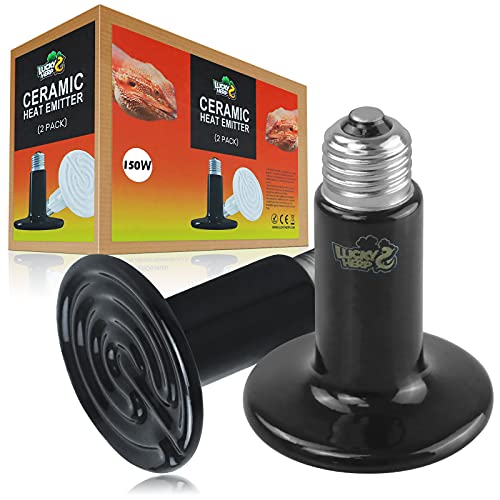
Exo Terra Ceramic Heat Emitter 40W
The Exo Terra Ceramic Heat Emitter 40W is the budget-reliable winter backup every crested gecko keeper should have on hand. It produces pure infrared heat with zero visible light, making it safe to run 24 hours a day without disrupting sleep or behavior. The 40W output is deliberately low — that is the feature, not a limitation. Crested geckos are sensitive to heat, and a 100W ceramic emitter is genuinely dangerous in a standard 18x18x24 enclosure without careful thermostat management. The 40W model gives you meaningful warmth while making it far harder to accidentally overshoot. Pair it with the Inkbird ITC-308 and set the high alarm at 80°F. It is not as sophisticated as the Arcadia DHP, but it costs a fraction of the price and is available at every pet store when you need it fast.
Frequently Asked Questions
Crested geckos should never be exposed to sustained temperatures above 82°F (28°C). At 80–82°F, heat stress begins. Above 82°F, organ damage and death can occur within hours. Always use a digital thermometer inside the enclosure — starter kit thermometers are often 3–5°F off, which can mask dangerous temperatures.
References & Sources
- https://reptifiles.com/crested-gecko-care/crested-gecko-temperatures-humidity/
- https://www.zenhabitats.com/blogs/reptile-care-sheets-resources/crested-gecko-complete-lighting-and-heating-guide
- https://www.thebiodude.com/blogs/gecko-caresheets/the-care-and-maintenance-of-a-crested-gecko
- https://www.petmd.com/reptile/crested-gecko-care-sheet
Related Articles

Best Isopods and Springtails for Crested Geckos (2026)
Compare the best isopods and springtails for a crested gecko bioactive enclosure, including safe species, cleanup performance, and colony care tips.

Best Crested Gecko Humidity: Your Complete Guide (2026)
Struggling to find the best crested gecko humidity? Our expert guide covers the ideal 60-80% range, the crucial daily cycle, and how to prevent health issues.

Best Crested Gecko Calcium: A Complete Nutrition Guide
Confused about calcium? Our expert guide reveals the best crested gecko calcium supplements and how to use them correctly for a healthy, happy gecko.