Finding the Best Chameleon Cage: A 2026 Keeper's Guide
Searching for the best chameleon cage? Our expert guide reviews size, screen vs. glass, and essential features to help you build the perfect habitat for your pet.


This article contains affiliate links. If you make a purchase through these links, we may earn a small commission at no extra cost to you. See our affiliate disclosure for details.
We recommend 4 picks here. Our top choice is the Zoo Med ReptiBreeze — check price and availability below.
How we choose: we compare published specifications against the care requirements in veterinary and species-care literature, and weigh those against what long-time keepers report. We do not test products ourselves and we do not restate Amazon star ratings. The 6 sources behind this article are listed at the bottom.
Quick Comparison
- Cage Type
- Full Screen Mesh
- Ventilation Quality
- Superior/Unmatched
- Humidity Retention
- Low (requires misting)
- Primary Function
- Main cage enclosure
- Best For Species
- Veiled, Panther, most Jackson's Chameleons
- Installation Complexity
- Minimal setup
- Cage Type
- Hybrid Glass/Screen
- Ventilation Quality
- Good (with modifications)
- Humidity Retention
- High (excellent)
- Primary Function
- Cage enclosure for specific climates
- Best For Species
- Montane species requiring high humidity
- Installation Complexity
- Moderate (fan modifications)
- Cage Type
- Drainage Accessory
- Ventilation Quality
- N/A
- Humidity Retention
- N/A
- Primary Function
- Water management
- Best For Species
- All cage types
- Installation Complexity
- Simple
- Cage Type
- Hydration System
- Ventilation Quality
- N/A
- Humidity Retention
- N/A
- Primary Function
- Automated hydration
- Best For Species
- All chameleons
- Installation Complexity
- Complex (plumbing/timers)
Prices are estimates only. Actual prices on Amazon may vary.
Choosing the best chameleon cage is the single most important decision you'll make for your pet's health and happiness. It’s far more than just a box to keep them in; a proper enclosure is a complete life-support system. It provides the security, ventilation, and specific environmental conditions these sensitive creatures need to thrive.
Unlike a snake or a leopard gecko, a chameleon interacts with every single part of its environment, all day long. The wrong setup can lead to stress, respiratory infections, and a shortened lifespan. The right setup, however, allows them to display their natural behaviors, from climbing and basking to hunting and hydrating.
In this guide, we'll walk you through everything you need to know. We'll cover the critical importance of size and shape, settle the screen versus glass debate, and detail the essential features that separate a mediocre cage from a great one. Let's build the perfect vertical world for your chameleon.
Why Your Chameleon's Cage Matters So Much
Before we dive into product types and features, it’s vital to understand why the enclosure is so crucial. Chameleons are famously delicate. In the wild, they have an entire forest to find the perfect spot with the right temperature, humidity, and cover. In our homes, their cage must replicate that choice on a micro-scale.
A well-designed habitat directly impacts their physical and psychological well-being. Proper airflow prevents the stagnant, moist air that breeds bacteria and leads to upper respiratory infections—a common and serious ailment in captive chameleons. The ability to climb high gives them a sense of security, as they naturally feel vulnerable on the ground.
Furthermore, the cage is the foundation for creating essential temperature and UVB gradients. Your chameleon needs to be able to move from a warm basking spot to a cooler, shaded area to regulate its body temperature. Without enough space and the right structure, this is impossible. Think of the cage not as a purchase, but as the most critical piece of your husbandry puzzle. It's the key to a vibrant, healthy, and long-lived companion.
Minimum Cage Dimensions by Species
Veiled & Panther Chameleons
24" × 24" × 48"
61 × 61 × 122 cm minimum for adults
Jackson's Chameleons
18" × 18" × 36"
46 × 46 × 91 cm minimum for adults
Design Priority
Height over floor space
Chameleons are arboreal and need vertical climbing space
Screen vs. Glass Enclosure Comparison
Side-by-side comparison
| Feature | Screen Cage | Glass/Hybrid Cage |
|---|---|---|
| Ventilation | ★Superior airflow | Poor, requires modification |
| Respiratory Health | ★Prevents bacterial infections | High risk without fans |
| Humidity Retention | Difficult, needs frequent misting | ★Excellent retention |
| Reflection Stress | ★None | Risk, requires covering 3 sides |
| Weight & Maintenance | ★Lightweight, easy to clean | Heavy and cumbersome |
Our Take: Screen cages are the superior choice for most chameleon species and home environments.
Interior Setup Essentials
What you need to know
Create varied branch pathways (horizontal, vertical, diagonal) as climbing highways
Place basking branch 6–8 inches below heat and UVB lamps for temperature gradients
Use live plants for humidity, security, and natural water droplet drinking surfaces
Secure all branches firmly with zip ties to prevent falling injuries
Design a dense upper canopy with increasingly open areas toward the middle and bottom
Detailed Reviews
1. Zoo Med ReptiBreeze
Best Overall
Zoo Med ReptiBreeze
Pros
- •Unmatched airflow protects against respiratory illness
- •Lightweight and easy to move and clean
- •Prevents reflection stress that causes anxiety
Cons
- •Harder to maintain humidity in dry climates
- •Humidity dissipates quickly without frequent misting
Bottom Line
Full-screen enclosure providing superior ventilation and airflow to prevent respiratory infections. The gold standard cage for most chameleon species including Veiled, Panther, and Jackson's Chameleons.
2. Hybrid glass terrarium
Premium Pick
Hybrid glass terrarium
Pros
- •Excellent humidity retention for extremely dry climates
- •Better ventilation than solid glass aquariums
- •Works for montane species requiring high humidity
Cons
- •Poor baseline ventilation requiring fan modifications to ensure air exchange
- •Chameleon may see its reflection causing chronic stress
- •Heavy and cumbersome compared to screen cages
Bottom Line
Hybrid enclosure with screen top and front ventilation slots, offering better humidity retention than full-glass aquariums while maintaining some airflow through design modifications.
3. Plastic reptile cage drainage tray
Best Value
Plastic reptile cage drainage tray
Pros
- •Safest and cleanest drainage solution
- •Allows easy collection and disposal of excess water
- •Prevents substrate moisture buildup and associated health issues
Cons
- •Requires regular emptying
- •Needs proper cage modification for installation
Bottom Line
Dedicated drainage solution placed under the cage to collect excess water from frequent misting, preventing cage flooding and maintaining a clean, healthy environment.
4. MistKing Starter Misting System
Premium Pick
MistKing Starter Misting System
Pros
- •Automated with customizable timers for consistent misting
- •Ensures chameleon always has water droplets to drink
- •Maintains stable humidity levels automatically
- •Eliminates inconsistent hand-misting
Cons
- •Expensive initial investment
- •Requires setup, plumbing, and ongoing maintenance
- •Not necessary if committed to twice-daily hand misting
Bottom Line
Automated misting system with programmable timers that delivers frequent, consistent misting cycles throughout the day. Highly recommended as one of the best long-term investments for chameleon care.
The Foundation: Get the Right Size and Shape
When it comes to chameleons, think vertical. These are arboreal (tree-dwelling) lizards that spend their lives climbing. The best chameleon cage will always prioritize height over floor space. A tall enclosure allows them to perform their natural climbing behaviors and provides the vertical space needed for proper temperature gradients.
So, how tall is tall enough? It depends on the species you keep.
- For larger species like Veiled Chameleons and Panther Chameleons, the absolute minimum recommended size for an adult is 24" x 24" x 48" (61 x 61 x 122 cm). This size is widely considered the standard for providing adequate space. (Source: ReptiFiles)
- For smaller species like Jackson's Chameleons, you can use a slightly smaller enclosure, with a recommended minimum of 18" x 18" x 36" (46 x 46 x 91 cm).
Can you go bigger? Absolutely! A larger cage offers more room for your chameleon to explore and allows for more complex and enriching interior setups with diverse foliage and branches. If you have the space and budget, a larger enclosure is always a fantastic upgrade.
Many keepers are tempted to start a juvenile in a smaller cage. While this can work, it's often more economical to purchase the full-sized adult cage from the beginning. You can simply furnish it densely with extra plants and vines to ensure the young chameleon feels secure and can easily find food. This saves you from having to buy a second, larger cage a few months down the road.
Screen vs. Glass: The Great Chameleon Cage Debate
This is one of the most common questions new keepers have, and the answer is critical. For the vast majority of chameleon species and home environments, a screen cage is the superior choice. Let's break down why.
The Case for Screen Cages
A full-screen or mesh enclosure provides one thing that is non-negotiable for chameleon health: superior ventilation. Stagnant air is a chameleon's worst enemy. The constant airflow in a screen cage prevents the buildup of moisture and bacteria that can cause dangerous upper respiratory infections.
Pros:
- Unmatched Airflow: Protects against respiratory illness.
- Lightweight: Easy to move and clean.
- Prevents Reflection Stress: Chameleons won't see their reflection and mistake it for a rival, which can cause chronic stress.
Cons:
- Harder to Maintain Humidity: All that airflow means humidity dissipates quickly. This can be managed with frequent misting, an automatic misting system, or the use of live plants.
For popular species like Veiled, Panther, and most Jackson's Chameleons, a screen cage like the [Zoo Med ReptiBreeze](https://www.amazon.com/dp/B001PHCWD0?tag=krawlo-20 is the gold standard and the best chameleon cage for most keepers.
When to Consider Glass or Hybrid Cages
While screen is usually best, there are specific scenarios where a glass or hybrid (part glass, part screen) terrarium might be considered.
Pros:
- Excellent Humidity Retention: Ideal for keepers in extremely dry climates (e.g., desert regions) where maintaining humidity in a screen cage is a constant battle.
- Can work for specific species: Some montane species that require very high humidity and cooler temperatures can benefit from a glass setup.
Cons:
- Poor Ventilation: This is a major risk and must be mitigated with computer fans or other modifications to ensure air exchange.
- Reflection: The chameleon may see its reflection, leading to stress. You can cover three sides of the enclosure to help reduce this.
- Heavy: Glass terrariums are significantly heavier and more cumbersome than screen cages.
A [hybrid glass terrarium](https://www.amazon.com/dp/B07Y866155?tag=krawlo-20 with a screen top and front ventilation slots is a better choice than a solid glass aquarium, but for most people, the simplicity and safety of a full-screen cage is the winning combination.
Setting Up the Interior: Creating a Vertical World
A bare cage is just a frame. The inside is what turns it into a home. Your goal is to create a dense, climbable environment that allows your chameleon to feel secure and move through different temperature and humidity zones.
Branches and Vines
This is your chameleon's highway system. You need to provide a network of pathways for them to navigate their world.
- Variety is Key: Use branches of different diameters and textures. Include some that are at least as wide as your chameleon's grip.
- Create Pathways: Place branches horizontally, vertically, and diagonally. Create a main basking branch that sits about 6-8 inches below your heat and UVB lamps.
- Secure Everything: Ensure all branches are firmly secured. Chameleons are surprisingly strong, and a falling branch can cause serious injury. Use zip ties or wedges to lock them in place.
Plants and Foliage
Plants provide cover, security, and a natural surface for drinking water droplets. They are absolutely essential.
- Live is Best: Live, non-toxic plants are fantastic for boosting ambient humidity. They also provide sturdy climbing opportunities and great cover. Check out our guide to the best plants for chameleons for safe and hardy options.
- Artificial Works Too: If you don't have a green thumb, high-quality artificial plants can also be used to provide visual barriers and cover. Just be sure to clean them regularly.
- Create a Canopy: The goal is to create a dense upper layer of foliage where your chameleon can hide and feel secure, with more open areas in the middle and lower sections.
Drainage and Substrate
With frequent misting comes a lot of water. You need a plan to manage it to prevent your cage from turning into a swamp, which can damage your home and create an unhealthy environment. A simple substrate layer is not enough and can be dangerous.
Never place a loose substrate like coconut fiber or soil directly on the cage floor where a chameleon can reach it. Some species, particularly Veiled Chameleons, are known to eat substrate, which can lead to life-threatening impaction.
The safest and cleanest option is a bare floor with a dedicated drainage solution. You can place a [plastic drainage tray](https://www.amazon.com/dp/B0164R03RW?tag=krawlo-20 under the cage or have a PVC bottom that funnels water into a bucket. This allows excess water to be collected and easily discarded, keeping the enclosure clean and your chameleon safe.
Must-Have Cage Accessories
Your chameleon's habitat isn't complete without the equipment that creates the right environment. This is just as important as the cage itself.
Lighting and Heating
Proper lighting is non-negotiable for your chameleon's health. They need three types of light:
- A Basking Heat Lamp: This creates a warm spot (typically 85-95°F, but check requirements for your specific species) where your chameleon can heat up. A simple dome fixture with a halogen bulb works perfectly.
- A Linear UVB Lamp: This is critical for preventing Metabolic Bone Disease (MBD). Your chameleon's body uses UVB light to produce Vitamin D3, which allows it to absorb calcium. A tube-style UVB light, like a T5 HO (High Output), spanning most of the cage top is far superior to compact coil bulbs. Our reptile heat lamp comparison can help you choose the right combination.
- A Plant-Growth LED (Optional): If you are using live plants, adding a full-spectrum LED light will help them thrive.
Hydration System
Chameleons do not drink from a water bowl. They hydrate by licking droplets from leaves. You must provide this for them.
- Hand Misting: You can use a manual pressure sprayer to mist the enclosure heavily at least twice a day. This can be time-consuming and inconsistent.
- Automatic Misting System: The highly recommended option is an automated system like the [MistKing Starter Misting System](https://www.amazon.com/dp/B088ZWMBF4?tag=krawlo-20 This allows you to set timers for short, frequent misting cycles throughout the day, ensuring your chameleon always has an opportunity to drink and keeping humidity levels stable. It's one of the best investments you can make for long-term success.
Monitoring Tools
You can't manage what you don't measure. You need at least two digital thermometer/hygrometer combos. Place one sensor near the basking spot and another in a cooler, shaded area of the cage. This allows you to monitor your temperature gradient and ambient humidity at a glance, ensuring your parameters are always in the safe zone.
Final Thoughts
Choosing the best chameleon cage is about building a complete, thriving ecosystem. It starts with a tall, screen enclosure that provides excellent ventilation and ample climbing space. From there, you must create a dense, enriching interior with a network of branches and plenty of foliage for security.
Finally, the right lighting and an automated misting system are the essential technology that brings the environment to life. By investing in a high-quality setup from the start, you are providing the foundation for a healthy, long, and fascinating life for your pet chameleon. It’s the most important step you'll take on your journey as a keeper.
Our Final Verdict

Zoo Med ReptiBreeze
Full-screen enclosure providing superior ventilation and airflow to prevent respiratory infections. The gold standard cage for most chameleon species including Veiled, Panther, and Jackson's Chameleons.
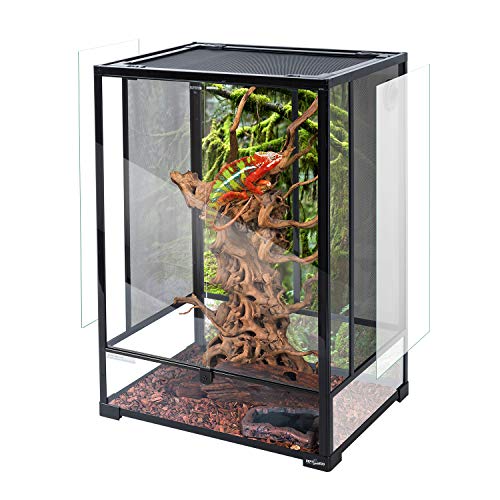
Hybrid glass terrarium
Hybrid enclosure with screen top and front ventilation slots, offering better humidity retention than full-glass aquariums while maintaining some airflow through design modifications.

Plastic reptile cage drainage tray
Dedicated drainage solution placed under the cage to collect excess water from frequent misting, preventing cage flooding and maintaining a clean, healthy environment.
Frequently Asked Questions
For common large species like Veiled or Panther Chameleons, the recommended minimum size is 24 inches long, 24 inches wide, and 48 inches tall (24"x24"x48"). For smaller species like Jackson's Chameleons, an 18"x18"x36" cage is suitable. Height is the most critical dimension as they are avid climbers.
References & Sources
- https://www.petmd.com/reptile/veiled-chameleon-care-sheet
- https://reptifiles.com/veiled-chameleon-care-sheet/
- https://reptifiles.com/jacksons-chameleon-care/jacksons-chameleon-enclosure-size/
- https://reptifiles.com/best-type-of-reptile-enclosure/
- https://reptifiles.com/jacksons-chameleon-care/shopping-list/
- https://reptifiles.com/panther-chameleon-care-sheet/
Related Articles

Best Plants for Chameleon Cage: A Krawlo Guide
Discover the best plants for your chameleon cage! Our expert guide helps you choose safe, functional, and beautiful live plants to enrich your chameleon's habitat.

Best Bearded Dragon Cage: The Ultimate Enclosure Setup Guide
Discover how to choose the best bearded dragon cage for your pet! This guide covers ideal sizes, essential features, and husbandry tips for a thriving enclosure.

Best Plants for Your Chameleon Enclosure: A Krawlo Guide
Discover the best plants for your chameleon enclosure, from safe live options to essential faux choices. Create a thriving, natural habitat with our expert guide.