Best Panther Chameleon Heating: Complete Setup Guide
Get panther chameleon heating right with our complete guide — basking temps, bulb types, wattage, positioning tips, and burn prevention for healthy chameleons.


This article contains affiliate links. If you make a purchase through these links, we may earn a small commission at no extra cost to you. See our affiliate disclosure for details.
We recommend 5 picks here. Our top choice is the Halogen Flood Basking Bulb for Chameleons — check price and availability below.
How we choose: we compare published specifications against the care requirements in veterinary and species-care literature, and weigh those against what long-time keepers report. We do not test products ourselves and we do not restate Amazon star ratings. The 4 sources behind this article are listed at the bottom.
Quick Comparison
- Primary Function
- Basking Heat
- Light Output
- Yes
- Requires External Fixture
- Yes (Dome)
- Monitors/Controls Temp Directly
- No
- Average Price Range
- $10-20
- Primary Function
- Spot Temperature Monitoring
- Light Output
- No
- Requires External Fixture
- No
- Monitors/Controls Temp Directly
- Yes (measures surface)
- Average Price Range
- $15-30
- Primary Function
- Bulb Housing/Direction
- Light Output
- N/A (houses light)
- Requires External Fixture
- N/A (Is the fixture)
- Monitors/Controls Temp Directly
- No
- Average Price Range
- $20-40
- Primary Function
- Lightless Night Heat
- Light Output
- No
- Requires External Fixture
- Yes (Ceramic Socket/Dome)
- Monitors/Controls Temp Directly
- No
- Average Price Range
- $25-50
- Primary Function
- Lighting Schedule Automation
- Light Output
- N/A (controls light)
- Requires External Fixture
- No
- Monitors/Controls Temp Directly
- No
- Average Price Range
- $10-20
Prices are estimates only. Actual prices on Amazon may vary.
Panther chameleons (Furcifer pardalis) are breathtaking reptiles — but they're also incredibly temperature-sensitive. Get the heating wrong, and you'll see a lethargic chameleon that won't eat, won't bask, and starts losing color. Get it right, and you'll have an active, vibrant animal showing off its best hues every single day.
This guide covers everything you need to know about panther chameleon heating — from basking temperatures to nighttime drops, bulb types to wattage, and the most common mistakes keepers make. Whether you're setting up a new enclosure or troubleshooting an existing one, this is your go-to reference.
Why Heating Matters So Much
Panther chameleons are ectotherms. That means they can't generate their own body heat — they depend entirely on external sources to regulate their temperature.
When your chameleon basks, it's doing a lot more than warming up. It's jump-starting digestion, activating immune function, and absorbing UVB for vitamin D3 synthesis. Without the right basking temperature, food won't digest properly, vitamins won't absorb correctly, and minor injuries take much longer to heal.
Temperature also drives behavior. A chameleon that's too cold will hide, refuse food, and become withdrawn. A chameleon that's overheating will flatten its body, gape its mouth, and darken its colors — clear stress signals. Both extremes are harmful.
Getting the thermal gradient right is one of the most important things you can do as a keeper.
Temperature Zones
Basking Spot (Daytime)
85–90°F
29–32°C
Ambient Zone (Daytime)
75–80°F
24–27°C
Ambient Zone (Nighttime)
65–72°F
18–22°C
Cool Zone (Daytime)
70–75°F
21–24°C
Cool Zone (Nighttime)
65–70°F
18–21°C
Heat Source Options
What you need to know
Halogen/Incandescent bulbs are the gold standard — affordable, effective, widely available
Reptile basking lamps offer tighter beam angles for focused heat in tall enclosures
Mercury vapor bulbs combine heat + UVB in one bulb for large enclosures (4x2x4 ft+)
Ceramic heat emitters for nighttime heating only — never as primary daytime heat source
Starting Wattage by Enclosure Size
Small (2x2x3 ft)
40–60W
Most homes at 70°F
Medium (2x2x4 ft)
60–75W
Standard adult setup
Large (2x4x4 ft)
75–100W
Larger adults, cooler rooms
Critical Burn Prevention Rules
What you need to know
Basking spot must never exceed 95°F — always verify with a thermometer
Keep all branches, vines, and foliage away from the lamp fixture
Position bulbs outside the enclosure only — never place inside
Check basking temperature monthly as bulb output decreases with age
Watch for flattening, gaping, or darkening — immediate signs of overheating
Detailed Reviews
1. Halogen Flood Basking Bulb for Chameleons
Best Overall
Halogen Flood Basking Bulb for Chameleons
Pros
- •Produces focused, directional heat at appropriate intensity
- •Lasts longer than standard incandescent bulbs
- •Widely available in multiple wattages for precise temperature control
- •Mimics natural solar radiation for effective basking
Cons
- •Emits light, making it unsuitable for nighttime heating
- •Requires a separate, compatible dome fixture
- •Can reach very high surface temperatures, necessitating careful placement
Bottom Line
Halogen flood bulbs provide the ideal focused and directional heat necessary for a panther chameleon's basking spot, crucial for their thermoregulation and metabolic processes. Their availability in various wattages allows keepers to accurately achieve the precise temperature gradient required for optimal health.
2. Infrared Temperature Gun for Reptiles
Editor's Choice
Infrared Temperature Gun for Reptiles
Pros
- •Reads actual surface temperature instantly and accurately
- •Essential for verifying basking spot temperatures (85–90°F)
- •Superior accuracy compared to stick-on or probe thermometers
- •Allows quick adjustments to heat sources based on real-time data
Cons
- •Does not provide continuous temperature monitoring
- •Requires manual operation for each temperature check
- •Accuracy depends on correct aiming at the desired surface
Bottom Line
An infrared temperature gun is an indispensable tool for verifying the exact surface temperature of basking areas, offering accuracy that traditional probes cannot match. It allows keepers to quickly and precisely measure temperatures, ensuring the thermal gradient is correctly maintained.
3. Reptile Clamp Lamp Dome Fixture
Best Value
Reptile Clamp Lamp Dome Fixture
Pros
- •Allows precise aiming and positioning of basking bulbs
- •Controls both direction and distance of the heat source
- •Designed for safe use with high-wattage reptile bulbs
- •Compatible with various bulb types, including halogens
Cons
- •Requires sufficient overhead clearance above the enclosure
- •Does not generate heat itself; relies on the installed bulb
- •Quality varies; some models may lack durability or stability
Bottom Line
This dome fixture provides essential functionality by securely housing and directing basking bulbs, enabling precise control over heat placement and intensity. It is vital for safely creating an optimal basking zone by managing the distance and angle of the heat source.
4. Ceramic Heat Emitter for Reptiles
Premium Pick
Ceramic Heat Emitter for Reptiles
Pros
- •Emits heat without producing any light output
- •Provides safe supplemental warmth for overnight temperature drops
- •Prevents disruption of the chameleon's dark rest period
- •Effective in maintaining ambient temperatures above 60°F
Cons
- •Does not provide light or beneficial UVB radiation
- •Can become extremely hot, requiring a protective cage to prevent burns
- •Needs a separate thermostat for accurate temperature regulation
Bottom Line
Ceramic heat emitters offer a lightless heat source, essential for maintaining safe nighttime temperatures without disturbing a chameleon's crucial dark rest cycle. This supplemental heating prevents harmful temperature drops, supporting overall chameleon health and well-being.
5. Reptile Outlet Timer
Budget Pick
Reptile Outlet Timer
Pros
- •Automates consistent 10–12 hour photoperiods
- •Ensures reliable on/off cycling for basking and UVB lights
- •Prevents accidental overnight lighting that causes chameleon stress
- •Reduces manual effort and increases husbandry consistency
Cons
- •Requires initial setup and programming
- •Does not control temperature, only light cycles
- •Can be disrupted by power outages, requiring reset
Bottom Line
An outlet timer is crucial for automating the precise 10–12 hour photoperiod required for panther chameleons, ensuring consistent light cycles daily. This automation prevents stress from irregular lighting and guarantees essential exposure to basking and UVB.
What Temperatures Do Panther Chameleons Need?
Panther chameleons need a range of temperatures throughout their enclosure — not a single uniform temperature. This is called a thermal gradient, and it gives your chameleon the ability to self-regulate by moving between warmer and cooler zones.
| Zone | Daytime Temperature | Nighttime Temperature |
|---|---|---|
| Basking spot | 85–90°F (29–32°C) | N/A (lights off) |
| Ambient (mid-enclosure) | 75–80°F (24–27°C) | 65–72°F (18–22°C) |
| Cool zone (bottom) | 70–75°F (21–24°C) | 65–70°F (18–21°C) |
The basking spot should never exceed 95°F (35°C). Anything above that risks thermal burns and serious heat stress.
Nighttime temperature drops are completely natural — and actually beneficial. In Madagascar, where panther chameleons come from, temperatures drop significantly after dark. Most homes naturally stay between 65–72°F overnight, which is perfect. You don't need a nighttime heat source unless your home drops below 60°F.
The Best Heat Sources for Panther Chameleons
Incandescent and Halogen Basking Bulbs
A plain halogen or incandescent flood bulb is the gold standard for panther chameleon basking. These bulbs produce the right spectrum of light and heat, they're affordable, and they're widely available.
Halogen bulbs are often the better choice over regular incandescent ones. They run hotter per watt, last longer, and produce a brighter, more natural-looking light that helps chameleons thermoregulate accurately. Look for a [halogen basking bulb for chameleons](https://www.amazon.com/dp/B0006L2UBU?tag=krawlo-20 that fits your enclosure size.
Reptile Basking Spot Lamps
Branded reptile basking lamps from Zoo Med, Exo Terra, or Arcadia work well too. These are essentially halogen or incandescent bulbs with a tighter beam angle for a more focused hotspot — useful if your enclosure is taller and you need heat to reach a specific branch.
A [reptile basking spot lamp](https://www.amazon.com/dp/B0B55TLWFD?tag=krawlo-20 is a solid pick if you want something purpose-built for reptile enclosures.
Mercury Vapor Bulbs (Larger Enclosures)
Mercury vapor bulbs (MVBs) are all-in-one bulbs that produce heat, visible light, UVA, and UVB at the same time. They're powerful — typically 100W or more — and work best in larger enclosures (4x2x4 ft and above).
If you have a big, tall enclosure, an [MVB for chameleons](https://www.amazon.com/dp/B0CSFPCLZS?tag=krawlo-20 simplifies your setup by combining basking and UVB into one bulb.
One caution: MVBs run very hot and must be positioned carefully to avoid overheating and burns. They're not ideal for smaller enclosures.
Ceramic Heat Emitters (Nighttime Only)
Ceramic heat emitters (CHEs) produce heat with no light at all. That makes them perfect for supplemental nighttime heating — but only if your home drops below 60°F overnight.
Don't use a CHE as your primary daytime heat source. Panther chameleons need visible light to locate heat and regulate temperature correctly. A heatless heat source confuses their thermoregulation instincts. Use a [ceramic heat emitter for reptiles](https://www.amazon.com/dp/B096JWWQMC?tag=krawlo-20 plugged into a thermostat for safe nighttime use.
What Wattage Do You Need?
There's no single correct wattage — it depends on your enclosure size and your room's ambient temperature. You'll need to experiment a little.
Here's a useful starting point:
| Enclosure Size | Starting Wattage | Notes |
|---|---|---|
| Small (2x2x3 ft) | 40–60W | Most homes at 70°F |
| Medium (2x2x4 ft) | 60–75W | Standard adult setup |
| Large (2x4x4 ft) | 75–100W | Larger adults, cooler rooms |
The method is simple: set up the bulb, let it run for 30 minutes, then measure the basking spot temperature with a temperature gun. Adjust wattage up or down until you hit 85–90°F at the branch where your chameleon will sit.
(Estimates only — actual prices on Amazon may vary.) Don't skip this step. A [digital infrared temperature gun](https://www.amazon.com/dp/B0B71HFH9K?tag=krawlo-20 costs around $15–25 and makes proper temperature management easy and reliable.
How to Position Your Basking Lamp
Positioning matters just as much as wattage. Here's what to get right:
Distance controls temperature. The basking lamp should be positioned 6–12 inches above the basking branch. Farther away means lower temperature at the basking spot. Use distance as your fine-tuning tool before swapping bulbs.
Aim for the highest branch. Chameleons naturally climb as high as possible to reach the warmest spot. Position your lamp directly above the highest branch in the enclosure — that's where your chameleon will bask.
Always outside the enclosure. Basking bulbs must sit outside the screen top, never inside. Direct contact with a hot bulb causes burns in seconds.
Use a quality dome fixture. A [clamp lamp dome fixture](https://www.amazon.com/dp/B0002DHODG?tag=krawlo-20 lets you aim and position the bulb precisely. Make sure the fixture is rated for the wattage you're running.
Burn Prevention: Critical Safety Rules
Burns are one of the most common injuries in captive chameleons — and they're almost entirely preventable.
Panther chameleons don't reliably pull away from dangerously hot surfaces the way some reptiles do. They can sit under a lamp that's far too hot and not move until they're seriously injured.
Follow these rules every time:
- The basking spot temperature must never exceed 95°F
- Always verify temperature with a thermometer — never guess
- No branches, vines, or foliage should be able to touch the lamp fixture
- Never place any bulb inside the enclosure
- Check basking temperature monthly — bulb output decreases as bulbs age
If your chameleon is flattening its body, gaping its mouth, or turning dark while near the basking spot, it's overheating. Move it to a shaded, cooler area immediately and recheck your temperatures.
How Long Should the Lamp Stay On?
Panther chameleons need 10–12 hours of light and heat per day. This mirrors the natural photoperiod they'd experience in Madagascar.
The easiest solution is a timer. Plug your basking lamp and UVB light into a [reptile outlet timer](https://www.amazon.com/dp/B00MWHQZX0?tag=krawlo-20 and set it for 8 AM to 8 PM — or whatever 10–12 hour window works for your schedule.
Lights off at night means completely off. Panther chameleons need true darkness to sleep well. Even dim red or blue bulbs can disrupt their rest and cause chronic stress. If you need nighttime heat, use a CHE — no light, pure warmth.
What NOT to Use for Heating
Some products are commonly marketed for reptiles but don't work for panther chameleons — or actively cause harm.
Heating pads and under-tank heaters: Panther chameleons are arboreal — they live in trees and bask from above. They don't absorb heat through their belly the way snakes and ground-dwelling lizards do. An under-tank heater does nothing useful for a chameleon. For a comparison of heating options across different reptile species, see our Best Heat Lamps For Reptiles Comparison.
Heat rocks: These are a documented safety hazard. They heat unevenly, frequently malfunction, and cause burns. Never use them with any reptile.
Red or blue "night bulbs": These are often marketed as invisible to reptiles — but that's not accurate. Chameleons can detect red and blue wavelengths. Any light at night disrupts sleep. Use CHEs instead.
Cooling the Enclosure
Overheating is just as dangerous as being too cold. If your basking spot consistently runs above 95°F, or your ambient temperature climbs above 85°F, you need to bring things down.
Here's how:
- Drop to a lower-wattage bulb
- Move the lamp farther from the screen top
- Improve ventilation (screen-sided enclosures help significantly)
- Run a fan to circulate air in the room
- Move the enclosure away from windows with direct sun exposure
If you live in a hot climate, monitor temperatures carefully in summer. A room that's a comfortable 72°F in January might reach 88°F in August — and that completely changes your heating math.
Temperature Monitoring: The Right Tools
Stick-on analog thermometers are nearly useless for chameleon keeping. They measure ambient air temperature — not the actual surface temperature where your chameleon is sitting — and those readings can differ by 20–30°F.
Use these instead:
Infrared temperature gun: Points at the basking branch and gives an instant surface reading. This is the most important tool for chameleon heating. Non-negotiable.
Digital probe thermometer with dual probes: Place one probe at basking height and one at the cool zone. This gives you a continuous real-time picture of your thermal gradient without having to point a gun every time.
Check temperatures weekly, and always after swapping a bulb. Older bulbs run cooler than new ones, so what was perfect at 60W six months ago might be slightly under target today.
Putting It All Together: The Complete Heating Setup
Here's what a properly set up panther chameleon heating system looks like:
- Basking lamp — halogen flood or incandescent, 40–100W based on enclosure size and room temp
- Dome fixture — clamp-style, rated for your bulb wattage, positioned outside the screen top
- UVB light — a separate linear T5 HO UVB tube (not the same as your basking lamp)
- Digital timer — 10–12 hour cycle, on every day
- Temperature gun — for verifying the basking spot is in range
- Ceramic heat emitter on thermostat — only needed if your home drops below 60°F at night
You don't need a complicated setup. A quality basking bulb, a good UVB light, and a reliable timer cover the vast majority of what your panther chameleon needs to thrive thermally.
For a full picture of everything your panther chameleon needs beyond heating — including humidity, UVB, feeding schedules, and enclosure size — see our Panther Chameleon Care: Complete Guide for Keepers.
Common Heating Mistakes and How to Fix Them
Basking spot is too hot. If your chameleon avoids the basking spot, gapes near the light, or darkens dramatically when basking, the temperature is too high. Move the lamp farther away or drop to a lower wattage.
No thermal gradient. If the whole enclosure is the same temperature, your chameleon can't self-regulate. Make sure the bottom of the enclosure is at least 10–15°F cooler than the basking spot.
Lights on 24/7. Chameleons need dark nights for proper rest. Always run your basking lamp on a timer.
Using heat mats or heat rocks. These don't work for arboreal chameleons and can cause burns. Stick to overhead basking lamps.
Not measuring temperature. Guessing never works. A temperature gun is the single most important tool you can own as a chameleon keeper — and it costs less than a bag of crickets.
Our Final Verdict

Halogen Flood Basking Bulb for Chameleons
Halogen flood bulbs provide the ideal focused and directional heat necessary for a panther chameleon's basking spot, crucial for their thermoregulation and metabolic processes. Their availability in various wattages allows keepers to accurately achieve the precise temperature gradient required for optimal health.

Infrared Temperature Gun for Reptiles
An infrared temperature gun is an indispensable tool for verifying the exact surface temperature of basking areas, offering accuracy that traditional probes cannot match. It allows keepers to quickly and precisely measure temperatures, ensuring the thermal gradient is correctly maintained.
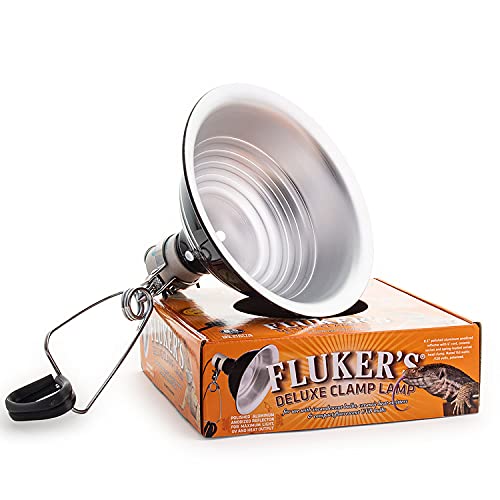
Reptile Clamp Lamp Dome Fixture
This dome fixture provides essential functionality by securely housing and directing basking bulbs, enabling precise control over heat placement and intensity. It is vital for safely creating an optimal basking zone by managing the distance and angle of the heat source.
Frequently Asked Questions
A halogen or incandescent flood bulb positioned outside the screen top of the enclosure is the best basking heat source for panther chameleons. These produce focused, directional heat at the right intensity. Branded reptile basking spot lamps from Zoo Med or Arcadia work equally well. Avoid heat mats and heat rocks — panther chameleons are arboreal and need overhead heat, not belly heat.
References & Sources
- https://reptifiles.com/panther-chameleon-care-sheet/
- https://www.zenhabitats.com/blogs/reptile-care-sheets-resources/panther-chameleon-care-sheet-reptifiles?srsltid=AfmBOoo4VlIVImbsWIO6VH8zEmcsTlauRmoPOcbRNF3ATjONO-4nx3
- https://www.thebiodude.com/blogs/chameleon-caresheets/the-care-and-bioactive-maintenance-of-the-panther-chameleon?srsltid=AfmBOootjkA4hMgLieZRsPCZ6MggoBbApP-a4u0V-VVEBAS_V6mfDl0F
- https://www.thesprucepets.com/panther-chameleon-7197791
Related Articles

Best Panther Chameleon Substrate: Top Picks
Find the best panther chameleon substrate for a healthy enclosure. We cover bioactive mixes, bare-bottom setups, and everything in between.

Best Panther Chameleon Food: Top Feeders & Diet Tips
Discover the best panther chameleon food options, from dubia roaches to hornworms, with feeding schedules and supplement tips for a thriving chameleon.

Best Panther Chameleon Misting System (2026): Top 5 Picks
Find the best panther chameleon misting system for your setup. We review the top 5 options, explain how to install them, and share a daily hydration schedule.