Best Bioactive Substrate Kits: Top Picks Reviewed
Looking for the best bioactive substrate kits? We break down top picks, what to look for, and how to build a thriving self-cleaning terrarium for your reptile.


This article contains affiliate links. If you make a purchase through these links, we may earn a small commission at no extra cost to you. See our affiliate disclosure for details.
We recommend 3 picks here. Our top choice is the The Bio Dude Terra Firma — check price and availability below.
How we choose: we compare published specifications against the care requirements in veterinary and species-care literature, and weigh those against what long-time keepers report. We do not test products ourselves and we do not restate Amazon star ratings. The 6 sources behind this article are listed at the bottom.
Quick Comparison
- Species Type
- Temperate & Arid
- Moisture Retention Level
- Moderate (balanced drainage)
- Includes Live Inoculant
- No (ready for springtail/isopod addition)
- Price Tier
- Premium ($$)
- Primary Particle Mix
- Organic topsoil, play sand, fine gravel
- Brand Positioning
- Premium, trusted by serious keepers
- Species Type
- Tropical
- Moisture Retention Level
- High (moisture-rich)
- Includes Live Inoculant
- Yes (Bio Shot microfauna included)
- Price Tier
- Premium ($$)
- Primary Particle Mix
- Coco fiber, organic topsoil, bark
- Brand Positioning
- Premium, includes biofertilizer
- Species Type
- Tropical & Temperate (both options)
- Moisture Retention Level
- Adjustable (varies by variant)
- Includes Live Inoculant
- No (ready for separate microfauna)
- Price Tier
- Budget-Friendly ($)
- Primary Particle Mix
- Mixed components (varies by type)
- Brand Positioning
- Value alternative for beginners
Prices are estimates only. Actual prices on Amazon may vary.
Setting up a bioactive terrarium is one of the best things you can do for your reptile. It looks amazing, stays cleaner on its own, and keeps your animal mentally stimulated. But picking the right substrate is where most people get stuck.
The good news? There are some excellent bioactive substrate kits out there that take the guesswork out of it. This guide walks you through everything you need to know — what to look for, which kits are worth your money, and how to set things up for long-term success.
What Is a Bioactive Substrate, Anyway?
A bioactive substrate is more than just dirt in a tank. It's a living ecosystem. The substrate contains beneficial microorganisms, fungi, and a cleanup crew of small bugs — like springtails and isopods — that break down waste, dead plant matter, and leftover food.
Think of it like a tiny forest floor inside your enclosure. Your reptile lives on top of it, and the living layer underneath does the cleaning for you.
This is very different from using paper towels or a basic coconut fiber substrate. Bioactive setups cycle nutrients naturally. They stay fresher longer and dramatically reduce your maintenance time.
5 Essentials in a Quality Bioactive Kit
What you need to know
Correct particle mix combining topsoil, sand, coconut fiber, and bark for proper drainage and root growth
Drainage layer included (lava rock, LECA, or gravel) to prevent standing water and root rot
Species-specific formulation — tropical, arid, or temperate mix tailored to your reptile
Microfauna-ready — pre-seeded or safe for adding your own springtails and isopods
Adequate depth — 3–6 inches minimum depending on species and burrowing needs
Top 5 Bioactive Substrate Kits
Quick recommendations
Trusted blend for temperate and arid species (ball pythons, blue tongue skinks). Excellent drainage and microfauna support.
Pre-formulated for high-humidity setups (crested geckos, dart frogs). Bio Shot inoculant jump-starts the biological cycle.
Reliable quality at lower cost. Available in tropical and temperate mixes with drainage layer bundle.
Sandier, drier formulation mimicking Australian habitat. Supports digging without staying damp.
Balanced moisture retention combining coco fiber, topsoil, and bark. Ideal for ball pythons and humid-dwelling snakes.
Substrate Depth Guide by Species
Small Geckos
3–4 inches
Crested, mourning — allows plant root growth
Medium Lizards
4–6 inches
Bearded dragons, blue tongue skinks — supports burrowing
Snakes
4–6 inches
Ball pythons, corn snakes — enables hiding and burrow behavior
Detailed Reviews
1. The Bio Dude Terra Firma
Best Overall
The Bio Dude Terra Firma
Pros
- •Trusted brand among serious reptile keepers
- •Long track record of success
- •Balanced drainage while maintaining adequate moisture for beneficial bacteria
- •Widely recommended for blue tongue skinks and similar species
- •Supports thriving microfauna colonies
Cons
- •Premium pricing relative to alternatives
- •Not suitable for tropical species requiring high moisture
Bottom Line
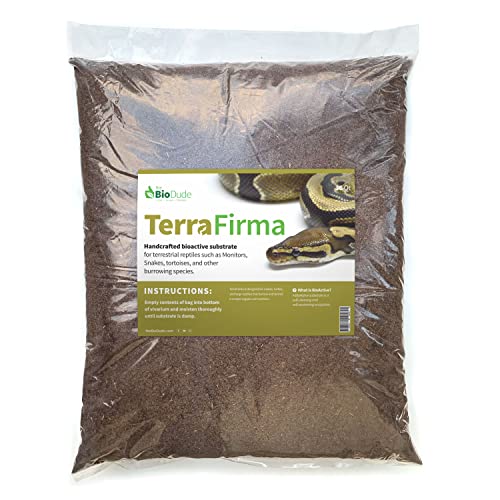
Premium bioactive substrate kit for temperate and arid species, combining organic topsoil, play sand, and fine gravel for balanced drainage and moisture retention.
2. The Bio Dude Terra Sahara / Bio Shot Bundle
Best for Tropical Species
The Bio Dude Terra Sahara / Bio Shot Bundle
Pros
- •Holds moisture without becoming soggy
- •Bio Shot includes live beneficial microorganisms for faster cycling
- •Becomes self-sustaining faster than unfertilized substrates
- •Ideal for high-humidity tropical setups
- •Popular among crested gecko and dart frog keepers
Cons
- •Requires 2-4 week cycling period before adding animals
- •Moisture-rich formula unsuitable for arid species
- •Higher cost than budget alternatives
Bottom Line
Tropical bioactive substrate mix combined with live beneficial microorganism inoculant that jump-starts the biological cycle for humid enclosures.
3. Josh's Frogs Bioactive Substrate Kit
Best Budget Kit
Josh's Frogs Bioactive Substrate Kit
Pros
- •Good quality at lower price point
- •Offers both tropical and temperate options
- •Frequently includes drainage layer materials
- •Well-reviewed by keepers
- •Reliable performance across common reptile species
- •Ideal for first-time bioactive builders
Cons
- •Budget positioning may indicate less premium sourcing than leading brands
- •Limited brand recognition compared to The Bio Dude
Bottom Line
Affordable bioactive substrate available in tropical and temperate variants, often bundled with drainage layer materials for beginners.
Why the Substrate Kit You Choose Really Matters
Not every substrate mix works for every species. A desert reptile like a bearded dragon needs a completely different setup than a tropical species like a crested gecko or a mourning gecko.
The wrong mix can cause problems. Too much moisture retention in a desert setup can lead to respiratory infections. Too little in a tropical setup, and your plants die and the microfauna can't survive.
According to ReptiFiles' bioactive vivarium maintenance guide, the substrate layer is the foundation of the entire system. If it fails, everything else fails with it.
Choosing one of the best bioactive substrate kits simplifies this. These kits are pre-formulated for specific species or humidity levels, so you're not mixing things blindly.
What to Look for in a Bioactive Substrate Kit
Before we get into specific product picks, here's what separates a good kit from a bad one:
Correct Particle Mix
A quality bioactive substrate isn't just one ingredient. It usually combines organic topsoil, sand, coconut fiber, and sometimes orchid bark or leaf litter. This mix allows roots to grow, water to drain, and bugs to tunnel — all at the same time.
Drainage Layer Included
Many kits include or recommend a separate drainage layer — usually lava rock, [LECA hydroton balls](https://www.amazon.com/dp/B09QM4P5R6?tag=krawlo-20 or coarse gravel. This sits below the main substrate and prevents the root zone from sitting in standing water.
Species Compatibility
Always check what species the kit is designed for. A kit labeled "tropical" is not the same as one labeled "arid" or "temperate." Match the kit to your animal.
Microfauna Ready
Some kits come pre-seeded with springtails or isopods. Others are ready for you to add your own cleanup crew. Either way, a good kit will mention whether it's safe and suitable for live microfauna.
Enough Depth
Your substrate layer needs to be deep enough to work properly. For most setups, you want at least 3–4 inches of substrate on top of the drainage layer. Some larger enclosures or burrowing species need 6 inches or more.
According to The Bio Dude's long-term bioactive maintenance resources at thebiodude.com, substrate depth is one of the most commonly overlooked factors by new bioactive keepers.
Top Bioactive Substrate Kit Picks
Here are some of the best bioactive substrate kits available right now, broken down by use case:
Best Overall: The Bio Dude Terra Firma
[The Bio Dude Terra Firma](https://www.amazon.com/dp/B07Z5C274C?tag=krawlo-20 is one of the most trusted names in bioactive keeping. This kit is designed for temperate and arid species — think ball pythons, blue tongue skinks, and similar animals.
It contains a blend of organic topsoil, play sand, and fine gravel. It drains well but also holds just enough moisture to support beneficial bacteria and microfauna. The Bio Dude is widely considered reputable among serious reptile keepers, and Terra Firma has a long track record of success.
If you keep a blue tongue skink, this is one of the most recommended substrates out there — and for good reason.
Best for Tropical Species: The Bio Dude Terra Sahara / Bio Shot Bundle
For humid tropical setups — crested geckos, dart frogs, mourning geckos — you need a mix that holds moisture without getting soggy. [The Bio Dude Terra Sahara](https://www.amazon.com/dp/B0CVQR1X6N?tag=krawlo-20 combined with their [Bio Shot](https://www.amazon.com/dp/B09RBDYPJY?tag=krawlo-20 inoculant is a popular combo.
Bio Shot adds live beneficial microorganisms directly into your substrate. This jump-starts the biological cycle so your setup becomes self-sustaining faster.
If you keep mourning geckos, tropical mixes like this are essentially required. These little geckos thrive in high-humidity environments with dense plant growth, and the substrate has to support that.
Best Budget Kit: Josh's Frogs Bioactive Substrate
[Josh's Frogs bioactive substrate kits](https://www.amazon.com/dp/B07D2H81RC?tag=krawlo-20 offer good quality at a slightly lower price point. They carry both tropical and temperate mixes and often bundle in drainage layer materials.
They're a solid choice if you're just getting started and don't want to spend a lot on your first bioactive setup. The mix is well-reviewed and works reliably for a wide range of common reptile species.
Best for Bearded Dragons: Arid Bioactive Mixes
Bearded dragons need a drier, sandier mix that can handle digging and doesn't stay damp. Look for arid bioactive substrate kits that combine coarse sand, organic topsoil, and excavator-style clay.
According to ReptiFiles' bearded dragon substrate guide, a bioactive setup for beardies needs to mimic the hard-packed, somewhat gritty soils of their native Australian habitat. Pre-made arid kits do a much better job of this than DIY sand-only mixes.
Best for Snake Enclosures: Tropical/Temperate Hybrid Kits
Ball pythons and other humid-dwelling snakes do well in a mix that holds moderate moisture. [Bioactive substrate kits for ball pythons](https://www.amazon.com/dp/B007UE10HG?tag=krawlo-20 usually combine coco fiber, organic topsoil, and some bark pieces for texture and drainage.
These setups work especially well when paired with a good cleanup crew. Isopods in particular are great at breaking down shed skins and leftover prey items.
How Deep Should Your Substrate Be?
This is one of the most common questions new bioactive keepers ask — and for good reason. Depth determines how well your system functions.
Here's a general guide:
| Species Type | Minimum Substrate Depth | Notes |
|---|---|---|
| Small geckos (crested, mourning) | 3–4 inches | Plant roots need room to grow |
| Medium lizards (bearded dragons, skinks) | 4–6 inches | Allows burrowing and thermoregulation |
| Snakes (ball pythons, corn snakes) | 4–6 inches | Supports natural hide and burrow behavior |
| Large monitors or tegus | 6–12 inches | These animals dig deep and need the room |
Don't skimp on depth. A shallow substrate can't support enough microfauna to make the system work. The bugs need space to live and breed.
Building Your Bioactive Setup: Step by Step
Once you've chosen your kit, here's how to put it all together:
Step 1: Add the Drainage Layer
Pour in your drainage material first — LECA, lava rock, or coarse gravel. Aim for 1–2 inches. This layer sits below the substrate and catches excess water so roots don't drown.
You can separate the drainage layer from the substrate above using a piece of [terrarium mesh or screen](https://www.amazon.com/dp/B00167VVO0?tag=krawlo-20 to keep the layers from mixing.
Step 2: Add Your Substrate Mix
Pour in your substrate kit on top of the drainage layer. Pat it down gently but don't compact it too hard — microfauna need to be able to move through it.
Aim for the depth recommended in the table above based on your species.
Step 3: Introduce Your Cleanup Crew
Add [springtails](https://www.amazon.com/dp/B0D776QX22?tag=krawlo-20 and [isopods](https://www.amazon.com/dp/B0G7WTKM47?tag=krawlo-20 before you add plants or your animal. Give them a week or two to settle in and start establishing colonies.
Springtails are great at breaking down mold and fungi. Isopods handle larger waste — poop, dead plant matter, shed skin. Together, they form an effective cleanup crew.
Step 4: Plant Your Enclosure
Add live plants appropriate for your species' humidity needs. For tropical setups, pothos, bromeliads, and ferns are popular choices. For arid setups, succulents and dry-adapted grasses work well.
Plants are a critical part of the bioactive system — they absorb waste compounds, stabilize the substrate, and provide enrichment for your animal.
Step 5: Cycle Before Adding Your Animal
Let everything settle for at least 2–4 weeks before introducing your reptile. This gives the substrate microbiome time to establish and lets plants root in properly.
This is especially important if you're using a bio-inoculant like Bio Shot. The beneficial bacteria need time to colonize the substrate fully.
Long-Term Maintenance Tips
One of the biggest misconceptions about bioactive setups is that they're completely maintenance-free. They're low maintenance — not zero maintenance. Here's what you'll still need to do:
- Top off moisture as needed, especially in tropical setups. Mist one side of the enclosure to maintain a moisture gradient.
- Spot clean any uneaten prey items or large piles of poop that the cleanup crew hasn't tackled yet.
- Trim plants regularly so they don't overtake the enclosure or block heat/UVB access.
- Replenish microfauna if populations crash — this can happen after a particularly heavy waste load or if the substrate dries out too much.
- Add leaf litter periodically. Dried leaves are a key food source for isopods and help maintain the substrate's organic content.
The Bio Dude's bioactive maintenance guide is a great ongoing resource for troubleshooting common issues like substrate mold, population crashes, and plant health problems.
Common Mistakes to Avoid
Even with a great kit, there are a few pitfalls that trip up new bioactive keepers. Make sure you're not making these common reptile owner mistakes:
- Using the wrong substrate for your species. A tropical mix in a desert setup will stay too wet and cause respiratory problems.
- Skipping the drainage layer. Without it, water pools at the bottom and the substrate becomes anaerobic and smelly.
- Adding the animal too soon. Give the system time to cycle before introducing your reptile.
- Not adding enough microfauna. A small starter colony won't be enough to handle the waste load of a full-grown reptile. Start with a generous amount.
- Overfeeding. Extra food that sits in the substrate can overwhelm the cleanup crew, especially in new setups.
Also, make sure your animal isn't experiencing reptile cold stress — a bioactive setup doesn't replace proper temperature gradients. Your heating and lighting still need to be dialed in correctly.
Is The Bio Dude Reputable?
Yes — The Bio Dude is one of the most well-regarded sources for bioactive supplies in the reptile hobby. They've been around since 2014 and their substrate kits are used by both hobbyists and professional zookeepers. Their formulations are species-specific and backed by years of real-world testing. If you're looking for a reliable place to start, their kits are consistently among the best bioactive substrate kits on the market.
Final Thoughts
Switching to a bioactive setup is one of the best decisions you can make as a reptile keeper. Your animal will be healthier, your enclosure will look better, and your maintenance workload will drop significantly.
The key is starting with the right substrate. Choosing one of the best bioactive substrate kits for your specific species takes the guesswork out of the equation. Whether you go with The Bio Dude, Josh's Frogs, or another reputable brand, make sure the mix matches your animal's natural habitat and humidity needs.
Take your time setting things up, let the system cycle properly, and enjoy watching your mini-ecosystem come to life. Your reptile will thank you for it.
For more help building the perfect habitat, check out our reptile handling guide and browse our full collection of care guides at Krawlo.com.
Our Final Verdict
The Bio Dude Terra Firma
Premium bioactive substrate kit for temperate and arid species, combining organic topsoil, play sand, and fine gravel for balanced drainage and moisture retention.

The Bio Dude Terra Sahara / Bio Shot Bundle
Tropical bioactive substrate mix combined with live beneficial microorganism inoculant that jump-starts the biological cycle for humid enclosures.

Josh's Frogs Bioactive Substrate Kit
Affordable bioactive substrate available in tropical and temperate variants, often bundled with drainage layer materials for beginners.
Frequently Asked Questions
Yes, The Bio Dude is widely considered one of the most reputable companies in the bioactive reptile hobby. They've been operating since 2014 and their substrate kits are used by both home hobbyists and professional zookeepers. Their formulations are species-specific and backed by years of real-world testing and community feedback.
References & Sources
- https://www.thebiodude.com/blogs/how-to-setup-a-bioactive-vivarium-terrarium-or-paludarium/long-term-maintenance-of-bioactive-habitats-what-you-need-to-know?srsltid=AfmBOoqQltpnMFiyFUL37AymY8dlVmqvL1TNxWm6hJzBdCf8z-CDAecL
- https://www.thebiodude.com/blogs/bioactive-terrarium-maintenance-guides-and-faqs?srsltid=AfmBOoqdjsrNzUSdQ__OXRnW41n-1MkODCraWAOapsRLHW1g3YjsoFdH
- https://reptifiles.com/bioactive-vivarium-maintenance/
- https://reptifiles.com/bearded-dragon-care/bearded-dragon-substrate-housing/
- https://reptifiles.com/mourning-gecko-care/mourning-gecko-substrate/
- https://reptifiles.com/blue-tongue-skink-care/blue-tongue-skink-substrate/
Related Articles

Best UVB Bulb for Reptiles: 2026 Buyer's Guide
Find the best UVB bulb for your reptile in 2026. We compare T5 HO, T8, and mercury vapor options so your animal gets the vitamin D3 it needs to thrive.

Best Reptile Heat Lamp: Top Picks for Every Species
Find the best reptile heat lamp for your species. We compare halogen, ceramic, and mercury vapor options with temperature guides and expert buying tips.

Best Reptile Terrarium Background: Top Picks & Guide
Find the best reptile terrarium background for your setup. We cover foam, cork, vinyl, and DIY options — with tips on bioactive builds and species matching.