Best Bearded Dragon Harness: Top Picks & Fitting Guide
Find the best bearded dragon harness for safe outdoor adventures. We cover top picks, sizing charts, training tips, and what to avoid.


This article contains affiliate links. If you make a purchase through these links, we may earn a small commission at no extra cost to you. See our affiliate disclosure for details.
We recommend 5 picks here. Our top choice is the Adjustable Soft Reptile Harness — check price and availability below.
How we choose: we compare published specifications against the care requirements in veterinary and species-care literature, and weigh those against what long-time keepers report. We do not test products ourselves and we do not restate Amazon star ratings. The 4 sources behind this article are listed at the bottom.
Quick Comparison
- Material Type
- Soft nylon or mesh
- Best Dragon Size
- All (XS-L)
- Price Range
- $8-$20
- Adjustability
- High (multiple straps)
- Fastening Type
- Buckles/secure closures
- Ease of Use
- Very easy on/off
- Material Type
- Velcro wrap
- Best Dragon Size
- All with flexibility
- Price Range
- Budget-friendly
- Adjustability
- Very High (Velcro)
- Fastening Type
- Velcro
- Ease of Use
- Very easy on/off
- Material Type
- Nylon with fabric wings
- Best Dragon Size
- Small to Large
- Price Range
- $15-$30
- Adjustability
- Medium (wings fixed)
- Fastening Type
- Buckles with wings
- Ease of Use
- Easy with practice
- Material Type
- Braided cord
- Best Dragon Size
- Requires exact measurements
- Price Range
- Under $10
- Adjustability
- Fixed (precise sizing only)
- Fastening Type
- Loop-through design
- Ease of Use
- Difficult (sizing critical)
- Material Type
- Thick padded vest
- Best Dragon Size
- Large (20+ inches)
- Price Range
- $25-$50
- Adjustability
- High (vest straps)
- Fastening Type
- Buckle/strap system
- Ease of Use
- Moderate (multiple straps)
Prices are estimates only. Actual prices on Amazon may vary.
Taking your bearded dragon outside is one of the most rewarding things you can do as a reptile owner. Fresh air, natural sunlight, and new sights make for a genuinely enriching adventure. But doing it safely means having the right gear — and finding the best bearded dragon harness starts with knowing what to look for.
This guide covers the top harness styles, sizing tips, and everything you need to train your dragon to walk on a leash comfortably.
Are Harnesses Safe for Bearded Dragons?
Yes — with the right fit and a patient approach. Bearded dragons are surprisingly calm and curious reptiles. Many take to harnesses well, especially when you introduce them gradually.
That said, not every harness is safe. A poorly fitted one can cause stress, restrict breathing, or let your dragon escape. The key is choosing a harness designed specifically for reptiles — ideally one made for bearded dragons.
According to PetMD's reptile leash training guide, reptiles can absolutely be trained to walk on a leash — but patience is non-negotiable. Never force it. Some bearded dragons love outdoor walks from day one; others need weeks to warm up.
Best Bearded Dragon Harnesses
Quick recommendations
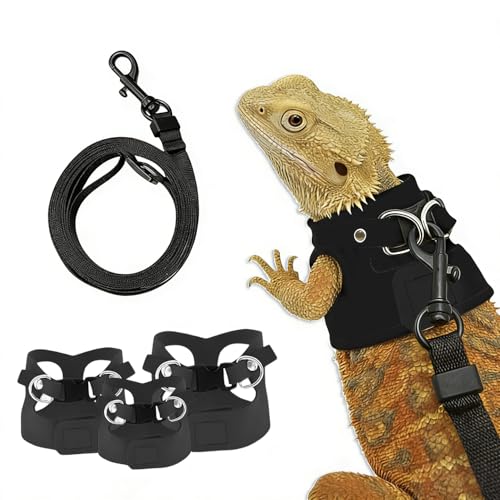
Soft nylon/mesh with adjustable straps, leash clip at mid-back. Works for all dragon sizes, easy to clean.
Minimal straps feel less intimidating. Flexible fit for dragons between sizes. Check Velcro quality.
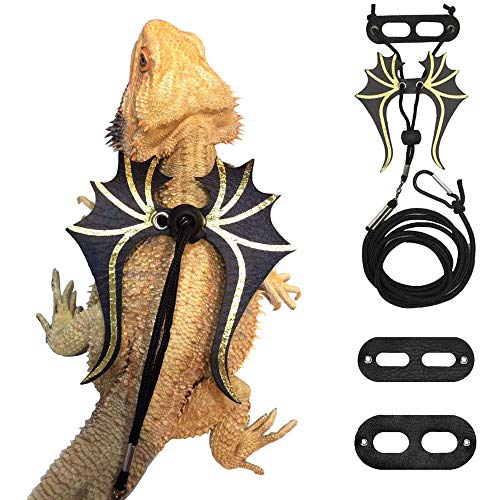
Decorative fabric wings add structure and cuteness. Lightweight design won't stress your dragon.
Braided cord in figure-8 design. Affordable but requires precise sizing—best for experienced owners.
Full-torso vest design for 20+ inch dragons. Distributes pressure evenly, more durable.
Bearded Dragon Harness Size Guide
XS
5–7 inches girth
Juvenile (under 1 year)
S
7–9 inches girth
Sub-adult
M
9–12 inches girth
Standard adult
L
12–15 inches girth
Large adult (20+ inches)
Bearded Dragon Harness Training Plan
Week 1: Introduction Phase
3–7 daysLeave the harness near your dragon's enclosure. Let them see and sniff it to build familiarity and reduce fear.
Week 2: Contact Without Fastening
7 daysDrape the harness over your dragon's back without clipping. Let them walk around loosely wearing it. Reward calm behavior with treats (dubia roaches or hornworms).
Week 3: Fasten and Release Indoors
7 daysFasten the harness for 2–3 minutes at a time on your lap or flat surface. Watch for stress signals (beard darkening, puffing, frantic movement). Remove immediately if stressed and try again next day.
Tip: Never force it—forcing sets back training by weeks.
What Makes a Safe Bearded Dragon Harness
What you need to know
Fit snugly without tight compression—no slipping, no ribcage restriction
Use soft materials (mesh, neoprene, padded nylon) to avoid irritating sensitive scales
Leash attachment at mid-back or shoulder—never around the neck to prevent injury
Escape-proof double-contact system that loops around front legs and torso
Detailed Reviews
1. Adjustable Soft Reptile Harness
Best Overall
Adjustable Soft Reptile Harness
Pros
- •Soft nylon or mesh construction
- •Adjustable belly and chest straps
- •Leash clip at mid-back for safety
- •Multiple size options (S, M, L)
- •Easy to rinse and air-dry
- •Most versatile style
Bottom Line
The gold standard for most bearded dragon owners. A well-fitted harness with torso strap and back leash attachment that works for dragons of all sizes and is easy to put on, take off, and clean.
2. Velcro Wrap Harness
Best for Beginners
Velcro Wrap Harness
Pros
- •Minimal strap design feels less intimidating
- •Forgiving on fit between sizes
- •Flexible Velcro adjustability
- •Less stressful for harness training
Cons
- •Velcro can snag on scales over time
- •Low-quality Velcro can be rough on sensitive skin with repeated use
Bottom Line
A beginner-friendly wrap-style harness that feels less intimidating for dragons new to harness training. The Velcro design is forgiving on fit and requires no rigid buckles.
3. Bearded Dragon Harness with Wings
Best for Photos
Bearded Dragon Harness with Wings
Pros
- •Adorable and Instagram-worthy
- •Lightweight fabric wings
- •Wings add extra structure to harness
- •Makes escape slightly harder
- •Enhanced visual appeal
Cons
- •More expensive than basic harnesses
- •Wings risk weighing dragon down if not lightweight
- •Potential for creating anxiety if poorly designed
Bottom Line
A fun and photogenic harness featuring decorative fabric wings that add structure and make your dragon instantly iconic while not purely aesthetic.
4. Rope-Style Reptile Harness
Budget Pick
Rope-Style Reptile Harness
Pros
- •Very affordable
- •Lightweight design
- •Reliable when properly sized
- •Minimal material
Cons
- •Needs precise sizing
- •Too loose and dragon can slip free
- •Too tight and restricts movement
- •Low forgiveness for fit errors
- •Requires experience to use safely
Bottom Line
A budget-friendly braided cord harness in figure-8 or loop-through design that works well for experienced owners who know their dragon's exact measurements.
5. Reptile Walking Jacket
Best for Large Adults
Reptile Walking Jacket
Pros
- •Sturdy construction for large dragons
- •Wraps more torso for even pressure distribution
- •Better security for large, active dragons
- •Lasts longer than simple strap designs
- •Excellent escape-proof design
Cons
- •Higher cost
- •May be overkill for average-sized dragons
- •Bulkier than minimal designs
Bottom Line
A heavy-duty vest-style harness for large bearded dragons (20+ inches, 500+ grams) that wraps more of the torso and distributes pressure evenly for superior security and durability.
What Makes a Good Bearded Dragon Harness?
Before diving into specific picks, let's break down what separates a great harness from a risky one.
Fit and Adjustability
Bearded dragons range from 10-inch juveniles to 24-inch adults. You need a harness that's snug without being tight. It shouldn't slip off when your dragon moves, but it also can't compress their ribcage.
Look for adjustable straps with secure closures. Velcro and buckle-style harnesses both work. Avoid anything designed for a different animal and hastily modified.
Material and Comfort
Your beardie's skin is sensitive. Rough or stiff materials can irritate their scales, especially around the legs and belly. Soft mesh, neoprene, or padded nylon are all solid choices. Skip rigid plastic pieces that press against the body.
Leash Attachment Point
This matters more than most people realize. The leash should connect at the back — never around the neck. A neck attachment could injure your dragon if they pull or get startled. Look for a D-ring or swivel clip at the mid-back or shoulder area.
The leash itself should be lightweight. Short fixed-length leashes (around 4–6 feet) give you control without tangles.
Escape-Proof Design
Bearded dragons are quick when motivated. A good harness is genuinely escape-proof — not just snug-looking. Designs that loop around both the front legs and the torso use a double-contact system that's much harder to back out of than a single-strap design.
Top Picks: Best Bearded Dragon Harness
(Estimates only — actual prices on Amazon may vary.)
Here are the best harness styles for bearded dragons, organized by use case.
Best Overall: Adjustable Soft Reptile Harness
A well-fitted [adjustable bearded dragon harness](https://www.amazon.com/dp/B0G7CWY7Z7?tag=krawlo-20 with a torso strap and back leash attachment is the gold standard for most owners. These typically run between $8–$20 and come in multiple sizes.
What to look for in this style:
- Soft nylon or mesh construction
- Adjustable belly and chest straps
- Leash clip at the mid-back
- At least three size options (S, M, L)
This is the most versatile style. It works for dragons of all sizes, is easy to put on and take off, and most can be rinsed and air-dried after muddy outings.
Best for Beginners: Velcro Wrap Harness
If your bearded dragon is brand new to harness training, a [Velcro wrap-style harness](https://www.amazon.com/dp/B0G7CWY7Z7?tag=krawlo-20 makes the process less stressful. These wrap around the torso with minimal straps, and feel less intimidating for a dragon that hasn't worn one before.
They're also forgiving on fit. If your dragon is between sizes, Velcro gives you more flexibility than rigid buckles.
One caution: check that the Velcro doesn't snag on scales over time. Low-quality Velcro can be rough on sensitive skin after repeated use.
Most Fun: Bearded Dragon Harness with Wings
The [bearded dragon wing harness](https://www.amazon.com/dp/B0834RXS6M?tag=krawlo-20 is a fan favorite — and not just because it's adorable. These harnesses attach decorative fabric wings to the back, giving your dragon an instantly iconic look.
But it's not purely aesthetic. The wings add a little extra structure to the harness, making it slightly harder for your dragon to back out.
(Estimates only — actual prices on Amazon may vary.) These typically cost more than basic harnesses — around $15–$30 — but the photos you'll capture are priceless. Just make sure the wings are lightweight and made from soft fabric so they don't weigh your dragon down or create anxiety.
Best Budget Option: Rope-Style Reptile Harness
For budget-conscious owners, a [rope-style lizard harness](https://www.amazon.com/dp/B07DPJCL4H?tag=krawlo-20 can work well. These are usually braided cord in a figure-8 or loop-through design.
The downside: they need precise sizing. Even a little too loose and your dragon can slip free. A little too tight and it restricts movement. For experienced owners who know their dragon's exact measurements, they're a reliable, low-cost option.
Best for Large Adults: Reptile Walking Jacket
Bigger bearded dragons — 20+ inches and over 500 grams — sometimes need something sturdier. A [reptile walking jacket or vest](https://www.amazon.com/dp/B0D315TN4B?tag=krawlo-20 wraps more of the torso and distributes pressure more evenly than a simple strap design.
(Estimates only — actual prices on Amazon may vary.) These cost more — typically $25–$50 — but they last longer and offer better security for a large, active dragon.
How to Size a Bearded Dragon Harness
Fit is everything. A harness that looks right might still be wrong. Here's how to measure your dragon before buying.
| Measurement | How to Take It | Why It Matters |
|---|---|---|
| Chest girth | Wrap soft tape around widest part of chest | Main sizing reference |
| Snout-to-vent length | Measure from nose tip to vent opening | Confirms size chart match |
| Weight | Use a kitchen scale | Secondary fit reference |
Most harnesses use size labels like this:
| Size | Girth Range | Typical Dragon Age/Size |
|---|---|---|
| XS | 5–7 inches | Juvenile (under 1 year) |
| S | 7–9 inches | Sub-adult |
| M | 9–12 inches | Standard adult |
| L | 12–15 inches | Large adult |
Always check the specific brand's size chart — these vary significantly between manufacturers.
How to Train Your Bearded Dragon to Wear a Harness
Don't just strap the harness on and head outside on day one. That's a recipe for a stressed dragon. Go slow.
Week 1: Introduction Phase
Leave the harness near your dragon's enclosure for a few days. Let them see it and sniff it. Bearded dragons are curious animals, and familiarity reduces fear significantly.
Week 2: Contact Without Fastening
Drape the harness over your dragon's back without clipping it. Let them walk around with it loosely resting on them. Reward calm behavior with treats — dubia roaches or hornworms work great.
Week 3: Fasten and Release Indoors
Fasten the harness for 2–3 minutes at a time. Keep your dragon on your lap or a flat surface where they feel secure. Watch for stress signals: beard darkening, puffing up, frantic movement, or trying to flatten against a surface.
If you see these signs, remove the harness immediately and try again the next day. Forcing it sets back the training by weeks.
Understanding your dragon's body language makes this step much easier. The guide on Understanding Bearded Dragon Color Changes and Their Meanings explains exactly what different colors and postures mean — essential reading before you start harness training.
Week 4+: Short Supervised Outdoor Sessions
Once your dragon tolerates the harness calmly indoors, try a short trip outside — 5–10 minutes max. Stay in a shaded, quiet area away from dogs, loud noises, and strangers. Let your dragon lead the pace.
Outdoor Safety Rules
Outdoor time is wonderful for bearded dragons, but it comes with real risks. Follow these rules on every outing.
Check the temperature first. Bearded dragons need ambient temps between 75°F–95°F to thrive outside. Avoid midday summer sun — it can overheat them fast. Always have a shaded retreat ready.
Supervise every second. Never leave your dragon unattended outside — not even briefly. Hawks, cats, and neighborhood dogs can appear instantly. A spooked dragon can also bolt faster than you'd expect.
Avoid chemically treated lawns. If you're letting your dragon walk on grass, confirm it hasn't been treated with herbicides or pesticides. These chemicals can absorb through their feet and belly.
Keep sessions short in cooler weather. When your dragon cools down rapidly, they slow down — which looks calm, but can be early hypothermia. On days below 70°F, keep outdoor sessions under 10 minutes.
Never leave your dragon in a parked car. Interior car temperatures spike dangerously fast, even on mild days.
If you're already working on your dragon's indoor setup, the Best Heating Mat for Bearded Dragon guide uses the same temperature principles — understanding your dragon's thermal needs indoors directly translates to keeping them safe outside.
How Often Should You Take Your Dragon Outside?
Once or twice a week is a solid starting frequency. Some owners do it daily during warm months — and according to ReptiFiles' bearded dragon care guide, natural sunlight provides full-spectrum UVB that indoor bulbs simply can't fully replicate. So outdoor time isn't just fun — it's genuinely beneficial.
Let your dragon's behavior guide the frequency. A curious, relaxed dragon that actively explores is enjoying itself. A dragon that tries to hide, turns dark, or puffs their beard is signaling it's too much.
Keep sessions under 30 minutes at first and build up gradually. Most bearded dragons eventually settle into a rhythm and start recognizing harness time as a positive event.
Should You DIY a Bearded Dragon Harness?
Some owners try making a harness at home using soft rope in a figure-8 configuration. It's possible, but it's risky if you're not experienced.
Commercial harnesses use materials tested for animal skin contact and go through fit refinement. A DIY version made from the wrong cord can fray, tighten unexpectedly under tension, or create pressure points that injure your dragon over time.
Given that budget harnesses on Amazon start under $10, it's rarely worth the DIY risk. The cost savings are minimal and the downside is real.
Final Thoughts
The best bearded dragon harness is the one that fits correctly, stays secure, and keeps your dragon comfortable from the moment you clip it on. Whether you go with a classic adjustable harness, a wing design for the 'gram, or a heavy-duty vest for your large adult — fit and training are what determine success.
Start slow, read your dragon's body language, and make every outdoor session a positive experience. With a little patience, harness walks can become one of the highlights of your week — and judging by how much bearded dragons seem to enjoy the sun, probably your dragon's too.
Our Final Verdict
Adjustable Soft Reptile Harness
The gold standard for most bearded dragon owners. A well-fitted harness with torso strap and back leash attachment that works for dragons of all sizes and is easy to put on, take off, and clean.
Velcro Wrap Harness
A beginner-friendly wrap-style harness that feels less intimidating for dragons new to harness training. The Velcro design is forgiving on fit and requires no rigid buckles.
Bearded Dragon Harness with Wings
A fun and photogenic harness featuring decorative fabric wings that add structure and make your dragon instantly iconic while not purely aesthetic.
Frequently Asked Questions
Yes, harnesses are safe and beneficial for bearded dragons when they fit correctly and are introduced gradually. They allow your dragon to enjoy outdoor time safely without the risk of escaping. The key is choosing a harness specifically designed for reptiles — never use cat or dog harnesses — and taking 3–4 weeks to get your dragon comfortable wearing one before going outside.
References & Sources
Related Articles

Best Bearded Dragon Accessories: Complete Setup Guide
Discover the best bearded dragon accessories for a thriving enclosure — basking platforms, hides, hammocks, climbing décor, and expert design tips for every budget.

Best Bearded Dragon Starter Kit (2026): What You Really Need
Find the best bearded dragon starter kit in 2026. We break down what's worth buying, what to skip, and exactly what your beardie needs to thrive.

Best UVB Light for Bearded Dragon (2026 Keeper's Guide)
Find the best UVB light for your bearded dragon in 2026. T5 vs T8, wattage, placement, and top picks reviewed by reptile care specialists.