Best African Fat-Tailed Gecko Heating Options (2026)
Find the best African fat-tailed gecko heating setup. We cover under-tank heaters, thermostats, and CHEs so your gecko stays healthy and active.


This article contains affiliate links. If you make a purchase through these links, we may earn a small commission at no extra cost to you. See our affiliate disclosure for details.
We recommend 7 picks here. Our top choice is the Zoo Med ReptiTherm Under Tank Heater — check price and availability below.
How we choose: we compare published specifications against the care requirements in veterinary and species-care literature, and weigh those against what long-time keepers report. We do not test products ourselves and we do not restate Amazon star ratings. The 4 sources behind this article are listed at the bottom.
Quick Comparison
- Product Type
- Under-tank heater
- Price Range
- $$
- Primary Function
- Belly heat source
- Thermostat Required
- Yes (on/off)
- Heat Coverage
- One-third tank floor
- Best for Enclosure Size
- 10-40 gallon
- Product Type
- Under-tank heater
- Price Range
- $$
- Primary Function
- Belly heat source
- Thermostat Required
- Yes (on/off)
- Heat Coverage
- One-third tank floor
- Best for Enclosure Size
- 10-40 gallon
- Product Type
- Thermostat
- Price Range
- $25-$55
- Primary Function
- Temperature regulation
- Thermostat Required
- N/A (is the thermostat)
- Heat Coverage
- All connected heat sources
- Best for Enclosure Size
- All sizes
- Product Type
- Ceramic emitter
- Price Range
- $$
- Primary Function
- Ambient air heating
- Thermostat Required
- Yes (pulse proportional)
- Heat Coverage
- Overhead (ambient)
- Best for Enclosure Size
- 20+ gallon (cooler rooms)
- Product Type
- Radiant panel
- Price Range
- $50-$130
- Primary Function
- Full enclosure heating
- Thermostat Required
- Yes (dimming)
- Heat Coverage
- Full enclosure
- Best for Enclosure Size
- 20+ gallon (premium)
- Product Type
- Infrared thermometer
- Price Range
- $
- Primary Function
- Surface temp measurement
- Thermostat Required
- No
- Heat Coverage
- Point measurement only
- Best for Enclosure Size
- All (measurement tool)
- Product Type
- Digital thermometer
- Price Range
- $
- Primary Function
- Ambient temp measurement
- Thermostat Required
- No
- Heat Coverage
- Ambient measurement only
- Best for Enclosure Size
- All (measurement tool)
Prices are estimates only. Actual prices on Amazon may vary.
African fat-tailed geckos are one of the most rewarding reptiles you can keep. But get their heating wrong, and you'll have a stressed, sluggish gecko that refuses to eat. Get it right, and you'll have an active, thriving animal for 15 to 20 years.
This guide breaks down the best African fat-tailed gecko heating options — from under-tank heaters to ceramic heat emitters to thermostats — so you can build a safe, effective setup from day one.
Why Heating Is So Critical for AFT Geckos
African fat-tailed geckos (Hemitheconyx caudicinctus) come from the dry savannas and forest edges of West Africa. In the wild, they spend their days hiding in humid burrows and their evenings moving between warm and cool patches of ground to regulate their body temperature.
This behavior is called thermoregulation. And in captivity, it's your job to make it possible.
Without the right temperatures, your gecko can't digest food. Their immune system slows down. They become lethargic and prone to infection. A healthy temperature gradient isn't just a comfort feature — it's a biological necessity.
The good news? Setting up proper heating isn't complicated. You just need the right equipment and accurate measurements.
African Fat-Tailed Gecko Temperature Targets
Warm side surface temp
88–92°F (31–33°C)
Cool side ambient temp
75–80°F (24–27°C)
Nighttime low
68–72°F (20–22°C)
Safe upper limit
Below 95°F to avoid thermal burns
Minimum warm temp
Above 85°F for digestion
Best Under-Tank Heaters for AFT Geckos
Quick recommendations
Solid track record, reliable heat distribution for belly heat
Consistent reviews, effective for warm-side heating in 20-gallon setups
Best Thermostat for AFT Gecko Heating
Quick recommendations
Accurate on/off thermostat, dual-outlet, alarm function if temps go out of range. Community favorite for UTH setups
Best Radiant Heat Panels for AFT Geckos
Quick recommendations
Quieter and more energy-efficient than ceramic emitters, extremely even heat distribution with no hot spots. Best for dedicated keepers
Detailed Reviews
1. Zoo Med ReptiTherm Under Tank Heater
Best Overall
Zoo Med ReptiTherm Under Tank Heater
Pros
- •Proven reliability
- •Good heat output
- •Popular within AFT gecko community
- •Works well with thermostats
Cons
- •Must be used with a thermostat
- •No temperature self-regulation
Bottom Line
Popular under-tank heater with solid track record for providing belly heat to African fat-tailed geckos. Well-known brand with consistent community reviews.
2. Fluker's Heat Mat
Runner Up
Fluker's Heat Mat
Pros
- •Consistent reviews
- •Good alternative option
- •Reliable heat output
Cons
- •Requires thermostat control
- •Not self-regulating
Bottom Line
Alternative under-tank heater option with solid track record in the AFT gecko community. Reliable heat mat for warm-side temperature control.
3. Inkbird ITC-306A Thermostat
Best Value
Inkbird ITC-306A Thermostat
Pros
- •Highly accurate temperature control
- •Dual-outlet capability
- •Built-in alarm function
- •Affordable for quality
- •Community recommended
Cons
- •On/off type (not pulse proportional)
Bottom Line
Accurate, dual-outlet thermostat with alarm function that is essential for safe heating control. Community favorite for reliable temperature regulation without surprises.
4. Ceramic Heat Emitter (60W)
Best for Ambient Heating
Ceramic Heat Emitter (60W)
Pros
- •No light emission
- •Can run 24/7 safely
- •Effective ambient heating
- •Even temperature distribution with pulse proportional thermostat
Cons
- •Requires pulse proportional thermostat
- •Additional equipment cost
- •Not primary heat source
Bottom Line
Overhead heat source that produces warmth without light, allowing 24/7 operation without disrupting the gecko's natural day-night cycle. Provides supplemental ambient air heating in cooler rooms.
5. Reptile Radiant Heat Panel
Premium Pick
Reptile Radiant Heat Panel
Pros
- •Extremely even heat distribution
- •No hot spots
- •Quiet operation
- •Energy efficient
- •Premium quality
- •Great for larger setups
Cons
- •Most expensive option
- •Overkill for single enclosures
- •Requires dimming thermostat
Bottom Line
Premium heating solution that radiates gentle, even heat downward with no hot spots. Quieter and more energy-efficient than ceramic emitters, providing the cleanest possible heating setup.
6. Etekcity Lasergrip Infrared Thermometer
Best Value
Etekcity Lasergrip Infrared Thermometer
Pros
- •Highly accurate
- •Affordable
- •Instant readings
- •Popular in reptile hobby
- •Non-contact measurement
Cons
- •Surface measurement only
- •Doesn't measure ambient temperature
Bottom Line
Accurate, affordable infrared thermometer essential for verifying warm-side surface temperatures reach the critical 88–92°F target range. Instant readings without contact.
7. Digital Reptile Thermometer with Probe
Runner Up
Digital Reptile Thermometer with Probe
Pros
- •Independent temperature verification
- •Ambient air monitoring
- •Affordable
- •Complements thermostat probes
Cons
- •Ambient measurement only
- •Manual monitoring required
Bottom Line
Digital probe thermometer for independent ambient air temperature monitoring. Allows verification of cool-side temperatures separate from built-in thermostat probes.
AFT Gecko Temperature Requirements
Before you buy any heating gear, know your targets. Here are the numbers every African fat-tailed gecko keeper should have memorized:
| Zone | Target Temperature |
|---|---|
| Warm side surface temp | 88–92°F (31–33°C) |
| Cool side ambient temp | 75–80°F (24–27°C) |
| Nighttime low | 68–72°F (20–22°C) |
The warm side surface temperature is the most critical number. This is what your gecko feels when it sits on the substrate over the heat source. According to ReptiFiles' African fat-tailed gecko care sheet, surface temps above 95°F can cause thermal burns, while temps below 85°F won't provide adequate warmth for digestion.
The cool side gives your gecko somewhere to retreat when it's had enough heat. If the whole enclosure is one temperature, your gecko has no way to self-regulate — and that's a problem.
Under-Tank Heaters: The Foundation of AFT Gecko Heating
Under-tank heaters (UTHs) are the most popular heat source for African fat-tailed geckos, and for good reason. AFT geckos spend most of their time on or near the ground. They absorb heat from below — just like they would from warm rocky soil or packed earth in the wild.
A quality UTH placed under the warm third of your enclosure provides that belly heat your gecko needs to digest meals and stay comfortable.
How to Choose the Right UTH
Here's what to look for when shopping for an under-tank heater:
Size: The UTH should cover roughly one-third of the tank floor — just the warm side, not the whole bottom. A 10-gallon tank needs a small mat (around 6"×8"). A 20-gallon long needs something bigger, around 8"×12".
Wattage: More wattage = more heat output. But with a thermostat controlling it (more on that below), the wattage matters less than the coverage area. Aim for a wattage that can comfortably reach your target temp without maxing out.
Brand quality: Cheap UTHs are a false economy. Low-quality mats can malfunction, develop hot spots, or fail to regulate output. Stick to well-known brands with consistent reviews.
Popular choices in the AFT gecko community include the [Zoo Med ReptiTherm under tank heater](https://www.amazon.com/dp/B00BUFWCNC?tag=krawlo-20 and the [Fluker's heat mat](https://www.amazon.com/dp/B0D2MJGF49?tag=krawlo-20 Both have solid track records.
Critical rule: Never run a UTH without a thermostat. Unregulated mats can climb to 120°F or higher and cause serious burns to your gecko. This is not negotiable.
Thermostats: The Most Important Piece of Equipment You'll Buy
If there's one non-negotiable in African fat-tailed gecko heating, it's a thermostat. Full stop.
A thermostat plugs between your heat source and the wall outlet. It monitors temperature via a probe and cuts power when the set point is reached. This keeps your heating equipment in a safe, consistent range — no guessing, no surprises.
Without a thermostat, you're relying on the heat mat to self-regulate. It won't. Temperatures can swing wildly, and your gecko pays the price.
There are three thermostat types worth knowing about:
| Type | How It Works | Best Paired With |
|---|---|---|
| On/Off | Cuts power completely at set temp | UTHs and heat mats |
| Pulse proportional | Pulses power to hold steady temp | Ceramic heat emitters |
| Dimming | Dims bulb output to hold temp | Incandescent basking bulbs |
For a standard UTH setup with AFT geckos, an on/off thermostat is the easiest and most affordable option. The [Inkbird ITC-306A thermostat](https://www.amazon.com/dp/B01486LZ50?tag=krawlo-20 is a community favorite — it's accurate, dual-outlet, and has an alarm function if temps go out of range.
(Estimates only — actual prices on Amazon may vary.) A quality thermostat runs $25–$55. That's a small price for the peace of mind it gives you.
Ceramic Heat Emitters: For Ambient Air Heating
A UTH handles your belly heat. But what about the air temperature inside the enclosure? In cooler rooms — or during winter months — you may need supplemental overhead heating to keep ambient temps in range.
That's where ceramic heat emitters (CHEs) shine. CHEs screw into a standard reptile dome fixture and produce heat without any light. That means you can run them 24/7 without disrupting your gecko's natural day/night cycle.
Pair a CHE with a pulse proportional thermostat, and you get remarkably stable ambient temperatures. The thermostat pulses power to the CHE in short bursts, maintaining your target without big temperature swings.
For a 20-gallon enclosure, a 60W [ceramic heat emitter](https://www.amazon.com/dp/B096JWWQMC?tag=krawlo-20 is typically enough. Larger setups may need 100W.
CHEs work best when your room temperature drops below 68°F regularly. If your home stays above 70°F year-round, your UTH alone may be sufficient.
Radiant Heat Panels: The Premium Option
Radiant heat panels mount inside the top of the enclosure and radiate gentle, even heat downward. They're quieter than CHEs, more energy-efficient, and produce an extremely even heat distribution with no hot spots.
The tradeoff is cost. (Estimates only — actual prices on Amazon may vary.) Quality radiant heat panels run $50–$130 depending on size. They're most popular with hobbyists who keep multiple enclosures or build larger, naturalistic setups.
For a dedicated AFT gecko keeper who wants the cleanest possible heating solution, a [reptile radiant heat panel](https://www.amazon.com/dp/B0D2MJGF49?tag=krawlo-20 paired with a dimming thermostat is hard to beat. The BioDude and ReptiFiles both recommend them for serious setups.
What About Heat Lamps and Basking Bulbs?
Here's the short answer: heat lamps aren't ideal for African fat-tailed geckos.
AFT geckos are crepuscular — most active at dawn and dusk. They don't bask under bright overhead lights the way bearded dragons or iguanas do. Bright, intense light actually stresses them out and makes them hide more.
If you want overhead heat, use a CHE or radiant panel. Leave the basking bulbs for species that actually use them.
For more on reptile heat source comparisons, check out our guide to the Best Reptile Heating Pad: Top Picks & Buyer's Guide.
Do AFT Geckos Need UVB Lighting?
This question comes up a lot, and the answer has shifted in recent years.
Traditionally, African fat-tailed geckos were kept without UVB — they're crepuscular, they hide during the day, and their natural habitat involves low-intensity ambient light at best.
But newer guidance from sources like The Bio Dude and ReptiFiles suggests that low-level UVB (Ferguson Zone 1, equivalent to a 2.0 or 5.0 tube at appropriate distance) may support vitamin D3 synthesis, improve calcium metabolism, and benefit long-term health.
If you add UVB, keep intensity low and provide plenty of hides. Your gecko should always be able to choose to avoid the light entirely. The UVB tube itself generates very little heat, so it won't interfere with your heating setup at all.
Setting Up Your Heat Gradient Step by Step
Ready to build your setup? Here's how to do it correctly:
Step 1: Place your UTH under the warm end of the enclosure. It should cover roughly one-third of the floor, all on one side.
Step 2: Connect the UTH to your thermostat. Place the thermostat probe on the substrate surface directly above the heat mat.
Step 3: Set the thermostat to 90°F. Let the system run for two hours to stabilize.
Step 4: Use an infrared thermometer to confirm surface temp on the warm side. Adjust thermostat if needed.
Step 5: Measure the cool side ambient temp with a digital probe thermometer. It should read 75–80°F without additional heat.
Step 6: If your room drops below 68°F at night, add a CHE on a separate thermostat set to 70°F.
Step 7: Add hides on both the warm and cool sides. Your gecko needs shelter options at both ends of the gradient.
That's your baseline. Once your temps are stable and verified, your gecko can move in.
Monitoring Temperature: Don't Guess, Measure
No heating setup is complete without accurate temperature monitoring. You need two tools:
Infrared thermometer: Points at the substrate and reads surface temp instantly. This is how you verify your warm side is hitting 88–92°F. The Etekcity Lasergrip infrared thermometer is accurate, affordable, and popular in the reptile hobby.
Digital probe thermometer: Reads ambient air temperature. Place the probe in the middle of the cool side to monitor ambient temps. Many thermostats include a built-in probe — but a separate [digital reptile thermometer](https://www.amazon.com/dp/B08R65W98H?tag=krawlo-20 lets you double-check independently.
Avoid stick-on analog thermometers. They're notoriously inaccurate and often read 5–10°F off. Don't trust them.
Common AFT Gecko Heating Mistakes
Even experienced keepers make these errors. Here's what to avoid:
Skipping the thermostat. This is the single most dangerous mistake in AFT gecko heating. Unregulated heat mats can reach 120°F+ and cause serious burns. Always use a thermostat — no exceptions.
Substrate too deep over the UTH. Thick substrate insulates the heat and throws off your thermostat's probe reading. Keep substrate 2–4 inches deep on the warm side, and make sure the probe sits at substrate level, not on top.
Heating the whole enclosure to one temperature. Your gecko needs a gradient to self-regulate. If the entire enclosure is 90°F, there's nowhere to cool down — and that causes chronic stress.
Forgetting nighttime temps. If your house gets cold at night, your UTH alone may not hold safe temps. Add a CHE on a secondary thermostat if nighttime ambient room temps drop below 65°F.
Using heat rocks. Heat rocks are notoriously uneven — scorching hot in some spots, barely warm in others. They're a burn risk and should be avoided entirely.
For a complete breakdown of AFT gecko care beyond just heating, see our African Fat-Tailed Gecko Care: The Complete Guide.
Enclosure Size and Heating Equipment Reference
Not sure what size heating equipment you need? Here's a quick reference:
| Enclosure Size | UTH Size | CHE (if needed) | Thermostat Type |
|---|---|---|---|
| 10-gallon | 6"×8" | 40W | On/Off |
| 20-gallon long | 8"×12" | 60W | On/Off |
| 40-gallon breeder | 12"×12" (×2) | 100W | Pulse proportional |
Larger enclosures often need two UTHs to cover the warm zone adequately, plus overhead heating to maintain ambient air temps. Always verify with a thermometer — don't assume the equipment is doing the job without checking.
Pre-Move-In Heating Checklist
Before your gecko moves into its new home, run through this list:
- UTH positioned under warm third of enclosure
- Thermostat connected, probe at substrate level
- Warm side surface reads 88–92°F (confirmed with IR thermometer)
- Cool side ambient reads 75–80°F
- Hides available on both warm and cool sides
- Nighttime heating plan in place if room drops below 65°F
- All temperatures stable for at least 2 hours before introducing gecko
Once you're green across the board, your gecko's new home is ready. A well-heated enclosure is the foundation of long-term health — and with the right setup, African fat-tailed geckos are genuinely some of the hardiest and most enjoyable geckos you can keep.
Our Final Verdict
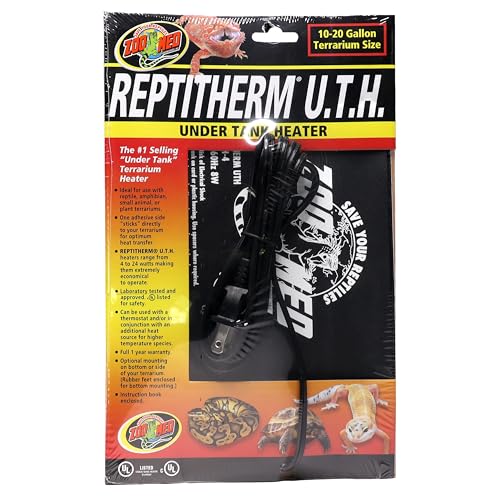
Zoo Med ReptiTherm Under Tank Heater
Popular under-tank heater with solid track record for providing belly heat to African fat-tailed geckos. Well-known brand with consistent community reviews.

Fluker's Heat Mat
Alternative under-tank heater option with solid track record in the AFT gecko community. Reliable heat mat for warm-side temperature control.

Inkbird ITC-306A Thermostat
Accurate, dual-outlet thermostat with alarm function that is essential for safe heating control. Community favorite for reliable temperature regulation without surprises.
Frequently Asked Questions
An under-tank heater (UTH) connected to a thermostat is the best primary heat source for African fat-tailed geckos. UTHs provide belly heat, which is how AFT geckos naturally thermoregulate by absorbing warmth from the ground. Trusted options include the Zoo Med ReptiTherm and Fluker's heat mats. Always pair your UTH with an on/off thermostat — never run it unregulated.
References & Sources
- https://reptifiles.com/african-fat-tailed-gecko-care-sheet/
- https://www.thebiodude.com/blogs/gecko-caresheets/african-fat-tailed-gecko-hemitheconyx-caudicinctus-care-sheet-and-bioactive-terrarium-maintenance
- https://dubiaroaches.com/blogs/gecko-care/african-fat-tailed-gecko-care-sheet
- https://zoomed.com/african-fat-tail-gecko/
Related Articles

Best African Fat-Tailed Gecko Lighting: Top Picks
Find the best African fat-tailed gecko lighting setup with expert picks for UVB bulbs, heat lamps, and schedules to keep your gecko healthy and thriving.

Best African Fat-Tailed Gecko Substrate: Top Picks
Discover the best African fat-tailed gecko substrate for healthy, happy geckos. We compare coconut fiber, bioactive mixes, topsoil blends, and what to avoid.

Best African Fat-Tailed Gecko Food: Complete Guide
Discover the best African fat-tailed gecko food — from staple feeders to supplements and feeding schedules. Keep your gecko healthy with this practical diet guide.