
Chahoua Gecko Care Guide: Setup, Diet & Handling Tips
Learn how to care for a chahoua gecko with our complete guide covering enclosure, temps, humidity, diet, and handling. Start here.

✓Recommended Gear
In this guide, we cover everything you need to know and recommend 7 essential products. Check prices and availability below.
TL;DR: Chahoua geckos (Mniarogekko chahoua) need a tall 18×18×24 in arboreal enclosure, 68-78°F temperatures, 60-70% humidity, and a CGD-based diet supplemented with insects 2-3× per week. They're slower to tame than crested geckos — expect 3-6 months of patience before regular handling; their prehensile tail and mossy appearance make them worth the wait.
You've been eyeing chahoua geckos online for months. The mossy green pattern, the chunky build, that prehensile tail wrapped around a branch — they look like tiny forest dragons. But every care sheet you find is either a paragraph long or just rehashes crested gecko advice with different temps.
Here's the thing: chahouas (Mniarogekko chahoua) aren't just "fat cresties." They're a distinct species with their own quirks — from locality-specific coloring to a diet that demands more live insects than their crested gecko cousins. This guide covers everything you need to keep a healthy, happy chewie for the next 15-20 years.
What Makes Chahoua Geckos Special
Chahouas are the only New Caledonian gecko with a truly functional prehensile tail. Unlike crested geckos (which can't regrow a dropped tail) or gargoyle geckos (which can regrow theirs but don't use them to grip), chahouas actively wrap their tails around branches for stability.
They're medium-sized geckos, reaching 10-12 inches (25-31 cm) as adults. Their lifespan is impressive — 15-20+ years with proper care.
Grande Terre vs Isle of Pines Localities
This is something most care guides skip entirely. Chahouas come from two distinct populations in New Caledonia, and they look noticeably different:
- Grande Terre (GT): Larger, often darker coloring with mossy green and brown marbling. More commonly available. Tend to be slightly bolder in temperament.
- Isle of Pines (PI): Smaller on average, often showing more vibrant pinks and whites. Rarer and pricier. Can be slightly shyer initially.
Pro Tip: When buying a chahoua, always ask the breeder about the locality. GT and PI can be crossed, but many keepers prefer pure locality animals for breeding projects. Expect to pay $250-500 for GT and $400-800+ for PI specimens.
Both localities have identical care requirements. The differences are cosmetic and behavioral, not husbandry-related.
Chahoua vs Crested vs Gargoyle: Quick Comparison
| Feature | Chahoua | Crested Gecko | Gargoyle Gecko |
|---|---|---|---|
| Size | 10-12" | 7-9" | 7-9" |
| Tail | Prehensile, functional | Drops permanently | Drops, regrows |
| Diet | 50% CGD + 50% insects | 80% CGD + 20% insects | 70% CGD + 30% insects |
| Temperament | Calm, handleable | Jumpy as juveniles | Calm but nippy |
| Price | $250-800+ | $30-100 | $100-300 |
| Difficulty | Beginner-friendly | Beginner | Beginner |
If you already keep crested geckos or gargoyle geckos, chahoua care will feel familiar — but don't copy-paste your setup without reading the diet and temperature sections below.
Enclosure Setup
Get a tall, front-opening terrarium that's at least 24" x 24" x 36" (60 x 60 x 90 cm). Chahouas are arboreal and need vertical climbing space more than floor area.
This is bigger than what you'd set up for a crested or gargoyle gecko. Chahouas are chunkier and more active climbers, so the extra room matters.
Enclosure Type
Glass terrariums with screen tops work fine but lose humidity fast. Here's what experienced keepers actually use:
- PVC enclosures: Best for humidity control. Brands like Animal Plastics or Zen Habitats.
- Glass terrariums: Exo Terra or Zoo Med — good visibility, but you'll mist more often.
- Screen enclosures: Not recommended. Chahouas need stable humidity, and screen cages dry out too quickly.
**[Exo Terra Glass Terrarium 24x18x36](https://www.amazon.com/dp/B07Y866155?tag=krawlo-20 is a solid starter option if you're going the glass route.
Juvenile Setup
Baby chahouas under 20 grams should start in a smaller grow-out enclosure — roughly 12" x 12" x 12" (5 gallons). This makes it easier for them to find food and reduces stress.
No heat lamps or UVB needed in the grow-out. Ambient room temperature is fine for juveniles temporarily.
Pro Tip: Move your juvenile to the full adult enclosure once it hits 20 grams — usually around 4-6 months. Don't wait too long; early enrichment helps them develop natural behaviors.
Enclosure & Housing Setup
Everything you need to get started
Temperature Requirements
Chahouas thrive in the mid-70s with a warm basking spot of 82-85°F (28-29°C). They're more temperature-sensitive than crested geckos, especially on the high end — anything above 85°F can cause heat stress.
| Zone | Temperature |
|---|---|
| Basking area | 82-85°F (28-29°C) |
| Cool side | 72-75°F (22-24°C) |
| Nighttime drop | 65-72°F (18-22°C) |
Heating Equipment
A low-wattage white incandescent bulb (25-40W depending on enclosure size) positioned at the top creates a natural basking gradient. Mount a branch 6-8 inches below the heat source.
Avoid these:
- Ceramic heat emitters (dry out the enclosure)
- Red or blue "night" bulbs (disrupt sleep cycles)
- Heat mats alone (chahouas are arboreal — they won't benefit from floor heat)
Zoo Med Digital Thermometer & Hygrometer is essential for monitoring both hot and cool zones. Place one probe near the basking spot and one on the cool side.
If your house drops below 65°F at night in winter, add a low-wattage ceramic heat emitter on a thermostat — but only as a nighttime supplement.
Temperature Zones at a Glance
Basking Area
82–85°F
Position branch 6–8 inches below heat source
Cool Side
72–75°F
Essential for thermoregulation
Nighttime Drop
65–72°F
Add ceramic heat emitter + thermostat if below 65°F
Heat Stress Threshold
Above 85°F
Avoid — causes stress and health issues
Lighting and UVB
UVB isn't strictly required for chahouas to survive, but it significantly improves their health and activity levels. Most experienced keepers now use low-output UVB as standard.
Aim for a UVI of 1.0-2.0 in the basking zone — this is "shade-dweller" level, much less intense than what a bearded dragon needs.
Recommended UVB Options
- **[Arcadia ShadeDweller Arboreal Kit](https://www.amazon.com/dp/B0CP68YJ1W?tag=krawlo-20 — specifically designed for arboreal geckos. Best overall choice.
- Zoo Med T8 ReptiSun 5.0 — budget-friendly alternative, but position the basking branch no closer than 6 inches below the bulb.
Set your lights on a timer:
- Summer: 13.5 hours on / 10.5 hours off
- Winter: 11 hours on / 13 hours off
Replace UVB bulbs every 12 months even if they still produce visible light — UV output degrades invisibly.
UVB & Lighting Specifications
Target UVI
1.0–2.0
Shade-dweller level; much lower than bearded dragon needs
Summer Schedule
13.5 hrs on / 10.5 hrs off
Use a timer for consistency
Winter Schedule
11 hrs on / 13 hrs off
Mimics natural seasonal light cycles
Bulb Replacement
Every 12 months
UV output degrades invisibly; don't wait for visible dimming
Humidity and Misting
Keep average humidity between 60-80%. Brief spikes up to 100% after misting are fine, and short dips to 50% between mistings are acceptable — just don't let it stay low all day.
How to Maintain Humidity
- Mist heavily in the evening — this mimics natural dew cycles and encourages drinking.
- Light morning mist if humidity drops below 50% overnight.
- Live plants (pothos, bromeliads, ferns) act as humidity buffers.
- Substrate depth: At least 2 inches of moisture-retaining substrate helps.
**[MistKing Starter System](https://www.amazon.com/dp/B0BZGN4JF5?tag=krawlo-20 automates misting on a schedule — a game-changer if you're not home during evening hours.
Pro Tip: Don't rely on a fogger as your primary humidity source. Foggers create stagnant air that promotes respiratory infections. Use a proper misting system that creates droplets on leaves — chahouas drink from leaf surfaces, not standing water.
Monitor with a digital hygrometer (not the dial-type analog gauges — those are notoriously inaccurate).
Substrate and Decor
A 2-inch layer of coconut fiber-based substrate works best for most keepers. It holds moisture, looks natural, and is easy to spot-clean.
Substrate Options
- Pre-made: Zoo Med Eco Earth, Exo Terra Plantation Soil, or Zilla Jungle Mix
- DIY mix: 60% organic topsoil + 40% coconut fiber — cheap and effective
- Bioactive: The Bio Dude Terra Fauna kit comes with soil, leaf litter, and cleanup crew
Top the substrate with a layer of leaf litter (magnolia or live oak leaves). This helps maintain humidity, provides microfauna habitat in bioactive setups, and gives your gecko a more natural environment.
Essential Decor
Chahouas are arboreal — they want to be off the ground. Fill the vertical space:
- Cork bark tubes and flats: Primary climbing and hiding surfaces
- Branches at multiple heights: Horizontal and diagonal, various diameters
- Magnetic feeding ledges: Wall-mounted for CGD cups (chahouas won't eat off the ground)
- Live or artificial foliage: Dense cover at all levels reduces stress
- Arboreal hides: Cork hollows or coconut halves mounted at mid-height and near the top
Replace substrate fully every 3-4 months unless you're running a bioactive setup (which is self-cleaning with a proper cleanup crew of isopods and springtails). Check out our bioactive vivarium guide for setup instructions.
Diet and Feeding
Chahouas are true omnivores and need roughly a 50/50 split between commercial crested gecko diet (CGD) and live insects. This is the single biggest difference from crested gecko care, where CGD alone can sustain an adult.
Commercial Gecko Diet (CGD)
Offer CGD in a wall-mounted feeding ledge — chahouas are arboreal feeders and often ignore food placed on the floor.
Top CGD brands that chahoua keepers swear by:
- Pangea Fruit Mix Complete — most popular choice, great palatability
- Repashy Crested Gecko MRP — slightly higher protein than Pangea
- Black Panther Zoological — premium option with high insect protein content
Rotate between 2-3 brands to provide nutritional variety.
Live Insects
This is where chahouas differ from cresties. They're active hunters and genuinely need live prey for optimal health:
- Primary feeders: Crickets, dubia roaches, discoid roaches
- Treat feeders: Hornworms (great for hydration), mealworms (sparingly — high fat)
- Occasional variety: Red runner roaches, small grasshoppers/locusts
Size all insects to roughly the width between your gecko's eyes.
Feeding Schedule
| Age | CGD | Insects |
|---|---|---|
| Juvenile (0-12 months) | Fresh cup daily | 2-3x per week, 3-5 appropriately sized insects |
| Adult (12+ months) | Fresh cup every other day | 2x per week, 4-6 insects |
Supplements
Dust all feeder insects lightly with a calcium + D3 supplement:
- Arcadia CalciumPro Mg — all-in-one with calcium, magnesium, and D3
- Repashy Supercal NoD — if you're already providing UVB (skip the D3 to avoid overdosing)
If you're using UVB lighting, use a calcium supplement without D3 for most dustings. Add D3 only once a week as insurance.
Pangea Fruit Mix Complete Gecko Diet
Most popular CGD brand with excellent palatability — even picky chahouas eat it willingly.
Arcadia CalciumPro Mg Supplement
All-in-one calcium, magnesium, and D3 supplement — dust on feeder insects for complete nutrition.
Water and Hydration
Chahouas drink from water droplets on leaves, not from standing water. Your misting routine is their primary water source.
That said, always provide a wall-mounted water dish as a backup. Some individuals will drink from a bowl, especially overnight.
Scrub the water dish with reptile-safe disinfectant (F10SC or chlorhexidine) at least once a week. Replace water daily.
Handling and Temperament
Chahouas are widely considered the most handleable of all New Caledonian geckos. They're less jumpy than crested geckos and less prone to biting than gargoyle geckos.
Getting Started
- Wait 2 full weeks after bringing your gecko home before attempting any handling.
- Start with 5-minute sessions every other day — no more.
- Scoop from below — never grab from above (triggers a predator response).
- Support all four feet and the body. Let the gecko sit on your flat palm.
Tail Safety (Important)
Chahouas have prehensile tails that they actively use — but those tails can still drop if grabbed or stressed. Unlike gargoyle geckos, chahouas do not regrow dropped tails.
Rules:
- Never grab or pull the tail
- Don't hold the gecko upside down (the tail wrap reflex can cause self-injury if panicked)
- If the gecko wraps its tail around your finger during handling, that's normal and fine — just don't try to unwrap it by force
Pro Tip: If your new chahoua is flighty during handling, use the "treadmill" technique — let it walk hand-over-hand at its own pace. This burns off nervous energy and teaches the gecko that your hands aren't a threat.
When to Stop
Put the gecko back if you see:
- Repeated jumping or darting
- Open-mouth threat displays
- Vocalizing (chahouas can bark when stressed)
- Tail thrashing
Most chahouas calm down within 2-3 weeks of consistent, short handling sessions. Adults often become genuinely laid-back — sitting on your shoulder while you watch TV is not unusual.
Common Health Issues
Most chahoua health problems come from husbandry errors, not from the species being fragile. Get the basics right and you'll rarely see a sick gecko.
Issues to Watch For
- Metabolic bone disease (MBD): Caused by insufficient calcium and/or UVB. Signs: rubbery jaw, kinked tail, tremors. Prevention: proper supplementation + UVB.
- Respiratory infections: Caused by chronically stagnant, overly humid air with poor ventilation. Signs: wheezing, mucus around nostrils, gaping. Prevention: good airflow + misting (not fogging).
- Stuck shed: Usually from low humidity. Signs: retained skin on toes or tail tip. Prevention: maintain 60-80% humidity and provide a moist hide.
- Parasites: Internal parasites are common in wild-caught imports. Get a fecal test from a reptile vet within the first month of ownership.
Pro Tip: Quarantine any new chahoua in a separate, simple setup for 30-60 days before introducing it near your other geckos. See our reptile quarantine guide for the full protocol.
Find a reptile-experienced vet before you need one. Check the Association of Reptilian and Amphibian Veterinarians directory for specialists in your area.
Recommended Gear
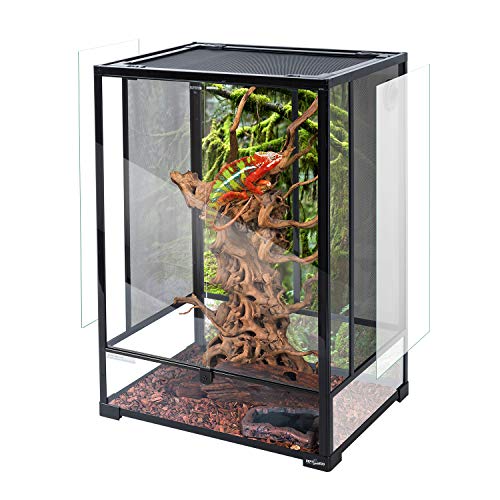
Exo Terra Glass Terrarium 24x18x36
Solid starter enclosure with front-opening doors and screen top for arboreal gecko species.
Zoo Med Digital Thermometer & Hygrometer
Accurate dual monitoring of temperature and humidity with a probe for precise placement.

Arcadia ShadeDweller Arboreal UVB Kit
Specifically designed for arboreal geckos with the correct low-output UVB for shade-dwelling species.

MistKing Starter Misting System
Automates misting on a programmable schedule — essential for maintaining consistent humidity when you're away.
Bio Dude Terra Fauna Bioactive Kit
Complete bioactive substrate kit with soil, leaf litter, and cleanup crew for a self-maintaining enclosure.
Pangea Fruit Mix Complete Gecko Diet
Most popular CGD brand with excellent palatability — even picky chahouas eat it willingly.
Arcadia CalciumPro Mg Supplement
All-in-one calcium, magnesium, and D3 supplement — dust on feeder insects for complete nutrition.
Frequently Asked Questions
Yes — chahouas are beginner-friendly. Their care requirements are similar to crested geckos, with the main difference being a higher need for live insects in the diet.
References & Sources
Related Articles

What Do Turtles Eat? A Complete Keeper's Guide
Wondering what turtles eat? Our complete guide covers the ideal diet for your pet turtle, from commercial foods and proteins to essential veggies and supplements.

Turtle vs Tortoise: 5 Key Differences Explained for Keepers
Confused about the turtle vs tortoise debate? Our expert guide breaks down their habitat, diet, shells, and anatomy to help you understand these amazing chelonians.

White-Lipped Python Care: The Complete Guide
White-lipped python care explained: rainbow iridescence, high-humidity tropical setup, feeding nippy juveniles, and everything that makes them unlike any other python. Start here.