Pinky Mouse Feeding Guide for Reptiles: What Every Snake Owner Should Know
Learn how to safely feed pinky mice to reptiles. Complete guide covers sizing, freeze-thaw methods, and species feeding schedules — get it right from the start.


✓Recommended Gear
Pinky mice are the first feeder item most new snake owners encounter. Getting this stage right sets the foundation for a reptile that feeds reliably for life.
Quick Answer: A pinky mouse is a newborn mouse aged 0–5 days old, weighing 1–2 grams. It's the standard starter prey for hatchling snakes and some small lizards. Always offer frozen-thawed pinkies over live ones — they're safer, easier to store, and nutritionally equivalent.
What Is a Pinky Mouse?
A pinky mouse is a newborn Mus musculus — a domestic mouse in its first five days of life. The name describes its appearance perfectly: hairless, translucent pink skin with sealed eyes and ears.
At this stage, the mouse weighs roughly 1–2 grams and measures about 2–3 centimeters in length [1]. These proportions make pinkies the right starting size for most hatchling snakes.
Nutritional Profile of a Pinky Mouse
Pinky mice aren't just small mice — they're nutritionally distinct from adult feeders. Key differences include:
- Higher water content: approximately 80% moisture vs. 65% in adult mice
- Lower bone density: bones are soft and fully digestible
- Lower fat content: less lipid than weanling or adult mice
- High protein: developing muscle tissue provides concentrated, digestible protein
This profile makes pinkies ideal for hatchlings. Young reptiles need protein and hydration more than fat. Adult reptiles need more calorie-dense prey to maintain healthy body mass.
The Feeder Prey Size Ladder
| Prey Stage | Age | Approx. Weight | Fur Present? | Best For |
|---|---|---|---|---|
| Pinky | 0–5 days | 1–2 g | None | Hatchlings |
| Fuzzy | 5–14 days | 3–6 g | Sparse fuzz | Young juveniles |
| Hopper | 14–21 days | 7–12 g | Full coat | Sub-adults |
| Adult mouse | 21+ days | 20–35 g | Full coat | Adults |
| Small rat | Varies | 40–80 g | Full coat | Large adults |
The golden rule: prey should be no wider than the widest part of the snake's body. This single guideline prevents the majority of feeding problems.
Pro Tip: Always buy one size smaller than you think you need. Under-sizing prey causes zero harm. Over-sizing causes regurgitation — which can permanently damage a young snake's digestive tract.
Quick Facts
Age
0–5 days old
Weight
1–2 grams
Length
2–3 cm
Fur
None (hairless)
Moisture content
~80%
Best for
Hatchling snakes & small juvenile reptiles
Which Reptiles Eat Pinky Mice?
Pinky mice are the standard first food for dozens of carnivorous snake species. Some large lizard species also eat them as occasional supplemental prey.
Common Snake Species That Start on Pinkies
Most beginner-friendly snakes begin their lives eating pinky mice:
- Ball pythons (Python regius): hatchlings eat pinkies or small fuzzies, switching to rats as they grow [2]
- Corn snakes (Pantherophis guttatus): classic beginner species that thrives on a pinky-to-adult-mouse progression
- King snakes (Lampropeltis spp.): generally excellent feeders that accept pinkies readily
- Milk snakes (Lampropeltis triangulum): similar feeding needs and prey ladder to king snakes
- Garter snakes (Thamnophis spp.): some accept pinkies, while others prefer fish or earthworms initially
- Western hognose snakes (Heterodon nasicus): often need prey scented with fish or amphibian before accepting mice
- Kenyan sand boas (Eryx colubrinus): hatchlings do well on pinkies from the very first feeding
The Biodude's western hognose care guide notes that some hatchling hognose snakes need prey scented with toad or frog before accepting mice — patience is essential with this species.
Lizards That Occasionally Eat Pinkies
A smaller group of large lizards also accepts pinky mice:
- Tokay geckos (Gekko gecko): large adults take pinkies as an occasional protein supplement [3]
- Argentine black and white tegus: juveniles and adults regularly consume whole prey including mice
- Savannah monitors (Varanus exanthematicus): whole prey forms part of their carnivore diet
- Blue-tongued skinks: large adults occasionally eat pinkies as part of a varied omnivore diet
Common Myth: "Bearded dragons and leopard geckos can eat pinky mice for extra protein." Reality: Bearded dragons rarely need whole prey, and it can cause digestive problems in juveniles. Leopard geckos are strict insectivores — pinky mice are inappropriate and potentially harmful for both species.
Fresh vs. Frozen Pinky Mice: Which Should You Use?
Frozen-thawed pinky mice are the clear choice for safety, convenience, and consistent nutrition. As of June 2026, this is the firm recommendation from reptile veterinarians and the broader keeper community.
Check out frozen pinky mice on Amazon — filter for sellers with verified cold-chain shipping and strong review counts before buying.
Why Frozen-Thawed Wins Every Time
Live pinky mice pose several risks that frozen-thawed options eliminate entirely:
- Biting and scratching: Even newborn mice can injure a snake's face, causing infections
- Disease transmission: Live feeders can carry parasites, bacteria, or viruses
- Feeding stress: Live prey increases anxiety in juveniles during the feeding response
- Escape risk: An unsupervised live feeder loose in an enclosure causes serious problems
Frozen pinkies are flash-frozen at peak nutritional value. Protein, moisture, and essential nutrients are fully preserved through proper freezing.
When Keepers Use Live Prey
Some chronic food-refusing snakes only respond to live prey as a last resort. Never leave the snake unattended during a live feeding. Return to frozen-thawed as soon as the snake establishes a reliable feeding pattern.
Common Myth: "Snakes prefer live prey because that's what they'd eat in the wild." Reality: Wild snakes eat whatever prey they can catch — temperature is the key trigger, not movement. Captive snakes adapt readily to frozen-thawed prey when it's offered at the correct warmth.
Frozen-Thawed vs Live
Side-by-side comparison
| Feature | Frozen-Thawed | Live |
|---|---|---|
| Bite / scratch risk | ★None | Present even in newborns |
| Disease transmission risk | ★Eliminated | Possible |
| Convenience | ★Buy in bulk, store for months | Must source fresh each time |
| Nutritional value | Equivalent (flash-frozen) | Equivalent |
| Cost per pinky | ★$0.15–0.30 (bulk) | $0.75–1.50 (per unit) |
| Feeding stress on reptile | ★Minimal | Higher |
Our Take: Frozen-thawed wins in every practical category. Reserve live prey as a last resort for chronic food-refusing snakes only.
How to Thaw and Offer a Frozen Pinky Mouse
Improper thawing is the leading cause of frozen-prey refusal in hatchling snakes. A prey item offered at the wrong temperature will almost always be rejected.
The target surface temperature before offering is 90–100°F (32–38°C). This mimics the body heat of living prey and triggers the snake's feeding response.
Step-by-Step Thawing Method
Warm Water Method (fastest — 30–45 minutes):
- Remove the frozen pinky from its storage bag
- Place it inside a clean, sealable zip-lock bag
- Submerge the sealed bag in warm water at 100–110°F (38–43°C)
- Replace cooling water once mid-way through the process
- After 30–45 minutes, check surface temp with an infrared thermometer
- Pat gently dry with a paper towel before offering
Refrigerator Method (overnight — best for planning ahead):
- Move frozen pinkies to the refrigerator the night before feeding day
- On feeding day, warm the thawed pinky in warm water for 10–15 minutes
- Confirm temperature reaches 90°F minimum before offering
Never microwave a pinky mouse. Microwaving creates dangerous internal hot spots that can burn a snake's mouth or esophagus — even when the surface feels warm to the touch.
Tools That Help
An infrared thermometer for reptile feeding costs under $15 and removes all guesswork from the thawing process. It's one of the most underused tools in a beginner's kit.
Pro Tip: Pat the thawed pinky completely dry before offering. Wet prey triggers refusal in many snakes, particularly ball pythons. A dry, warm pinky produces a much stronger feeding response than a wet one at the same temperature.
Feeding Schedule: How Often to Give Pinky Mice
Hatchling snakes eating pinkies should be fed every 5–7 days — not more frequently. More frequent feeding doesn't speed growth. It increases stress and raises the risk of regurgitation.
Recommended Feeding Frequency by Life Stage
| Life Stage | Age | Frequency | Prey Type |
|---|---|---|---|
| Hatchling | 0–3 months | Every 5–7 days | Pinky mouse |
| Young juvenile | 3–6 months | Every 7 days | Fuzzy or small hopper |
| Sub-adult | 6–12 months | Every 7–10 days | Hopper |
| Adult | 12+ months | Every 10–14 days | Adult mouse or small rat |
After every feeding, avoid handling the snake for at least 48 hours. Handling during digestion is a leading cause of regurgitation in juvenile snakes.
Keeping a Feeding Log
A feeding log is one of the most underused tools in reptile keeping. Record the date, prey size, and whether the snake ate successfully. This data reveals patterns — seasonal slowdowns, early illness signs, or prey preference shifts — long before a problem becomes serious.
USARK (United States Association of Reptile Keepers) recommends basic husbandry recordkeeping as a foundational practice for all reptile owners, not just experienced collectors.
Quick Facts
Hatchling feeding frequency
Every 5–7 days
Post-feeding handling wait
48 hours minimum
Target prey temp before offering
90–100°F (32–38°C)
Max safe prey width
Equal to snake's widest body point
Typical transition to fuzzies
3–6 months (species-dependent)
Sizing Up: Moving From Pinkies to Fuzzies
The transition from pinkies to fuzzies happens when the prey item looks visibly smaller than the snake's mid-body width. For most species, this occurs between 3–6 months of age — though individual growth rates vary significantly.
How to Assess Prey Size Correctly
The simplest method: hold the thawed prey beside the thickest part of the snake's body before feeding. The prey should be roughly equal to — or slightly smaller than — the snake's widest point.
Watch for these signs that it's time to size up:
- Post-feeding lump disappears in under 24 hours (prey is too small)
- Snake finishes the pinky and immediately continues active searching behavior
- The pinky looks noticeably small compared to the snake's growing body
Transitioning Picky Eaters
Some snakes refuse fuzzies after readily accepting pinkies. This is common, especially with ball pythons. Proven techniques include:
- Scenting: rub the fuzzy against a piece of shed skin from the snake
- Brain-scenting: a small nick in the fuzzy's skull releases powerful scent cues that trigger reluctant feeders
- Smaller feeding container: some snakes feed more reliably in a tight, dark space
Shop reptile feeding tongs on Amazon — stainless-steel tongs with a soft tip let you safely create prey movement without risking a feeding bite to your hand.
Pro Tip: Don't try to transition prey sizes during a stress period — after a move, enclosure cleaning, or temperature change. Wait until the snake has eaten two consecutive meals without issue before introducing a larger prey size.
Common Mistakes When Feeding Pinky Mice
Most feeding problems with hatchling snakes trace back to five easily avoidable errors. Identifying and correcting them early saves significant stress for keeper and animal alike.
Mistake 1 — Prey That's Too Large
This is the most damaging mistake. Prey wider than 1.5x the snake's body width is too large. The snake may attempt to eat it, then regurgitate. Repeated regurgitation erodes the esophageal lining and causes lasting harm. When uncertain, always size down.
Mistake 2 — Handling Immediately After Feeding
The 48-hour post-feeding window exists because digestion is metabolically intensive. Snakes are physically vulnerable during this period. Even gentle handling can trigger a regurgitation reflex, ruining the feeding and stressing the animal.
Mistake 3 — Offering Prey That's Too Cold
A pinky at room temperature or below reads as dead or inedible to a snake's heat-sensing system. Pit-organ snakes like pythons specifically detect warmth as a feeding trigger. Cold prey almost always gets rejected — always verify temperature first.
Mistake 4 — Switching to Live Prey Too Quickly
Most frozen-thawed refusals have simple fixes: temperature, presentation, or location. Switching to live after one or two rejections creates a hard-to-break dependency. Give frozen-thawed at least 5 attempts using varied methods before considering live prey.
Mistake 5 — Buying From Low-Quality Suppliers
Pet store feeder mice are often stressed, poorly nourished, and potentially carrying pathogens. Stressed feeders pass cortisol and pathogens up the food chain. Always buy from a reptile-specific feeder supplier with transparent breeding and euthanasia practices.
Where to Buy Pinky Mice in 2026
Dedicated online feeder suppliers offer the best combination of quality, price, and cold-chain reliability. As of June 2026, the keeper community consensus strongly favors bulk online purchasing over individual pet store buys.
Buying Source Comparison
| Source | Price Per Pinky | Cold Chain | Quality | Best Choice? |
|---|---|---|---|---|
| Online feeder supplier | $0.15–0.30 | ✅ Yes | ★★★★★ | ✅ Best overall |
| Reptile expo | $0.20–0.50 | ⚠️ Limited | ★★★★ | ✅ Good occasionally |
| Big-box pet store | $0.75–1.50 | ❌ No | ★★★ | ⚠️ Emergency only |
| Breed your own | $0.05–0.10 | N/A | ★★★★★ | ✅ Best long-term |
Ready to get started? Check price on Amazon for bulk frozen pinky mice — look for verified cold-chain delivery and sellers with 4.5+ star ratings.
What Makes a Feeder Supplier Trustworthy
When evaluating any pinky mouse supplier, prioritize these factors:
- Stated euthanasia method: CO₂ or cervical dislocation indicates humane practices
- Consistent sizing: pinkies labeled by gram weight, not vague size categories
- Cold-chain shipping: insulated packaging with dry ice or gel packs as standard
- Replacement guarantee: reputable suppliers replace orders that arrive thawed or damaged
Recommended Gear
Aquarium Starter Kit
A complete starter kit makes setup straightforward and reduces the chance of early mistakes.
Check Price on AmazonWater Conditioner
Dechlorinating tap water before adding fish is essential for their health.
Check Price on Amazon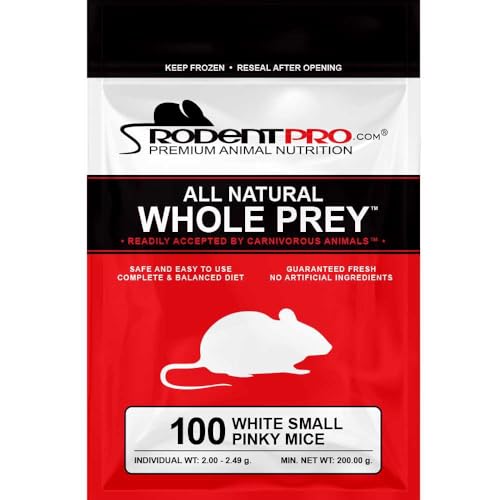
Aquarium Filter
Reliable filtration keeps the nitrogen cycle stable and water parameters in range.
Check Price on AmazonFrequently Asked Questions
A pinky mouse weighs 1–2 grams and measures approximately 2–3 centimeters in length. It has no fur, sealed eyes, and sealed ears — this is the smallest whole-prey option available and is only appropriate for hatchling and small juvenile reptiles.
References & Sources
- https://www.thebiodude.com/blogs/snake-caresheets/ball-python-care-guide
- https://www.thebiodude.com/blogs/snake-caresheets/western-hognose-care-sheet-and-maintenance
- https://www.thebiodude.com/blogs/gecko-caresheets/tokay-gecko-gekko-gecko-care-sheet
- https://www.thebiodude.com/blogs/snake-caresheets/kenyan-sand-boa-care-and-bioactive-maintenance
- https://www.thebiodude.com/blogs/snake-caresheets/rosy-boa-care-guide-and-bioactive-terrarium-maintenance
- https://usark.org
Related Articles

Cave Gecko Care: Why This Cool-Loving Gecko Is Different
Cave geckos (Goniurosaurus) break the usual gecko rules: they need cool, humid conditions, not desert heat. Here is a plain-English care guide for beginners.

Giant Madagascan Day Gecko Care: Costs, Setup, and Budget Tips
Thinking about a giant Madagascan day gecko but watching your budget? Here is the honest cost breakdown, setup guide, and where you can safely save money.

Terrarium Supplies: The Complete Checklist for a First Pet Reptile
Buying a first reptile for your child? This plain-English terrarium supplies checklist covers exactly what you need, what each item does, and what you can skip.