Blue Tongue Skink Enclosure Size: Full Guide
Learn exactly what enclosure size your blue tongue skink needs at every life stage — from hatchling to adult — plus setup tips to keep them healthy.


✓Recommended Gear
TL;DR: Adult blue tongue skinks need a minimum 4'×2'×2' enclosure (120×60×60 cm), providing about 8 square feet of floor space for proper thermoregulation and exercise — standard 55-gallon aquariums (48×13 inches) are too narrow for adults. A 40-gallon breeder tank can work for juveniles up to 12–14 inches but must be upgraded before the skink reaches adult size. Blue tongue skinks are strictly solitary and should never be housed together, as cohabitation causes territorial aggression and chronic stress.
Blue tongue skinks are robust, curious lizards that need more space than most beginners expect. Getting the enclosure size right from day one is one of the most important decisions you will make for your skink's health and happiness.
This guide covers the exact enclosure dimensions for every life stage, explains why floor space matters more than height, and walks you through the key setup elements that make a properly-sized tank work well.
Why Enclosure Size Matters So Much
Blue tongue skinks are ground-dwellers native to Australia and parts of Indonesia. In the wild they roam large territories — sometimes covering hundreds of meters in a single day foraging for food, regulating body temperature, and seeking shelter.
In captivity, the size of the enclosure directly affects several health outcomes:
- Thermoregulation: Skinks need a proper thermal gradient — a warm basking spot on one end and a cool retreat on the other. A tank that is too small cannot maintain this gradient, forcing the skink to stay in temperatures that are either too hot or too cold.
- Exercise and muscle tone: Lack of movement leads to obesity, which is a common killer of captive skinks. A larger space encourages natural walking and exploration.
- Stress levels: Confined animals show higher baseline stress hormones. Chronic stress suppresses the immune system, making your skink more vulnerable to infections and parasites.
- Mental stimulation: Blue tongue skinks are among the more intelligent lizard species. A cramped, featureless enclosure leads to boredom and repetitive behaviors.
Simply put, a bigger enclosure is almost always better, as long as you can maintain proper temperatures and humidity throughout.
Why Size Matters
What you need to know
Thermoregulation: proper thermal gradient prevents temperature-induced stress
Exercise prevents obesity, a common killer of captive skinks
Chronic stress suppresses immune system and increases disease vulnerability
Mental stimulation reduces boredom and repetitive behaviors
Minimum Enclosure Size for Adult Blue Tongue Skinks
For a single adult blue tongue skink, the widely accepted minimum enclosure size is 4 feet long × 2 feet wide × 2 feet tall (120 cm × 60 cm × 60 cm), which works out to roughly 8 square feet of floor space.
This is equivalent to a standard 120-gallon or larger enclosure. A 4×2 PVC or wooden vivarium from a reptile-specific manufacturer is the most popular choice.
Many experienced keepers and organizations like ReptiFiles recommend going larger — a 5×2 or 6×2 enclosure — whenever space and budget allow. The extra floor space lets you create a more elaborate setup with better temperature gradients, more enrichment, and deeper substrate.
Northern vs. Indonesian Blue Tongue Skinks
Northern blue tongue skinks (Tiliqua scincoides intermedia) are the largest subspecies, regularly reaching 24 inches (60 cm) and occasionally more. They benefit most from 5×2 or 6×2 setups.
Indonesian blue tongue skinks (Tiliqua gigas ssp.) are generally slightly smaller and can do well in a standard 4×2. However, they have higher humidity requirements, which are easier to maintain in a taller, PVC-lined enclosure.
Merauke blue tongue skinks (Tiliqua gigas evanescens) are the largest Indonesian subspecies and should be treated like Northerns in terms of space.
Enclosure Size by Life Stage
Your skink's housing needs change as it grows. Here is a practical size roadmap:
Hatchlings (0–3 months)
Hatchlings are typically 5–7 inches long. Counterintuitively, starting them in an adult-sized enclosure is not ideal. In a very large space, hatchlings can struggle to find food and water, feel exposed and stressed, and have difficulty maintaining body temperature.
A good starter size for hatchlings is a 2×1.5 foot enclosure or a 20-gallon long tank. This gives them enough room to move and thermoregulate without feeling exposed.
Juveniles (3–12 months)
Juveniles grow quickly. By the time they are 6 months old they are often 10–14 inches long and starting to run out of room in a hatchling setup.
Upgrade to a 3×1.5 or 40-gallon breeder by around 4–6 months of age, or whenever the skink's body length exceeds roughly one-third of the enclosure's length.
Adults (12+ months)
Most blue tongue skinks reach adult size between 12 and 18 months. By this point the minimum 4×2 enclosure described above is appropriate. If you plan to upgrade anyway, some keepers skip the intermediate juvenile stage and move directly from the hatchling tub to the adult enclosure, placing the hatchling in a small section cordoned off with cardboard until it grows into the full space.
| Age | Recommended Size | Notes |
|---|---|---|
| 0–3 months | 20-gallon long / 2×1.5 ft | Smaller helps hatchlings feel secure |
| 3–12 months | 40-gallon breeder / 3×1.5 ft | Upgrade when body > ⅓ enclosure length |
| 12+ months | 4×2 ft minimum | 5×2 or 6×2 preferred for large subspecies |
Enclosure Size by Life Stage
Hatchlings (0–3 months)
2×1.5 ft or 20-gallon long
Smaller space prevents stress and helps locate food/water
Juveniles (3–12 months)
3×1.5 ft or 40-gallon breeder
Upgrade when body length exceeds ⅓ of enclosure length
Adults (12+ months)
4×2 ft minimum (8 sq ft)
5×2 or 6×2 preferred for large subspecies
Width and Height: Why Floor Space Wins
Blue tongue skinks almost never climb. They are built low to the ground with short legs and a heavy body. Vertical height in the enclosure matters much less than horizontal floor space.
When comparing enclosures, prioritize:
- Length — the longest dimension for movement and thermal gradient
- Width — determines how much usable floor space you actually have
- Height — only matters for lighting clearance and ventilation; 12–18 inches is plenty
A 4-foot-long, 2-foot-wide enclosure gives your skink 8 square feet of floor space. A standard 55-gallon aquarium (48×13 inches) gives only 4.3 square feet, despite having a higher water capacity rating. This is why gallon ratings are a poor measure of suitability — always check the actual dimensions.
Floor Space Priority
What you need to know
Length (priority 1): enables movement and proper thermal gradient
Width (priority 2): determines actual usable floor space for the skink
Height (priority 3): only 12–18 inches needed for lighting and ventilation
Can a Blue Tongue Skink Live in a 55-Gallon Tank?
A 55-gallon aquarium (48 inches long × 13 inches wide × 21 inches tall) is borderline too narrow. The 13-inch width is the problem. An adult northern blue tongue skink can be close to 24 inches long — nearly twice the width of the tank. The skink cannot even turn around comfortably.
If a 55-gallon is all you have access to right now, it can work as a temporary housing for a juvenile. But plan your upgrade to a proper 4×2 before your skink reaches 14–16 inches.
Tank Dimensions Comparison
55-gallon aquarium
48×13×21 inches (4.3 sq ft)
Too narrow — adult cannot turn around comfortably
40-gallon breeder
36×18×16 inches (4.5 sq ft)
Acceptable temporary housing for juveniles up to 12–14 inches
75-gallon aquarium
48×18×21 inches (6 sq ft)
Barely meets minimum; tight for large Northerns and Meraukes
4×2 ft minimum
120×60 cm (8 sq ft)
Proper minimum for adult blue tongue skinks
Can a Blue Tongue Skink Live in a 40-Gallon Tank?
A 40-gallon breeder (36×18×16 inches) has 4.5 square feet of floor space, which is acceptable for a juvenile up to around 12–14 inches. It is not suitable as permanent housing for an adult, as most adults will quickly exceed the enclosure's usable space.
The 40-gallon breeder does have a useful advantage over the 55-gallon: the 18-inch width allows a skink to turn around without much difficulty. Use it as a stepping stone, not a permanent home.
Can a Blue Tongue Skink Live in a 75-Gallon Tank?
A 75-gallon aquarium is typically 48×18×21 inches — 6 square feet of floor space. This is technically above the minimum for a single adult, but only barely. The 18-inch width is on the tight side for large Northerns and Meraukes.
If your only other option is the 55-gallon, the 75-gallon is a meaningful upgrade. However, a purpose-built 4×2 reptile enclosure will still outperform it in terms of ventilation, heating efficiency, and usable floor space.
Housing Two Blue Tongue Skinks Together
Blue tongue skinks are solitary animals in the wild. They do not benefit from companionship the way some social reptiles do. Housing two together is not recommended for the following reasons:
- Territorial aggression: Males will fight, often causing serious injuries including tail loss and deep lacerations.
- Competition for resources: Even if two skinks appear to tolerate each other, one will typically dominate food, basking spots, and hides — leading to chronic stress and nutritional deficits in the subordinate animal.
- Disease transmission: Cohabiting increases the risk of passing parasites and respiratory infections between animals.
If you want two blue tongue skinks, house them in two separate enclosures. The only exception sometimes made is for carefully supervised, short-term breeding introductions between adults of opposite sex.
Enclosure Type: Glass Aquarium vs. PVC Vivarium
The enclosure material affects your ability to maintain the correct environment, which in turn determines how well any given size actually functions.
Glass aquariums are inexpensive and widely available but lose heat rapidly and offer poor front-access options. Mesh lids cause significant heat and humidity loss, which is especially problematic for Indonesian subspecies requiring 60–70% humidity.
PVC vivariums (such as those made by Animal Plastics, Vision Cages, or Zen Habitats) retain heat and humidity far more efficiently, are lighter than glass, and typically feature front-opening doors that reduce stress during feeding and handling. For most keepers, a PVC or ABS enclosure in a 4×2 configuration is the gold standard.
Wooden vivariums work well but require sealing with aquarium-safe sealant to prevent moisture damage. They retain heat well and can be custom-built for larger sizes.
Key Setup Elements That Depend on Enclosure Size
Choosing the right size enclosure is only the starting point. The following elements must be scaled to your enclosure's dimensions:
Thermal Gradient
Your skink needs a basking spot of 100–110°F (38–43°C) on the warm end and a cool side of 75–85°F (24–29°C). In a 4-foot enclosure, this gradient forms naturally with a single basking bulb over one end. In a shorter tank, the heat bleeds across the whole enclosure and you lose the cool retreat.
Substrate Depth
Blue tongue skinks like to burrow. Aim for 3–4 inches of substrate — a mix of coconut fiber and topsoil works well for Northern subspecies, while Indonesian subspecies benefit from higher-humidity mixes. A larger enclosure lets you maintain deeper substrate without it taking up a disproportionate amount of the interior height.
Hides
Every blue tongue skink needs at least two hides — one on the warm side, one on the cool side. In a properly sized 4×2 enclosure, you can place a hide at each end without blocking the thermal gradient.
Water Dish
Blue tongue skinks drink regularly and will often soak in their water dish. A large, shallow dish (10–12 inches across) should be placed on the cool side. In a small tank this dish takes up a disproportionate amount of floor space; in a 4×2 it fits naturally.
Setting Up Your Blue Tongue Skink Enclosure: Quick Checklist
- Enclosure is at least 4×2 ft (or scaled to life stage)
- Basking spot: 100–110°F
- Cool side: 75–85°F
- Ambient temperature: 80–85°F
- Humidity: 40–60% (Northerns), 60–80% (Indonesians)
- Substrate depth: 3–4 inches minimum
- Two hides (warm side and cool side)
- Large water dish on cool side
- UVB lighting spanning ⅔ of enclosure length
- Enrichment items: cork bark, fake plants, tunnels
Upgrading Your Enclosure: When and Why
Many new keepers start with a smaller tank and plan to upgrade, which is perfectly fine — as long as the upgrade happens on schedule. Signs your skink has outgrown its current setup:
- The skink cannot turn around in a straight line
- There is no room for both a warm-side and cool-side hide
- The skink is pacing or glass-surfing constantly
- You cannot maintain a proper thermal gradient
If you see any of these signs, an upgrade is overdue.
Summary
Blue tongue skinks need more space than their chunky, slow-moving appearance suggests. For adult skinks, a 4×2 foot enclosure is the minimum — and a 5×2 or 6×2 is better for large subspecies like Northern and Merauke. Floor space matters far more than height. Avoid the common mistake of using aquarium gallon ratings as a size proxy — always check the actual length and width dimensions.
Get the enclosure right, and every other element of blue tongue skink care becomes easier. Get it wrong, and even perfect diet and lighting cannot fully compensate for the chronic stress of an undersized home.
Recommended Gear

4x2x2 PVC Reptile Enclosure
A purpose-built 4×2×2 PVC vivarium provides optimal heat retention, front-opening access, and the correct floor space for one adult blue tongue skink.
Check Price on AmazonDeep Substrate Mix for Reptiles
Blue tongue skinks are burrowers. A quality coconut fiber and topsoil blend holds burrows and maintains humidity, especially important for Indonesian subspecies.
Check Price on AmazonReptile Basking Bulb 100W
An incandescent or halogen basking bulb is the most reliable way to hit the correct basking temperature. Pick wattage based on your ambient room temperature.
Check Price on Amazon
UVB Reptile Lighting Strip T5 HO
Blue tongue skinks require UVB for proper vitamin D3 synthesis and bone health. A T5 HO fixture spanning most of the enclosure length ensures consistent exposure.
Check Price on Amazon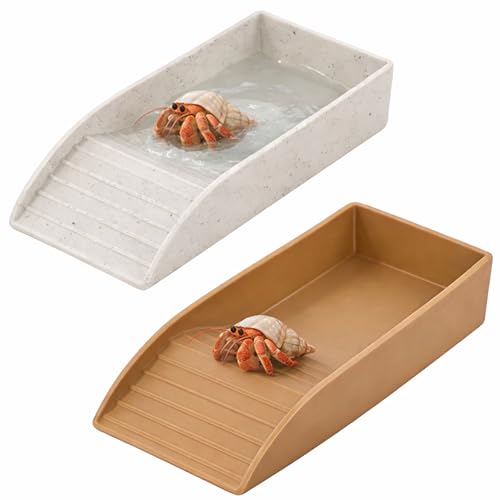
Large Reptile Water Dish
Blue tongue skinks drink frequently and like to soak. A large, shallow ceramic or resin dish that is easy to clean keeps your skink hydrated without becoming a bacteria trap.
Check Price on AmazonFrequently Asked Questions
The widely accepted minimum is 4 feet long by 2 feet wide (120 cm × 60 cm), providing about 8 square feet of floor space. Larger subspecies like Northerns and Meraukes do even better in 5×2 or 6×2 enclosures.
References & Sources
- https://reptifiles.com/blue-tongue-skink-care/blue-tongue-skink-enclosure-size/
- https://www.thebiodude.com/blogs/lizard-caresheets/care-and-maintenence-of-the-northern-blue-tongue-skink
- https://www.zenhabitats.com/blogs/reptile-care-sheets-resources/blue-tongued-skink-care-sheet-reptifiles
- https://reptifiles.com/blue-tongue-skink-care/
- https://community.morphmarket.com/t/northern-blue-tongue-skink-care-guild/41004
- https://www.thebiodude.com/blogs/lizard-caresheets/care-sheet-for-classic-indonesian-blue-tongue-skink-tiliqua-gigas-gigas
Related Articles

Skink Lizard Care: Guide to Blue-Tongued Skinks and More
Skink lizard care guide -- covering blue-tongued skinks and other popular skink species with enclosure, diet, heating, and health tips.

Red-Eyed Crocodile Skink Care: Complete Guide
Red-eyed crocodile skink care guide -- enclosure, high humidity, temperature, feeding, and handling for this prehistoric-looking display lizard.

Blue Tongue Skink Lifespan: How Long Do They Live?
*Affiliate disclosure: we earn a small commission on qualifying purchases.* Blue tongue skinks live 15–20 years in captivity — with well-kept northerns regularly hitting 25+. Here's what decides yours.